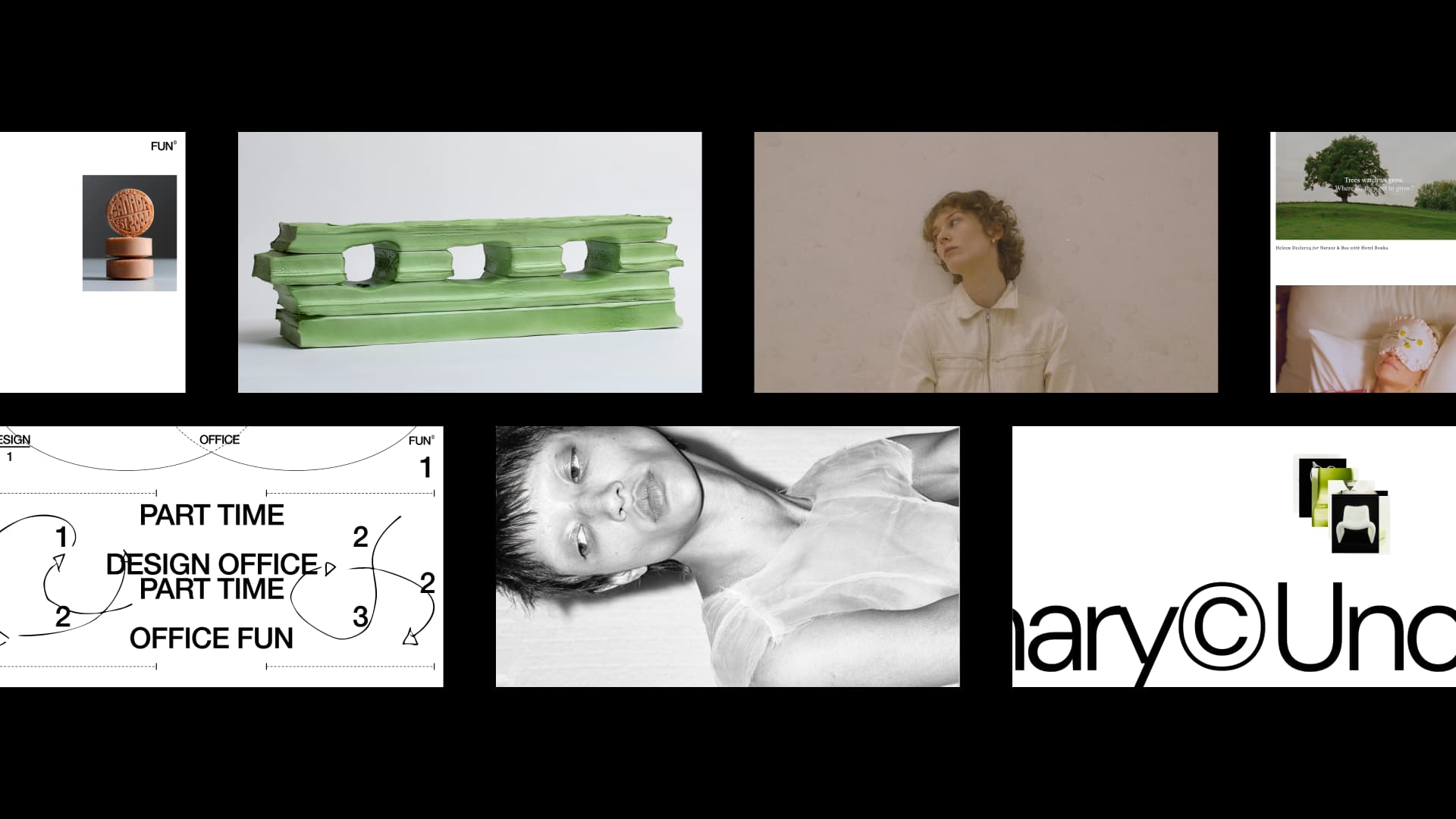
WeDirectory Website of the Week collage featuring Part Time Design Office Fun branding and editorial photography
8 min

Best Websites of the Month: April 2026

By WeDirectory

Explore the best creative websites of April 2026, including film director portfolios, design studios, branding experts, and production agencies shaping visual culture.

By WeDirectory

April felt like a good snapshot of the internet when it’s actually working - shaped by different ideas, practices, and points of view, rather than trends or repetition. This month, we’re highlighting five creative projects across design, film, production, and branding:

  • Sayna Fardaraghi,

  • Nicolas Zanoni,

  • ILA Studio,

  • Unordinary,

  • Design Office Fun.

​Each of them approaches their work differently - from cinematic storytelling to experimental objects and bold identity systems - but all share a clear sense of authorship. We featured them on WeDirectory as Website of the Week throughout April. Here’s why they’re worth revisiting.

Sayna Fardaraghi

Sayna Fardaraghi is a British-Persian film director working between London and Paris, known for her cinematic, emotionally charged visual storytelling that blends narrative film with fashion and experimental formats. Her most recent short film Glint premiered on NOWNESS, followed by sold-out screenings at REFERENCE.POINT in London. The project extended beyond film into a multi-format experience, including live-score performances and a published “making of” book - reflecting a growing trend of films as immersive cultural events.
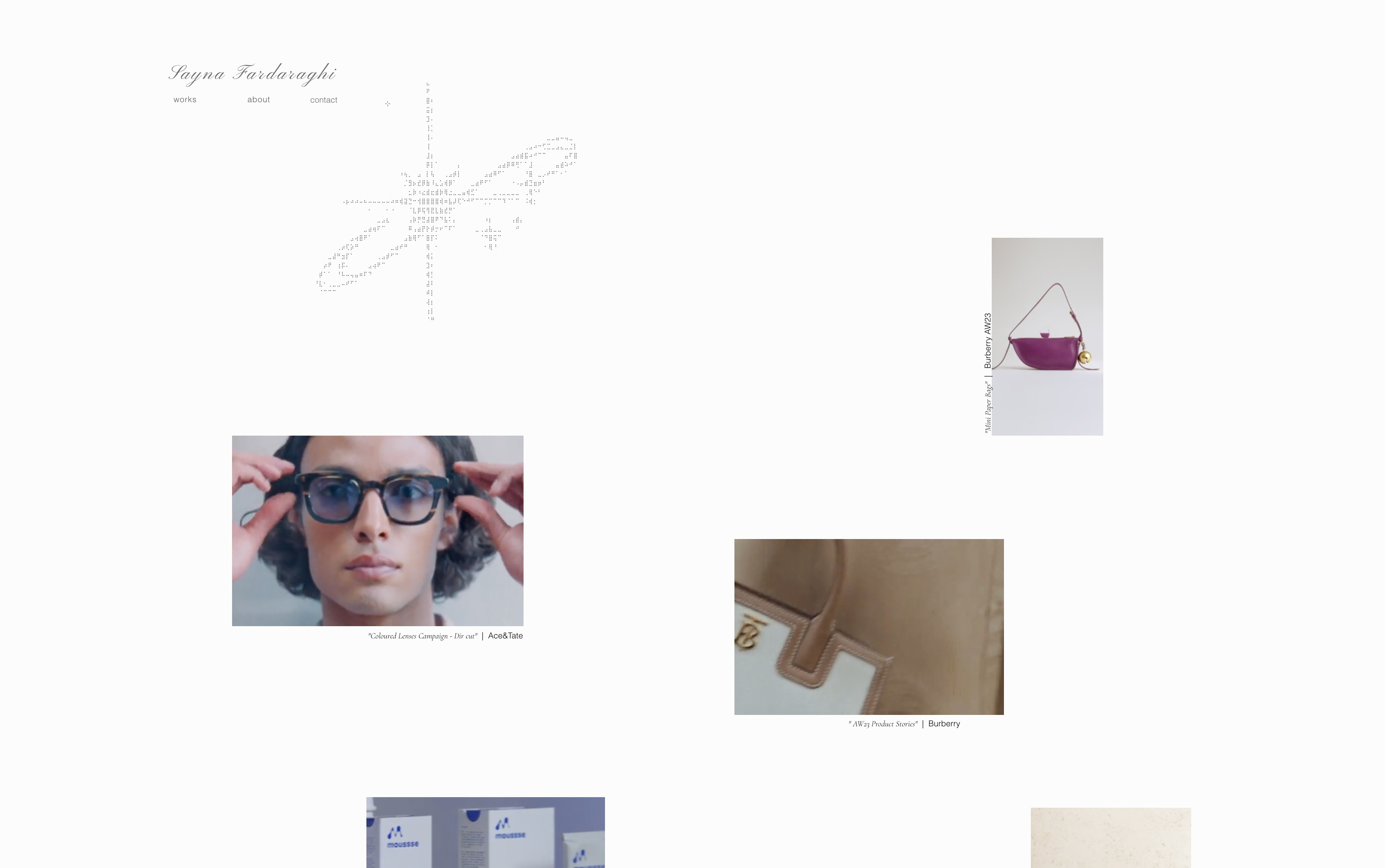
Sayna Fardaraghi portfolio site featuring Acne Studios eyewear campaign and Burberry bag photography

© Sayna Fardaraghi


Earlier work such as Waiting gained attention from acclaimed filmmakers like Barry Jenkins and Nicholas Britell, later premiering on MUBI. Her early fashion films were also featured on Vogue and SHOWstudio.

Working globally from Los Angeles to Tokyo and across Europe, Sayna collaborates with leading brands including: Burberry, Sony Music, Charlotte Tilbury, Marc Jacobs, BMW, Bentley.

Her work has been featured across major publications including W Magazine, Dazed, CULTED, and SLEEK Magazine, reinforcing her position at the intersection of fashion, film, and contemporary visual culture.​

Recognition includes:

  • D&AD Wood Award (2024) for Burberry on TikTok

  • Promonews Top 25 Best New Directors (2023)

  • London Fashion Film Festival nominee

  • Best Director at HP “Power Your Breakthrough”

  • Best Experimental Film at TIFF (Tatsuno)

What makes Sayna Fardaraghi’s website stand out is its ability to translate her visual language into a digital format - atmospheric, minimal, and cinematic. It doesn’t just showcase projects; it builds a cohesive directorial identity.

Nicolas Zanoni

Nicolas Zanoni (b. 1995, Paris. Based in Brussels) is a French designer of Argentinian origin whose work sits at the intersection of collectible design, sculpture, and functional objects. His practice challenges traditional expectations of contemporary design. Rather than prioritizing usability alone, Zanoni explores how objects can carry emotion, memory, and material experimentation - creating pieces that function as both furniture and sculptural statements. After completing a Master’s in Industrial Design at La Cambre, he developed a nonconformist approach rooted in intuition, improvisation, and physical engagement with materials.
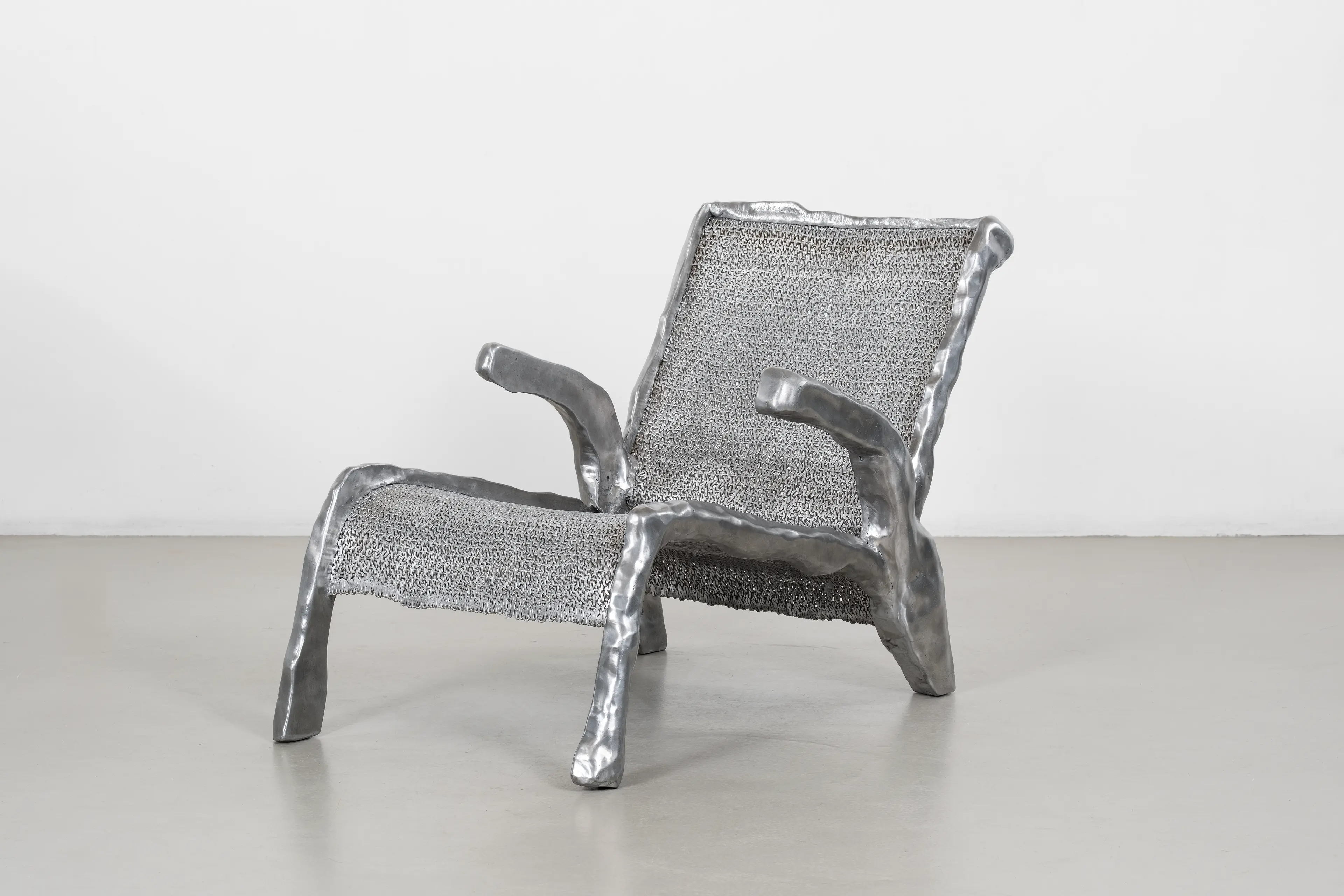
Nicolas Zanoni sculptural cast aluminum lounge chair with chain mail mesh seat and back

Fuzzy Lowchair by Nicolas Zanoni, 2024 © Nicolas Zanoni


Zanoni works primarily with industrial materials such as aluminium and polystyrene — but treats them in unconventional ways. His techniques include:

  • weaving aluminium threads into soft, armor-like structures

  • melting, flattening, and pressing metal into organic textures

  • burning polystyrene to create volcanic, marbled surfaces

These processes are often analogue, repetitive, and labor-intensive - yet intentionally open to accident and unpredictability. Instead of controlling materials completely, Zanoni allows their internal logic to shape the outcome. The result is work that feels:​ organic, tactile, and slightly surreal.

​A recurring element in his work is the use of familiar objects - often drawn from childhood - reinterpreted through design. Series like Climbing (featuring climbing grips) and Spinner (using rollerblade wheels) transform everyday references into unexpected compositions. This approach highlights a key aspect of his practice: decontextualisation. Fragments from personal memory, sports culture, or the built environment are isolated and reassembled into objects that feel: playful, slightly ironic, and visually striking.

​While his pieces often resemble sculptures, they are designed for domestic environments. Chairs, lamps, and tables invite interaction - encouraging users to touch, experience, and build a relationship with the object. This creates something rare in contemporary design: intimacy. Zanoni’s work is not just about form, but about connection - between: material and maker, object and user, and process and experience. His work has been presented internationally across major design platforms and galleries, including:

  • Milan Design Week (Rossana Orlandi Gallery)

  • Paris Design Week

  • Collectible Design Fair (Brussels)

  • Max Radford Gallery

  • VanAbbe Museum

With exhibitions spanning Paris, London, Milan, Brussels, and beyond, Zanoni continues to build a strong presence within the global collectible design scene.

ILA Studio

ILA Studio (Amsterdam, Antwerpen, Paris) is a full-service production and creative agency working at the intersection of fashion, advertising, and visual culture. With a strong focus on visual storytelling, ILA combines in-house production capabilities with an extensive international network of photographers, directors, and digital artists - allowing them to deliver projects across formats, platforms, and scales.
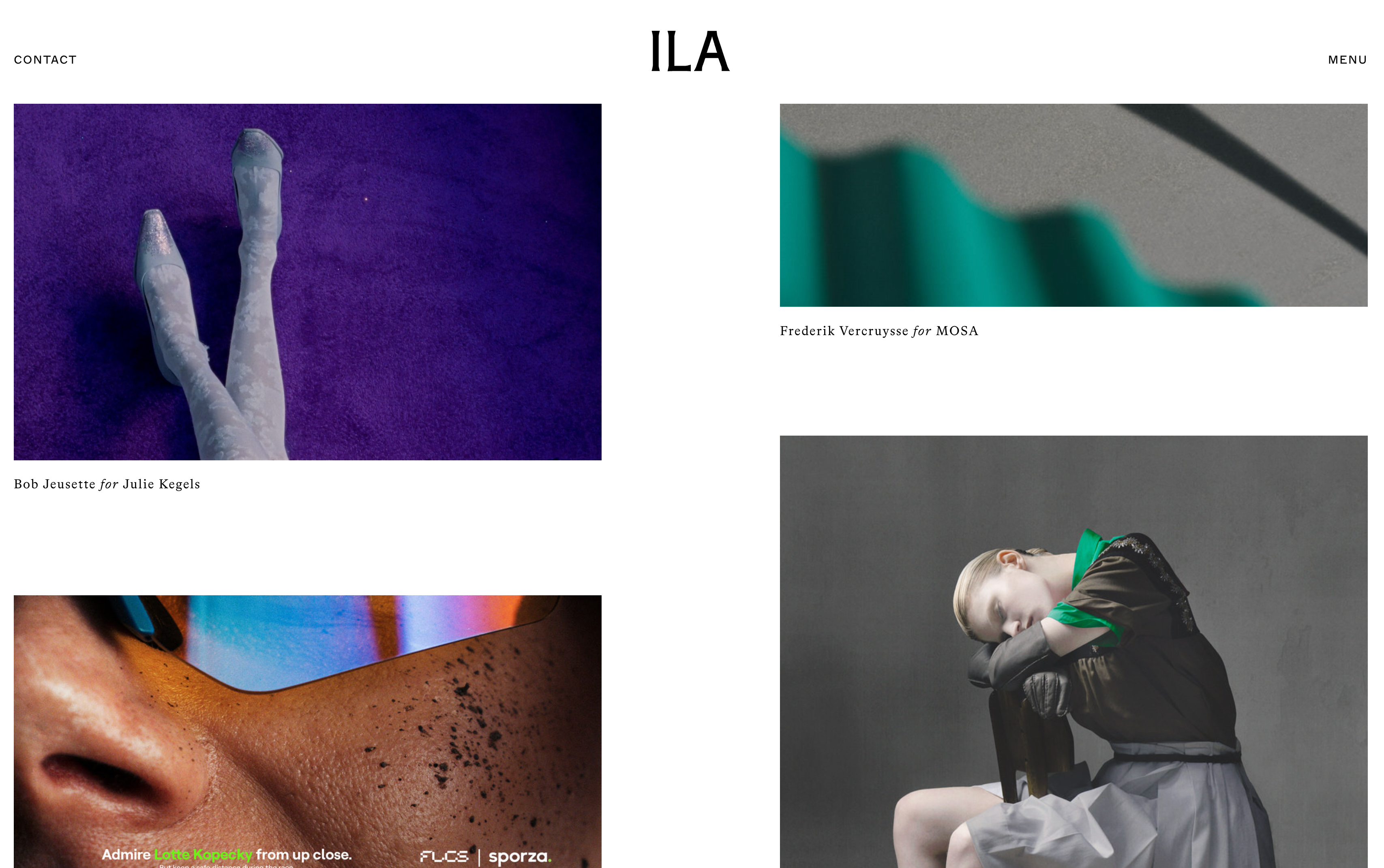
ILA creative agency portfolio grid featuring Bob Jeusette, Frederik Vercruysse, and Sporza campaigns

© ILA Studio

​ILA operates across: still photography, motion and film, advertising campaigns, and fashion editorials. From large-scale billboards to mobile-first content, their work is designed to resonate within contemporary culture - always aligned with brand identity, but with a distinct edge that captures attention. What sets them apart is their ability to move seamlessly between formats while maintaining a consistent creative vision: polished, relevant, and slightly unexpected.

​Beyond production, ILA also functions as a representation agency, supporting both established and emerging talents. They work closely with creatives to: navigate commercial projects, develop personal work, connect with global brands. Rather than acting as a traditional agent, ILA positions itself as a creative partner and catalyst - helping talent grow while shaping projects that feel culturally relevant. Their roster includes a curated selection of photographers, directors, and digital artists, bridging disciplines from traditional image-making to AI-driven practices.

​At the core of ILA’s model is creative matchmaking - bringing together the right mix of talent for each project. Whether it’s: a fashion campaign, a branded film, and a hybrid digital experience. ILA builds tailored teams that match the ambition and tone of the brief. Their production capabilities scale from intimate shoots to complex international campaigns, supported by experience across markets and a strong operational backbone.

​Through the ILA Foundation, the studio extends its work beyond commercial projects, supporting non-profit initiatives and socially relevant causes. By channeling creative resources into purpose-driven work, they position themselves not just as a production agency, but as an active participant in cultural and social dialogue.

​​

Unordinary©

Unordinary Studio (Amsterdam) is an independent brand identity and web design studio led by Dione Ros, based in Europe. The positioning is clear from the start: this is not a studio for everyone.

Unordinary Studio is built for individuals and brands that don’t fit traditional categories, and don’t want to. Instead of adapting clients to trends or expectations, the studio focuses on uncovering what makes them distinct, and turning that into a strong, cohesive visual identity.
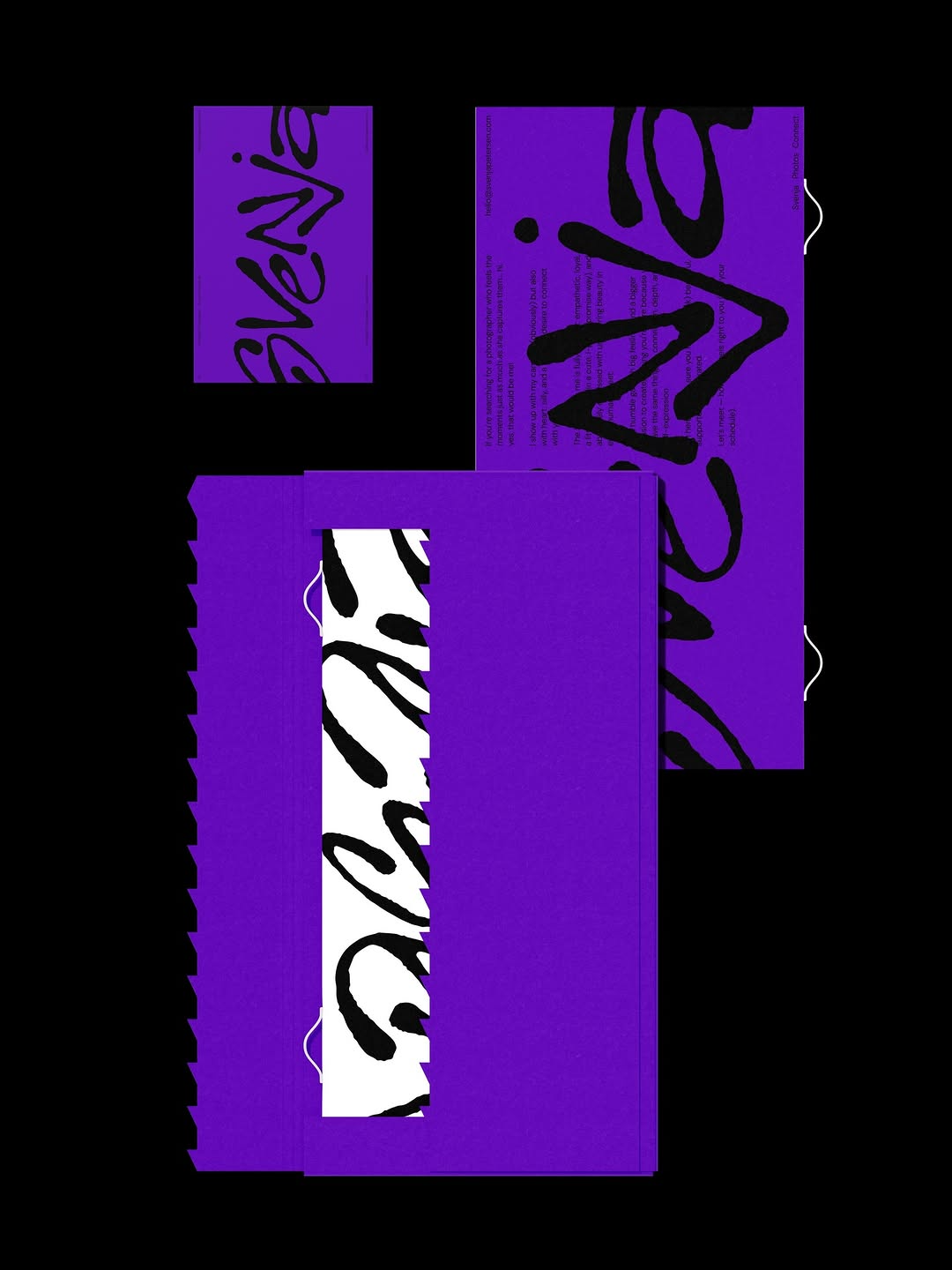
Svenia brand identity design with bold black script on vibrant purple print collateral

© Unordinary

The studio works across: brand identity, art direction, creative direction, editorial and print design, web design, and social media design. But beyond services, the real value lies in the approach.

Dione Ros builds brands through:intuition, authenticity, and personal alignment. Rather than forcing structure, the process is about extracting what already exists - and refining it into a visual system that feels true to the client. Unordinary Studio doesn’t try to appeal to everyone - and that’s exactly why it works. Its philosophy is simple: ordinary brands compete and distinct brands lead. This clarity of positioning makes the studio especially relevant in today’s saturated design landscape, where many brands look polished but interchangeable. Here, the focus is on personality over perfection.

​​

Design Office Fun

Part-time design office, part-time office of fun - but in reality, a serious exploration of how creativity works. Founded by Paula de Alvaro in Barcelona, Design Office Fun operates as a multidisciplinary design studio working across creative direction, visual research, strategy, and content creation.

Their core idea is simple but powerful: play is not decoration - it’s methodology. They treat play as: a tool for knowledge creation, a way to access unexplored visual territories, and a mechanism to challenge established design systems.
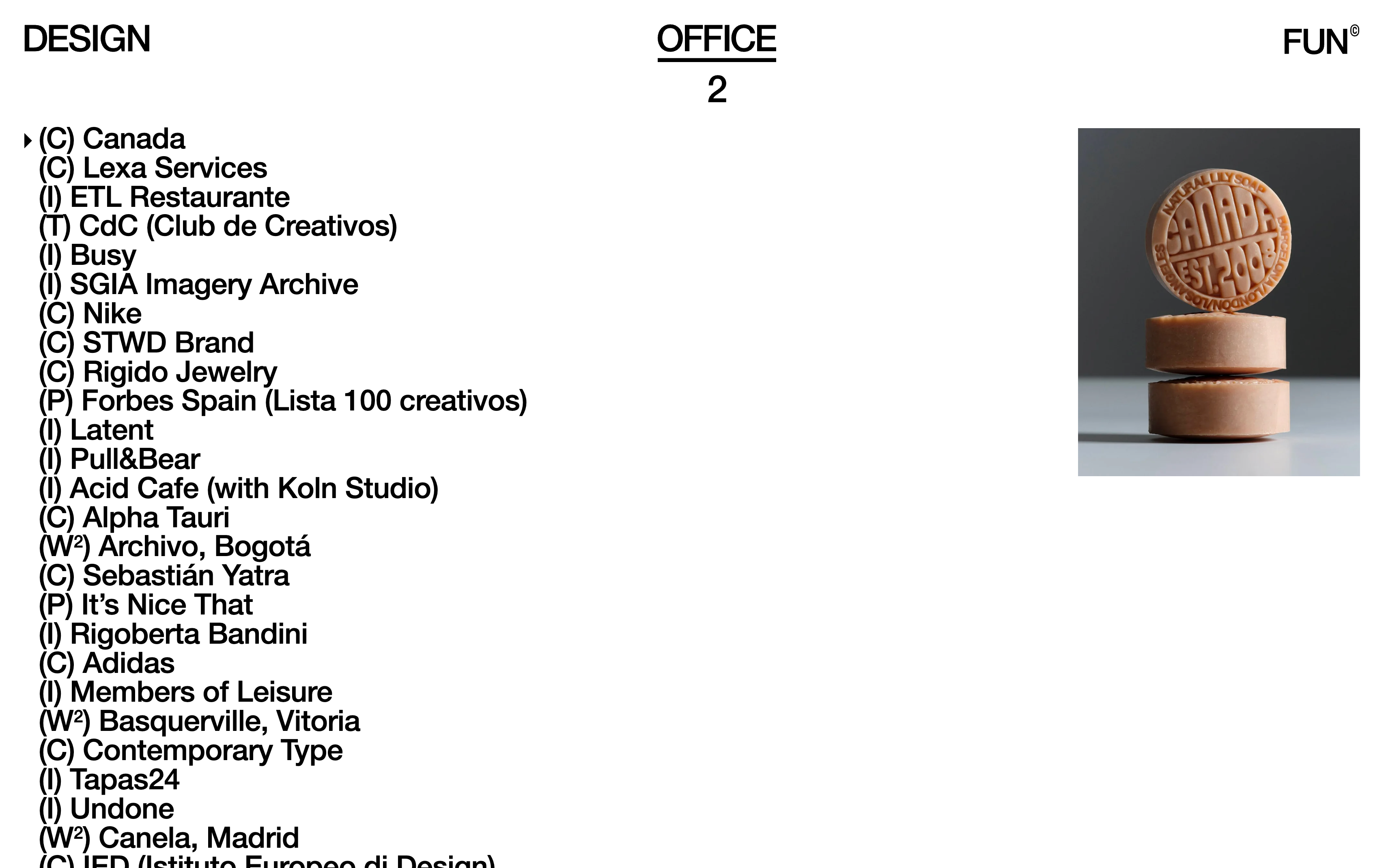
Stacked ceramic stamp discs engraved with Canada Design Office branding, established 2001

© Design Office Fun

From ideation to execution, their process is intentionally open and collaborative. They invite co-creation, experimentation, and even a bit of chaos - not to lose control, but to discover unexpected systems where others see noise. Their services span: creative direction, visual research, design strategy, workshops and creative dialogues.

What makes this selection special?

What makes this selection special is how different each approach is - and how clearly each one owns it. Sayna Fardaraghi builds cinematic worlds where fashion and narrative blur into something immersive. Nicolas Zanoni turns materials into emotion, creating objects that feel both raw and intimate. ILA Studio operates at scale, connecting talent and ideas into culturally relevant productions. Unordinary Studio challenges what branding should look like - bold, personal, unapologetic. Design Office Fun reminds us that play isn’t optional - it’s a powerful creative tool.

Together, they reflect where the creative industry is heading: more personal, more experimental, more intentional. If you’re looking for inspiration, collaboration, or simply a reminder of what strong creative work looks like online - take the time to explore their websites. Reach out. Start a conversation. Work with them. Because the best projects rarely happen in isolation - they’re built through the right connections.
Author

WeDirectory

Date

30.04.2026

Tags
Creative Technology & Innovationbest websites 2026creative websiteswebsite of the weekdesign inspirationfilm director portfoliobranding studiosproduction agencycontemporary designcollectible designexperimental designcreative studiosweb design inspirationportfolio websitesart and design platformsvisual storytellingcreative industrybrand identityfashion filmcreative agenciesdigital portfolios
Jenny Saville at Ca’ Pesaro Installation view
9 min

Venice Biennale 2026: Must-See Collateral Exhibitions & Events Guide

By Francesca Interlenghi

The lagoon city as a cultural ecosystem: the best collateral and parallel events to see in Venice during the 61st International Art Biennale 2026.

During the 61st International Art Exhibition of the Venice Biennale, the lagoon city behaves like a living organism, a cultural ecosystem in constant expansion. The Biennale Gardens and the Venice Arsenale serve as a gravitational center, but the experience is made unique by the proliferation of collateral events, independent exhibitions, foundations, historic palaces, and temporary spaces that orbit around them. Below is a guide to the most significant events that you won’t want to miss.

Jenny Saville at Ca’ Pesaro

Jenny Saville large-scale figurative painting installation view at Ca' Pesaro Venice, photo by Irene Fanizza

Jenny Saville at Ca’ Pesaro Installation view. Photo: Irene Fanizza


The Ca’ Pesaro International Gallery is presenting a major retrospective of the work of Jenny Saville (b. 1970, UK), one of the most influential painters of our time. This is the first monographic exhibition of her work in Venice, aiming to document her artistic development by tracing her career from the 1990s to the present. Saville’s story begins at the Glasgow School of Art, where she developed an interest in representing the female body. After spending a semester at the University of Cincinnati in 1991, her work emerged as a significant contribution to feminist discourse on the body, understood not as an object of contemplation but as a field of political, perceptual, and symbolic tension. An heir to the tradition of great Western painting, from Michelangelo to Rembrandt, Rubens, and, above all, Titian, Saville destabilizes its codes through a rendering of the flesh that is analytical yet visceral. Her monumental figures often defy conventional standards of beauty, challenging the Western tradition of depicting the female nude. This tradition has historically been shaped by the idealizing male gaze. Visual culture theorist Michelle Meagher defines this as an “aesthetic of disgust,” which forces viewers to confront their visceral responses to bodies that defy societal norms, revealing how deeply internalized the cultural codes that govern the perception of the female body are.

Jenny Saville large-scale figurative paintings installed at Ca' Pesaro museum, Venice

Jenny Saville at Ca’ Pesaro Installation view. Photo: Irene Fanizza


Saville’s figures assert themselves as irreducible presences, removed from any logic of erotic objectification. In this way, the artist subverts the paradigm of the so-called “male gaze,” offering a representation of the feminine that is not mediated by male desire but is instead rendered in all its opacity and complexity. Her subjects “simply exist,” devoid of idealization or aesthetic complacency. The large, monumental nudes of the 1990s, including the seminal works Proped (1992) and Hybrid (1997), which are both on view in this exhibition, are complemented by portraits of extraordinary chromatic and luminous intensity. Notable examples include Hyphen (1999), which depicts the artist with her sister, and Reverse (2002–2003), in which Saville’s face appears stretched out and reflected on the floor. This composition is suspended between introspection and alienation. The figures multiply and intertwine while the style gradually opens to abstract and expressionist influences. In the foreground, color breaks free from its descriptive function, becoming more saturated and vibrant. The brushstrokes become rapid and almost cursive, culminating in a painterly exploration focused on the materiality of color in the 2020s. Luminous faces, sometimes barely childlike, are imbued with cultural references and evoke figures from mythology and literature. Examples include Ligeia (2020–21) and Song of Songs (2020–23). Other works are condensed into essential, conceptual titles such as Focus (2022–24), Gaze (2021–24), and Rupture (2020). The artist’s most recent work openly engages with emotionally and symbolically impactful themes, including war and collective grief. Works such as Aleppo (2017–2028) and the various Pietàs draw on news images that remain tragically relevant today; however, they do not merely document a specific event. Instead, Saville transforms suffering into a universal concept capable of transcending eras and historical contexts. To conclude the profound dialogue between the artist and Italy, particularly Venice, the final room of the exhibition features a series of previously unseen works created specifically for Ca’ Pesaro. This series is an intimate and solemn tribute to the lagoon city.

Jenny Saville at Ca’ Pesaro
March 28 – November 22, 2026
Ca’ Pesaro – Galleria Internazionale d’Arte Moderna Santa Croce 2076, Venice 
Curated by Elisabetta Barisoni
With the support of Gagosian

Marina Abramović at the Gallerie dell’Accademia

Performer submerged in hemp seeds in gold bathtub wearing headphones at Marina Abramovic MAM Shanghai exhibition

Transforming Energy by Marina Abramović at Modern Art Museum (MAM) Shanghai; Photo: Yu Jieyu


Marina Abramović (b. 1946, Belgrade) is the first living artist to be honored with a major solo exhibition at the Gallerie dell’Accademia, an institution historically dedicated to the masters of the past. “Transforming Energy,” conceived to celebrate her 80th birthday, is an ambitious project that attempts to connect her influential performative practice with the visual and symbolic fabric of the Venetian Renaissance. Curated by Shai Baitel, the artistic director of the Modern Art Museum (MAM) in Shanghai, in close collaboration with the artist, the exhibition unfolds across the galleries of the permanent collection and the temporary exhibition spaces. This is a significant milestone in the museum’s history. The result is a journey that plays on explicit polarities—past and present, matter and immateriality, body and spirit—but finds its coherence in the centrality of experience above all else. Visitors are no longer merely spectators; they are active participants in an interactive installation. The Transitory Objects, consisting of beds and stone structures pierced by crystals, solicit direct physical interaction in accordance with what Abramović defines as “energy transmission.” Iconic works, such as Imponderabilia (1977), Rhythm 0 (1974), Balkan Baroque (1997), and Carrying the Skeleton (2008), convey the scope of a body of work that has made resistance, vulnerability, and transformation its cornerstones. New works further expand this horizon. One of the most intense moments of the exhibition is the juxtaposition of “Pietà (with Ulay)” (1983) and Titian’s “Pietà,” his last unfinished masterpiece, completed by Palma the Younger. On the 450th anniversary of Titian’s painting, this juxtaposition goes beyond a formal dialogue. Through a radical temporal shift, it reawakens profound questions about suffering, transcendence, and redemption.

Visitors with headphones contemplate amethyst geode sculptures in Marina Abramovi's Transforming Energy at MAM Shanghai

Transforming Energy by Marina Abramović at Modern Art Museum (MAM) Shanghai; Photo: Yu Jieyu


From this perspective, the human body becomes a site of tension between finitude and spiritual aspiration once again, a theme that runs through the Renaissance tradition and the artist’s practice. In Venice, a city that has built its identity on cultural exchange for centuries, the choice of quartz, amethyst, and other natural elements takes on a value that transcends the symbolic, evoking continuity with the mosaic tradition and research into matter transformation. Abramović comments “I was 14 when my mother first brought me to the Venice Biennale. We travelled by train from Belgrade and as I stepped out of the station and saw Venice for the first time, I began to cry. It was so incredibly beautiful—unlike anything I had ever seen. Since then, returning to Venice has become a tradition, and after receiving the Golden Lion in 1997, the city has always held a special place in my life. Now, as I prepare to celebrate my 80th birthday, I return for an even more meaningful reason: to become the first woman artist to present an exhibition across the Gallerie dell’Accademia, including its contemporary collection, with Transforming Energy. It is a profound honor, and I am deeply touched by this opportunity.

Marina Abramović: Transforming Energy
May 6 – October 19, 2026
Gallerie dell’Accademia Campo della Carità, Dorsoduro 1050, Venice
Curated by Shai Baitel

The Dries Van Noten Foundation: The Only True Protest Is Beauty

Mannequin wearing ruffled patchwork coat with red belt and sculptural red headpiece, Dries Van Noten Foundation exhibition

The Dries Van Noten Foundation: The Only True Protest Is Beauty. Photo: Matteo De Mayda


In Venice, within the layered halls of the Palazzo Pisani Moretta, a project has emerged that transcends the traditional exhibition format to offer a more nuanced experience. With “The Only True Protest Is Beauty,” the Dries Van Noten Foundation launches its program by offering a reflection on beauty as an active force capable of not only seducing but also questioning and destabilizing. Conceived by Dries Van Noten and Patrick Vangheluwe, the foundation is based on the idea that craftsmanship is not a nostalgic practice but a way of thinking. It is a “thinking with the hands” approach that, through materials, gestures, and the passage of time, restores the centrality of the human dimension of making, which is often marginalized in today’s production processes. In this sense, the space becomes a place of transition where traditions are continually reactivated, tested, and transformed, rather than simply preserved. The exhibition’s title, taken from a line by the American singer-songwriter and activist Phil Ochs, sets the tone from the beginning: “In such ugly times, the only true protest is beauty.” Van Noten curated the project with the assistance of Geert Bruloot. It is a deliberately non-linear journey spread across the ground floor and two levels of the Piano Nobile. It is organized into twenty spaces that prioritize intuition over rigid themes. More than two hundred works spanning fashion, jewelry, art, design, photography, glass, and ceramics are arranged in a network of fluid relationships where eras, languages, and origins overlap without clear hierarchies. The result is a visual landscape in which craftsmanship asserts itself as a universal language capable of conveying emotion and challenging established conventions.

Ornate ceramic vase displayed in gilded niche at Dries Van Noten Foundation exhibition, photo by Matteo De Mayda

The Dries Van Noten Foundation: The Only True Protest Is Beauty. Photo: Matteo De Mayda


The dialogue between contemporary creations and archival pieces from major fashion houses is particularly significant. This  restores clothing to its role as a cultural and aesthetic artifact. Christian Lacroix’s layered silhouettes blend naturally into the building’s decorative context. In contrast, Rei Kawakubo’s radical design for Comme des Garçons stand out as autonomous entities that redefine beauty. The work of Palestinian designer Ayham Hassan introduces an additional dimension: a fragile yet resilient quality in which material becomes a vehicle for memory and identity.

Dries Van Noten Foundation archive garments: coral chiffon gown beside embroidered floral brocade fabrics

Christian Lacroix, Haute Couture Fall/Winter 2003. Courtesy of Christian Lacroix, STL group and Madame Suzanne Saperstein.


The exhibition begins in the portego, a symbolic axis between water and land. There, a sculpture by Peter Buggenhout immediately evokes a sense of ambiguity and suspension. From here on, the dialogue with the architecture continues: in the first hall of the Piano Nobile, beneath Guarana’s fresco The Victory of Light over Darkness, Steven Shearer’s photographs and Codognato’s memento mori jewelry create a counterpoint between sleep and memory, presence and absence. Throughout the space, objects and artworks respond to one another through unexpected affinities. For example, Kaori Kurihara’s ceramics echo the convivial scenes depicted in the frescoes on the walls. Meanwhile, the historic glass from the Pisani Moretta collection finds a contemporary extension in the works of Alexander Kirkeby, Ritsue Mishima, and Armand Louis. In a more intimate space, works by Misha Kahn and Ann Carrington introduce irony and disruption. Interventions by artists such as Isaac Monté and Hubert Duprat, with his famous “insect-goldsmiths,” draw the gaze back to an almost primordial dimension of matter. Even the theme of seating provides an opportunity for reflection. The palace’s historic armchairs engage in dialogue with creations by Guillermo Santomà, Nifemi Marcus-Bello, and Lionel Jadot. This highlights the subtle balance between function and abstraction. A subtle yet persistent thread holds this deliberately heterogeneous ensemble together: the excellence of craftsmanship and the continuous tension between harmony and rupture. Each time the image appears to achieve balance, an unexpected element disrupts it, reawakening the viewer’s gaze by introducing dissonance. The exhibition finds its most authentic voice precisely in this oscillation between chaos and cosmos, transforming beauty from an aesthetic category into a critical tool capable of questioning the present.

Dries Van Noten Foundation exhibition juxtaposing large-scale male figure photograph with classical painting

The Dries Van Noten Foundation: The Only True Protest Is Beauty. Photo: Matteo De Mayda​

The Only True Protest is Beauty
April 25 – October 4, 2026
Dries Van Noten Foundation – Palazzo Pisani Moretta San Polo, 2766, Venice
Curated by Dries Van Noten in collaboration with Geert Bruloot

Erwin Wurm at the Fortuny Museum

Erwin Wurm aluminum sculpture of figure layered in clothing at Fortuny Museum Venice

Erwin Wurm, Balzac, 2023. © Erwin Wurm, Bildrecht, Wien 2026. Photo: Markus Gradwohl 


In the historic halls of the Fortuny Museum, the work of Erwin Wurm (b. 1954, Austria) introduces a subtle yet striking shift. Rather than presenting itself as a mere retrospective, the exhibition, titled “Dreamers”, highlights the trajectory through which the artist has progressively redefined the concept of sculpture, shifting its focus from form to condition. Sculpture is no longer a static object, but rather a process involving time, the body, and everyday matter. Humor plays a crucial role in this shift, serving as a critical tool that undermines social conventions and investigates crucial contemporary issues (consumption, identity, and representation) through a language that oscillates between irony and unease. This tension is particularly effectively synthesized in the famous One Minute Sculptures (1996–97), in which visitors are called upon to actively participate by transforming their own bodies into temporary sculptures through simple instructions. The work unfolds in the brief span of a single action and exists only as photographic documentation, often captured on Polaroid film, as a trace of its immediacy. Alongside this performative dimension, works such as The Dreamers introduce a more strictly visual reflection. Placing familiar objects, such as cushions deformed and supported by human limbs, in precarious positions suggests an ambiguous space between physicality and the dreamlike realm.

Erwin Wurm, Shadow 2024, bronze sculpture with patina depicting empty hoodie and sneakers

Erwin Wurm, Shadow, 2024, Substitutes series.  © Erwin Wurm, Bildrecht, Wien 2026 Photo: Markus Gradwohl 


The dialogue with Mariano Fortuny’s legacy focuses on garments as extensions and residues from the body. In the Substitutes series, garments appear as empty presences, surfaces that retain the memory of those who wore them. Works such as Yikes seem to capture the instant the body has just vanished, leaving behind a form still charged with vibration. This resonates profoundly with Fortuny’s vision. He conceived the palace as a laboratory where materials and languages intermingled without hierarchy. The son of a painter, Fortuny had a restless and curious spirit and was never content with a single form of expression. He was a painter, a clothing designer, an inventor of theatrical lighting systems, a student of ancient dyes, and an innovator of garment pleating. The famous Delphos dress emerged from this approach, blending archaeology, art, and technique. In this context, the museum reveals itself as more than just a container; it is a living organism, a veritable “semiosphere” in which signs, eras, and forms overlap, generating new possibilities of meaning. Wurm’s works fit into this system as elements of controlled disruption. They fold, swell, and contract, altering the balance between past and present. In doing so, they transform the space into a site of inquiry into contemporary identity. In an era that constantly imposes postures and definitions, what remains when these forms dissolve? This exhibition invites us to dwell in this instability and recognize the human body, exposed and mutable, as the true malleable substance of the contemporary world.

Erwin Wurm Yikes 2024 aluminium sculpture draped white sheet blue sandals Substitutes series

Erwin Wurm, Yikes, 2024, Substitutes series. © Erwin Wurm, Bildrecht, Wien 2026 Photo: Markus Gradwohl 

Erwin Wurm. Dreamers
May 6 – November 22, 2026
Museo Fortuny, San Marco 3958, Venice
Curated by Elisabetta Barisoni and Cristina Da Roit

Ca’ Riviera: A New Contemporary Art Hub

Cecilia Granara paintings installed in historic chapel at Ca' Riviera, Venice

Ca’ Riviera, The Shape of the Self / La forma del Sé Installation view. Photo courtesy of Ca'Riviera


Just outside of Venice, along the serene shores of the Brenta Riviera, a new venue is emerging that is poised to make its mark on the contemporary art world. Called Ca’ Riviera, it will open on May 9, 2026, with private previews available from May 5. This opening coincides with the 61st International Art Exhibition of the Venice Biennale. From the outset, Ca’ Riviera will position itself not just as an exhibition space, but rather as a home for the arts, a place of residence and passage where different languages meet and transform. Founded by Leonardo Tiezzi and Riccardo Corò Ca’ Riviera is housed in two 16th-century villas in Mira. The villas are nestled in a landscape that still echoes the golden age of Venetian patrician residences. The name itself conveys the idea of a space that is both rooted in the local area and open to an international dimension. It combines the Venetian “Ca,’” meaning house or home, with the term “riviera.” It is not just a physical space, but rather a living entity designed to encourage ongoing dialogue between artists, galleries, and institutions and the local and global contexts.

Venetian interior with marble bust, ornate Murano mirror, and modern metal vase with yellow lilies

Ca’ Riviera, The Shape of the Self / La forma del Sé Installation view. Photo courtesy of Ca'Riviera


The inaugural exhibition, “The Shape of the Self / La forma del Sé,” organized in collaboration with the Milan-based gallery Cassina Projects and under the artistic direction of Marina Denora, marks the launch of this initiative. The title introduces the central theme of the exhibition: an exploration of identity construction and metamorphosis through artistic practices spanning different eras and sensibilities. The project presents a constellation of perspectives on the self. The presence of Leonor Fini (Argentina, 1907–Italy, 1996), a central figure of European surrealism, establishes an ideal connection to contemporary explorations. Between 1945 and 1969, Fini developed a personal mythology of the unconscious, an inner theater of sorts, that she described as “enchantment in the guise of autobiographical affirmation.” In her works, the definition of feminine and artistic identity becomes an act of continuous negotiation and liberation. This tension finds new expression in the works of younger artists. Cecilia Granara (b. 1991, Italy) expands painting into an almost cosmic dimension where spirituality and the stream of consciousness intertwine in images that seem to address the viewer directly. Yves Scherer (b. 1987, Switzerland) offers a distinct yet complementary perspective, navigating the fluid boundary between reality and fiction. The works of Chiara Capellini (b. 1981, Italy) and Sedef Gali (b. 1990, Turkey) are permanently installed at Ca’ Riviera. Though their styles differ, their practices converge in a subtle exploration of perception and the invisible layers of reality. Gali’s organza paintings appear as suspended surfaces traversed by light that dissolves painterly gestures into webs of transparencies, evoking the unstable nature of seeing. Capellini, on the other hand, works by subtraction. Her site-specific installations transform emptiness into an active condition, a field of possibilities engaging with architecture, light, and materials, generating spaces of suspension and latent presence.

Art installation at Ca' Riviera featuring sculptures by Leonor Fini and Yves Scherer, Venice

Ca’ Riviera, The Shape of the Self / La forma del Sé Installation view. Photo courtesy of Ca'Riviera


Ca’ Riviera’s curatorial approach emerges precisely from this interweaving of differences: a practice grounded in relationships, listening, and duration. The goal is to build a year-round cultural hub that can transcend the intense yet limited temporality of Venetian events and become a stable point of reference on the Italian and international scenes. Contributing to this mission is the launch of the first artist residency program, scheduled for summer 2026. This marks a further step toward establishing Ca’ Riviera as a production and exhibition space where long-term research can develop and be discussed.

The Shape of the Self / La forma del Sé
Opening event by invitation only: May 9, 2026, 6pm – late
Private previews available from May 5, 2026 
Ca’ Riviera Via Caltana 129, Mira, Venice
In collaboration with Cassina Projects
Artistic direction and project development by Marina Denora

Date

28.04.2026

Tags
Art & IllustrationVenice Biennale 2026Venice Biennale collateral eventscontemporary art VeniceJenny Saville Ca' PesaroMarina Abramovi Gallerie dell'AccademiaDries Van Noten Foundation VeniceErwin Wurm Fortuny MuseumCa' Riviera Brenta61st International Art ExhibitionVenice art exhibitions 2026Biennale guideart events Venice 2026collateral exhibitions Biennalecontemporary art ItalyVenice ArsenaleBiennale Gardens