
The twelve practices gathered here work in sterling silver, recycled metals, Perspex acrylic, found objects, and upcycled kitchenware — a material range that says something about how broadly the category of accessories now stretches. Several use ancient techniques: lost-wax casting, hand-carving in wax, silversmithing traditions with roots in pre-Columbian Peru. Others start in CAD software or with a 3D printer. What the body content makes clear is that these aren't interchangeable approaches — each maker has a specific relationship to their materials and process, whether that's Gilly Langton working with hand-dyed elastic in a Highland village since 1997, or Clara Chu turning jar openers into bag hardware in London. The range of locations, references, and methods here is genuinely wide, and that variety is the point.
Ancient Techniques, Enduring Materials: Handcrafted Metalwork and Fine Jewellery
Gilly Langton Contemporary Jewellery Design and Handcrafted Accessories
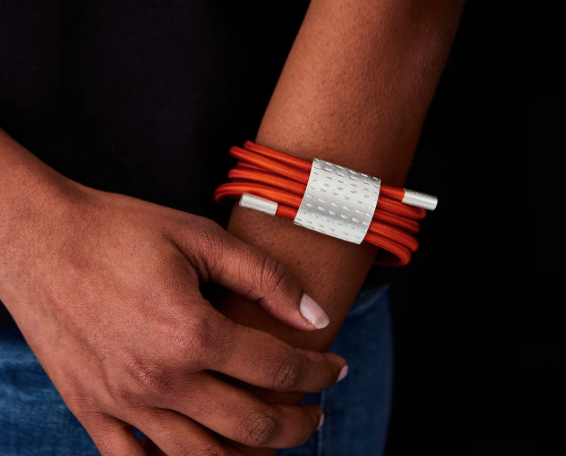
Since 1997, Gilly Langton has been making jewelry by hand in Plockton, a small village on the west coast of the Scottish Highlands. Her signature combination — sterling silver with hand-dyed elastic — produces pieces that range from chunky string necklaces to architectural brooches, all made individually in her Highland workshop. The color palette is vivid and deliberate, drawing on the nautical landscape around her, and the work has been sold and exhibited in galleries, museums, and fairs internationally. She also produces a men's collection, extending the same approach to silver and elastic into less commonly explored territory for handmade jewelry.
Kensho Heirlooms Handcrafted Jewelry and Wearable Artifacts
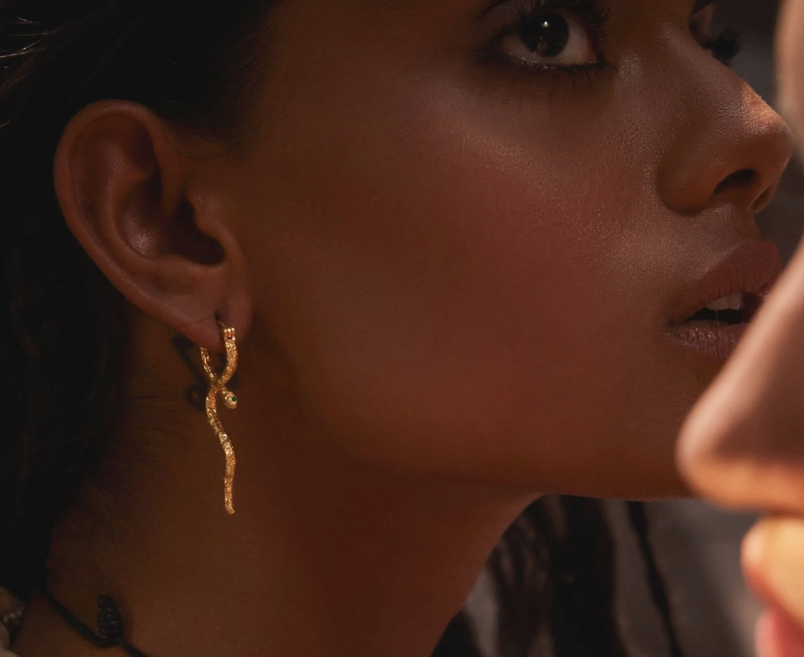
Kensho Heirlooms, founded by Mrigya Sharma, uses the lost-wax casting technique — a process dating back roughly 5,500 years — to produce Gold Vermeil and sterling silver jewellery in London. The method lends each piece its characteristic molten surface and organic irregularity; no two come out identical. The brand frames its work around Zen ideas of self-discovery and intentional living, with pieces organised around themes such as protection, transformation, and new beginnings. The aim, stated plainly, is jewellery made to last a lifetime.
NMRK Jewellery Contemporary British Handcrafted Fine Accessories

Solid gold, diamonds, and ethically sourced gemstones form the foundation of NMRK Jewellery, a female-founded, independently owned brand based in St Albans. The collection is built around elevated staples — diamond-studded hoops, stackable mini huggies, pieces designed to sit outside the seasonal churn rather than within it. Alongside its core fine jewellery line, NMRK hand-selects vintage and antique pieces sourced across the UK, adding a curatorial dimension to the offer. The brand's stated commitment to responsible handcrafting and affordability runs through both strands, making solid gold and diamond pieces accessible without stripping back on material quality.
Sketchy Bones Collective
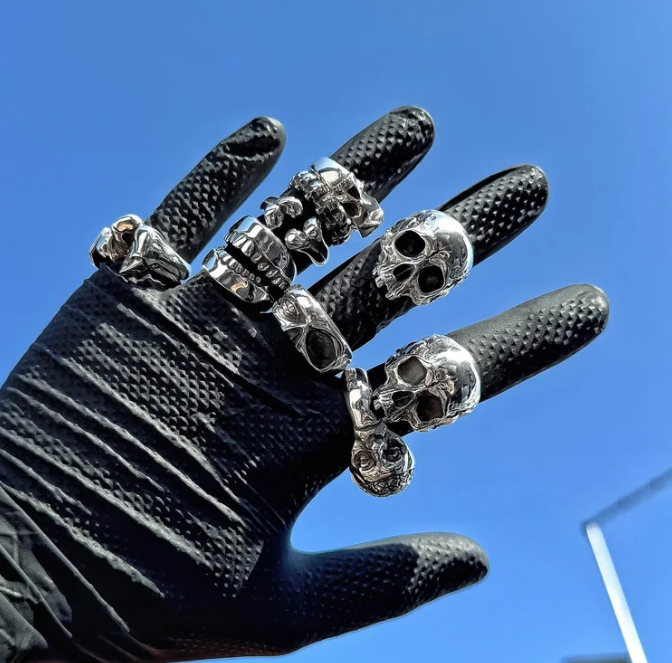
Skull rings begin in CAD at Sketchy Bones Collective, a London studio where anatomical jewellery is made to order using recycled sterling silver and ethically sourced materials. The process moves from digital modelling to 3D printing and casting, with hand-polishing and oxidised detailing applied at the finish stage. The range extends from minimalist skull rings and pendants to bespoke commissions, with a showroom available by appointment. A debut runway collection shown at London Fashion Week S/S26 marked an expansion into fashion, while the studio's stacking club and charm ranges point to a deliberately layered approach to how pieces are worn together.
The Wildness Jewellery
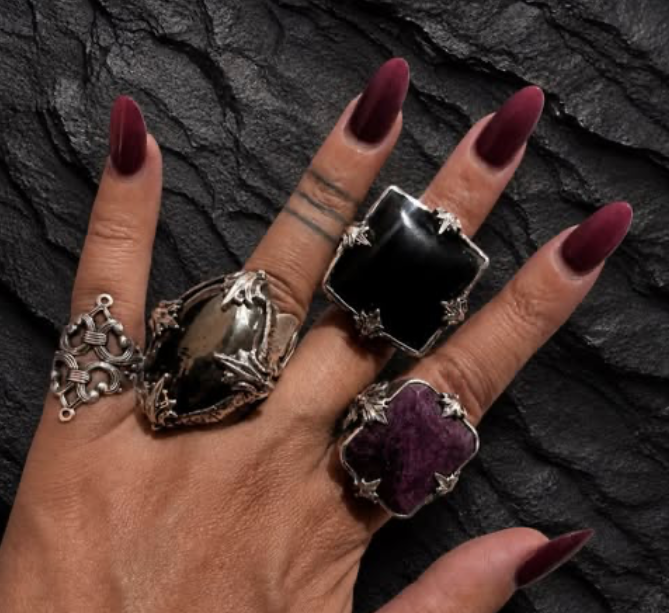
Stefania, the London-based artisan behind The Wildness Jewellery, works in sterling silver using the lost-wax casting process — a technique with roots in ancient metalworking that involves hand-carving a wax model before casting it in metal. The result is jewellery that retains the marks of the hand throughout. Her sources are varied: the natural world, literature, ancient symbolism. The range runs from sculptural rings and upper-arm snake bangles to winged chokers and signet rings, with bespoke commissions also available. She also makes wedding bands, trained as a goldsmith, though that quieter side of the practice sits alongside the more dramatically conceived pieces.
Found, Foraged and Repurposed: Jewellery and Accessories from Unconventional Sources
Clara Chu Upcycled Accessories From Household Objects
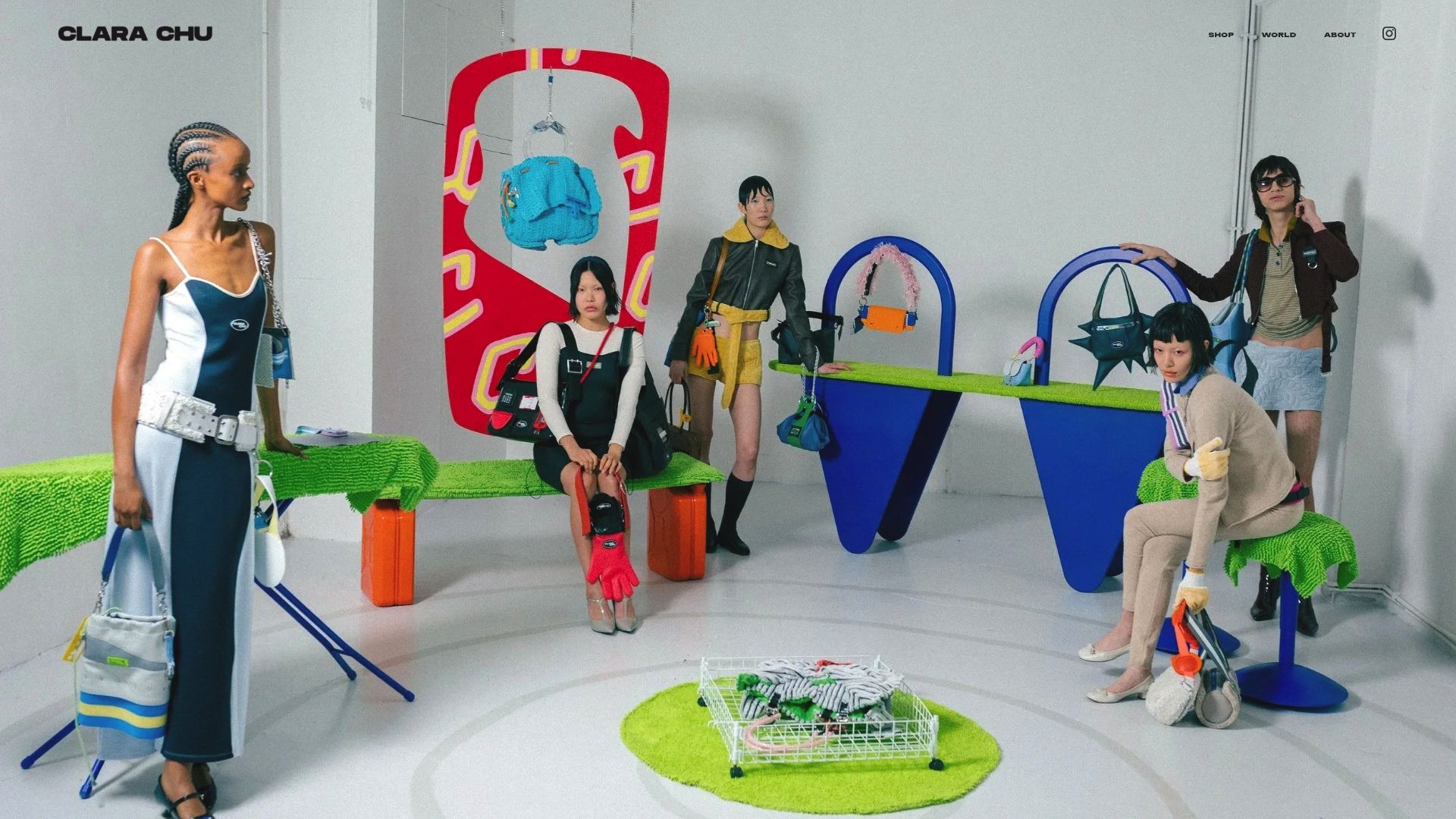
Clara Chu makes accessories from things that were never meant to be worn. Working in London, she takes kitchenware — water bottles, jar openers — and turns them into functional bag fittings and wearable pieces, combining 3D printing with traditional leather bag-making techniques. The results sit somewhere between fashion accessory and deadpan joke, which is clearly the point. Her work is androgynous in sensibility and unambiguous in its humor, finding something genuinely odd and appealing in the gap between a mundane domestic object and a finished piece you might actually carry.
Emily Frances Barrett
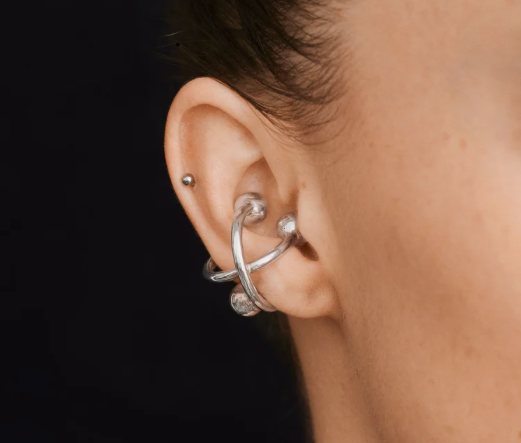
Seaweed, feathers, flowers, and objects pulled from the Thames foreshore are the raw materials for Emily Frances Barrett. The London-based artist and jeweler sets these found organic materials in resin, preserving them inside handcrafted pieces made with precious metals. The work has appeared in British Vogue, AnOther, The Face, and ID, and she has collaborated with brands including Nike and David Koma — a press list that reflects how far her practice reaches beyond conventional jewelry. Each piece carries the specific history of its materials: where they came from, what they once were.
Leo Costelloe
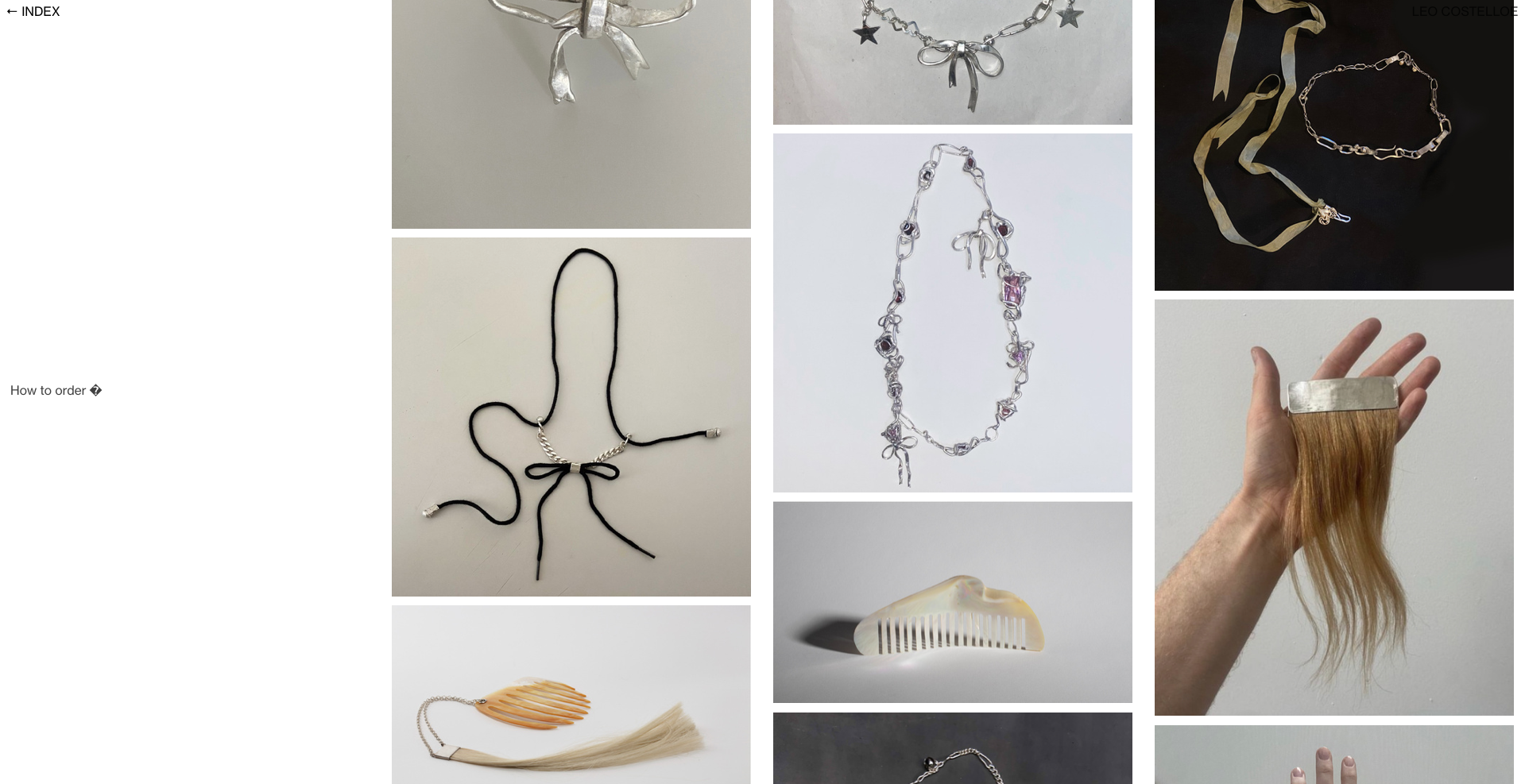
Silver, glass, and found objects are the materials Leo Costelloe works with — though the results sit somewhere between wearable jewellery and sculpture. The London-based artist and jeweller takes hyper-feminine motifs and subjects them to a kind of formal pressure through delicate metalwork, producing pieces that hold nostalgia and unease in the same frame. Themes of queerness and sentimentality run through the practice, which resists easy categorisation as either accessories design or fine art.
Yuki Barton
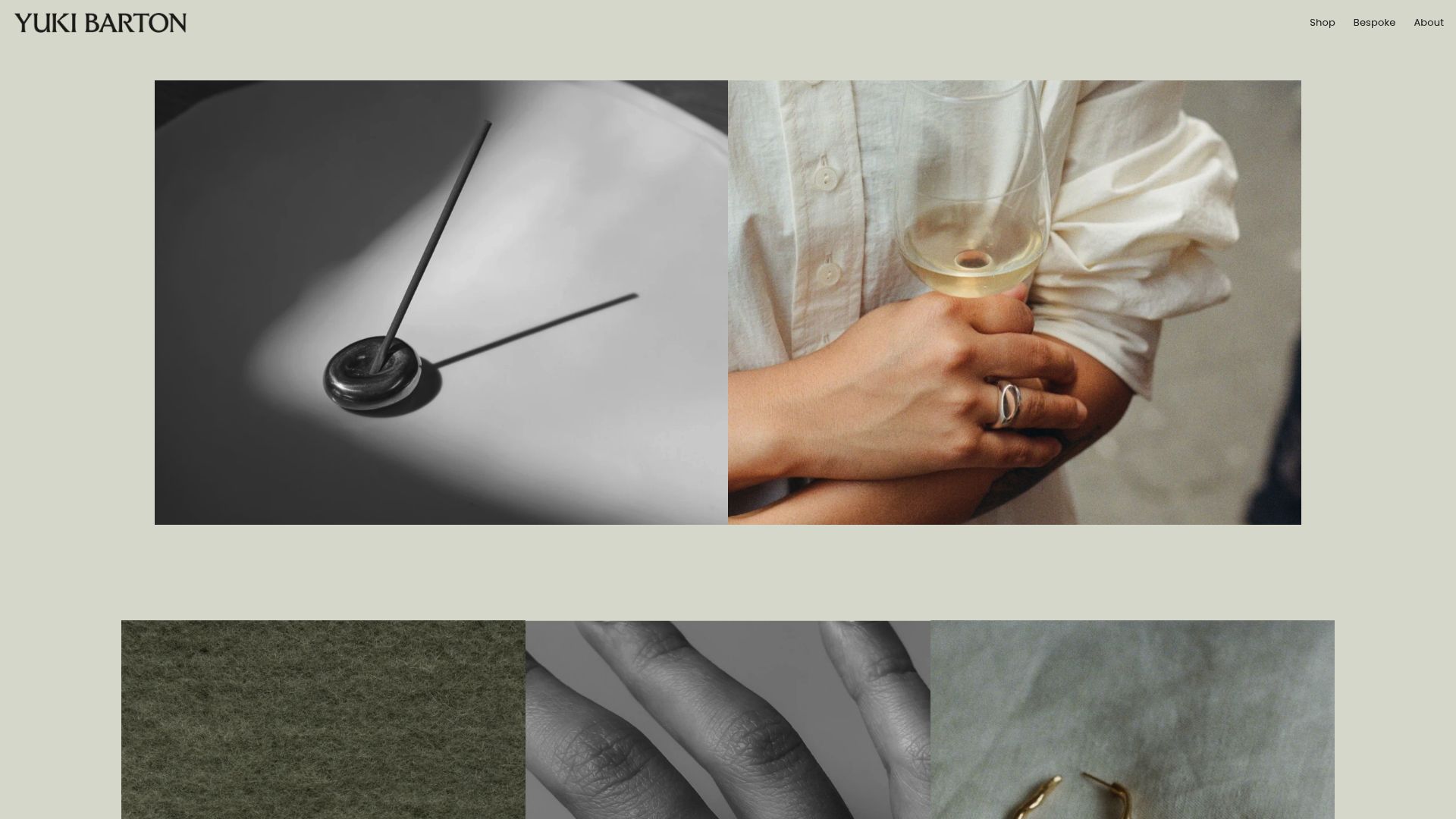
Working with recycled metals, raw crystals, and freshwater pearls, Yuki Barton produces sculptural jewellery and accessories from London. The Japanese-Canadian designer draws on both her heritage and a broader interest in nature and art, with pieces — rings, hoops, and objects including an incense holder — that treat irregularity as a quality rather than a flaw. The collection includes named works such as the Nagare ring, Nami hoops, and Tamago ring, suggesting a practice attentive to individual pieces rather than interchangeable product lines.
Cultural Roots and Craft Heritage: Jewellery Shaped by Tradition and Place
Iris De La Torre
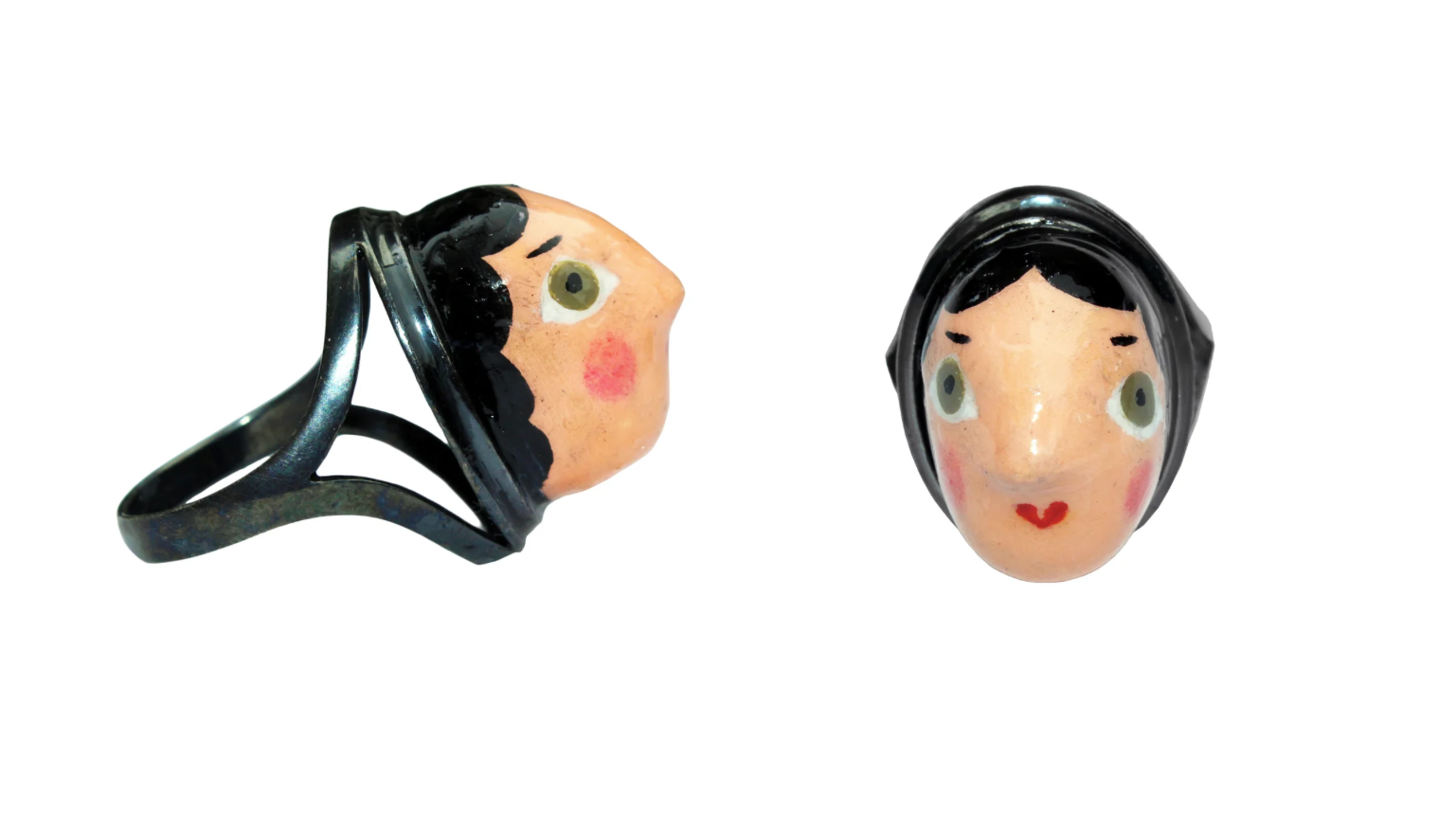
Perspex acrylic might seem an unlikely material for jewellery rooted in folk tradition, but for Iris De La Torre, it's precisely the right choice. Working from her Surrey studio, she hand-assembles vibrant pieces that draw on Mexican Folk Arts and Crafts and the graphic clarity of 1960s design — necklaces, earrings, brooches, pocket mirrors, and more, each built from sustainable acrylic and non-traditional materials. The results are colourful, graphic, and deliberately optimistic: objects made to be kept rather than discarded, carrying a sense of fun that feels considered rather than incidental.
Jakhu Studio
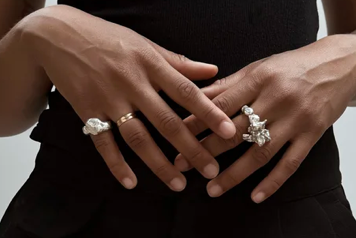
Handcrafted in Peru and conceived in London, the pieces from Jakhu Studio are grounded in Pre-Columbian art and culture. The studio works with local Peruvian artisans through slow, ethical production — a deliberate counterpoint to the pace of mainstream jewellery manufacture. Collections like Moon Drops, born from the meeting of molten silver and water, and the UNU artisanal series, made in collaboration with Peruvian silversmiths, show a practice that treats cultural heritage as active material rather than decorative reference.
The Art of Joca
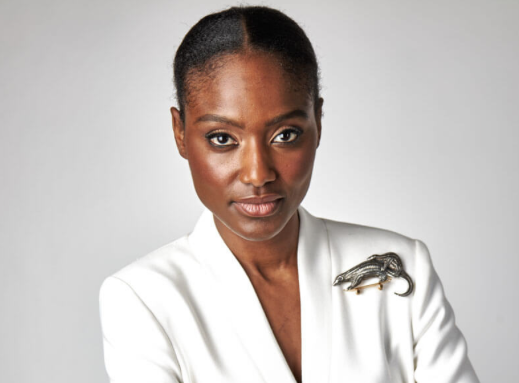
Brooches occupy an odd position in contemporary jewellery — functional enough to be wearable, sculptural enough to be art objects, and often overlooked for both. The Art of Joca makes a case for taking them seriously. Founded by John Ringer and Francesca Adekoya in London, the studio produces handcrafted statement brooch sculptures that draw on the natural world as subject matter, treated with what the makers describe as light-hearted humor. The pieces are designed to prompt conversation and resist a single reading — each one inviting the wearer and viewer to bring their own interpretation. In a category that tends toward the decorative, that openness feels deliberate.
A few things stand out across this group. Lost-wax casting appears independently in at least two practices — Kensho Heirlooms and The Wildness Jewellery — each framing the same ancient technique around quite different concerns. Ethical sourcing and slow production come up repeatedly, from Jakhu Studio's work with Peruvian artisans to Sketchy Bones Collective's recycled silver. And the brooch, the skull ring, the snake bangle, and the upcycled jar opener all make an argument, in their different ways, for accessories as objects with a point of view rather than background product. The range of studios here — from a one-person workshop in Plockton to a London studio with a London Fashion Week runway slot — reflects how varied independent practice in this space actually is.