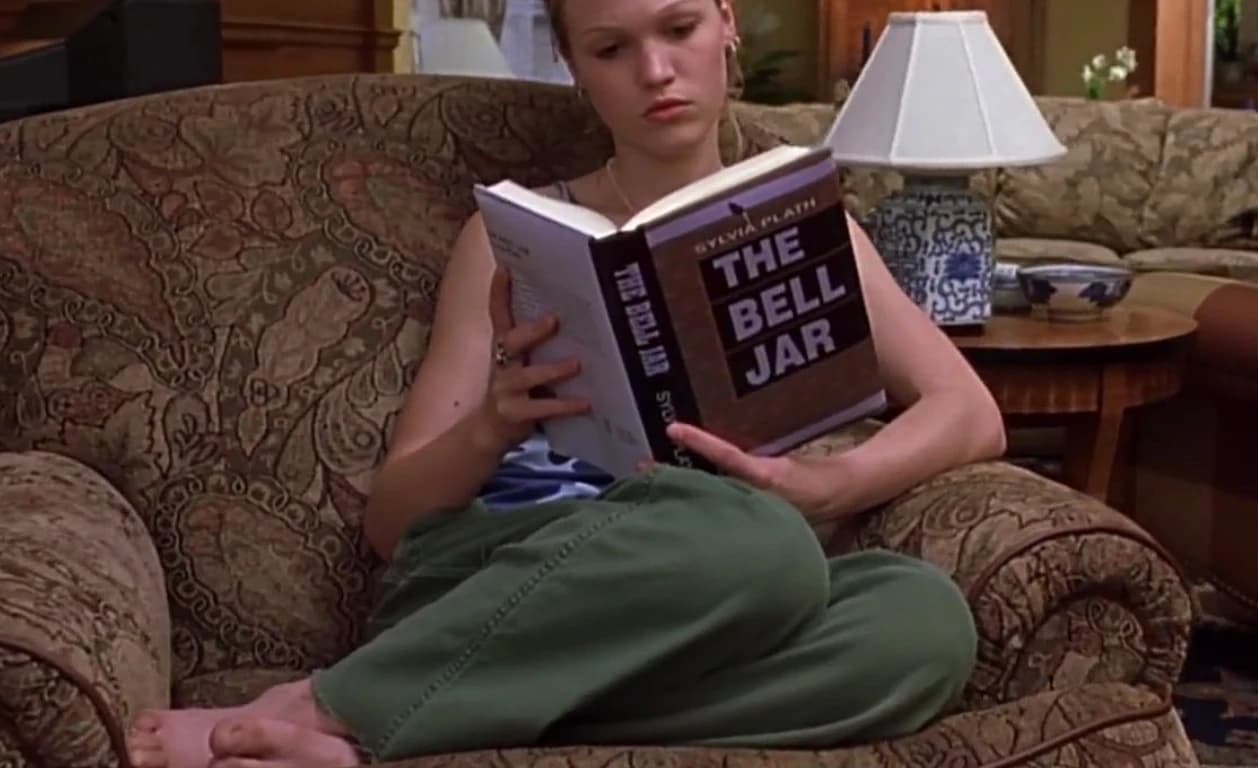
Film still of a young woman seated in an armchair reading The Bell Jar by Sylvia Plath, shown in a quiet domestic setting.
8 min

Women’s Voices in the Digital Literary Sphere

By Mobina Mirzaei

How women writers, critics, and readers are reshaping literature online through blogs, podcasts, BookTok, and digital publishing.

From Woolf to Web: Women Writing Across Ages

Women writers have been fighting to leave their traces in the literary world for centuries. Women have been kept out of culture and criticism, from writing under men's pseudonyms to being dismissed as "domestic" or "sentimental." Stories of erasure, exclusion, and survival are abundant in feminist literary history. 

In her classic essay A Room of One's Own (1929), Virginia Woolf famously asserted that women need symbolic and spatial space in which to write literature. The human toll of reconciling artistic aspirations with domestic duties was starkly illustrated by Sylvia Plath. 

Susan Sontag insisted that women be respected not only as artists, but as thinkers. 

These pioneers cleared the way for countless generations of women writers and critics. But they continue to call attention to the struggle of achieving principal recognition. Literary life is in a new revolution. Women are reclaiming online space through digital publications, BookTok, podcasts, and blogs. As writers, but as curators, critics, and thinkers. More can now engage, different voices can be heard, and literary conversation can advance due to the literary world in the digital age. In this new world, women are not just writing but remaking the literary canon itself. 

Traditionally, literature was dominated by male gatekeepers—editors, publishers, and critics—who determined what they termed "serious writing." The Western literary canon, which was man-heavy, tended to place women's voices in a secondary position. Even such greats as Jane Austen and the Brontës had to cope with limiting gender expectations and, at times, print their work anonymously or under male pseudonyms. Women's writing was usually characterized as sentimental, frivolous, or domestic, even as it conveyed deep understanding of the nuances of social arrangements and private life. 

Virginia Woolf transcended these limitations by remaking narrative structure; her use of stream-of-consciousness in Mrs. Dalloway and To the Lighthouse mapped on-ordered truths of women's inner lives. Sylvia Plath, in The Bell Jar and her confessional poetry, spoke to the psychological conflict of female identity in a patriarch culture. As public intellectual, Susan Sontag seriously and critically analyzed gendered culture and taste. These had long been exceptions to the male rule in an otherwise masculine literary world. Not only have the publishing practices changed but women have also established their own blogging culture and rewrote the rules of literary criticism to contribute to the current transformation. 
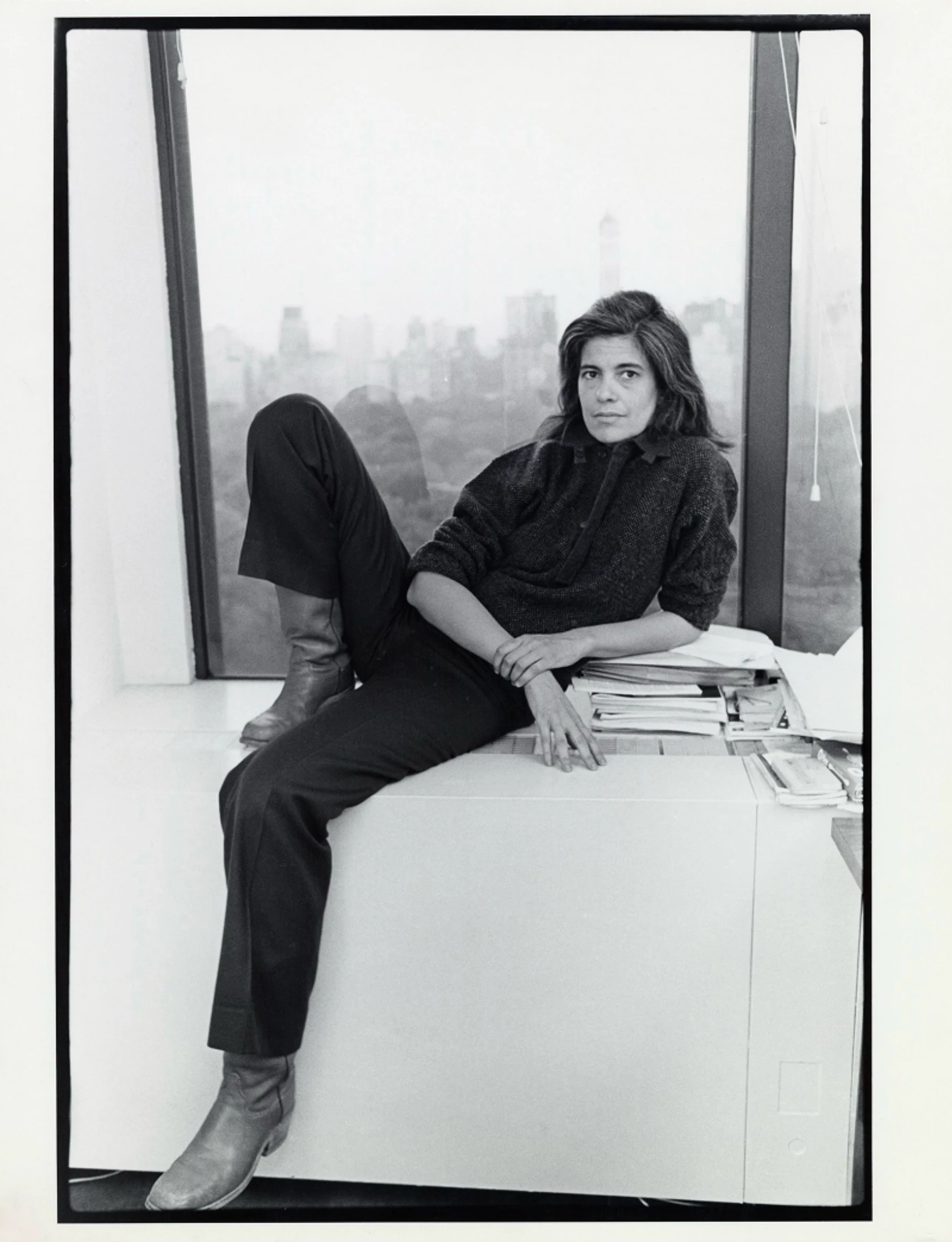
Black-and-white portrait of Susan Sontag reclining on a desk beside a stack of papers, photographed inside her New York apartment with the city skyline visible through a window.

Susan Sontag in her New York apartment, c. 1970s. Photograph by Peter Hujar.

Blogging as Liberation 

Cyber feminism and lit blogs escalated to a new dimension with the early 2000s. Women began having their own pages for writing, reviewing, and discussing outside of the academic or publishing straitjacket as the net grew. 

Blogs were free, single, and activist-directed, in contrast to classic literary criticism, which was credential-infused and institution-conforming. They functioned as a force of democratisation and elevated subjectivity, passion, and experiential knowledge over contempt. 

Online platforms such as The Rumpus first identified authors like Roxane Gay, who wrote about racism, gender, and trauma in critical yet personal essays. 

Her work transformed feminist literary criticism by demonstrating that literary criticism can be both analytical and passionate, and that personal experience is political. 

Blogging has enabled women writers of color, queer authors, and disabled writers, long marginalized from mainstream publishing. There, they were in a position to study culture, tell stories, and converse with readers face to face. Blogging helped women turn reading into an act of solidarity, taking over literary space and also the right to decode, resist, and eulogize literature in their own terms. 

Podcasts: A New Space For Women’s Voices 

Press photograph of Dolly Alderton and Pandora Sykes seated in a caf setting with newspapers and coffee, associated with The High Low podcast.

Pandora Sykes and Dolly Alderton. Photo: Eva K Salvi

In the 2010s, then, came the rise of the new powerful medium: the literary podcast. Podcasts transformed literary arguments into personal, intimate conversation, taking feminist analysis to readers who would never in a million years hear a university lecture or visit a literary festival. 

Podcasts such as The High Low (hosted by Dolly Alderton and Pandora Sykes), Sentimental Garbage (hosted by Caroline O'Donoghue), and Bad Author Book Club changed the dynamic of book talk. These female-hosted podcasts entail emotion, satire, and cultural critique as they discuss topics such as femininity, mental health,sexuality, and friendships. 

In contrast to elitist or alienated tradition criticism, these podcasts establish private listening cultures. They encourage the participation of listeners in ongoing conversations on the internet, in email, and in book club-like discussions. Formerly isolated genres dubbed "women's fiction" are being reconsidered with real respect and admiration. 

This is a wider feminist rethinking of literary appreciation: that fiction centered around feeling, romance, and self-fashioning has a place in critical appreciation. 

Subsequently, women have been turning literary criticism into participatory, community-focused conversation through podcasts. They established a space where emotion and reason existed in harmony. 

BookTok And The Age Of Algorithm 

Whereas blogs did turn the door ajar and podcasts constructed a community, BookTok, the book-loving aspect of TikTok, has flung the gates wide open. 

Led by young women, BookTok is a grassroots literary phenomenon in which books go popular not because of corporate marketing but because of genuine reader passion. Enthusiastic, genuine, and creatively visual, BookTok has changed the process by which readers discover and engage with literature. 

The platform is not without its problems: algorithms prefer certain visuals, and redundancy and overmarketing ensue. Still, at its core, BookTok is a manifestation of reader-driven literature activism. 

By this means, feminist writers and readers demonstrate that passion, commitment, and representation are inherent components of literary criticism. 

What She Reads Matters: Building a Modern Feminist Canon

Electronic literary magazines occupy a key position in giving women greater voice and pushing feminist critique into the online mainstream. 

Platforms such as Electric Literature, Guernica, The Rumpus, Bustle Books, and Ms. Magazine feature essays, interviews, and reviews on a regular basis that provide critical explorations of gender, identity, and culture. These sites have committed to intersectional feminism, providing venues for authors who upset literary hierarchies and expose the shortcomings of traditional criticism. 

Writers such as Rebecca Solnit and Jia Tolentino have employed online magazines to critique anything from the "difficult woman" stereotype to the commodification of authenticity in the media. These websites blur boundaries between memoir and literary essay, demonstrating that subjectivity is a strength and not a weakness. 

Black-and-white portrait of writer and activist Rebecca Solnit looking directly at the camera in an interior setting.

Rebecca Solnit. Photo: Jim Herrington.

Interestingly, online literary magazines produce new critics. The majority of new voices build their portfolios in online publishing and then write for print publications or begin their own endeavors. 

These publications are placing a new literary canon high on their agenda by fueling open discussions. 

A celebration of social consciousness, emotional truth, and diversity. In addition to offering women new platforms, the digital literary revolution has democratized literary criticism. Although it does occasionally wreak havoc when it is sans firm foundations, criticism is no longer the domain of universities or high-visibility newspapers; instead, it now thrives on social media debates, blogs, and radio talk show debates. 

Publics and commentators reject the old hierarchies which previously defined "good taste" when addressed within digital feminism. Genres once thought to be "chick lit" or "romance" are undergoing intense and penetrating examination. Never has there ever been so global or so open a debate about what constitutes literature and who should decide. Wider cultural trends, such as the rejection of gatekeeping, the celebration of diversity, and the insistence that first-hand experience should be given as much validity as academic theory, are reflected in this democratisation. 

Women have consistently had to seek out areas in which to write, speak, and be heard, from Virginia Woolf's quiet sanctuary to the lively BookTok forums. One arena that resists the traditional gatekeeping is the virtual literary sphere. 

Women have created an area of critical and creative argument through online publications, blogs, podcasts, and TikTok that resists literature as a defining concept and those who can judge it. 

Woolf struggled for mental liberty. Plath charted the cost of artistic expression on the individual level. Sontag cemented the freedom to think unreproachfully and unapologetically. Instead of imitating earlier institutions, modern-day digital feminists pay tribute to their legacy by building new ones. Unapologetic, open, and collaborative platforms. 


Conclusion

In this changing atmosphere, women are no longer demanding a seat at the table. They are constructing their own. The consequence is a literary canon rewritten in the moment, 

by women, for everyone. 

Date

13.01.2026

Tags
Writing & Publishingwomen writersfeminist literaturedigital publishingbooktokliterary podcastswomen criticsonline literary culturefeminist criticismliterary canonwomen in publishing
Installation view of Takapau by Mataaho Collective at La Biennale di Venezia, featuring woven polyester tie-downs and metal fittings suspended within a brick-columned exhibition space.
10 min

Gen Z Art Collectors in 2025: A Gallery Guide

By Calypso Lyhne-Gold

How Gen Z buys art, what they value, and five collectors to watch - with practical steps galleries can take now.

As the high-end market softens, younger collectors are remaking the rules. Here’s how galleries can learn from those leading the shift.

The State of the Art Market in 2025

Anyone orbiting the art world will have heard the operatic dismay about its supposed collapse. “It’s not what it used to be”, “overheads are unfeasible”, “no one’s buying art anymore”. In a grim global climate, the sentiment is understandable. But the data tells a happier story - and it matters for galleries and institutions that feel increasingly alienated from the industry they love.

As Julian Degrange argued in his excellent essay, Is the Art World Truly in Crisis?, headlines have fixated on the sharp contraction at the very top while missing what is happening lower down. Headlines have fixated on the drastic 40% fall in 2024 for high-spend sales (above $10 million), but few mention that, on the flip side, transactions under $5,000 actually rose by 13%. Global sales declined 12%, but smaller galleries with turnovers under $250,000 grew by 17%. Yes, thirty galleries closed last year. What about the thirty-seven that opened?

Close-up of a data graph showing growth in auction lots under $5,000 from 2023 to 2024 and a higher share of spending on emerging artists by Gen Z compared to Boomers.

© Calypso Lyhne-Gold | we[dot]art

The shape of demand is pluralising. Weight is moving from a narrow apex of blue-chip trophies toward a broader base where new-entry buyers wield influence. The next generation will command an extraordinary $80 trillion by 2045, but they are approaching art with a different sensibility. They are digital natives raised with transparency and participation, more interested in access than exclusivity, in networks over hierarchies, and in ideas that feel alive in their time.

How Young Collectors Buy Art & How Galleries Can Support Them

Make Art Cool Again

Millennial and Gen-Z collectors are digital natives, but that’s only the start. In Artsy’s 2024 survey, 87% of collectors under 37 had purchased art online, but most only closed after seeing the work in person. That makes sense - you want to stand in front of a piece, sense scale and surface, talk to an expert regarding care, provenance etc. then take it home.

But there’s more opportunity here. Gen Z may be chronically online, but they are also symbiotically lonelier than any other generation. There’s a huge capacity for cultural cachet, seeded online and nurtured in the real. Gen Z’s hunger is social as much as aesthetic. This is the same cohort that sells out £2,000 limited-edition trainers in seconds to impress their peers IRL. They can collect art with the same fervour if it feels alive in their world.

So how can a gallery speak the same language as Gen Z, creating cultural cachet and growing the next generation of art collectors? Gagosian’s Artist Spotlight: One Artist, One Work, One Week was a strong example - weekly, every wednesday, an abundance of education around artistic practice, influences and process were published. Two days later at 6am, the gallery made a singular, priced work available with a 48-hour buy window. Outside the commercial lane, In London, Tate Modern’s Lates also capitalised on social media buzz through timed ticket releases that build anticipation and vibrant activities throughout the night.

Wide interior view of Tate Modern during a Lates event, showing large groups of visitors gathered inside the Turbine Hall for an evening programme.

Tate Lates are capturing young audiences, bridging them into an otherwise often-exclusive art world.

Practical moves galleries can consider executing:

  • Timed releases that create anticipation. Publish a small drop window for editions or drawings and announce it on your newsletter and Instagram Stories.

  • Rhythm people can follow. Weekly themed releases that educate on your artists accompanied by a fixed drop day each month.

  • Student and educator access. Take time to educate on the value of art investing on online platforms.

Values Take Precedent

The sharpest change is priority: young collectors are rewarding emerging talent alongside culturally conscious practice. In the 2024 Art Basel × UBS survey period, Gen Z devoted 55% of their spend to new and emerging artists, with Boomers at 50%. In 2024/2025 Gen Z also directed 45% of spend to works by women artists, far above Boomers’ 25%.

We are in an epoch shaped by climate awareness and postcolonial reparations, and Gen Z have grown up inside that discourse. They came of age with climate strikes in the streets, wildfire footage on their phones and restitution debates in their classrooms.

Insitutions are responding to this zeitgeist: and in particular, buyers are unprecedently recognising ancestral and Indigenous lineages as contemporary value, not an ethnographic side note. Prices of contemporary indigenous american art has multiplied x6 in the last 5 years, whilst the Māori collective Mataaho’s large scale, steel woven Takapau won a Golden Lion at the Venice Biennale in 2024, cited for translating matrilineal textile traditions into an engineering feat. This is not an outlier. Attention to First Nations artists has accelerated across museums, galleries and auctions, and as institutions make materials, method and community ties legible, younger collectors respond.

Installation view of Takapau by Mataaho Collective at La Biennale di Venezia, featuring woven polyester tie-downs and metal fittings suspended within a brick-columned exhibition space.

La Biennale di Venezia: Mataaho Collective, Takapau, 2022, re-confingured in 2024. Polyester hi-vis tie-downs, stainless steel buckles and J-hooks. Photo: La Biennale di Venezia

The shift shows up on the floor too. At Frieze London 2025, Cecilia Brunson Projects sold six of eight woven works by the Indigenous Wichí collective Claudia Alarcón & Silät within the first hour, and all to new clients. It’s clear that new generation art collectors lean towards a specific moral orientation. For any gallery positioning art investment in 2025 to a younger base, it pays to demonstrate cultural stewardship and to explain how value is carried through materials, method and community.

Some suggestions:

  • Publish a fair pay statement for artists, fabricators and installers. One paragraph on your site is enough, and then market it.

  • Provide context. When an artist’s work supports a community or draws on ancestral practice, consider sharing concise educational posts, short process clips and a focused artist interview that links back to the work.

Textile artwork Wenachelamejen (Lo diferente) (2025) by Claudia Alarcn & Silt, made from hand-spun chaguar fibre woven in yica stitch, displayed in a simple framed presentation.

Cecilia Brunson Projects: Claudia Alarcón & Silät, Wenachelamejen (Lo diferente), 2025. Hand-spun chaguar fibre, woven in yica stitch. Photo: Lucy Dawkins

Transparency = Trust = Sales

New-gen art collectors consistently cite opacity as a barrier. Artsy’s survey found 95% of respondents see visible pricing as important, and more than half hesitated to buy online when price was hidden. Wider research converges on the same point: most collectors, and especially younger ones, view lack of transparency as a major market problem. If you want first-time buyers to become long-term patrons, make trust frictionless.

Actions that convert:

  • Edition transparency. Show total edition, current numbers available, and the exact certificate template on the work page.

  • Plain-English costs. A calculator that totals artwork, packing, shipping and taxes to the buyer’s postcode is undoubtedly an incentive for Gen Z art collectors.

  • Aftercare sheet for every sale. Hanging, framing environmental guidelines, and the conservator you recommend.

Five Gen-Z Art Collectors to Watch

The following profiles sketch where young art collectors are pushing taste and infrastructure.

1. Lukas Jakob

Portrait of art collector Lukas Jakob seated inside a minimalist interior surrounded by artworks and display plinths.

Lukas Jakob via Collectors Agenda. Photo: Johannes Baudrexel

Since 2016, Berlin-based Gen z art collector Lukas Jakob has amassed over 100 contemporary artworks spanning painting, installation, and new media under the Jakob Collection. His philosophy is simple but increasingly rare: support artists early and stay with them. Jakob’s shows, staged everywhere from Galerie Anna25 to the experimental energy hub E-WERK Freiburg, fold collectors, curators and artists into the same creative ecosystem.

Takeaway: Jakob’s art collecting approach signals a shift towards collaboration with avant-garde exhibition spaces.

Installation view of Shion (2021) by Thomas Liu Le Lann, a large soft sculpture made of vinyl, cotton and polyester, shown inside an industrial exhibition space.

Jakob Collection: Thomas Liu Le Lann, Shion, 2021. Vinyl, cotton and polyester. On display at E-Werk Freiburg. Photo: Marc Doradzillo

2. Brian Beccafico

News photograph of NFT collector Brian Beccafico standing with digital artworks from Odile Finck’s CryptoPunks series in an interior setting.

Le Monde: News photograph of Brian Beccafico, NFT collector, with Odile Finck’s CryptoPunks, Jouy-en-Josas, 18 April 2022. Photograph: Le Monde

Paris-based Gen Z art collector Brian Beccafico represents the new frontier of digital-native collecting. Before turning thirty, he had already been tapped by Sotheby’s Paris to lead its NFT department, helping to define the primary market for blockchain art. His cutting-edge collection spans Beeple, Refik Anadol, XCopy, Odile Finck, Pak and Pascal Boyart - a who’s who of the NFT era’s pioneers.

Takeaway: Beccafico’s trajectory signals that digital literacy is now part of cultural capital. Hiring experts within the gallery space that know and understand digital art, are a key way to expand gallery presence and not fall behind the curve.

3. Ayo Shonibare

London-based and a first-generation art collector, Ayo Shonibare began collecting in his early twenties with modest £50 editions, slowly building a library of more than two hundred prints and twenty-five unique works with his partner, Daniek Godschalk. Speaking to Artnet, Shonibare describes a proclivity for emerging talent and slow-steady buying that focuses on the relationships with the artist themselves.

Takeaway: design long-tail pathways for collectors who grow with your artists. Early editions, studio access, and honest aftercare keep them in the circle.

4. Delora Xuanqiao Che

At just thirty-one, Beijing-born and Canada-educated Delora Xuanqiao Che is already a lodestar for China’s experimental art scene. In 2021 she founded the Macalline Art Center (MACA) in Beijing, where her collection - including Kasia Fudakowski, David Douard and Tao Hui - forms the backbone of an evolving curatorial programme. Che and her institution engage directly with sociological and ecological urgencies; she is, in many ways, a collector archiving the emotional and environmental memory of our time.

Takeaway: For young art collectors, collecting is civic. A recent survey by ArtVerona & Collezione da Tiffany found that younger people were focusing on sustainability and social impact, compared to older collectors who favoured classical language and innovation. Galleries that can show tangible social and environmental intelligence alongside artistic integrity have a head start.

Installation view of Hominins (2019) by Wu ChiYu, a single-channel video work displayed on a large screen inside a gallery space at Macalline Art Center.

Maccaline Art Center (2022): Wu ChiYu, Hominins, 2019. Single-channel video (Full HD, 16 min 04 sec). Exhibition: Multispecies Clouds. Photo: Sun Shi

5. Tia Tanna

At twenty-four, London-based Tia Tanna embodies a shift from ownership to participation. Her collection stitches contemporary photography, fashion, and sculpture, and is unusually active in loans. As she told Cultured, at any given time she is organising around 70 outgoing loans so the work is seen and studied.

Takeaway: extend sales relationships into loan facilitation and public visibility. This aligns with how the new-gen art collectors measure impact.

Times are changing - perhaps for the best. The centre of gravity is shifting. Less velvet rope, more open door. A market once lit by eight-figure trophies is widening into a landscape where meaning, access and care set the tone. That is not decline - it is redesign - and it suits the next generation who want art to live with them, not hide in storage.

For galleries the immediate to-do is clear. Put prices, edition sizes, provenance and aftercare in daylight. Make process legible in short notes and studio clips. Programme nights worth talking about and set a rhythm people can follow. Build the gentle staircase from a £50 edition to custodianship. Partner with digital specialists so on-chain and in-gallery speak the same language. Done well the market stops feeling like a gated enclave and starts behaving like a long table where new voices take their seats.

If you make the invitation accessible, ethical and exciting, the next generation of art collectors will come. And they will stay.

What will define Gen Z collectors is not a gimmick but a feeling: belonging, curiosity, the spark of being part of a eco-system. Digital life can thin community and real life connection; the art world ultimately has the potential to be where it thickens. Offer a place to gather and learn, and buyers old and new will return not just for the drop but for the culture that forms around it. In an age of infinite scroll, giving Gen Z a place to stand still is sure to pay-off.

Date

13.01.2026

Tags
Culture Researchgen z art collectorsart market 2025young art collectorsgallery strategycontemporary art marketemerging collectorsart galleries gen zart collecting trendscultural consumptionart investment future