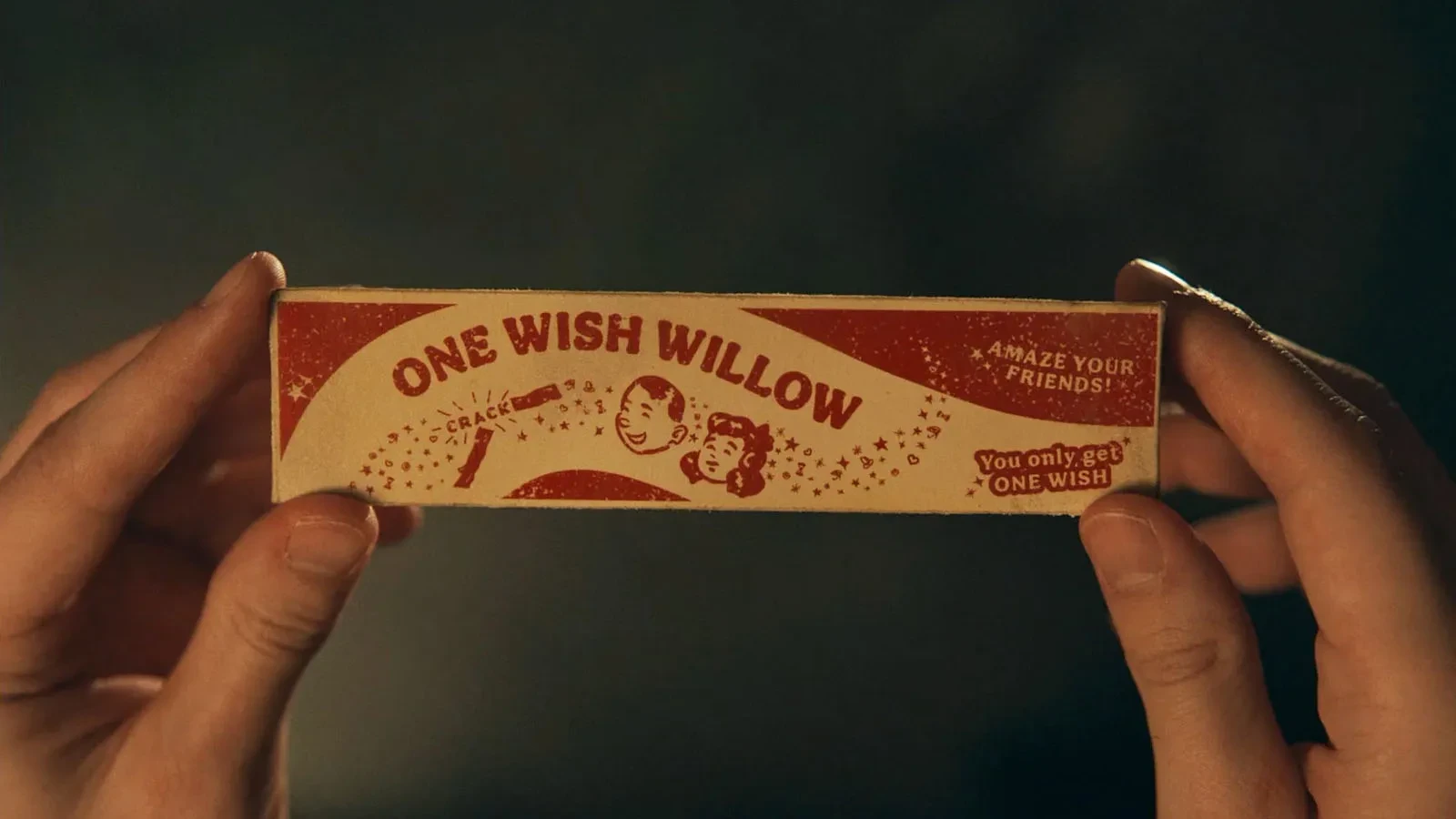
Inde Navarrette in a moody bar scene from Obsession 2025, wearing a gold necklace with a somber expression
10 min

09.08.2026

When Wishes Become a Personal Hell: A Review of Obsession (2026)

By Tuba Meltem Pekol

Curry Barker's Obsession explores how a wish-granting curse exposes toxic male fantasy through horror.

Horror never seems to exist without unsettling supernatural forces at play. The wind has shifted, and that alone could be a palpable reason for horror. Nothing much to say once the unknown takes hold; it would seem the horror speaks for itself. The audience can’t quite put a finger on what’s happening, but they instinctively know something is off. Curry Barker’s Obsession taps into what might otherwise pass as a throwaway phrase, recasting it as a masterful horror device that transcends time and space to become a devastating curse. The flip in the plot as a result of random words taken as a wish brings about a curse that claims someone's life. A simple wish scenario establishes Barker as a filmmaker to watch, with greater things undoubtedly ahead.

Bear's Unrequited Obsession

Along the way, whether familiar from 13 Reasons Why or Superman & Lois, lead actress Inde Navarrette delivers a haunting and thrilled performance as Nikki in Obsession. Haunted by the desperately intense feelings for Nikki, Bear (Michael Johnston, known for his role in Teen Wolf) is barely aware that he has summoned evil. Bear lives a pretty normal life working in a music store alongside Nikki, his unkempt appearance and withdrawn demeanor leaving him on the margins of attention — someone she would hardly notice. He has been smitten with her for far too long, only to fail to advance beyond a longtime friendship because he is never quite sure whether there is something between them or she is simply being amiable. As a result, he keeps his feelings a secret. Not being good at initiating conversations, he delays confessing them, time and again.
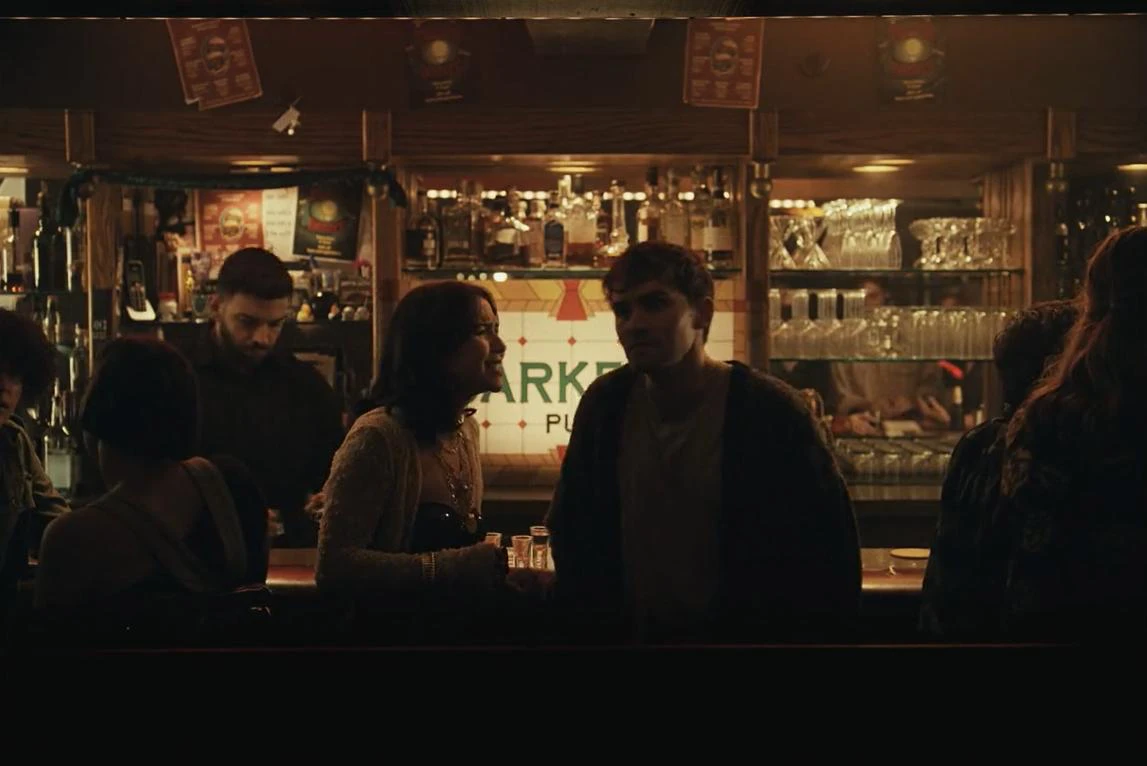
Sarah and Bear share an intimate conversation at Barker's Pub in Focus Features' Obsession

Friends Gathering at Barker’s Pub, Sarah (Megan Lawless) and Bear (Michael Johnston), Obsession (2026) © Focus Features.


Sitting at the bar, Bear complains to their mutual friends, Ian (Cooper Tomlinson) and Sarah (Megan Lawless), about how Nikki keeps friend-zoning him. In the background lore, a quiz show mentions a blue genie then the scene cuts short. The blue genie is a well-known character from the fairy tale Aladdin. For the story, the wish-granting genie introduces itself to Aladdin, and also makes it clear that some wishes are strictly forbidden. The warning is taken very seriously, if someone tries to make anyone fall in love with someone else, there is a cost. Love, it seems, possesses a magic of its own, one that bewitches both body and soul, occupying a sacred place that belongs to the divine. The very act of betraying a fate already written, one that serves a greater plan, is enough to awaken something sinister. Upon being broken, this fate turns the one responsible into a target for evil spirits. Only God has the ability to do that, whether through miracles like raising the dead or other divine acts that defy the natural order. Another, strict rule concerns bringing souls back from the underworld – a power reserved for the divine alone. The last prohibition is ending another person’s life. The reason all wishes must be forbidden is that they interfere with fate’s decree. By allowing someone to make a wish without crossing a certain boundary, the power is there yet it remains limited. Of course, the genie itself is assigned by a higher force, one that possesses power beyond human understanding — yet that force shares a connection with the genie, which is the tricky part. Unnecessary details are not given too much attention or are explained very little — instead, the film reveals only what is needed. Meanwhile, there is a crucial moment when someone breaks these rules that activates the foundation of the film's horror. These rapid changes in the film keep the audience's mind busy subverting expectations of what's coming next, therefore it is so much fun. The imagery could give the audience a dystopian impression rather than encouraging them to turn a blind eye to the unfolding paranormal events. Still, the film leaves room for viewers to interpret its multilayered narrative, offering explanations without explaining away every mystery.

Wish Me a Nightmare!

How far would someone go if there were even the slightest chance that their wishes could come true? Precisely, this was close to what was on Bear’s mind. He is obsessed with the idea of a perfect relationship with Nikki, placing his own desires above hers and imagining a romance that fulfills him while gradually making her emotionally dependent on him. In doing so, the film reframes man’s intention to create a utopian fantasy through a feminist lens, exposing how seeking true love can be doomed by selfishness. Ultimately, everything conceived in the mind requires an instrument such as a magic wand, and wishing dust (so called magical item from 13 Going on 30) needed so that dreams do come true. The chaos within a modest trinket shop holds the film's pivotal moment, its seemingly ordinary surroundings concealing the catalyst for everything that follows.
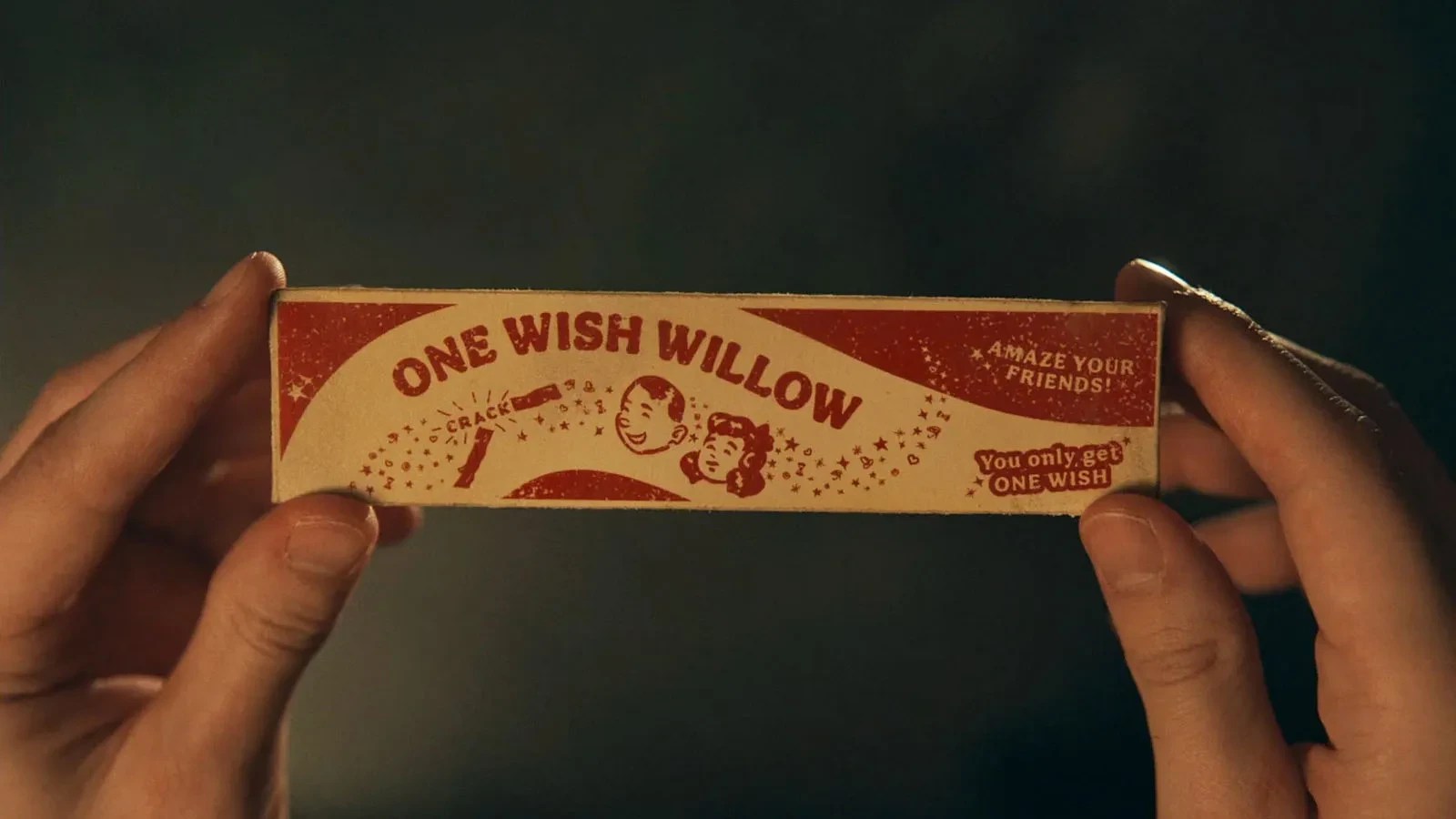
One Wish Willow vintage-style novelty cracker trinket from Focus Features film Obsession, The Curry Barker Universe

A Trinket from The Curry Barker Universe, Obsession (2026) © Focus Features.

Early on in the film, Bear is heading to buy Nikki a crystal, wanting to be there for Nikki during her difficult time and doing whatever he can to get her to notice him, a behavior that renders him pathetic and miserable in the eyes of the audience. Desperation at its finest, the camera cuts to Bear’s gaze as he turns toward a box containing various novelty gifts. Bear spots One Wish Willow, a breakable wish stick that promises to make your dreams come true. It sounds like monkey business – no way it can be real. It should be a great start to renowned fairy tales or so it seems. Bear's wish is granted, but it turns out to be a nightmare in disguise.

Beneath its surface lies a longing for fairy-tale-like romance in which women devote themselves to Prince Charming entirely. Far from mutual attention, it condemns one person to worship another till the sacred vow is broken. By gathering these ideas into a multidimensional narrative, Barker suggests how fairy tales are built upon a toxic pattern rooted in one's desires and wishes. Not a single wish is as innocent as it seems; Instead, he gives agency to the very idea of wishing, creating a dystopia where spiritual forces meddle in human desire, exposing the darker side of fantasies.

After the bar scene, he blows his only chance to confess his feelings to Nikki, clinging to One Wish Willow hoping it works out, saying loudly “Nikki Freeman love me more than anything in the f***ing world”. It is cracked in half, igniting the curse. Who would’ve thought it would unleash the worst nightmare? A spell (just a couple of words) that he casts almost by accident draws Nikki into its grip, only for it to backfire on her. Everything upside down reasonably darkens Nikki’s new version.

Girl, Why Are You So Obsessed with Me? (Not Like the Fantasy Mariah Carey Meant It)

Abracadabra! (I create as I speak) A word once spoken is past recalling, much like Bear’s wish. It is love at first saying. A perfect illusion straight from hell ensnares the soul, leaving it to rot from within. No magic comes from nothing; it always demands something in return. Beneath Nikki’s unsettlingly ordinary appearance, an uncanny personality begins to emerge, suggesting that another presence has claimed her from within. The 'love is blind' trope manifests as Nikki acts obsessively toward Bear in a creepy and toxic way. As displayed through the personality swap whether it is an outer force or possession, the camera lingers on Nikki, her face is lost and becomes part of the darkness without any clear reflection.

The “human” form identical to Nikki, seems to take on a feral, sinister and manic spectre invading her. But darling, love is madness after all. Her love is savage, peculiar and obsessive – such a sick attachment might only come from a creep dwelling in the shadows.

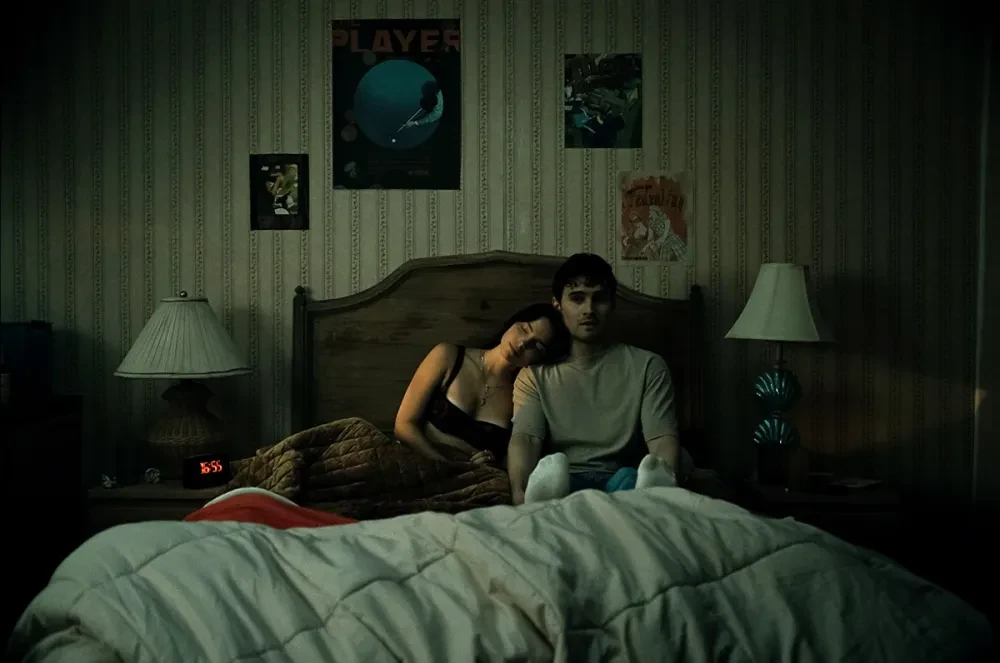
Nikki leans on Bear in a dim moody bedroom, a tender yet unsettling scene from Focus Features.

The fantasy Bear wished for begins to reveal its horror. Nikki (Inde Navarrette) and Bear (Michael Johnston) in Obsession (2026) © Focus Features.


Bear was lost in a wishful fantasy of love, took it too far, then, the worst nightmare unleashed. All of this reflects the entire history of how love has been imagined from the male perspective, yet the most revealing form is found in horror. Love is no longer under control, no longer an obligation, but an obsessive interest that creates its own sort of interpretation. Here, love breaks free, emphasizing that it cannot be reduced to a single meaning or confined within the boundaries of so-called romances, with a sense of irony. The film seems to deepen its dialogue with fairy tales by evoking Hansel and Gretel, using Nikki's suffering while trapped inside her own body as a modern echo of the ordeal at the heart of the tale. The most disturbing part is that, although Bear knows something is deeply wrong with Nikki, he still clings to the fantasy he wished for. Even as she silently cries out for help, he insists on seeing only the version of love he imagined.

The Cost of No-Return Desires

The crack in the middle of the ordinary poses the deepest mystery, as the given reality becomes stacked against itself – one that is strangely tangled. The horror behind the illusion of male love truly matters when Nikki is trapped in her own body. The image remains deeply shocking, even when viewed through the lens of quirky and whimsical horror. Bear digs his heels in, refusing to acknowledge Nikki’s suffering. Obsession sheds light on how the dreams men chase may become the nightmares they fear somehow. The director brilliantly frames the story as the creation of a utopia born of wishes before dismantling it through the conventions of horror. The return to the very beginning, where nothing has yet happened, is possible only when Bear takes back his wish and sacrifices himself, however. With Obsession, Barker crafts his most compelling work so far.

Date

09.08.2026

Tags
Film & MediaObsession film reviewCurry Barker directorhorror film analysisInde Navarrettefeminist film criticismwish curse horrortoxic masculinity cinemasupernatural horrorFocus Featuresdark fairy tale adaptation