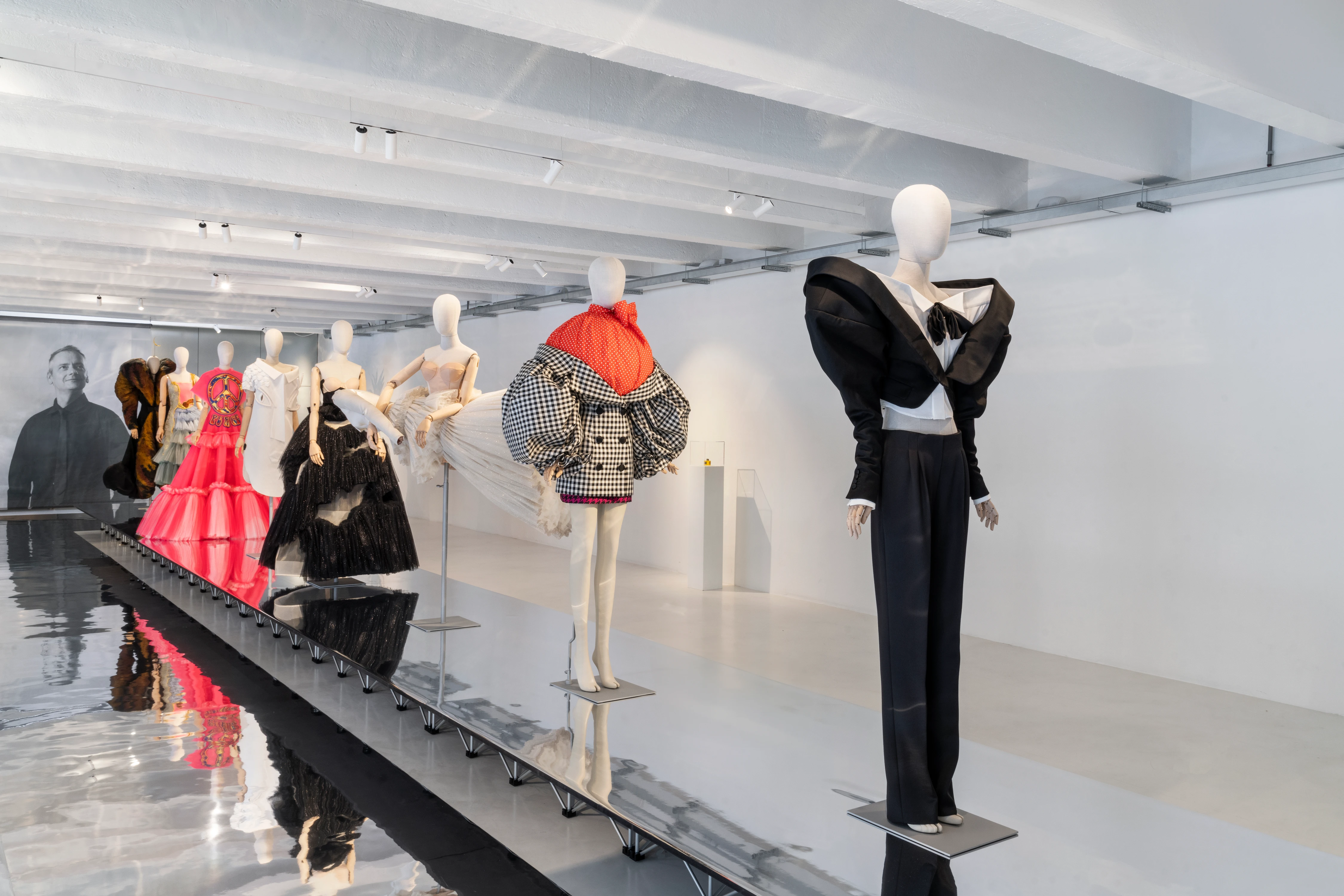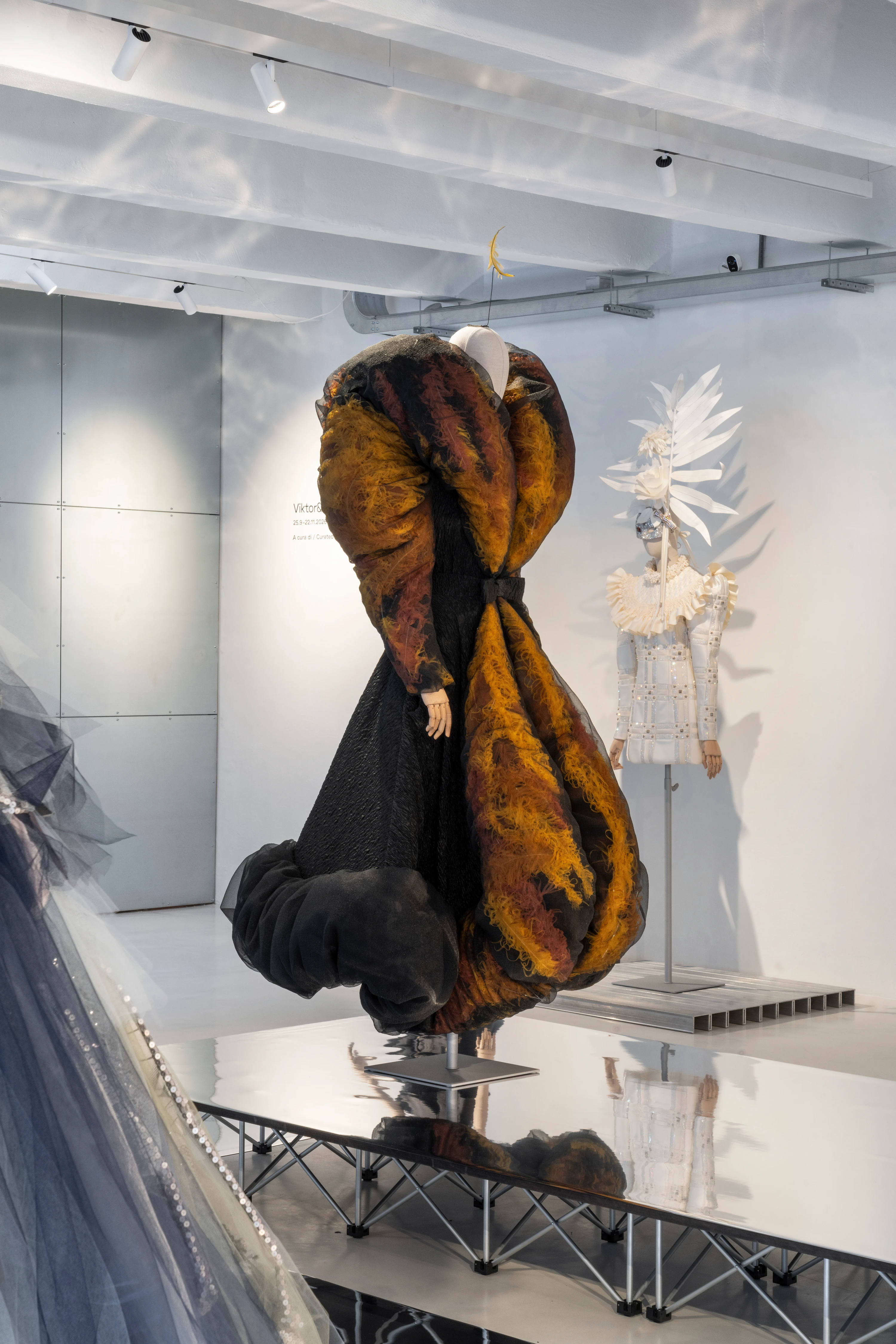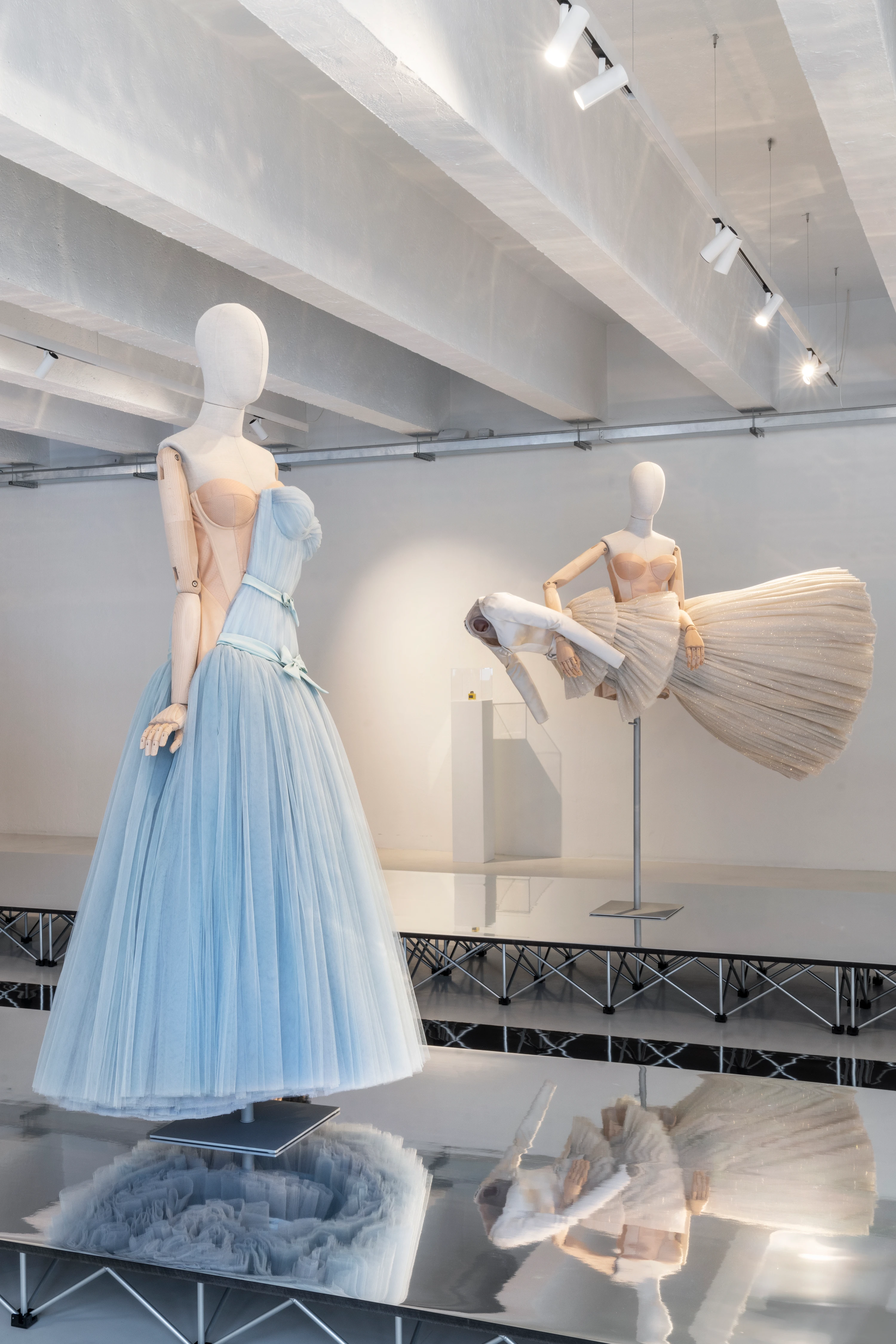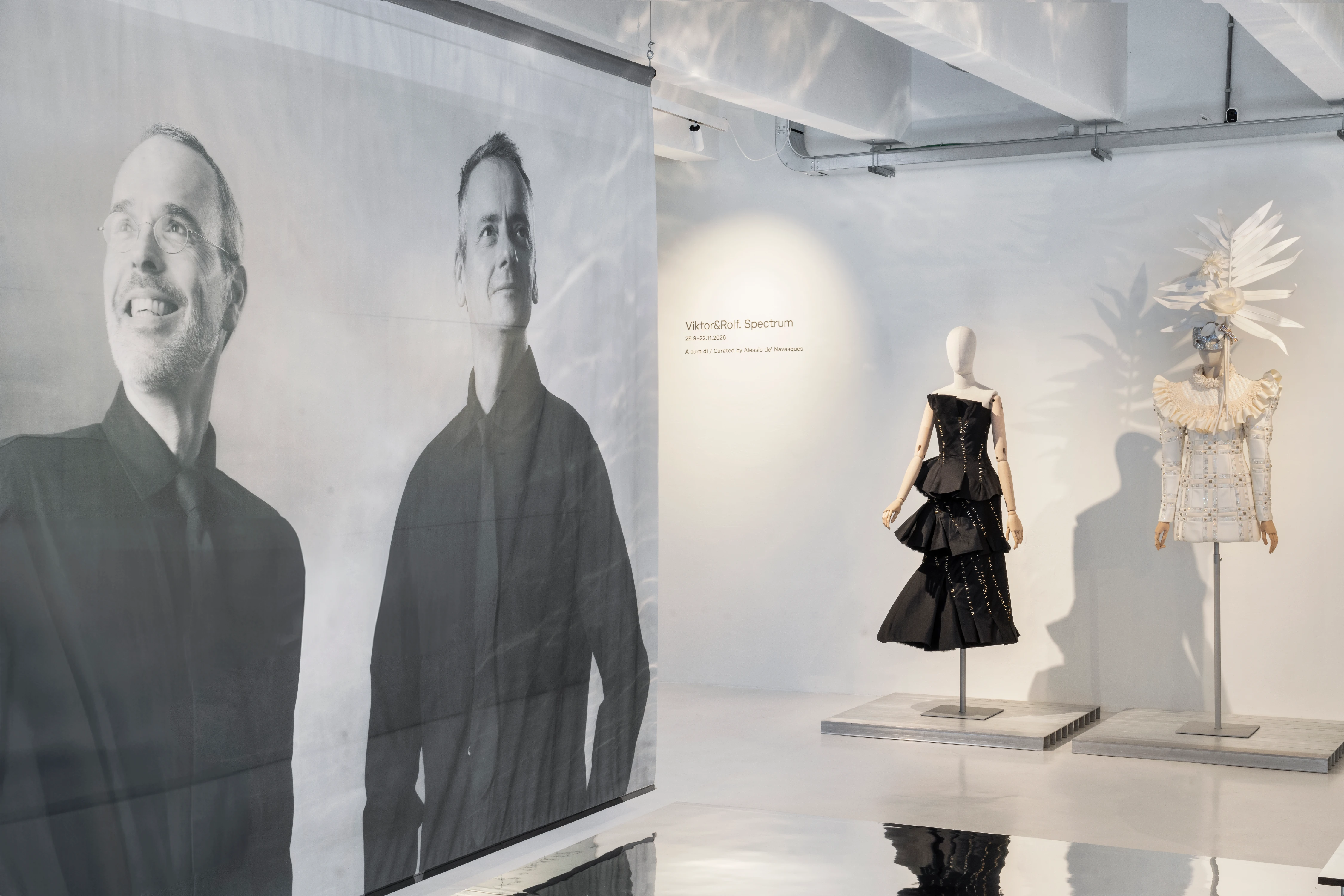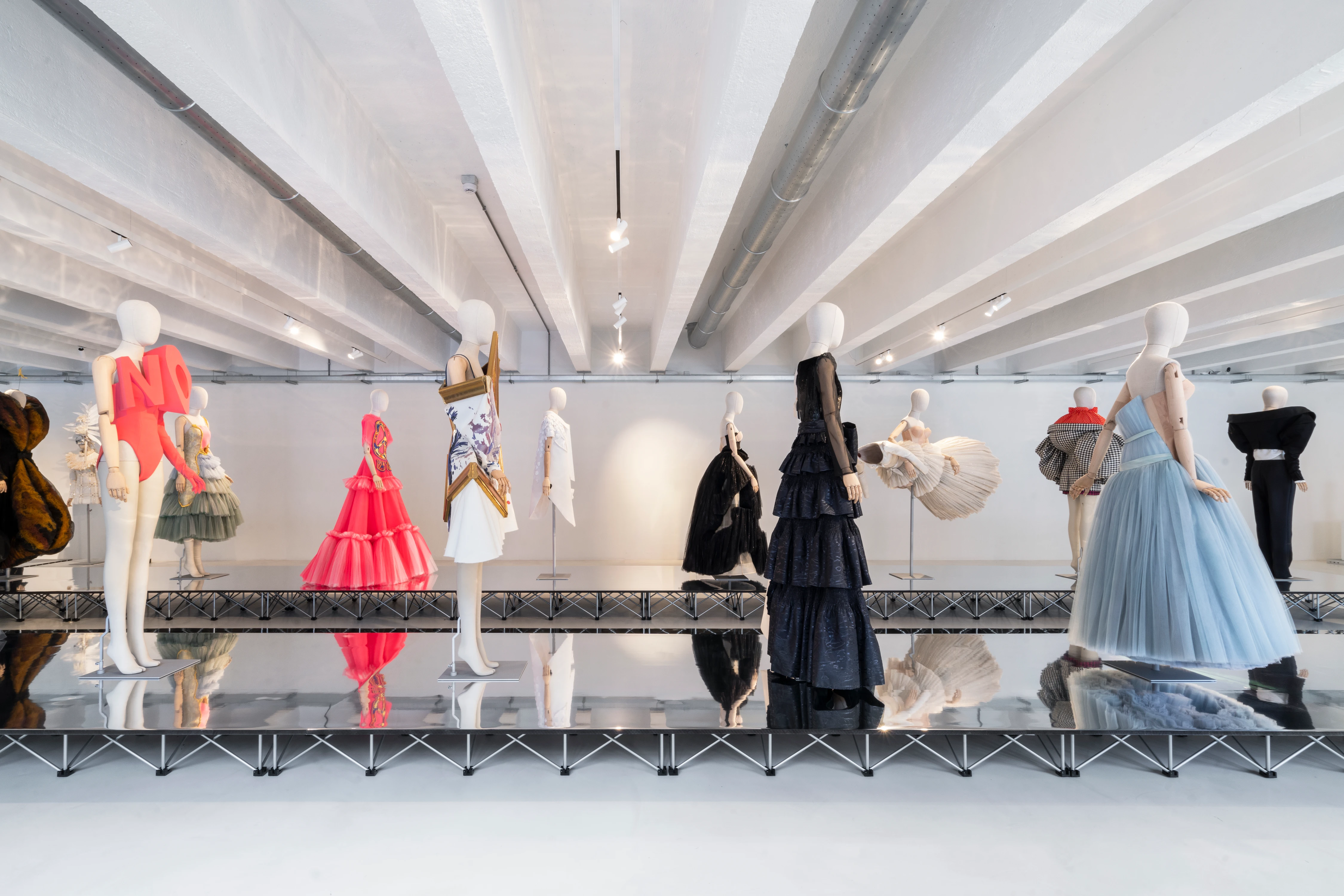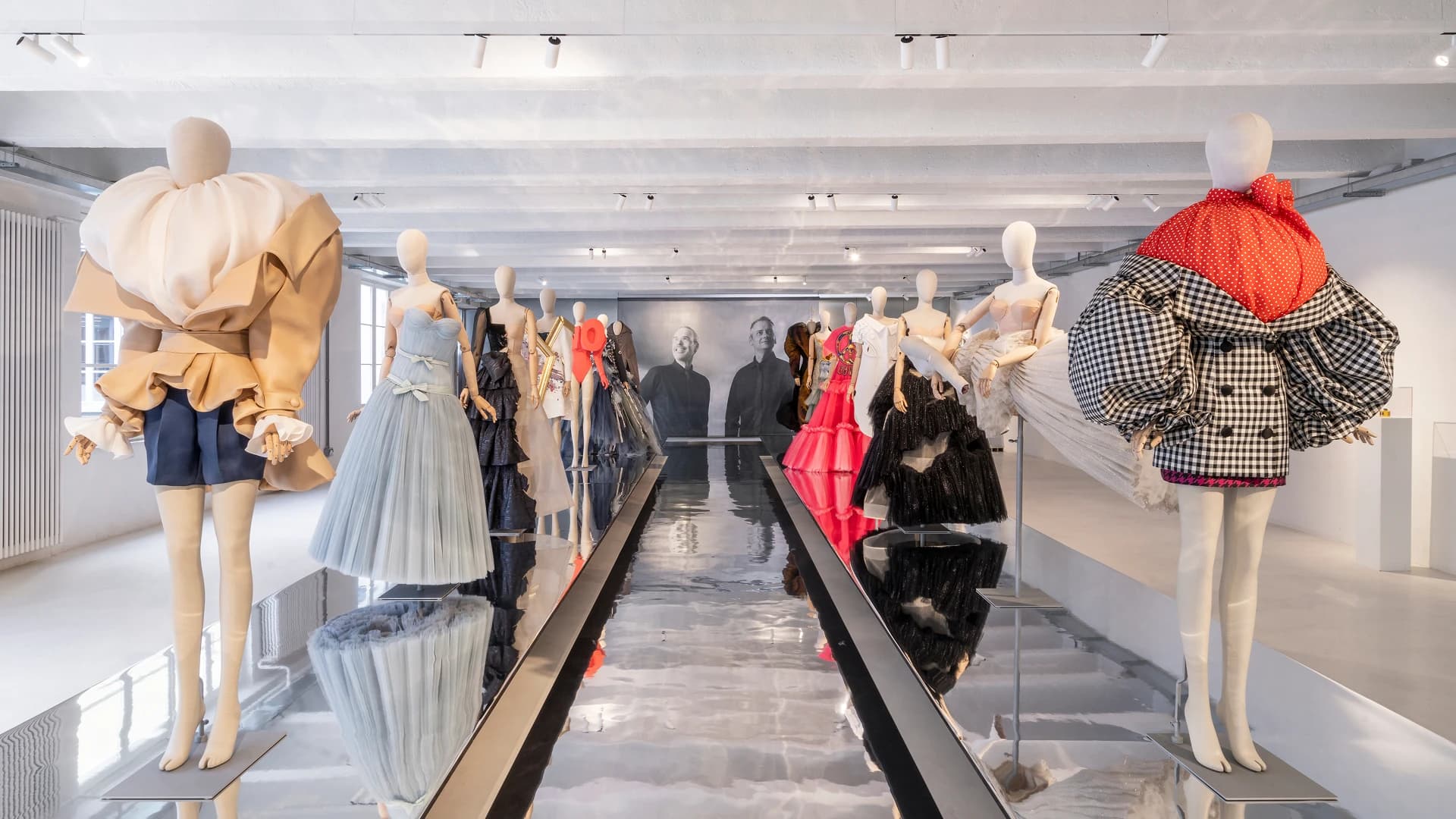
With Viktor&Rolf.Spectrum, the first Italian exhibition dedicated to Dutch designers Viktor Horsting and Rolf Snoeren and curated by Alessio de’ Navasques, 10 Corso Como continues to redefine its cultural identity. This journey began in recent years under the guidance of Tiziana Fausti. In 2020, she acquired the brand founded by Carla Sozzani, took the helm, and gradually ushered in a new era for one of Milan's most iconic venues. From September 25 to November 22, 2026, the gallery will present twenty haute couture looks that trace over thirty years of Viktor & Rolf’s creative exploration. These looks are displayed through a system of correspondences that highlights central themes in the designers’ work, such as duality, distortion, irony, and a critique of fashion conventions.
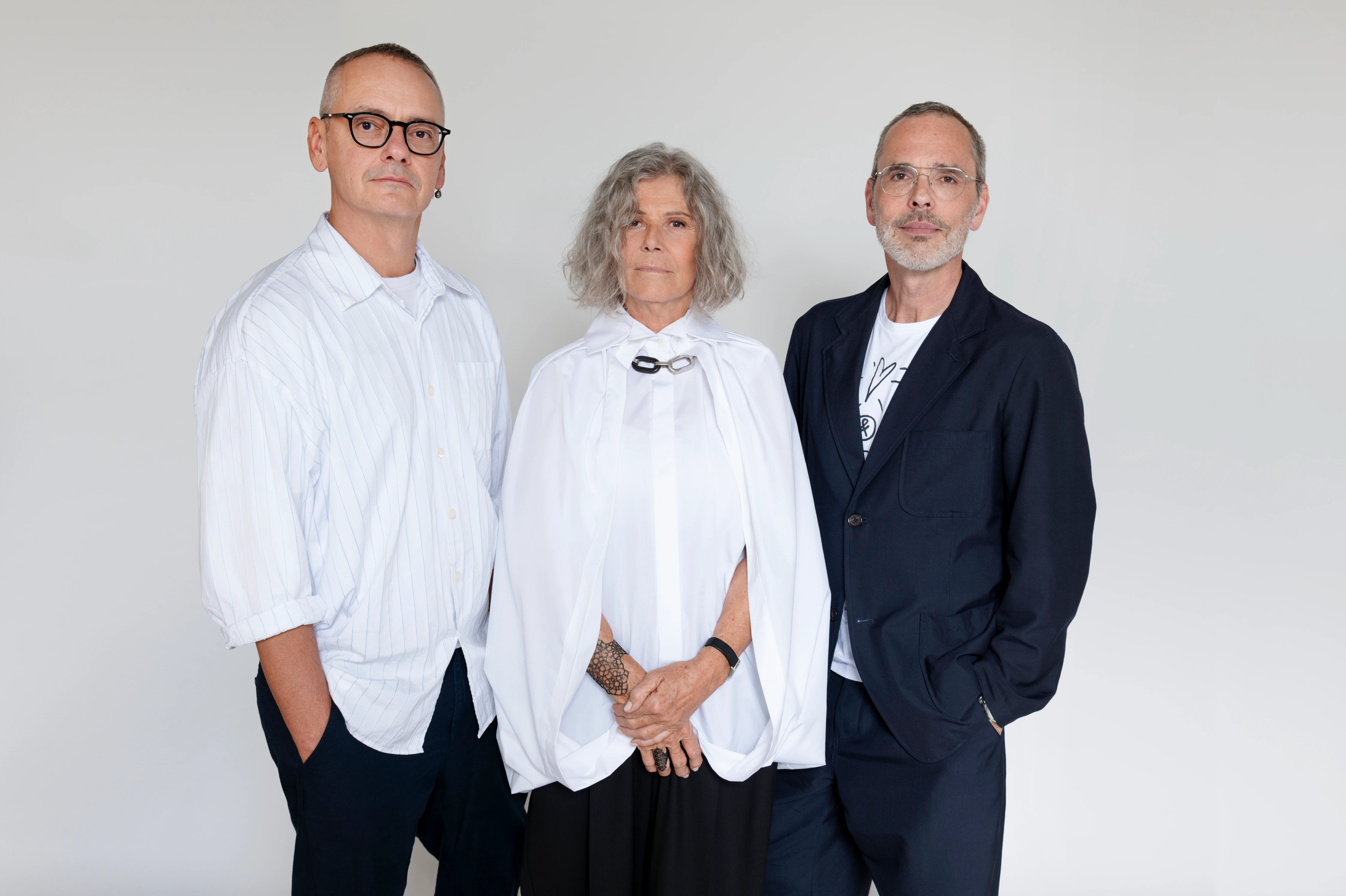
Tiziana Fausti with Viktor&Rolf © Stefano Guindani Photo
Viktor Horsting and Rolf Snoeren. Between Fashion and Contemporary Art
Viktor Horsting and Rolf Snoeren founded their eponymous fashion brand in 1993, shortly after graduating from the Arnhem Academy of Art and Design. Even then, their approach to the fashion industry defied conventional categorization. This was especially evident in their meta-narrative explorations, in which clothing transcended its role as merely an object to be worn and became a tool for questioning fashion itself. Throughout their thirty-plus-year career, the duo has transformed couture into a conceptual laboratory where sartorial construction, performance, visual culture, and contemporary art converge to yield surprising and unprecedented results. Their self-definition as "fashion artists" is both a statement of method and a declaration of disciplinary affiliation. “Viktor and Rolf are designers who truly work with the codes of contemporary art," observes de' Navasques. "Each of their collections is built around a strong concept, and every piece has the nearly autonomous power of a work of art. There is always a meaning and concept in their clothes. It's not just a reference to an artistic movement." The curator adds that this creative exploration maintains remarkable consistency, even on a formal level. “They work with the silhouette, deconstructing the garment through exaggeration, twisting, and magnification. The theme of the double and mirroring returns continually.” From the beginning, their journey has unfolded at the intersection of fashion and art—in a liminal space where these disciplines blend into one another. Their creations are now part of the collections of the Metropolitan Museum of Art, the Victoria and Albert Museum, and the Kyoto Costume Institute. They have also been featured in major international exhibitions. However, the issue is not so much the museums' recognition of fashion as it is the nature of their work. "Art and fashion have always been deeply intertwined," Fausti emphasizes, recalling a lineage that includes Elsa Schiaparelli and Salvador Dalí, as well as the numerous subsequent cross-pollinations. "Fashion has always drawn from art because art is culture and can add an extra layer of meaning to clothing."
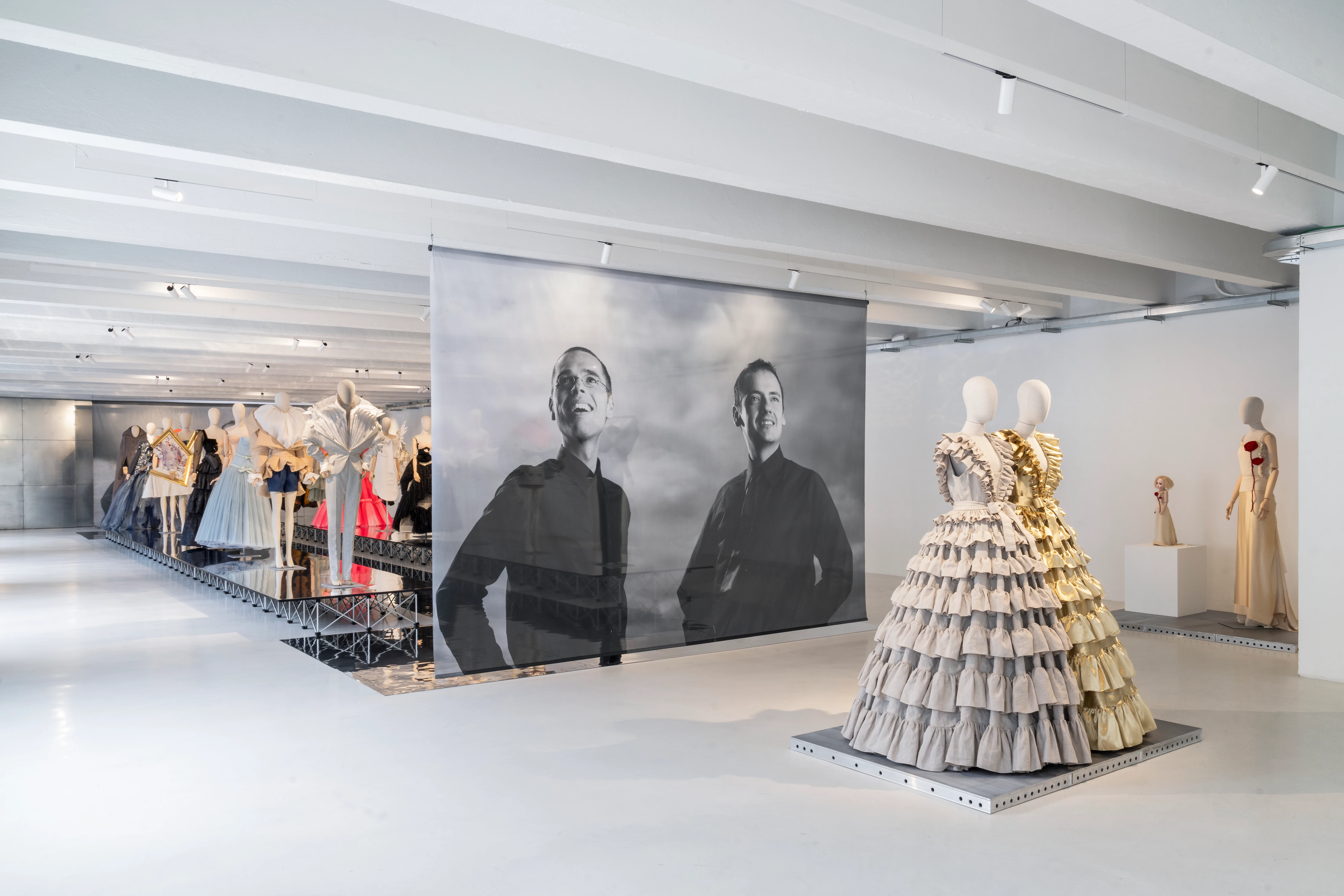
Viktor&Rolf. Spectrum, Installation view at 10 Corso Como, Milan © Alessandro Saletta - DSL Studio
Curating More Than Thirty Years of Viktor&Rolf
The challenge of the exhibition was to translate such an extensive and multilayered body of work into the gallery space without reducing it to a mere chronological sequence. "The challenge was to condense the vision of a brand spanning more than thirty years of fashion history into approximately three hundred square meters," explains de' Navasques. “We had to create an installation that could convey this complexity while also allowing visitors to get an overview of their work." The curation process also involved physically entering the world of Viktor&Rolf's production. Fausti describes visiting the Amsterdam atelier as "an extraordinary experience," especially for the opportunity to observe the people who craft the garments by hand. This aspect extends beyond the designers' creative personas: “Journalist often underestimate the valuable manual labor behind every creation. In an industry characterized by constant change, where creative directors come and go all the time, what remains are the archives, the history, and the DNA of a fashion house. Most importantly, there are the people who construct the garments. They are incredibly important.” The exhibition’s title reflects the selection process.
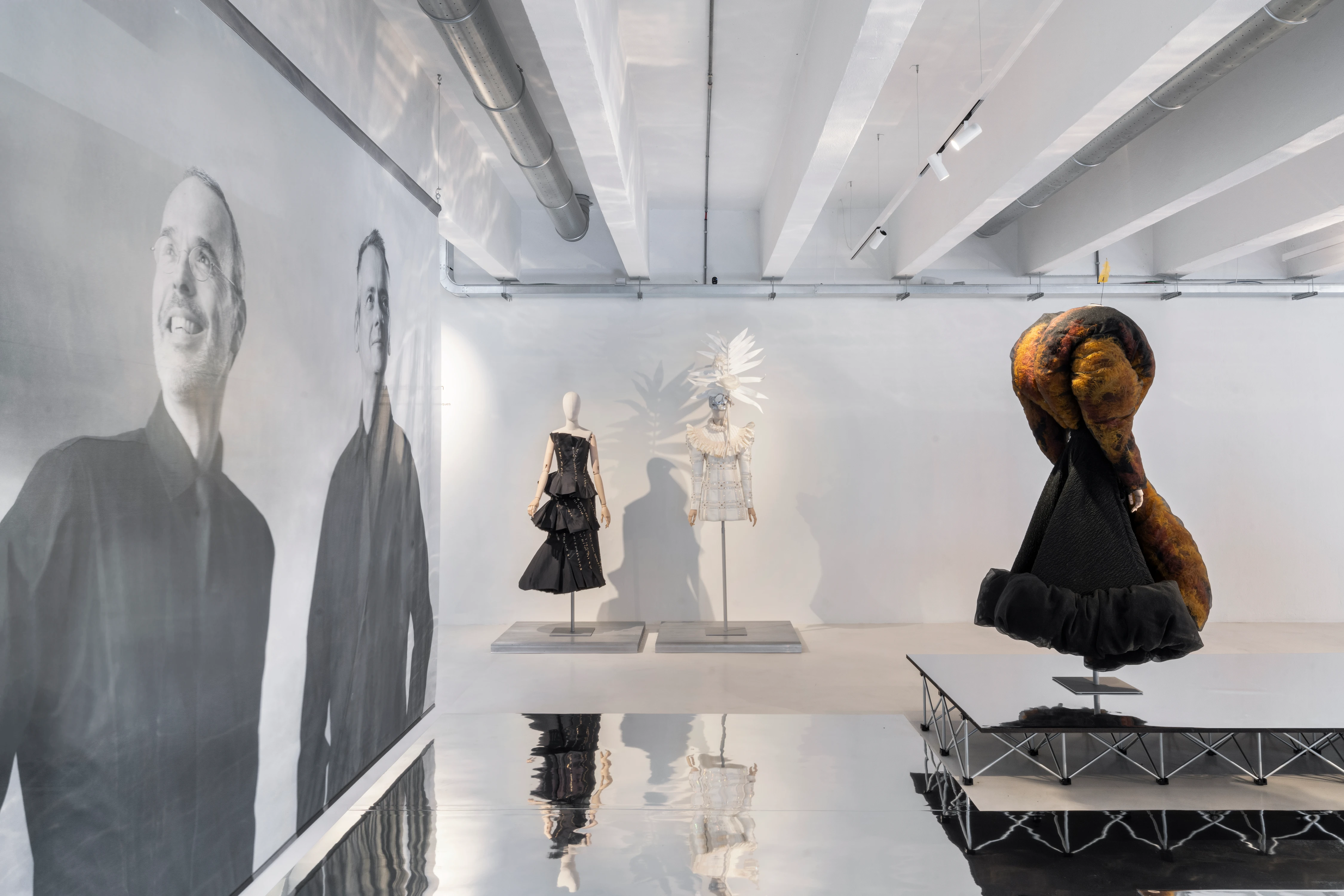
Viktor&Rolf. Spectrum, Installation view at 10 Corso Como, Milan © Alessandro Saletta - DSL Studio
The Meaning Behind “Spectrum”: Duality, Mirroring and Transformation
"We started with the concept of duality, which is central to Viktor&Rolf's work," explains de' Navasques. "The spectrum is also understood in reference to the laws of physics, like a beam of light that disperses into different colors when passing through a prism. The various components of Viktor&Rolf’s work are presented as pairs of outfits.” Twenty haute couture looks are arranged according to a mirroring system that seeks conceptual correspondences rather than literal analogies. “This doesn’t mean the outfits are identical,” the curator clarifies. "It's about looking for the recurrence of the same vocabulary within the displayed pairs—a vocabulary that can pertain to both forms and ideas." The first duo deconstructs the concept of power dressing with fan-like shoulders and exaggerated volumes. Elsewhere, the body is transformed into a sort of sphere—at times, an unsettling globe—redefining the relationship between anatomy and garment construction. Twists, inversions, and cuts then reveal the garment’s internal structure. Surrealism and Dadaism emerge not as references, but as strategies for destabilizing reality. The exhibition then traces the transformation of the garment into a performative sculpture. Clothes built around the word "NO" and statement phrases offer an explicit critique of the fashion system's mechanisms. Further on, another element deeply rooted in the duo’s practice emerges: reuse. Archival materials, fragments, and pre-existing pieces are reassembled through recycling and upcycling processes to address issues now firmly entrenched in the debate on fashion production. Finally, the system of pairs creates a dialectic between black and white. This duality is not merely a curatorial device introduced by the exhibition, but rather an inherent aspect of Viktor&Rolf’s work: two creators, two identities, and two perspectives that come together to form a unified vision.
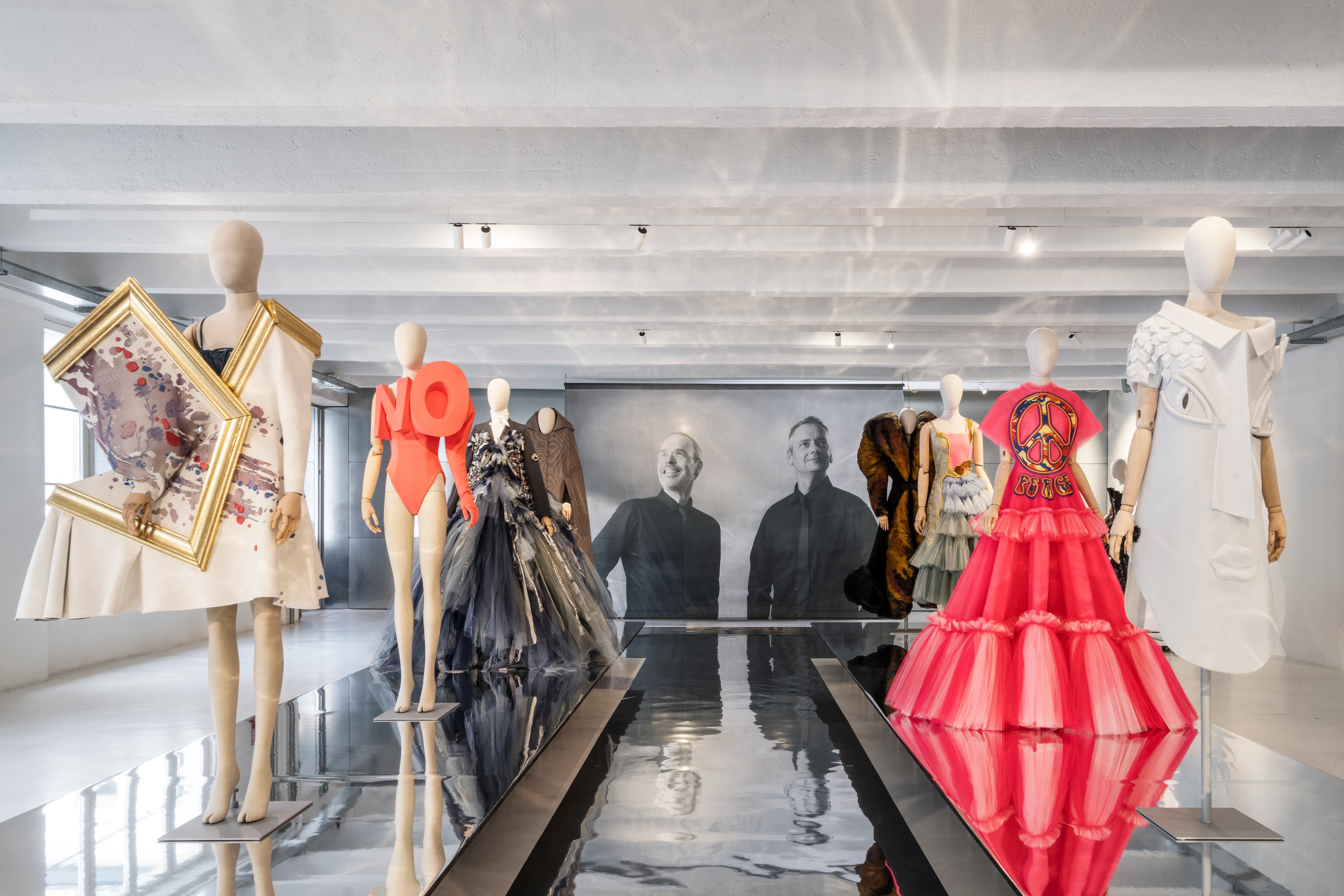
Viktor&Rolf. Spectrum, Installation view at 10 Corso Como, Milan © Alessandro Saletta - DSL Studio