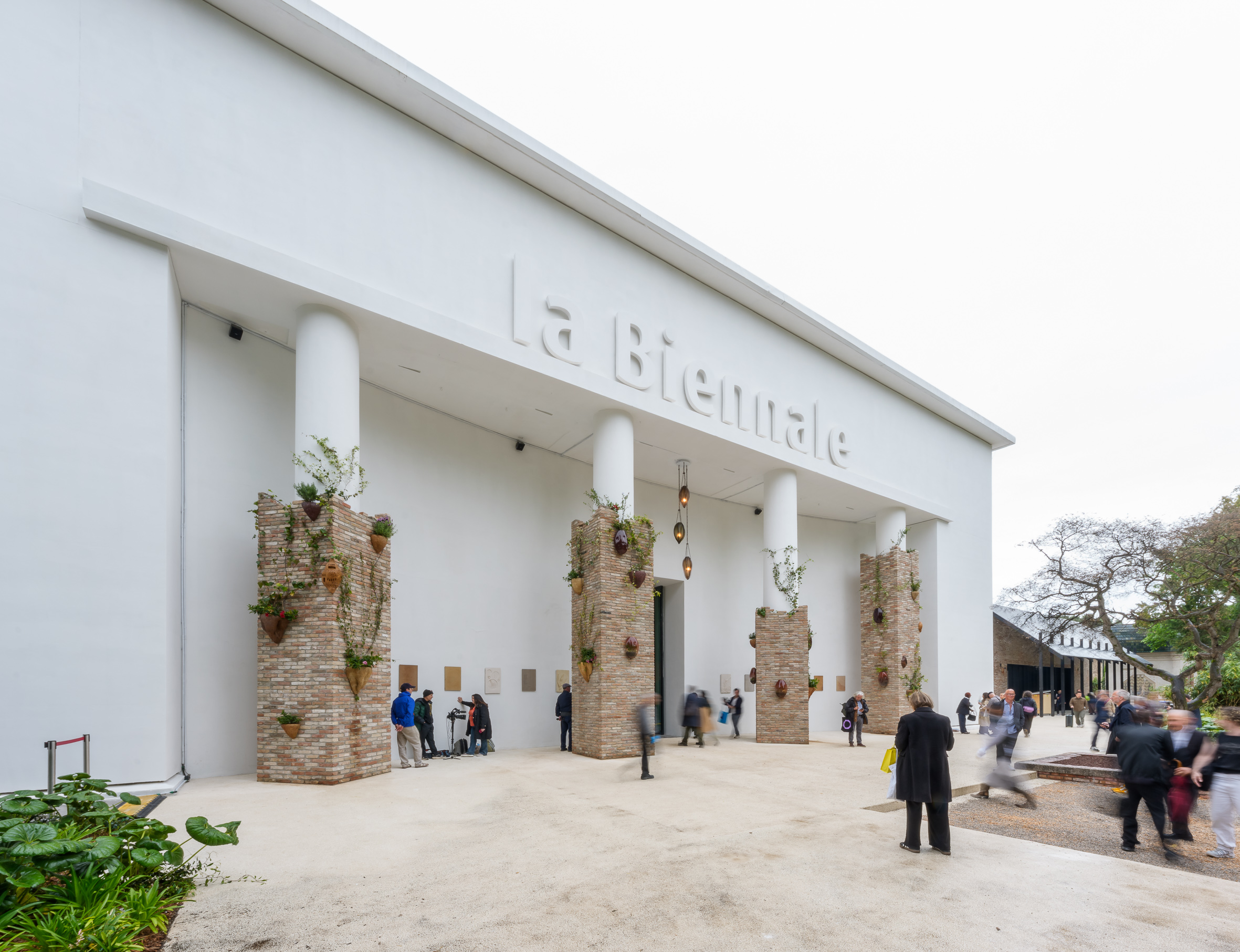
The 61st Venice Biennale certainly did not get off to the best start. In May 2025, Cameroonian curator Koyo Kouoh passed away unexpectedly. She was set to become the first African director of the renowned international art exhibition. This was followed by heated controversies regarding the reopening of the Russian Pavilion and the presence of the Israeli Pavilion. Then, the international jury resigned en masse, refusing to consider the two countries. Next came the decision to let visitors vote. After that, 52 artists and curators, along with 16 national participants, withdrew from the competition for the new Visitors’ Lions. Pussy Riot, the Russian anti-Putin feminist collective, showed up to protest in support of the dissidents. Finally, on May 8, there was a strike. Some national pavilions closed, and a procession of demonstrators carrying Palestinian flags slowly moved through the city.
Geopolitics and the Limits of the Biennale System
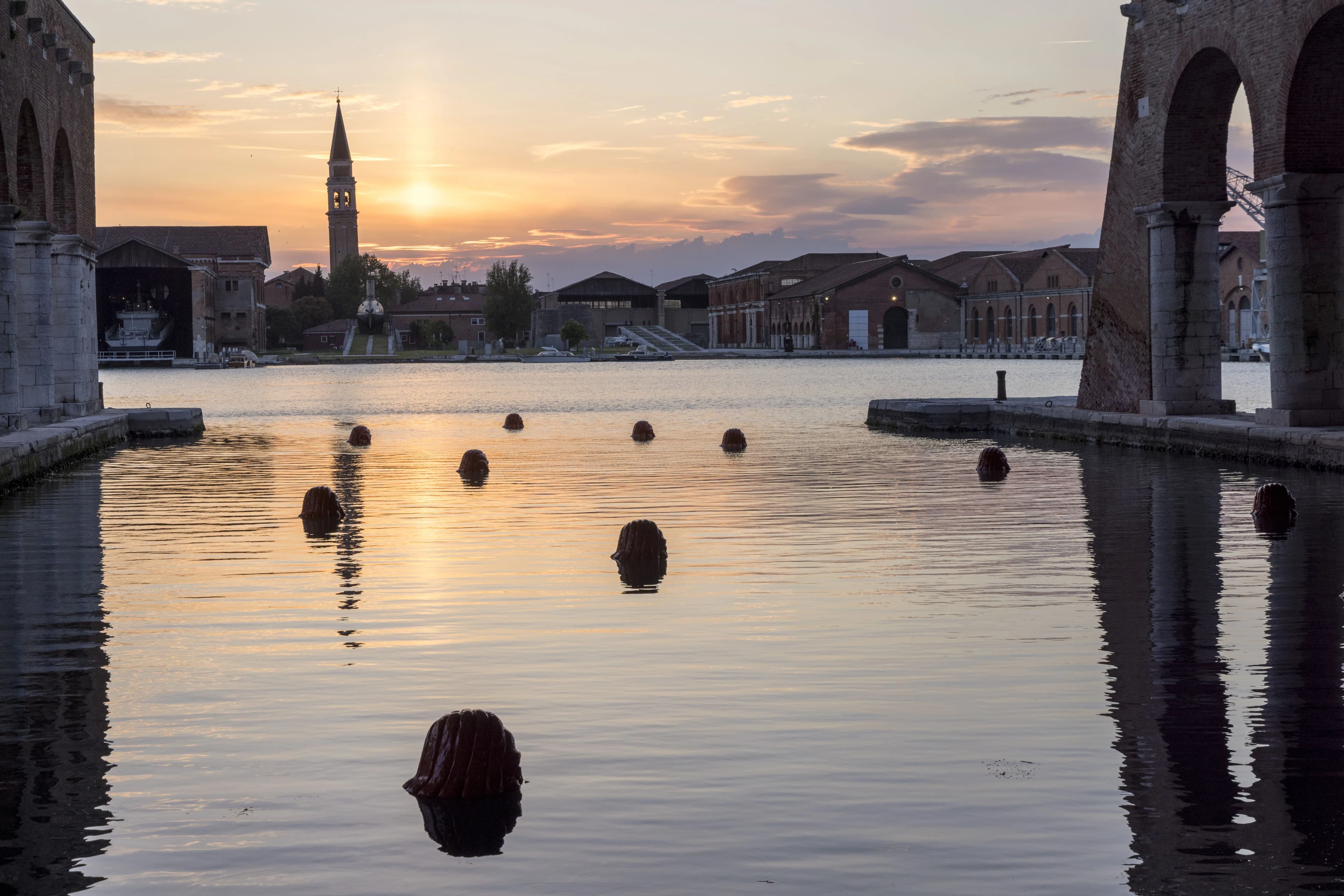
One might say that it is a start that is anything but low-key, paraphrasing the title of this edition. It is an inevitable consequence of the geopolitical complexity that characterizes our present. Many global factors intertwine, making it difficult to predict the balance of power among states. This complexity cannot be addressed by a completely obsolete model—a legacy of European cultural diplomacy. Imagine a large public park—the Gardens, the nerve center of the event—dotted with buildings representing nation-states. Each building serves as a bearer of its own art, an expression of its own aesthetic codes, and a vehicle for its own message. In times of peace, this system, organized into orderly patterns and developed in the early 20th century as a tool of cultural diplomacy, probably made sense. In a multipolar, unstable, and increasingly conflict-ridden world, the Biennale system reveals its artificial simplicity. With all due respect to those who believe Venice is a space for dialogue and interaction among people, everything here takes on political significance. Reopening a pavilion is a political act, as is refusing an award. So is organizing an exhibition whose title itself is a statement and a challenge to the idea that dominant ideas, even artistic ones, must come from the ruling class or the economic and financial elite. This elite promotes a frighteningly single-minded and hegemonic way of thinking.
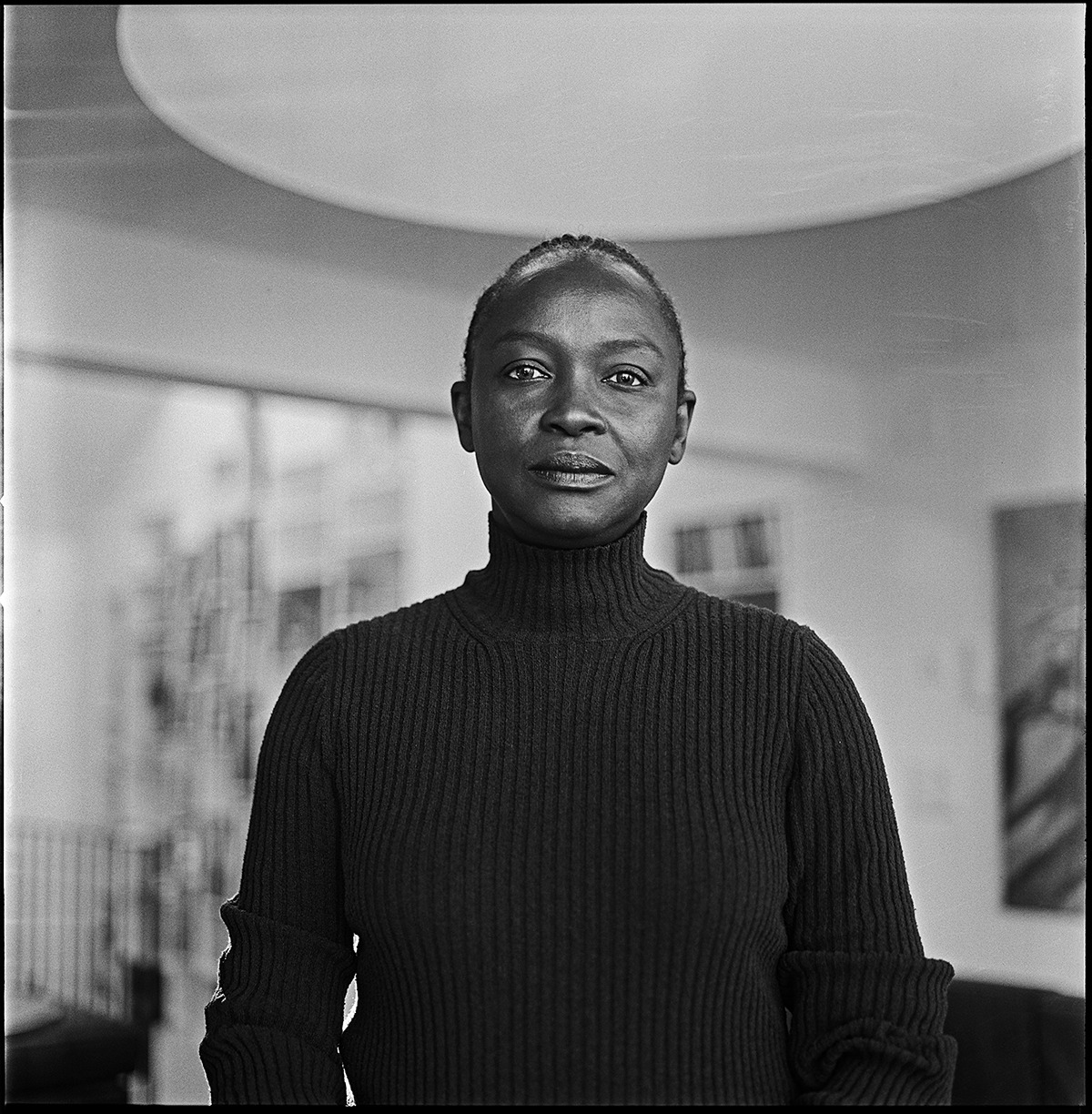
Koyo Kouoh. ©Mehdi Benkler
Koyo Kouoh’s Vision for “In Minor Keys”
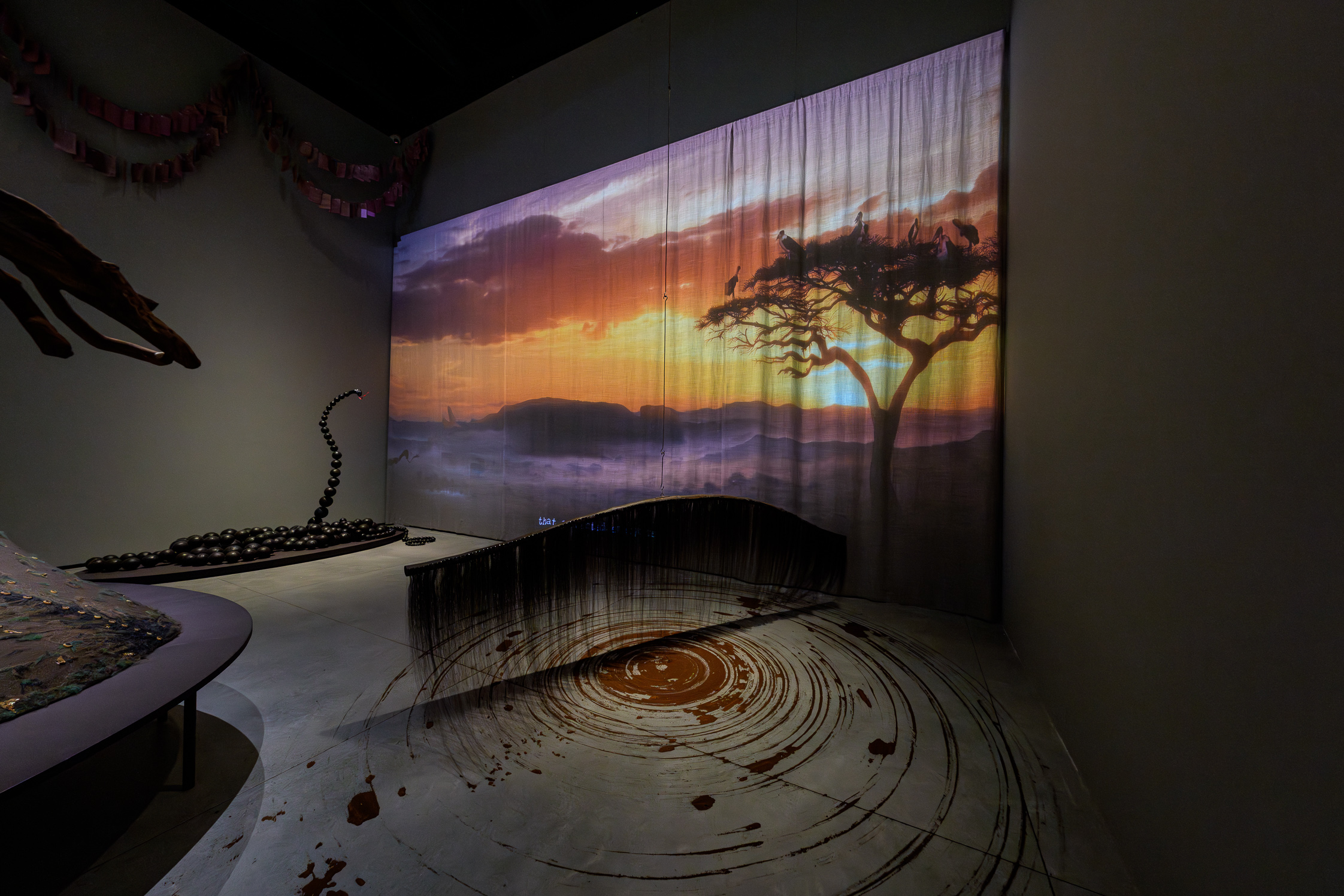
According to Kouoh’s vision, this is “an exhibition tuned in to the minor keys; an exhibition that invites listening to the persistent signals of earth and life, connecting to soul frequencies. If, in music, the minor keys are often associated with strangeness, melancholy and sorrow, here their joy, solace, hope, and transcendence manifest as well.” Following her passing, the team she had chosen—Gabe Beckhurst Feijoo, Marie Hélène Pereira and Rasha Salti (advisors); Siddhartha Mitter (editor-in-chief); Rory Tsapayi (research assistant)—assumed the responsibility of developing the project according to the curator's guidelines.The result is a polyphonic composition in which 111 invited artists—including individuals, duos, collectives, and artist-led organizations—from diverse geographical areas and regions participate. The goal is to create a transnational artistic map based on migration, cultural exchange, and global networks. Artists from the African continent are particularly well represented, and several others are connected to Caribbean and Latin American contexts. There is also no shortage of artists from or working in the Middle East, Asia, North America, and Europe. The outcome is a constellation of relationships that is not always easy to decipher. This is partly because the exhibition is structured around conceptual themes rather than traditional sections. This creates a fluid composition guided by underlying thematic currents. The "Shrines" motif featured in the Sala Chini pays tribute to two artists: Issa Samb (Senegal, 1945–2017) and Beverly Buchanan (USA, 1940–2015). Samb was a key figure in the Laboratoire Agit’Art in Dakar, and Buchanan was known for her land art and anti-monumental public sculptures related to memory and place. Both artists conceived of art as a generative process that transcends the object itself. Inspired by carnival and Afro-Atlantic traditions, the processions invite the public to participate rather than observe, challenging dominant narratives and archives. The “Schools,” on the other hand, represent ecosystems of collaborative learning that are locally rooted yet internationally connected. The performances highlight the body as a vessel for knowledge and resistance. One such performance is a poetic procession inspired by Kouoh’s 1999 Poetry Caravan from Dakar to Timbuktu. This procession pays homage to the griot storytelling tradition.
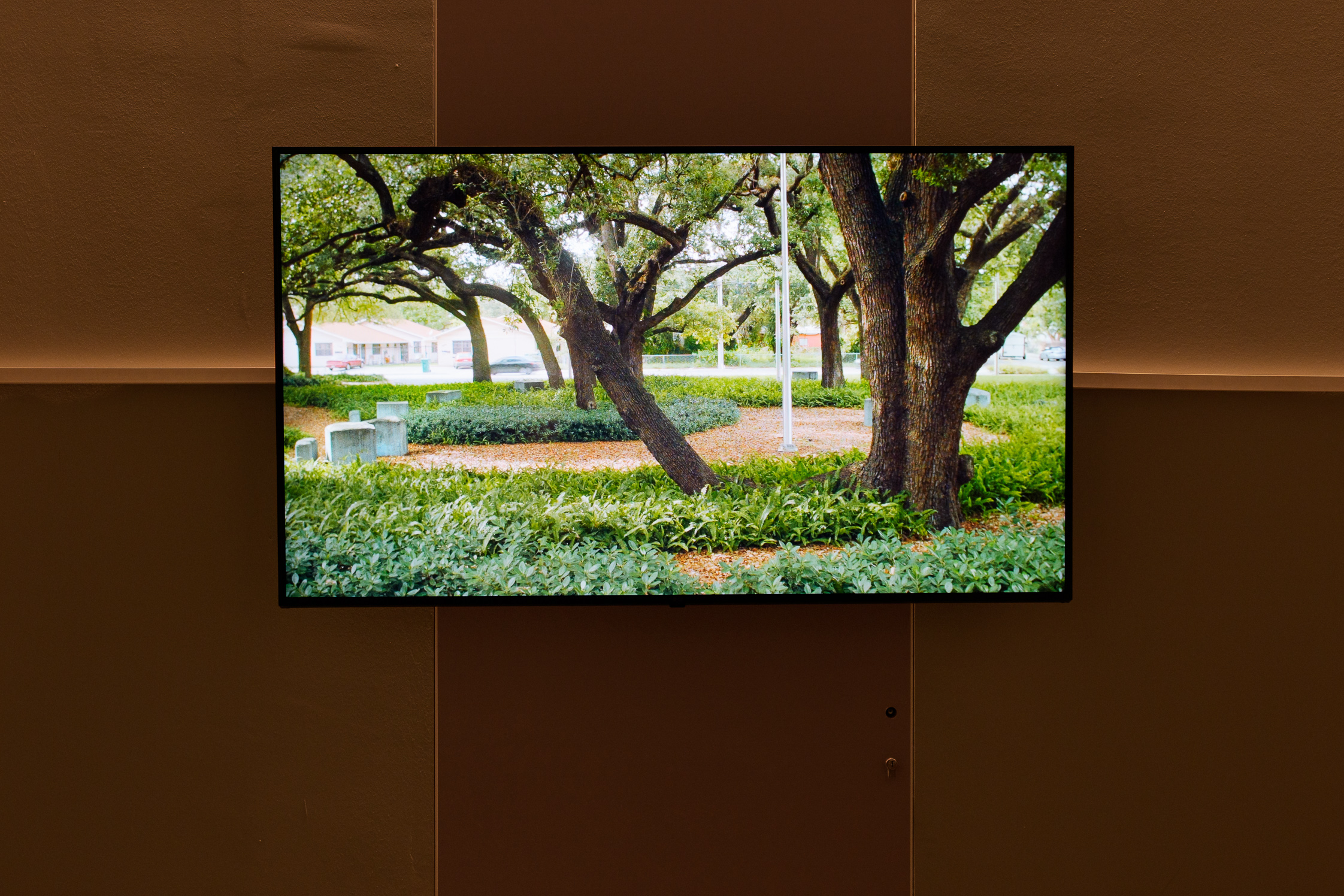
Beverly Buchanan. Photography Andrea Avezzù. Courtesy La Biennale di Venezia
Postcolonial Perspectives in Contemporary Art
“In Minor Keys” is situated within the framework of postcolonial discourse as applied to art, which has its pros and cons. On the one hand, it offers a pluralistic narrative involving participants from various cultures. However, there is an excessive focus on recognizing the “other,” which seems to validate the works based almost exclusively on their place of origin. This inevitably leads to oversimplification. Simplifying, reducing things to categories, and constructing clear, delimited—and consequently limiting—narrative frameworks is precisely what art does under the hegemony of capital. This is the same hegemony that has made art part of consumer culture. How can we defend the existence of cultural singularities and free ourselves from judging works in the name of those singularities? Multiculturalism brings complex issues to the forefront, and an exhibition is a space where these issues converge without necessarily being resolved. Handcrafted materials, textiles, ceramics, and other handmade objects dominate, as do installations linked to manual practices and ecological works reflecting on the relationship between humans, plants, and animals. Visitors are greeted by an installation by Otobong Nkanga at the entrance to the Central Pavilion. This piece serves as a symbolic, conceptual gateway, offering a vision of matter that is both ecological and postcolonial.