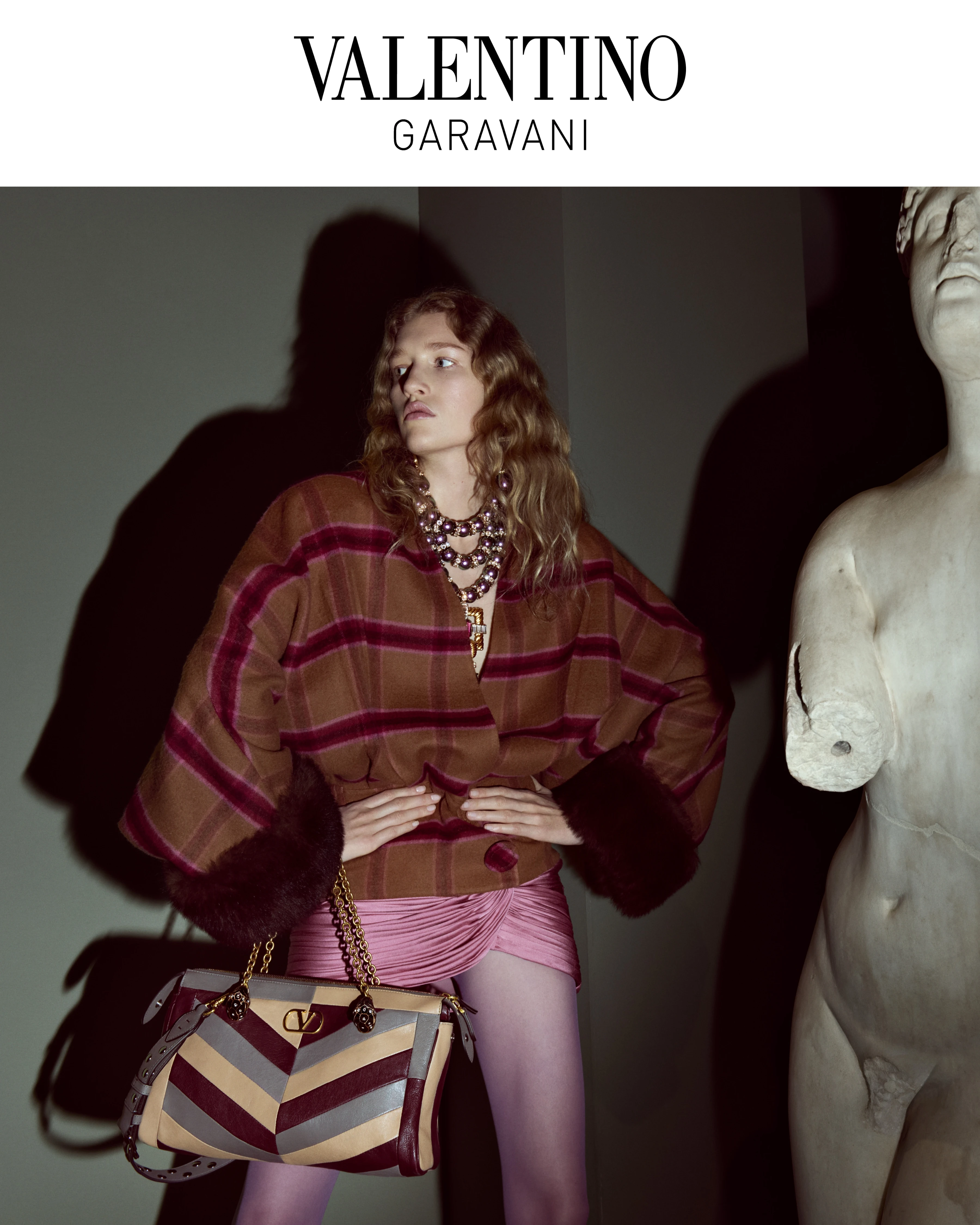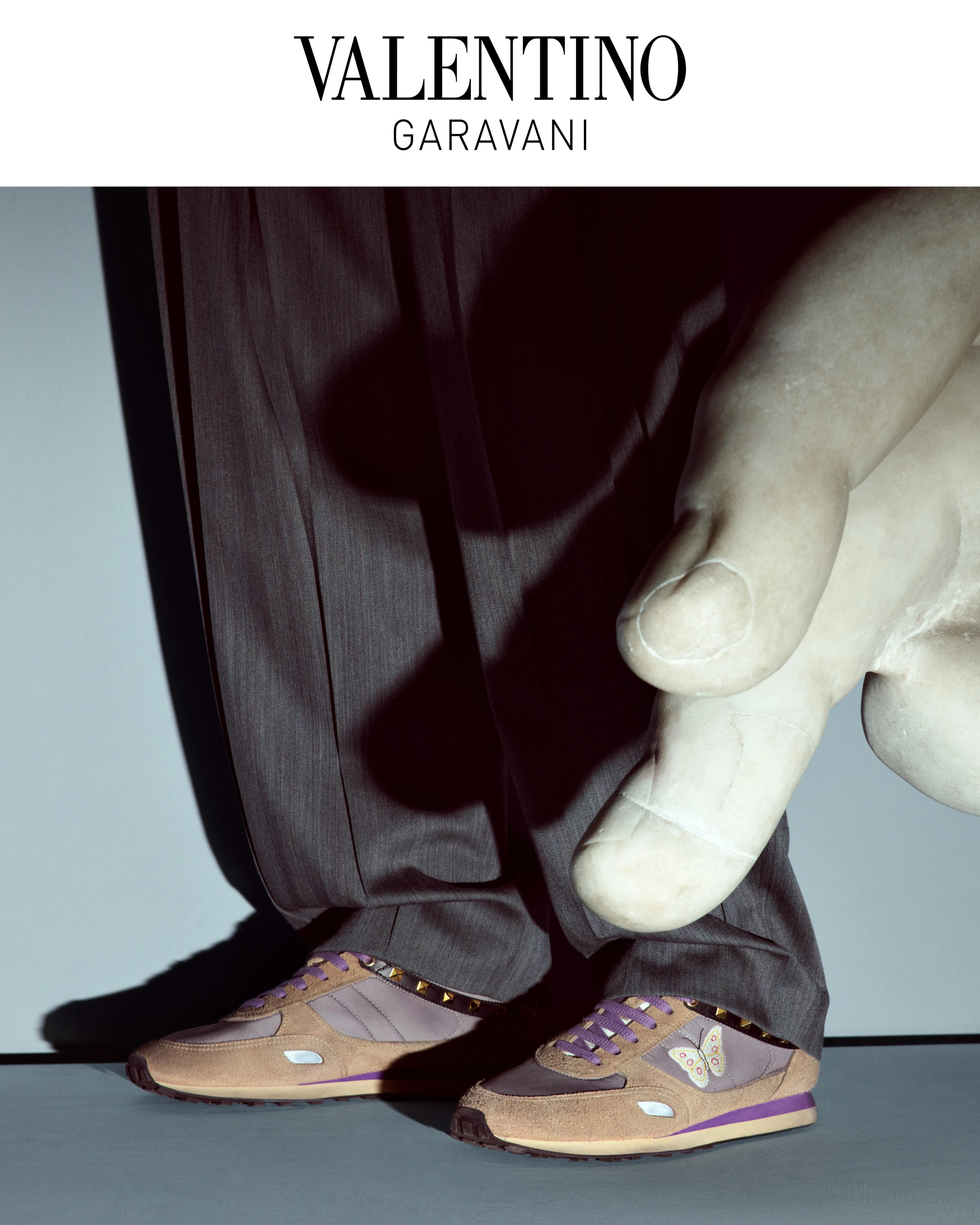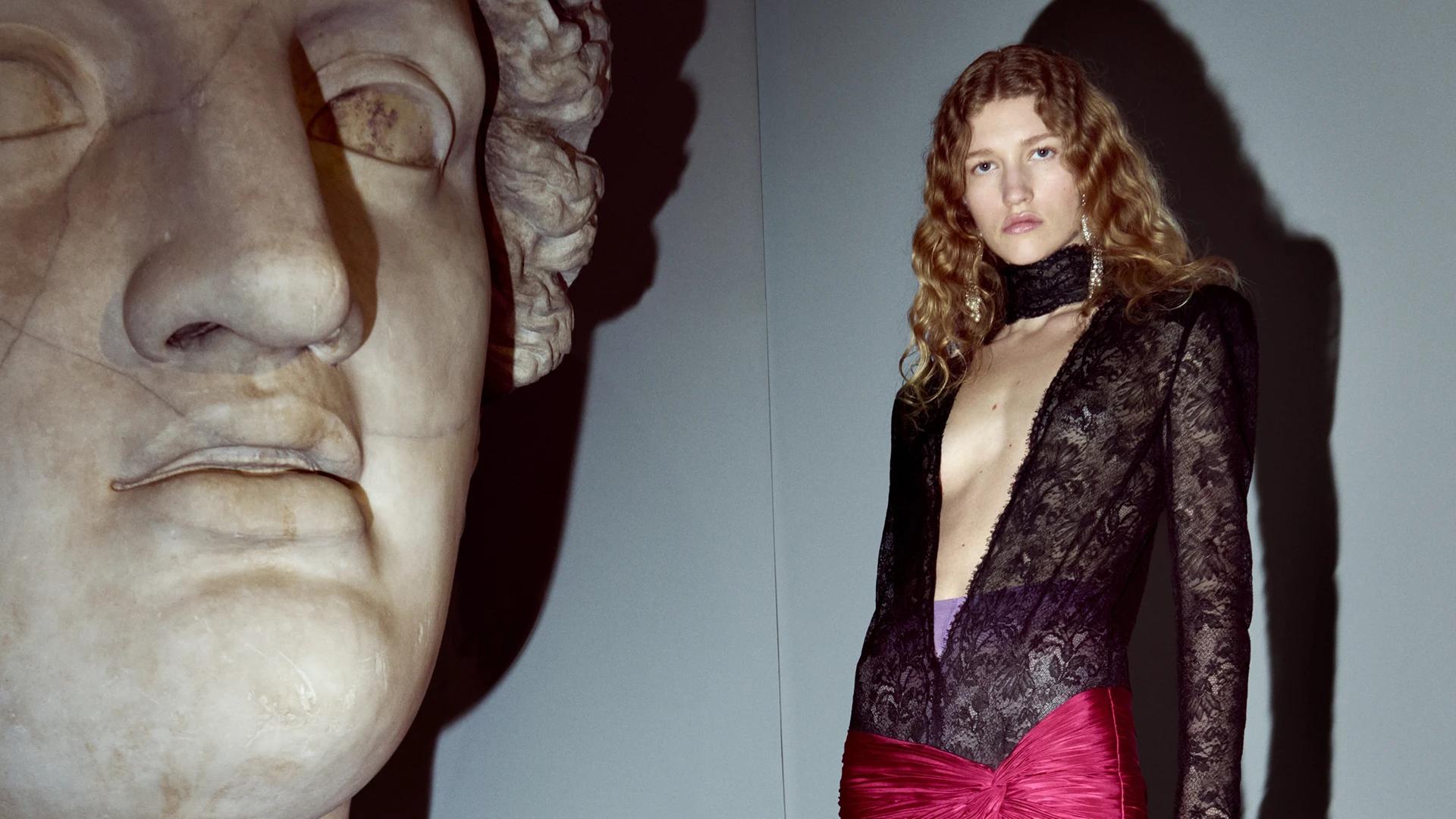
Centrale Montemartini in Rome isn't your typical fashion shoot location. The former power station – Rome's first public electricity plant, built in the early 20th century – became a satellite venue for the Capitoline Museums in 1997. It's a place suspended between two worlds: classical marble statuary on one side, looming industrial machinery on the other. For Valentino's new Interferenze campaign for FW26, that contradiction is the point.
The campaign takes the location's fundamental duality and extends it, letting the collision between ancient and industrial shape everything. Marble busts appear alongside diesel engines, Roman goddesses rise among alternators and overhead cranes. The space becomes something stranger than a museum – less a repository of history and more what you might call an alchemical ground, where incompatible eras somehow coexist.
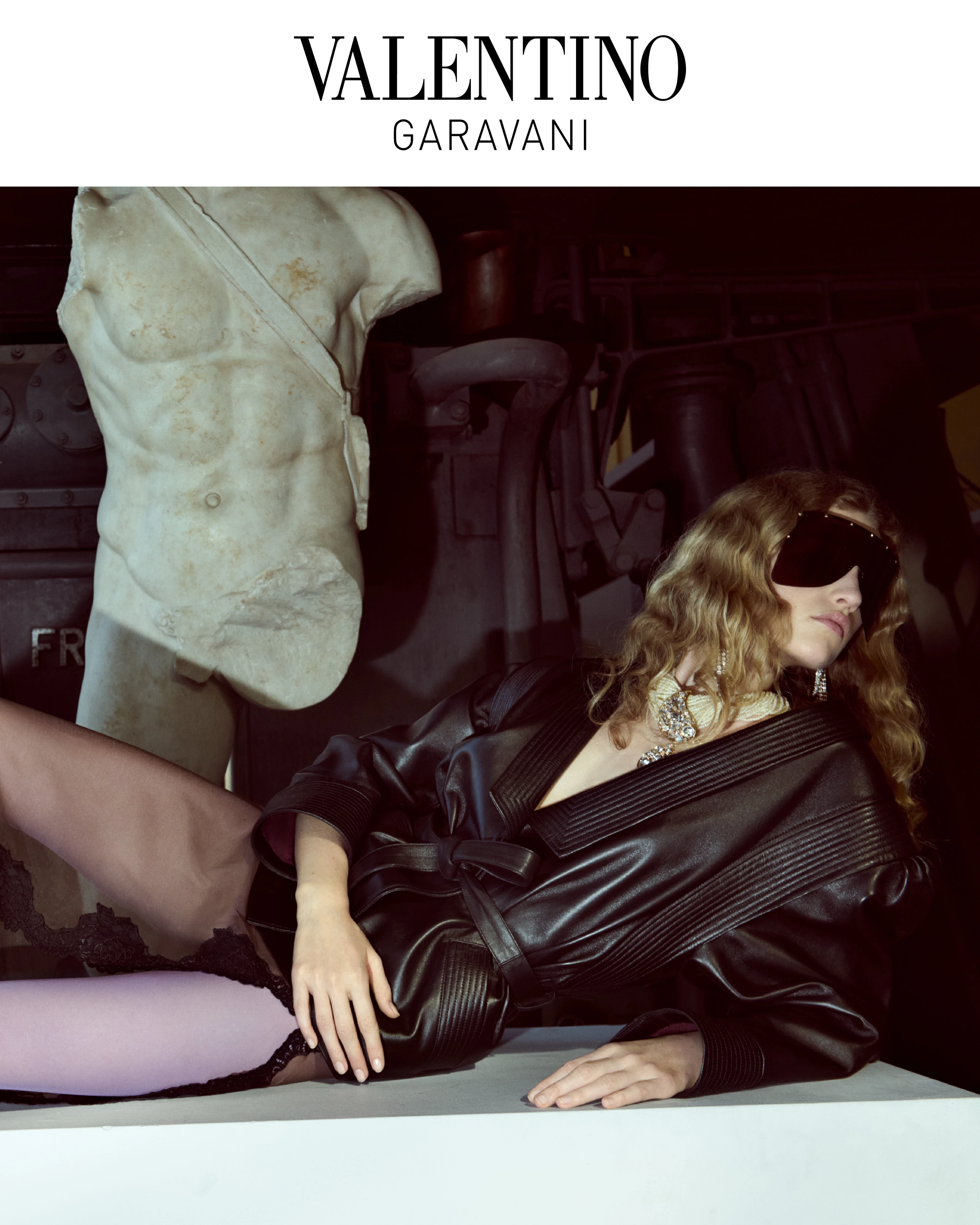
Valentino Garavani FW26 Campaign. Image © Valentino
The Power of Juxtaposition
This is where the campaign's conceptual framework becomes interesting. Creative Director Alessandro Michele doesn't treat these contrasts as cosmetic. The pairing of a Roman statue with a piece of industrial machinery is meant to be generative: each element changes how you see the others. The pallor of marble meets the opacity of cast iron, the lightness of fabric confronts the weight of steel, anatomical perfection clashes with mechanical monumentality.
When you look at the resulting images, your eye doesn't know where to settle. There's no single focal point – meaning doesn't come from any individual object but from the space between them, from the relationships they create. It echoes a particular way of thinking about composition that runs through 20th-century visual theory.

Valentino Garavani FW26 Campaign. Image © Valentino
The press material references Aby Warburg's Mnemosyne Atlas and Sergei Eisenstein's concept of montage. Both thinkers understood that meaning doesn't emerge simply from adding things together. Instead, it erupts from collision – from the moment when distinct, even contradictory images or objects are forced into proximity.
For Eisenstein, the Soviet filmmaker, this was foundational. Two shots placed next to each other create something neither could alone. A shot of a face and a shot of a bowl of soup suddenly tells you the face is hungry. It's not in either image; it's in the gap between them. The campaign works similarly. Neither the statuary nor the machinery speaks on its own. It's their interference with each other (the term itself suggests waves that meet and create new patterns) that generates meaning.
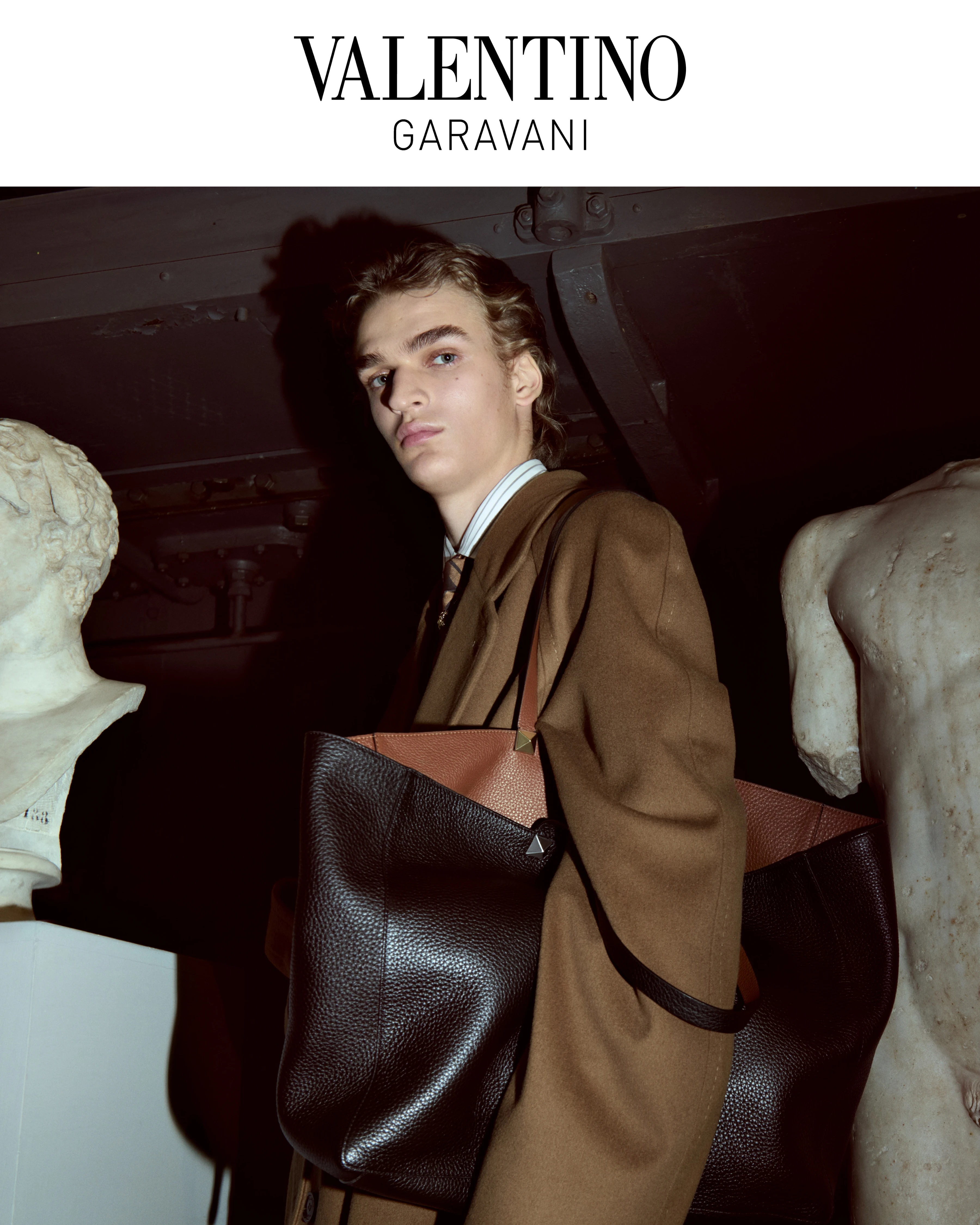
Valentino Garavani FW26 Campaign. Image © Valentino
A Cinematic Space
The campaign's visual language is very cinematic: light pierces and fragments, bodies emerge in pieces – a marble profile here, an iron backbone there, the massive machines loom in the background, almost dissolved in darkness. There's a sense of suspension, nothing looks permanently still, yet nothing quite moves.
It's an approach that asks you to read the images the way you might read a film: not as a single statement but as a composition where every element exists in relation to others. The clothes, the bodies, the stone, the steel – they're all equally present and equally weighted.