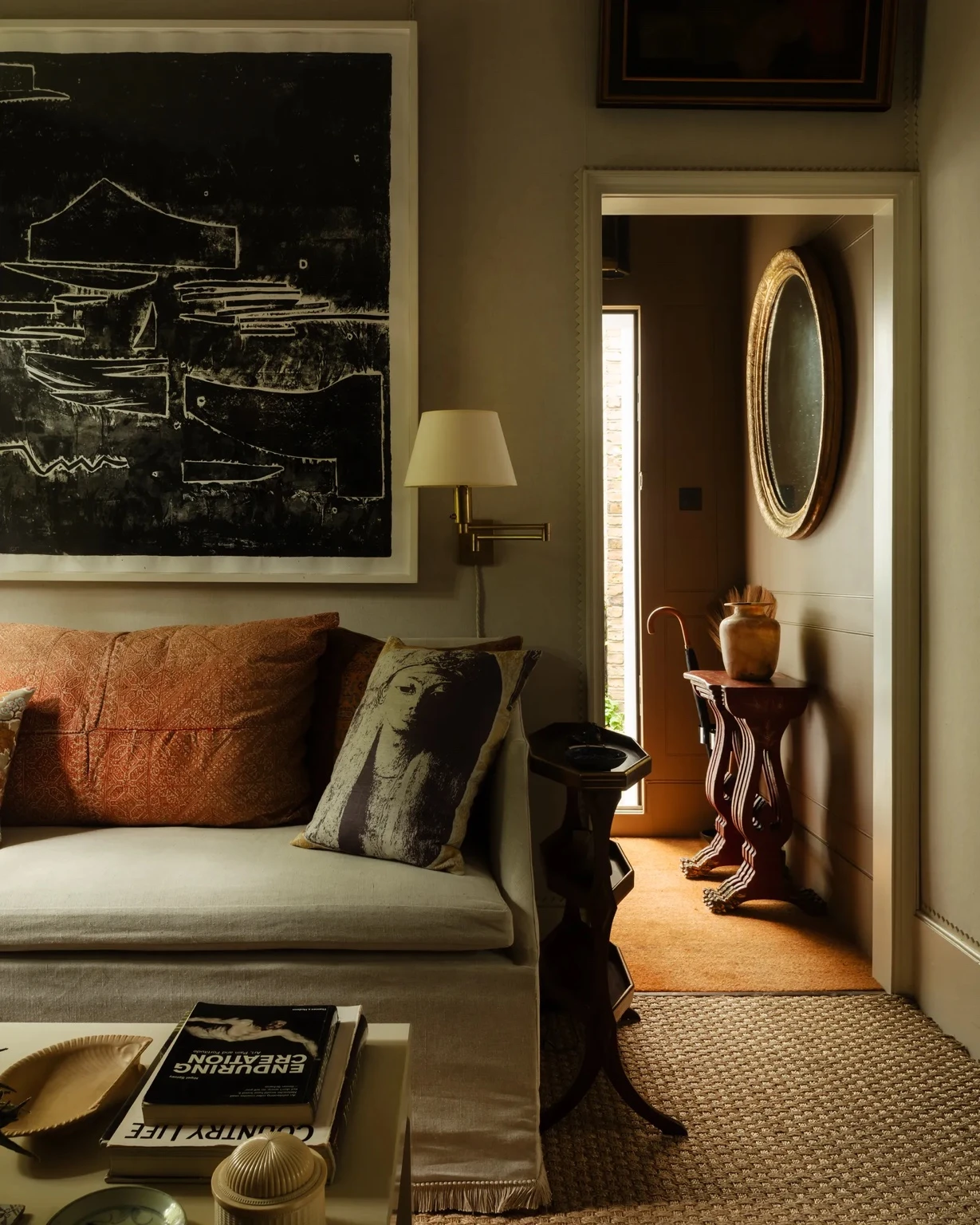
Warm living room with a cream sofa, patterned rust cushions, large black abstract artwork, and a view into a hallway with sculptural side tables and an oval mirror.
7 min

Top 10 UK Interior Designers & Architects to Watch in 2025

By WeDirectory

Discover 10 of the best UK interior designers and architects to watch in 2025, from country house specialists to joyful maximalists, all blending heritage with contemporary design.

By WeDirectory

The Evolving Landscape of UK Design

Interior design and architecture in the UK have always been more than just aesthetics — they are reflections of cultural shifts, technological progress, and the way we live our daily lives. Over the past century, British design has transitioned from the ornate formality of pre-war houses to the open-plan minimalism of the early 2000s, and now toward a rich fusion of heritage and contemporary creativity.

While global influences shape the way spaces look, there is still something distinctly British about the work of the country’s best designers: a sensitivity to history, a deep respect for craft, and an instinct for creating interiors that feel both timeless and alive.

Every year, a select group of studios stands out for their innovation, professionalism, and ability to capture the spirit of the times. For 2025, these ten designers and architects represent the best of that balance — blending tradition with forward-thinking ideas, and producing spaces that are not just beautiful, but meaningful.

Adam Architecture
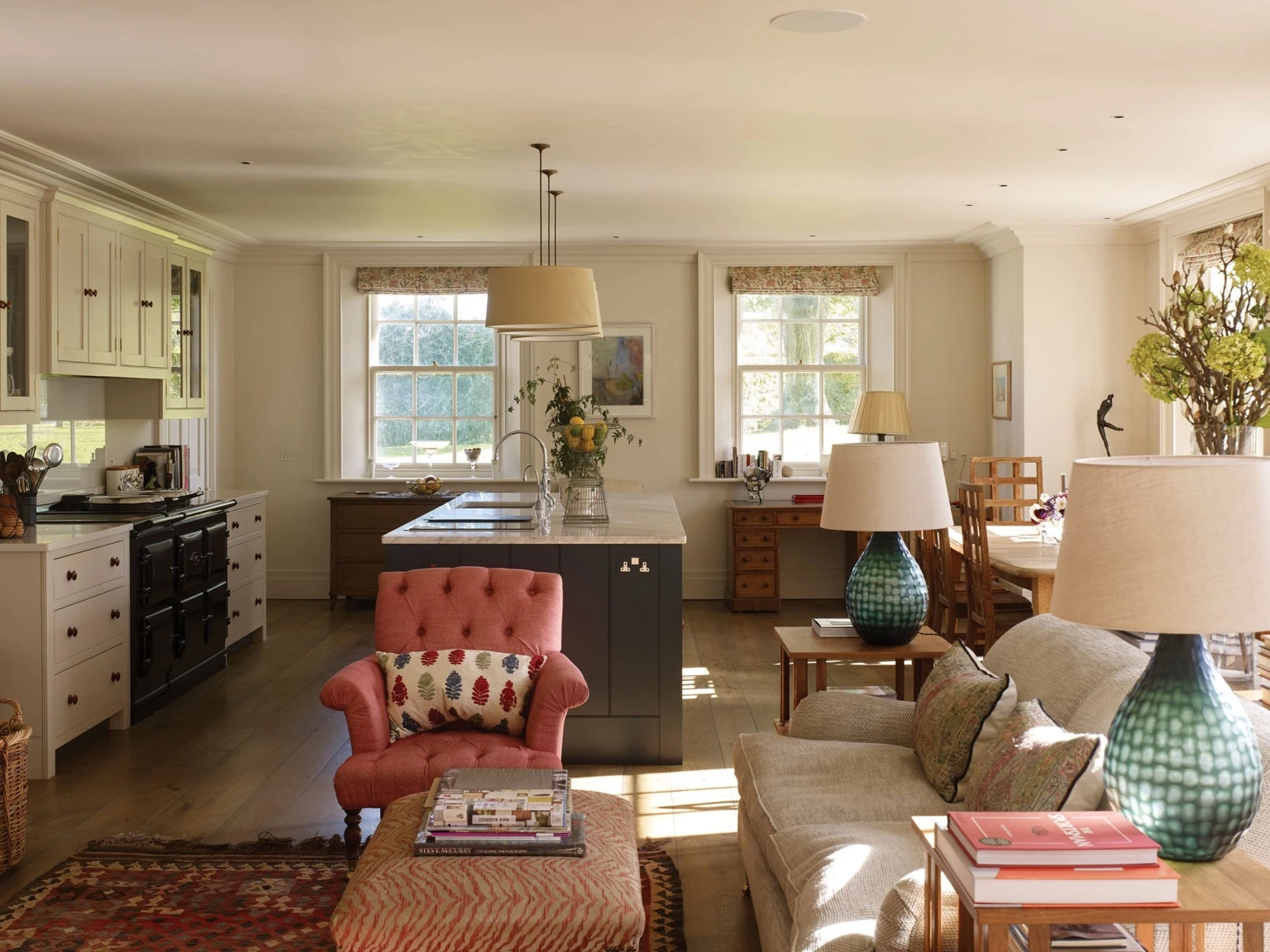
Light-filled open-plan Grade IIlisted Oxfordshire interior with a classic kitchen, dining area, and sitting room featuring warm wood floors, soft neutral furniture, and colorful accents.

Grade II–listed Oxfordshire interior.

Masters of the Modern Country House

Adam Architecture has become synonymous with high-quality, Neoclassical-inspired homes. Their work often features grand proportions, symmetrical facades, and intricate detailing, but these classical elements are always adapted to suit 21st-century life. The firm’s projects range from sprawling countryside estates to elegant urban residences, each one deeply informed by architectural history.

Notable project: A recently completed Hampshire estate that blends Palladian proportions with discreet eco-technologies, including ground-source heating and rainwater harvesting.

Why watch in 2025: With rural living once again on the rise, Adam Architecture is perfectly positioned to lead the charge in building new country houses that feel timeless yet modern.

Adam Bray
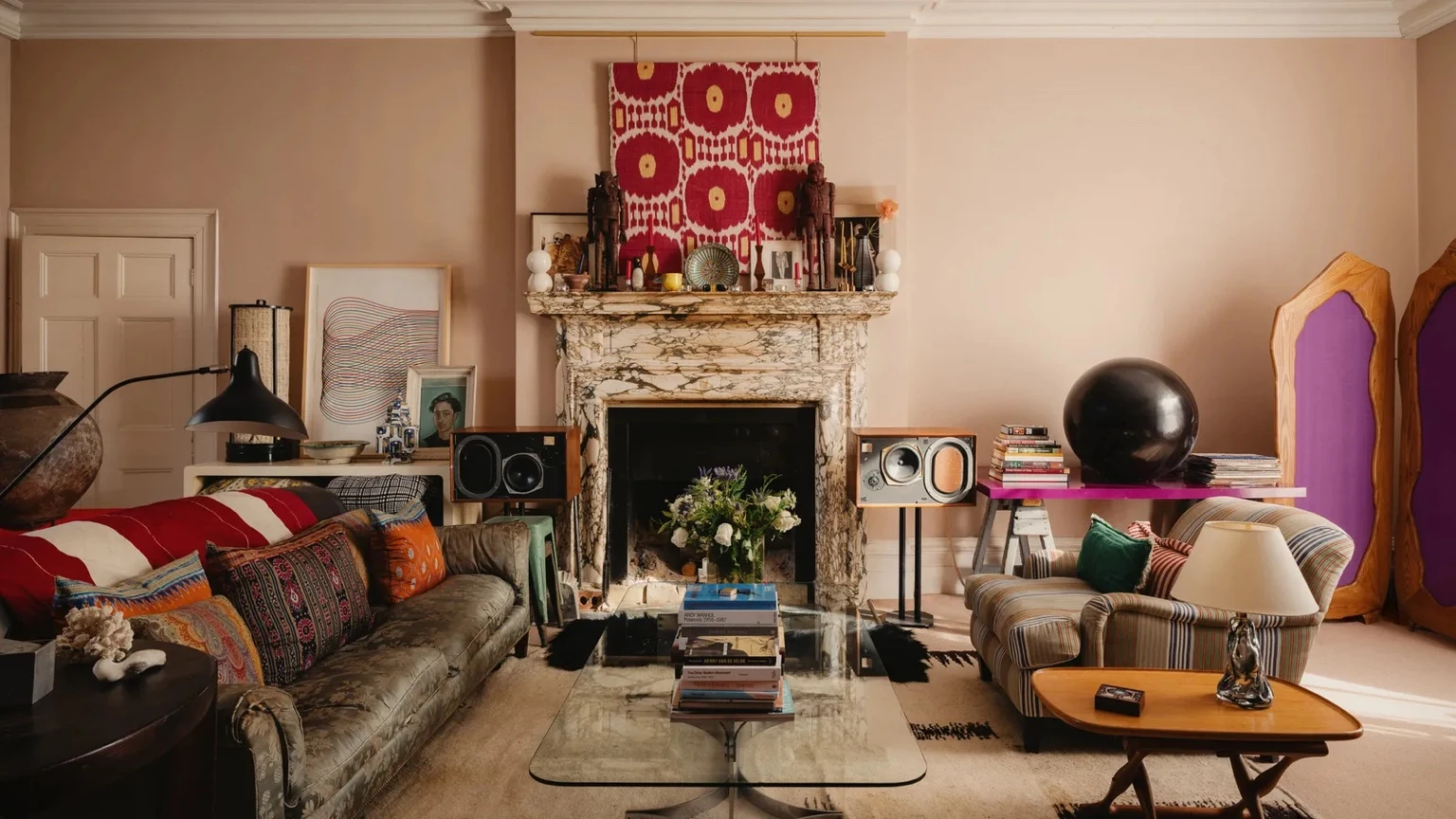
Eclectic Maida Vale living room with a marble fireplace, patterned sofas, colourful cushions, vintage speakers, books, and bold decorative objects.

Inside Adam Bray’s Maida Vale flat, where antique suzani textiles, vintage designer fabrics, rich textures, and mid-century pieces create a bold, lived-in sense of luxury.

The Alchemist of Glamour and Wit

Adam Bray’s interiors are like a well-mixed cocktail: a little sparkle, a lot of sophistication, and a twist of the unexpected. His palette often includes lacquered walls, velvet-upholstered panels, and bold colour pairings, but these are balanced with antiques and found objects that add character and warmth.

Notable project: A Belgravia townhouse transformed into a moody, jewel-toned sanctuary, featuring a custom silk wall covering and curated mid-century lighting.

Why watch in 2025: Bray’s approach to combining high-glamour finishes with intelligent restraint is in growing demand, particularly among clients who want luxury without ostentation.

Adam Richards Architecture
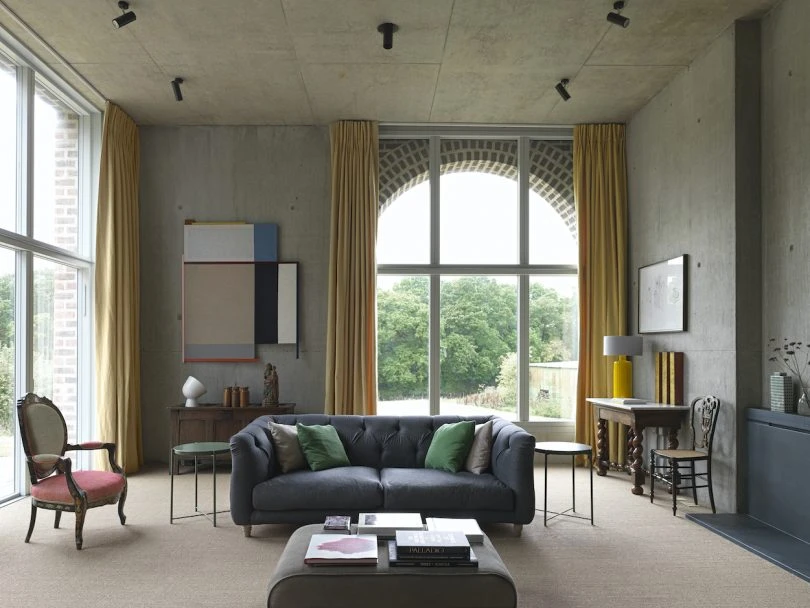
Contemporary living room with tall concrete walls, large arched window framed by mustard curtains, a dark tufted sofa with green cushions, and curated vintage furniture and art.

Material harmony: concrete bones softened by warm textiles, timber details, and carefully curated art.

Where Narrative Meets Structure

Adam Richards brings a literary quality to architecture — his buildings tell stories. Nithurst Farm, his own home in West Sussex, has been hailed as one of the most original English country houses in decades, with its brutalist exterior softened by richly textured interiors.

Notable project: A cultural centre in the South Downs that fuses modernist geometry with traditional flint masonry, paying homage to the region’s landscape.

Why watch in 2025: Richards’s work appeals to clients who see architecture as art. His portfolio is expanding to include both private residences and cultural institutions, blurring the line between personal and public space.

Alex Dauley
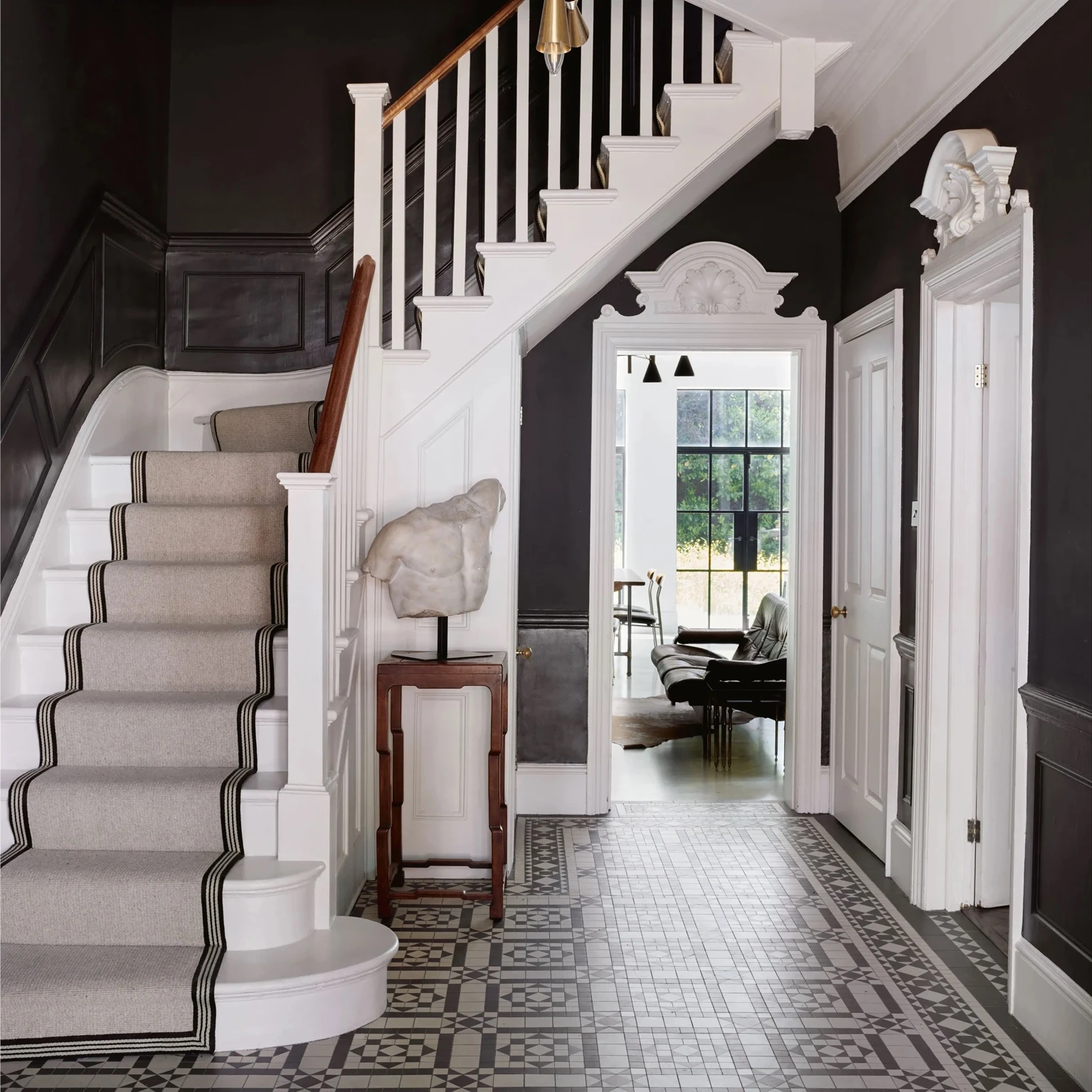
Edwardian hallway with patterned tiled floor, white staircase with a soft runner, dark painted walls, and a view through to a bright living room with large steel-framed windows.

Elegance in the everyday: graceful architecture meets timeless design in this Edwardian hallway.

Design with Purpose

Alex Dauley’s style is understated yet deeply considered. Her interiors have a quiet elegance, balancing minimalism with warmth and texture. Beyond her design work, she co-founded United in Design, a charity addressing the lack of diversity in the UK interiors industry.

Notable project: An Edwardian family home redesigned with muted tones, natural materials, and a seamless connection between indoor and outdoor spaces.

Why watch in 2025: As sustainability and inclusivity become central to design conversations, Dauley’s voice — and her interiors — feel more relevant than ever.

Anna Haines
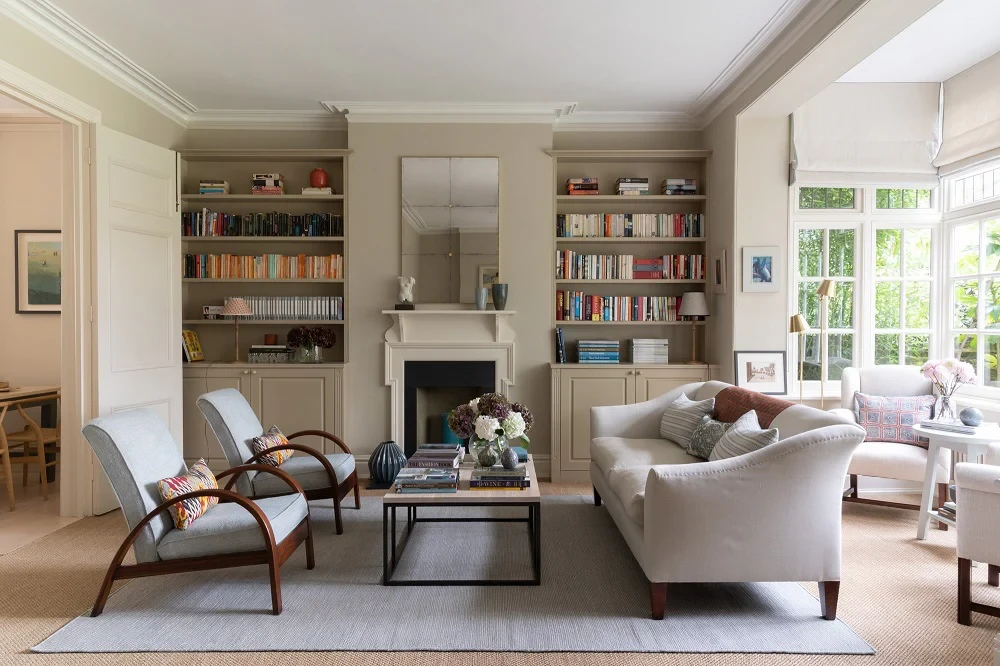
Bright, traditional living room with built-in bookshelves around a fireplace, pale upholstered sofa and armchairs, and large windows overlooking greenery.

Comfort meets heritage — a welcoming, quietly elegant living room that feels like an old friend, beautifully curated.

The Art of Comfort

Anna Haines creates interiors that feel as welcoming as they are beautiful. Her spaces often feature natural light, tactile fabrics, and a lived-in charm that makes them instantly relatable. Whether she’s working on a Cornish coastal retreat or a New York State estate, her designs reflect the lifestyle and personality of her clients.

Notable project: A seaside home in Cornwall with a palette inspired by local cliffs and seagrass, complete with handwoven rugs and reclaimed wood accents.
Why watch in 2025: As more clients seek homes that support well-being and authenticity, Haines’s approach to comfort and charm is set to resonate even more widely.

Beata Heuman

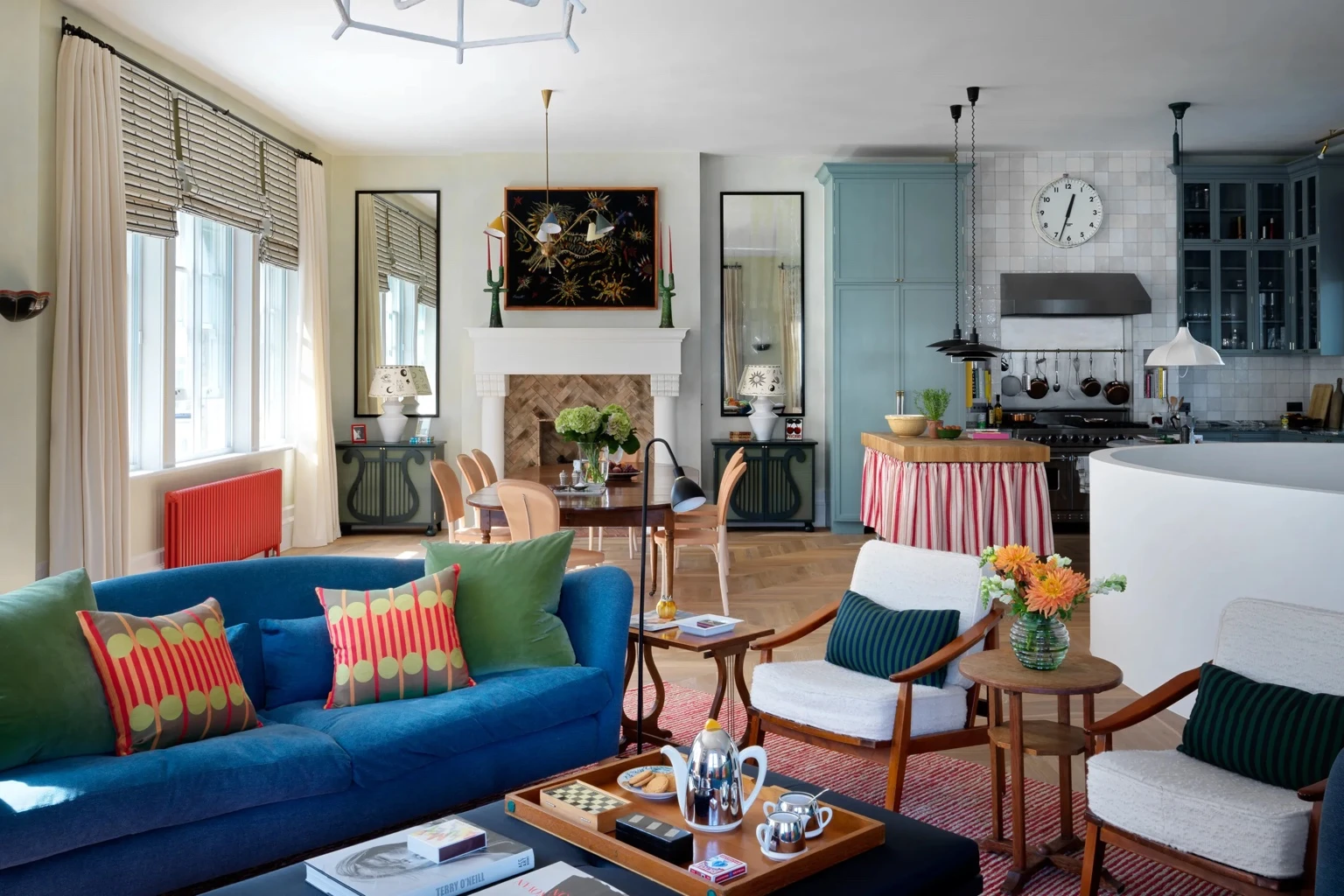
Vibrant open-plan living, dining and kitchen space with a blue sofa, patterned cushions, colourful cabinetry, and playful decor by Beata Heuman.

Beata Heuman interiors — where whimsical maximalism meets timeless soul. Colour, pattern, antiques and a wink of the unexpected; rooms that make you feel alive.

The Queen of Joyful Interiors

Beata Heuman is known for her playful yet sophisticated style, where bold patterns meet whimsical details. Her spaces are layered with character — from hand-painted wallpapers to unexpected furniture silhouettes. She also runs Shoppa, a collection of furniture, lighting, and textiles that embodies her colourful vision.

Notable project: A London townhouse where each room is inspired by a different era, yet unified by a palette of warm ochres and sea greens.

Why watch in 2025: As “joyful maximalism” gains traction, Heuman’s work is the perfect antidote to years of minimalist dominance.

Ben Pentreath

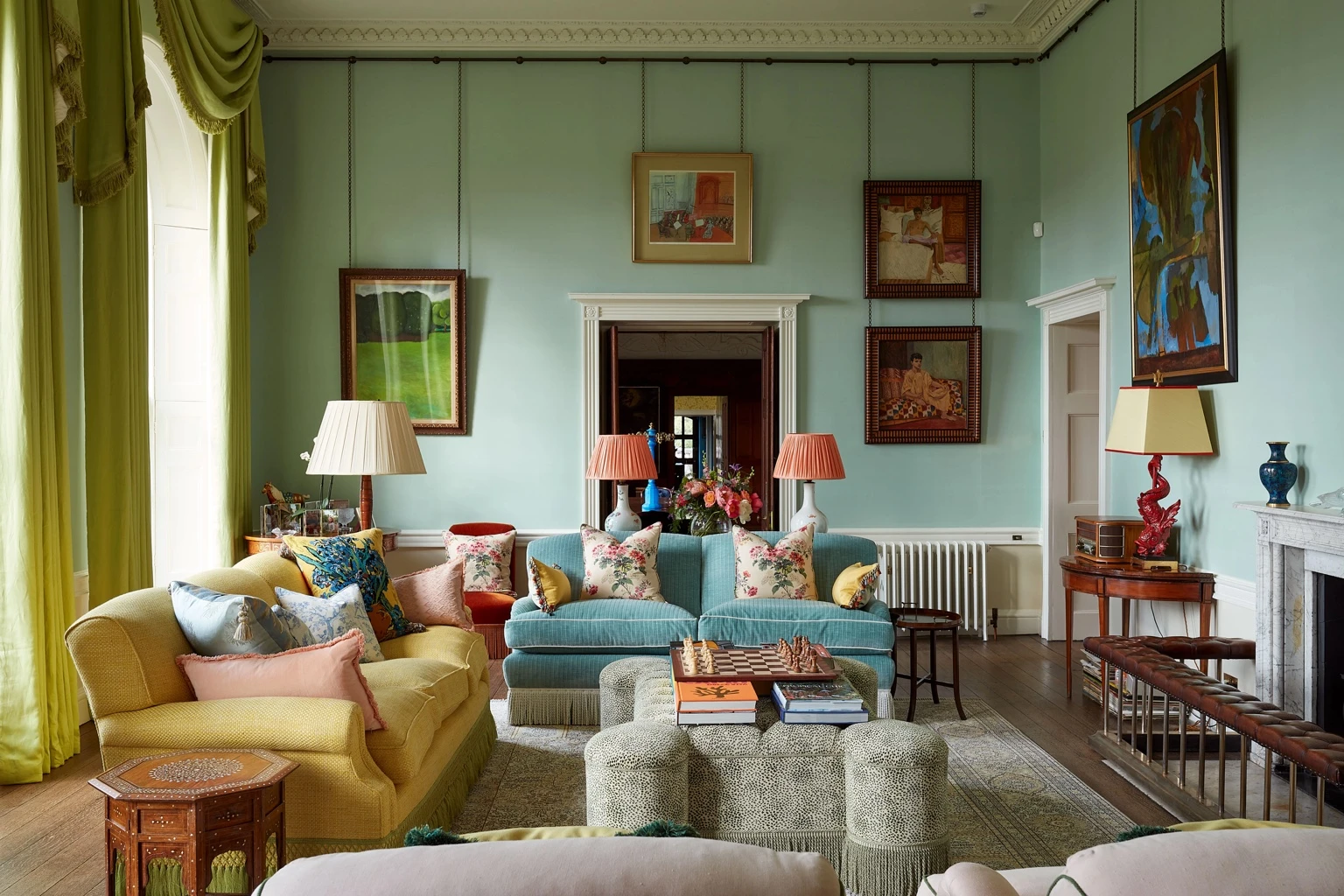
Elegant Georgian drawing room with mint-green walls, colourful sofas, floral cushions, hanging paintings, and classic furniture arranged around a central coffee table.

Georgian comfort with modern soul — Pentreath’s way of living inside tradition, with colour, art, and character layered over timeless bones.

Tradition with a Twist

Ben Pentreath is one of the UK’s most influential designers, known for his deep respect for classical architecture combined with a talent for fresh, livable interiors. His work often incorporates English heritage motifs, updated for modern lifestyles.

Notable project: The interior design of a new town in Dorset, master-planned for harmonious community living while embracing traditional aesthetics.

Why watch in 2025: Pentreath’s vision of community-driven, classically informed design offers a counterpoint to the anonymity of much contemporary architecture.

Benedict Foley

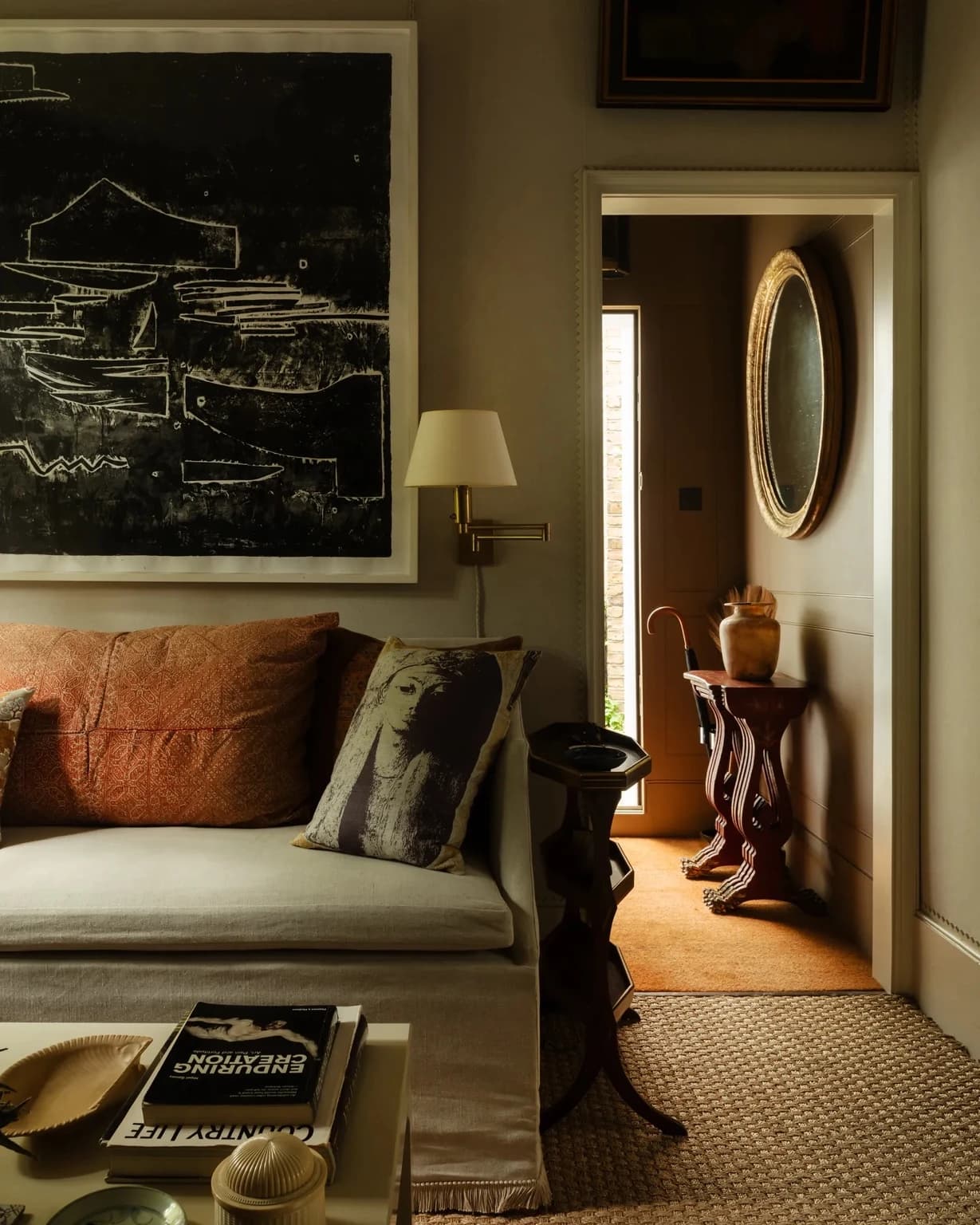
Warm living room with a cream sofa, patterned rust cushions, large black abstract artwork, and a view into a hallway with sculptural side tables and an oval mirror.

When Foley and Slowik design together, you get a home that’s equal parts couture and cozy—artful, intimate, and quietly glamorous.

The Theatrical Visionary

Benedict Foley’s work is impossible to pigeonhole — one project might channel 18th-century opulence, another sleek modernism. What unites them is his fearless approach to colour, pattern, and form.

Notable project: A London apartment where deep emerald walls set the stage for antique gilt mirrors and contemporary art.

Why watch in 2025: In a climate where bold personal expression is increasingly celebrated, Foley’s theatrical approach offers inspiration for clients tired of safe choices.

Berdoulat

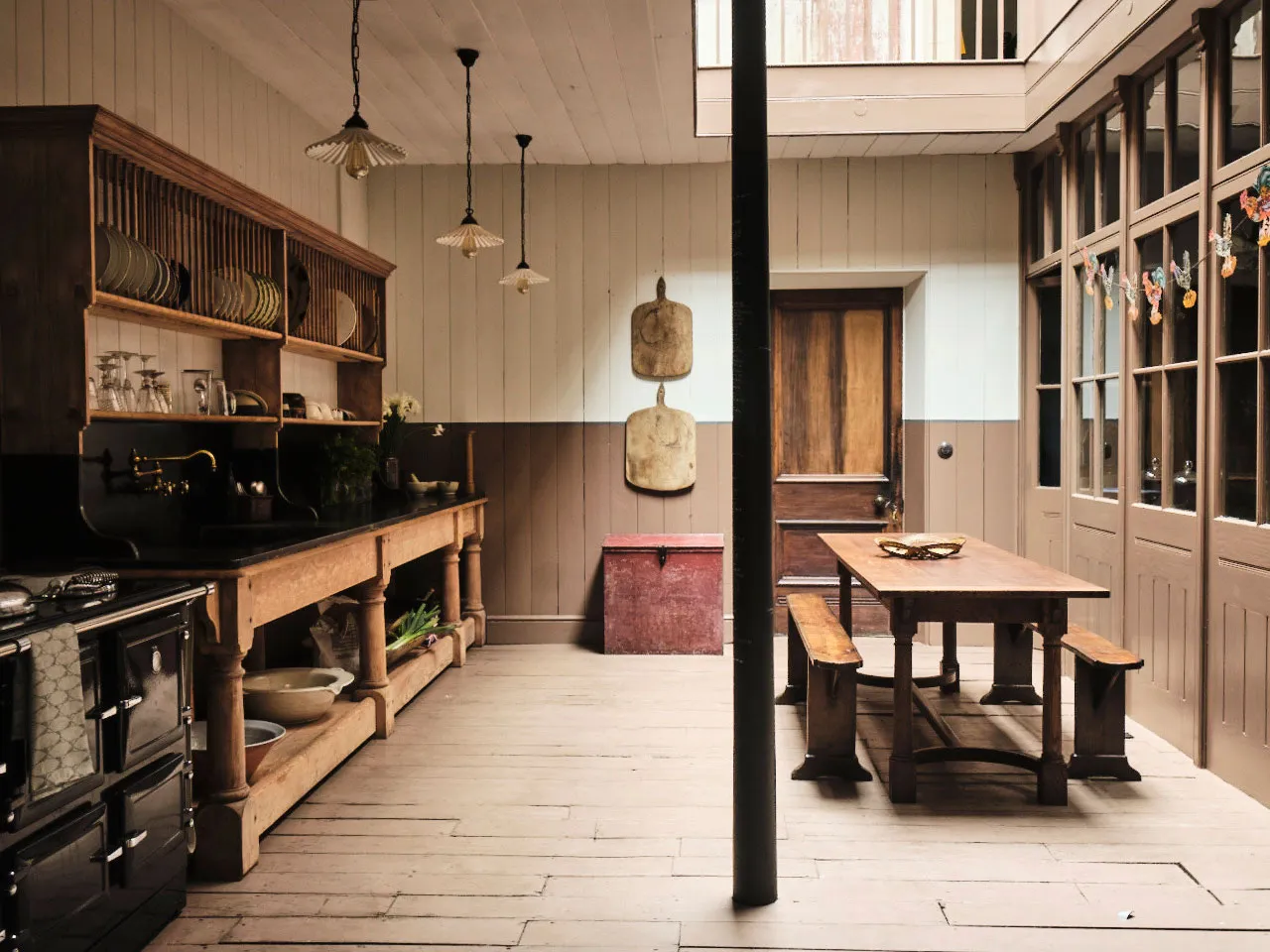
Historic kitchen at Berdoulat with open wooden shelving, long farmhouse table and benches, and paneled walls in warm brown and cream tones.

Berdoulat’s kitchen-dining space in Bath, where original joinery, worn timber floors and simple farmhouse furniture create a lived-in, Georgian-meets-modern warmth.

Buildings as Clients

For Patrick and Neri Williams of Berdoulat, the building itself is the primary client. Their Bath-based studio is dedicated to restoring and adapting historic structures in ways that honour their original character.

Notable project: A Georgian townhouse restored using only traditional techniques, paired with a newly launched furniture collection inspired by historic forms.

Why watch in 2025: With heritage conservation gaining attention, Berdoulat’s approach to design that resists trends feels increasingly relevant.

Brandon Schubert

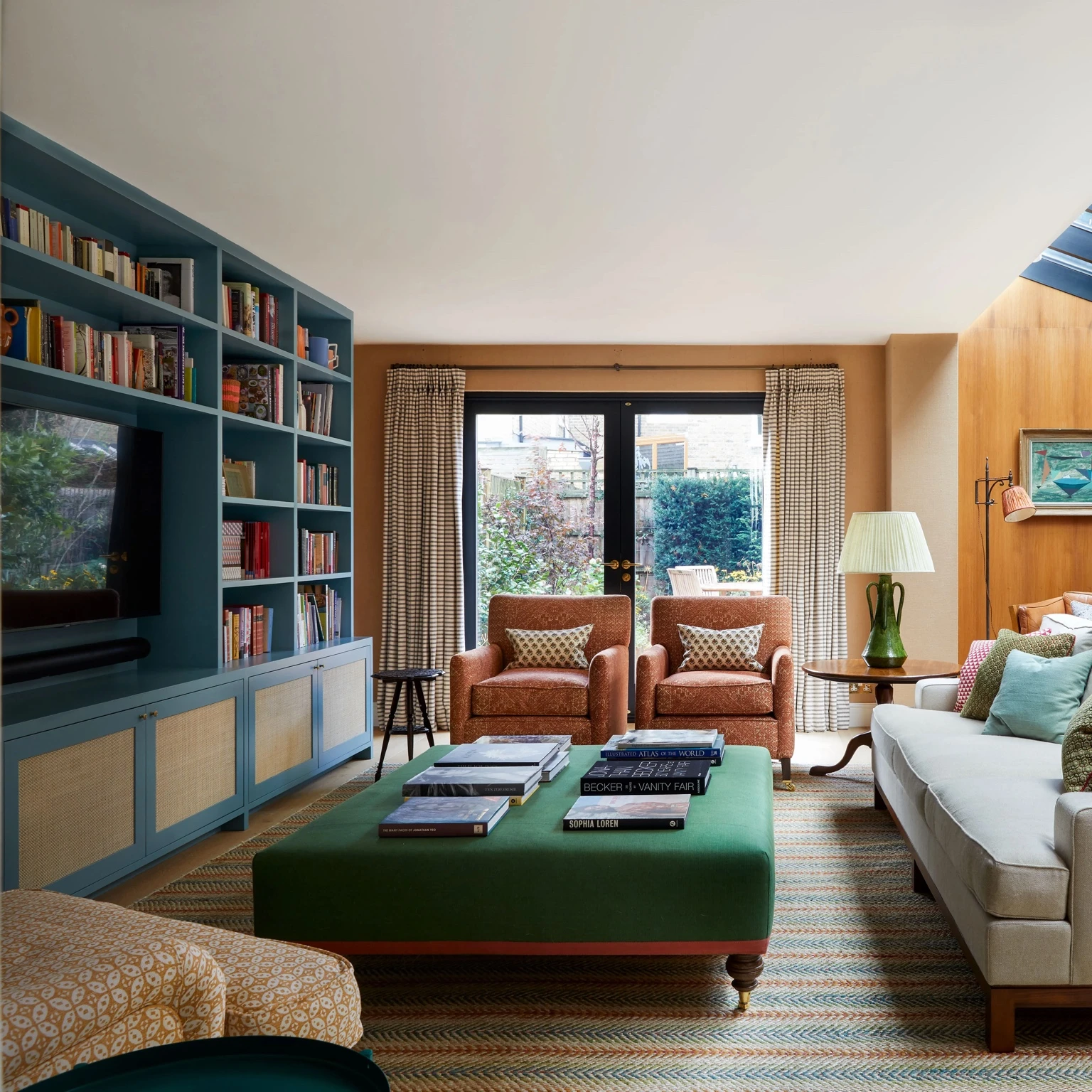
Warm, book-lined living room by Brandon Schubert, with teal built-in shelves, terracotta armchairs, a large green ottoman, and soft layered textiles.

Layered, lived-in, never predictable — Schubert’s magic lies in the details.

Colour, Comfort, Character

Brandon Schubert’s interiors are warm, dynamic, and layered. His work often involves bold colour palettes, clever space planning, and a mix of antique and contemporary pieces.

Notable project: A city apartment where Victorian detailing meets modern open-plan living, unified by a palette of deep blues and earthy reds.

Why watch in 2025: Schubert’s refusal to stick to one “look” allows him to adapt to each client’s personality — a trait that’s becoming ever more valuable in bespoke design.

The UK design scene is rich with talent that respects history while embracing the new. Whether you’re planning your dream home, commissioning a public space, or simply looking for inspiration, these ten names are shaping the future of interiors and architecture.

Author

WeDirectory

Date

02.12.2025

Tags
Architecture & Spatial Designuk interior designbritish interior designersuk architectslondon interior designerscountry house designneoclassical architecturejoyful maximalismheritage restorationcontemporary interiorsmodern georgian stylesustainable interiorsdesign studios to watchuk design trends 2025
Two people sit on benches in a dark gallery watching a projected scene from Nan Goldins film Memory Lost at Pirelli HangarBicocca in Milan.
7 min

Nan Goldin's "This Will Not End Well" in Milan

By Francesca Interlenghi

Discover Nan Goldin's touring exhibition "This Will Not End Well" at Pirelli HangarBicocca in Milan, tracing her intimate images, films and activism from the 1970s to today.

Pirelli HangarBicocca in Milan, Italy, is dedicating its first major exhibition to the work of Nan Goldin (b. 1953, Washington, D.C.), as a filmmaker and multimedia artist. The show is curated by Roberta Tenconi with Lucia Aspesi and will be on display until February 15, 2026.

Black-and-white portrait of Nan Goldin looking at the camera, with curly hair and her hand resting near her chin, wearing a dark top and a ring

Nan Goldin, portrait. Photo: Thea Traff.

The concept came from a collaboration between the artist and Fredrik Liew, chief curator at Moderna Museet, Stockholm, where the show debuted in 2022. It traveled to the Stedelijk Museum in Amsterdam (2023) and the Neue Nationalgalerie in Berlin (2024). After Milan it will continue at Grand Palais Rmn in Paris (2026). The internationally acclaimed American artist presents the public with the full force of her work: a far-reaching narrative rooted in her life, her friends, and the places she has lived, and set though the world of “diversity”. Removed from any notion of photography as social inquiry or conceptual experimentation tool, Goldin has always been drawn to the intimate diary form; an exploration akin to a family album no longer hidden in a drawer. “I don't choose people to photograph; I take photos straight from my life. These photos come from relationships, not observation” she states, affirming her approach to exploration. This strategy is never conducted from the outside, but rather undertaken in the first person as the result of direct engagement. The outcomes are both striking and compelling. To fully understand Goldin’s work, however, we must take a step back and outline the climate of the 1980s, when her poetics developed. The change in attitude toward photography that emerged at the beginning of the decade stemmed from an evolution in how images and their aesthetic identity were conceived and the growing presence of female artists in the international art scene. The revival of themes related to the body and sexuality that characterized the period found fertile ground inGoldin’s research, which featured a high degree of personalization and the substantial abolition of the private sphere.


The emotional essence of everyday life

Goldin was raised in the suburbs of Boston in a Jewish family with four children. She was the youngest. At sixteen, she bought her first camera and started experimenting with black-and-white film. She was an avid cinephile and was captivated by Marlene Dietrich, Marilyn Monroe and Hollywood divas. She was also influenced by European films, such as those by Michelangelo Antonioni, Robbe-Grillet, and Jacques Rivette, as well as the films of Andy Warhol.

Four glamorous performers in bright gowns and evening wear pose at a bar in warm, cinematic light, in Nan Goldins photograph taken during a fashion show at Second Tip in Bangkok.

The Other Side, 1992–2021. Nan Goldin, Fashion show at Second Tip, Toon, C, So and Yogo, Bangkok, 1992 © Nan Goldin. Courtesy Gagosian

After finishing her studies at Satya Community School in Lincoln, Massachusetts, in the early 1970s, she moved to Boston with a group of drag queens and began narrating their lives through images. Around this time, she decided to attend the School of the Museum of Fine Arts, where she studied the history of photography. She then moved to the queer community of Provincetown. Without access to a darkroom for printing, she began considering slides as a means of displaying her work, an approach that would soon become her preferred method. Starting in 1978, in the chaotic and fervent laboratory that was New York City, she documented the lives of her friends and lovers at clubs, underground cinemas, and in her Bowery apartment. She was interested in the emotional essence of everyday life and the souls of people, which the medium allowed her to access as if it were an invisible extension of the empathy felt by herself. If we had to attribute a function to Goldin’s photography, it would be maieutic because, like a midwife, it encourages viewers of her stories of identity, intimacy, marginality, violence, love, and loss to give birth to feelings of awareness and knowledge of the human condition. Her work is a mirror image of the real world, which is dominated by both beauty and enchantment and pain and terror. It is a world in which humans are immersed with no escape.


“The diary I let people read”

Drawing from her personal experiences and relationships, she began working on her first major slideshow, The Ballad of Sexual Dependency (1981–2022). This collection comprises nearly 700 portraits and an eclectic soundtrack that capture moments of life in New York, Provincetown, Berlin, and London from the 1970s to the 1990s. “Some of the music is obscure; my friends gave me music, and I collected music from around the world. Wherever I went to do the slideshow, people would turn me on to another piece of music.” The work is continuously updated and re-edited, so it is constantly changing.

Visitors sit on dark benches in a black-box gallery watching a projected scene from Nan Goldins film The Ballad of Sexual Dependency, showing an intimate moment between two people on screen.

Nan Goldin, The Ballad of Sexual Dependency, 1981-2022, Installation view, Pirelli HangarBicocca, Milan, 2025 © Nan Goldin. Courtesy the artist, Gagosian, and Pirelli HangarBicocca, Milan. Photo Agostino Osio

It has never been exhibited in the same version, which gives new impetus to Goldin’s candid yet delicate perspective on relationships, intimacy, parties, bedrooms, and bars. This seminal work of the artist (included in the groundbreaking 1980 Times Square show in New York) is contained within one of several architectural structures, defined as pavilions, and designed by architect Hala Wardé, that characterize the exhibition. Together, they form a sort of village. Each stop of the metaphorical journey they suggest, corresponds to one of Goldin’s works, including Memory Lost (2019–21). Goldin herself considers that her most important work after The Ballad of Sexual Dependency. The narrative revolves around substance addiction and withdrawal and how these experiences can alter memory. The use of blurred, damaged, or technically imperfect photographs taken from deleted scenes serves to convey the distortion of memories. These images, in their rawness, can be deeply lyrical. The artist’s community of friends—her big family—was affected by many deaths from overdose or AIDS. This led her to found the activist group P.A.I.N. (Prescription Addiction Intervention Now), which is dedicated to curbing the phenomenon of prescription opioid abuse. This has skyrocketed in America since the late 1980s due to unscrupulous marketing.


This Will Not End Well

The exhibition unfolds through the artist’s most significant works: The Other Side (1992–2021), a historical portrait and tribute to transgender friends, featuring intimate and private photographs taken between 1972 and 2010; Fire Leap (2010–2022), an exploration of childhood; and Sirens (2019–2020), a depiction of the ecstasy of drug use. Additionally, two slideshows are presented for this occasion. You Never Did Anything Wrong (2024) is Goldin’s first abstract work and a poetic meditation inspired by the ancient myth that eclipses are caused by animals stealing the sun.

Installation view of Nan Goldins exhibition This Will Not End Well at Pirelli HangarBicocca in Milan, showing dark pavilion-like structures lit with blue, green, and orange spotlights inside a large industrial hall.

Nan Goldin, “This Will Not End Well”, Exhibition view, Pirelli HangarBicocca, Milan, 2025 © Nan Goldin. Courtesy the artist, Gagosian, and Pirelli HangarBicocca, Milan. Photo Agostino Osio

Stendhal Syndrome (2024) is based on six myths from Ovid’s “Metamorphoses,” which come to life through portraits of Goldin’s friends in a visual dialogue across time. Visitors are welcomed by the sound installation Bleeding (2025), which was specially commissioned by Pirelli HangarBicocca and conceived by Soundwalk Collective, a duo formed by contemporary artist Stephan Crasneanscki and producer Simone Merli in 2015. Together, they have created soundtracks for various projects, including the 2022 documentary All the Beauty and the Bloodshed, winner of the Golden Lion at the 79th Venice International Film Festival. This new composition is based on environmental recordings collected during previous editions of the show in Stockholm, Amsterdam, and Berlin. The sound fragments are continuously recomposed using a custom instrument suspended in mid-air and transformed. However, the exhibition reaches its true climax with Sisters, Saints, Sibyls (2004–2022), a testament to family trauma and suicide, and the point where the dramatic tension condenses and becomes almost palpable.

Installation view of Nan Goldins Sisters, Saints, Sibyls at Pirelli HangarBicocca in Milan, showing a single lit bed in the center of a dark hall surrounded by three large projected family photographs on the walls.

Nan Goldin, Sisters, Saints, Sibyls, 2004-2022, Installation view, Pirelli HangarBicocca, Milan, 2025 © Nan Goldin. Courtesy the artist, Kramlich Collection and Pirelli HangarBicocca, Milan. Photo Agostino Osio

This three-channel video installation with sculptural elements and various objects explores the biographical narrative of the artist’s sister, Barbara, who was institutionalized in a psychiatric hospital and committed suicide at eighteen. The installation is presented inside the Cubo, a monumental space whose vastness with a height exceeding 20 meters evokes the architectural grandeur of the Chapelle de la Salpêtrière in Paris, where the piece was originally commissioned and exhibited in 2004. In its re-proposal in the Milanese venue, the work emerges in a form strictly faithful to the original. It features two wax figures: a young woman lying on a small bed and a man raised on a support. Viewers can observe these figures from an elevated platform as the images flash across the screens. “It is a story about women trapped—figuratively and literally—in mythological, psychological, and physical spaces.” The exhibition is titled This Will Not End Well. It could sound ominous, were it not for the benevolent irony with which the artist approaches the complex human comedy. The extensive body of work that resembles a free-verse poem expresses her secular passion for humanity.

A nude woman sits immersed in a small tiled pool, looking directly at the camera, in Nan Goldins photograph Amanda at the sauna, Hotel Savoy, Berlin, 1993.

The Ballad of Sexual Dependency, 1981–2022. Nan Goldin, Amanda at the sauna, Hotel Savoy, Berlin, 1993 © Nan Goldin. Courtesy Gagosian

However, no photos are allowed at this great festival of existence. In the so-called era of flat culture where everything is reduced to information and shareable images, Goldin forces us to take a symbolic step back, giving new value and meaning to things. She brings us into contact with the incredible emotional intensity of her gaze and gives us a comprehensive view of the sphere of existence, including moral deformities, thought distortions, anomalies, and brutality.


Nan Goldin, This Will Not End Well

Dates: 11 October 2025 – 15 February 2026

Address: Pirelli HangarBicocca, Via Chiese 2, 20126 Milan, Italy

Organised by Moderna Museet, Stockholm, in collaboration with Pirelli HangarBicocca, Milan; Stedelijk Museum Amsterdam; Neue Nationalgalerie, Berlin; and Grand Palais RMN, Paris.

Presentation at Pirelli HangarBicocca curated by Roberta Tenconi with Lucia Aspesi.

Date

01.12.2025

Tags
Photography & Visual MediaNan Goldin exhibitionNan Goldin This Will Not End WellNan GoldinPirelli HangarBicoccaNan Goldin Milan exhibitionNan Goldin photographyNan Goldin Sisters Saints SibylsNan Goldin The Ballad of Sexual DependencyPirelli HangarBicocca exhibitionscontemporary photography exhibitions MilanNan Goldin Memory LostP.A.I.N. Sackler opioids activism