When quasicrystals were first discovered in 1982, they challenged one of crystallography's most fundamental assumptions. Their seemingly impossible atomic order led Nobel laureate Linus Pauling to famously dismiss them with the words: "There should be no such creature." Decades later, quasicrystals continue to reshape our understanding of matter, order, and possibility. For Irene de Boer, they have become both a material phenomenon and a conceptual framework through which to imagine new environmental futures.
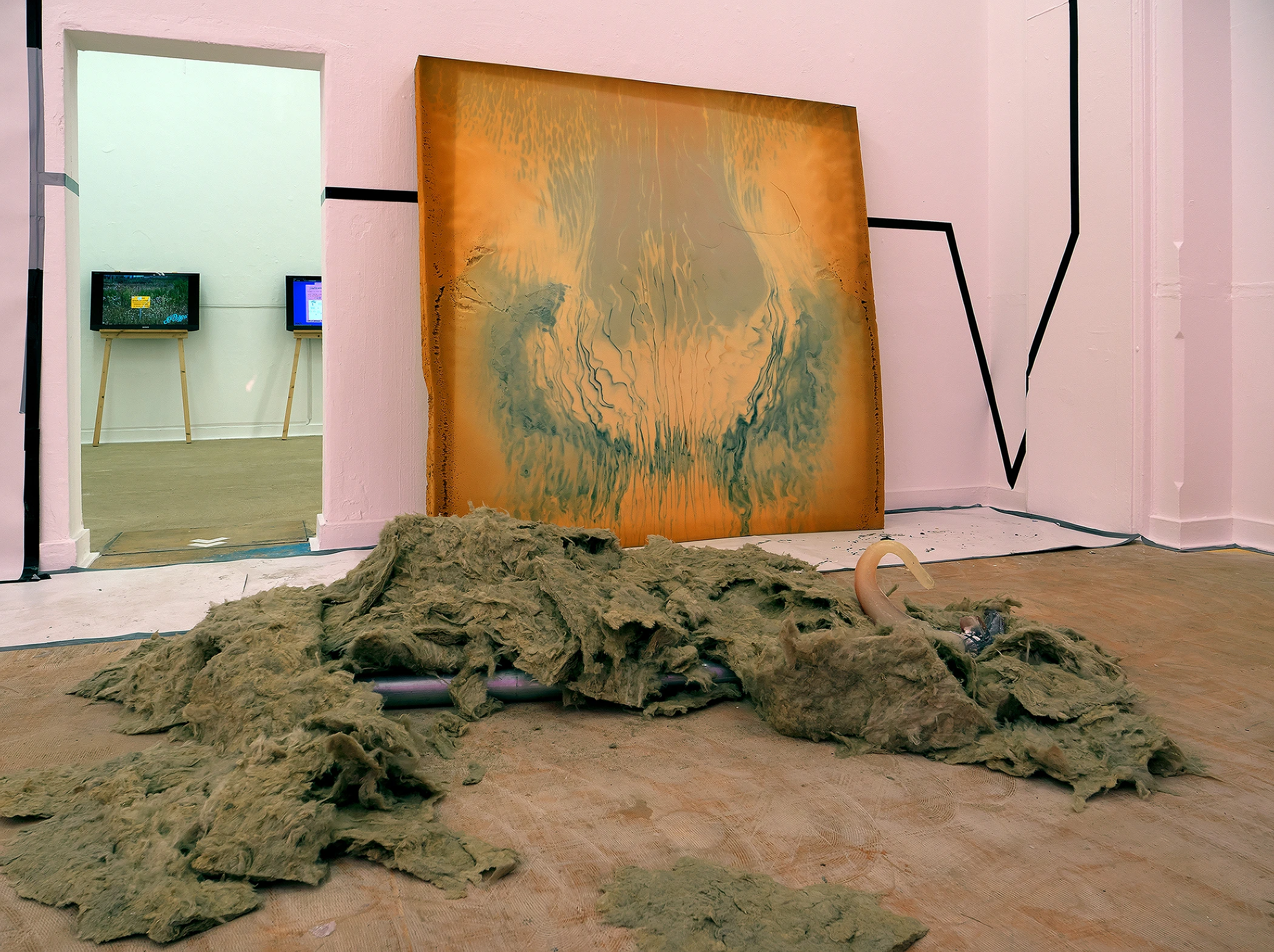
Irene de Boer, Everything was in Ajar, (RE: Discovery), Installation View, Plateau NP3, RE:Search:Gallery, 2020, Groningen, NL. Photo: Jan Tengbergen
An Artist Who Listens to Materials
Irene de Boer (1994, The Netherlands) is an interdisciplinary artist working at the intersection of Art & Science, Material Culture, and Environmental Narratives. Based in Amsterdam and working internationally, her research-driven practice emerges through long-term collaborations with scientists, museums, universities, and research institutions. Together they investigate geology, mineralogy, biomineralisation, archaeology, and material science: not as subjects to illustrate, but as shared territories for artistic exploration.
Growing up in the Dutch gas-mining region profoundly shaped de Boer's understanding of landscapes as living archives of extraction, transformation, and resilience. Since then, her fieldwork has taken her to earthquake-prone regions in Japan and New Zealand, laboratories in California, geological collections, and collaborations with researchers whose work continually reshape how she understands the material world. These encounters become the foundation for installations, textiles, sculpture, moving image, writing, and long-term research.
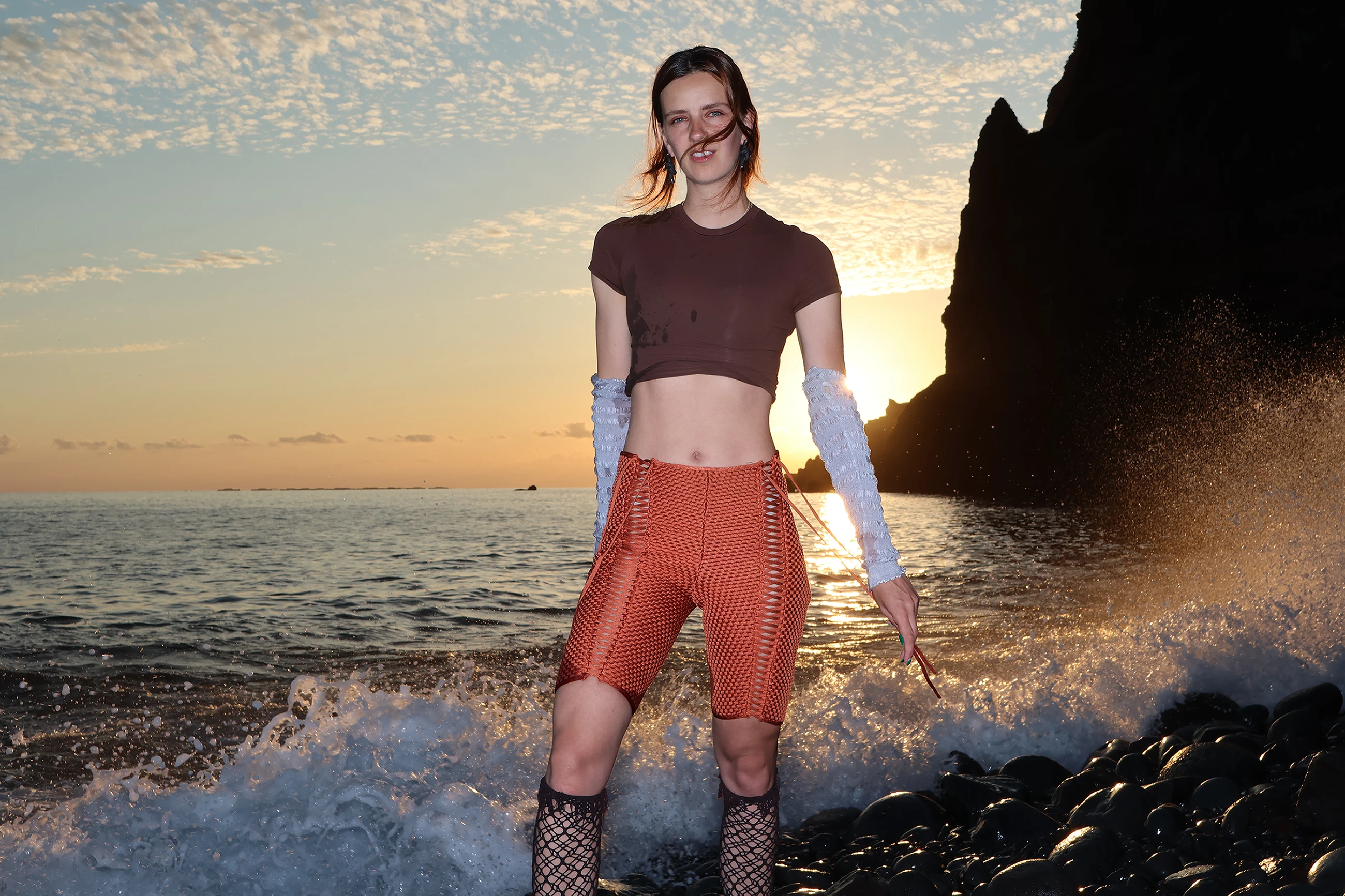
Irene de Boer Portrait, Madeira, 2026. Photo: Babak Esmaeili
Quasicrystals & Collaborative Research
One of the central threads within her ongoing research project Min[d]ing Crystals has been her collaboration with researchers at Caltech, including Professor Paul D. Asimow, investigating quasicrystals through contemporary crystallographic research. Rather than presenting scientific discoveries as facts, de Boer translates them into immersive environments where research becomes atmosphere, material, and speculation. Scientific knowledge becomes a language through which viewers can experience complexity, curiosity, and wonder.
Rather than treating science as a source of certainty, she approaches it as a shared language for asking better questions. Fieldwork, laboratory collaborations, and conversations with specialists become starting points for artworks that move between research and imagination. Crystals, minerals, industrial residues, biological processes, and landscapes function not merely as subjects but as active collaborators that reveal hidden relationships between ecology, technology, memory, and the body.
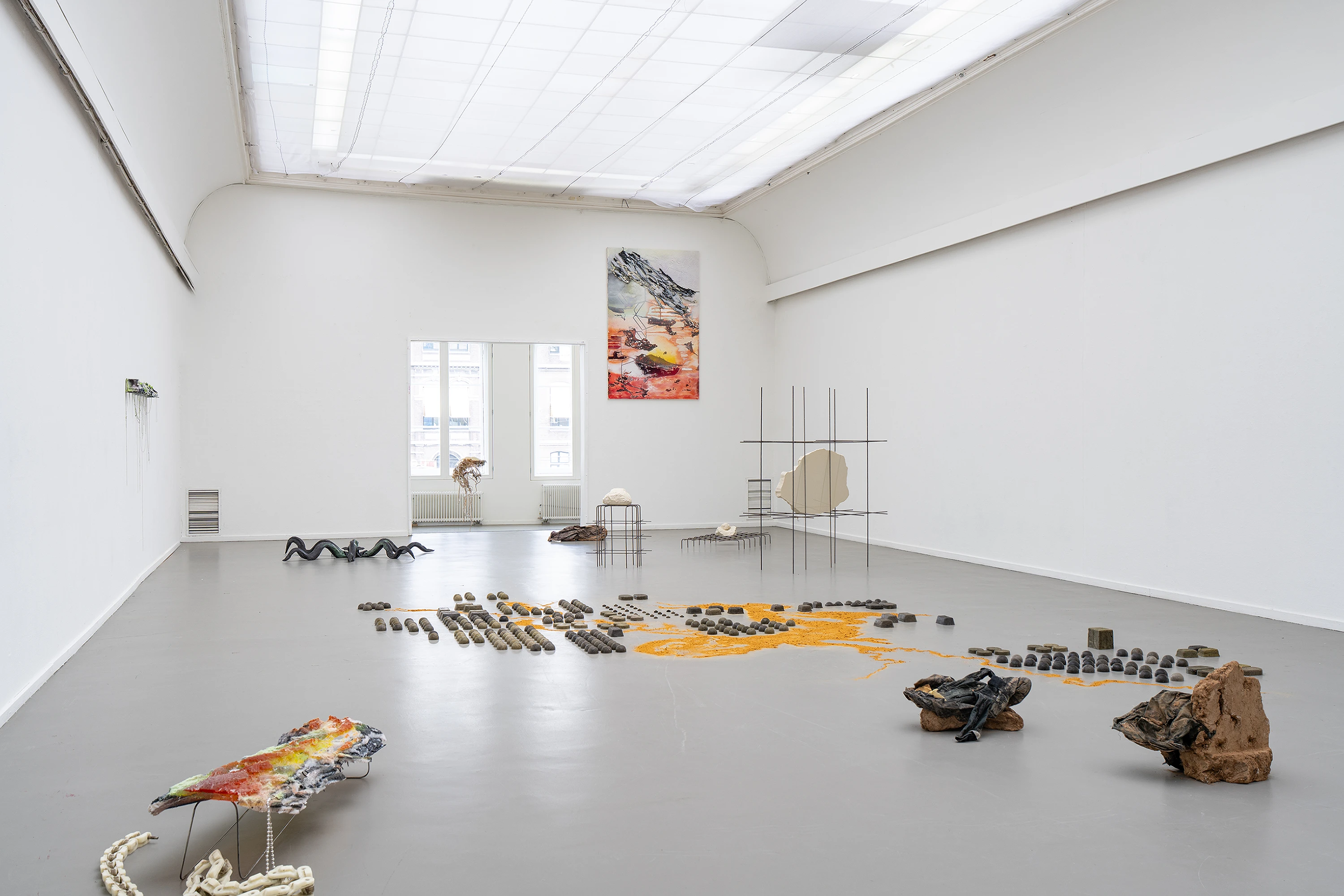
Strata Strolling, Group show Installation View, Arti et Amicitiae, 2026, Amsterdam, NL. Photo: Jonathan de Waart
Alongside exhibitions, writing has increasingly become an extension of de Boer's artistic practice. She is interested in developing speculative forms of social theory that explore how future cultures might emerge through new relationships with materials, technology, and ecology. Rather than only responding to existing cultural structures, she hopes to contribute to new cultural imaginaries: frameworks that help us think about how we might collectively inhabit the future.
This fascination with future culture is often grounded in unexpectedly familiar references. One recurring point of departure is The Flintstones. Their world imagines technological progress through prehistoric matter, where stone, minerals, animals, and domestic life coexist in playful contradiction. That inversion continues to resonate within de Boer's own work, where ancient geological processes meet contemporary technologies, and where the future is imagined through materials that have existed for millions of years. Rather than looking toward sleek visions of tomorrow, she is interested in futures that remain deeply rooted in the Earth's geological memory.
This way of thinking also forms the basis of her ongoing collaboration with the Korean collective RE#Sister, where they are developing The Magnetite Theory, an evolving conceptual framework centred on orientation. Magnetite, the mineral that enables many organisms to navigate through Earth's magnetic field, becomes both a scientific phenomenon and a cultural metaphor. In a world increasingly shaped by environmental instability, technological acceleration, and information overload, orientation itself becomes a material, social, and political question. Instead of asking only what we extract from the Earth, The Magnetite Theory asks what materials might teach us about finding direction, building relationships, and imagining alternative forms of collective navigation.
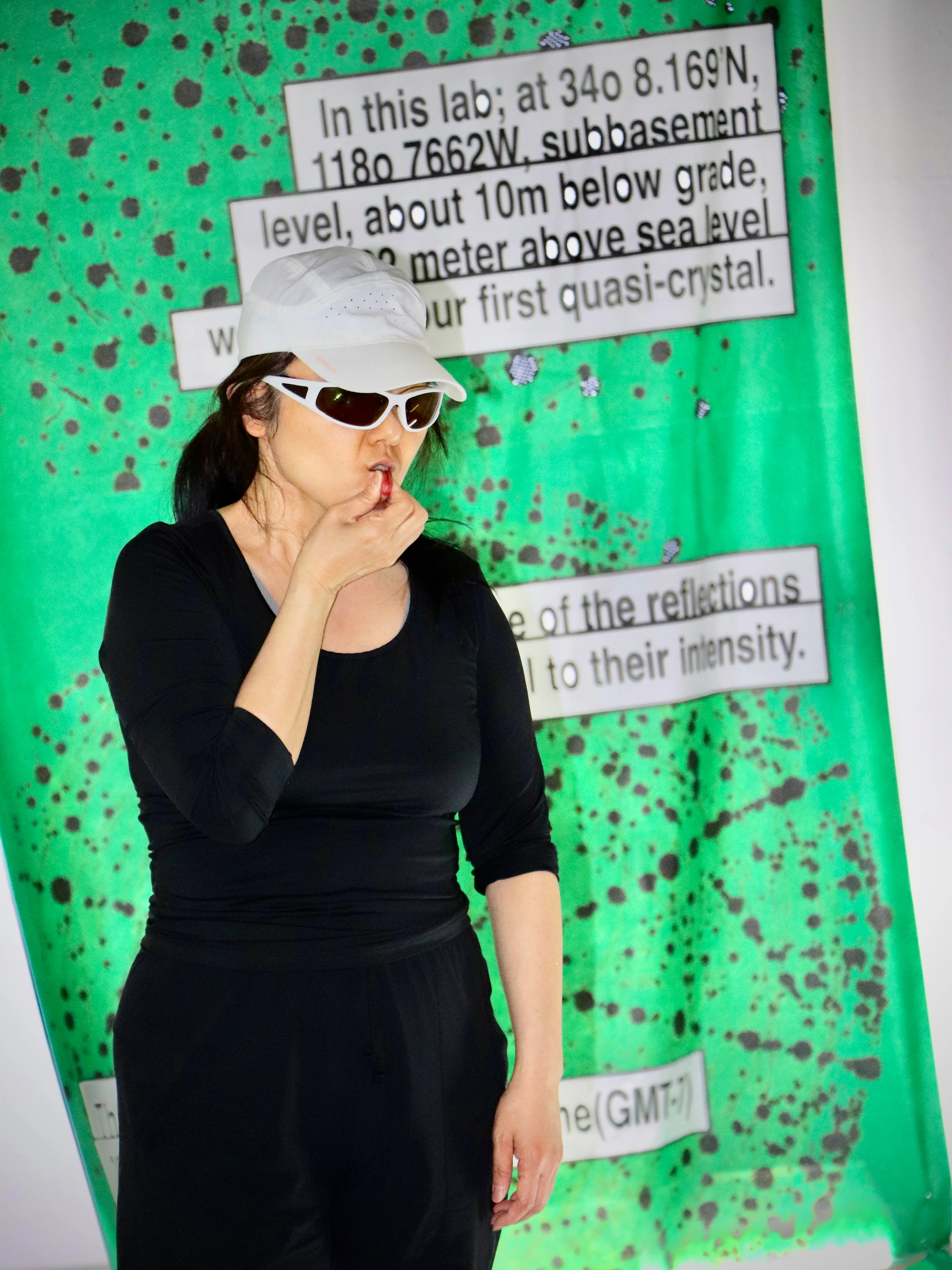
‘2’22’ Irene de Boer x Re#Sister Korea, CICA Museum, 2025, Gimpo, South Korea
Material Intelligence & Future Imaginaries
At the core of her practice lies a fascination with material intelligence: the idea that matter is never passive but continuously records, transforms, responds, and generates new possibilities. By bringing together scientific research, material culture, speculative writing, and artistic experimentation, de Boer seeks to create spaces where environmental narratives become tangible and where viewers are encouraged to reconsider their own position within larger ecological and planetary systems.
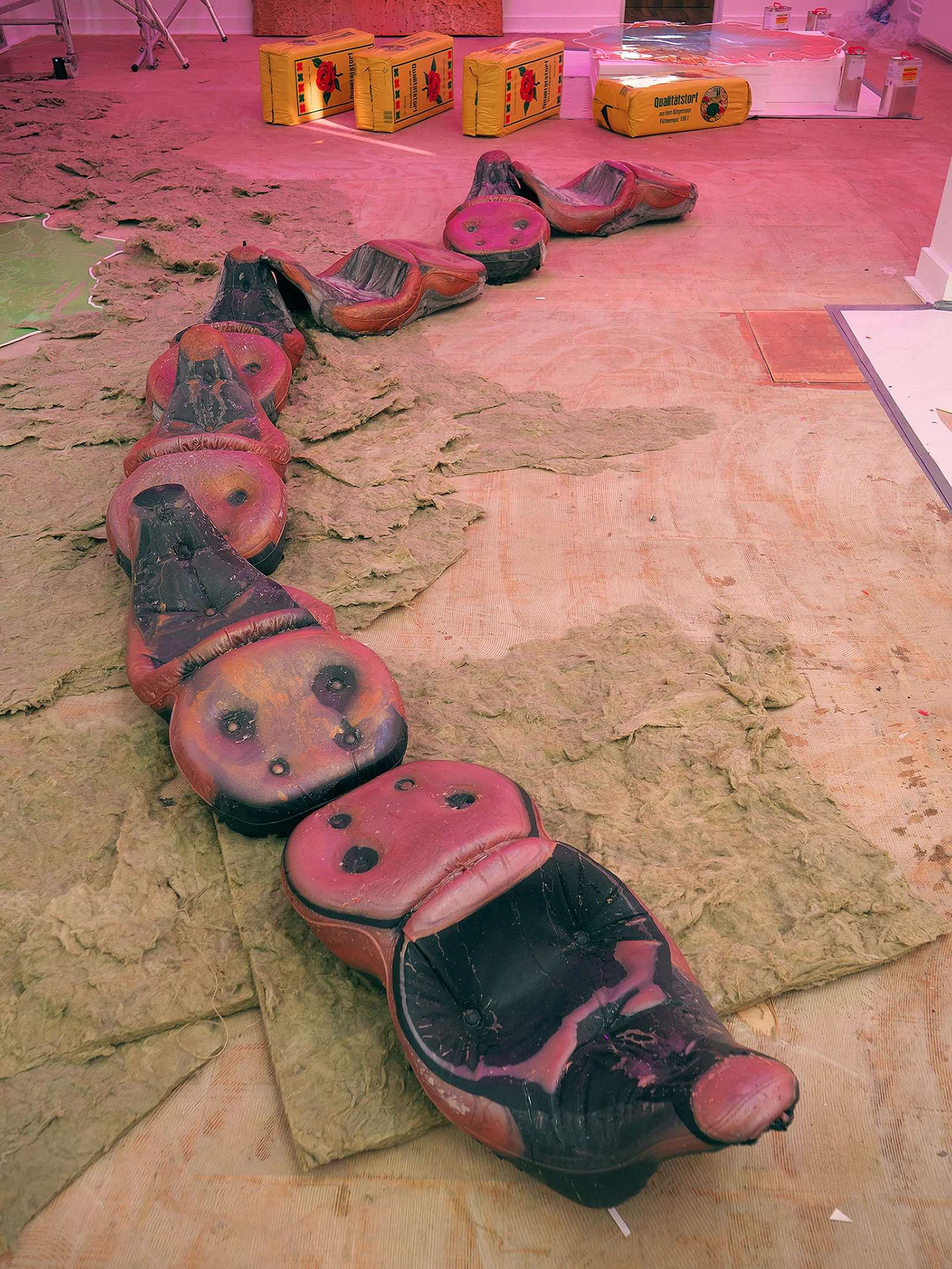
Irene de Boer, Everything was in Ajar (RE: Discovery), 2020, mixed media installation. Photo: Jan Tengbergen
Upcoming Exhibitions & Residencies
The coming year marks a new chapter in this ongoing research. Following recent exhibitions in Amsterdam, South Korea, and Los Angeles, upcoming projects include the second chapter of RE#Sister × Irene de Boer in Seoul, a group exhibition at Daejeom Art Space on Jeju Island, and her forthcoming solo exhibition Environments of Expansive Well-Being at CMAY Gallery in Los Angeles. De Boer is also participating in the YGA-4 Trajectory, a year-long development programme by Plateau NP3 x Groninger Museum, under the guidance / in close collaboration with the curators and directors Ruud Akse and Zwaan Ipema, Clare Molloy, Curator of Contemporary Art, and Roos Gortzak, Artistic Director. Alongside these exhibitions, de Boer will begin a residency at EKWC, where she will further investigate ceramics and material transformation through new sculptural processes.
If quasicrystals taught us anything, it is that impossibility is often only temporary. Through collaboration, research, and artistic imagination, de Boer hopes to contribute to new cultural imaginaries: where art does not simply reflect the future, but actively participates in making it. Perhaps future culture, like the quasicrystal itself, first appears impossible. There should be no such creature, until suddenly, there is.
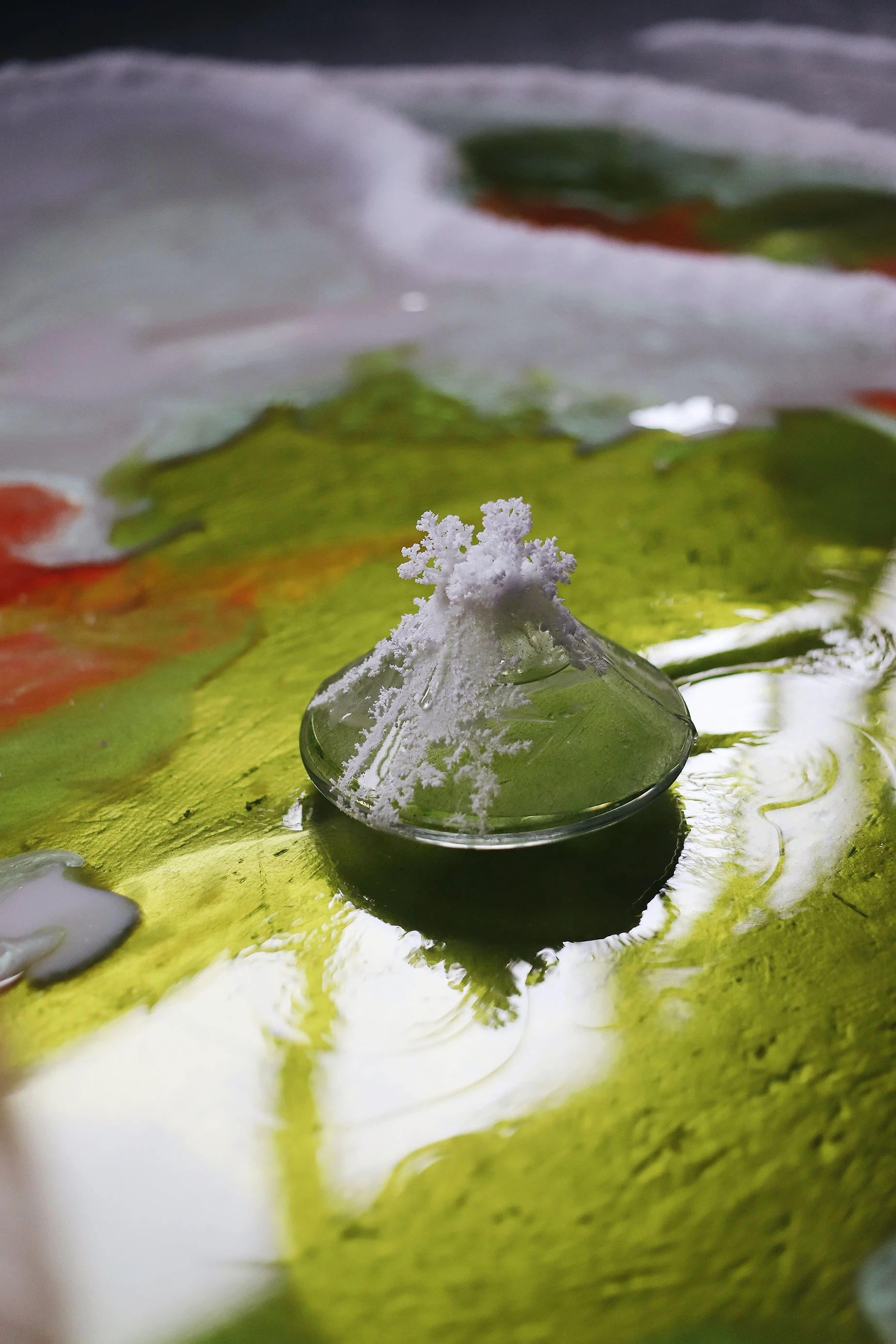
Irene de Boer, Tales of Potassium, Mixed media installation, 2023, Platform POST, Arnhem, NL
