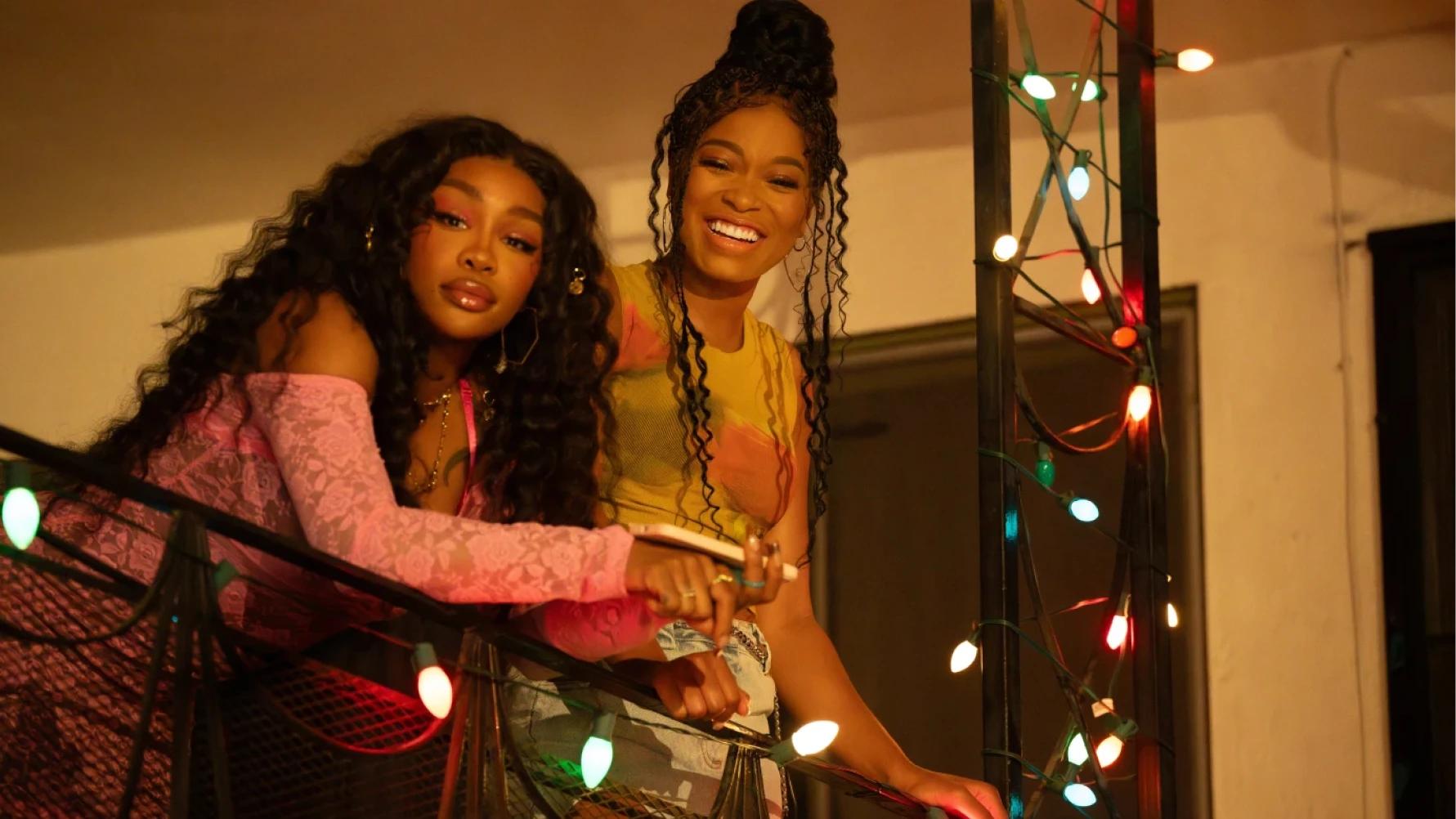
This is One of Them Days – where “almost got it” is never enough for the universe. On borrowed time. Keke Palmer and SZA’s rental crisis fuels their downward spiral, as being kicked out of their apartment begins to loom over them. They have no idea how their life paths will unfold when the band begins to play. Crafted by music video director Lawrence Lamont, the film captures the feeling of “I’ve had enough today! My good luck has expired, and the universe turns against me.” It is sort of funny, and every next move feels unexpected, as the characters’ situation is driven by fate. Together with the screenwriter Syreeta Singleton, the film provides a script through the stream of inside jokes, the artwork and the artist's decision to let the journey create its own value.
How Could This Happen to Us?
In One of Them Days, working at a local restaurant, Dreux (Palmer) dreams of becoming a franchise manager amid life’s constant hustle. Her very best friend Alyssa (SZA) is a free spirit who is never ready to accept herself as an artist, as though she is killing time at random jobs that are beneath her worth. They are not sure when the right time is to take action, spending their lives pushing away their own potential. But, life comes to them with all the triggers that bring out the meaning they already have. Their long-term friendship has seen them through thick and thin, but life may have dealt them a bad hand this time. Will their friendship survive the tension of this tumultuous rush? And will they align with the core values they are supposed to maintain?
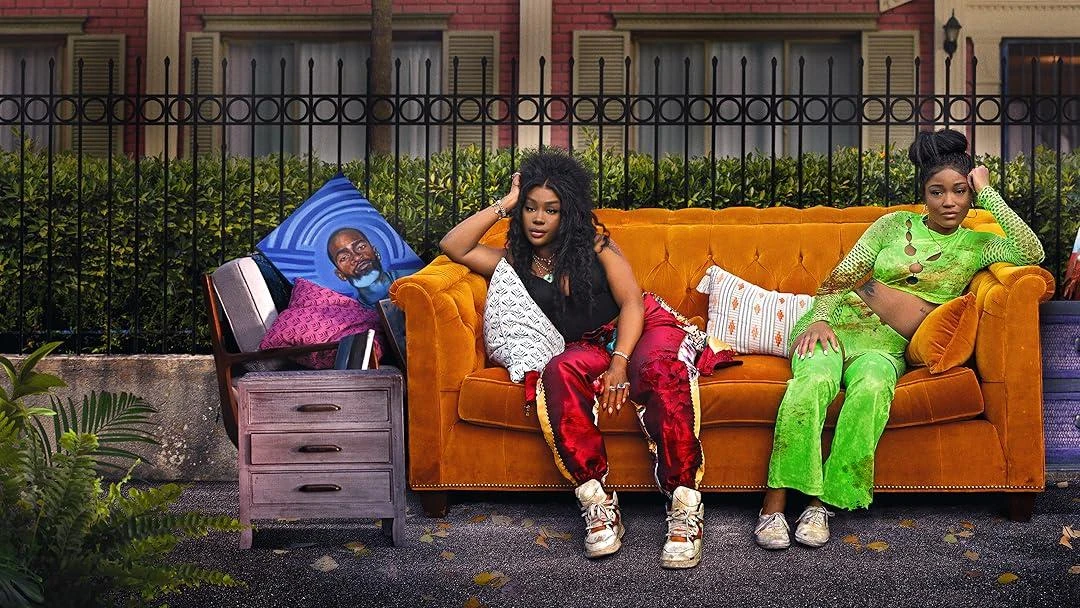
Keke Palmer and SZA in “One of Them Days.” © Anne Marie Fox/Sony Pictures
If only they had woken up to a morning just like the day before. But no, this story is not spontaneous. Now, let’s see how things are supposed to get stuck in a dead end. Meeting Dreux at NORMS, a restaurant known for its nostalgic take on the classic American lifestyle, she serves customers with a proud smile on her face. Cultural patterns often feel like a waste of time. People cling to the hope of something better, waiting until the last minute, only to get nothing in return. The overall culture creates a value system in which people feel compelled to own or experience the things that are believed to give meaning to their lives. Just as Dreux’s happiness depends on cultural values rather than who really she is, it destroys her individuality. Furthermore, in the following scene, Alyssa disrupts this rut by driving off swiftly in her car.
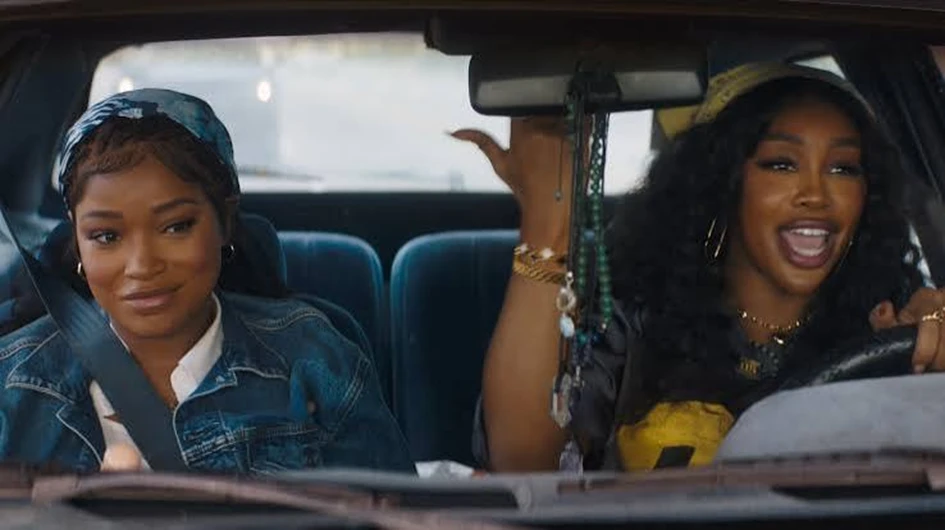
Keke Palmer and SZA in “One of Them Days.” © Anne Marie Fox/Sony Pictures
Her apparent lateness (thanks to Dreux’s prank) and refusal to follow the expected order disrupt that structure, creating a sense of chaos, turning the moment into a quiet rebellion against the cultural expectations she has to live up to. The value of culture only exists when one constantly desires to be part of that communal identity. The movie, however, marks a major shift from the cultural value to the artistic value of individuality — people ought to live life as an art form, and each person is an artist. Both triumphs and hardships are ways in which life calls upon the artist to create meaning from their experiences.
Catastrophes Before the Calamity
This is just the beginning before the chaos builds toward it. There are always twists and turns before everything is sorted out. This time, calamity knocks on the door in human form—little do they know that Keshawn (Joshua Neal), Alyssa’s sneakerhead dimwit boyfriend, will seriously convolute the situation. And apparently, if that situation is a little bit odd, he goes too far, shamelessly offering his opinions as though he owns the place and virtually taking over the girls’ house, his Nike sneakers littering every corner. He’s far too overconfident for someone acting as though he has already moved in, though no one knows why he has such an oddly prominent place in the household dynamic. It is because the film riffs on the idea that cultural value over artistic value creates a rigid hierarchy between Keshawn and Alyssa. The scene confers cultural superiority onto the iconic Nikes, while Alyssa’s painting is left in the corner. For the Nike collection, from Jordans to Dunks, they are no longer just sneakers but stories, legends, artworks — the most sought-after kind — and cultural symbols.
At first, Nike entered the market as footwear, but it has become a lasting legend, growing into more than just a sneaker over time. What it represents is not instant fame, as it is not a product that sprang up overnight; it is a symbol crafted through a long, meticulous process, evolving step by step from design into narrative. Those iconic sneakers will always find someone willing to pay a premium for them. Of course, a product can also achieve a cultural breakthrough and become a work of art overnight. However, we are talking about what is given in the film One of Them Days.
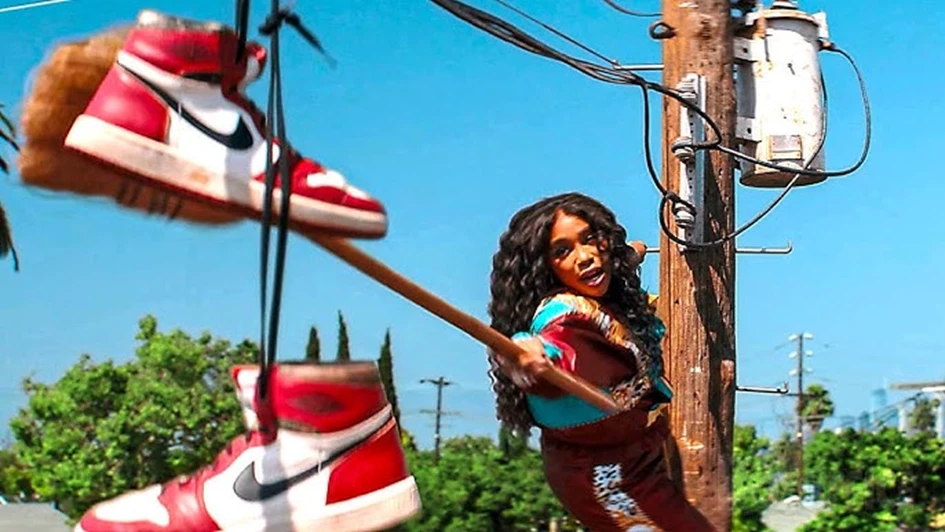
People could kill for a pair of Nike Jordans. Alyssa tries to catch one of them in “One of Them Days.” Courtesy of Sony Pictures.
Within the Alyssa–Keshawn rivalry, Alyssa conceives an idea that “The painting is not even that good”; she reduces its worth in comparison to Nike’s cultural value. This vision pisses Dreux off, who accuses Alyssa of treating them like doormats and warns that if she keeps going like this, she'll never ever make it into MoMA (The Museum of Modern Art). Another much-talked-about issue is introduced to the audience: the false belief that an artist gains recognition only when their work is placed in the marketplace, whether in galleries or at art fairs. Alyssa's paintings never hit the market; she is waiting for a sign from the universe. This does not make her less successful or any less worthy than others.
Following her wish, perhaps soon to be answered, the universe has its own plans, sending her through recurring scenarios that end in catastrophe. The breakout moment comes when the dopey Keshawn sneaks off with Alyssa’s and Dreux’s rent money. They discover the betrayal when the landlord comes knocking at their door. Now, they are on the verge of eviction and must find a way to pay their rent before time runs out. Here, the film reaches its peak moment, as it is revealed that Keshawn wasted the rent money on a misguided investment, a T-shirt business featuring a large “Cucci” logo. This reference speaks to one’s desire to get close to the art object itself, to become part of it in order to draw inspiration and catch its vibe. The characters go through different phases, strengthening their bond with the art object and gradually realizing where they stand in relation to it.
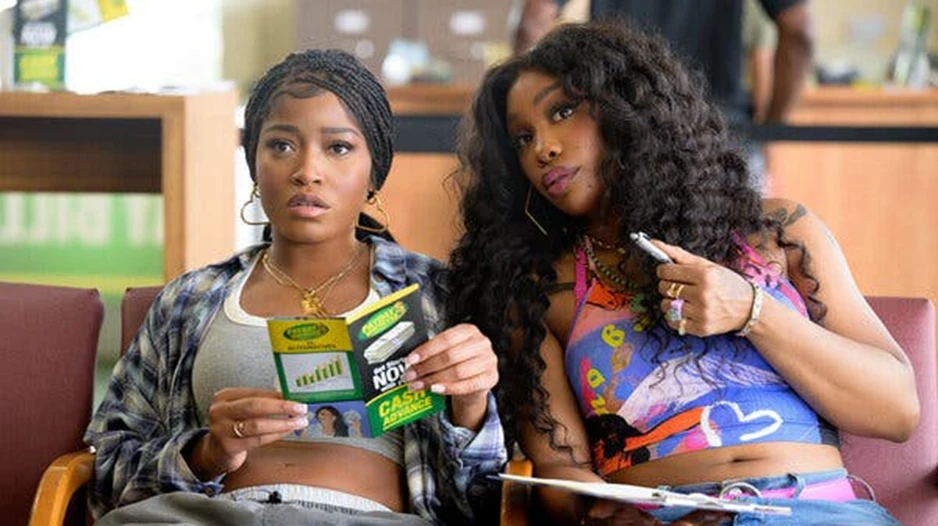
Dreux and Alyssa review a cash advance brochure in a scene from Payday Whenever. Courtesy of Sony Pictures.
Scraping together the rent money drives them to places they should never have been. A mysterious stranger with the ironic name "Lucky" (Katt Williams) shows up. In an ominous tone, he reverses Nike's famous slogan into "Don't do it!" outside Payday Whenever, as if he can foresee the near future. If it were meant to happen by now, the universe would have made them earn the money this way yet it does not. Inside, the female receptionist looks down on Alyssa and asks, “Is there a bill for your so-called art?” the moment Alyssa reveals she is an artist. The emphasis is that society does not recognize your worth unless you are culturally relevant; therefore, you are not seen as an artist. Once again, they are pushed aside by an unseen force, as if the universe itself refuses them, until they learn to make their own way. Whether it is a kind reminder from the universe or a gentle push, the characters, as artists, begin to question what cultural value truly means, ultimately discovering what they want and how to fully embrace their own potential.
The film demonstrates how social influence can elevate an object from a simple commodity to a highly sought-after cultural icon. Life sent them to places where people drop money to be part of those stories. Those embedded visuals from Church’s Texas Chicken to Nike suggest how inherent worth would affect the characters, and how artistic value may be collectively crafted. At times, the narrative relies on a turn of events, devised to shape what is seen as more worthy.
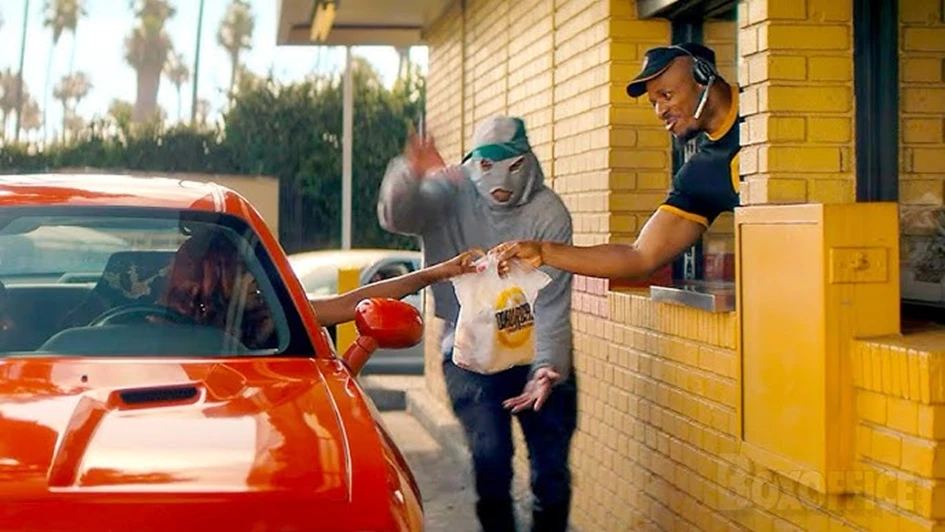
A Chicken Bandit obsessed with Church's Texas Chicken. Courtesy of Sony Pictures.
Alyssa and Dreux need an engaging conflict, mystery and a slump – wherever there is attention, there is a greater concern. They miss every potential financial opportunity that could have prevented their eviction, while quick, consumption-driven forms of value fail to work out. The job interview Dreux is trying to make it to, a major opportunity for her career, has had its share of drama as well. Even if Dreux’s partly made-up success stories reflect her desperate desire to land a job, they do not come from lived experience. Still, the universe has no need to evade the truth. If life is an art, it needs an interpreter, an artist, a creator to reveal what is hidden. They create a narrative thread that gives their work a unique identity; their art now possesses a story of its own. Even life's adversities are part of the art.
The universe denies them these chances, and it is only after they are cast out of the house that true value becomes apparent, when Alyssa’s painting is finally appraised by new neighbor Bethany (Maude Apatow), a social media influencer. In this manner, bringing out the value of something depends on visibility. The film highly criticizes the fact that we live in an age where people go to fancy art galleries just to show up, whereas in reality, the origin of art is life, coming from street culture and suburbs. Likewise, Bethany breaks this perception and curates a party for Alyssa’s artworks in the low-rent apartment’s garden. All problems come to an end.
From there, the artistic value built through their convoluted experiences is externalized by their neighbor Bethany, a social-media-driven figure, who launches an exhibition of Alyssa's art in their backyard, thereby constructing a new layer of cultural meaning or value around the work.
The Universe Always Has a Plan
Everything worked out. It had seemed that the universe always has the last word" or "It seemed like the universe always has the last word. Now, if life comes to you, it is a process of art that emerges through chaos – chaos is part of life, and so is art. Life, of unknown origin, places you in situations for which you could never be fully ready. The ever-changing moments in life redefine someone’s perception about art. In fact, by putting someone in uncertainty and desperation where artistic value gains meaning, life makes it inevitable to walk away as if nothing had happened.
The film plays out the artistic value as something that brews in the middle of chaos in which Alyssa and Dreux find themselves stuck. The more they confront life itself, the more they gain a new perspective on their relationship with art, and the cultural value against which they had positioned themselves becomes, in a sense, devoid of meaning. Now, the story behind their art creates its own cultural value.