In commercial photography, a production designer works where art and marketing meet. For me, production design is far more than decorating a space or arranging beautiful objects. It is about creating a visual language that allows a brand to communicate with its audience in a way that feels authentic, memorable, and emotionally engaging.
Every commercial project is built around a specific objective. Whether the goal is to launch a new product, strengthen a brand identity, or create editorial content, every visual decision serves a purpose. Colors, materials, textures, lighting, furniture, and spatial composition all work together to shape the viewer's perception. Nothing appears by accident. Every element contributes to the story the brand wants to tell.
While commercial photography is driven by business goals, visual storytelling gives those goals emotional depth. People rarely connect with products through functionality alone. They remember images that create an atmosphere, evoke curiosity, or make them feel part of a carefully imagined world. Production design helps transform marketing ideas into visual experiences that audiences can connect with on a more personal level.
Every project begins with a brief. This is where all the essential information about the brand, its identity, and the goals of the shoot comes together. A brief usually includes the brand's positioning, the target audience, visual references, campaign objectives, and the format of the final content, whether it is an advertising campaign, editorial story, social media content, or e-commerce photography.
At this stage, the production designer begins translating strategic ideas into visual concepts. Rather than thinking about decoration, I focus on understanding what emotions the brand wants to communicate. What should the viewer feel when looking at the image? Which visual language best represents the product? How can space support the narrative instead of simply framing it? These questions become the foundation for every creative decision that follows.
After studying the brief, the concept development stage begins. This is where research, experimentation, and visual thinking come together. The objective is never simply to make something beautiful. Beauty alone rarely creates a memorable image. Instead, the goal is to build a coherent visual system in which every component supports the central idea of the project.
At this point, the production designer begins thinking much like a scenographer. The space is no longer treated as a neutral background. It becomes an active participant in the visual narrative. Every object exists for a reason, every surface contributes to the atmosphere, and every composition guides the viewer's attention through the image.
This scenographic approach is what fascinates me most about production design. A successful set does not simply contain beautiful elements—it creates an environment where the product naturally belongs. Instead of competing for attention, the surrounding space strengthens the narrative and amplifies the emotional qualities of the subject.
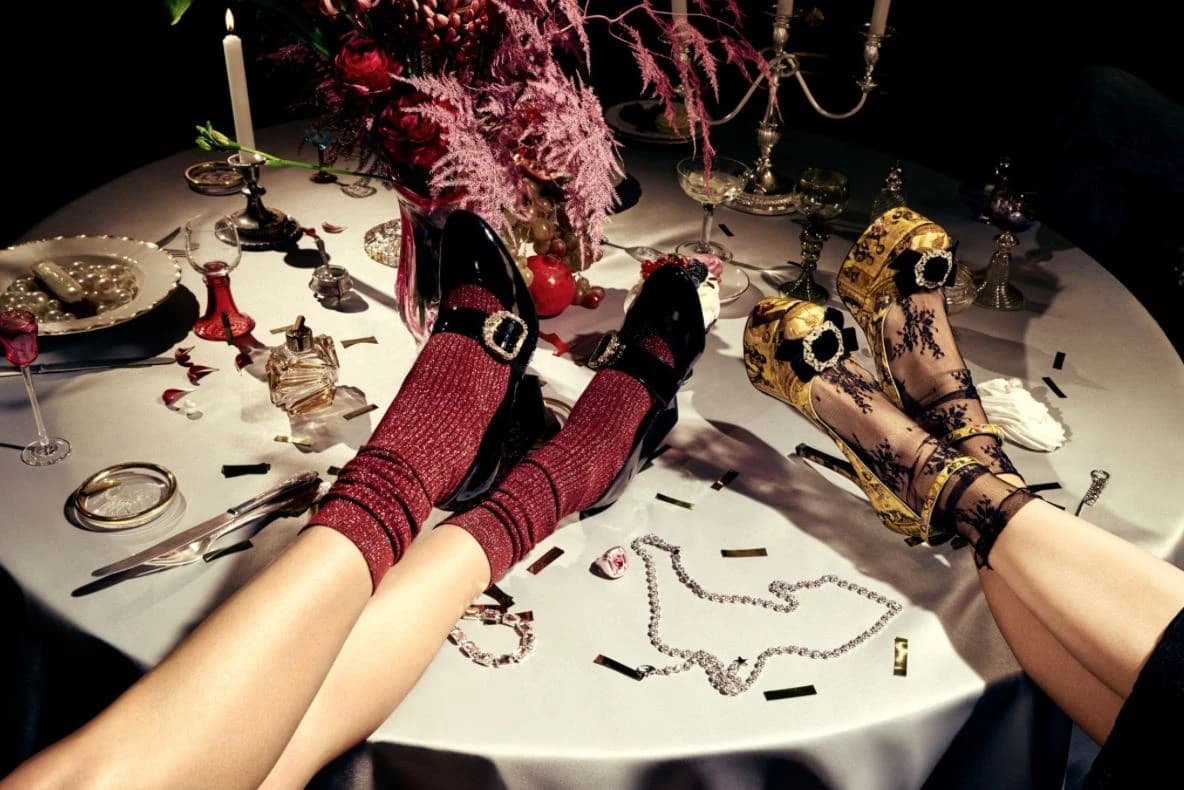
One project that clearly reflects this approach was my editorial shoot for Flacon Magazine in collaboration with Gold Apple. The location itself was a historic interior filled with architectural character and decorative details. Rather than treating this setting as a ready-made backdrop, I explored ways to create a dialogue between classical architecture and a contemporary fashion aesthetic.

My goal was to design a space that could tell its own story while remaining visually balanced. Carefully selected furniture, vintage tableware, candles, flowers, textiles, and decorative objects became narrative tools rather than simple props. Every element was chosen not only for its appearance but also for the atmosphere it created within the composition. Together, these details built a world that felt timeless, elegant, and emotionally rich.
In projects like this, space becomes an essential part of the visual narrative. This is why production design often feels closely connected to exhibition design and theatrical scenography. It is not simply about choosing attractive objects or filling an empty room. It is about shaping movement, creating rhythm within the composition, balancing visual weight, and designing an environment that encourages the viewer to engage with the image for longer.

Good production design often goes unnoticed because everything feels natural and inevitable. Yet behind that sense of effortlessness lies a long process of research, testing, refinement, and countless small decisions. Every object is evaluated not only for its aesthetic qualities but also for how it contributes to the overall story. Sometimes removing a single detail strengthens the image more than adding several new ones.
In the Flacon Magazine project, every decorative element supported the atmosphere without distracting attention from the key subjects of the shoot. Instead of overwhelming the composition, the objects created layers of visual interest that invited the viewer to explore the image more closely. The result was a space that felt immersive rather than decorative—a setting that enhanced the editorial narrative while allowing the fashion and products to remain at the center of attention.
