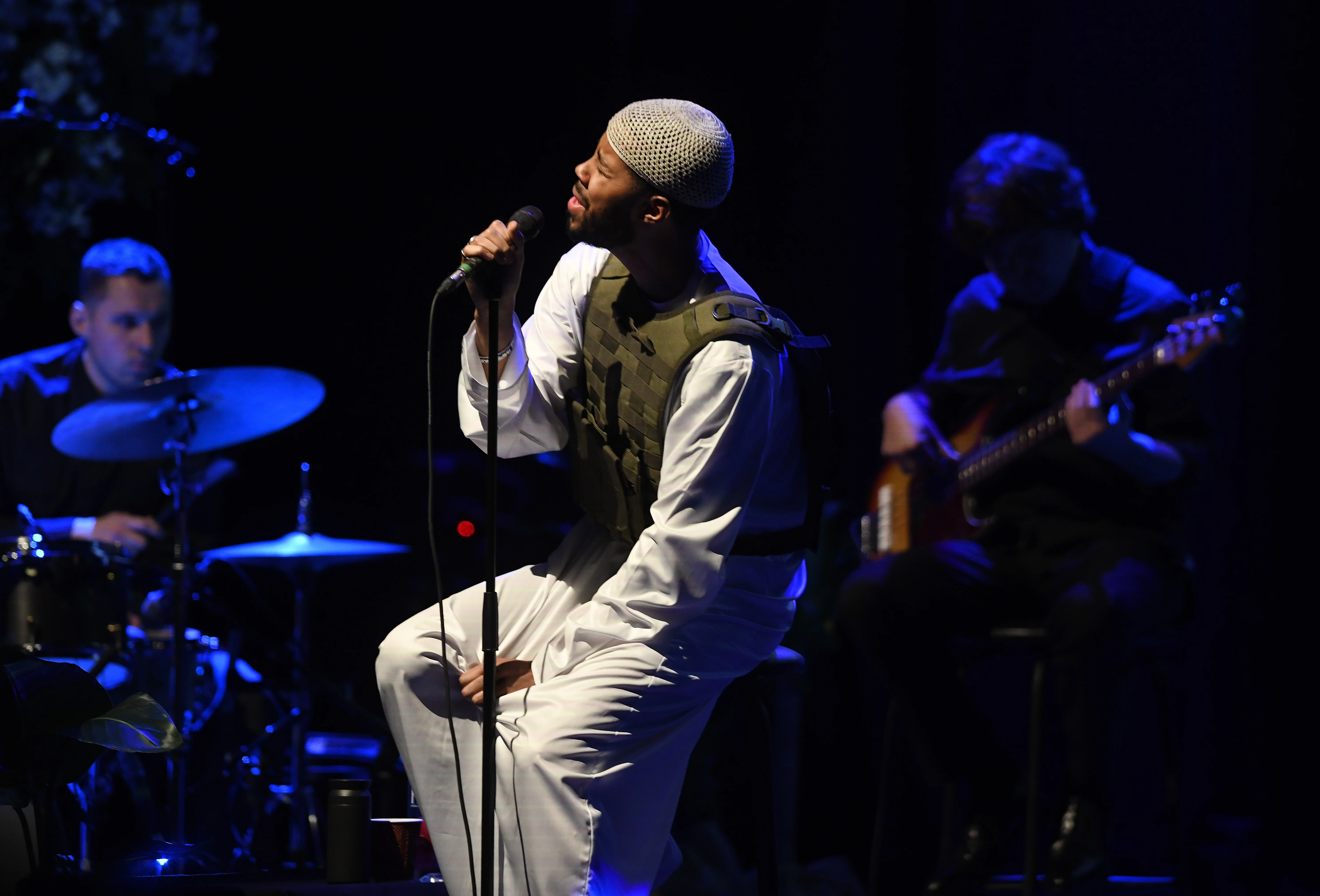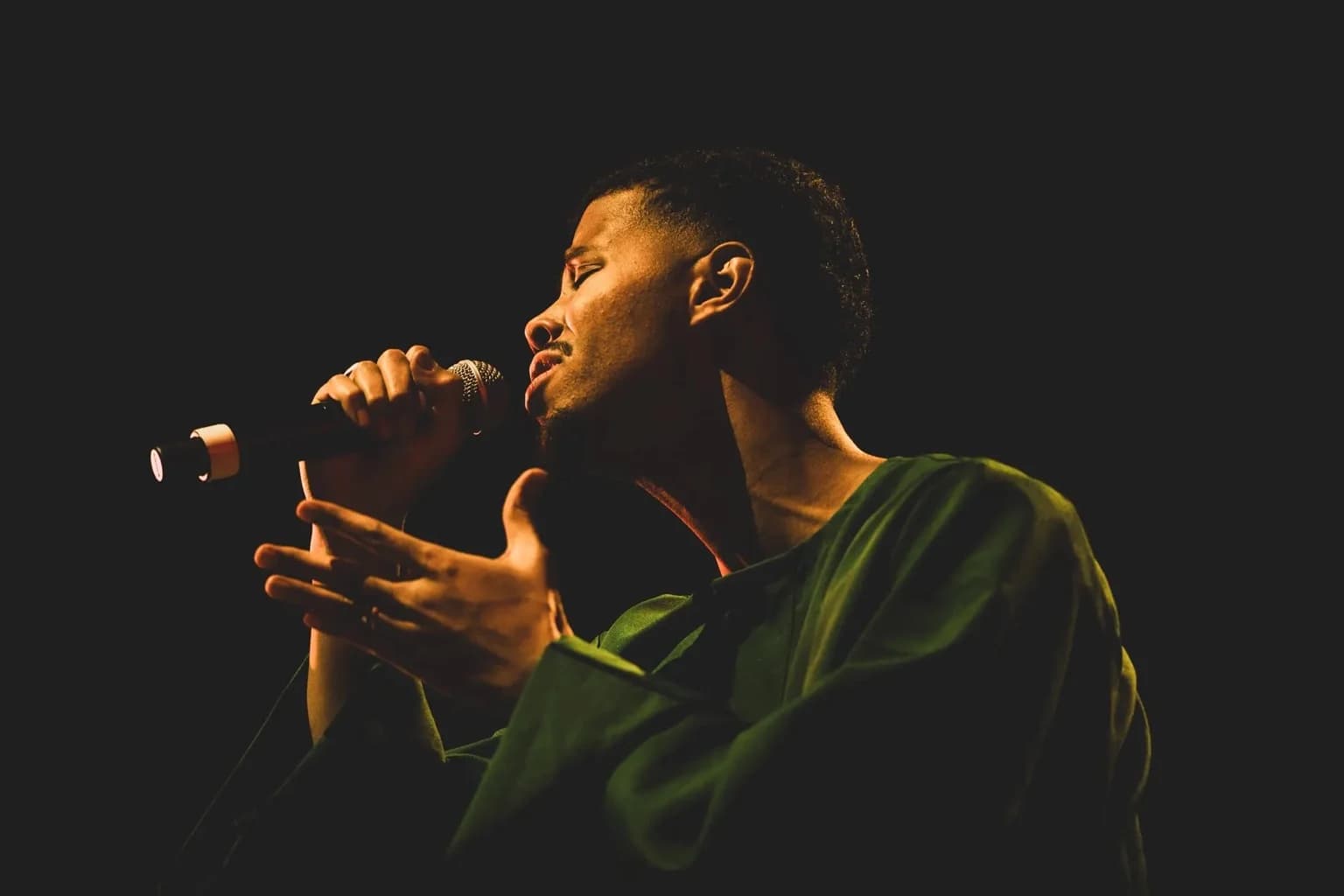
Mustafa the Poet represents the complexity of diaspora identity, balancing his Sudanese heritage, Muslim faith, and experience of being Black in Canada. His unique blend of Sudanese music and folk poetry creates space for memory and belonging. Yet after his viral NPR Tiny Desk Concert, critics in Sudan questioned his authenticity, reigniting debate over who defines cultural representation in the diaspora.
Diaspora voices in global music
Diaspora voices don’t just “add diversity” to global music; they rewrite what it means to belong and are taking charge of their own narrative in the face of modern globalisation. There are artists across the music industry who are using their art to turn private histories into public language. Take Riz Ahmed’s concept album The Long Goodbye, for example. The project reimagines a toxic breakup as Britain’s fraught relationship with its South Asian citizens, fusing rap, spoken word and theatre to stage the push-pull of home, hurt and hope.
Meanwhile, M.I.A.’s song “Borders” placed migrant bodies at the centre of her lyrics and video, at a time when they’re scapegoated and clouded by negativity in Western media and politics. Closer to Mustafa’s register, UK rapper Little Simz threads Nigerian heritage into British rap, exploring her faith and the realities of the London streets in a way that makes hybridity sound like home for many Nigerian-British and diaspora populations in the UK.These artists are preserving inherited identities while transforming them through new contexts and audiences. In that sense, the “authenticity” debates around Mustafa’s Tiny Desk are part of a larger conversation about how diaspora music isn’t a mistranslation but a living dialect of culture.
Who is Mustafa the Poet?
The debate raises challenging questions: when a diaspora artist shares their culture with the world, is imperfect but well-intentioned enough, or does it risk cultural misrepresentation? This tension sits at the heart of Mustafa’s work. Born in 1996 to Sudanese immigrant parents in Toronto’s Regent Park, Mustafa, widely known as Mustafa the Poet, grew up in one of Canada’s most historically marginalised neighbourhoods. He first gained attention as a teenager after performing a poem about gun violence at a local event that caught national media attention. By 2014, he was part of Prime Minister Justin Trudeau’s “Youth Advisory Council,” a sign of his early role as both artist and community voice. But even as he was celebrated for his political eloquence, Mustafa’s deeper project was always personal, giving poetic dignity to the lives of young Black Muslim men often depicted only through tragedy.
That mission shapes all his art. His debut album When Smoke Rises (2021) is a haunting folk-soul meditation on grief, written in memory of friends lost to gang and street violence. It uses sparse arrangements, mostly acoustic guitar and layered harmonies. In his follow-up, Dunya (2024), Mustafa extends that emotional and spiritual terrain, using the Arabic word dunya (meaning “the world” and often used in Islamic theology to describe humans’ temporary material life) as a philosophical reference. The record traces a journey between life in exile and balances sorrow with worship, faith, and yearning.
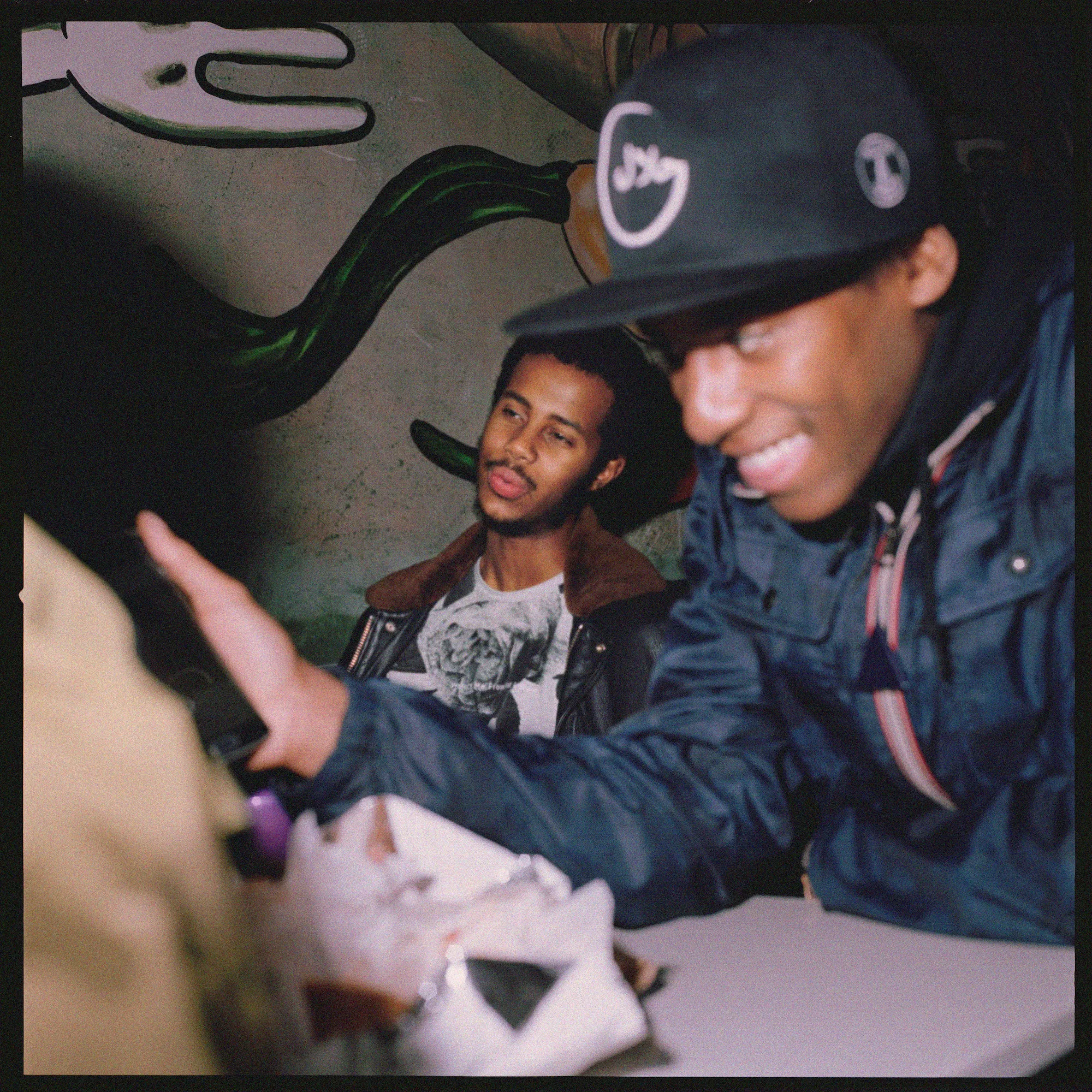
Debut album When Smoke Rises (2021).
Mustafa’s faith, storytelling, and lyricism come together to hold space for trauma, resilience, and love. He often sings in a restrained, almost prayer-like tone. He weaves in traditional instruments such as the tambour (a five-string lyre from northern Sudan) and traditional drums into his acoustic palette, creating what he calls a “folk of the displaced.” These choices aren’t ornamental. They’re deliberate gestures of remembrance and preservation.
Yet his artistic decisions also carry the complicated weight of cultural representation in a Western/global context. Who gets to tell stories, and how much return to roots can or should be demanded? Mustafa’s Sudan is both inherited and imagined. It’s filtered through Toronto’s high-rises, and for some, this makes his art beautifully hybrid yet for others, it invites scrutiny about authenticity. But perhaps the power of Mustafa’s work lies precisely in that space between and in showing that diasporic identity is not a distortion of heritage, but one of its living, evolving forms.
The Tiny Desk Performance
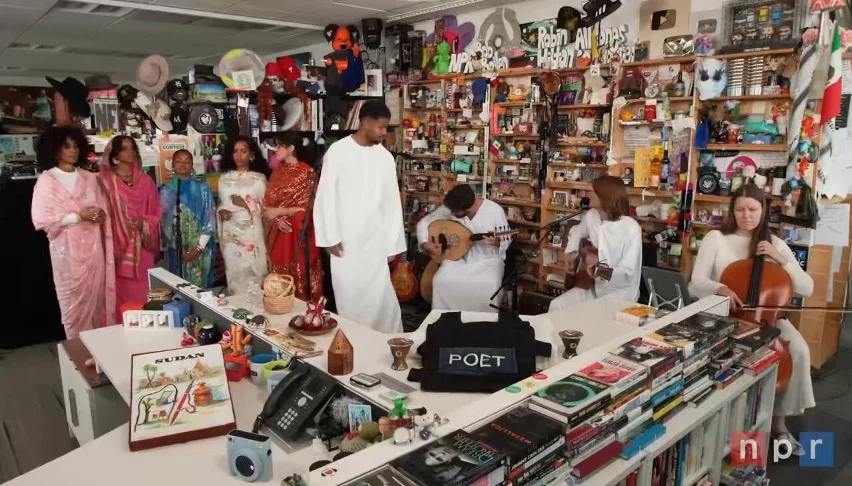
In September 2025, Mustafa performed at NPR’s Tiny Desk. The set included songs from Dunya and Stay Alive and he was joined by background vocalists from a choir of Sudanese women. His Tiny Desk concert is rich in symbolism and aesthetic choice: from his jalabiya (traditional Sudanese men’s clothing), and other objects celebrating Sudanese heritage.
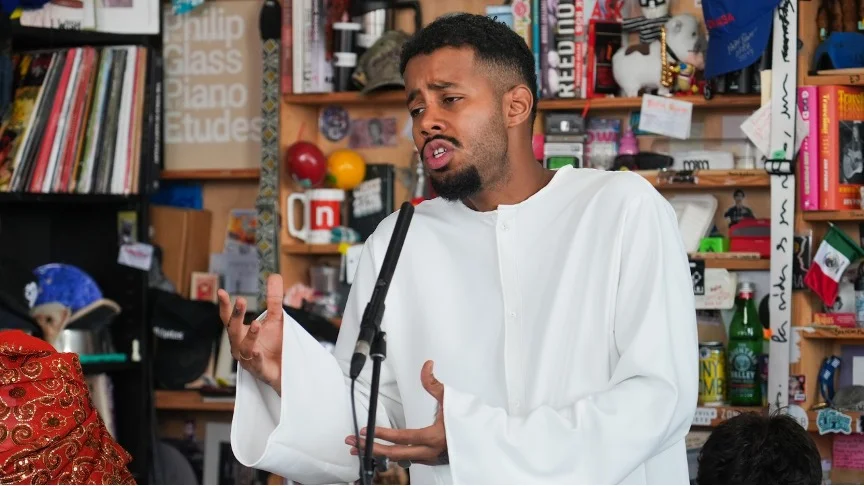
Mustafa: Tiny Desk Concert, NPR Music (2025). Still from the performance. © NPR / YouTube.
While many celebrated the performance for its emotional power and elegance, some Sudanese listeners expressed criticism. For some, elements felt forced and disingenuous. That the dancing, production, or presentation diverged from what they considered authentically Sudanese. Social media commentary says the performance felt awkward or that certain traditional Sudanese rhythms were missing.