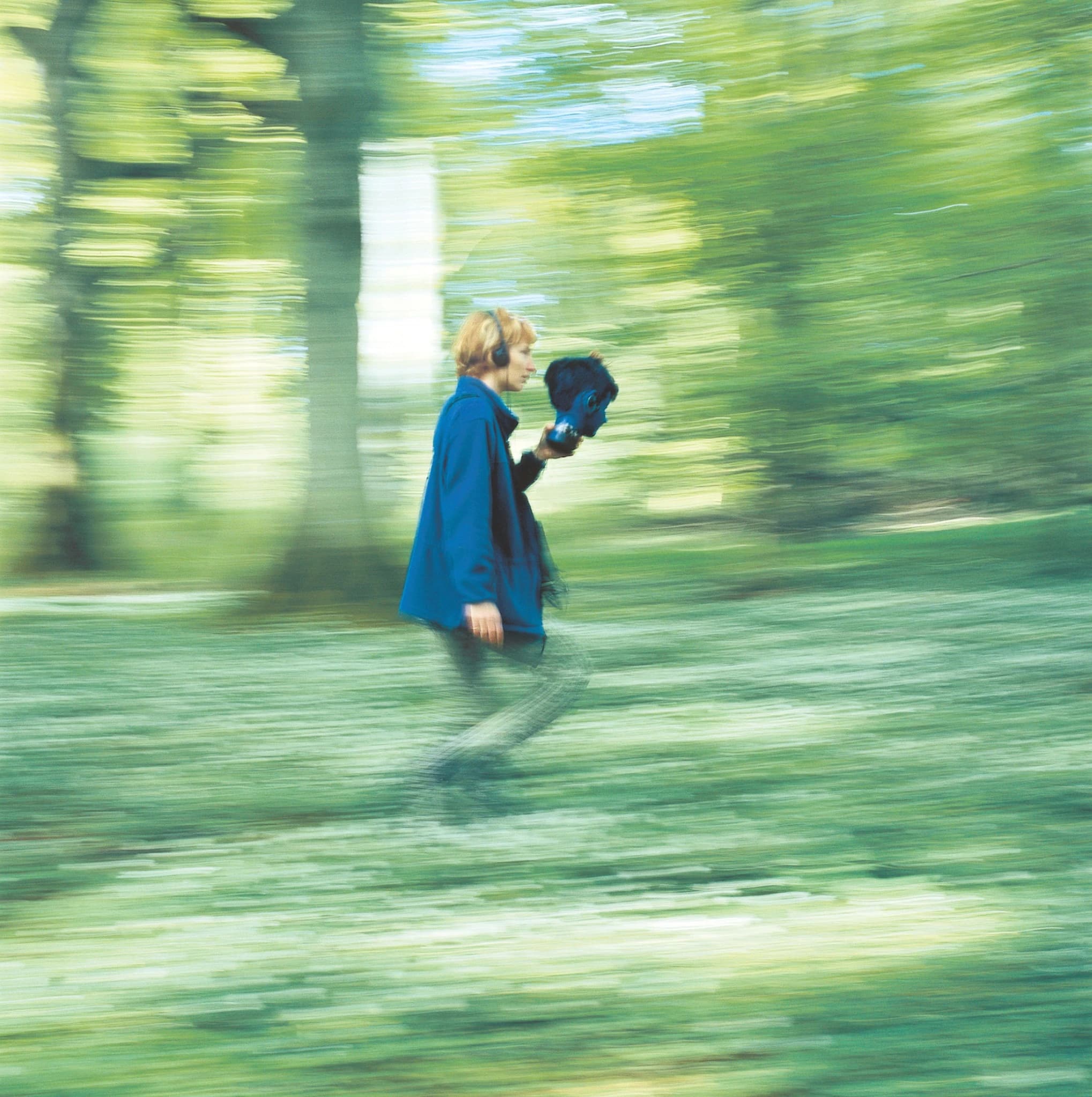
Sound Art is one of the most innovative and boundary-pushing movements in modern and contemporary art. Blurring the lines between sculpture, installation, and performance, the medium invites audiences into immersive environments, challenging how we perceive sound and space.
While the term “sound art” was first popularized in the 1970s, it was the Italian futurist artist Luigi Russolo who created the first sound installations between 1913 and 1930. These radical noise machines were made possible by extraordinary development of sound visualization, which began in 1857 with the creation of the phonautograph (a machine that recorded the vibrations of airborne sounds onto a permanent medium) by French inventor Edouard-Léon Scott de Martinville.
From the late 19th century onwards, sound became both visible and permanent, whereas throughout history it had been purely invisible and fleeting. To record became a historical act, which would indefinitely change not only art, but our experience of the world indefinitely. Artists would continue to experiment with sound and performance throughout the 20th century, from the futurists to the surrealists, and later the Fluxus movement. Ten installations stand out as the most iconic and defining of the medium.
1. Luigi Russolo’s pioneering noise installation: Intonarumori Instruments, 1913
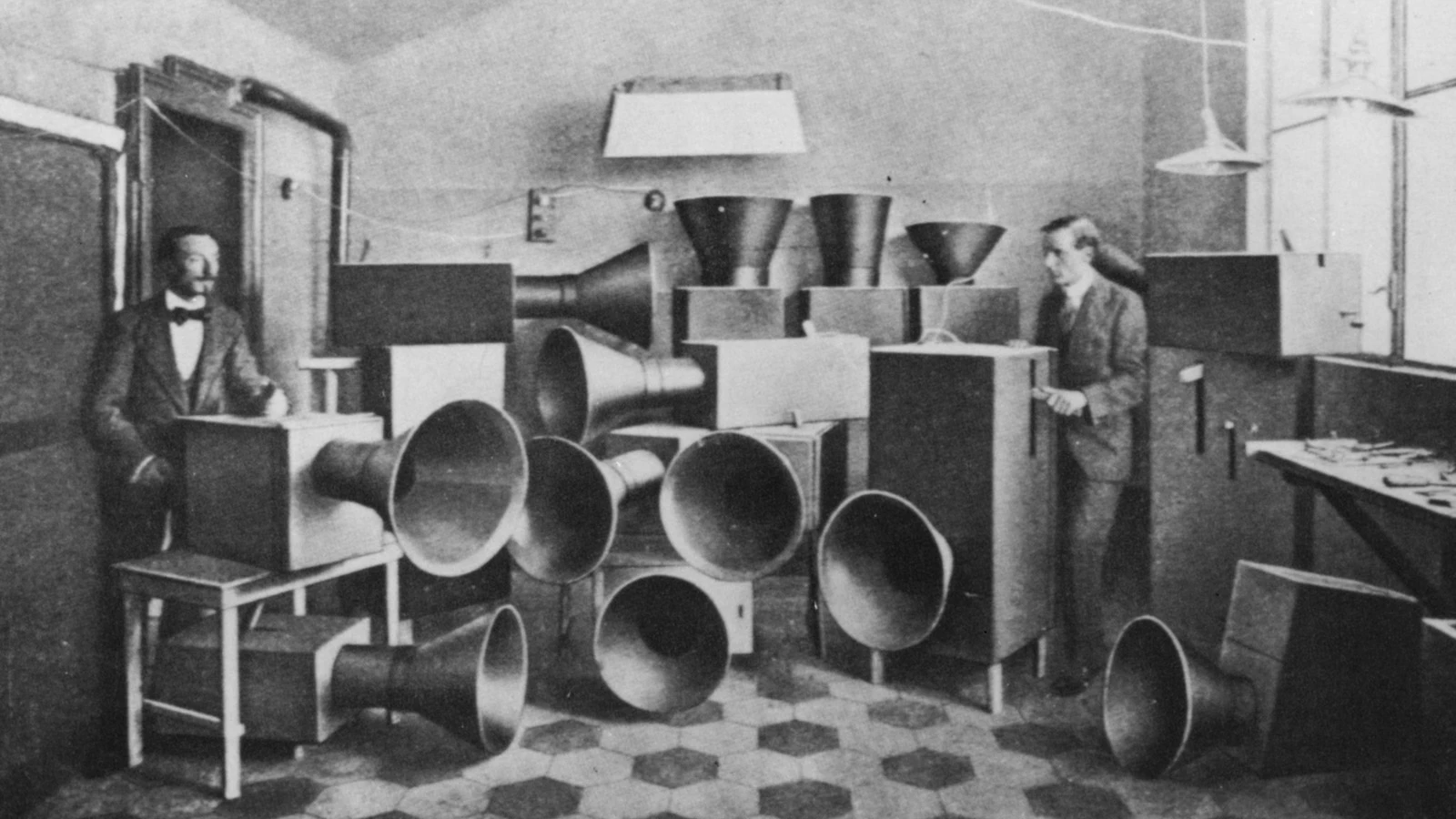
Luigi Russolo, Intonarumori Instruments, 1913.
Long before the term “noise” had entered everyday vocabulary, Italian futurist painter and composer Luigi Russolo published his manifesto “The Art of Noises” in 1913, launching his invention of ‘noise music’. Russolo’s thesis states that before the 19th century, noise did not really exist: it was with the advent of machinery that sound was revolutionized towards the mechanical sounds of industrialization, which are ubiquitous to us today. Russolo believed that a revolution was in the works that called for breaking away from restrictive and pure sounds, to "conquer the infinite variety of noise-sounds”. It was from this inspiration that Russolo devised his “acoustic noise generators”: musical contraptions of 27 varieties which were named according to the sound produced. Music and sounds had officially become fodder for visual exploration, as Russolo’s instruments were displayed one on top of another in a sculptural stack. The Art Noise movement was thus inaugurated, the first of its kind in history.
2. Man Ray’s surrealist, ready-made sound sculpture: Object to be Destroyed, 1923
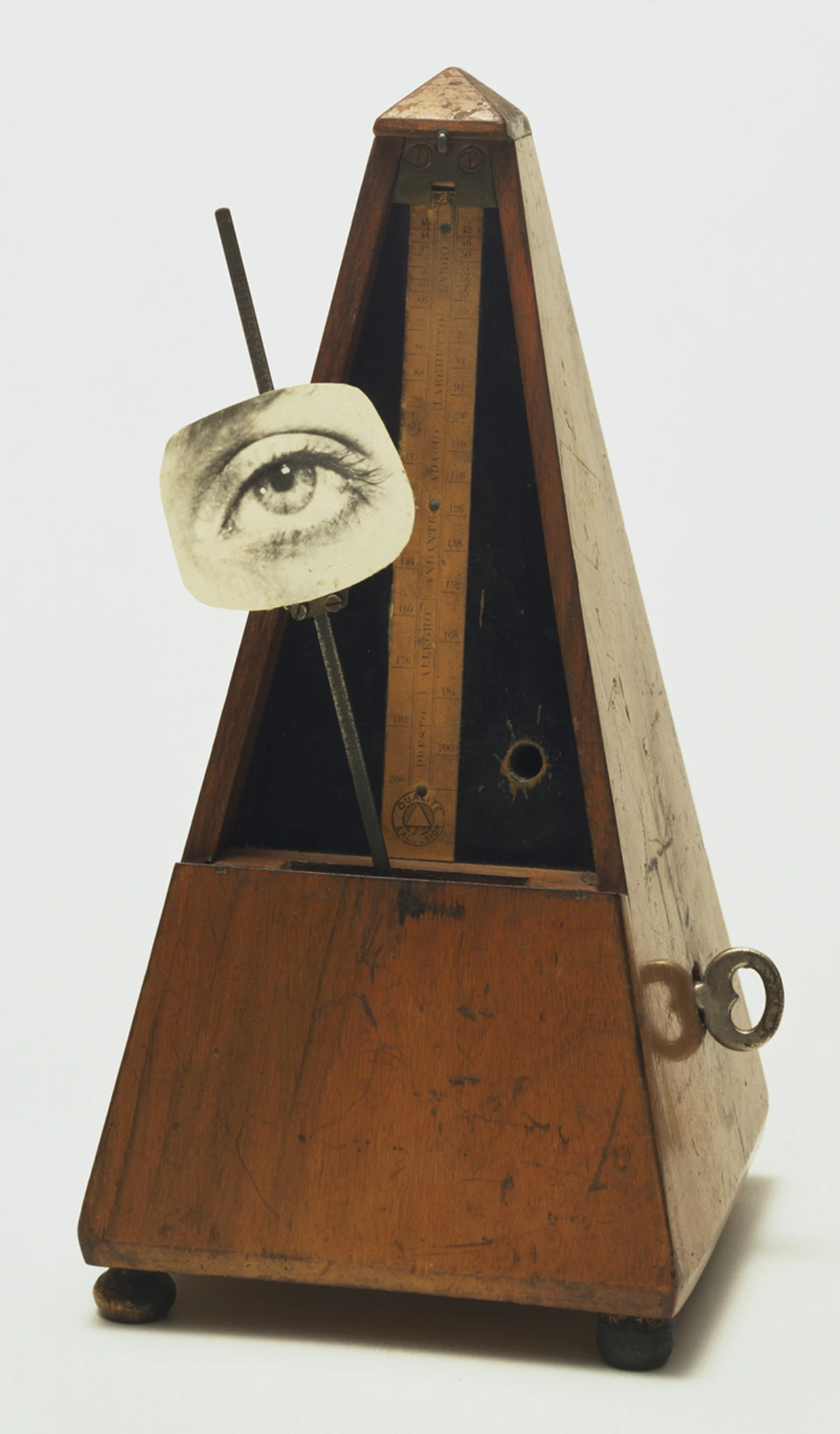
Man Ray (Emmanuel Radnitzky), Indestructible Object (or Object to Be Destroyed), 1964, replica of the 1923 original. © 2025 The Museum of Modern Art.
A list of the most iconic sound art installations would be incomplete without a mention of the surrealists, themselves heirs of the Dada sound experiments. Originally created in 1923, ‘Object to be Destroyed’ is a small sculpture by Man Ray consisting of a metronome with a photograph of an eye attached to its arm. As a ready-made, the object combines early ideas about sculpture and the sensory experience. The metronome endlessly ticks, its hypnotizing eye swaying steadily and without hesitation. The work is representative of early explorations of the effect of combining visual stimuli and noise in art, as Man Ray believed that the sound of an increasing metronome was equal to mental alienation.
3. John Cage’s silent orchestra: 4’33, 1952

John Cage, 4′33″, 1952.
John Cage is considered one of the most famous American composers and music theorists of the post-war avant-garde. Cage’s most iconic work is the 1952 composition 4’33”: a piece performed for the absence of deliberate sound. The musicians who perform it are required simply to be present before their instruments for the duration of the piece. They do not actually play their instruments. Today, the piece is recognized as a groundbreaking work that synthesizes experimental music and visual arts, as the piece is a purely visual sound installation that posits silence as an ambient environment.
4. Atsuko Tanaka’s sonic, space-time immersive installation: Bell, 1955
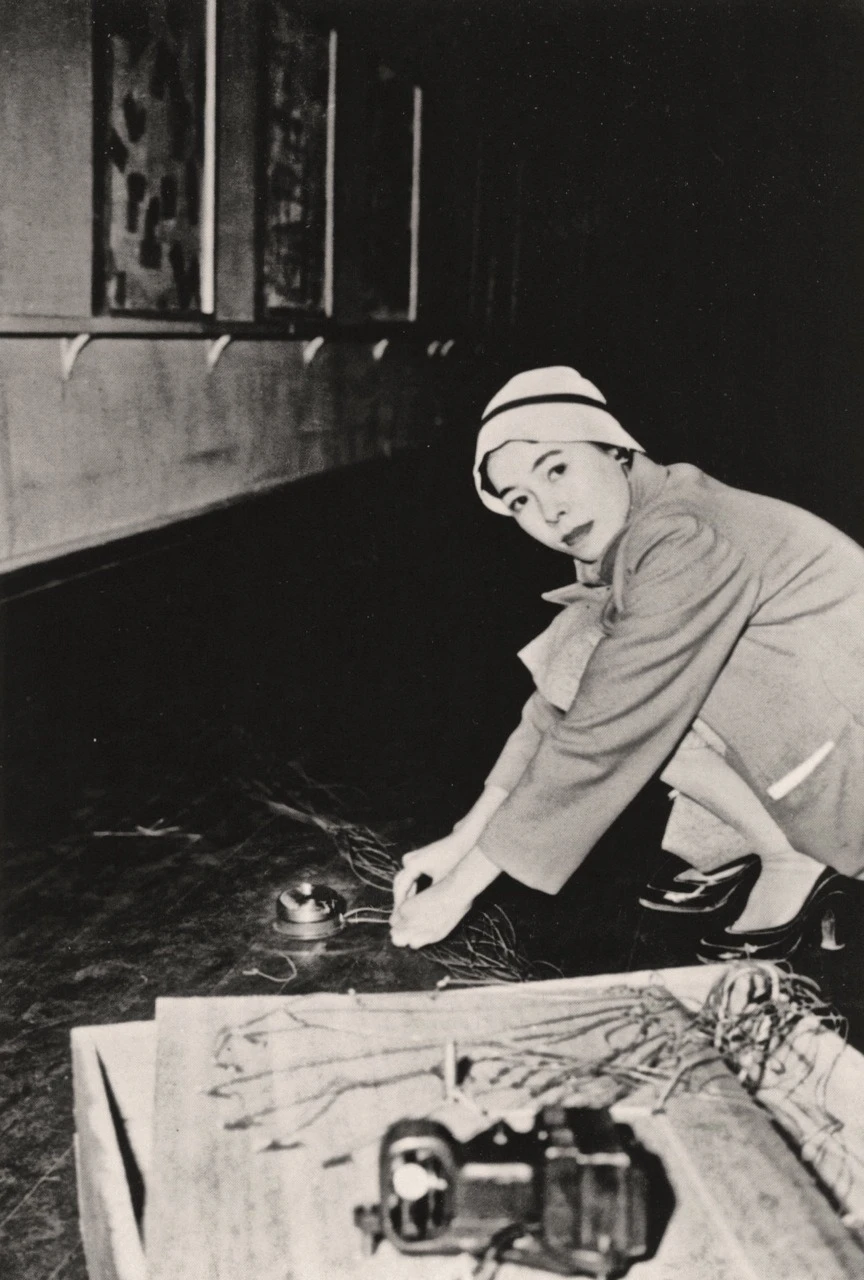
Atsuko Tanaka, Work (Bell), 1955–1993.
Atsuko Tanaka was one of the most iconic artists of the Japanese avant-garde movement Gutai during the 1950s and 1960s. During the first Gutai Art Exhibition in 1955, Tanaka presented “Bell”, where 20 electric alarm bells are connected by a long chord in a sequence. When the viewer presses the button on a switch instructed by a card that says “Feel free to turn on the switch, Atsuko Tanaka,” the first bell starts to ring. The audience watches as the sound travels across the space, as bell after bell begins to ring in sequence. This piece marks a significant development in both sound installation and participatory art.
5. Ben Patterson’s chance-inspired, randomized composition Ants, 1960-62
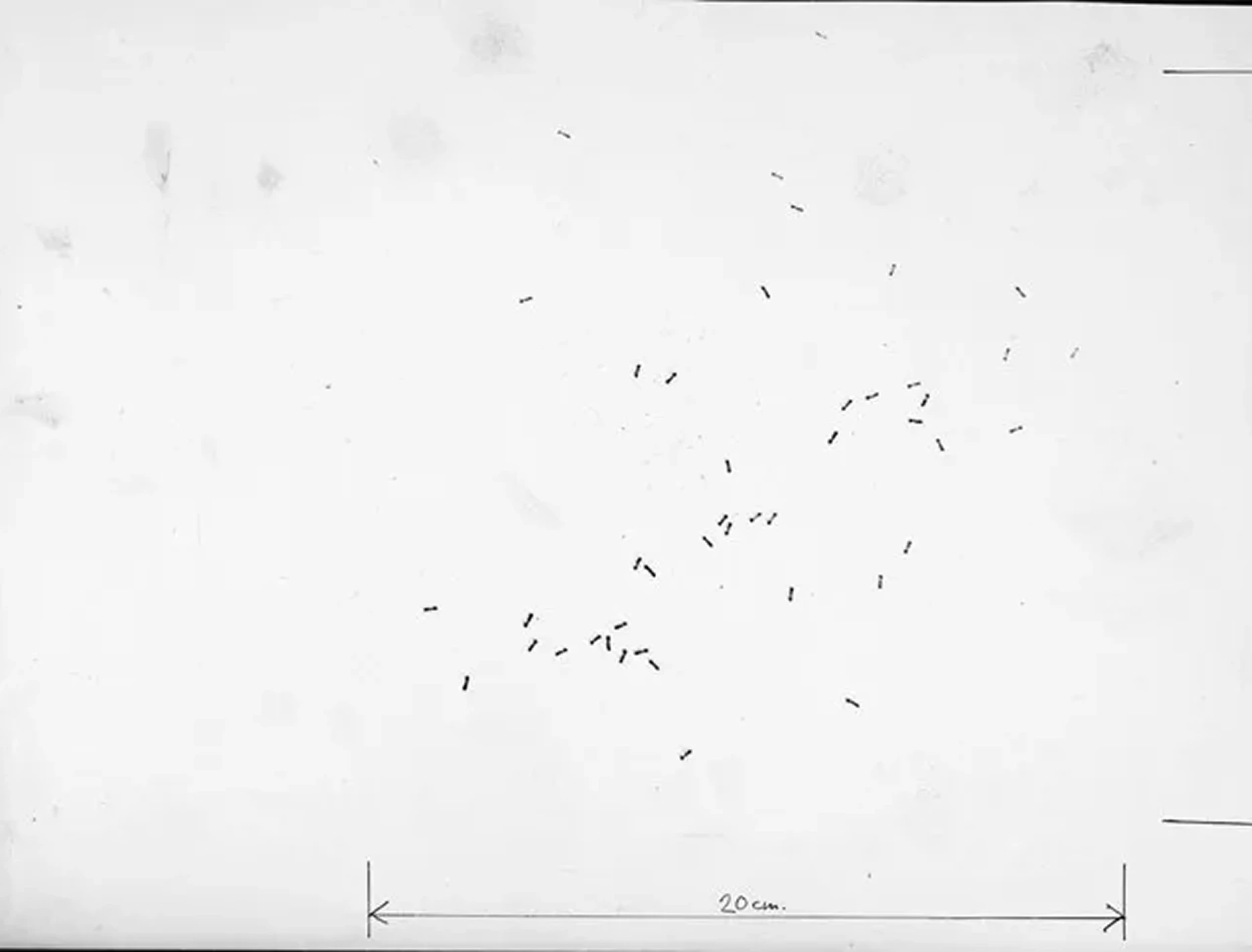
Benjamin Patterson, Ants (detail), 1960–62
Ben Patterson was a key member of the Fluxus movement, experimenting with composition and multimedia. He performed his own composition at the first concert co-organized by George Maciunas in Germany in 1962. Patterson has been overlooked in unequally written Fluxus histories, but thanks to a slate of archival audio released and a comprehensive 2010 exhibition, art historians are able to highlight the true impact of this African American artist’s groundbreaking work. His 1960s piece “Ants” reveals his playfulness and deliberate method. The artist began composing “Ants” by capturing the little insects and letting them roam across a piece of white paper. In a continuation of “chance-based” music, Patterson photographed and observed the ants' positions, transcribing them as notes on musical staffs.