Culture is heritage, but in today’s digital era, visibility and technology are no longer optional. They’re the survival! Every creative business, from emerging design studios to established cultural institutions, competes for netizens' fleeting attention.
So, Search Engine Optimization a.k.a SEO is the essential technology that bridges this gap. Even though it is often perceived as a dry, technical chore, it is actually the most powerful distribution channel for your art. It transforms your online presence from a quiet back office into a high-traffic destination, ensuring your brand is found by the clients, critics, and collaborators who need your services.
This article acts as your blueprint. We will show you exactly how to make your website an authority, using a practical, step-by-step guide to conquer Google and ChatGPT.
The Visibility Crisis: Why Your Online Presence Needs SEO
You spend countless hours developing a cutting-edge visual identity or building a highly functional platform. But if Google does not understand the quality or context of that work, your business growth is throttled. SEO is simply about translating the language of creativity into the language of the machine. It is about ensuring that when a client searches for "UX/UI Design Studio in Berlin”, your website is one of the ten answers Google trusts most. Here is why ignoring this is an existential threat to your brand:
The Click Cliff is Real. When you google something, have you ever checked into the third, or at least, the second page? Studies consistently show that the top organic search result captures over 25% of all clicks. Visibility drops sharply after the third result, and almost no one clicks past the first page. Brutally honest truth: if your website is not on page one, your competition is getting all the clients. This is a fundamental law of the digital market.
SEO is a Passive Growth and Client Acquisition. Now you can say that you do make money when I sleep! By optimizing your site once, you create a system that drives highly qualified, relevant traffic 24/7. SEO is the engine of passive discovery and client acquisition.
Technology is Credibility (E-E-A-T). I know the restaurant I’m about to dine in is worth it if it has at least a proper digital presence. Of course, I stalk the restaurant where I’m going to eat. The same happens with your site! When you properly optimize your creative and cultural content, you are demonstrating E-E-A-T (Experience, Expertise, Authoritativeness, and Trustworthiness). This is how you signal to the digital world the deep expertise and authority behind your brand. This credibility is critical for securing high-value contracts and attracting senior talent.
If your online presence is not being discovered, it cannot influence, attract followers, or generate commissions. SEO is the difference between a personal blog seen by ten friends and a global exhibition seen by thousands of potential collaborators.
The Core Foundation: A Simple 5-Step Website Refresh
Before chasing complex technical fixes, you must master the fundamental building blocks of on-page optimization. They tell both Google and your audience exactly what they are looking at.
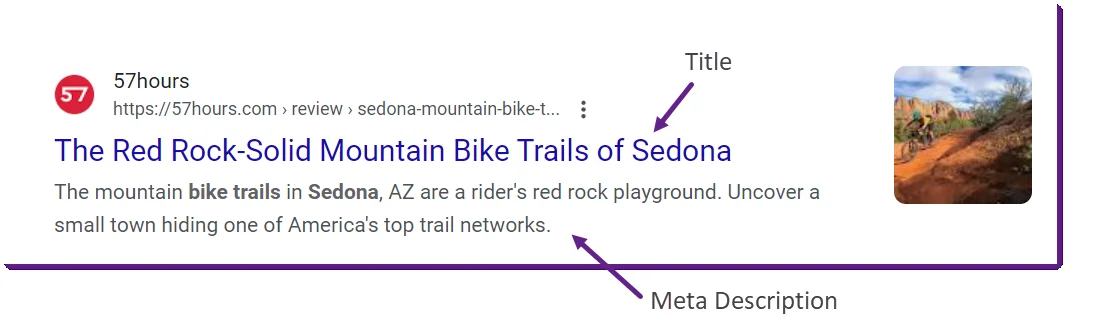
1. Recommended SEO Titles (Meta Titles)
The title tag is the clickable link in Google search results. It is the most critical text on your page for both ranking and click-through rate. Keep it under 60 characters, use your main focus keywords, and place your most important keyword near the front. Make it clear and concise.
Bad Example: Black Cows Studio
Good Example: Black Cows Studio| Digital Brand & Technology in Berlin
2. SEO Description (Meta Description)
This is the two-to-three-line summary that appears beneath your title tag in search results. It does not directly affect ranking, but it is your best chance to persuade the user to click. How to master it? Use emotional language and action-oriented verbs, keep it under 155 characters, and most importantly: clearly summarize the value proposition of your brand. You can also use related secondary keywords naturally.
Good Example: Black Cows Studio is a digital brand and technology studio in Berlin, crafting websites, visual identities, and products that help startups and brands grow online.
3. SEO Tags (Keywords) and Category Selection
Tags and internal categorization are crucial for niche websites. They help Google match your business to specific intent (e.g., matching "Black Cows Studio| Digital Brand & Technology in Berlin " to a client looking for Design & Creative Studios).
Action (Use Niche Categories): Think of your business through the lens of specific categories: Design & Creative Studios, Digital Media & Technology, Culture Research, Creative Technology & Innovation, etc.
Application: Ensure these terms are used throughout your website’s headings (H1, H2, H3, …) and content.
Good Example Keywords: black cows studio, digital brand studio, digital agency berlin, branding agency berlin, creative technology studio, web design studio berlin, ux ui design studio
4. Image Strategy (Alt Text, Naming, and OG Image)
For visual brands, images are essential, but Google is blind to them without your help. You must label every visual asset for discovery and sharing.
Alt Text (The Machine Description): Describe the image accurately while incorporating keywords. This is vital for image search and accessibility.
Bad Alt Text: “image1.jpg”
Good Alt Text: “Digital brand and technology work by Black Cows Studio, showing interface and brand design mockups..”
Filenames: Rename every file before uploading. This is a simple, high-return SEO win. Bad: DSC_001.jpg. Good: black-cows-studio-digital-brand-berlin.webp.
OG Image (Open Graph Image): This is the mandatory image that appears when your link is shared on LinkedIn, Facebook, or other social channels. Ensure it is high-resolution, branded, and visually compelling to maximize click-throughs from social platforms. A weak OG image means a weak link share.
5. Canonical Rules (Avoiding Duplicate Content)
Creative websites frequently suffer from duplicate content issues—for example, a project listed on your main "Work" page, an industry-specific "Case Studies" page, and a separate blog post. Google views this as confusion, which dilutes your SEO authority. So, the rule is to use a Canonical Tag to tell Google which version of the content is the "original" or preferred source.
How it Works: If the full case study lives at moderna.com/projects/client-a-ux, but you reference it on your blog at moderna.com/blog/ux-trends, the blog post should contain a canonical tag pointing back to the projects page.
Benefit: This tag prevents Google from seeing your internal pages as competing and keeps your authority focused on the main URL, consolidating your ranking power.
Earning Authority: Backlinks and the Digital Reputation
Once your internal pages are technically perfect, the next step is building Authority—the foundation of exponential growth and client acquisition. Google treats your website like a new brand: a great aesthetic is a start, but a brand cited by trusted peers is authoritative.
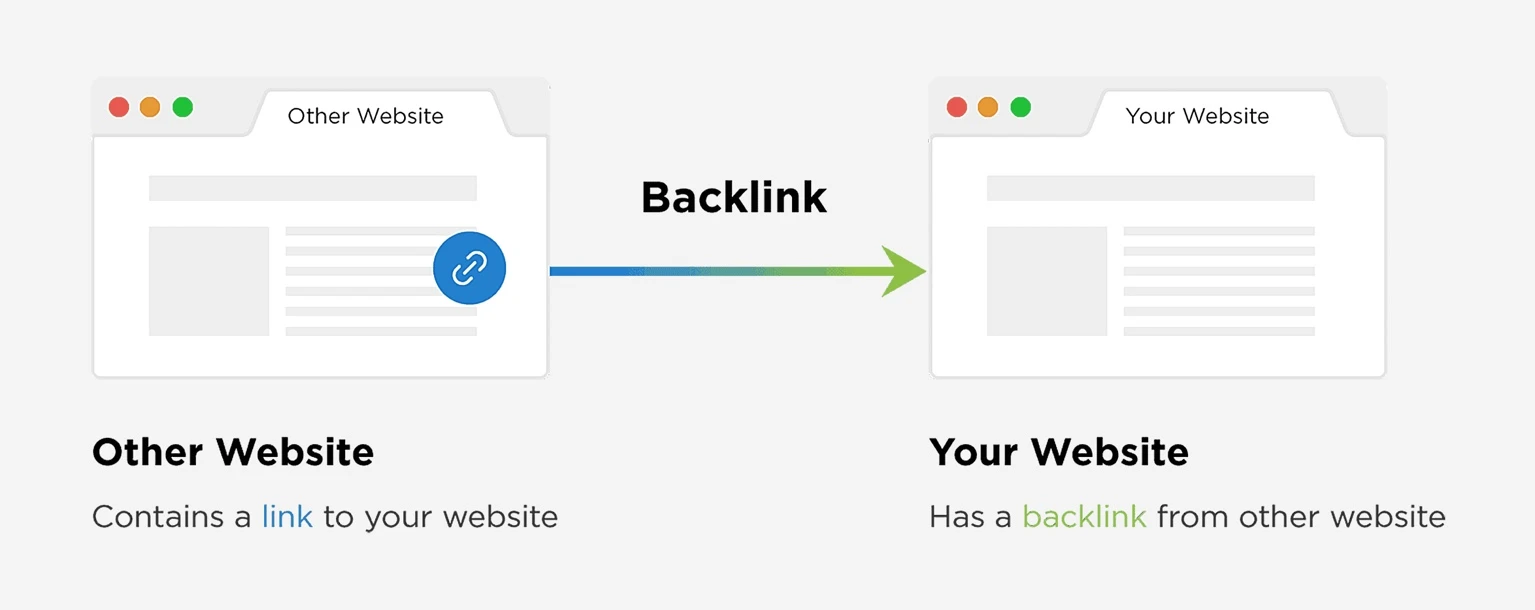
The core of authority is the backlink: a link from another trusted website to yours. Let me tell you a the Tale of the Golden Backlink.
“Once upon a time, in the endless Kingdom of the Internet, there lived a wise old ruler named Google. He had one rule: “I will only show the most trustworthy websites at the top of my kingdom. Only the ones others believe in.”
A young website, talented but unknown, stayed lost on page 5. When she asked Google why, Google replied: “You are good—but you are still unknown. Let others speak your name. Earn backlinks—and I will raise you higher.”
She set out and earned a golden backlink from a respected magazine and a kind blogger. Suddenly, people started visiting. Google noticed. “Ah,” said Google. “Others trust you. That means I can trust you too.”
And just like that—the website rose from page 5 to page 1. The moral of the story? Backlinks are not just links. They are digital reputation. The more trusted voices speak for you, the higher you rise—in search, in visibility, in opportunity.
In SEO, a backlink is essentially a vote of confidence. When a high-authority publication links to your site, it tells Google, "We trust this source." So, what’s the strategy to earn digital trust?
Mutual Backlinks and the we[dot]art Privileges
The fastest and most strategic way to gain immediate trust is through mutual backlinks, an exchange where two authoritative sites link to each other, strengthening the SEO for both partners.
When you join www.wedotart.com, all you need is your website link. Our AI automatically generates your title, description, and a preview card, and that alone boosts your visibility in Google and ChatGPT.
By placing our logo, text, or a short article on your site, you activate mutual backlinks, which push you even higher. The whole community becomes one shared SEO engine. This is how you leverage the collective trust of a powerful creative network.
Editorial Links and Guest Posting
The highest quality links come from respected online editorials and industry publications.
Many online editorials, design blogs, and cultural platforms actively accept 'write for us' submissions or guest posts. Email them with a highly specific topic idea that demonstrates your studio’s unique expertise. Tip: You can hire skilled niche writers on the Behind.Art platform to produce this high-authority content for your outreach strategy, ensuring a professional pitch every time.
Blogging: The Ultimate SEO Booster
A blog on your website is not just for announcements. It is a huge SEO booster and a continuous source of citable content.
Use your blog to create long-form, citable content around your core expertise (e.g., "The Future of Design Technology in 2026"). This positions you as an expert, attracting editorial backlinks.
Link from your blog posts back to your project pages (e.g., a post about Digital Media & Technology trends links directly to the Black Cows Studio case study). This spreads link authority across your site.
Leveraging Professional Platforms
Treat every professional platform as a backlink opportunity. The goal is to build a web of authority that always points back to your main site.
Pinterest and Behance: Every project uploaded must include a clear, natural link back to the detailed case study page on your main website.
LinkedIn, Medium, Substack: Use these platforms to publish summarized versions of your articles with a strong CTA to read the full, citable version on your primary website. This drives referral traffic and reinforces your domain authority.
The Next Frontier: Optimizing for AI and Client Acquisition
The search landscape is moving quickly towards AI answers. Your new SEO objective is to be the trusted source cited within these generative summaries, driving highly relevant client traffic that comes from being the definitive answer.
When an AI model summarizes an answer, it pulls structured facts and clear definitions. Your content must be built for machine comprehension.
Use schema markup to explicitly label your content. This is non-negotiable for modern SEO For " Black Cows Studio| Digital Brand & Technology in Berlin," use Organization Schema to tag your location, services, and reputation. This tells AI exactly who you are and where you operate. For a case study, use Project Schema.
Use your blog content to explicitly define and synthesize topics related to the we[dot]art categories. For example, a post titled, "What is Creative Technology & Innovation in UX/UI?" gives AI a clean definition to pull from and cite.
AI loves unique, proprietary data. Create content that no one else has—a "2026 UX/UI Trend Prediction Report" or " Black Cows Studio Annual Client Satisfaction Index." This original research instantly makes you a must-cite source for other publications and AI models.
It is not difficult—just schedule one day to refresh your website: title, description, headings, alt text, OG image. By focusing on these core principles, you are investing in the long-term survival of your brand. That alone can bring you more clients, visitors, and followers than months of posting on social media.