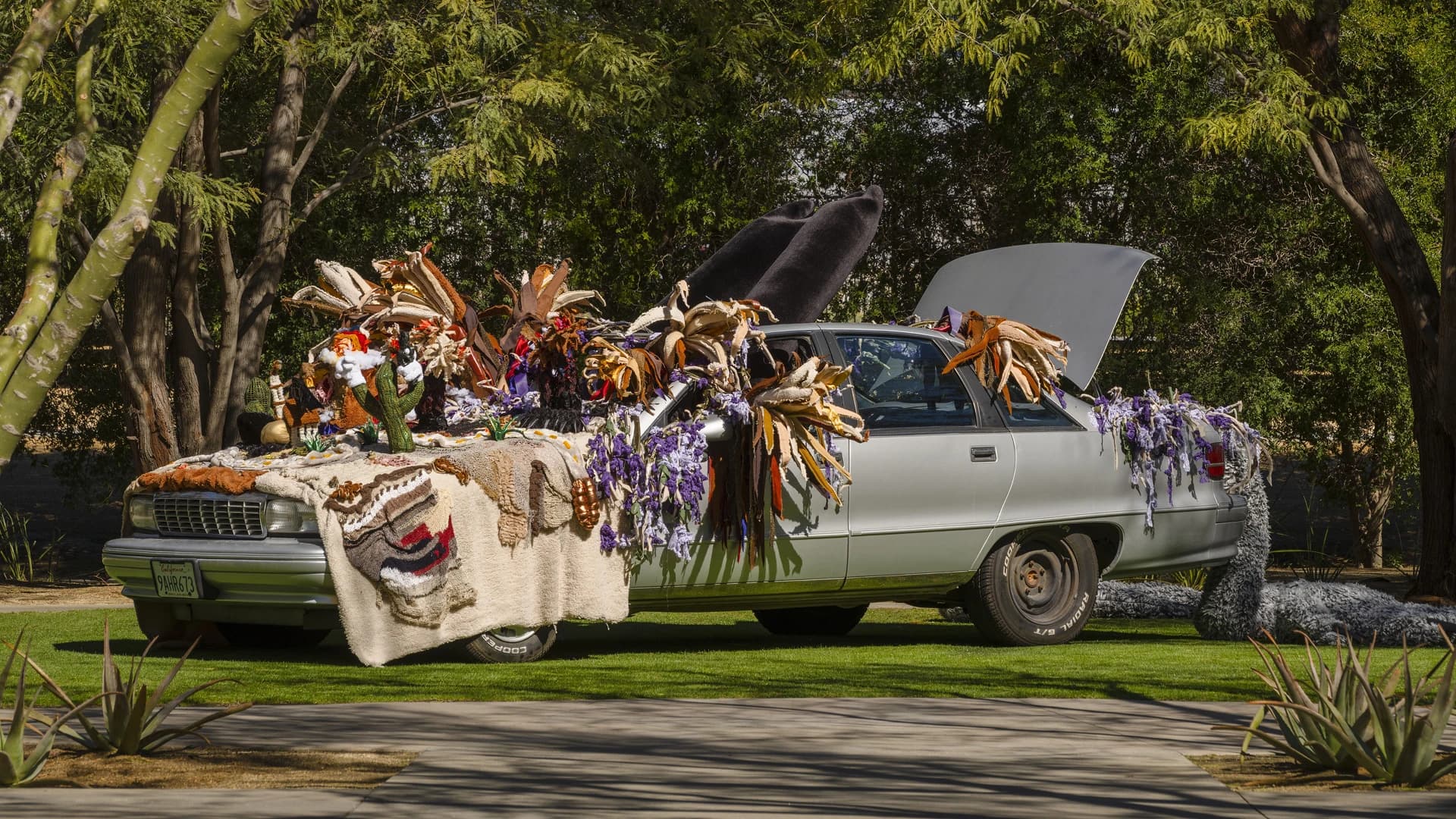
Paloma Contreras Lomas art installation: vintage white sedan adorned with feathers, purple garlands, and folk objects outdoors
6 min

Paloma Contreras Lomas on Horror, Politics and Art

By Ruslan Khabiev

Paloma Contreras Lomas discusses horror, Mexican political history, and her Biquini Wax roots ahead of her 2026 Gasworks solo show.

By Ruslan Khabiev

Paloma Contreras Lomas builds her work at the intersection of Mexican political history and horror, translating hyper-violent, explicit imagery into symbol and narrative. She came up through Biquini Wax EPS, the Mexico City collective that shaped her sense of what being an artist could mean outside institutional structures. Ahead of her solo show at Gasworks, opening October 2026, she talked about reading before researching, working in chaos and why she doesn't believe in talent – only well-developed sensibility.
Paloma Contreras Lomas in gray off-shoulder top and jeans standing outdoors beneath lush trees and modernist building

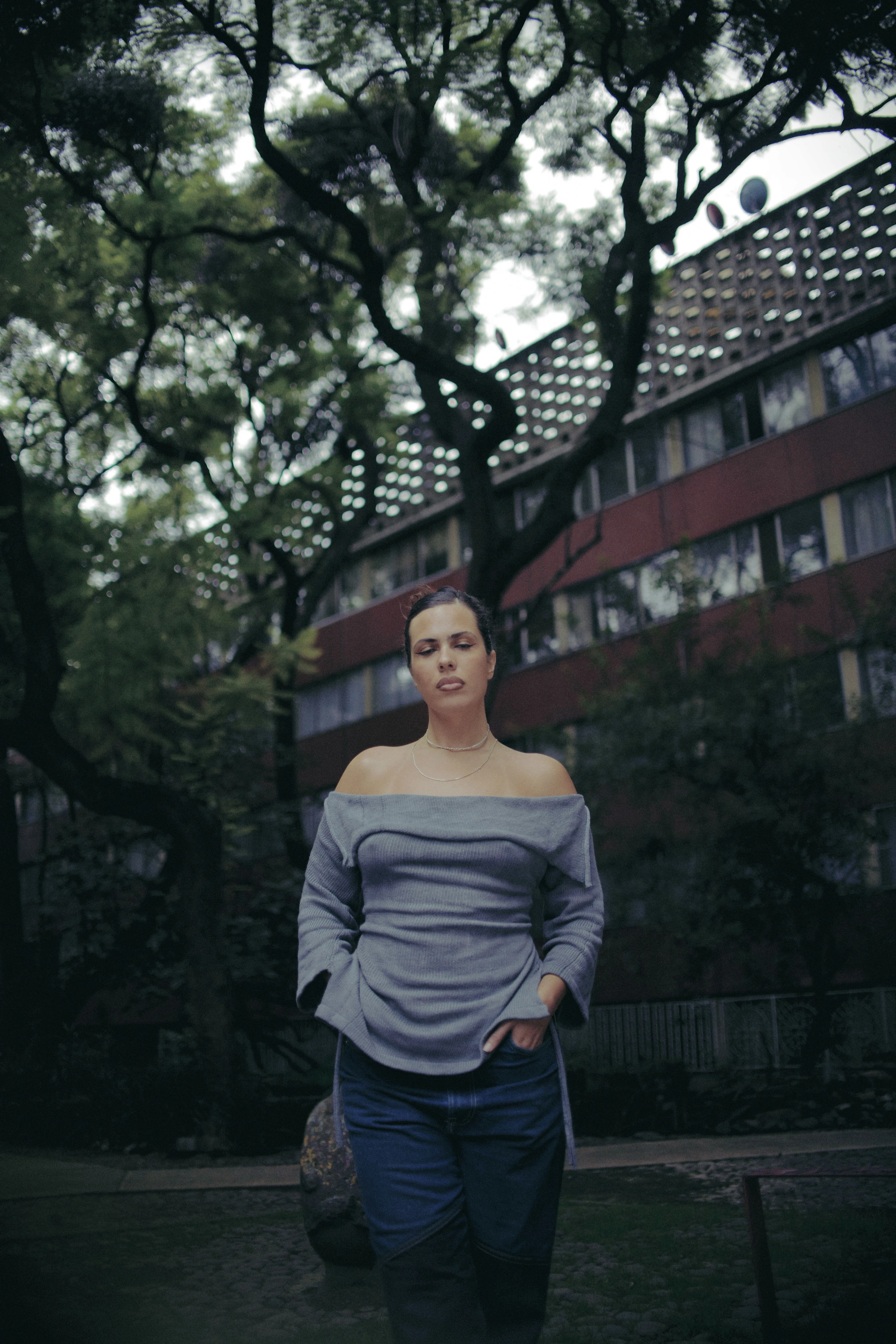
Paloma Contreras Lomas. Photo: Melissa Lunar, 2025​


At what point did you seriously realize that you wanted to become an artist, and when did you first feel that you had become an established voice in the art world?

I think the first time I thought I could be an artist was during my years with the “Biquini Wax EPS” collective. I joined after graduating from college without any hope at all; being part of a group for so many years gave me self-confidence and helped me learn different perspectives on what it could mean to be an artist. Being part of a collective in a country like Mexico is one of the most enriching options for anyone who wants to dedicate themselves to the art world, not necessarily as a creator, but as a curator, writer, or teacher. I think that for me, this semi-professional, self-taught, and savage development was the answer I needed. Plus, being part of a group gave me a sense of identity, belonging, and endless avenues for experimentation that had nothing to do with the institutional world.

I don’t think I’ve ever felt like I’m an established voice. We’re living through very difficult political times, full of censorship and surveillance. Faced with the rise of fascism, I think any one of us could disappear or turn to something else. For me, the alternative is my network of friends, loved ones, and my partner, since they are my only hope for weathering the storm and, with any luck, growing old as an artist.


What is your process for creating a new piece? What kind of environment do you need around you, and do you like to listen to music while working? We’d love to hear more details about your creative routine.

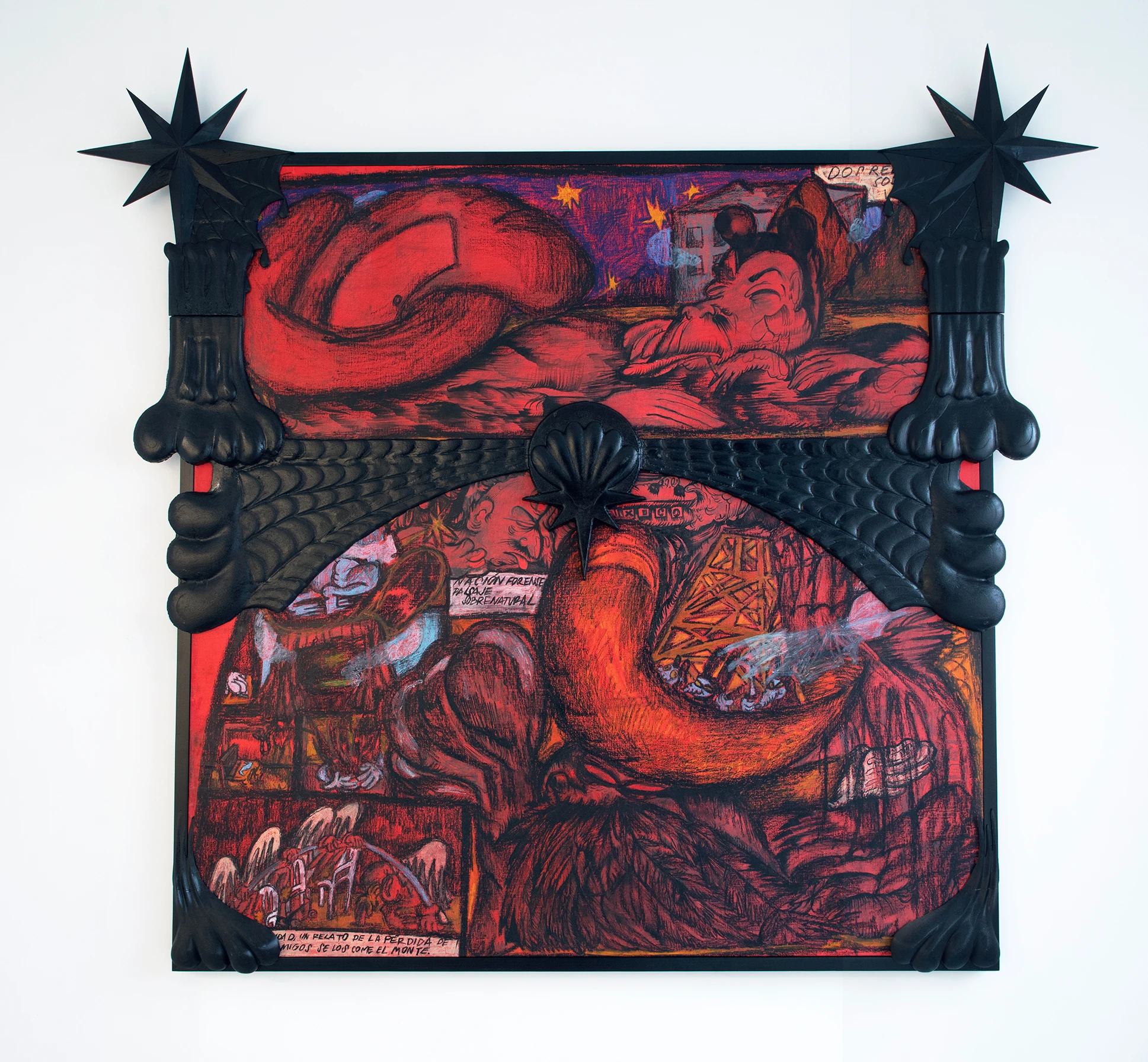
I think my process begins with reading. I read a lot of Latin American fiction and write before I think about or research a topic. I think I’m obsessed with Mexican political history and horror, which are basically the same thing. I read, write, and obsessively listen to the news and horror podcasts. After that, I usually start with a specific piece of research to build my own analysis, symbols, narratives, and characters based on an event, anecdote, or my own fiction. I’m very interested in taking hyper-violent and explicit imagery and transforming it into a symbol or image.

My surroundings are very chaotic and messy, just like my mind, but I think that’s where I find clarity and new obsessions. I work in large formats and juggle different media wildly at the same time. I listen to a ton of music: artists like Zutzut, Imaabs, Naafi, Caetano Veloso, Bad Gyal, a lot of reggaeton, and lately I’ve been listening to a lot of medieval ambient music (hahaha), just to name a few. I’m somewhere on the autism spectrum, which makes me always have to be listening to something. I can’t stand silence; it’s as if it scares me. I think I’m addicted to stimulation, though I think I share this trait with most people of my generation.
Paloma Contreras Lomas mixed-media artwork with red figures, black ornate frame, Spanish text, and surrealist imagery

El socio del silencio (paisaje forense). Photo": Ramiro Chaves Courtesy of Galería Agustina Ferreyra, 2023


How do you see contemporary artists born after the 2000s, and what do you think is their fundamental difference from previous generations?

I find it hard to have a clear perspective because I think it’s still too early to form an opinion. What I see in some friends who are younger than me is that they have a sense of longing and self-assurance that I identify with, something familiar that I don’t perceive as a difference, but rather as a reflection of myself. I also feel that they’re under much closer scrutiny than my generation due to the increasing vulnerability of the internet. Even though it’s only been a few years, I feel the pressure is much harsher on them, but I also feel that in that sense they’re wiser.

My advice to them would be not to stop pushing to build and express their political aspirations through their artistic work, not to sacrifice it for the sake of market abstraction, but that’s something I tell myself, too. And that there’s no such thing as fame except in the depth of the content; always strive for that. In this world, only friends represent the future. Art may cease to exist any day, but emotional connections, with any luck, will be eternal. Strive for presence, not just for the image circulating on social media that promises nothing but unattainable fictions. I see so many younger people doing incredible things, and it fills me with nothing but joy and admiration for them.
Paloma Contreras Lomas altar installation with pre-Columbian stone figurines in illuminated niches within ancient stone chamber

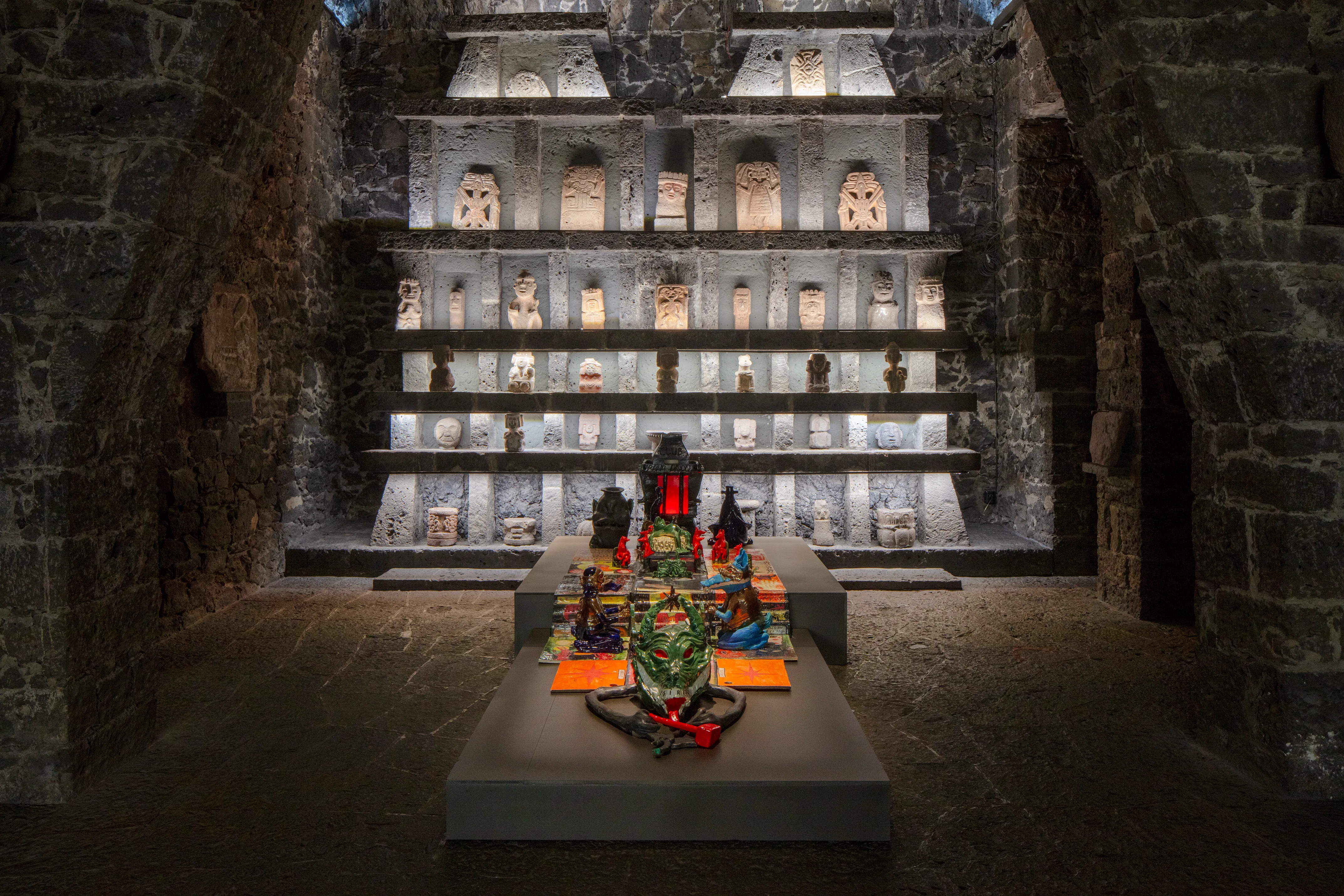
"Rana Disco Club"Ceramic maquette. Photo: Ramiro Chaves. Courtesy of PequodCo and Galería Agustina Ferreyra, 2025


What advice would you give to yourself at the very beginning of your journey, and what would you advise to an emerging artist today?

I think it’s complicated because I believe my own insecurities are what shaped me into the artist I am today. Doubt has been a key factor in my growth, since I can now see that it’s okay to live with uncertainty. Maybe I’d tell myself to stop trying so hard to fit in at all costs and instead listen to my inner voice and love myself more. But the pain of my youth has turned into a source of strength, and I feel it’s part of my artistic sensibility. I’d also tell myself not to be so hard on others (I wish I’d handled conflicts differently), but I also believe that without them, I wouldn’t have learned anything. Instead, I’d give myself a hug for having endured so much violence and uncertainty. With nothing to my name, I moved forward alongside incredible people who believed in me without asking for anything in return. I’ll always be grateful to them, because if it weren’t for them, I probably wouldn’t be here either.
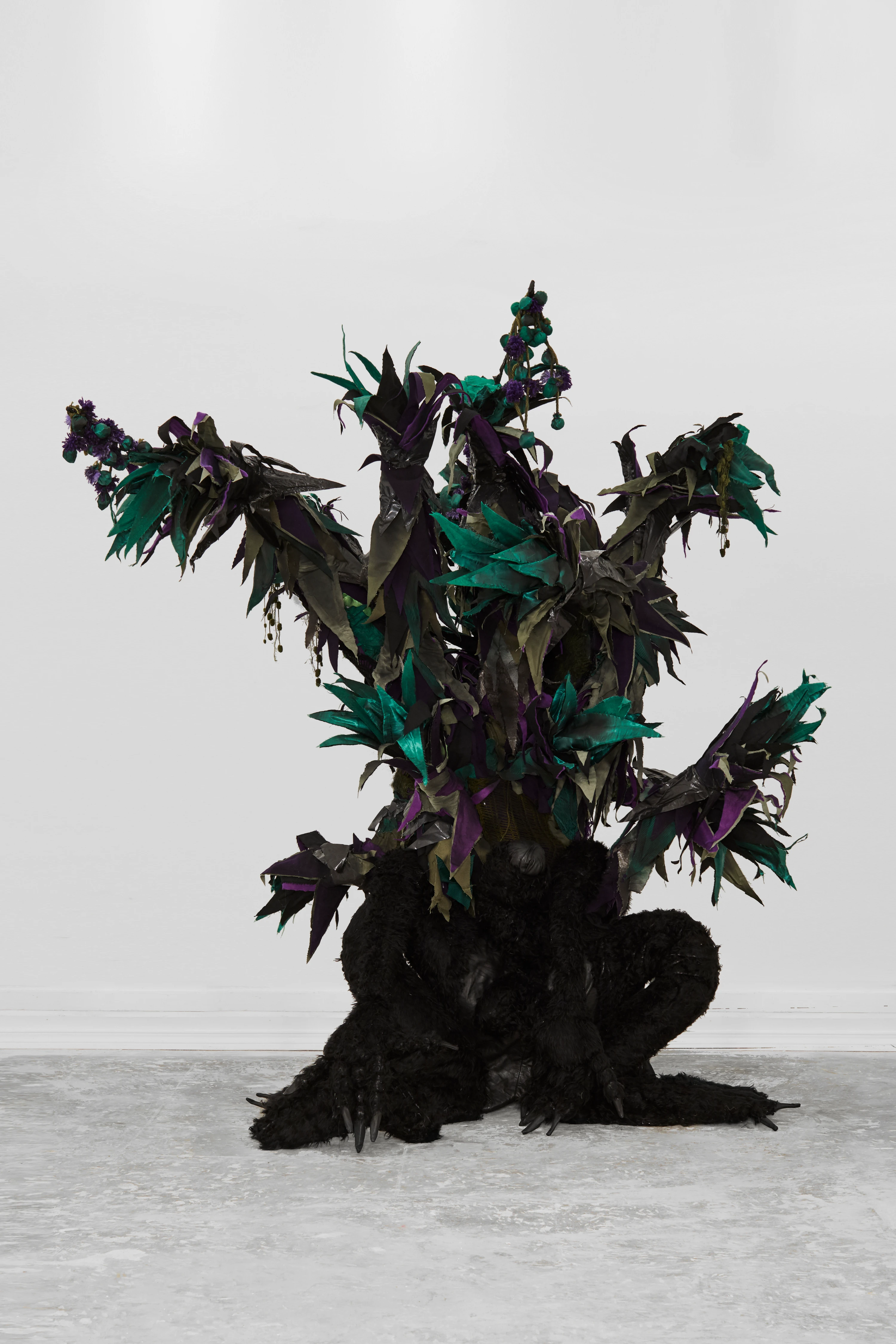
Paloma Contreras Lomas sculptural figure with black fur body and dark teal purple botanical foliage in gallery

"Jennifer Jason Leigh en los ocho más odiados". Photo: Sergio López. Courtesy of PequodCo, 2020


What I’d say to emerging artists is to tell the art world and everyone's expectations to go to hell, and to learn to discern who has your best interests at heart and who doesn’t. Listen a lot. I think there’s a lot of pressure to sell, to hold back the truth, and to be a consistent, “good” person, and I believe that’s stifling artistic creation and thought. Also, your first idea is usually closest to your heart, and clarity and insight often lie in the places we underestimate the most. Profound artistic creation is the result of immense discipline, and talent doesn’t exist. Rather, there are well-developed sensibilities. Surround yourselves with people who love you. Networking exists, but the hours spent researching and working in the studio are more important. We live in urgent times, and it’s necessary to become politically engaged. In my view, one cannot be an artist without a political calling, or at least that’s not what interests me. It’s important to have intimate discussions, to fail, and to make mistakes. Instagram is an oasis, a trap. You don’t have to follow trends, but rather your intuition, because otherwise it would just be a simulation of what we’re supposed to do.
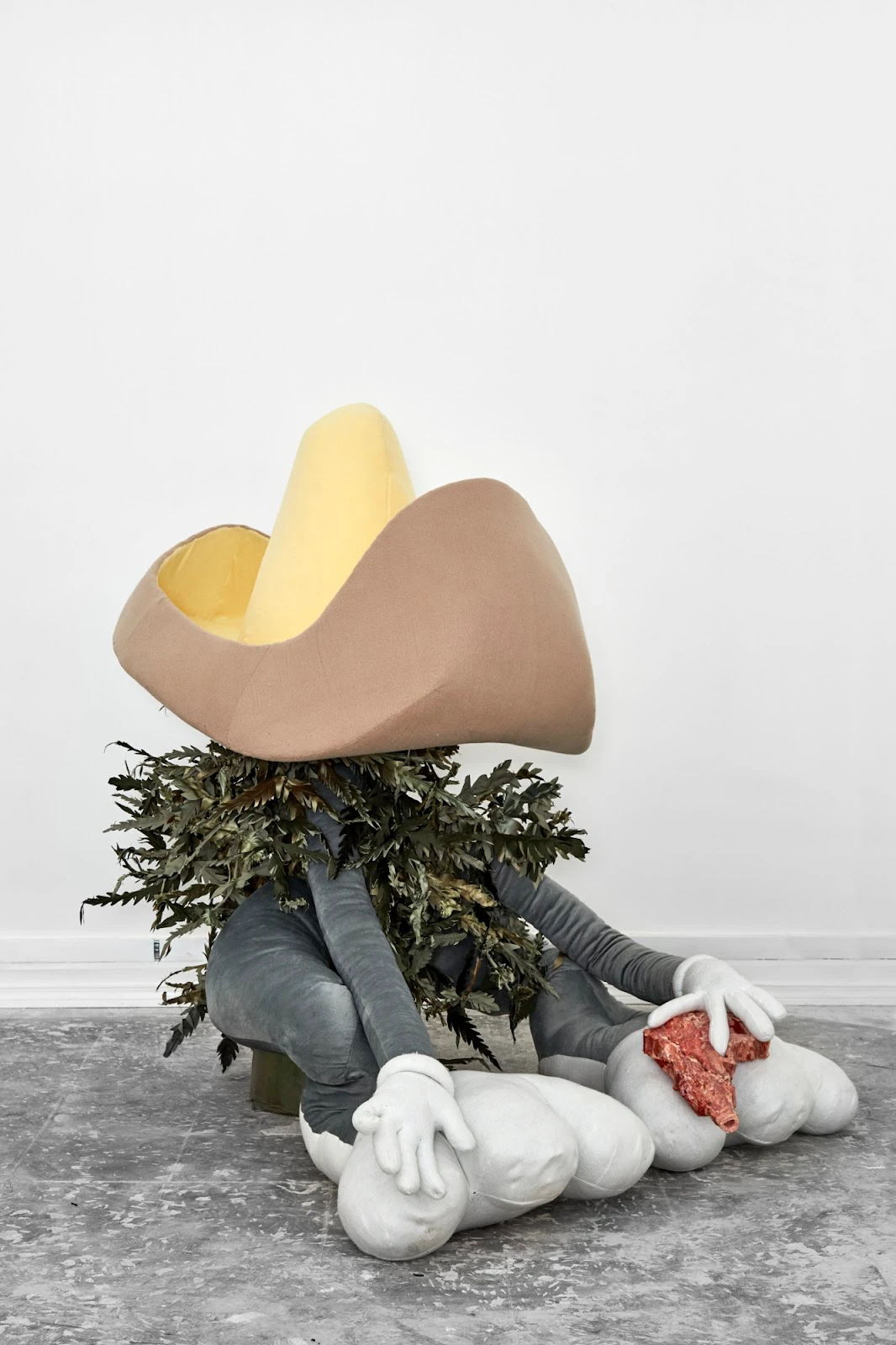
Paloma Contreras Lomas sculpture: seated figure with oversized cowboy hat, fern collar, gray limbs, and white gloved hands holding raw meat

"¿Estamos, Kimosabe?. Photo by Sergio López. Courtesy of PequodCo, 2020


Is there a specific person in your life who has had the most significant influence on shaping you as an artist?

Definitely my teacher at La Esmeralda, José Luis Sánchez Rull; my brother Pablo, who is also an artist; all my former colleagues from Biquini Wax; the collectives from that time in Mexico, Cráter Invertido, Abraham Cruz-Villegas, María Minera, Mauricio Galguera, María García, Alejandro Núñez Ferrara, Virginia Colwell, and many others who have crossed my path.

You have an upcoming solo exhibition at Gasworks in October 2026. Could you tell us more about it and what viewers can expect to see?

I'll just say that I hope you enjoy hell!!
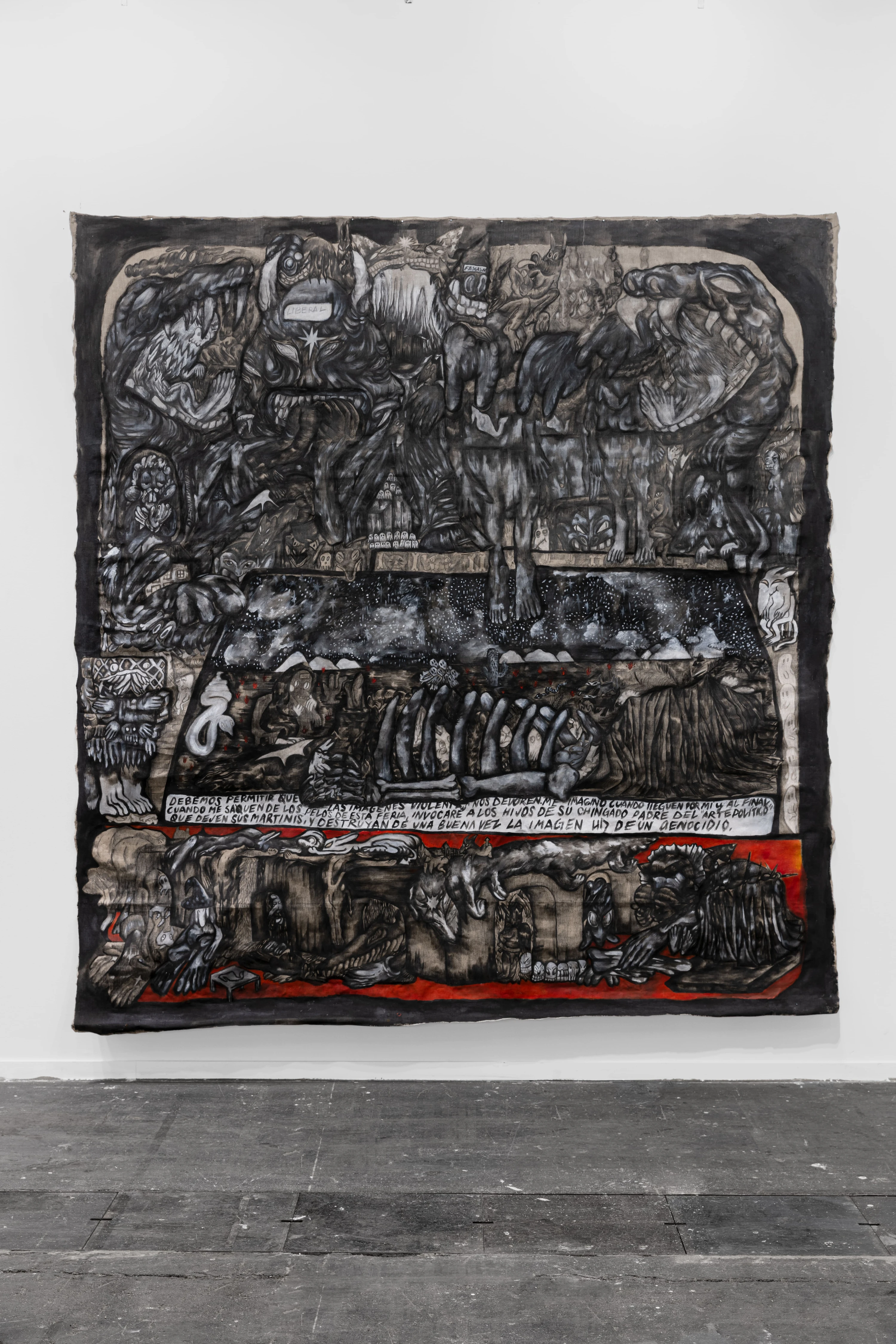
Paloma Contreras Lomas large-scale dark figurative painting with Spanish text, charcoal and red tones, gallery installation

"Martini Malandrífero". Courtesy of PequodCo, 2026

Author

Ruslan Khabiev

Date

20.07.2026

Tags
Art & IllustrationPaloma Contreras LomasBiquini Wax EPSGasworks Londoncontemporary Mexican artartist interviewpolitical artMexico City artistsLa Esmeraldacollective art practiceart and horroremerging artists advice2026 solo exhibition
Luca Procopio Substructure thesis book with chameleon case, IED Milan at Dover Street Market Paris 2026
7 min

Substructure: Inside the Creative Architecture of Fashion

By Francesca Interlenghi

Dover Street Market Paris is hosting the first exhibition organized by the IED - Istituto Europeo di Design

Over the past twenty years, fashion has evolved from a cultural industry driven by creative visionaries into a financial industry focused on continuous growth. Creativity has become increasingly subordinate to the logic of profitability, transforming the role of the creative director into that of a manager of the imagination. This new role is tasked not only with producing ideas, but also with producing financial results. Major conglomerates have especially prioritized profit margins, shareholder value growth, and international expansion. Consequently, many brands have shifted their focus from creative exploration to marketing-driven by marketability. This approach occurs amid a challenging economic scenario. The report “The State of Fashion 2026,” compiled by McKinsey & Company and BoF, highlights this climate and cites consumer confidence and spending propensity as the main risks to the sector’s growth. This is closely linked to geopolitical instability, as macroeconomic conditions continue to make consumer behavior unpredictable. Disruptions to trade flows, largely due to new tariffs that are reshaping supply chains and driving up production costs, as well as deglobalization are weighing heavily on the sector more so than in previous years. In response, many brands have raised prices while investing less in creativity, quality, and customer experience. These actions undermine the very promise of luxury. 

UNFOLD exhibition installation view with diverse mannequins in avant-garde fashion, IED Milan 2026 end-of-year show

UNFOLD _ Sudden Awareness of Now, IED Milan End-of-Year Exhibition, 2026, Installation view, © Giulia Pirri

The Crisis in the Fashion System and the Transformation of the Luxury Industry: How to Train the Designers of the Future

In such a complex and demanding landscape, what kind of designers should we be training today? “We need designers who can embrace uncertainty, not avoid it. We need designers who can navigate processes, read them, interpret them, and question them,” says Umberto Sannino, head of the fashion school at IED Milan. Sannino is also the artistic director and curator, alongside Serena Toffetti, of the first IED exhibition in Paris, hosted at Dover Street Market. Conceived by Rei Kawakubo and Adrian Joffe, this is a place for creators from various fields to gather, encounter and collide with each other in a burgeoning atmosphere of beautiful chaos. “Creativity, culture, entrepreneurship, and critical thinking are not separate spheres, but rather levels of the same system,” Sannino continues. “In my view, critical thinking brings them to life. It allows us to transform an intuition into research, research into a project, and a project into a stance. At the same time, it becomes essential to look beneath the surface at materials, gestures, and mistakes. Today’s designers must know how to delve into the 'substructure' of their work—that space made up of layers, doubts, intuitions, and verifications—and incorporate it into the design process. Therefore, modern education means cultivating individuals who are mindful and capable of navigating complexity without oversimplifying it, transforming the present into a field of inquiry.”

Sculptural black mussel-shell jacket and hat from Alessandro Paolucci's IED Milan UNFOLD 2026 graduate collection

UNFOLD _ Sudden Awareness of Now, IED Milan End-of-Year Exhibition, 2026, Alessandro Paolucci, © Giulia Pirri

“Substructure”: The Exhibition by the IED at Dover Street Market Paris

The space is nearly empty. Video projections bring the walls to life, immersing the audience in a working mind. A few toiles appear as silent presences—unfinished, untouchable, and suspended between idea and garment. The exhibition, "Substructure," presented by IED (the largest network of European art and design schools, founded in Milan in 1966), offers an unconventional perspective on fashion. Rather than presenting fashion through finished garments, the project reveals the hidden framework beneath a collection. This framework includes images, references, sketches, fragments, doubts, gestures, research materials, and conceptual ideas. Sannino describes the exhibition as "a dark, underground space that becomes a metaphor for the creative brain." The show focuses on the moment before fashion becomes visible, when intuition, memory, research, and technique begin to take shape. It provides a behind-the-scenes glimpse of creativity, unveiling the underlying structure of a project and elevating fashion beyond its purely spectacular dimension to reveal its ontological depth. This is precisely the project's aim, as it highlights the invisible geography of thought. "Substructure" is firmly rooted in the belief that the creative process is a network of relationships rather than a linear progression of ideas. “I’ve been working in Paris for Comme des Garçons for several years,” explains co-curator Toffetti. “While talking with Camille Rayer, the commercial manager with whom I cooperate closely, I showed her the work I’ve been doing with my Fashion Design students for years as part of the research project leading up to the creation of their thesis collections. Rayer showed great interest in the behind-the-scenes aspects of a collection and the methodology I use as a professor. She was also impressed by the art books presented as part of the research. Therefore, it seemed only natural to involve the IED Fashion School, where I have taught creative research for about 17 years. This set the wheels in motion for a collaboration on an exhibition at Dover Street Market in Paris. This is the first event for the IED Fashion School in Paris. It is a wonderful opportunity for the students to showcase their work in the heart of the city within a space that embraces research, experimentation, and curiosity as its defining style and way of life thanks to Rei Kawakubo and Adrian Joffe.”

Aurora Perinelli Substructure thesis book with mixed-media collage, photographs, and woven textile, IED Milan at Dover Street Market Paris

Substructure, IED Milan Exhibition, Dover Street Market Paris, July 17-19, 2026, Thesis Book by Aurora Perinelli

School as a Critical Laboratory

In the 1990s, the creative director was primarily an authorial figure. Today, however, he or she is expected to simultaneously ensure revenue growth, quarterly results, geographic expansion, commercial partnerships, and brand continuity. Consequently, creativity is now measured by financial KPIs, a change that has profoundly altered the design profession. “That's why schools must increasingly become spaces for critical exploration,” says Sannino. “It should be a place where dialogue with industry isn't about subordination but exchange. It should be a place where we can observe, anticipate, and propose unexpected directions in the changes taking place. While a career in a major fashion house is still possible, it’s no longer the dominant model. Career paths are multiplying. For this reason, it is essential to prepare students not for a specific destination, but rather, for a state of being—the ability to find their own way. They must know when to join an established structure and when to build something independently. They must learn to transform instability into an opportunity for exploration. The point is not to choose between the system and independence, but rather to develop a stance. This stance comes from a deep understanding of one’s creative process.”

Sculptural avant-garde garment of layered torn fabric on mannequin, Cecilia Turrini, UNFOLD exhibition IED Milan 2026

UNFOLD _ Sudden Awareness of Now, IED Milan End-of-Year Exhibition, 2026, Cecilia Turrini, © Giulia Pirri

Desire and Beauty: Antidotes to the Contemporary Crisis

Financial logic has transformed fashion, fostering a gradual standardization of the market and favoring highly profitable, recognizable products over experimentation. “For many years now, fashion—and the images it produces—has lost its spontaneity,” Toffetti notes. “Images have become less authentic. Not in the sense of objective reality, but rather an inner truth—intimate, dreamlike, brutal, imperfect, and deeply rooted in identity. The messages have also grown fainter. Yet we live in an era in which fashion has infinite possibilities to interpret and narrate the present. Fashion is sociology; it is the zeitgeist, the spirit of the times. Today, however, few people seem to engage with their own time through a personal vision. Perhaps what is lacking most of all is courage—the courage to take a stand and express a strong opinion without letting the logic of the market, revenue, or the constant pursuit of results stifle freedom of expression. This constant pursuit of results is evident in the frequent turnover of creative directors. At the same time, we are inundated with overused, globalized images. Although we have access to an unprecedented visual heritage, we are also witnessing a gradual dumbing down of society. Images that can etch themselves into our memories and shape the identity of a brand, designer, or cultural project are becoming increasingly rare. I’ve always felt like a punk—not in terms of my appearance, but my attitude. I try to convey this to my students: Create something unique born from an authentic vision—whether a shout or a whisper—but make it stand out. It’s no surprise that younger generations are looking to figures like Rei Kawakubo, Yohji Yamamoto, Issey Miyake, and Martin Margiela with growing interest. It's not just nostalgia; it's a search for creators who still have something to say in a landscape where substance seems rare. At the same time, a trashy and decadent aesthetic is emerging, perhaps inevitably reflecting our times. I'm not pessimistic. Recognizing a crisis is the first step toward overcoming it. In younger generations, I see a growing awareness of, and deep need for, authenticity, relationships, stories, and details. I am confident that this desire can restore fashion’s imaginative power. As Dries Van Noten recently stated at the opening of his foundation at Palazzo Pisani in Venice, beauty is one of the most powerful forms of protest.”

Avant-garde black polka-dot bodysuit with feathered pink cap on mannequin, IED Milan UNFOLD 2026 exhibition by Paolucci & Spacone

UNFOLD _ Sudden Awareness of Now, IED Milan End-of-Year Exhibition, 2026, Alessandro Paolucci & Caterina Spacone, © Giulia Pirri

Blurred editorial portrait beside abstract cyanotype texture, Substructure thesis book by Simone Griffa, IED Milan at Dover Street Market Paris

Substructure, IED Milan Exhibition, Dover Street Market Paris, July 17-19, 2026, Thesis Book by Simone Griffa​

Substructure
Dover Street Market (35/37 Rue des Francs-Bourgeois, Paris)
Creative direction by Umberto Sannino
Curatorship by Umberto Sannino and Serena Toffetti
The exhibition will open on Friday, July 17th, with a cocktail reception and will remain open until Sunday, July 19th (11 am - 7 pm)

On the cover: Substructure, IED Milan Exhibition, Dover Street Market Paris, July 17-19, 2026, Thesis Book by Luca Procopio

Date

15.07.2026

Tags
Fashion & TextileSubstructureIEDIstituto Europeo di DesignDover Street Market ParisUmberto SanninoSerena Toffettifashion educationComme des GaronsRei Kawakuboluxury industry crisisfashion design researchParis exhibitions 2026