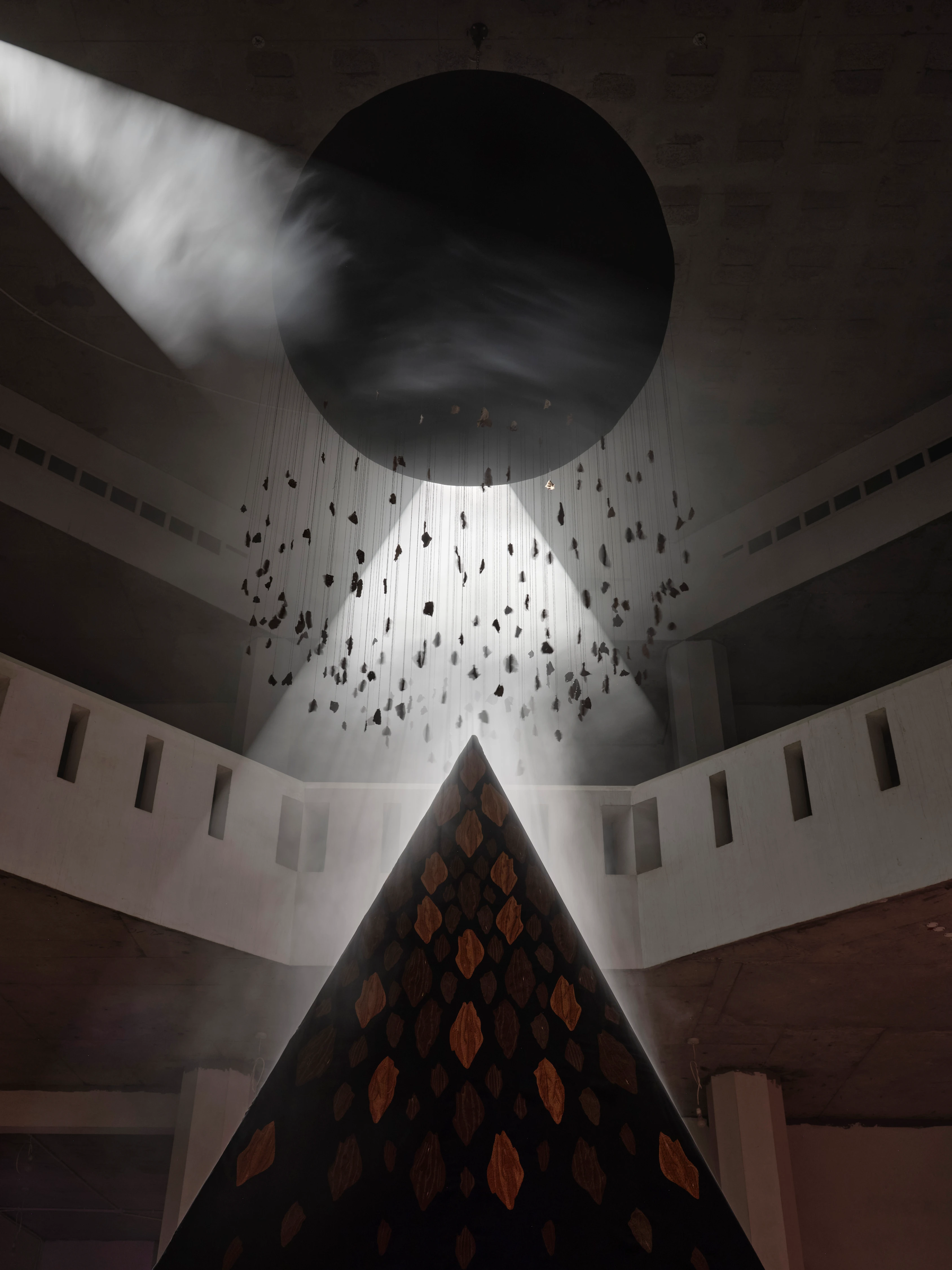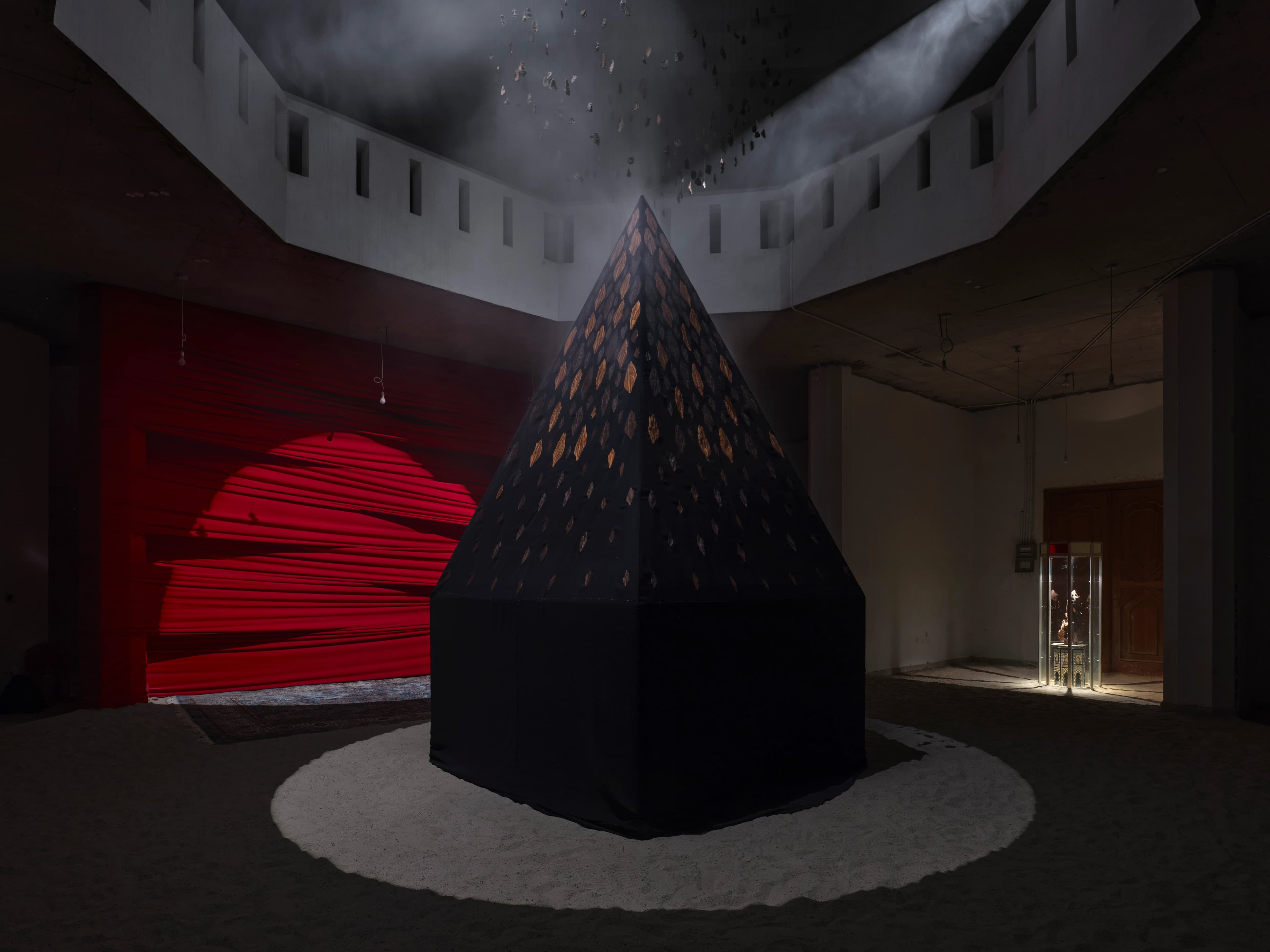
Departed Soul incense burner installation, dark pyramid form with gold motifs, ASBAR 2026 contemporary art exhibition
5 min

14.07.2026

Oud Abaya: Reimagining the Abaya Through Contemporary Art

By WeDirectory

Discover Oud Abaya, Reem Al Muhannadi's multidisciplinary practice reimagining Gulf abaya and oud through sculpture, installation, and film.

By WeDirectory

The abaya is one of the Gulf's most recognisable cultural garments, while oud remains one of its most valued materials. Deeply embedded in everyday life through dress, hospitality, ritual, and craftsmanship, both carry histories that extend far beyond their practical use. Through Oud Abaya, Qatari artist Reem Al Muhannadi brings these materials into contemporary art, creating large-scale installations, sculptural garments, photography, film, and performance that expand the visual language of Gulf material culture.
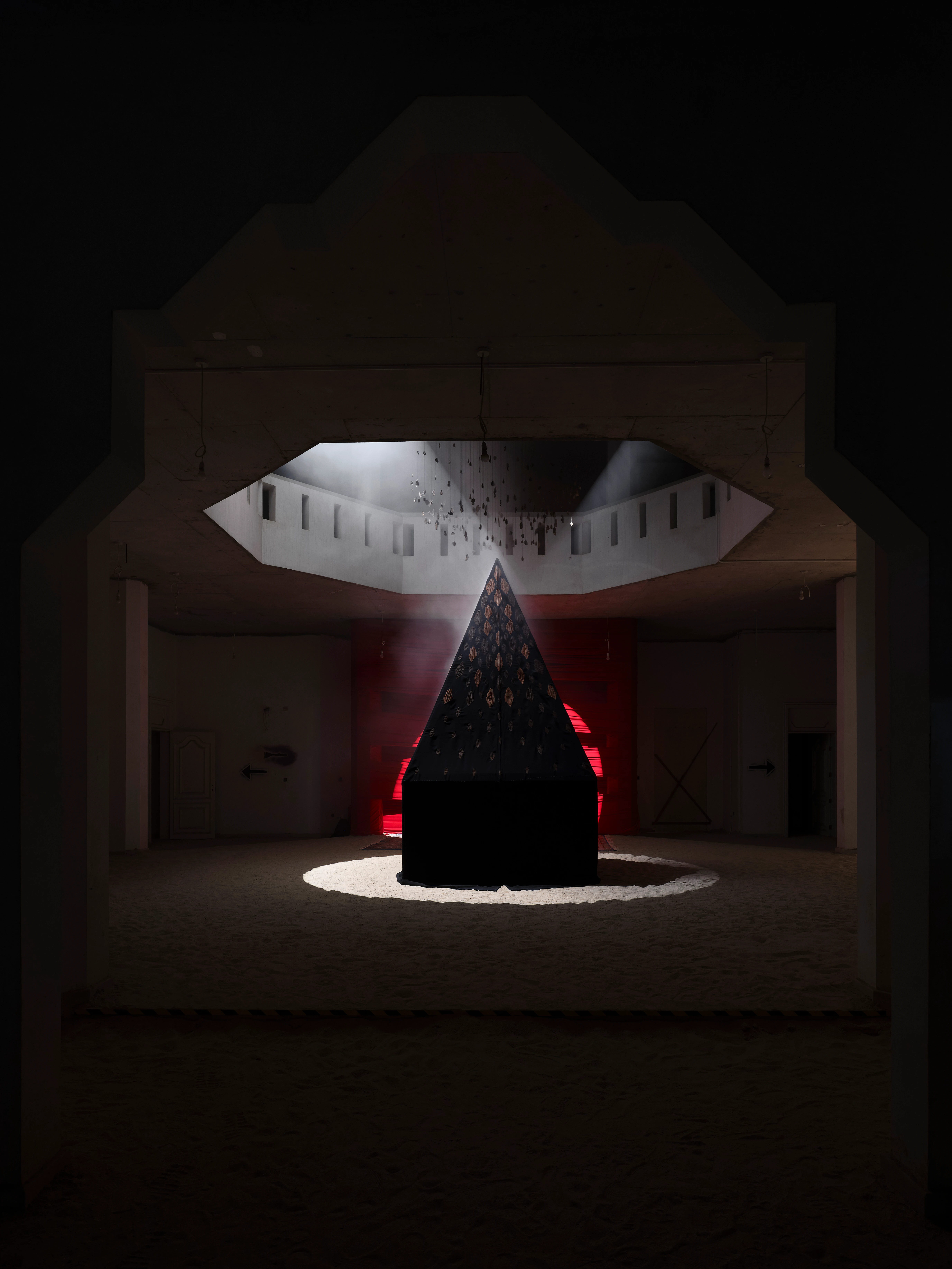
Departed Soul incense burner sculpture, dark pyramid form illuminated by shaft of light, ASBAR 2026 installation

Departed Soul (Incense Burner), Part of ASBAR / أصبر, 2026. Photo: © Eva Herzog

A Practice Built on Two Materials

Based between Doha and London, Oud Abaya is the multidisciplinary art practice of Reem Al Muhannadi. Working across garment-based installation, sculpture, photography, film, and performance, the practice uses the abaya and agarwood (oud) as starting points for creating large-scale installations and original cultural objects informed by Gulf material culture.

The practice originated in 2023 following a dream of an abaya covered entirely in raw oud. At the time, Al Muhannadi was not making art professionally, but the image remained with such urgency that she felt compelled to bring it into physical form. A few months later, while travelling in the UAE, she drew the garment in the sand—not as a sketch for an artwork, but as the first attempt to bring the object to life. What followed was not simply the making of an artwork, but years of developing the techniques needed to make the object possible.
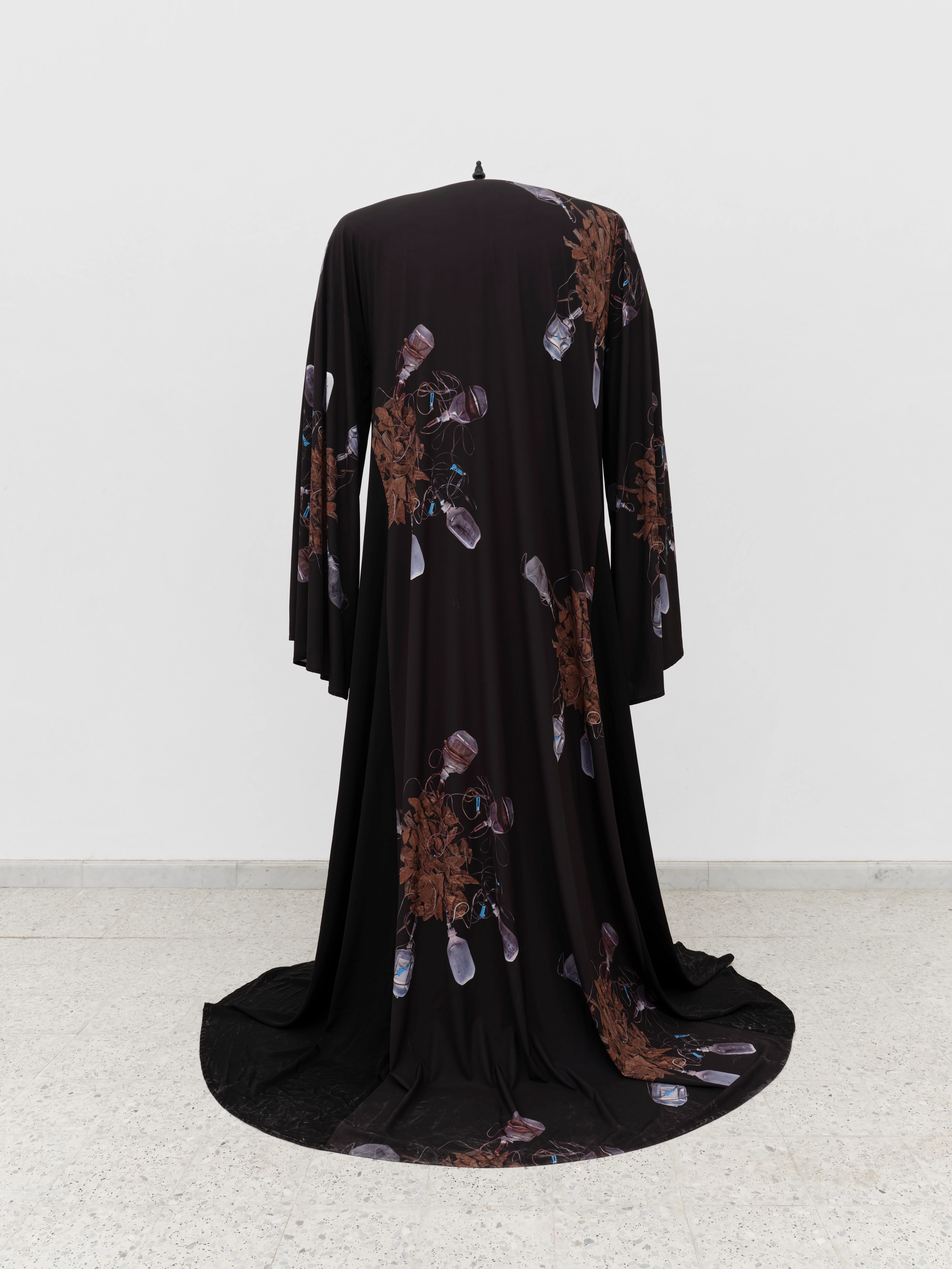
Oud Abaya black floor-length robe with trailing hem and botanical crystal print, displayed on stand

Blast Abaya (Back), Part of ASBAR / أصبر, 2026. Photo: © Eva Herzog

Craft as Method

There was no established method for incorporating raw oud into garments. Through craftsmanship, material experimentation, and research, Al Muhannadi pioneered its use as a primary material in garment-based installation. As co-owner of Sara Secrets Tailoring Workshop in Qatar, she develops each project in close collaboration with specialist makers, allowing craftsmanship to become an active part of the artistic process. Maintaining direct access to production allows ideas to evolve through sampling, embroidery, pattern cutting, and repeated construction, with the workshop functioning as an extension of the studio rather than a separate manufacturer. New techniques emerge through making rather than following established processes.
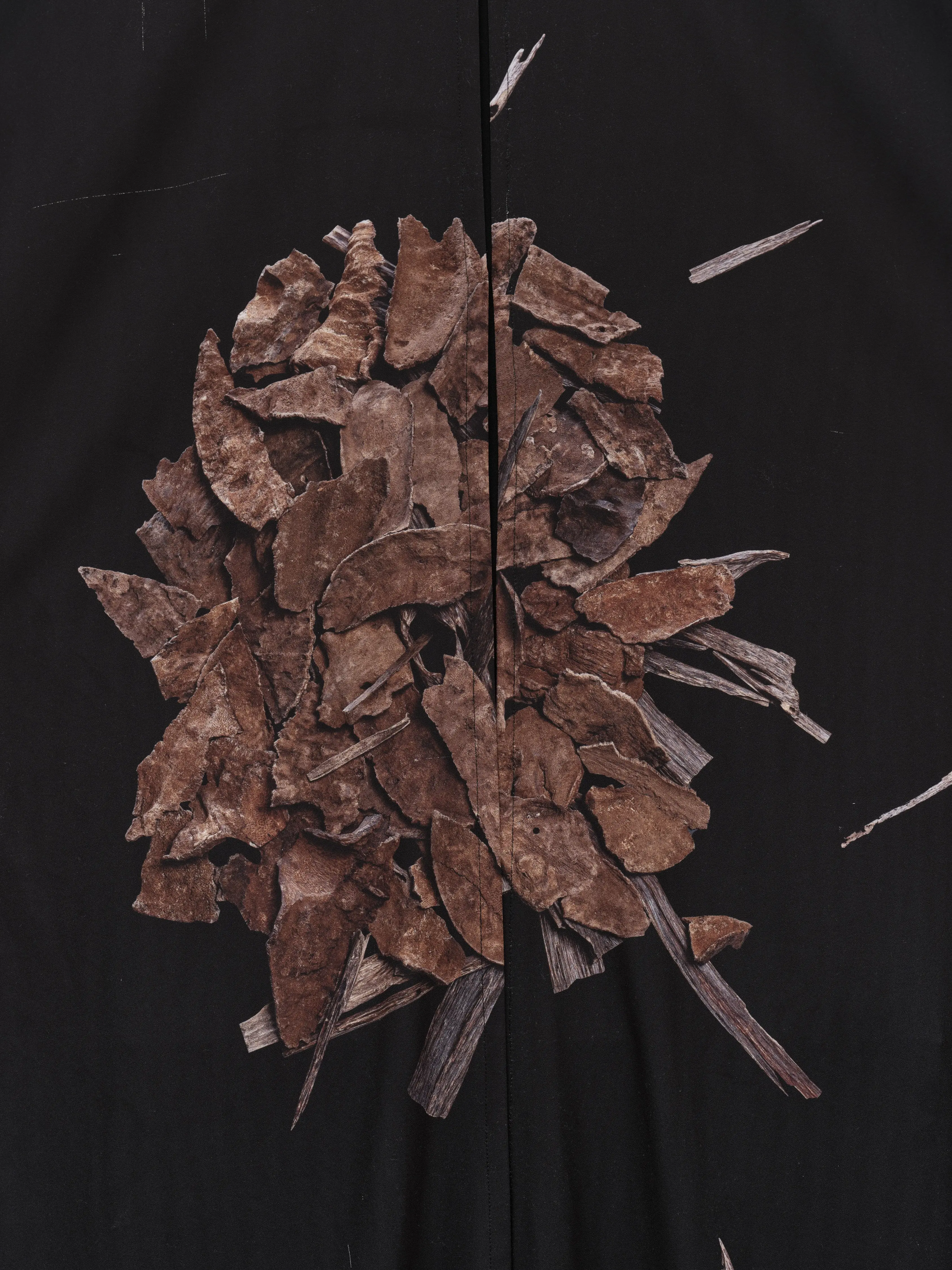
Black oud abaya with textured bark fragment motif detail on fabric center

Blast Abaya (detail), Part of ASBAR / أصبر, 2026. Photo: © Eva Herzog


Using the material itself is fundamental to the practice. Substituting imitation wood would change not only the appearance of the work, but also its weight, scent, physical behaviour, and relationship to craftsmanship. The material is never illustrative, it remains materially and culturally authentic.

Working directly with oud also transformed Al Muhannadi's understanding of the material. Research into the Aquilaria tree revealed that oud develops only after the tree has been wounded, with resin forming over many years as part of its natural response. Ecology, craftsmanship, rarity, trade, hospitality, ritual, and time all became inseparable from the work itself. Rather than treating oud as a symbol, she works with it as a material in its own right, allowing its physical properties, histories, and methods of making to determine how each project develops.
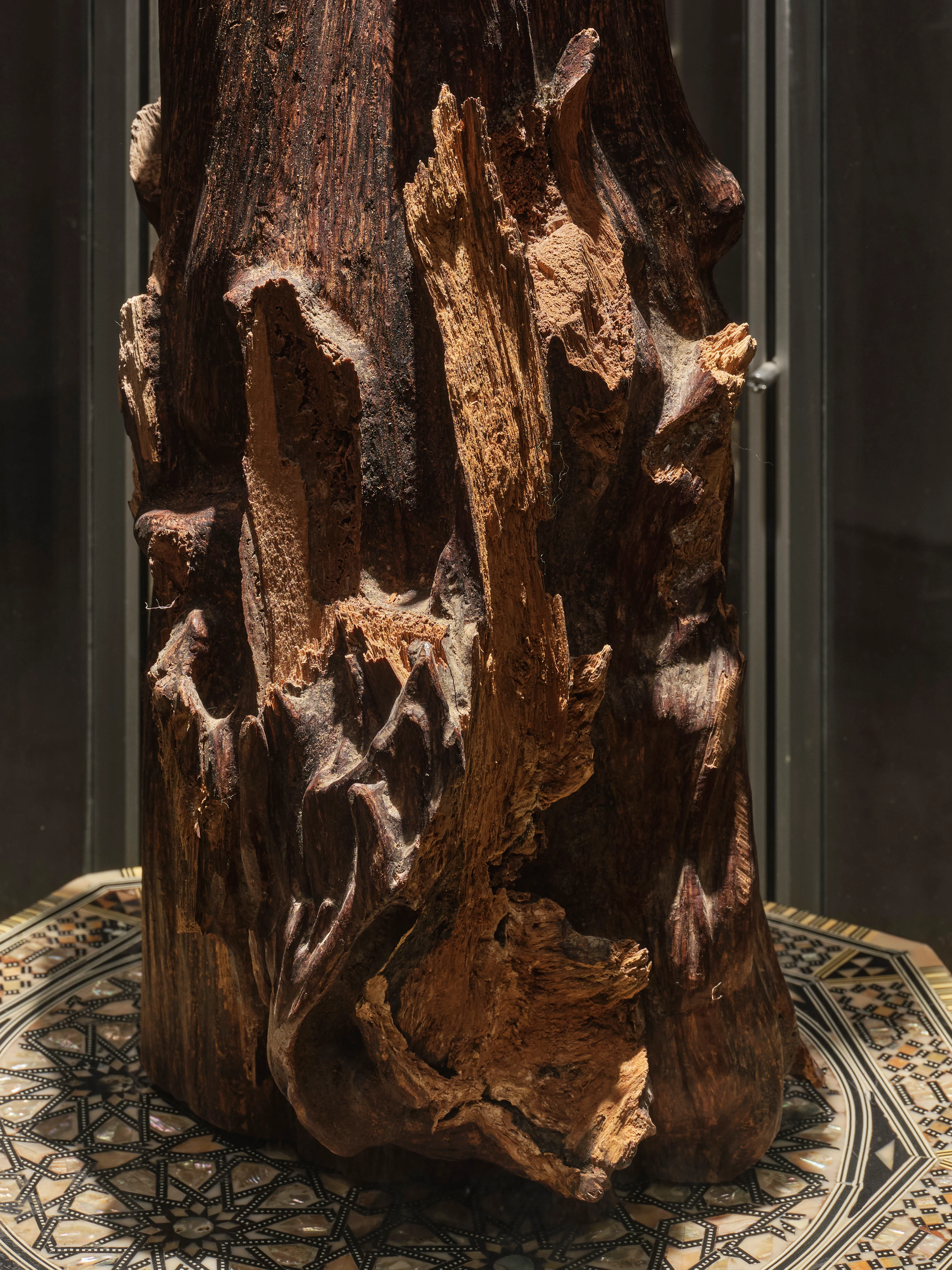
Raw oud wood chunk with natural crevices and resinous grain, displayed on ornate inlaid base for Oud Abaya collection

Aquilaria (Oud) trunk inherited from artist’s grandfather, Part of ASBAR / أصبر, 2026. Photo: © Eva Herzog


Rather than producing individual artworks, Oud Abaya constructs complete worlds in which familiar materials establish new systems of value. Garments, objects, scent, photography, film, performance, and space are conceived together, allowing each installation to operate according to its own internal logic rather than illustrating existing narratives.
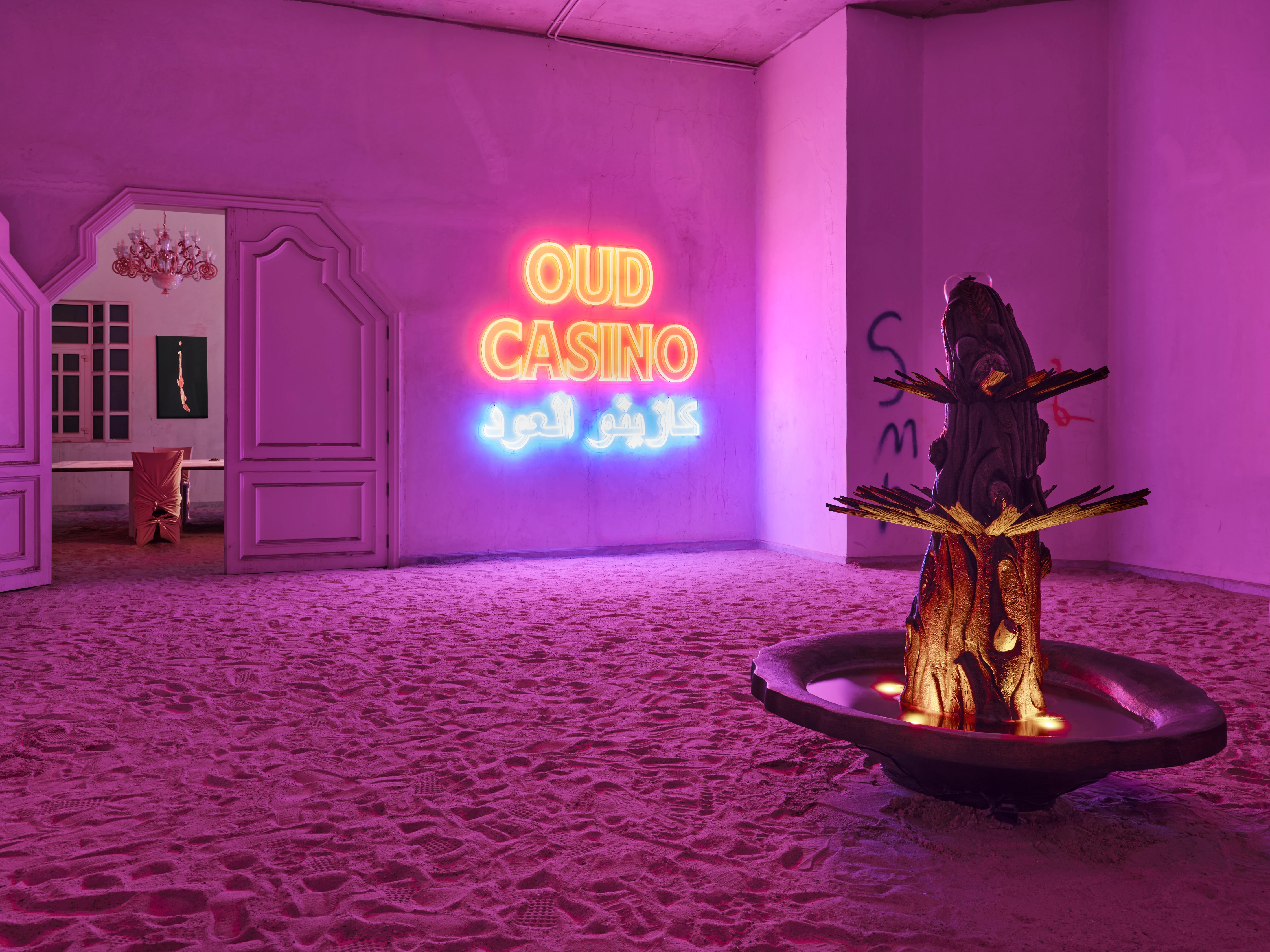
Oud Casino and the Logic of Invented Worlds

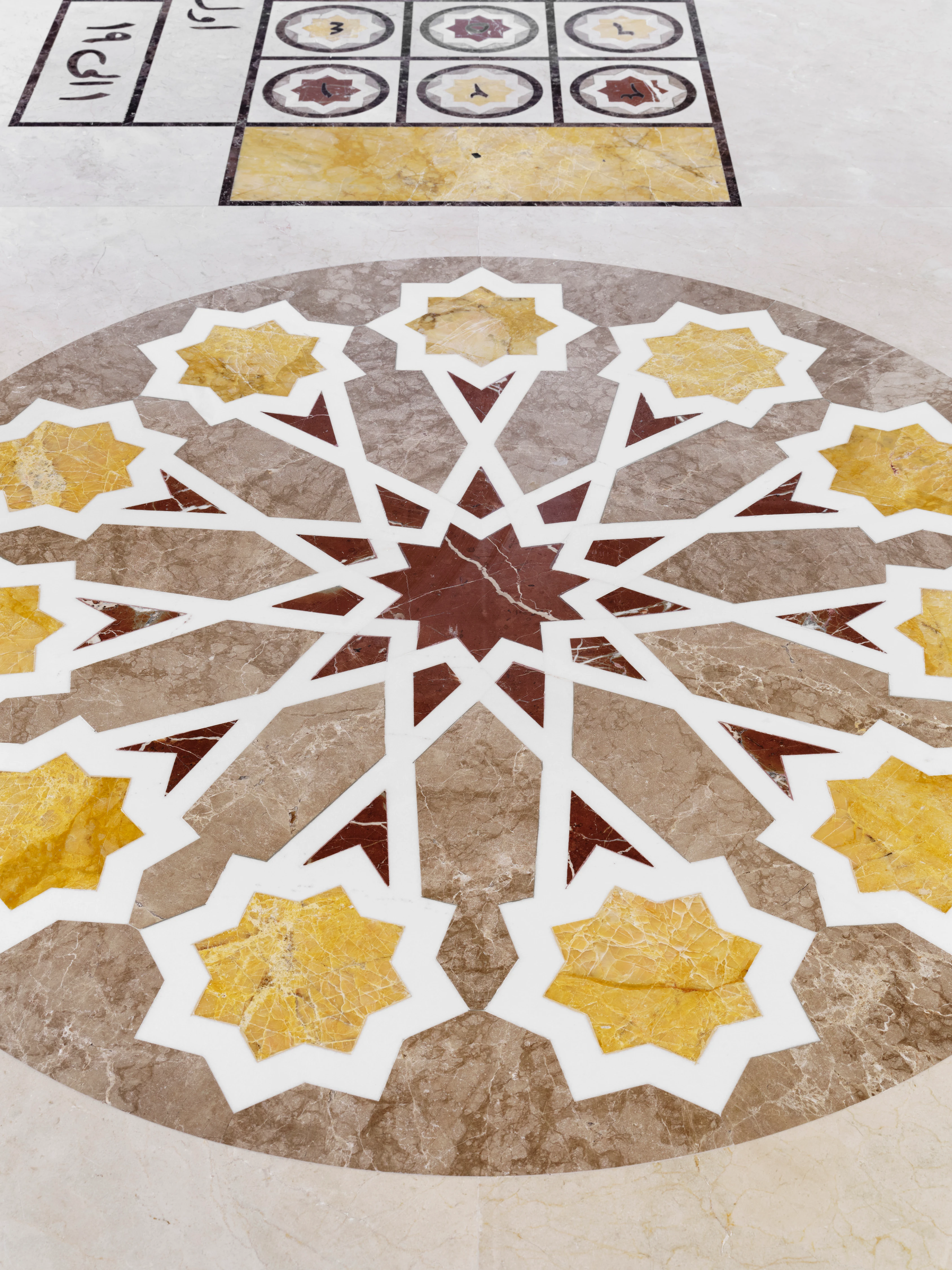
This approach is central to Oud Casino, an immersive installation where a six-metre Arabic Roulette Table forms the centre of a fictional casino reconstructed through Gulf material culture. Within Oud Casino, familiar objects are reassigned entirely new roles. Raw oud becomes currency, the roulette table becomes unplayable, and craftsmanship itself becomes a measure of value. Garments, sculpture, uniforms, scent, and moving image establish a world where luxury, chance, craftsmanship, and exchange operate according to a different set of rules.

Oud Casino neon sign glowing pink over sand-covered gallery floor with sculptural palm tree fountain

Threshold Room (Communal Transition), Oud Casino, Part of ASBAR / أصبر, 2026. Photo: © Eva Herzog

Marble inlaid floor medallion with geometric star pattern, Arabic Roulette Table by Oud Casino, ASBAR 2026

Arabic Roulette Table, Oud Casino, Part of ASBAR / أصبر, 2026. Photo: © Eva Herzog

The Departed Soul

The same methodology appears throughout the practice. Monumental garments exceeding three metres in height retain the recognisable silhouette of the abaya while moving beyond the scale of the body. The Departed Soul, a six-metre installation crowned by a suspended moon, transforms the traditional Gulf incense burner into a monumental environment. Historically, smaller incense burners were used to scent garments by placing clothing above rising smoke. Reimagined at monumental scale, the sculpture opens into an inhabitable structure while carefully selected abaya fabric softens and diffuses the smoke. Garment and burner become one installation. Although many visitors assumed oud was burning because of the embroidered garments surrounding it, the material itself was never consumed. By then, Al Muhannadi's understanding of the material had changed. The remaining pieces of raw oud from the making process were suspended beneath the moon, wrapped in black abaya fabric, allowing the material to remain present without being burned.

Departed Soul Incense Burner installation, ASBAR series: dark sphere suspended above illuminated pyramid with hanging fragments

Departed Soul (Incense Burner), Part of ASBAR / أصبر, 2026. Photo: © Eva Herzog


The practice also extends through photography, film, collaborative performance, and public interventions, allowing garments to move beyond the gallery into public space. Whether through live interventions, moving image, photography, or installation, each project expands the relationship between object, material, body, and environment.

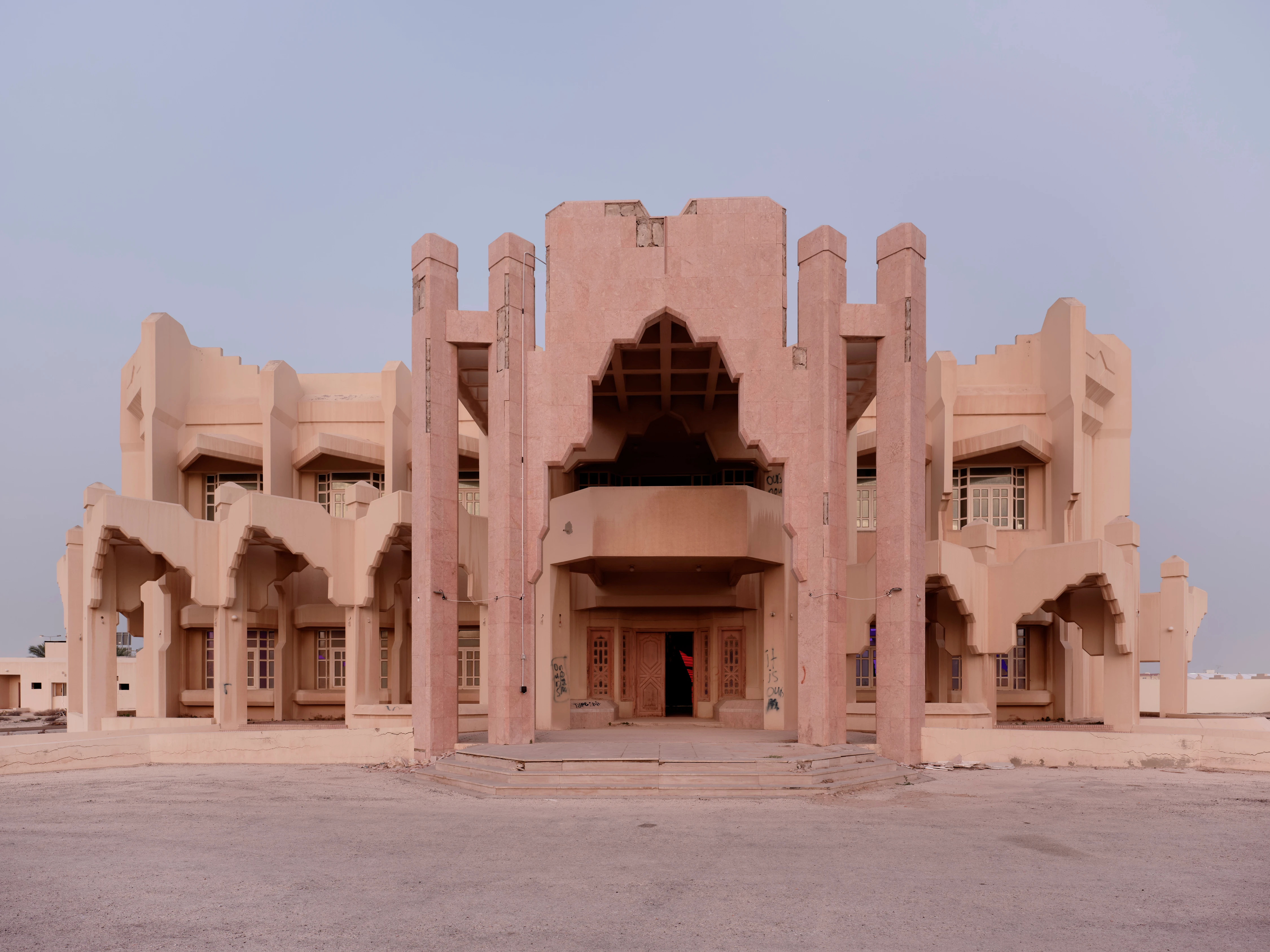
Developed independently, Oud Abaya is realised through artist-led, site-responsive exhibitions that respond directly to the character of each location. Rather than treating the site as a neutral backdrop, every environment becomes part of the work itself, shaping how visitors encounter the installation. Recent projects include Oud Abaya, presented as a public installation at Doha's 5/6 Park, and ASBAR (أصبر / WAIT), an independently conceived exhibition staged within an unfinished Neo-Islamic villa. Presented over four evenings, ASBAR welcomed more than 400 visitors, reflecting significant public engagement for an independently produced exhibition within Qatar's emerging contemporary art scene.

ASBAR 2026 abandoned pink modernist palace with Islamic arches in arid desert landscape, photo by Eva Herzog

Neo-Islamic domestic structure in Al Wakrah, Qatar, ASBAR / أصبر, 2026. Photo: © Eva Herzog


Today, Oud Abaya continues to evolve across installation, fashion, photography, film, research, and publication. Every project begins with a material. Rather than asking what it represents, the practice asks what else it can become, and what unexpected materials can enter into dialogue with it. Through craftsmanship, experimentation, and making, familiar materials are repositioned into new relationships, constructing immersive worlds where objects establish their own systems of value. Each body of work expands this evolving material vocabulary, contributing original cultural objects and new visual languages rooted in Gulf material culture.

​

On the cover: Departed Soul (Incense Burner). Part of ASBAR / أصبر, 2026
Photo © Eva Herzog

Author

WeDirectory

Date

14.07.2026

Tags
Art & IllustrationOud AbayaReem Al MuhannadiGulf contemporary artabaya artoud material cultureQatari artistDoha art scenegarment installationsculptural fashionGulf material culturecontemporary art QatarOud Casino installation