With his debut at Milan Fashion Week featuring the Spring/Summer 2027 collection, “Está anocheciendo en mi vida,” Neithan Herbert marks a significant milestone in the global expansion of his eponymous fashion brand. Moving beyond conventional notions of luxury, the Mexico-based designer offers a vision of fashion grounded in cultural exchange, collective creativity, and a profound personal perspective on identity. In this interview, Herbert reflects on the values that shape his work, the challenges of establishing an independent brand, and the potential for reimagining fashion’s future.
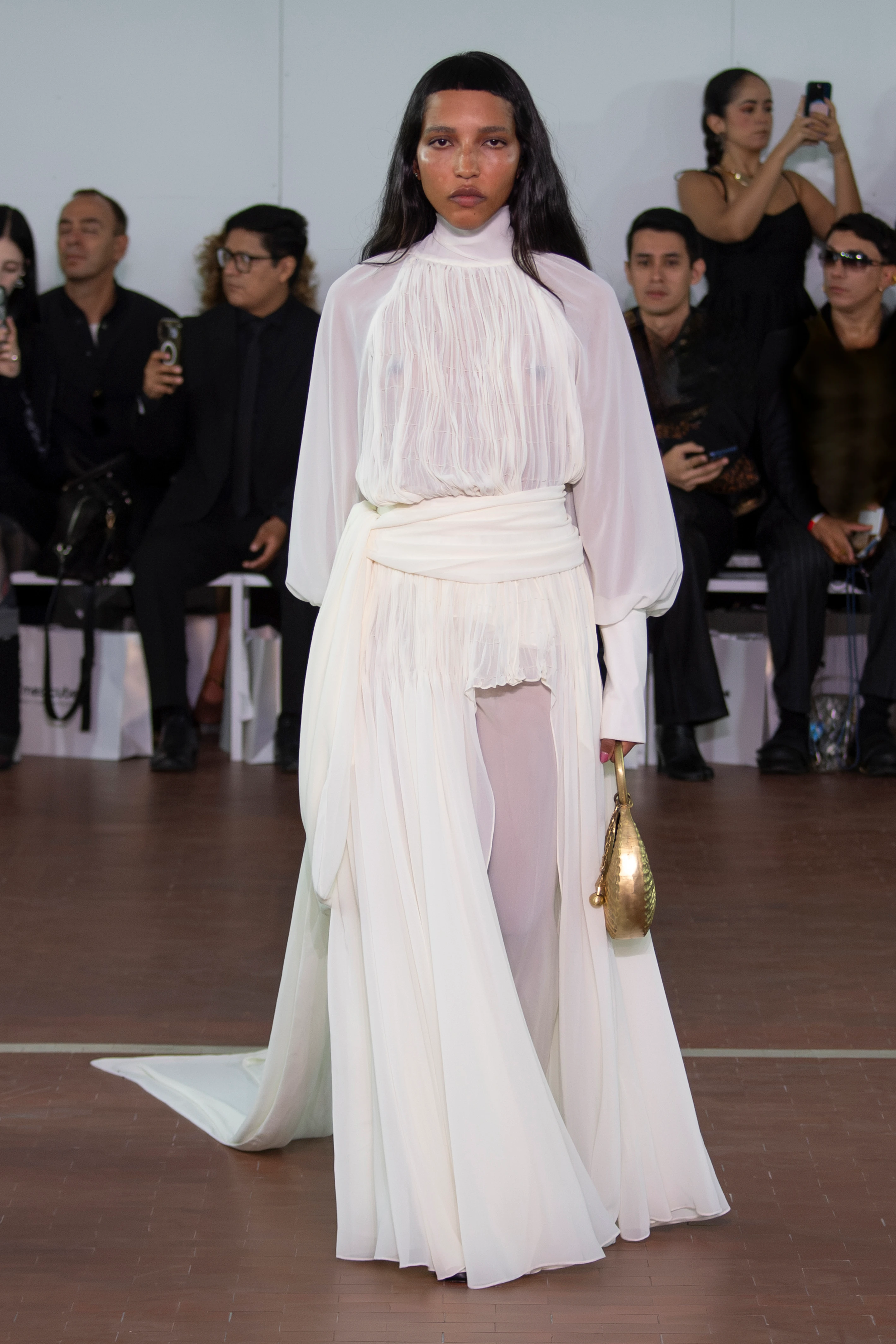
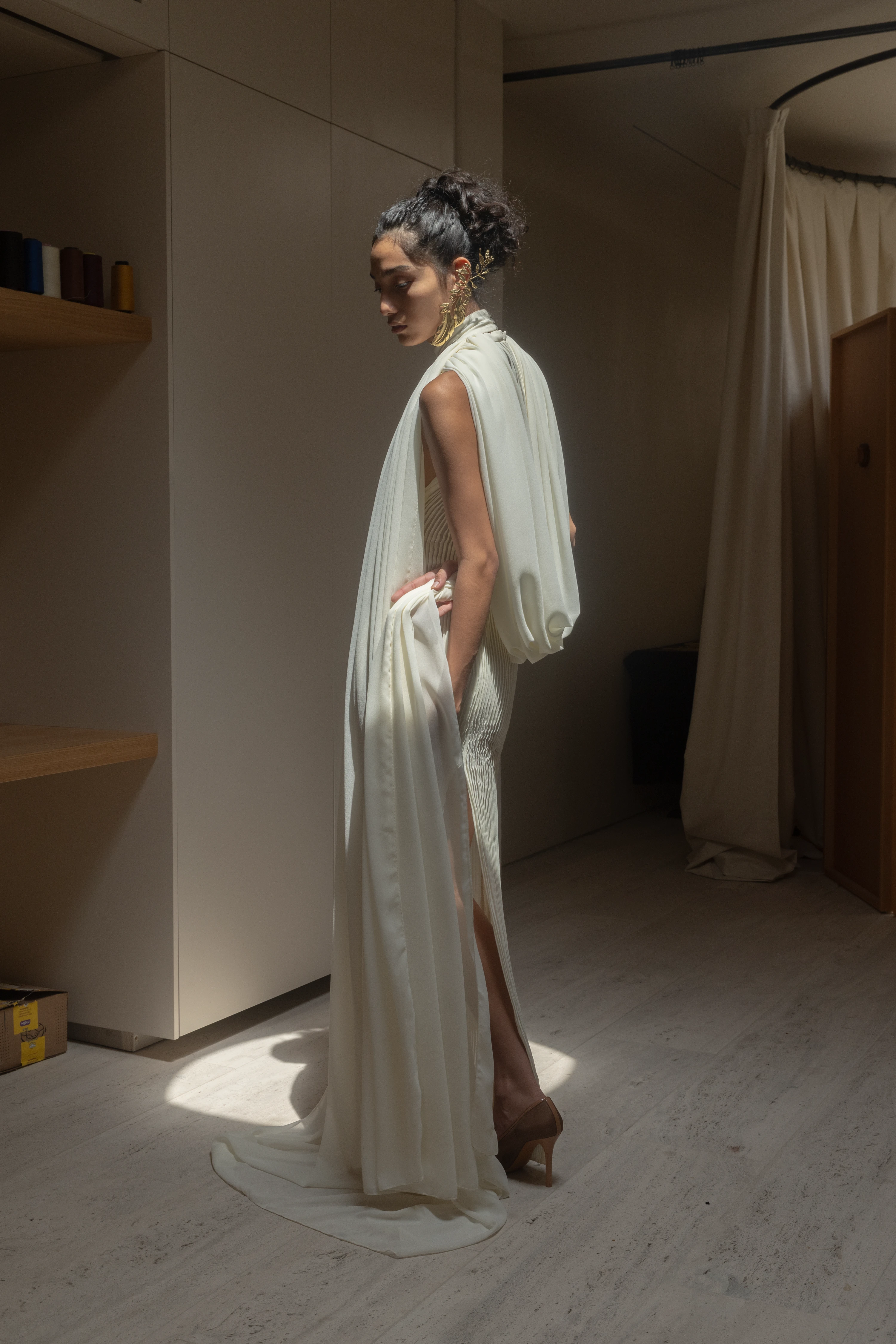
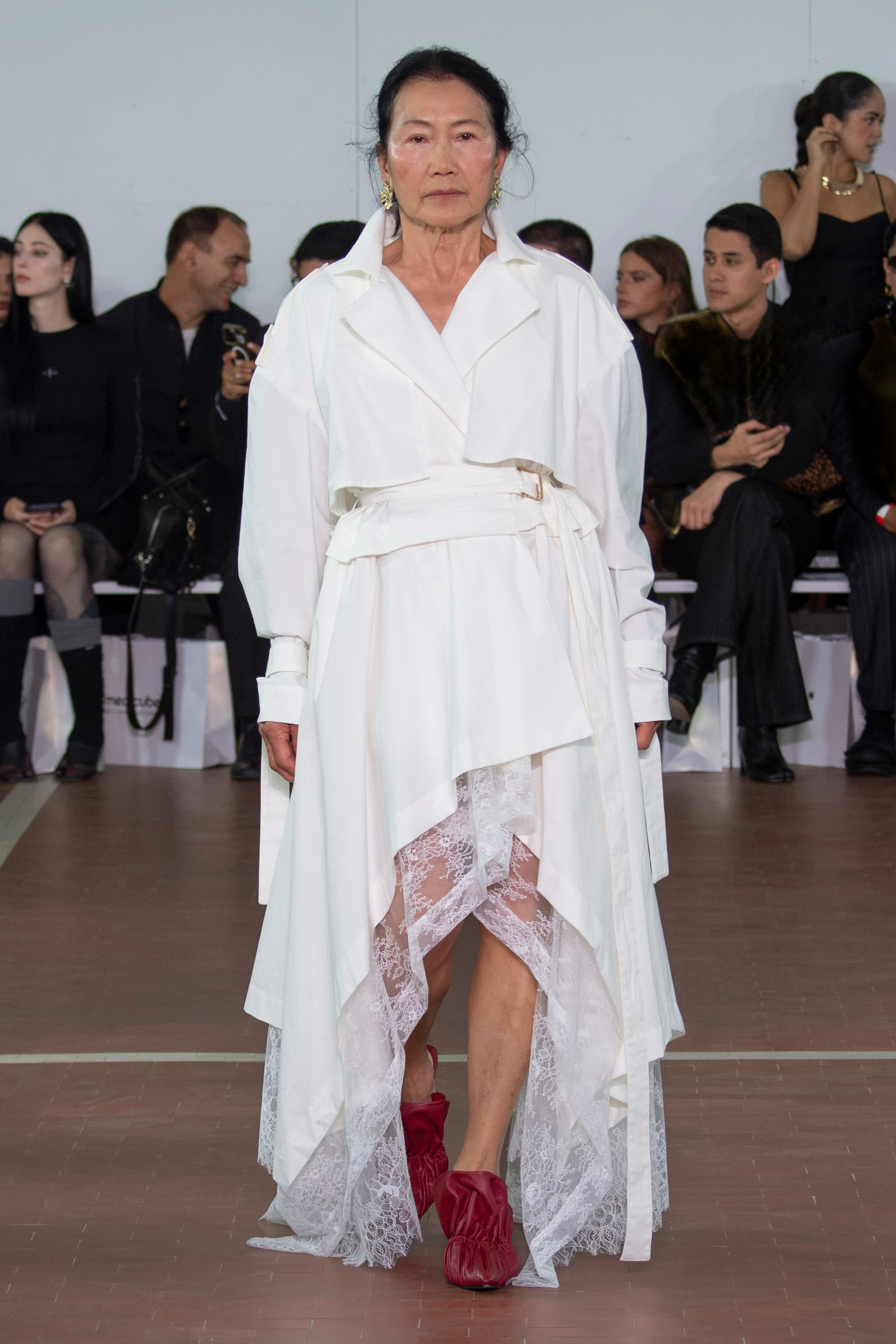
Neithan Herbert Spring/Summer 2027. Photo: Victor Virgile
Your creative identity has been shaped by different cultural influences, including your Ecuadorian indigenous heritage, your upbringing in Mexico, and your education in Milan. How do you translate these traditions into a contemporary fashion language that preserves their cultural significance without reducing them to mere aesthetic references?
I grew up understanding that identity is not necessarily defined by one place. My family comes from the Indigenous community of Otavalo, Ecuador, but much of my childhood was shaped by Mexico, and later, my education in Milan. Each of these places introduced me to different ways of understanding clothing, beauty, and the relationship between people and their surroundings. My mother was particularly influential. Through her, I understood that textiles could carry knowledge, memory, and a sense of belonging. They were never simply decorative objects. When I began designing, I wasn’t interested in reproducing traditional garments or translating cultural symbols literally. I wanted to understand the ideas behind them: the relationship between the body and cloth, the intelligence of handwork, and the emotional significance of dressing. At NEITHAN HERBERT, these references become part of a contemporary design language through construction, material experimentation, and silhouette. I believe cultural heritage remains relevant when we allow it to evolve rather than treating it as something fixed in the past.
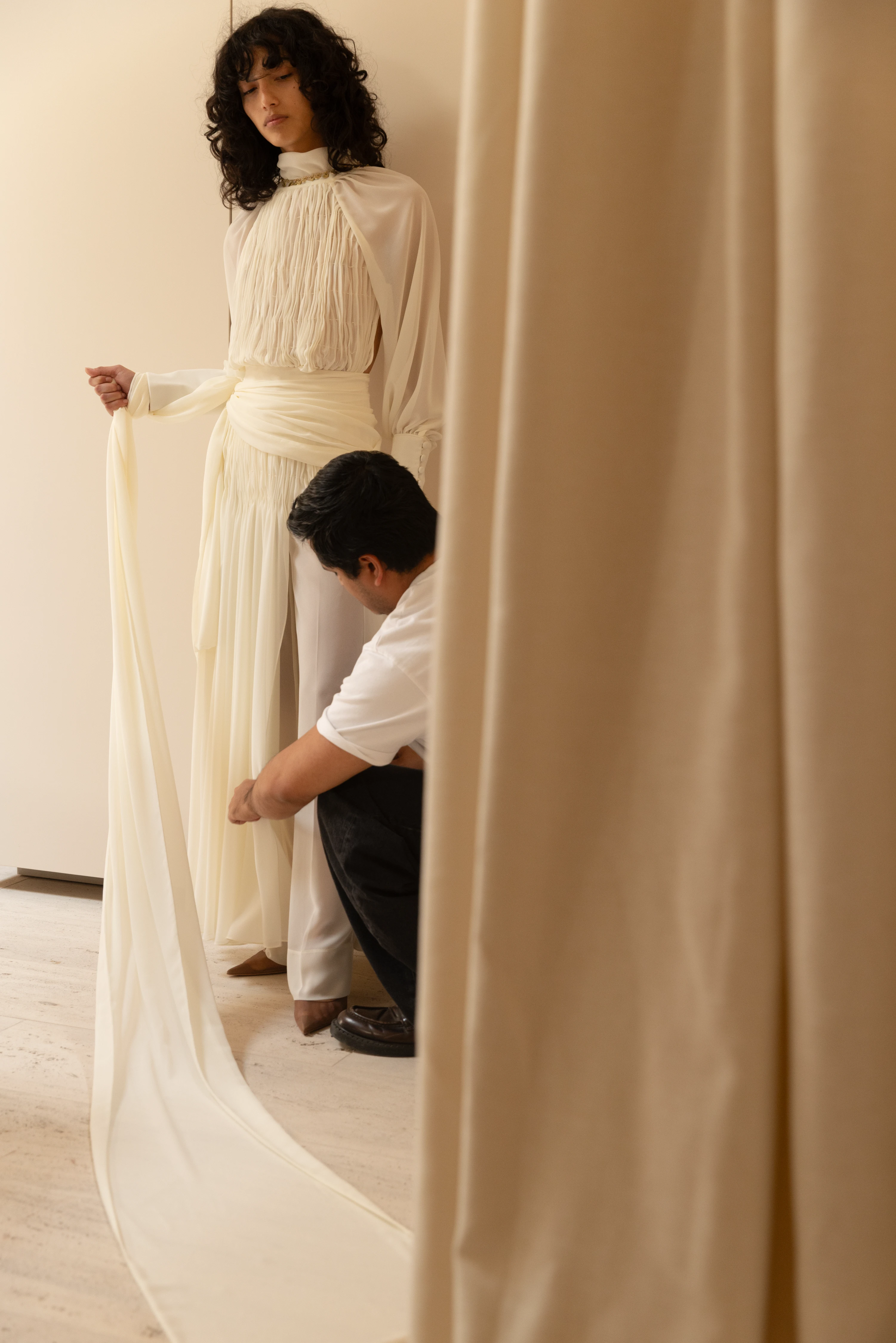
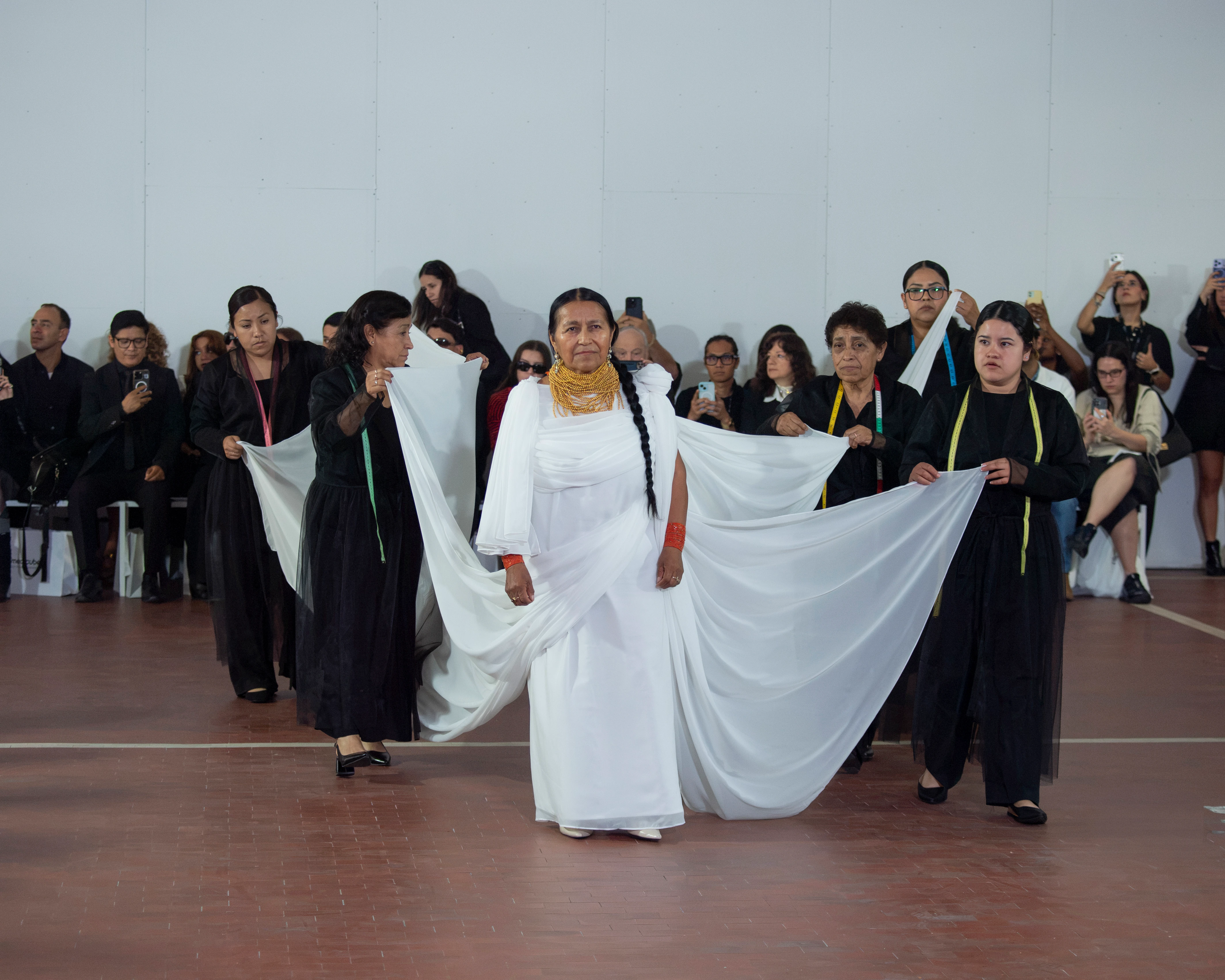
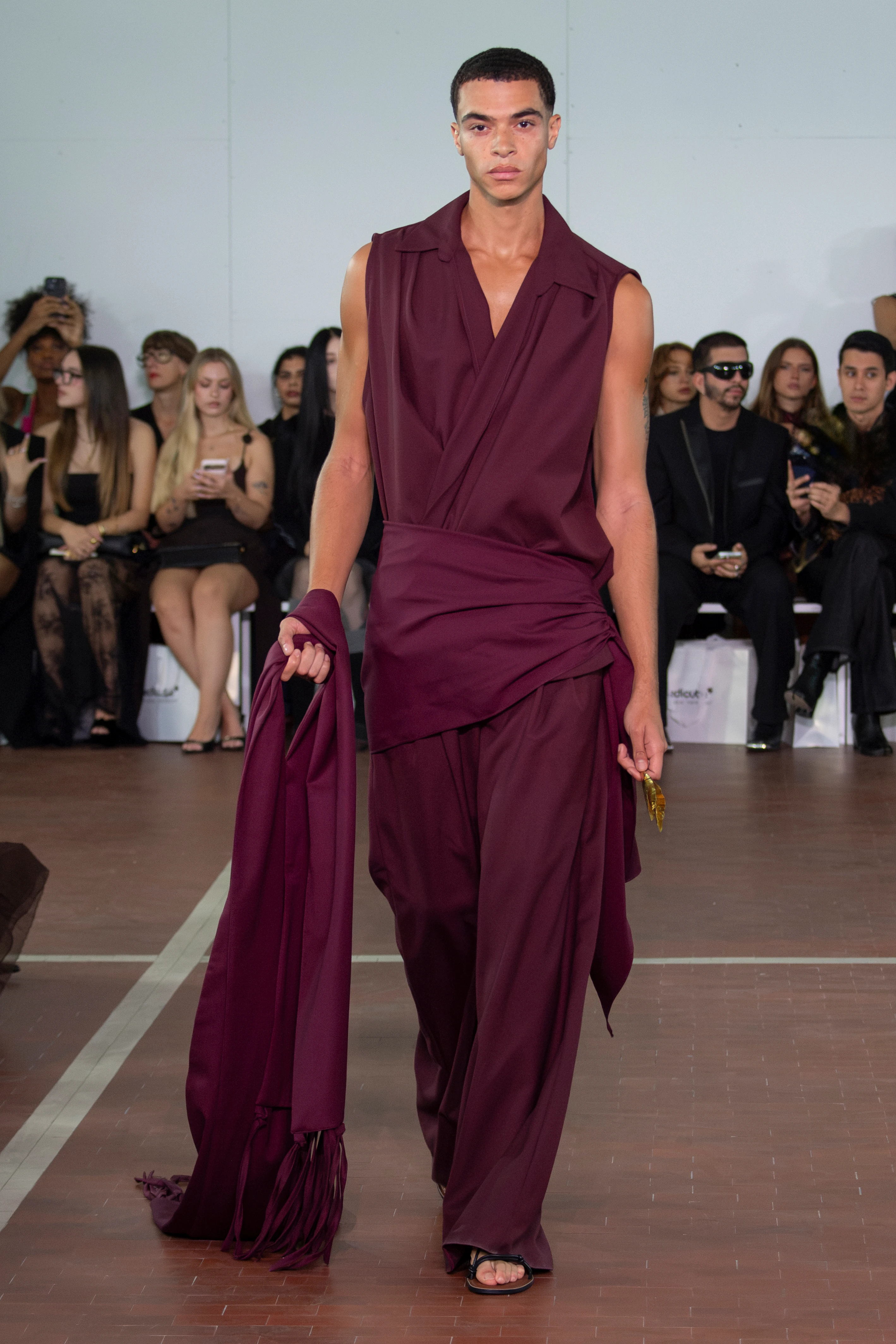
Neithan Herbert Spring/Summer 2027. Photo: Gustavo Garcia Villa
Your Spring/Summer 2027 collection, “Está anocheciendo en mi vida,” draws on the deeply personal childhood memory of your mother carrying you wrapped in a white cloth. This image suggests an understanding of clothing that transcends its functional or aesthetic purpose, transforming it into a form of shelter. Can fashion create a sense of home, protection, and belonging, especially in a world increasingly marked by displacement and uncertainty?
One of my earliest memories is of my mother carrying me wrapped in a white cloth. It is a very simple image, but one that has stayed with me throughout my life. When I began developing “Está anocheciendo en mi vida,” I found myself returning to that memory. I became interested in the idea of clothing as something that exists beyond appearance, something that can hold, conceal, protect, and accompany the body. I think we often underestimate the emotional relationship we have with garments. Certain pieces make us feel protected, others give us confidence, and some carry memories of people or moments that are no longer present. In the collection, this idea appears through layers, enveloping silhouettes, transparency, and the tension between revealing and concealing the body. I don’t believe fashion can resolve the uncertainty of the world around us, but I do believe clothing can offer a deeply personal sense of security and belonging.
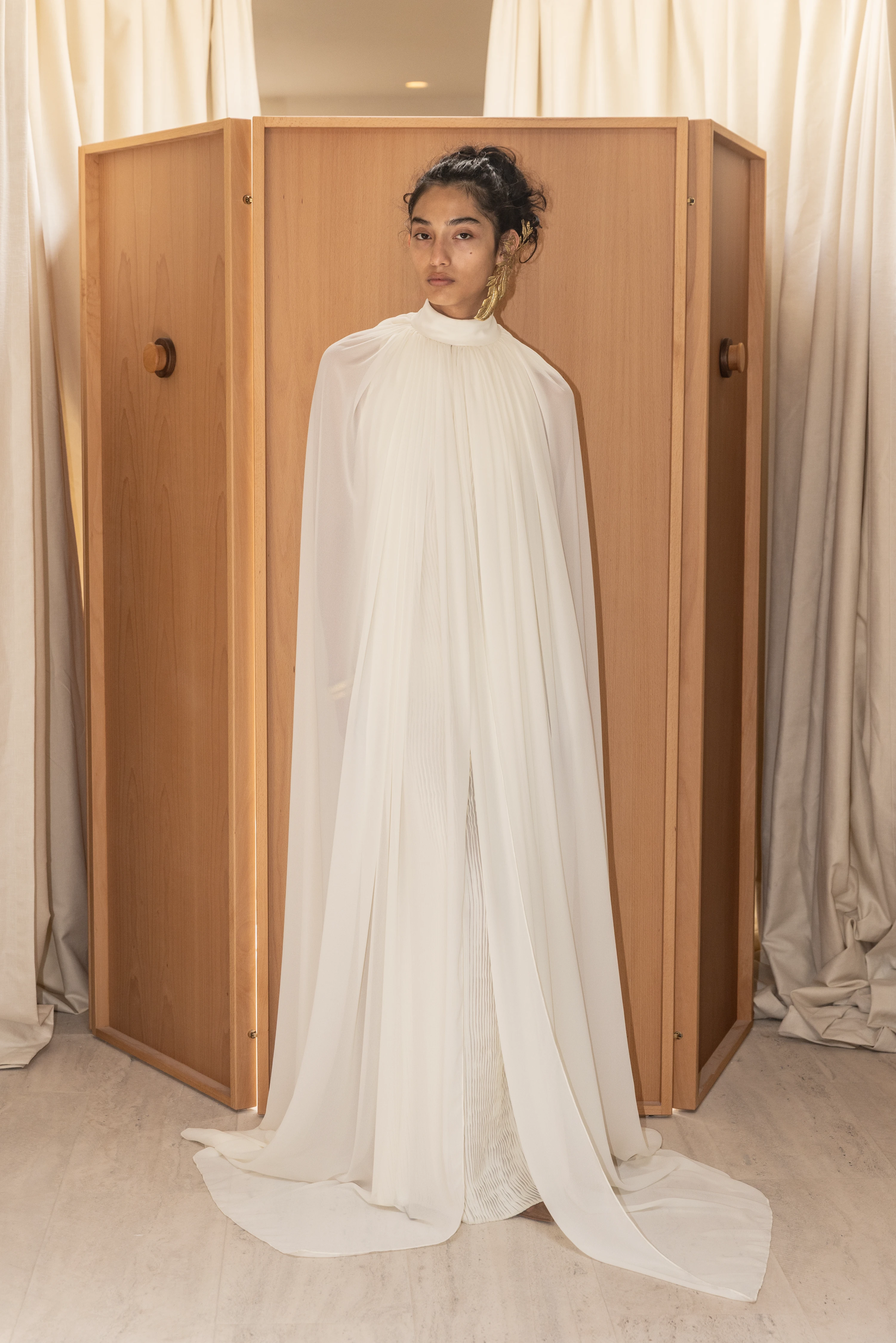
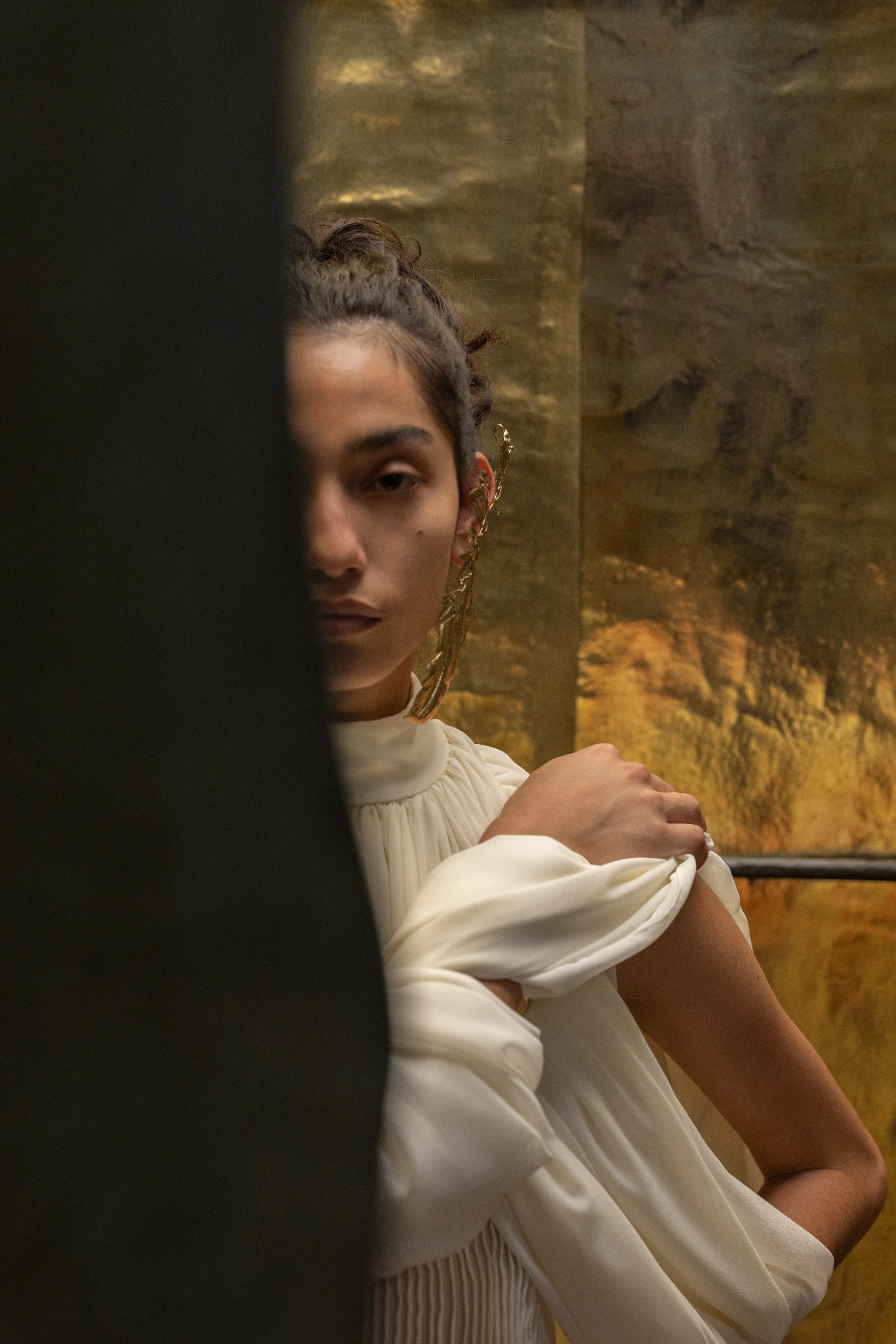
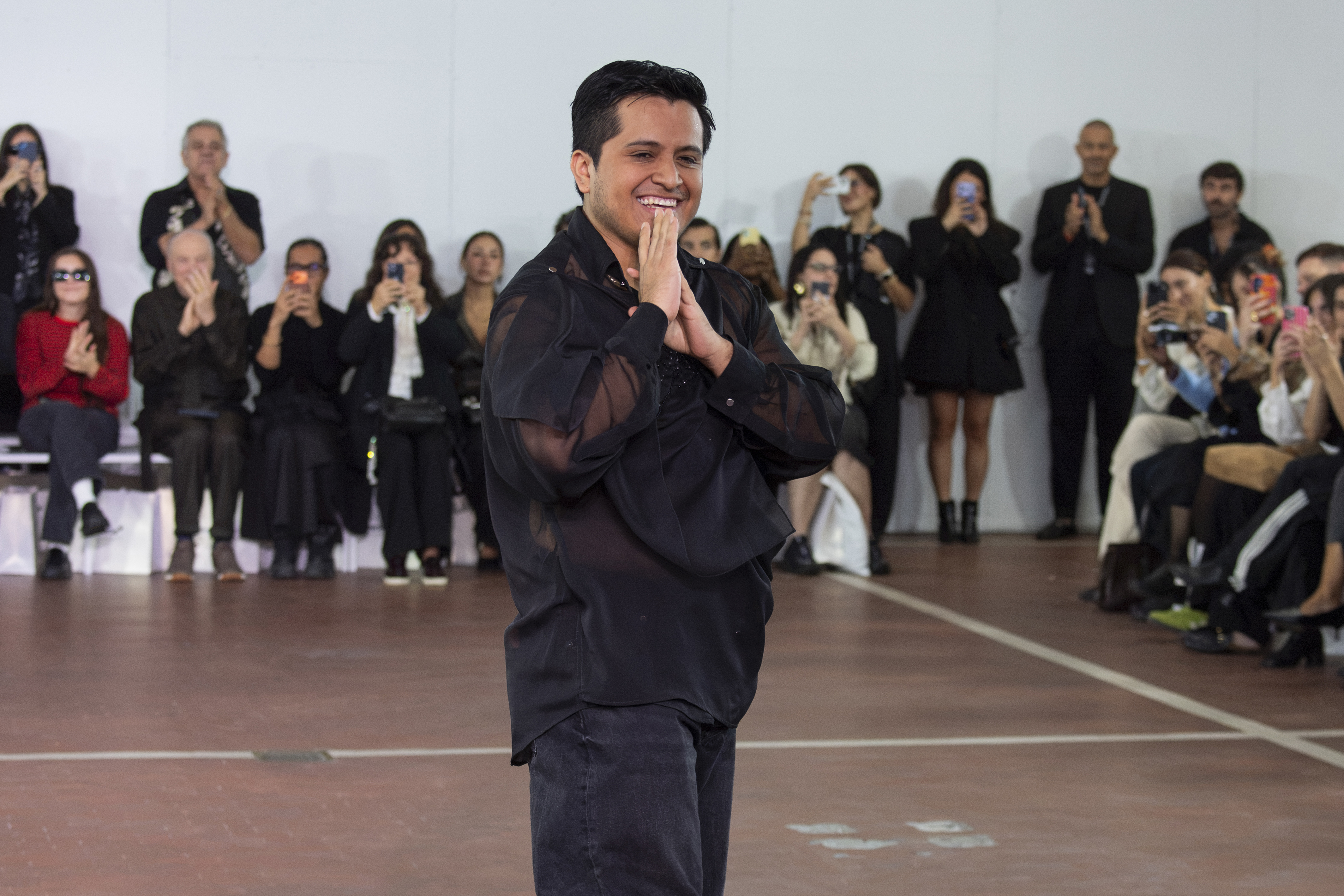
Neithan Herbert Spring/Summer 2027. Photo: Gustavo Garcia Villa
Your collection evokes a dreamlike atmosphere where memories, emotions, and imagination seem to merge, blurring the boundaries between reality and fantasy. What role does the dreamlike dimension play in your creative process?
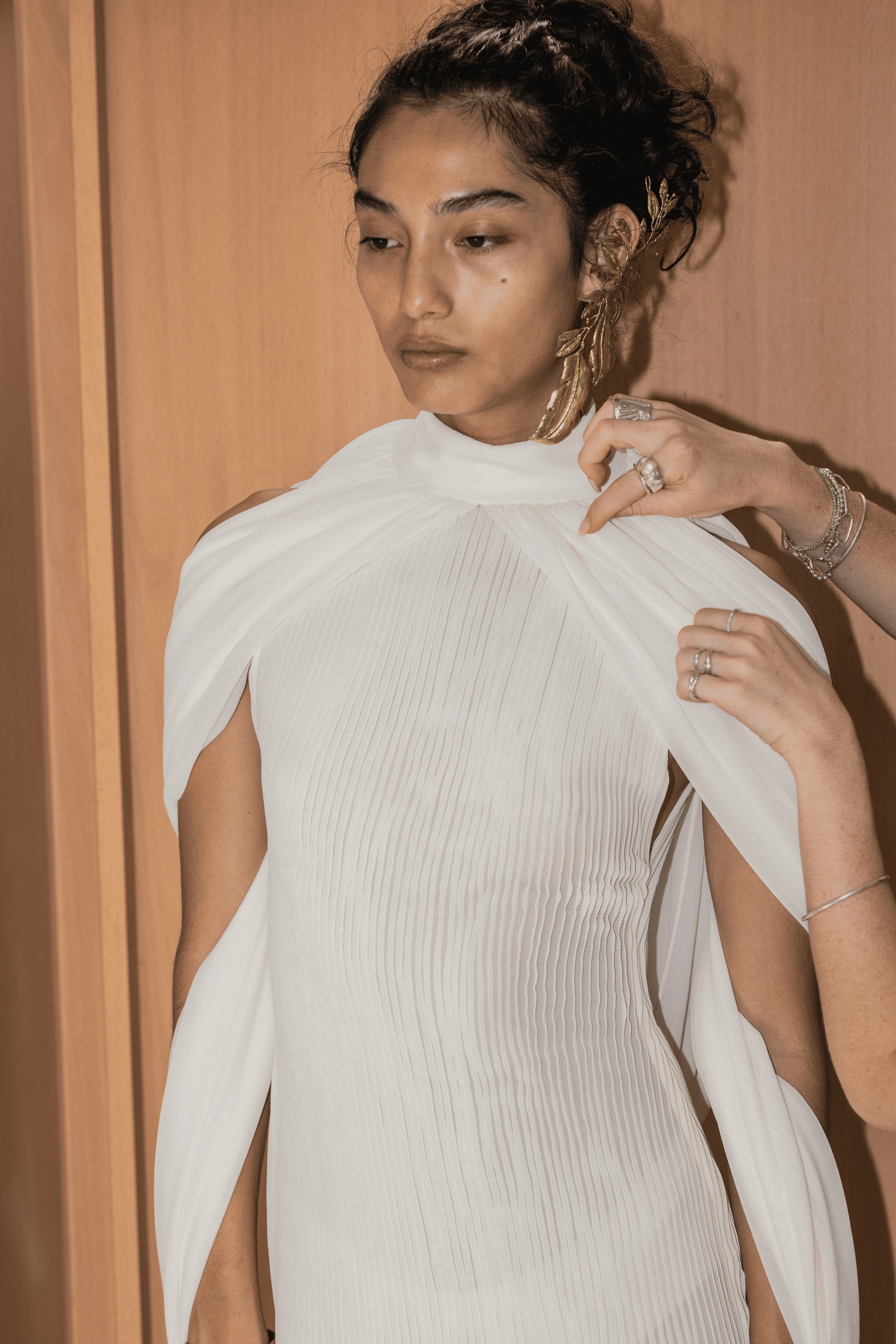
Dreams have become an important part of how I understand the creative process. They allow memories, emotions, and images that might appear unrelated to exist together. While developing “Está anocheciendo en mi vida,” I was interested in that moment between wakefulness and sleep, when familiar things begin to lose their definition and another reality starts to emerge. I found myself working through layers of memory, discovering forms, rituals, and objects that seemed to belong to a world somewhere between the real and the imagined. I think fashion has the extraordinary ability to make those abstract experiences tangible. Through fabric, movement, and construction, something that begins as a feeling can eventually become an object that exists in the physical world. For me, fantasy is not necessarily an escape from reality. Sometimes it is another way of understanding it.
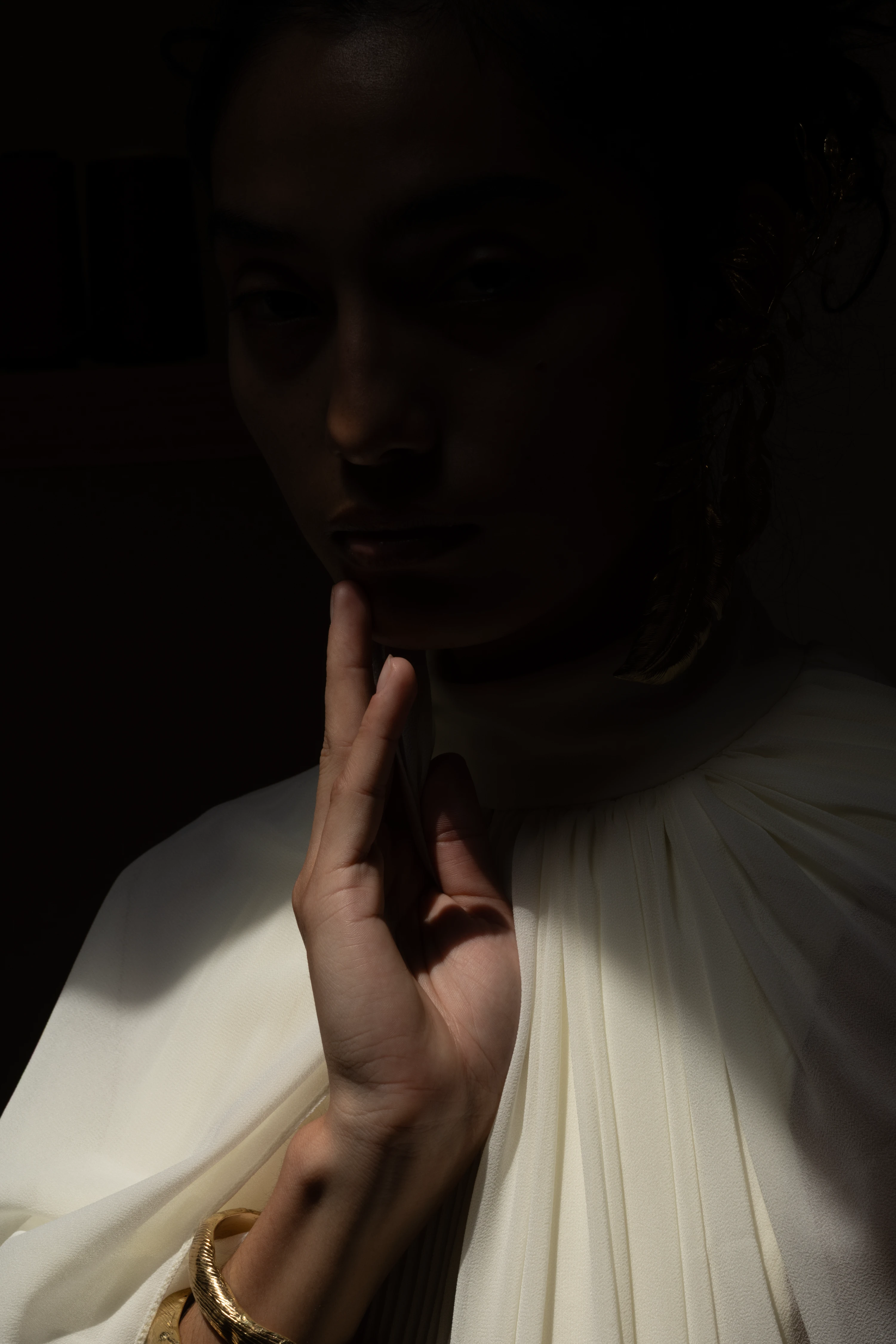
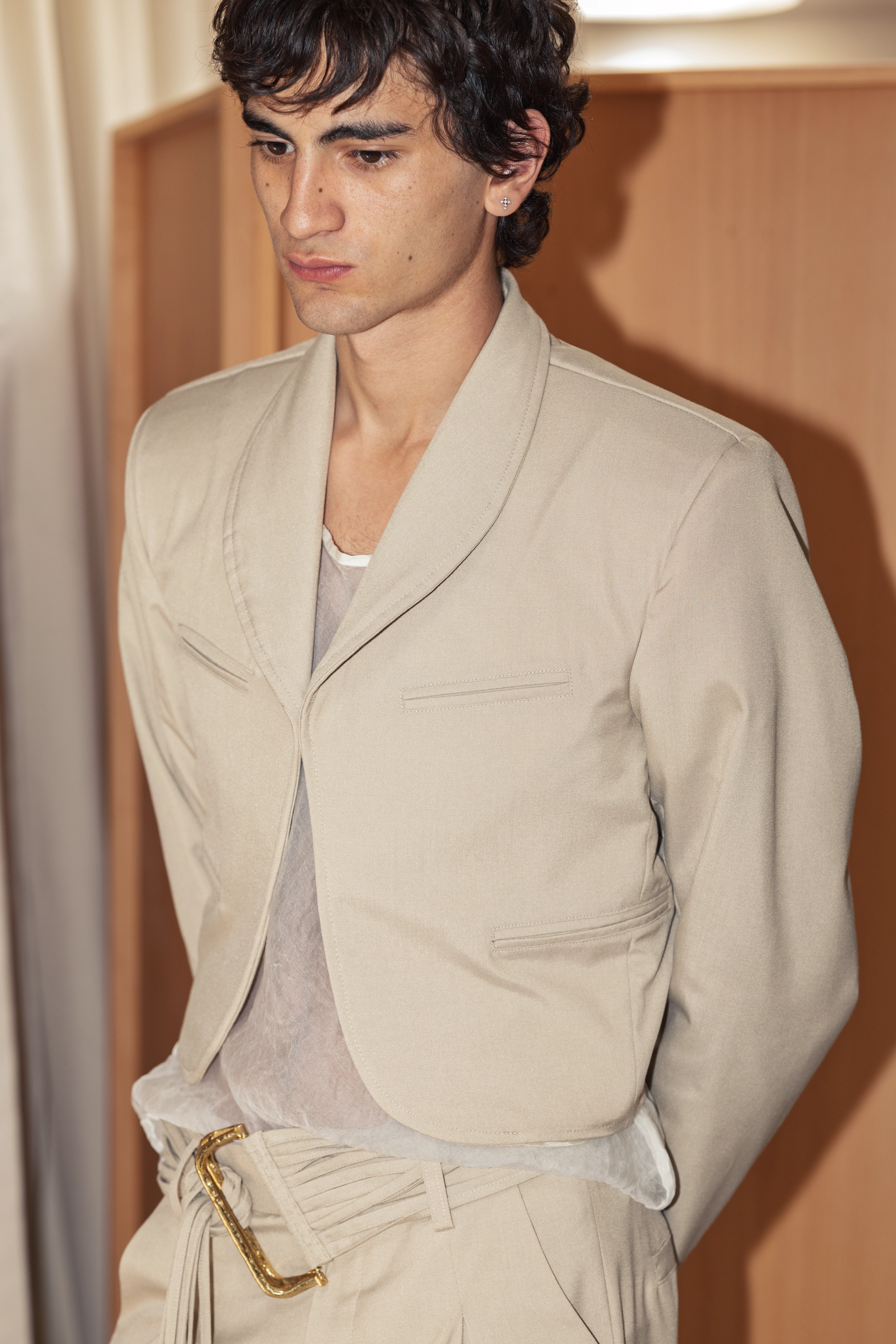
Neithan Herbert Spring/Summer 2027. Photo: Gustavo Garcia Villa
Your designs often explore the tension between concealment and exposure through draping, fluid silhouettes, transparency, and architectural volumes. How do you conceive of the relationship between the body, the garment, and the space they inhabit? To what extent can clothing transform the way we experience our surroundings physically and emotionally?
I have always been fascinated by the space that exists between the body and a garment. When I design, I don’t necessarily begin by thinking about how a piece will look on a static figure. I think about movement, proportion, and how the garment changes when someone inhabits it. A silhouette can transform the way a person occupies a room. Volume can create distance, while transparency can introduce a sense of vulnerability. Even the smallest adjustment in construction can change the relationship between the body and its surroundings. This is why our work often moves between very precise tailoring and softer, more fluid forms. I am interested in that contrast, particularly in the tension between control and freedom. Ultimately, I believe clothing can influence not only how others perceive us, but also how we perceive ourselves.
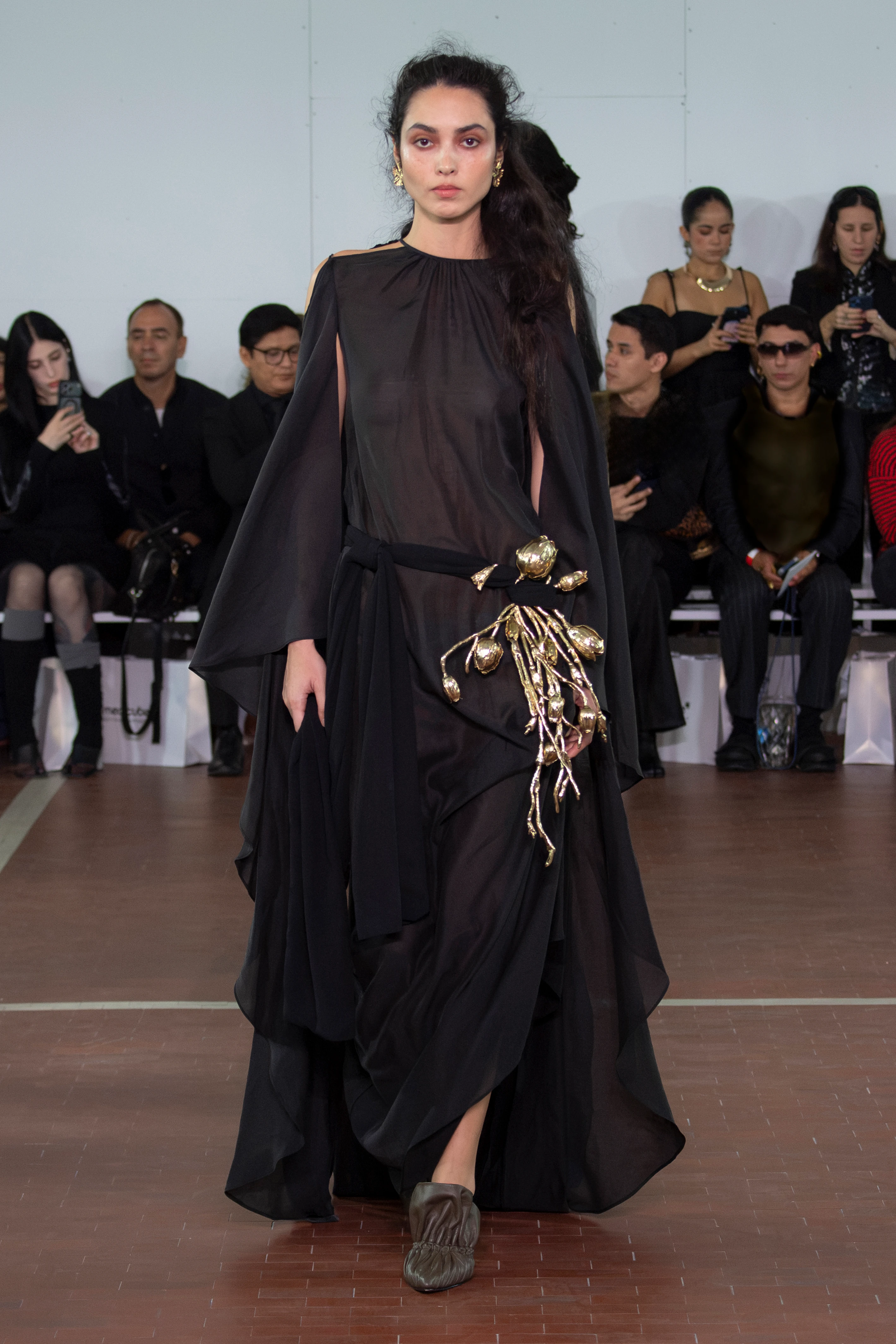
Neithan Herbert Spring/Summer 2027. Photo: Victor Virgile
Craftsmanship is central to your practice, from traditional Mexican handiwork to your recent collaboration with Italian manufacturers. In an industry increasingly driven by speed, standardization, and technological innovation, how can traditional craftsmanship become a language of contemporary experimentation rather than simply a way of preserving the past?