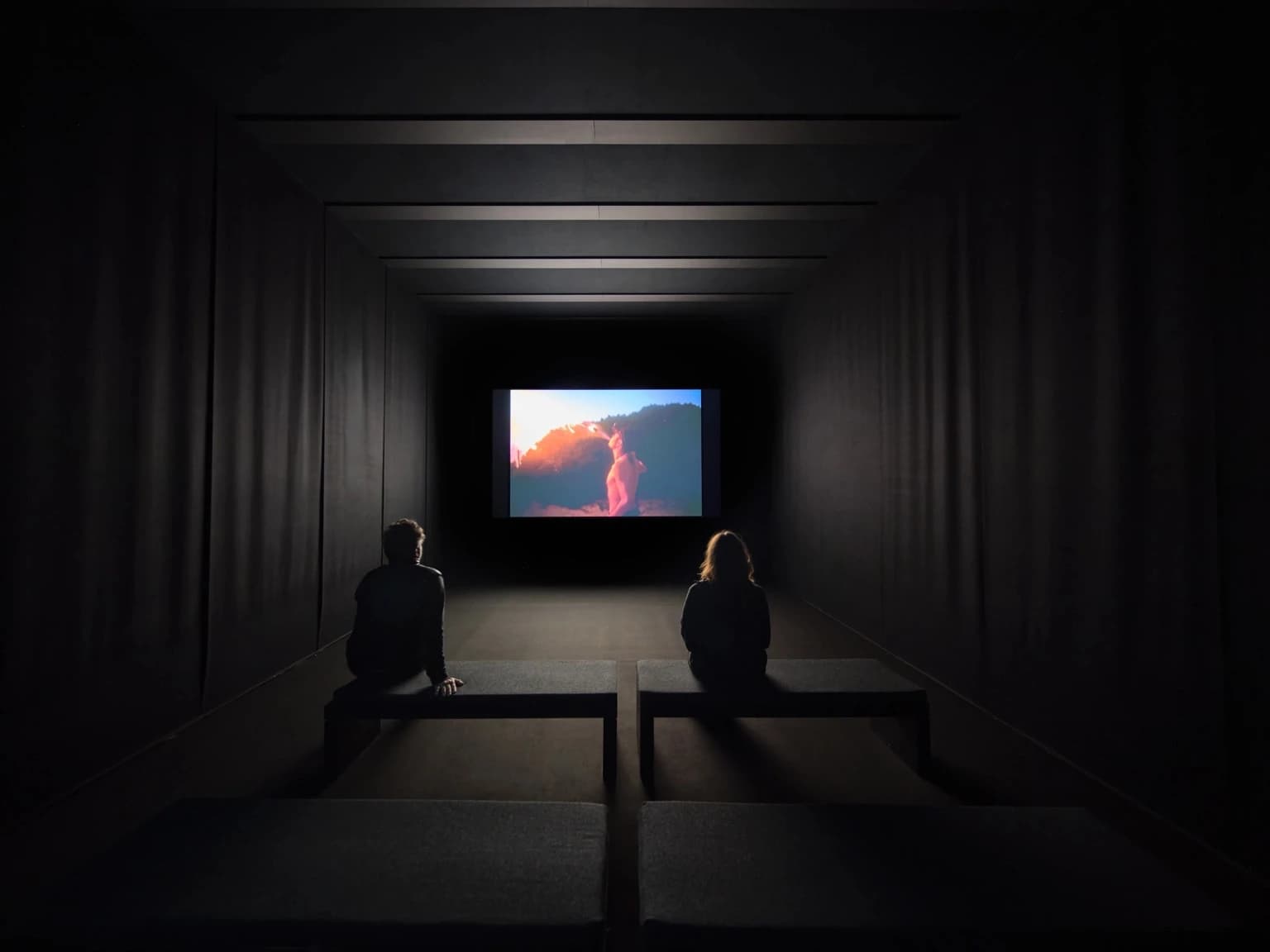
Two people sit on benches in a dark gallery watching a projected scene from Nan Goldins film Memory Lost at Pirelli HangarBicocca in Milan.
7 min

Nan Goldin's "This Will Not End Well" in Milan

By Francesca Interlenghi

Discover Nan Goldin's touring exhibition "This Will Not End Well" at Pirelli HangarBicocca in Milan, tracing her intimate images, films and activism from the 1970s to today.

Pirelli HangarBicocca in Milan, Italy, is dedicating its first major exhibition to the work of Nan Goldin (b. 1953, Washington, D.C.), as a filmmaker and multimedia artist. The show is curated by Roberta Tenconi with Lucia Aspesi and will be on display until February 15, 2026.
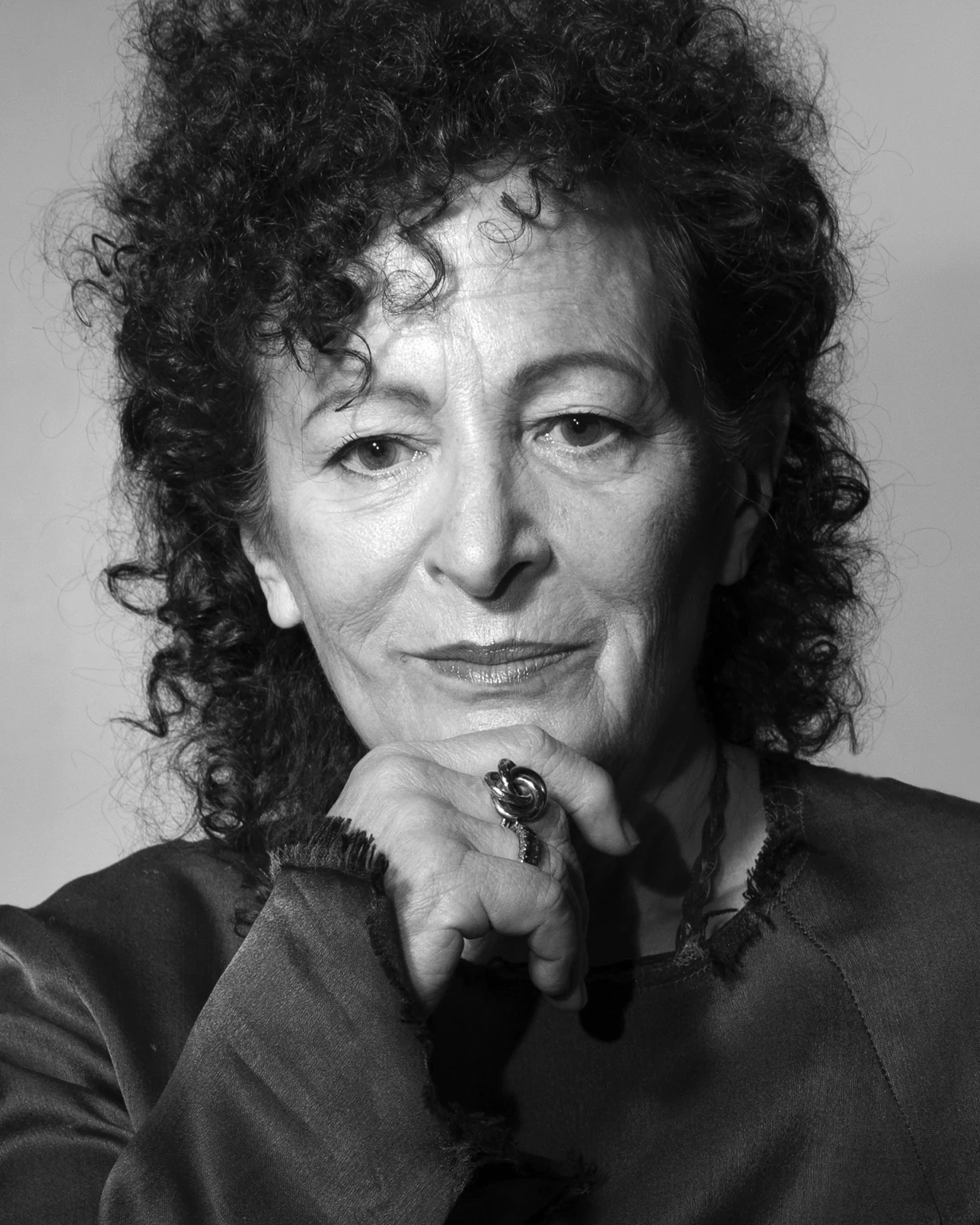
Black-and-white portrait of Nan Goldin looking at the camera, with curly hair and her hand resting near her chin, wearing a dark top and a ring

Nan Goldin, portrait. Photo: Thea Traff.

The concept came from a collaboration between the artist and Fredrik Liew, chief curator at Moderna Museet, Stockholm, where the show debuted in 2022. It traveled to the Stedelijk Museum in Amsterdam (2023) and the Neue Nationalgalerie in Berlin (2024). After Milan it will continue at Grand Palais Rmn in Paris (2026). The internationally acclaimed American artist presents the public with the full force of her work: a far-reaching narrative rooted in her life, her friends, and the places she has lived, and set though the world of “diversity”. Removed from any notion of photography as social inquiry or conceptual experimentation tool, Goldin has always been drawn to the intimate diary form; an exploration akin to a family album no longer hidden in a drawer. “I don't choose people to photograph; I take photos straight from my life. These photos come from relationships, not observation” she states, affirming her approach to exploration. This strategy is never conducted from the outside, but rather undertaken in the first person as the result of direct engagement. The outcomes are both striking and compelling. To fully understand Goldin’s work, however, we must take a step back and outline the climate of the 1980s, when her poetics developed. The change in attitude toward photography that emerged at the beginning of the decade stemmed from an evolution in how images and their aesthetic identity were conceived and the growing presence of female artists in the international art scene. The revival of themes related to the body and sexuality that characterized the period found fertile ground inGoldin’s research, which featured a high degree of personalization and the substantial abolition of the private sphere.


The emotional essence of everyday life

Goldin was raised in the suburbs of Boston in a Jewish family with four children. She was the youngest. At sixteen, she bought her first camera and started experimenting with black-and-white film. She was an avid cinephile and was captivated by Marlene Dietrich, Marilyn Monroe and Hollywood divas. She was also influenced by European films, such as those by Michelangelo Antonioni, Robbe-Grillet, and Jacques Rivette, as well as the films of Andy Warhol.
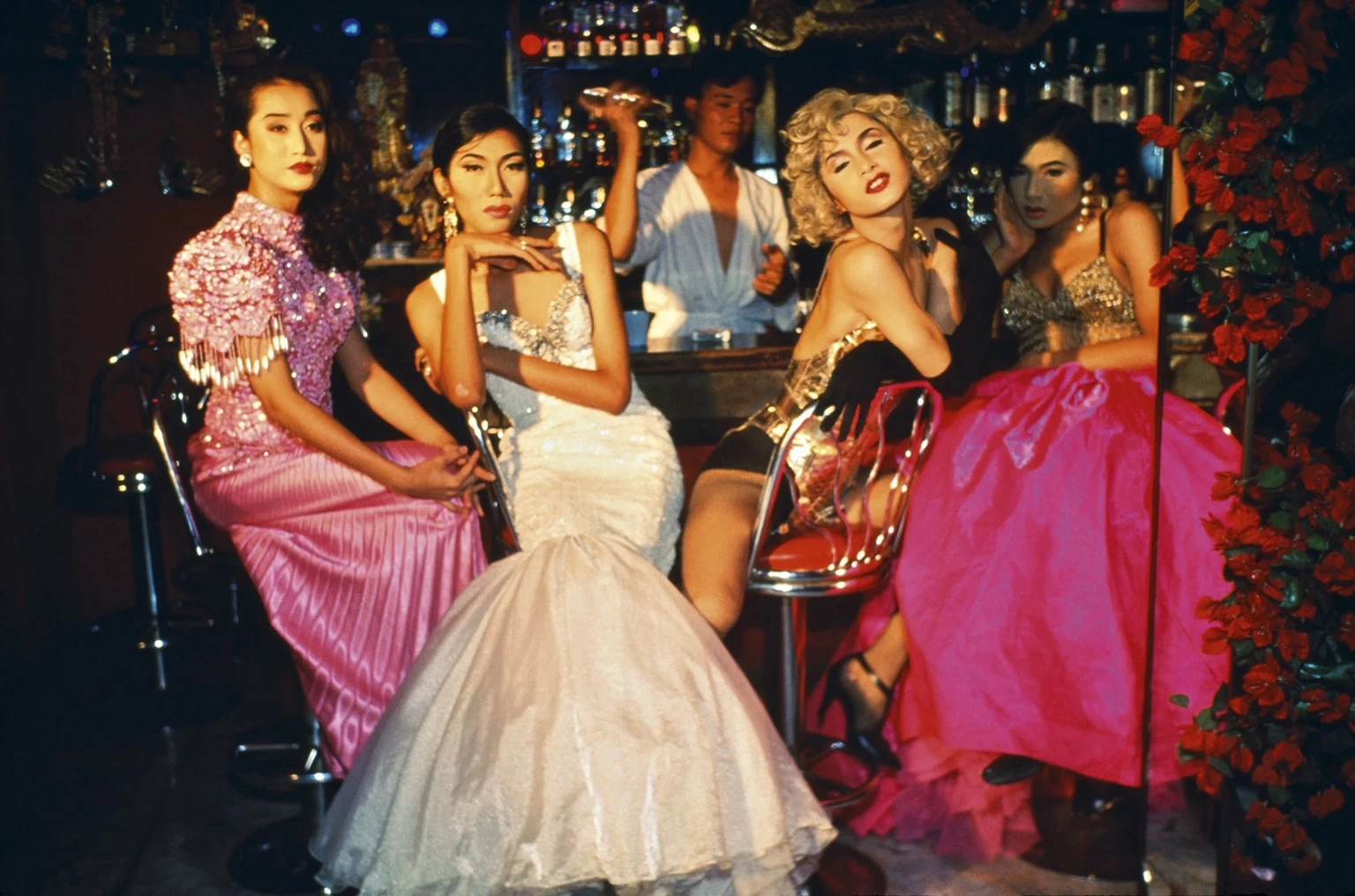
Four glamorous performers in bright gowns and evening wear pose at a bar in warm, cinematic light, in Nan Goldins photograph taken during a fashion show at Second Tip in Bangkok.

The Other Side, 1992–2021. Nan Goldin, Fashion show at Second Tip, Toon, C, So and Yogo, Bangkok, 1992 © Nan Goldin. Courtesy Gagosian

After finishing her studies at Satya Community School in Lincoln, Massachusetts, in the early 1970s, she moved to Boston with a group of drag queens and began narrating their lives through images. Around this time, she decided to attend the School of the Museum of Fine Arts, where she studied the history of photography. She then moved to the queer community of Provincetown. Without access to a darkroom for printing, she began considering slides as a means of displaying her work, an approach that would soon become her preferred method. Starting in 1978, in the chaotic and fervent laboratory that was New York City, she documented the lives of her friends and lovers at clubs, underground cinemas, and in her Bowery apartment. She was interested in the emotional essence of everyday life and the souls of people, which the medium allowed her to access as if it were an invisible extension of the empathy felt by herself. If we had to attribute a function to Goldin’s photography, it would be maieutic because, like a midwife, it encourages viewers of her stories of identity, intimacy, marginality, violence, love, and loss to give birth to feelings of awareness and knowledge of the human condition. Her work is a mirror image of the real world, which is dominated by both beauty and enchantment and pain and terror. It is a world in which humans are immersed with no escape.


“The diary I let people read”

Drawing from her personal experiences and relationships, she began working on her first major slideshow, The Ballad of Sexual Dependency (1981–2022). This collection comprises nearly 700 portraits and an eclectic soundtrack that capture moments of life in New York, Provincetown, Berlin, and London from the 1970s to the 1990s. “Some of the music is obscure; my friends gave me music, and I collected music from around the world. Wherever I went to do the slideshow, people would turn me on to another piece of music.” The work is continuously updated and re-edited, so it is constantly changing.
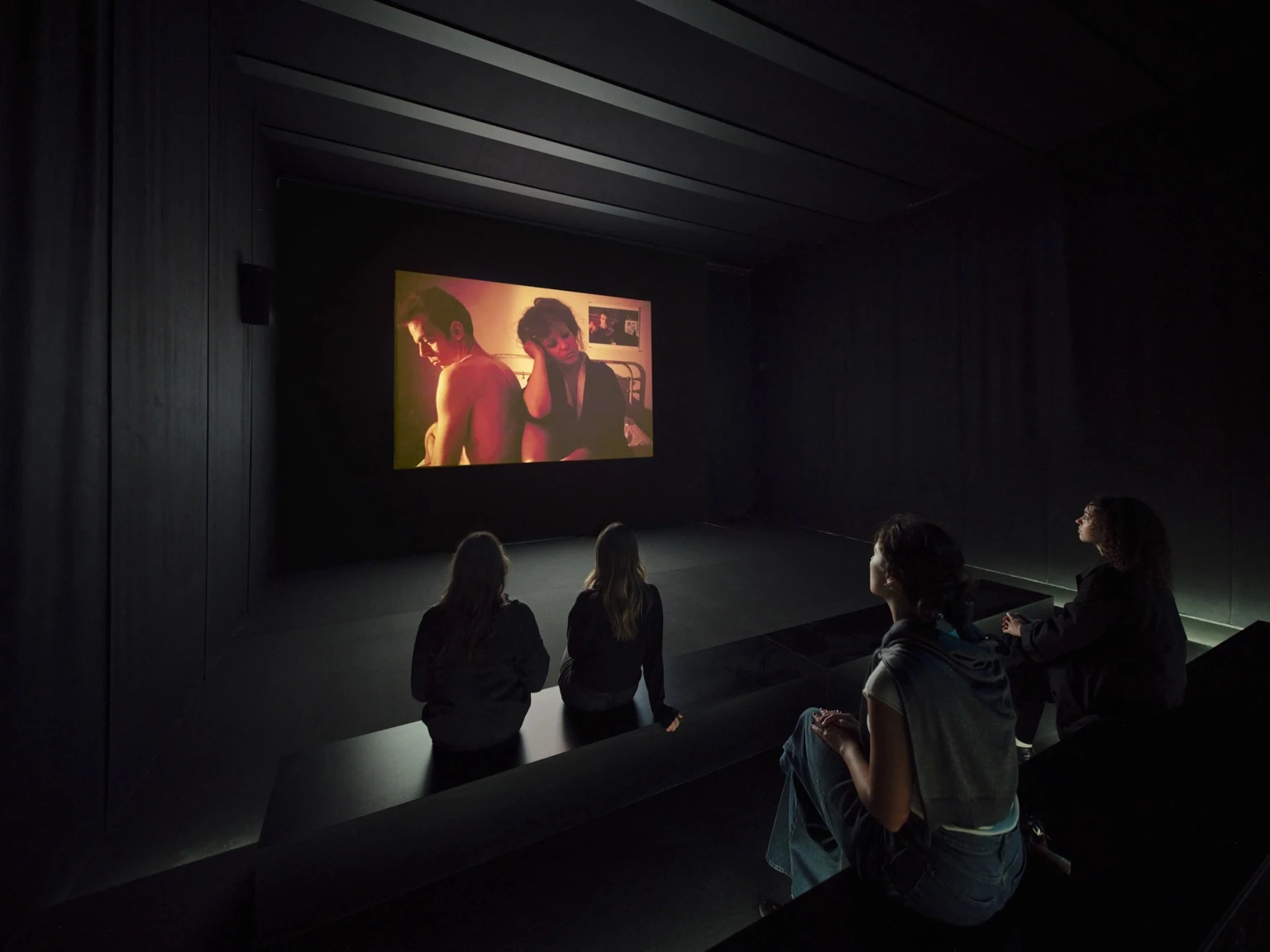
Visitors sit on dark benches in a black-box gallery watching a projected scene from Nan Goldins film The Ballad of Sexual Dependency, showing an intimate moment between two people on screen.

Nan Goldin, The Ballad of Sexual Dependency, 1981-2022, Installation view, Pirelli HangarBicocca, Milan, 2025 © Nan Goldin. Courtesy the artist, Gagosian, and Pirelli HangarBicocca, Milan. Photo Agostino Osio

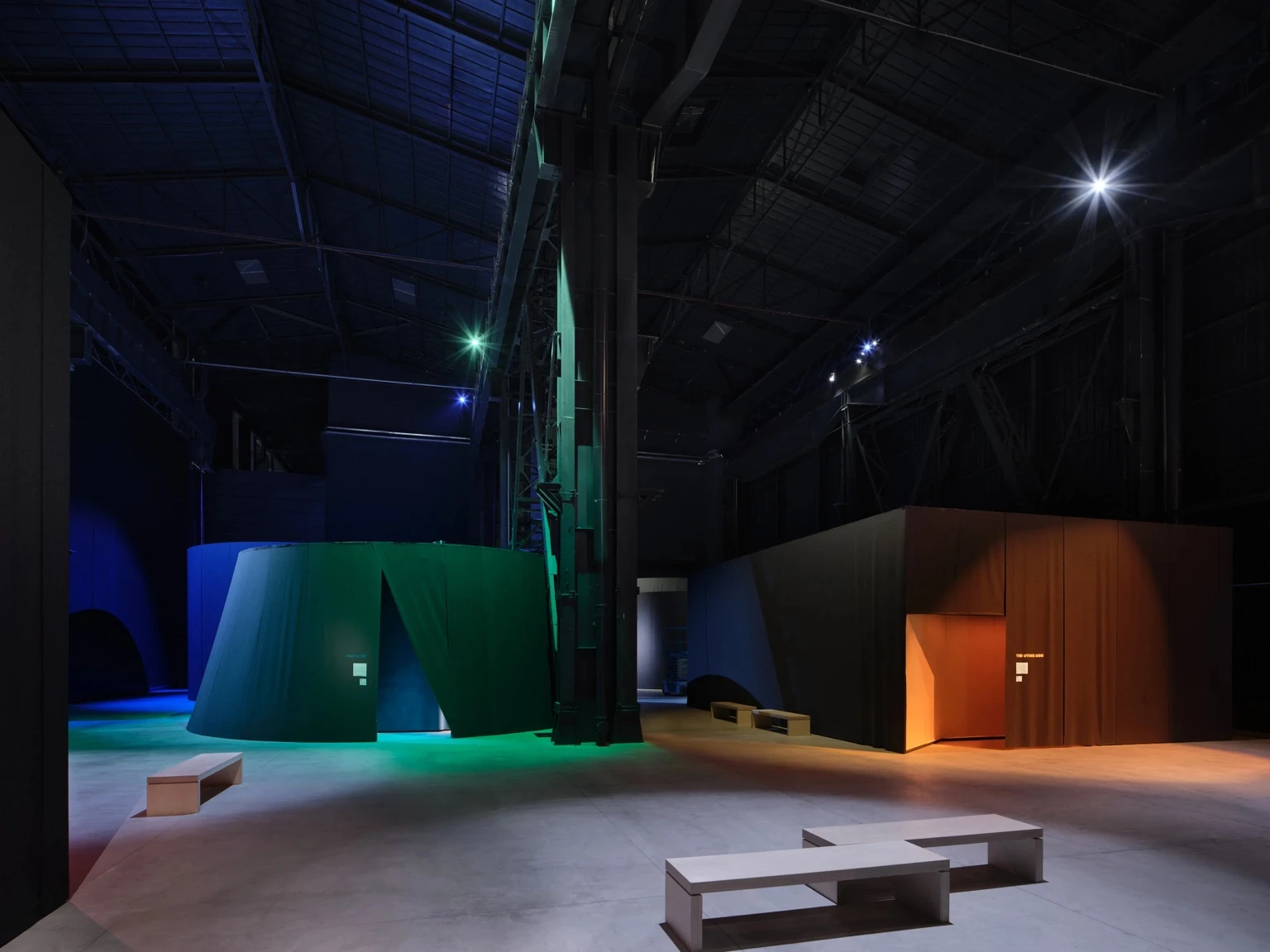
It has never been exhibited in the same version, which gives new impetus to Goldin’s candid yet delicate perspective on relationships, intimacy, parties, bedrooms, and bars. This seminal work of the artist (included in the groundbreaking 1980 Times Square show in New York) is contained within one of several architectural structures, defined as pavilions, and designed by architect Hala Wardé, that characterize the exhibition. Together, they form a sort of village. Each stop of the metaphorical journey they suggest, corresponds to one of Goldin’s works, including Memory Lost (2019–21). Goldin herself considers that her most important work after The Ballad of Sexual Dependency. The narrative revolves around substance addiction and withdrawal and how these experiences can alter memory. The use of blurred, damaged, or technically imperfect photographs taken from deleted scenes serves to convey the distortion of memories. These images, in their rawness, can be deeply lyrical. The artist’s community of friends—her big family—was affected by many deaths from overdose or AIDS. This led her to found the activist group P.A.I.N. (Prescription Addiction Intervention Now), which is dedicated to curbing the phenomenon of prescription opioid abuse. This has skyrocketed in America since the late 1980s due to unscrupulous marketing.
           

This Will Not End Well

The exhibition unfolds through the artist’s most significant works: The Other Side (1992–2021), a historical portrait and tribute to transgender friends, featuring intimate and private photographs taken between 1972 and 2010; Fire Leap (2010–2022), an exploration of childhood; and Sirens (2019–2020), a depiction of the ecstasy of drug use. Additionally, two slideshows are presented for this occasion. You Never Did Anything Wrong (2024) is Goldin’s first abstract work and a poetic meditation inspired by the ancient myth that eclipses are caused by animals stealing the sun.

Installation view of Nan Goldins exhibition This Will Not End Well at Pirelli HangarBicocca in Milan, showing dark pavilion-like structures lit with blue, green, and orange spotlights inside a large industrial hall.

Nan Goldin, “This Will Not End Well”, Exhibition view, Pirelli HangarBicocca, Milan, 2025 © Nan Goldin. Courtesy the artist, Gagosian, and Pirelli HangarBicocca, Milan. Photo Agostino Osio

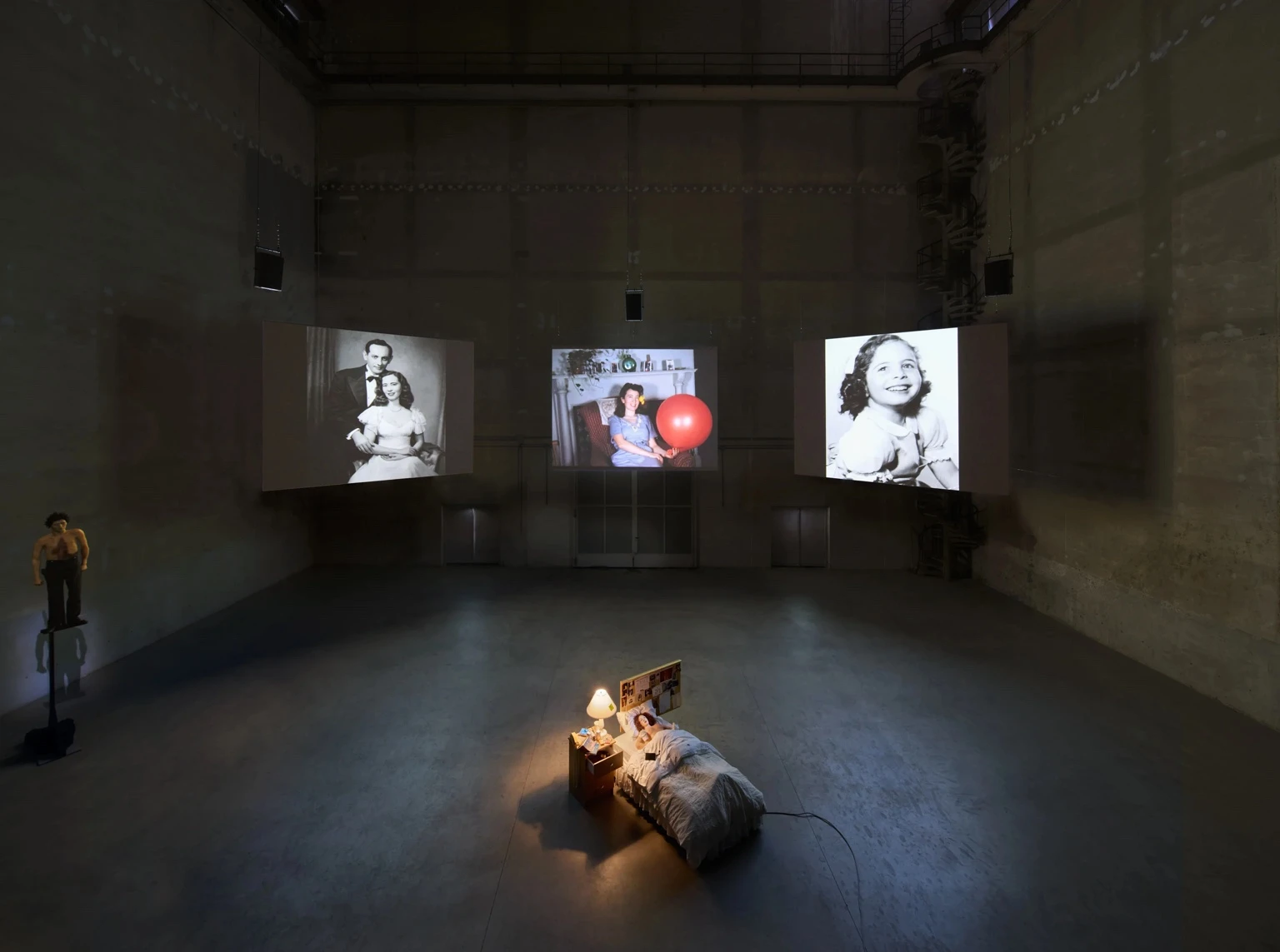
Stendhal Syndrome (2024) is based on six myths from Ovid’s “Metamorphoses,” which come to life through portraits of Goldin’s friends in a visual dialogue across time. Visitors are welcomed by the sound installation Bleeding (2025), which was specially commissioned by Pirelli HangarBicocca and conceived by Soundwalk Collective, a duo formed by contemporary artist Stephan Crasneanscki and producer Simone Merli in 2015. Together, they have created soundtracks for various projects, including the 2022 documentary All the Beauty and the Bloodshed, winner of the Golden Lion at the 79th Venice International Film Festival. This new composition is based on environmental recordings collected during previous editions of the show in Stockholm, Amsterdam, and Berlin. The sound fragments are continuously recomposed using a custom instrument suspended in mid-air and transformed. However, the exhibition reaches its true climax with Sisters, Saints, Sibyls (2004–2022), a testament to family trauma and suicide, and the point where the dramatic tension condenses and becomes almost palpable.

Installation view of Nan Goldins Sisters, Saints, Sibyls at Pirelli HangarBicocca in Milan, showing a single lit bed in the center of a dark hall surrounded by three large projected family photographs on the walls.

Nan Goldin, Sisters, Saints, Sibyls, 2004-2022, Installation view, Pirelli HangarBicocca, Milan, 2025 © Nan Goldin. Courtesy the artist, Kramlich Collection and Pirelli HangarBicocca, Milan. Photo Agostino Osio

This three-channel video installation with sculptural elements and various objects explores the biographical narrative of the artist’s sister, Barbara, who was institutionalized in a psychiatric hospital and committed suicide at eighteen. The installation is presented inside the Cubo, a monumental space whose vastness with a height exceeding 20 meters evokes the architectural grandeur of the Chapelle de la Salpêtrière in Paris, where the piece was originally commissioned and exhibited in 2004. In its re-proposal in the Milanese venue, the work emerges in a form strictly faithful to the original. It features two wax figures: a young woman lying on a small bed and a man raised on a support. Viewers can observe these figures from an elevated platform as the images flash across the screens. “It is a story about women trapped—figuratively and literally—in mythological, psychological, and physical spaces.” The exhibition is titled This Will Not End Well. It could sound ominous, were it not for the benevolent irony with which the artist approaches the complex human comedy. The extensive body of work that resembles a free-verse poem expresses her secular passion for humanity.

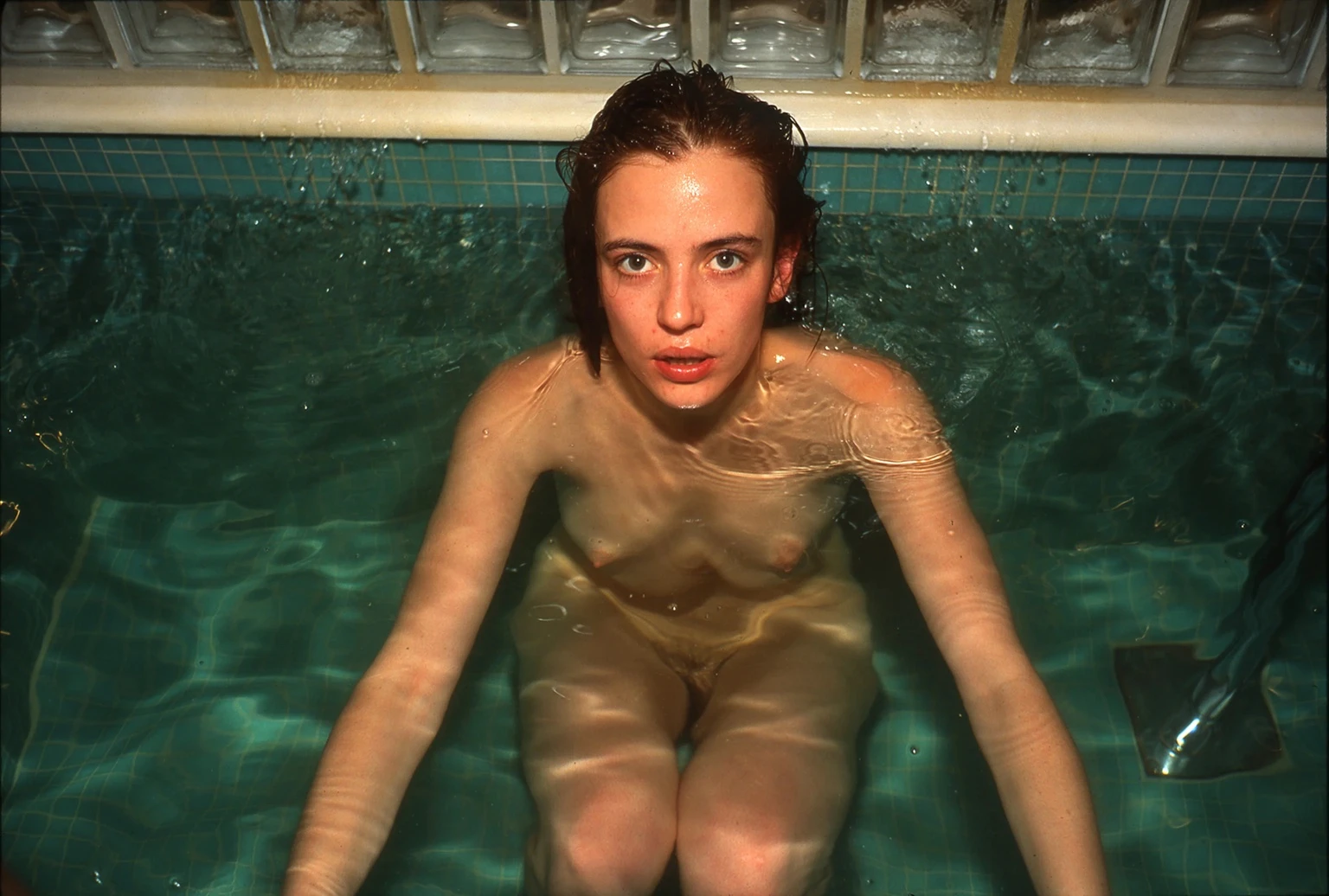
A nude woman sits immersed in a small tiled pool, looking directly at the camera, in Nan Goldins photograph Amanda at the sauna, Hotel Savoy, Berlin, 1993.

The Ballad of Sexual Dependency, 1981–2022. Nan Goldin, Amanda at the sauna, Hotel Savoy, Berlin, 1993 © Nan Goldin. Courtesy Gagosian

However, no photos are allowed at this great festival of existence. In the so-called era of flat culture where everything is reduced to information and shareable images, Goldin forces us to take a symbolic step back, giving new value and meaning to things. She brings us into contact with the incredible emotional intensity of her gaze and gives us a comprehensive view of the sphere of existence, including moral deformities, thought distortions, anomalies, and brutality.


Nan Goldin, This Will Not End Well

Dates: 11 October 2025 – 15 February 2026

Address: Pirelli HangarBicocca, Via Chiese 2, 20126 Milan, Italy

Organised by Moderna Museet, Stockholm, in collaboration with Pirelli HangarBicocca, Milan; Stedelijk Museum Amsterdam; Neue Nationalgalerie, Berlin; and Grand Palais RMN, Paris.

Presentation at Pirelli HangarBicocca curated by Roberta Tenconi with Lucia Aspesi.

Date

01.12.2025

Tags
Photography & Visual MediaNan Goldin exhibitionNan Goldin This Will Not End WellNan GoldinPirelli HangarBicoccaNan Goldin Milan exhibitionNan Goldin photographyNan Goldin Sisters Saints SibylsNan Goldin The Ballad of Sexual DependencyPirelli HangarBicocca exhibitionscontemporary photography exhibitions MilanNan Goldin Memory LostP.A.I.N. Sackler opioids activism
Artist Naeem Mohaiemen standing outside his Artangel exhibition Through a Mirror, Darkly in London, wearing a mustard shawl.
7 min

In and Out of Frame - A Review of Naeem Mohaiemen's Through A Mirror, Darkly

By Abhijan X.

A review of Naeem Mohaiemen's three-channel film Through A Mirror, Darkly at Artangel, linking Vietnam, Kent & Jackson State and today's campus protests.

Naeem Mohaiemen’s Through A Mirror, Darkly at Artangel

Artangel presents Through A Mirror, Darkly, a major new three-channel film installation by artist and filmmaker Naeem Mohaiemen, on view at Albany House – Petty France, London from 21 September to 30 November 2025. The work connects historic and contemporary struggles against imperialism and state violence through the lens of student movements and political memory. It connects and contrasts the infamous Kent and Jackson State shootings in 1970 to explore legacies of campus activism, the racial divides in how we remember and the struggle against American imperialism.

Portrait of artist Naeem Mohaiemen standing on a London rooftop, wearing a mustard yellow shawl with Big Ben and Westminster Abbey softly blurred in the background.

Naeem Mohaiemen Through a Mirror, Darkly (2025). Courtesy of Artangel. Photo Thierry Bal.

Revisiting America’s Campus Tragedies: Kent State and Jackson State

“We are still here, because we are still here!” A figure addresses the crowd at an event commemorating the anniversary of the Jackson State Killings of May 15, 1970, in Naeem Mohaimen’s Through A Scanner, Darkly. The sentiment resonates deeply through the artist’s three channel video installation that connects the history of leftist organising against the American War in Vietnam, with our current moment. Known for their ambitious commissions, such as Rachel Whiteread’s House (1993) or Jeremy Deller’s Battle of Orgreave (2001), Artangel returns with this politically charged, expansive project presented at Albany House - Petty France in London, running from September 21 - November 9, 2025. For Mohaiemen, whose films have tackled histories of Third World internationalism and the Non-Aligned Movement, this project is his first to engage with American political history directly.

Three-channel video installation by Naeem Mohaiemen at Artangel, showing crowds, a lone skateboarder in a city, and a protest scene projected in a dark gallery.

Installation view of Naeem Mohaiemen Through a Mirror, Darkly (2025). Courtesy of Artangel. Photo Thierry Bal.

Linking Past and Present: Anti-War and Anti-Racist Movements Across Time

Mohaimen’s film engages with the two incidents that occurred ten days from each other in 1970 on two university campuses in the United States of America: the Kent State Massacre at Kent State University, on May 4, and the Jackson State Killings at Jackson State University, on May 15. In both instances, members of the National Guard had shot unarmed student protestors on their own college campuses, resulting in several deaths and injuries. One shooting occurred at a historically black educational institution, in Jackson, Mississippi and the other in a more renowned, largely white college, in Ohio. Both groups of students, however, were protesting the expansion of the American war in Southeast Asia, which had already claimed the lives of millions of Vietnamese, and thousands of Americans. The murders of the students by the US government were significant historical moments in the continued and growing movement against American imperialist wars overseas.

Film crew recording a mourner with yellow flowers in a Southern cemetery for Naeem Mohaiemens Through a Mirror, Darkly project.

Still from Through a Mirror, Darkly (2025) by Naeem Mohaiemen. Courtesy of Artangel.

The Act of Looking: Reframing History Through Three Channels

In his film, the artist brings together archival and original footage to not only reconstruct the incidents, but to understand their continued significance for anti-war and anti-racist movements today, especially on college campuses in the United States and around the world. The film asks precisely what it means to look at these moments in history, and how each act of looking transfigures them. It challenges the often forensic remit of documentary films - of establishing who did what, of the sequence of events, of the grand reveal of violence - and instead attempts to sit with the question of why, and how the conditions for such violence is produced, and it creates in its aftermath. The work is imbued with a sense of repetition, of perhaps still being stuck in what feels like should be a bygone historic moment, disjointed from the narrative we would like to tell ourselves about ourselves. Yet, we are still here - here to bear witness to these moments, to our memories, which we hold on to through each act of remembering. It places this act of looking literally at the centre - the three channels are divided up into a central screen that shows original footage, or goes blank with recordings of interviews conducted by Mohaiemen playing, while the two flanking screens on each side focus on archival footage, often contrasting images from Kent State and Jackson State.

Film still from Naeem Mohaiemens Through a Mirror, Darkly, showing a Black student facing a National Guard cameraman and helmeted soldiers on a university campus.

Still from Through a Mirror, Darkly (2025) by Naeem Mohaiemen. Courtesy of Artangel.

The American War In Vietnam, the Cold War, and the Cycles of Imperial Violence

In the opening scenes of Through A Mirror, Darkly, the central screen focuses on a camera recording a commemoration of the Kent State Massacre, while the other two screens play archival footage of body bags being sent back from Southeast Asia, and from the campuses in the 70s. The film appears to be set simultaneously in both times - in the 1970s, and in the present, connected by seemingly never-ending wars to maintain American interests, and the movements against these wars. In 1970, Richard Nixon expanded the already nearly-decades long war in Southeast Asia, pushing US troops into Cambodia, while simultaneously claiming that “This is not an invasion of Cambodia”. It is the height of the Cold War, and anti-communist sentiment in the UK, and successive administrations have only continued to shovel more and more American money and bodies into what seems like a never-ending conflict.

Voices from the Frontlines: The Winter Soldier Investigation

At the same time, opposition to the war has continued to grow - not least from veterans of the war itself. In an early scene of the film, we see footage from the Winter Soldier Investigation, a public media event organised by veterans aimed at shedding light on atrocities committed by the American military in Southeast Asia. In it, we encounter the testimony of Jim Weber, who served in Vietnam: visibly haunted by his experiences, he offers an incisive perspective on the violence and racism of both the operations and of the culture of the military. He describes how the recruitment process takes advantage of youth disaffection, turning angry young men into killing machines, dehumanising them, and turning them against anyone even slightly different from them. Particularly jarring in his testimony is his description of how this fed into existing racist attitudes, even against black fellow servicemen, and how military propaganda leveraged racist stereotypes about Southeast Asians (“They were depicted only as ‘slant eyes’”, he says) to enable the army to become desensitised to the atrocities they were carrying out. This harrowing testimony, seen through Mohaiemen’s eyes, seems to set up the basis for the kind of violence against students that led to the massacres the film centres around - as well as the state repression of student organising that continues today.

Gradient green and yellow halftone image of Naeem Mohaiemens Through a Mirror, Darkly module cover, based on a graveyard filming scene.

Still from Through a Mirror, Darkly (2025) by Naeem Mohaiemen. Courtesy of Artangel.

Echoes of Today: Campus Activism and the Fight for Palestine

The film maintains a keen eye on the present: alongside the archival footage from the 1970s, we see the monuments to the American War in Vietnam, memorials to victims, and glimpses of a new era of campus activism against the involvement of the United States in the Israeli genocide of Palestinians in Gaza, in the central screen. At the memorial for those massacred in Kent State, we see rows of students in keffiyehs, and a choir wearing “Jews Say Ceasefire Now” performs a tribute to the slain of May 1970. A recent graduate of Columbia University, which saw huge standoffs with the US government over student encampments in solidarity with Palestinians, performs a hypnotic dance - a ritual of remembering through the streets of New York. Yet, direct footage of the protests and encampments themselves are noticeably visually absent from the film.

Through these fleeting references to the unrest on campuses in the US, the film feels haunted by the shadow of violence in Palestine. Just as explicit images of American war crimes in Southeast Asia were deliberately kept from the American public in the 1960s and 1970s, the current conflict remains just outside the frame in discussions of contemporary campus activism. These two historical moments become twins - mirrors, even - of each other. On all sides of the political spectrum, whether on Fox News, or through recent documentaries such as The Encampments, the narrative focuses on the student, framed either as a hostile threat to the nation, or as a heroic figure. Mohaiemen seems to dwell on this act of framing, both literally and figuratively, throughout the film, bringing to question what is seen, and what is deliberately obscured through this logic. He takes a circumspect view, asking not only what is hidden through official state narratives, but also what falls out of frame in heroic narratives of students in struggle, and how these struggles themselves become sanitised and torn from their radical beginnings.

Shifting the Frame: The Role of Film in Remembering and Resistance

Through Through A Mirror, Darkly, he deliberates on the place of film, video and cinema in producing these frames, and asks how much these media can hold. This act of deliberation is neither melancholic nor defeatist, but rather asked as a question of strategy. Against the backdrop of the erasure of the people of Gaza, the imperative to learn the lessons from America’s wars in Southeast Asia is more urgent than ever, and yet, despite the memorials, the monuments, the archives, the empire remains, changed but unmoved. To move it, we must learn these lessons in all their complexity and be ready to shift the frame tactically. Towards the end of the film, we see a group of prospective students touring the Jackson State University campus, as the memorial wraps up, as if a new generation enters the frame, to whom the baton might be passed.​

Date

29.11.2025

Tags
Film & MediaNaeem MohaiemenArtangel Londonfilm installationcampus activismKent State MassacreJackson State KillingsVietnam WarPalestine solidaritystudent movementspolitical memorydocumentary aesthetics