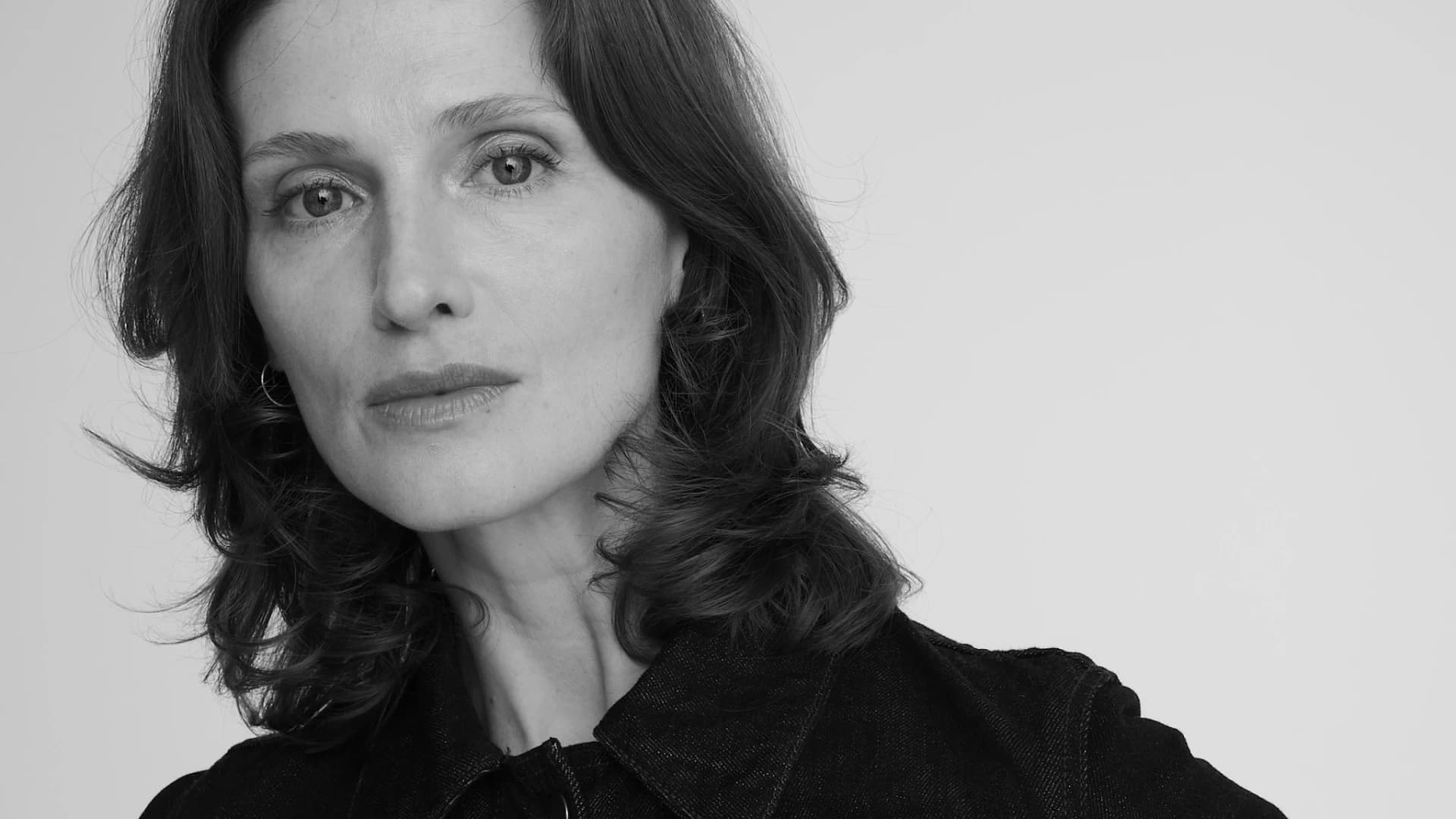
Black-and-white studio portrait of a woman with wavy shoulder-length dark hair, wearing a black denim jacket, standing with hands on her hips, gazing directly at the camera against a plain light background.
5 min

16.10.2026

Marzena Jarczak: Learning to Trust the Reader

By Ruslan Khabiev

Marzena Jarczak, Creative Director of Harper's Bazaar Polska, on art criticism, close looking, and giving readers room to interpret an image.

By Ruslan Khabiev

Marzena Jarczak has always preferred the position of the spectator. She did not want to become an artist; she wanted to look. Over time, that instinct led her from political studies to art criticism, where writing became a way of staying with an image long enough to understand what it had done to her.

“Art has always been, for me, above all a personal experience,” she says. Publishing her response to a work meant learning how to share that experience without making it smaller. At first, she says, it felt “almost like letting someone into my intimate space.”

That question now follows her into her role as Creative Director of Harper’s BAZAAR Polska, which returned to the Polish market this September after a seven-year absence, with Tilda Swinton on its cover. Jarczak has written for publications including Artforum and Artpress, and she continues to work as a critic. The new role brings her work to a much broader audience. The question underneath it remains the same: what can an image communicate, and what happens when it meets a viewer?
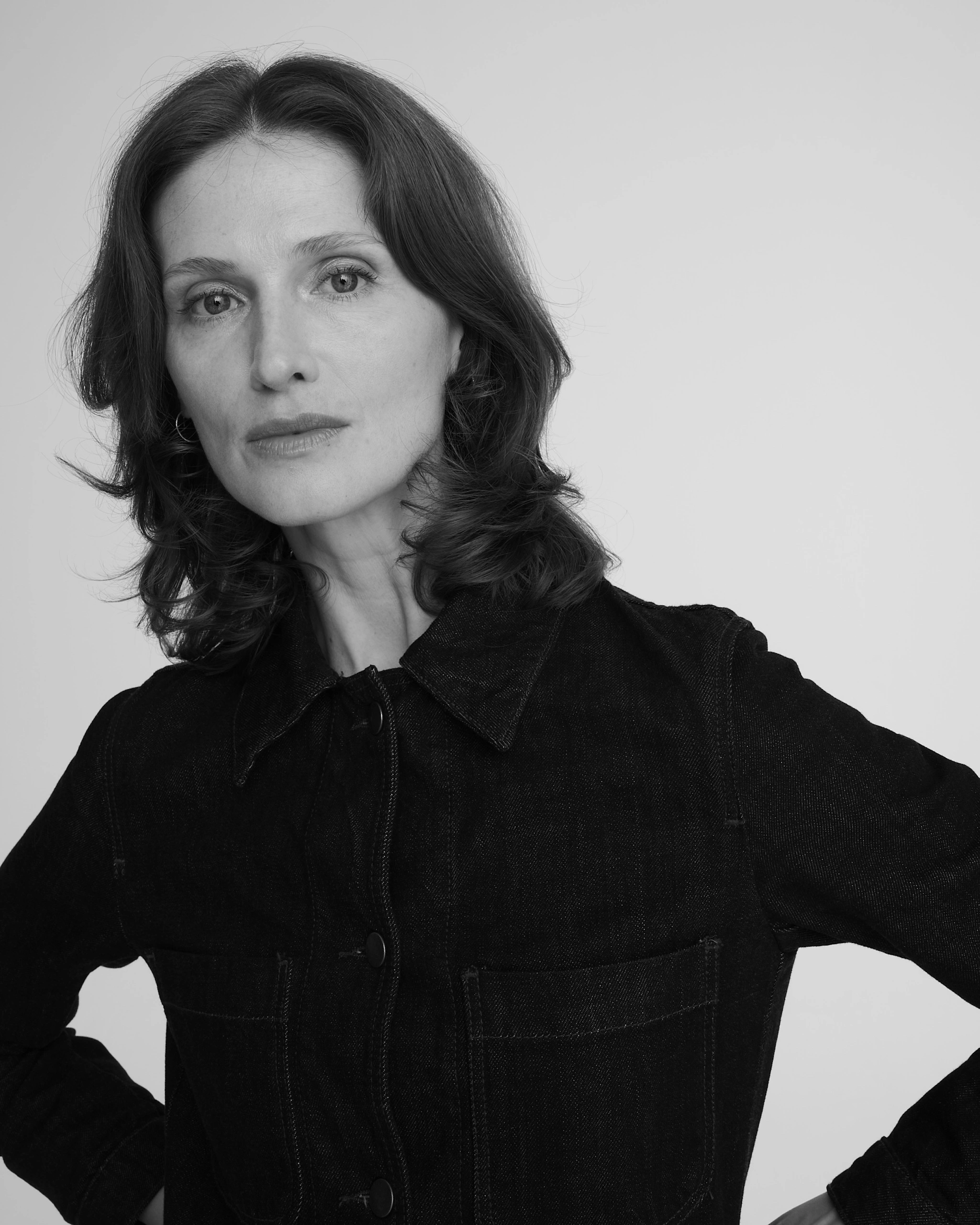
Black-and-white studio portrait of a woman with wavy shoulder-length dark hair, wearing a black denim jacket, standing with hands on her hips, gazing directly at the camera against a plain light background.Marzena Jarczak

Marzena Jarczak. Photo : Aleksandra Modrzejewska-Mitan.

Looking before writing

For Jarczak, a work becomes worth writing about when it begins to change the person looking at it.

“When I look at a work of art, and if there is a point of connection, even if unexplainable at first, my gaze bounces back towards me,” she says. “It moves inward, challenging what I feel, what I know, what I understand.”

Then the gaze returns to the world outside the work. “And then the gaze bounces back again, but this time not towards the artwork itself, but towards the world around it.” She is drawn to artists who can make that happen — artists whose work alters the way familiar things are seen.

Her first encounter with a work is deliberately unstructured. She arrives “completely off-duty,” without research or a ready argument, and lets the work set the pace. Starting with analysis too early, she says, would feel like “looking at a work of art and filling in an Excel spreadsheet.”

Only afterwards does the research begin: formal decisions, art-historical references, biographical material and the wider context around the work. Writing is part of that return. Jarczak can spend half a day revising a review in search of one slightly more accurate word. The language has to remain close to the original experience, rather than flattening it into a conclusion.
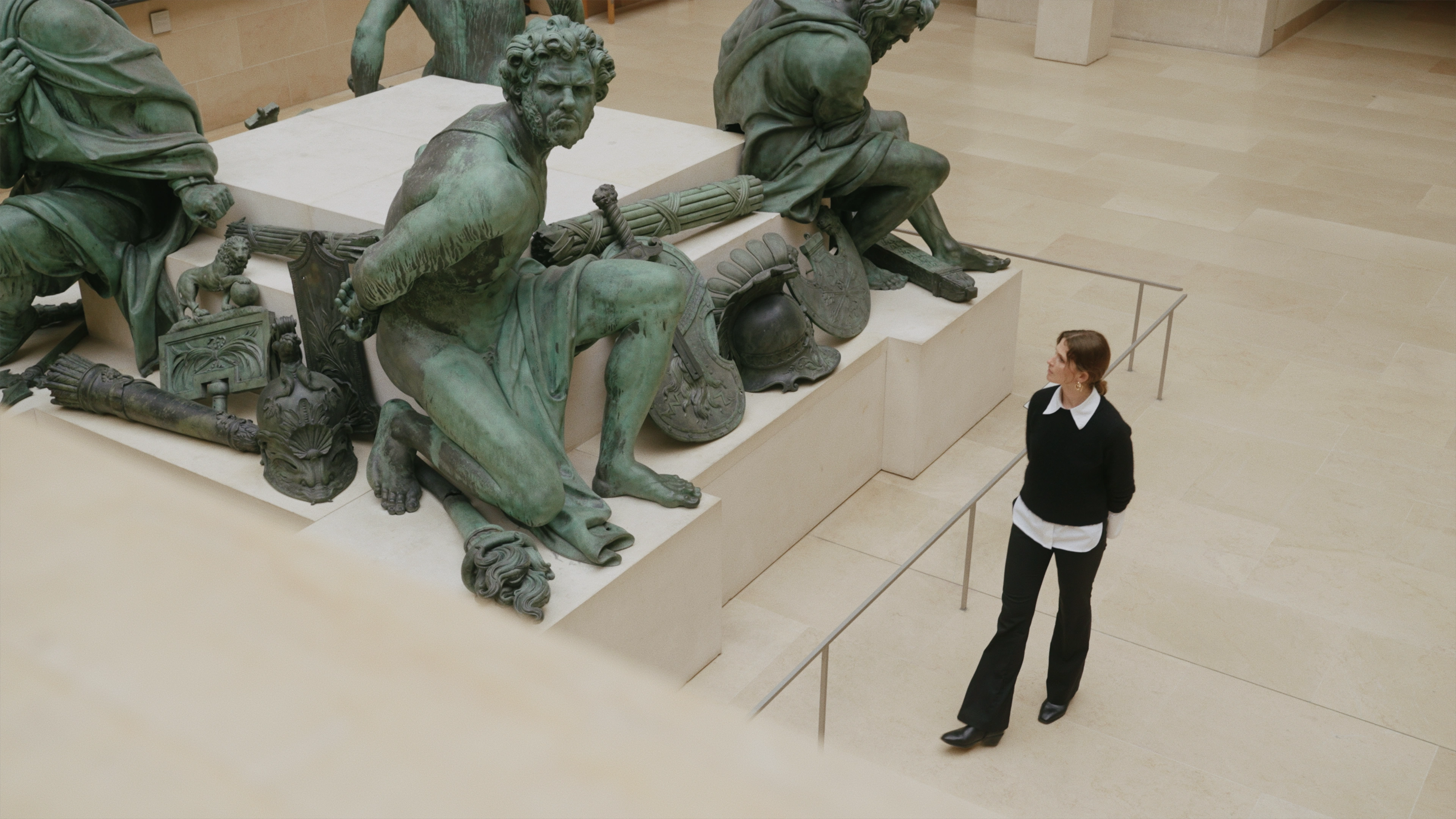
Aerial view of a museum gallery showing a woman in a black sweater and trousers looking up at a large bronze sculptural group of classical warrior figures with weapons, shields, and helmets, displayed on a pale stone pedestal.

Marzena Jarczak. Photo : Łukasz Jaśniak.

​Giving the reader room

Jarczak approaches criticism as a way of giving readers more to work with. “The more context you give people, the more freedom you actually give them” she says. Her writing moves through historical, formal and experiential perspectives, leaving the reader space to arrive at an interpretation of their own.

“I don’t mind if someone finishes a text thinking, ‘I don’t agree with you,’” she says. “It means they have engaged with the work and developed a position of their own.”

She wants criticism to be clear and vivid, without over-explaining. Facts alone do not necessarily make someone curious; the language on the page needs to carry knowledge, attention and feeling.

Culture in a magazine

At Harper’s BAZAAR Polska, Jarczak is interested in what fashion, art and culture reveal about the moment in which they are made. She points to early twentieth-century abstraction, shaped in part by artists’ fascination with electricity and changing perceptions of movement and light. For Jarczak, the fashion of the 1970s cannot be separated from the countercultural, economic and social changes of the decade. Trends, she says, are only one part of a much bigger picture.

The relaunch gives the team an opportunity to take images seriously and make room for culture in a medium often associated with speed. Jarczak recognises the magazine’s history — a masthead that has long brought writers, artists, photographers and editors into the work of making culture — but she is not romantic about the media landscape she is entering. Information now moves fast and is often forgotten just as quickly.

“I think this is the moment when my generation should encourage quality culture in the media more than ever,” she says.

For Jarczak, the work begins with looking carefully and finding language precise enough to get out of the way — and trusting the reader to meet an image with a mind of their own.

Author

Ruslan Khabiev

Date

16.10.2026

Tags
Writing & PublishingMarzena JarczakHarper's Bazaar Polskaart criticismCreative Director interviewArtforumArtpressfashion and cultureTilda Swinton coverart journalismmagazine creative directionPolish fashion mediacontemporary art writing