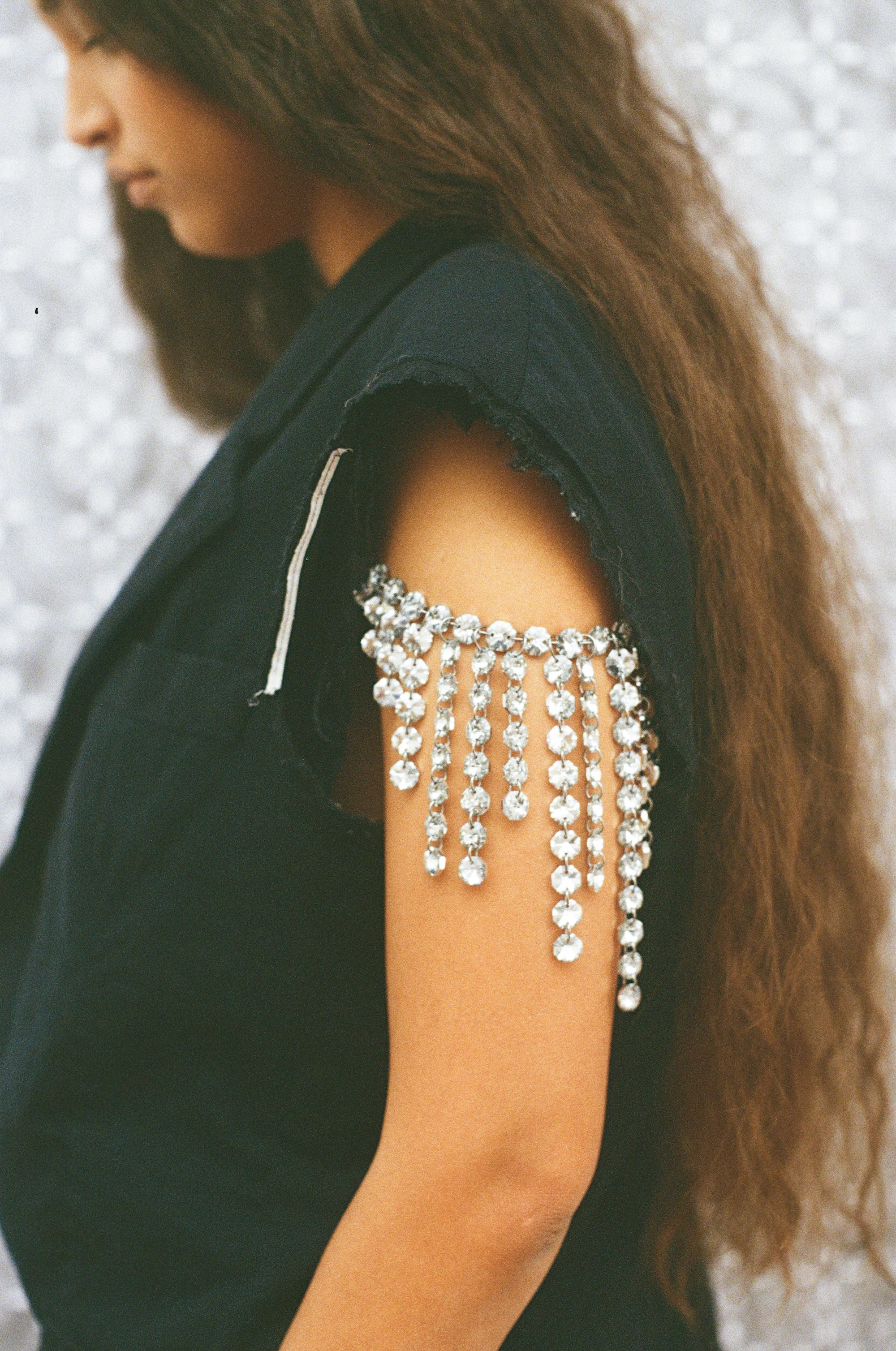
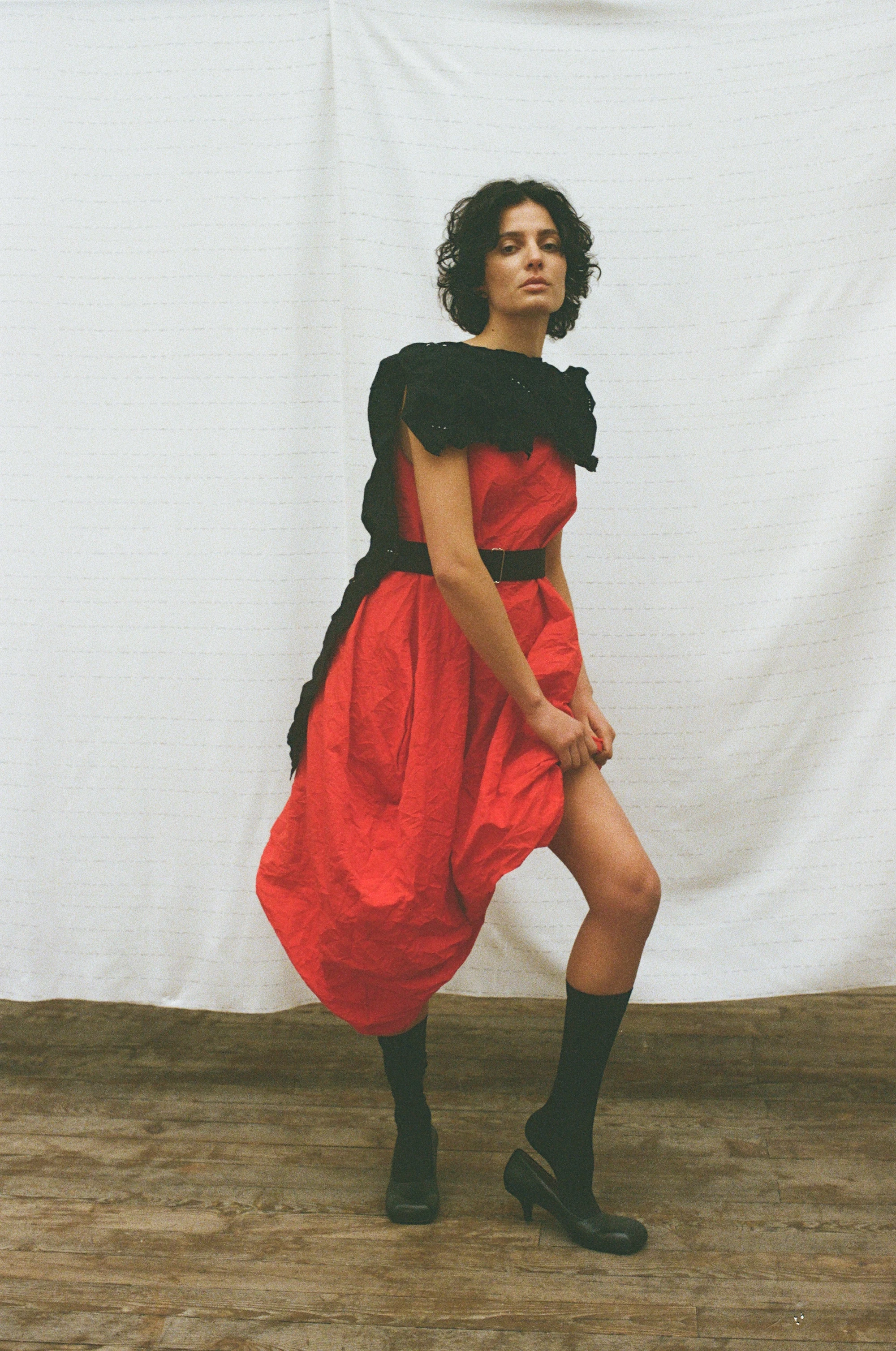
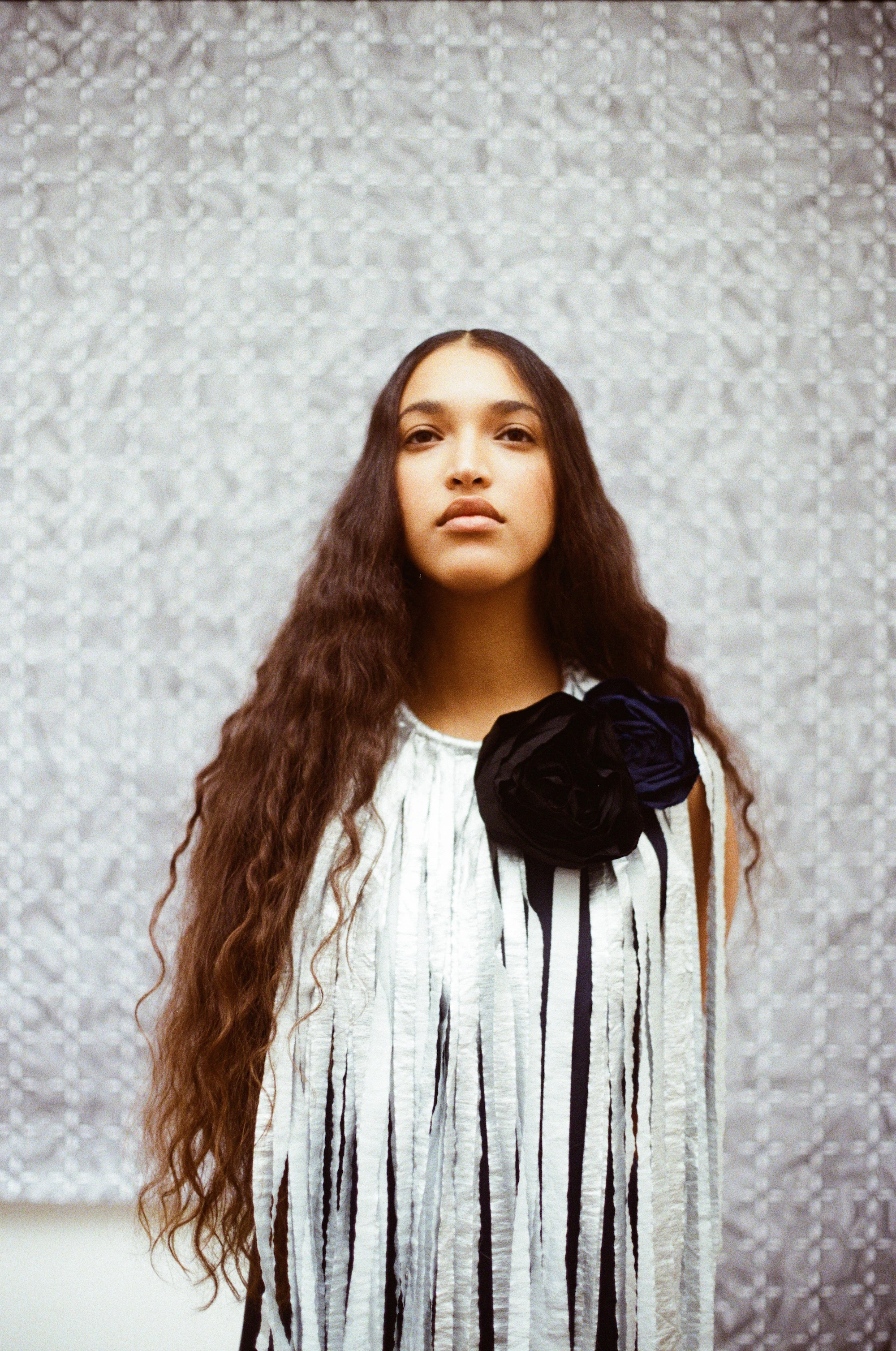
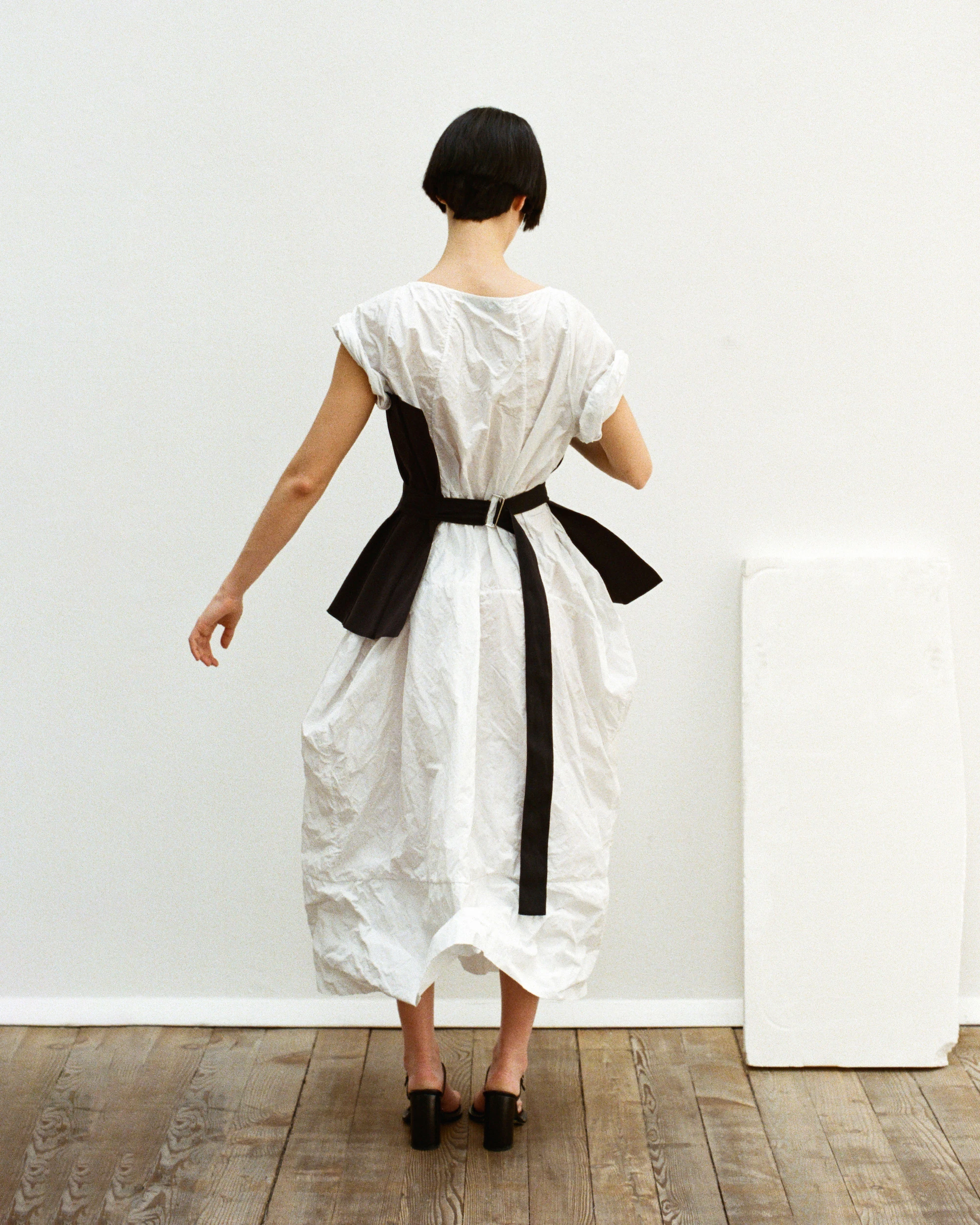
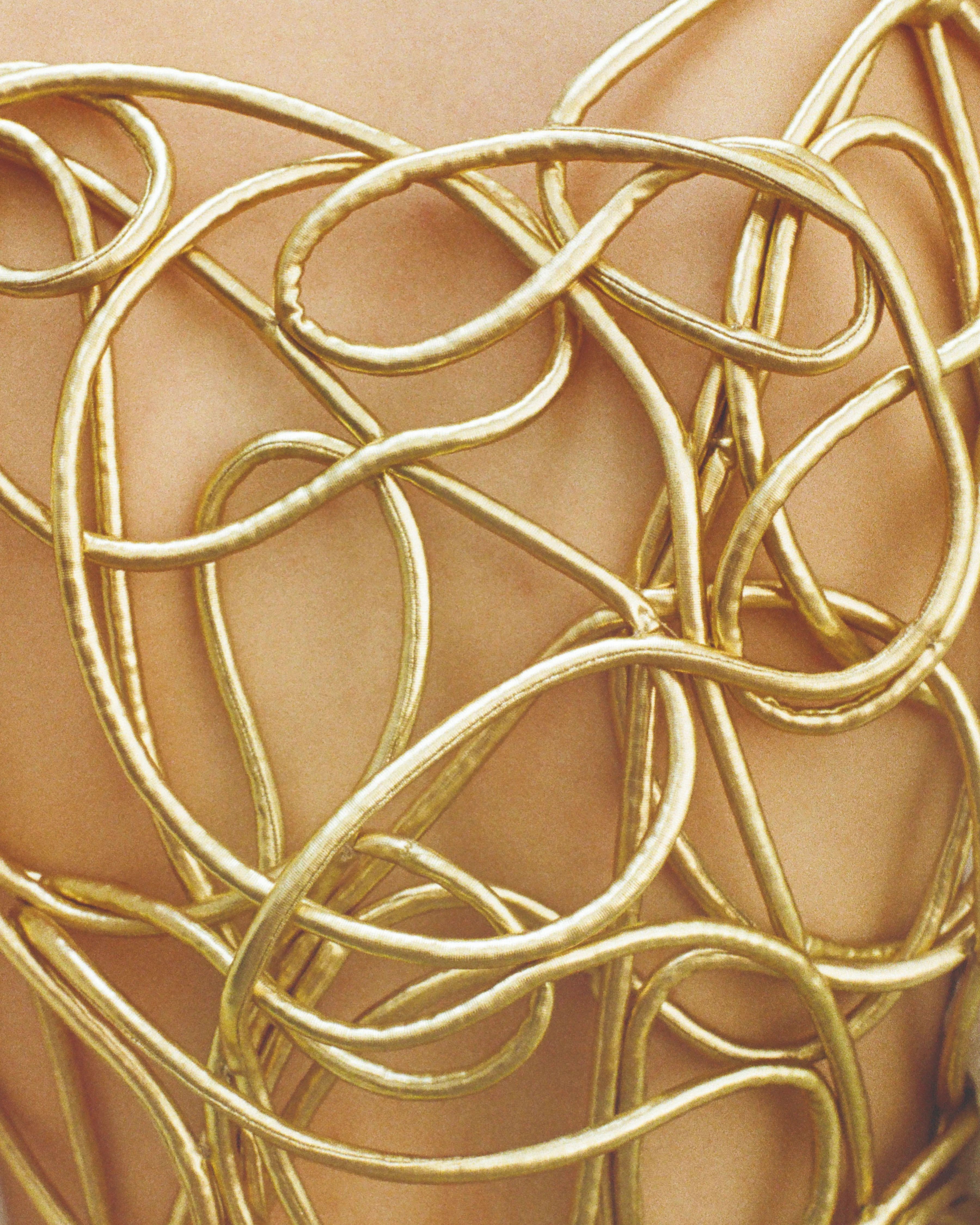
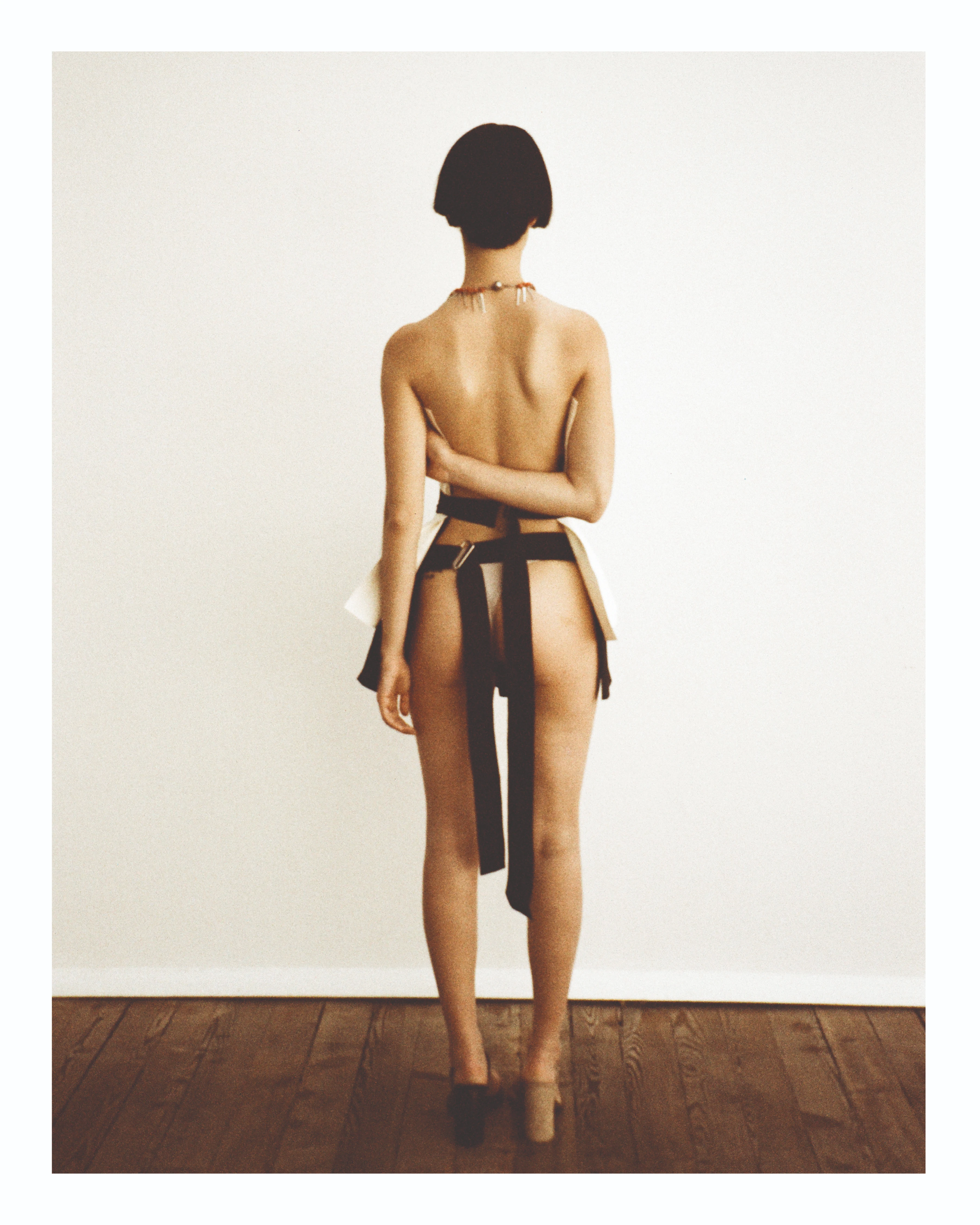
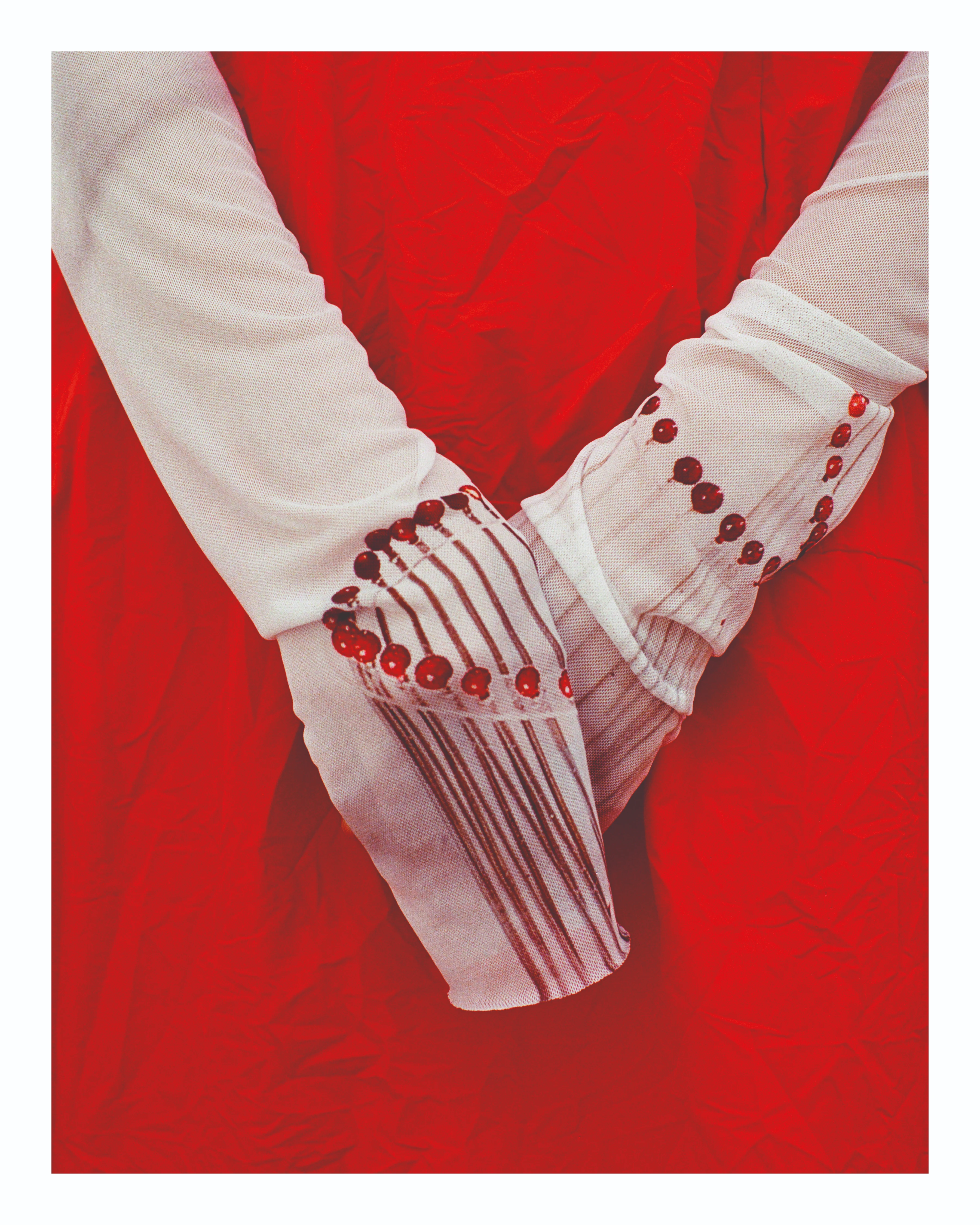
Founded in Venice (Italy) in 1982, the Maria Calderara brand is driven by a vision of fashion deeply rooted in design culture. The designer, who graduated from the University of Venice’s architecture program, bases her creative vision on the idea that garments are complex organisms that serve as both interpreters and guardians of the body. Her architectural training taught her the value of proportion, balance, negative space, and the relationship between interior and exterior. These elements have become the cornerstones of her design language, which is rigorous yet not rigid, conceptual yet deeply sensitive, and essential yet imbued with subtle poetic tension. The Venetian atelier where Calderara works today is the physical and symbolic center of a creative process that attributes cultural value, rather than merely economic value, to creation. Embroidery, hand-stitching, fabric manipulation, pleating, crumpling, dyeing, raw-edge cuts, layering, deconstruction, and experimental techniques comprise the vocabulary of a style of dress that liberates itself from impersonal, mass-produced, industrial manufacturing. Designs recur, evolve, and are reinvented with new fabrics and unexpected proportions. Garments can be layered, knotted, adjusted, or worn in different ways, generating forms open to multiple interpretations.
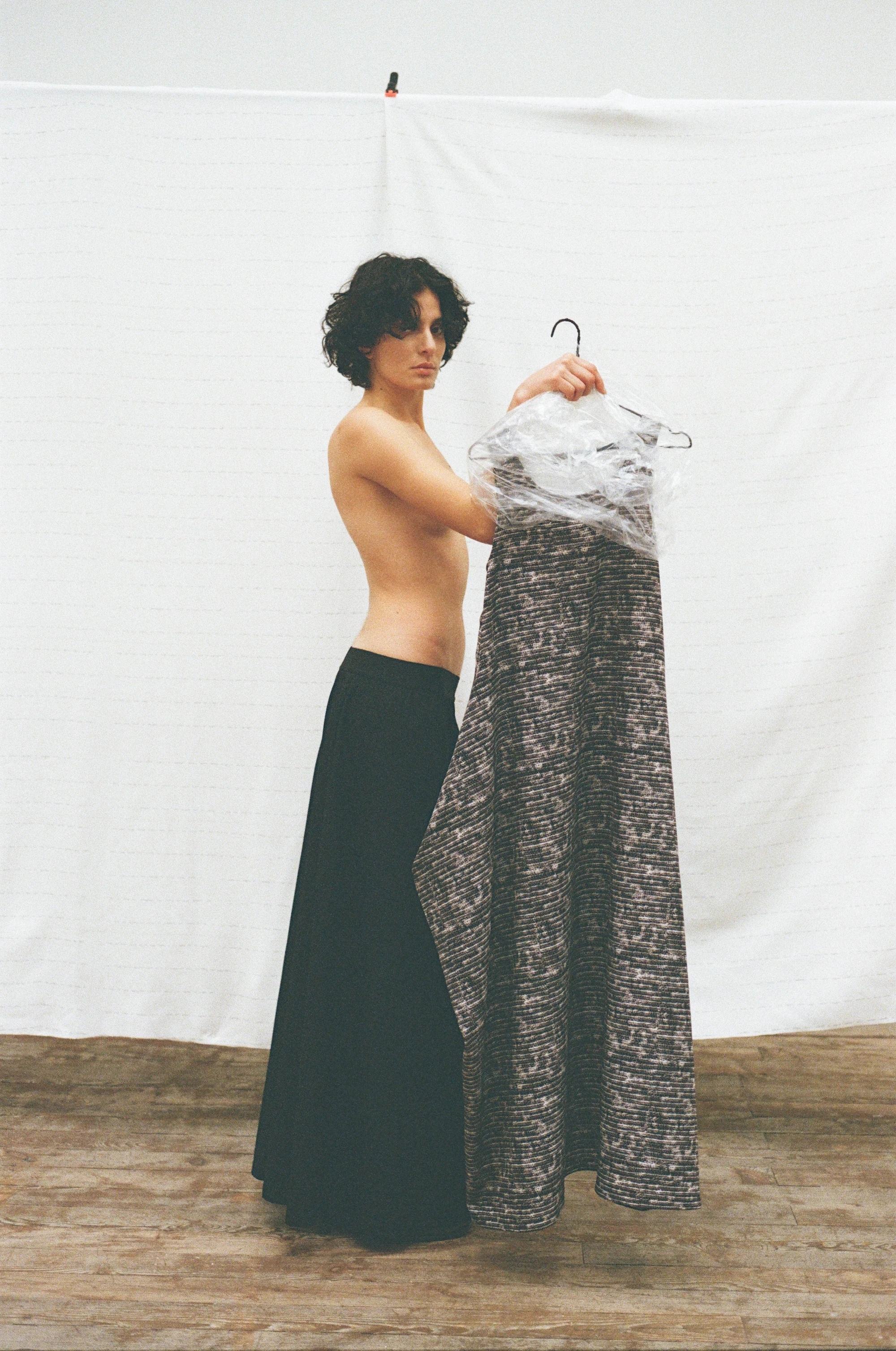
Maria Calderara, F/W 26, #WWWWOMANWORDWRITING
Maria Calderara: A Poetics of Design
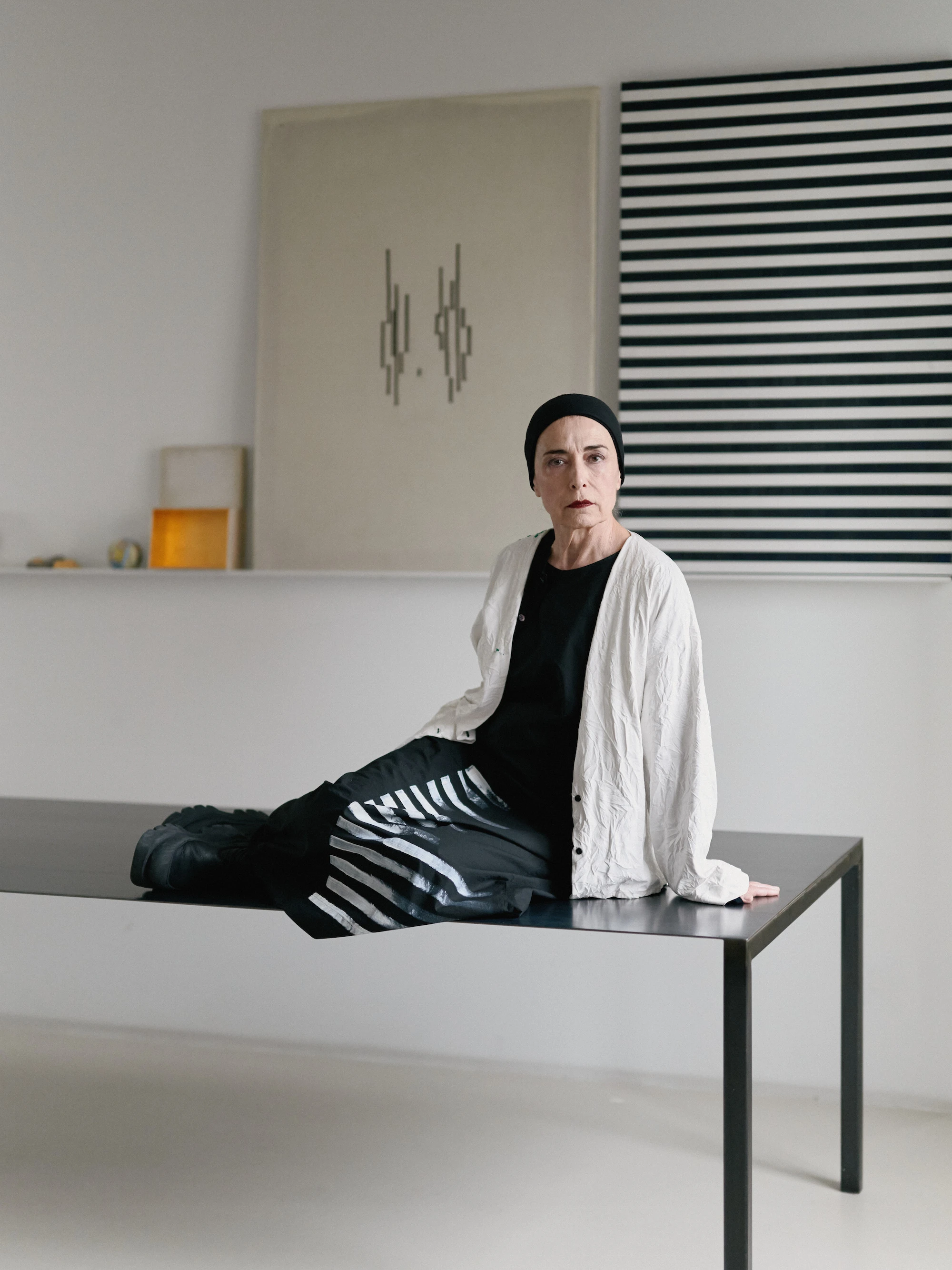
For Maria Calderara, art is more than just a means of communication; it is an integral part of her background and her approach to design. As a refined and passionate collector, she has cultivated an everyday familiarity with works of art and artists. This has enabled her to engage with their artistic languages without reducing them to a repertoire of images to be transposed onto garments. Since 2022, this relationship has become explicit through a series of collections created in collaboration with contemporary artists. Through these collaborations, Calderara addresses issues extending beyond fashion, such as impermanence, freedom, marginality, travel, writing, gender identity, the relationship between the body and power, and nature and its invisible structures. The garment thus becomes a critical tool, and even the everyday act of dressing is imbued with meaning—sometimes poetic, sometimes political, but always existential. The first capsule collections, dedicated to Gianni Pettena and Luca Maria Patella, laid the groundwork for this approach. In both cases, the focus is on artists who have worked across different disciplines, challenging the traditional separation between art, architecture, the environment, behavior, and language. This approach is a natural fit for Calderara's practice, which has always embraced the hybridization of expressive forms. As the collections evolve, the dialogue with art becomes more nuanced. The Milanese exhibition space that bears her name becomes a venue where clothing, jewelry, and artworks converge. This gives rise to projects in which the public is invited to interpret the connections, follow the clues, and create their own narrative.
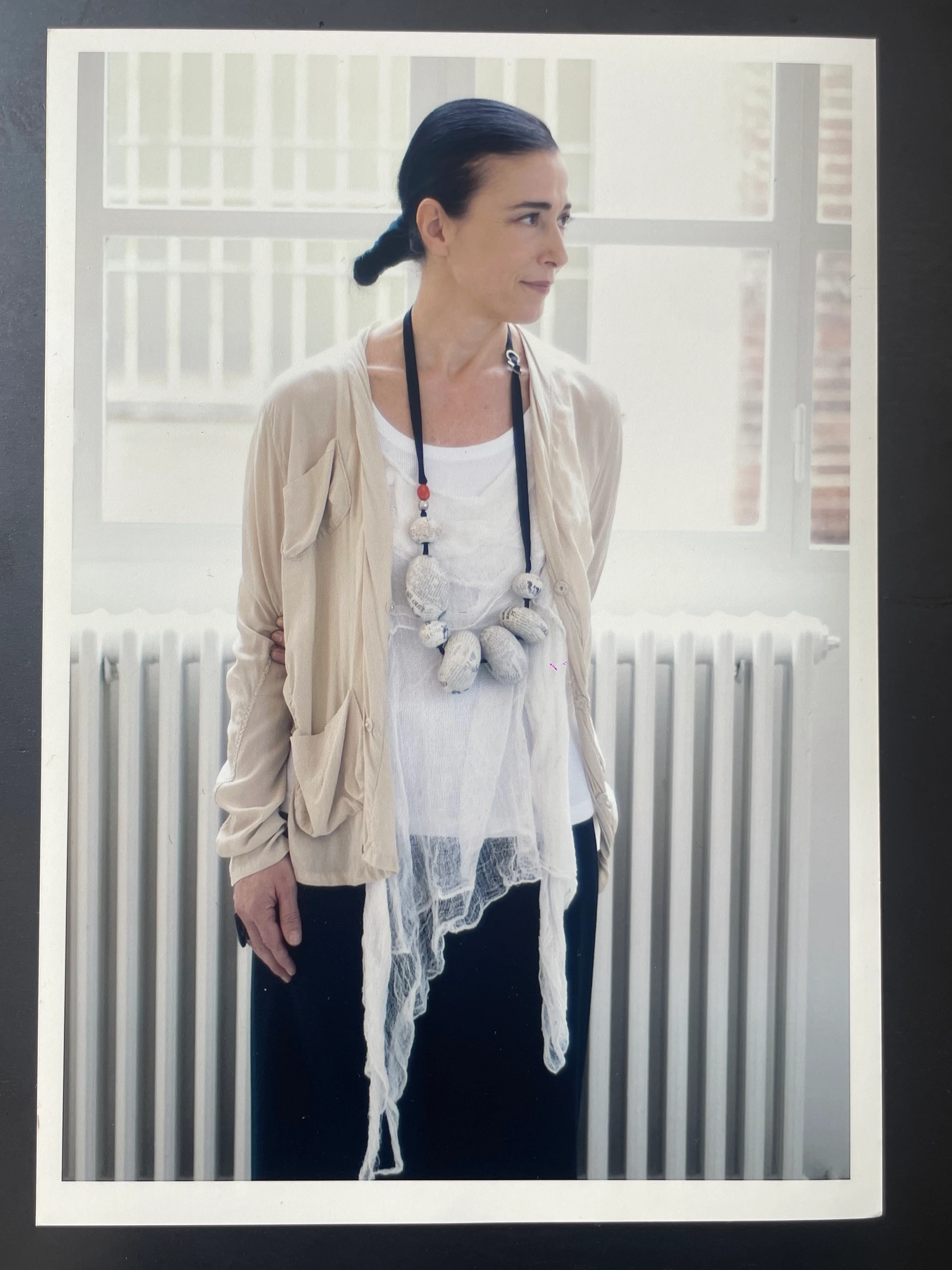
Maria Calderara, portrait. Ph. Sebastiano Pavia
The Dialogue Between Fashion and Art in Maria Calderara’s Collections
Collaborations with artists never amount to mere references. After all, the fashion world is full of this kind of superficial approach. Instead, each collection emerges from a long process of study and assimilation, during which an artistic concept is reinterpreted through the language of fashion. The Spring-Summer 2024 Round River collection, inspired by Antonio Scaccabarozzi's exploration of perception, light, and the instability of form, presents garments as elements in a state of perpetual change. The title evokes the paradox of a river flowing over itself, becoming a metaphor for fashion that intentionally eludes any sense of permanence. The silhouettes caress the body without constraining it, and the materials seem to shift in response to movement and light.
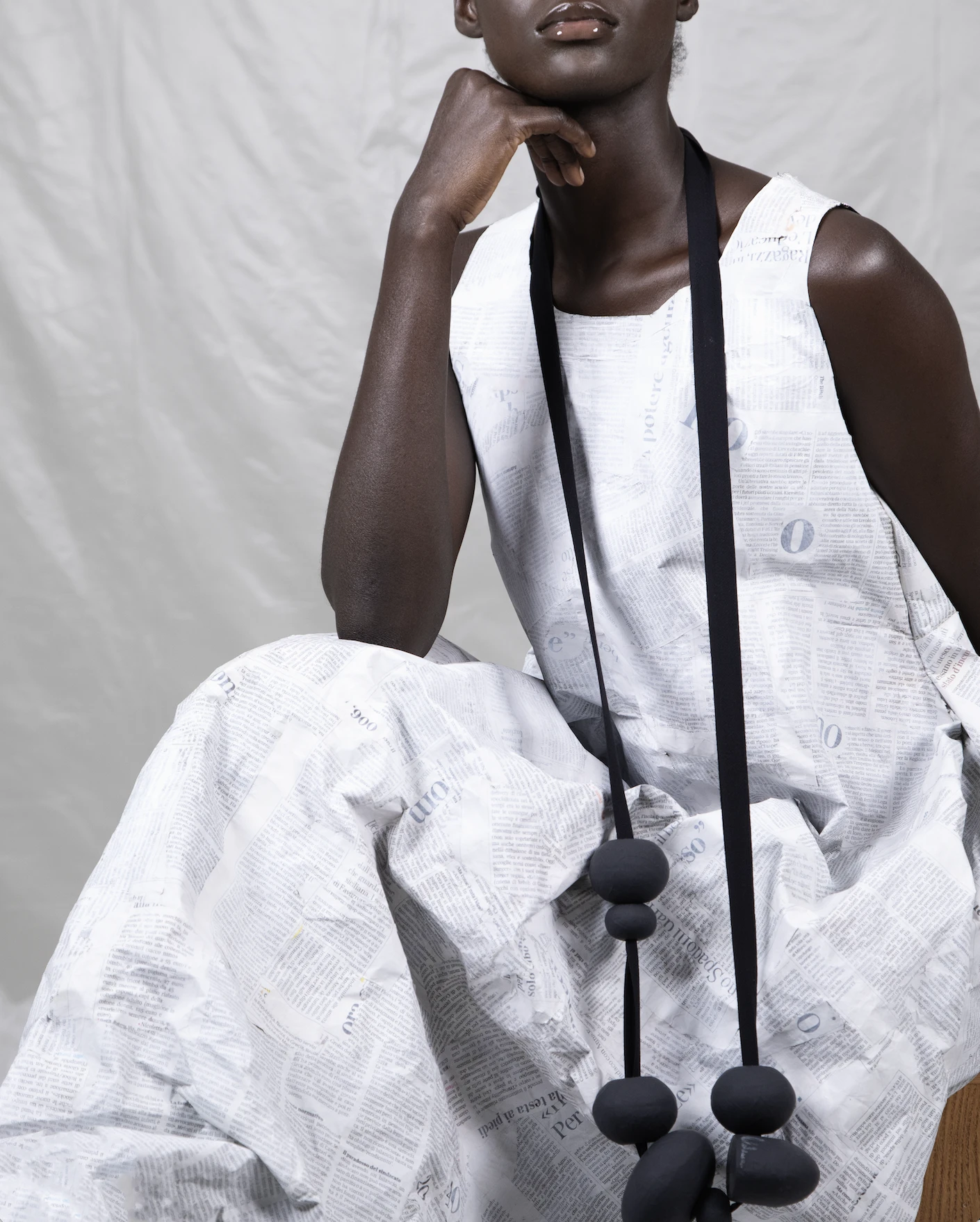
Maria Calderara, S/S 24, Round River
In Speaking Birds (Fall-Winter 2024/25), Calderara focuses on the suburbs as explored by Eugenio Tibaldi. Tibaldi's work transforms the margins into places of possibility. The designer translates this concept into garments bearing traces of time and transformation. Patches, crumpled surfaces, layering, deconstructed pinstripes, and brushstrokes that veil without erasing embody an aesthetic of imperfection.
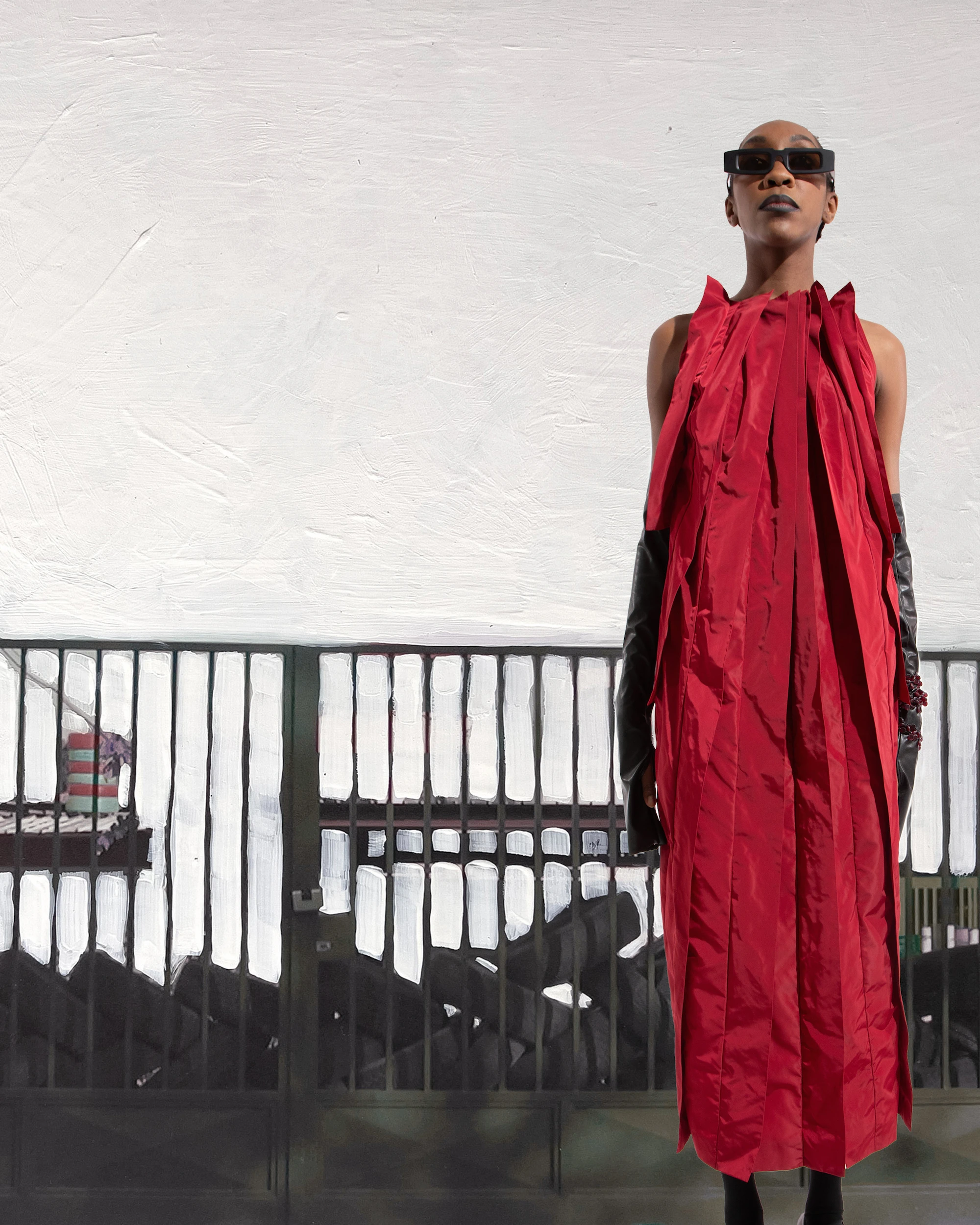
Maria Calderara, F/W 24, Speaking Birds
In Touch (Spring-Summer 2025), Calderara engages with Piero Manzoni's radicalism by adopting his innovative, reductionist method. The wrinkles of his renowned "colorless" paintings, the “Achromes,” are reimagined in a dress made of parachute fabric. Glass wool, polystyrene, and bread rolls are repurposed as innovative textile materials. The artist’s performances are perpetuated through Calderara’s imprints, signatures, and jewelry.
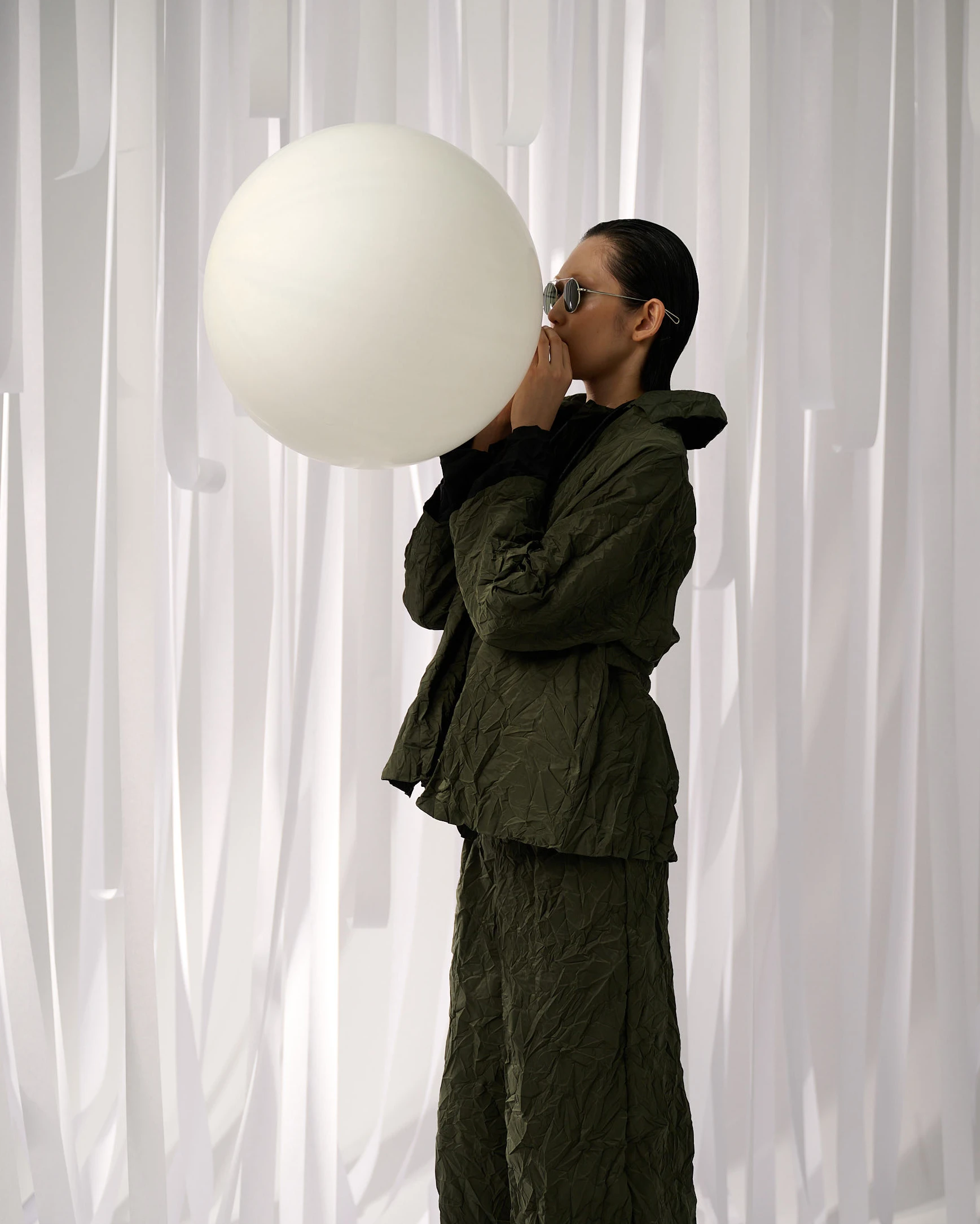
Maria Calderara, S/S 25, Touch
Lightness is the theme of Via Lactea (Spring-Summer 2026), a collection created in collaboration with the Japanese artist Satoshi Hirose. The cocoon, a recurring symbol in Hirose's work, represents metamorphosis. Tea bags imprinted on fabrics, skies from the "Sky Project" photographic series, and organic elements scattered across the garments create an expressive language suspended between travel and memory.
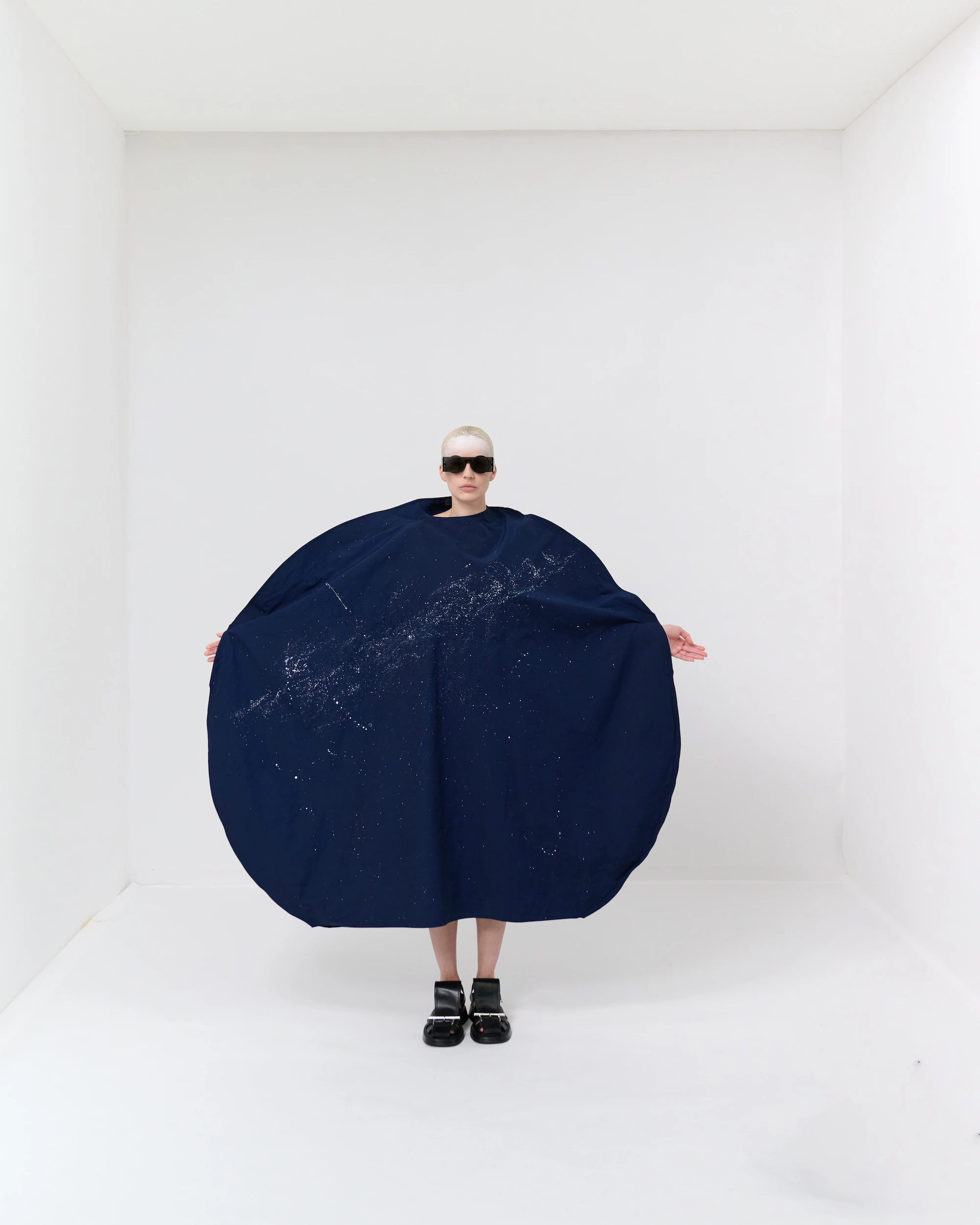
Maria Calderara, S/S 26, Via Lactea
The #WWWWOMANWORDWRITING collection (Fall-Winter 2026/27), born from a collaboration with feminist artist Tomaso Binga, has an overtly political dimension. Inspired by Binga’s a-semantic writing, which deliberately eschews the conventional meaning of words, Calderara creates a new textile alphabet that serves as a pretext for a conceptual reformulation of the idea of the body. Modular garments, transformable silhouettes, and adjustable details challenge the notion that identity is a stable, acquired condition.