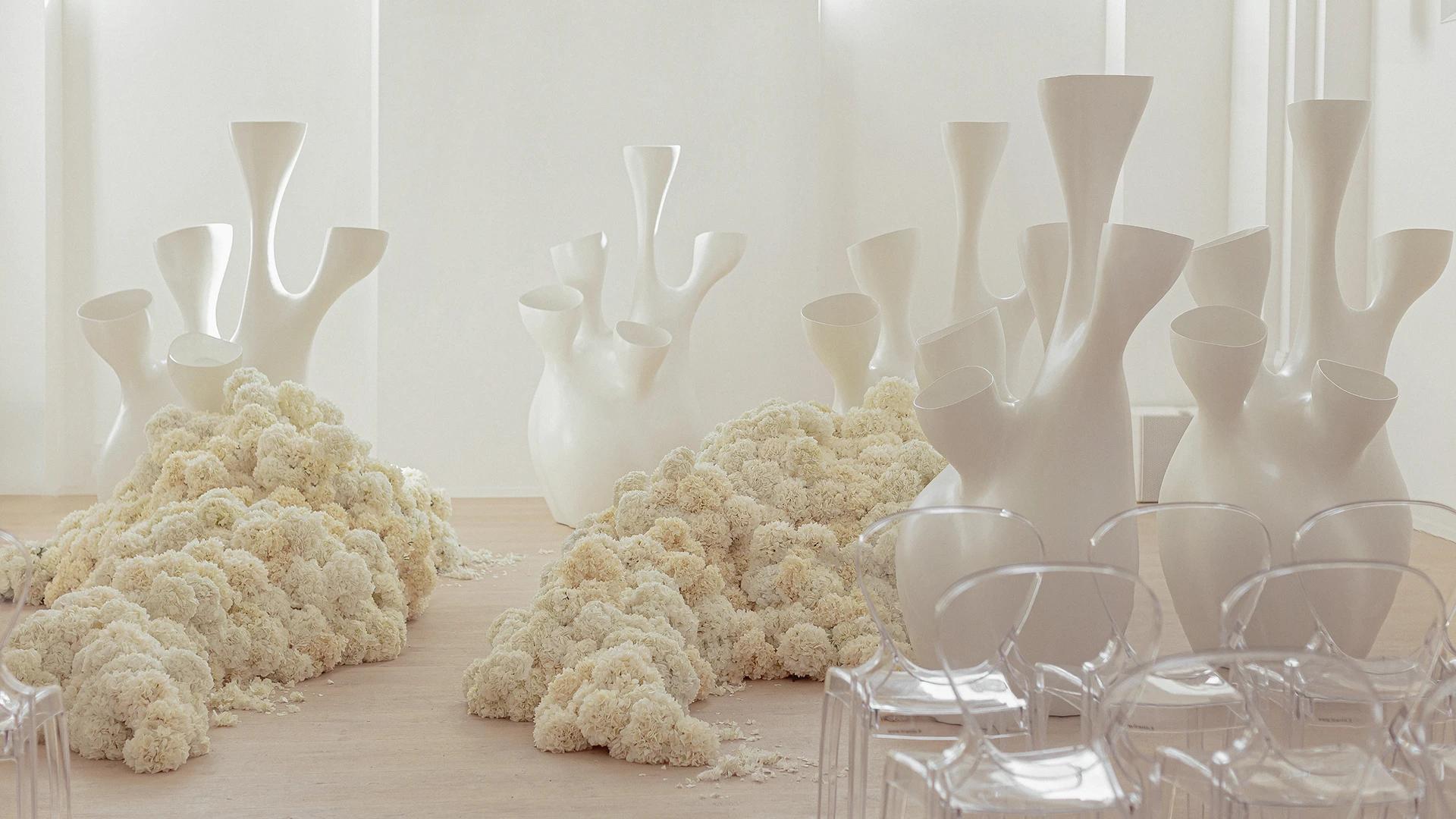
The meeting of art, design and craftsmanship that draws audiences to Design Miami Paris also invites a closer look at the spaces we use every day. Beyond the exhibition setting, creativity shapes the places where we meet, dine and spend time: a restaurant entrance, a café terrace, a hotel courtyard.
For Lithuanian floral designer Mantas Petruskevicius, who lives and creates in Paris, and his studio, Flower Couture, these everyday environments offer rich creative possibilities. Flowers and greenery can become part of a venue’s visual identity, complementing its architecture and giving familiar surroundings a new atmosphere.
This side of the studio’s work deserves attention alongside its celebrations and events. Across restaurants, cafés, hotels and outdoor spaces, Petruskevicius explores how floral design can belong to a place and contribute to its character. His website expresses a belief that aesthetic experience has a place in daily life as well as in celebrations. Flower Couture.
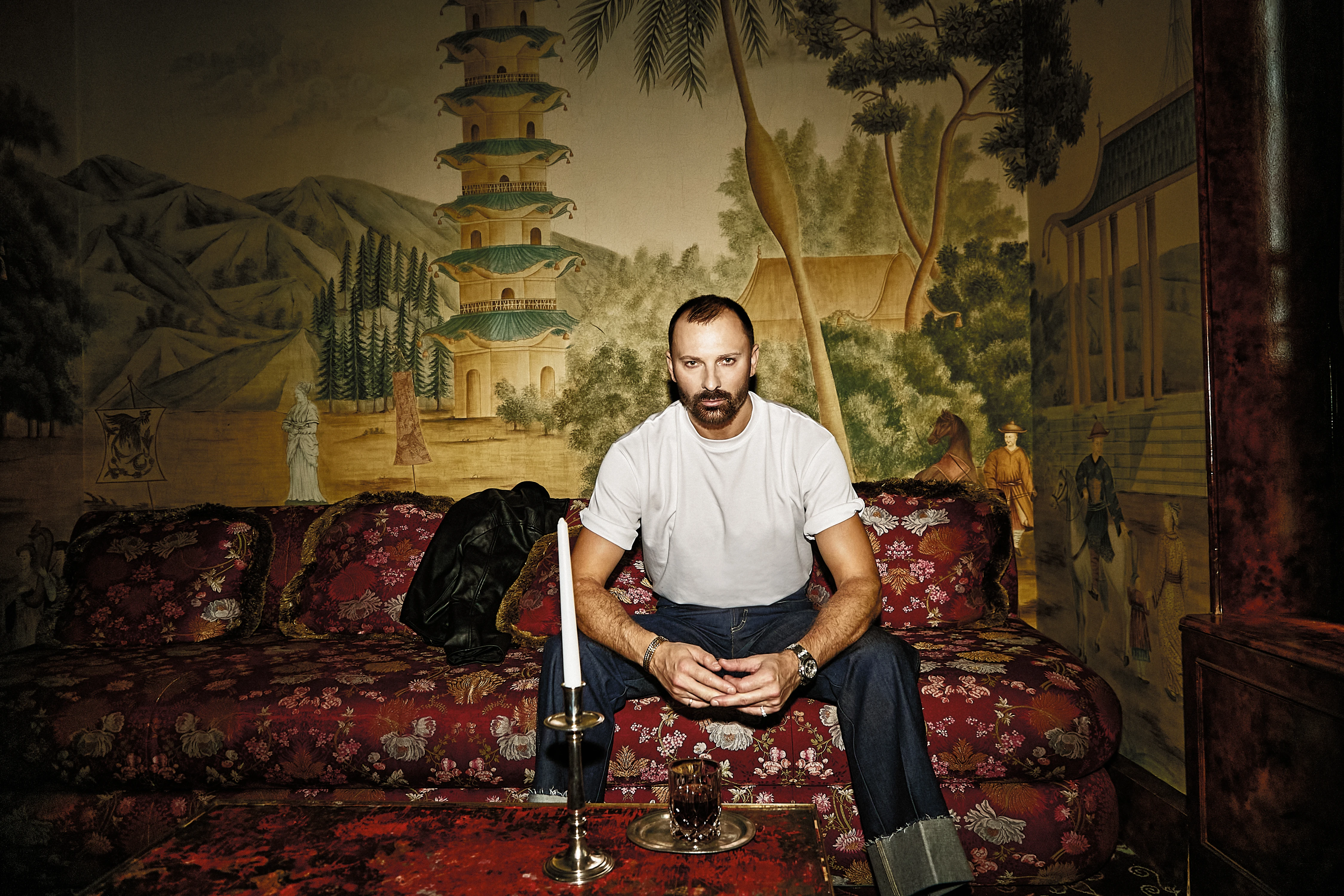
Mantas Petruskevicius. Photo: David Dijan, Lapérouse Paris.
Reading the Architecture
Petruskevicius begins with the setting. The surrounding architecture helps determine the colour and form of his compositions, giving each project a relationship with the space it occupies. That relationship leaves room for different expressions. An ornate interior might invite generous arrangements that echo its decorative richness, a quieter setting can call for sculptural branches, a restrained palette or carefully placed greenery. The question is how the installation contributes to the whole.
His references include the Renaissance, the Baroque, Art Nouveau and Art Deco. These influences sit within a practice that also embraces contemporary and minimalist environments. Homo Faber’s profile describes his work across restaurant interiors, hotels, castles and smaller architectural settings. The variety matters. It suggests an approach guided by the possibilities of each location, with flowers providing a means of interpreting its proportions, materials and atmosphere.
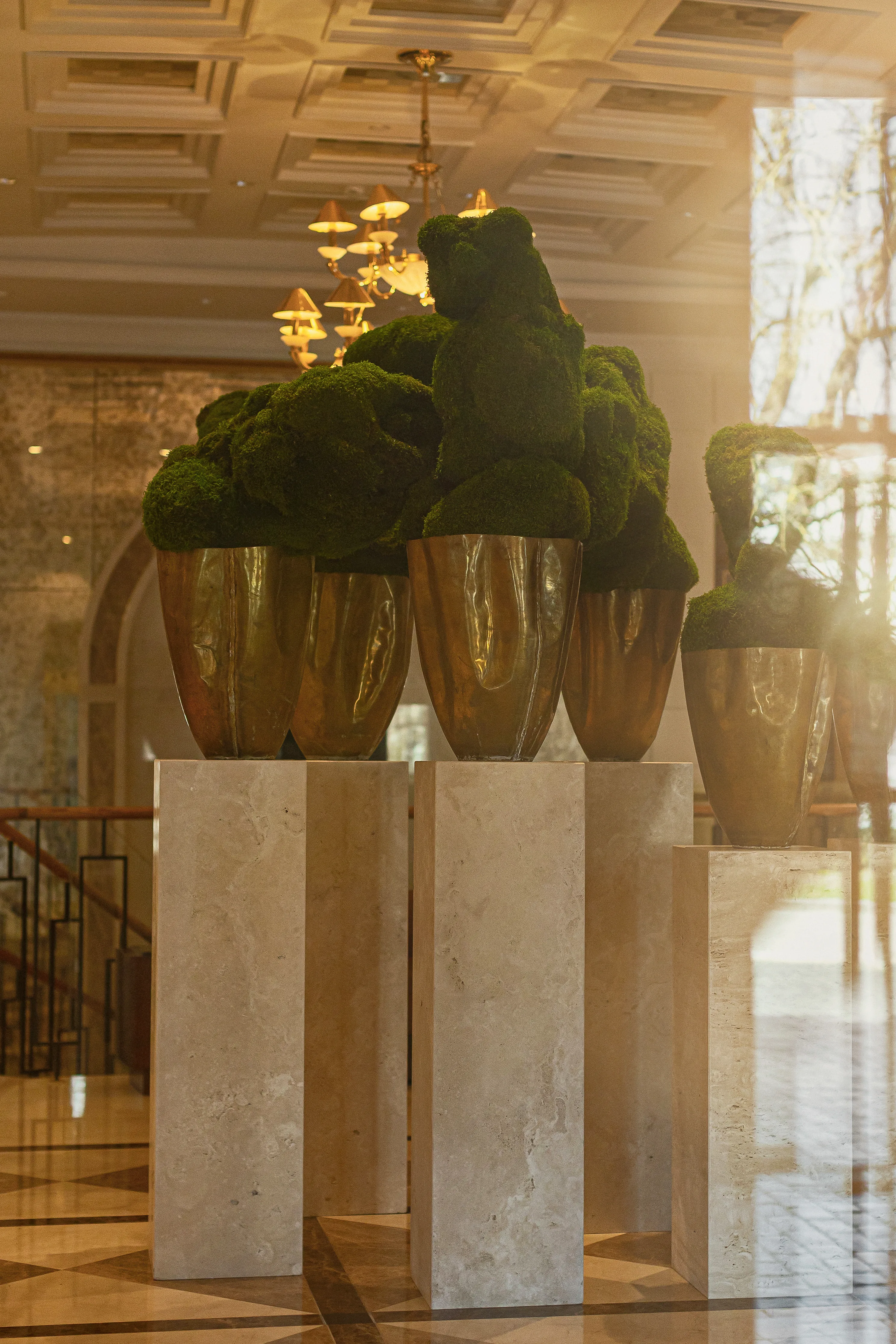
Grand Hotel Vilnius, Curio Collection by Hilton. Photo: AA Studio
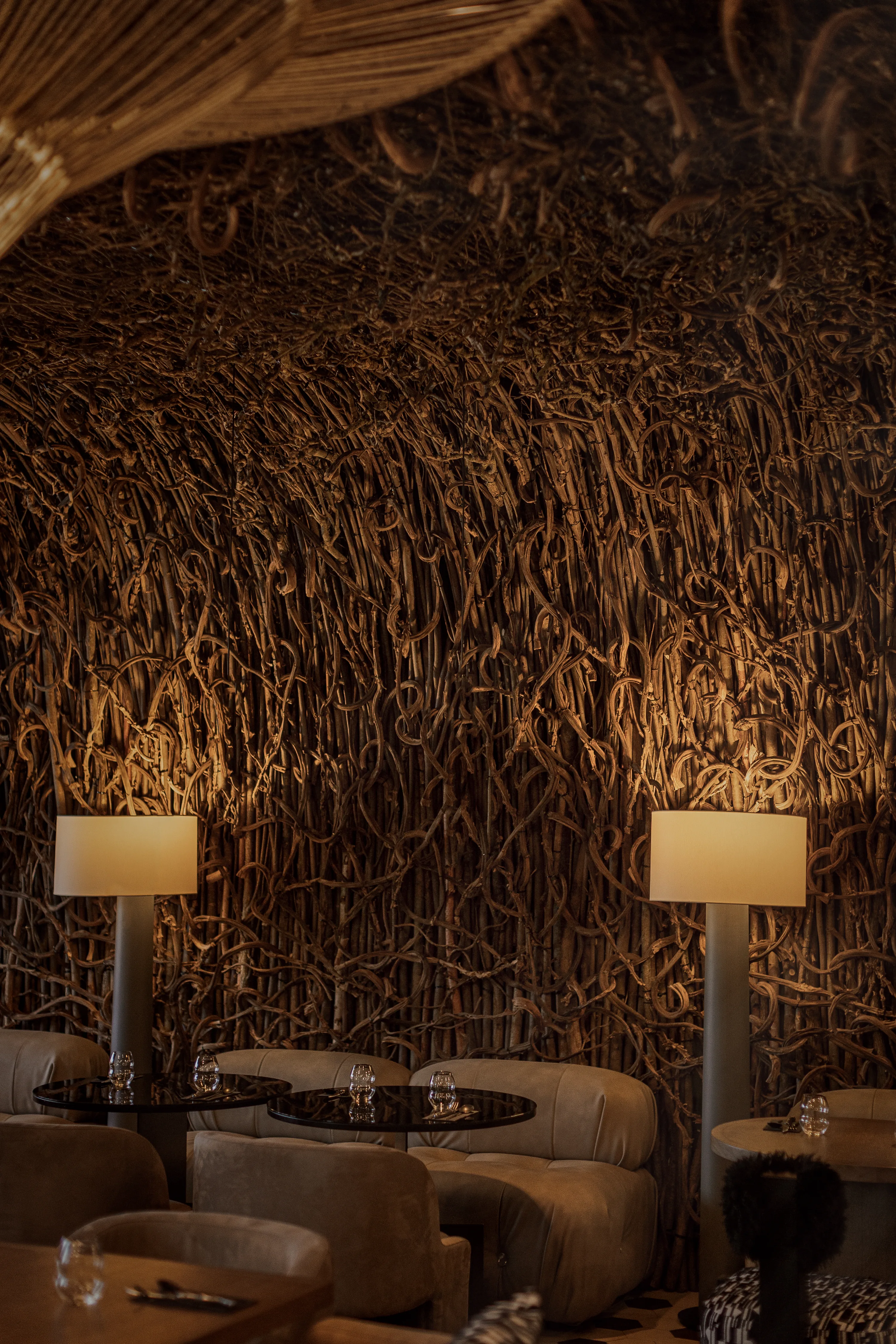
La Papa Loca Restaurant, Kaunas. Photo: AA Studio
Why Flower Couture?
The studio’s name reflects Petruskevicius’s connection to fashion. In his Homo Faber interview, the designer, whose professional career began in 2007, links floristry and haute couture through handwork and mastery. He also describes the importance of architecture, lighting and audience to the presentation of his floral ideas. This offers a useful way to understand his installations. Their effect depends on more than the individual flowers: scale, placement, texture and the surrounding light all contribute to how a composition is experienced.
Within a hospitality space, those relationships become particularly interesting. A floral installation shares the room with furniture, tableware, architectural details and the movement of guests. Its character emerges through that setting, whether the result feels theatrical, intimate, playful or calm.
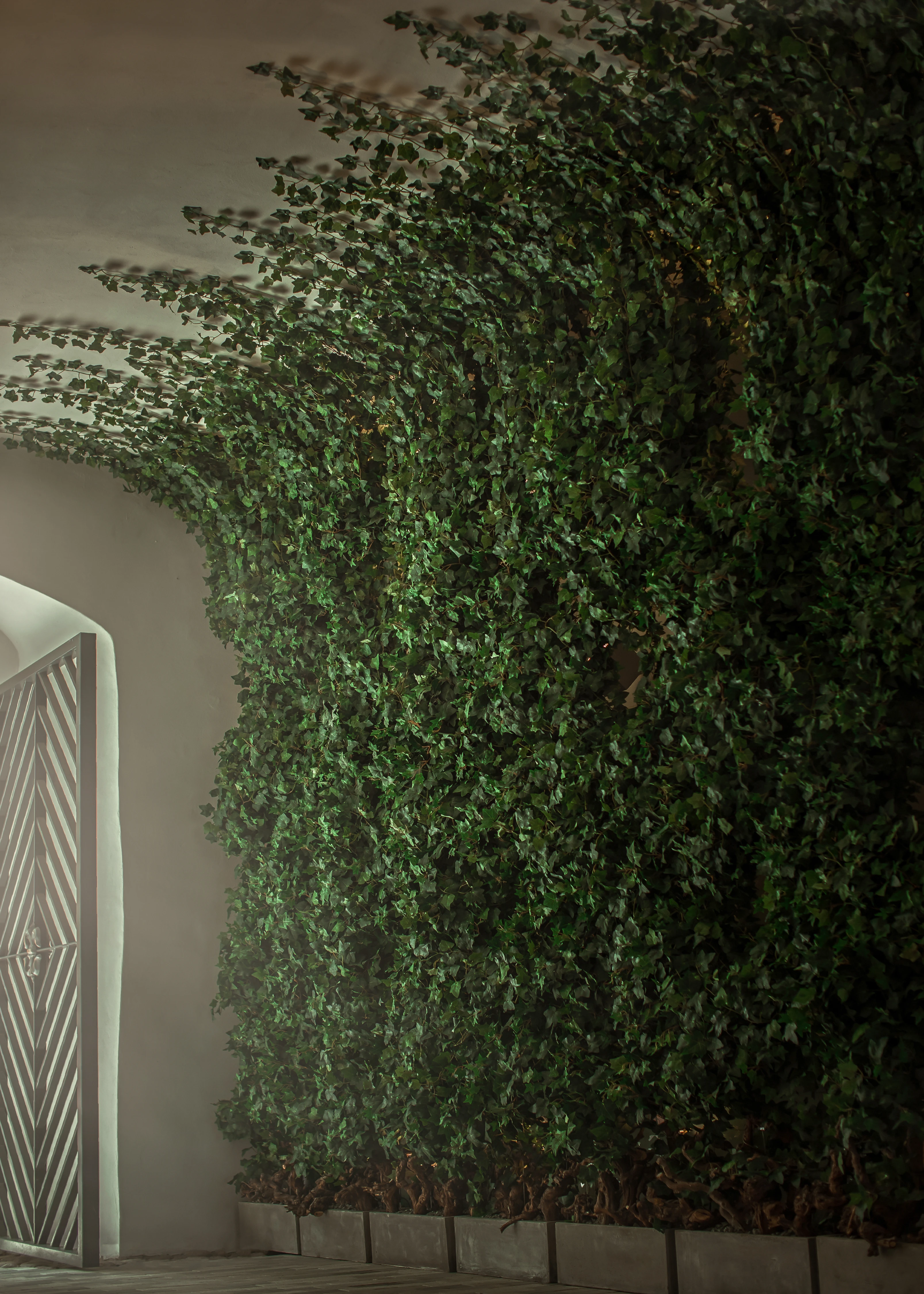
Hotel Pacai, Vilnius, Lithuania. Photo: AA Studio
Interiors Inspired by Place
Flower Couture’s catalogue provides several examples of how a venue’s concept can inform its floral and botanical design.
At La Papa Loca in Kaunas, the beaches and atmosphere of Tulum provide the inspiration. The project explores roots, branches and entangled natural forms, with a direction described as minimal, modern and natural. It demonstrates how botanical elements can help communicate a restaurant’s identity through texture and shape.
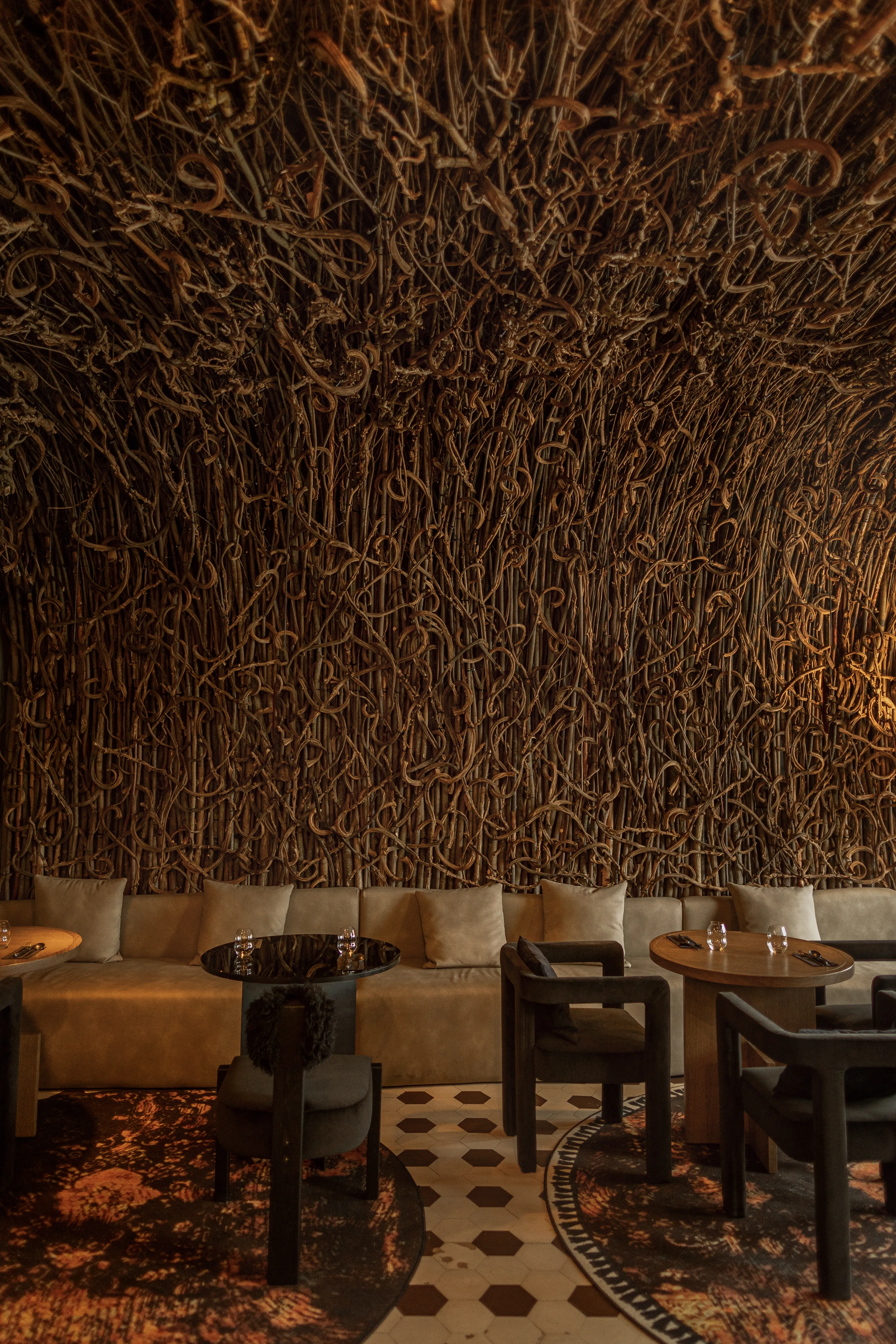
La Papa Loca Restaurant, Kaunas. Photo: AA Studio
In Vilnius, St. Elizabeth’s Chapel offers a very different setting. It sits within the Bokšto skveras complex, a historic site in the Old Town that has been fully restored and reopened to the public, with the chapel and a secluded courtyard now used as a venue for events. The chapel dates from the 18th century and has a Baroque interior with a balcony, while the courtyard is surrounded by gardens and looks out over Užupis. For a designer who names the Baroque among his references, the space offers a natural dialogue between floral composition and historic architecture.
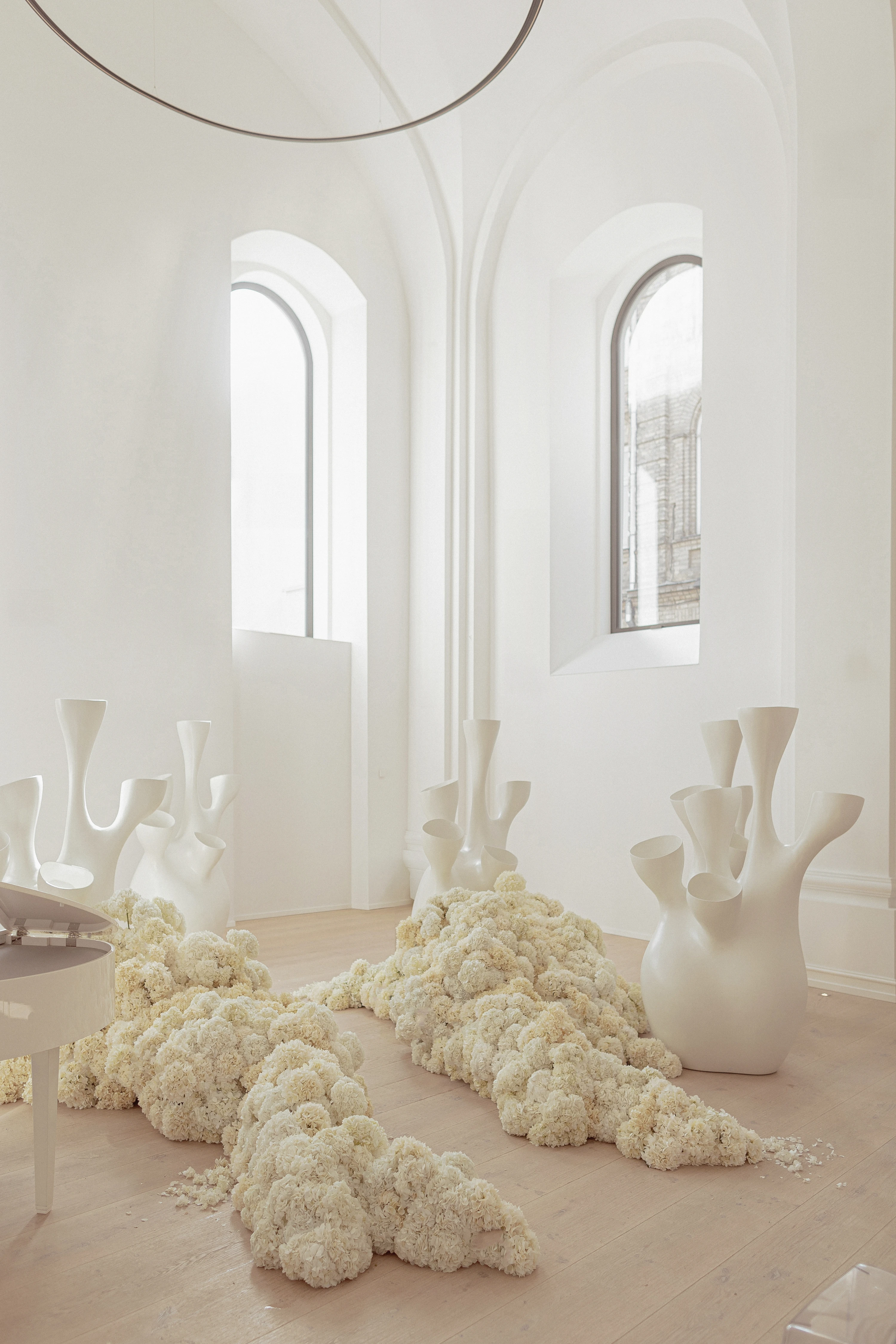
St. Elizabeth’s Chapel, Bokšto skveras, Vilnius. Photo: AA Studio
Tekés brings the studio’s work to Paris. The restaurant, on rue Saint-Sauveur in the 2nd arrondissement, is from chef Assaf Granit, known for Balagan and Shabour, and is devoted to vegetarian Levantine cooking. Its name means “ceremony” in Hebrew, and chef Cécile Lévy works with Granit on dishes cooked over wood, embers and sand. Beyond the open kitchen and the counter in front of it, a large patio terrace opens at the back of the restaurant.
This courtyard, set under a glass roof and paved with old cobblestones, is where Flower Couture’s installation takes shape. Columnar cactuses hang overhead, suspended upside down among clumps of moss and long strands of Spanish moss that fall towards the tables. A desert plant usually seen rising from dry ground becomes a canopy, and its sculptural forms contrast with the soft, trailing greenery around it. Below, palms, climbing plants and terracotta pots complete the scene, in tune with the terracotta bar and the earthy palette of the restaurant. The approach reflects the team’s own intention to avoid the cliché of a vegetarian restaurant filled with plants, and to highlight instead what allows them to grow: light, water and soil.
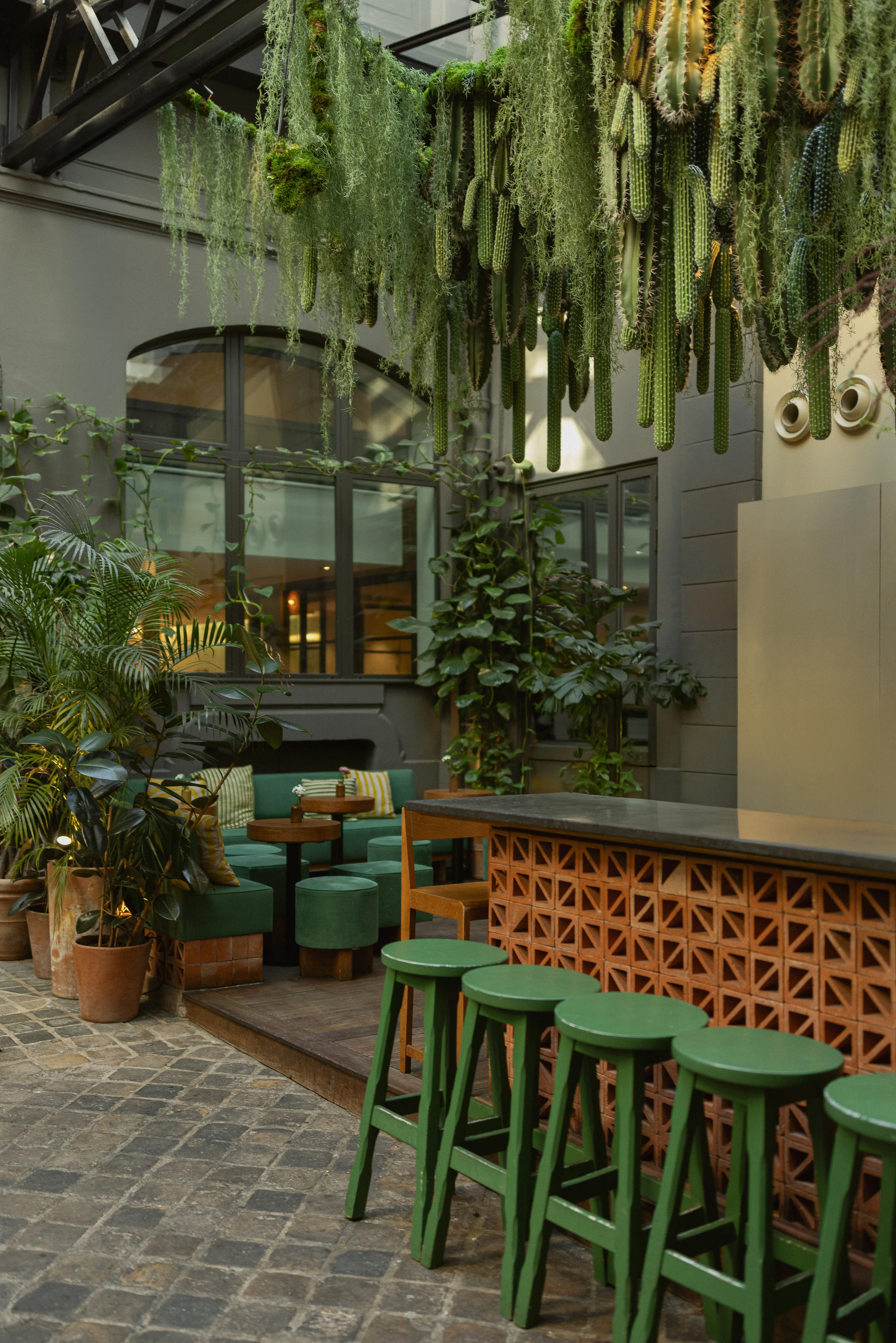
Tekés, Paris, France. Photo: Shot by Lukas
Cafés and Facades with a Seasonal Identity
A café’s character begins before a guest steps inside. Its entrance and facade contribute to the street, offering an early impression of the atmosphere within.
Flower Couture’s seasonal projects for Augustas & Barbora café in Vilnius explore this relationship through blossom, pastel colours and combinations of pink and green. The catalogue returns to the café across several projects, with references ranging from the freshness of early spring to a more exuberant, tropical mood.
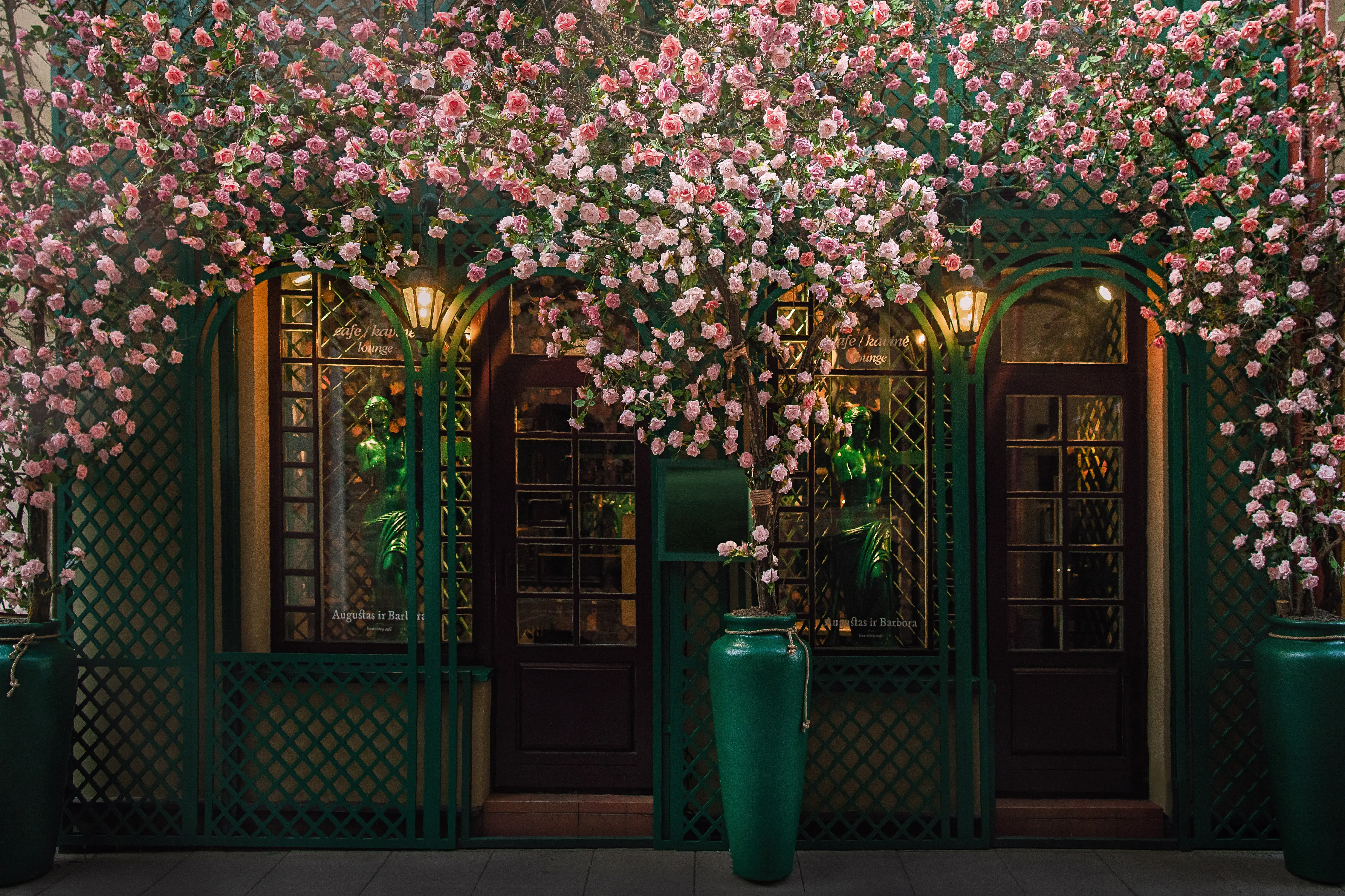
Augustas & Barbora. Photo: AA Studio
At Sugamour in Vilnius, a summer garden provides the inspiration for a playful green and pink scheme.
These projects suggest how seasonal installations can become part of a venue’s ongoing expression. Changes in colour, density and botanical form offer new ways to encounter a familiar place. A facade can contribute to the mood of the street while giving the business behind it a distinctive presence.
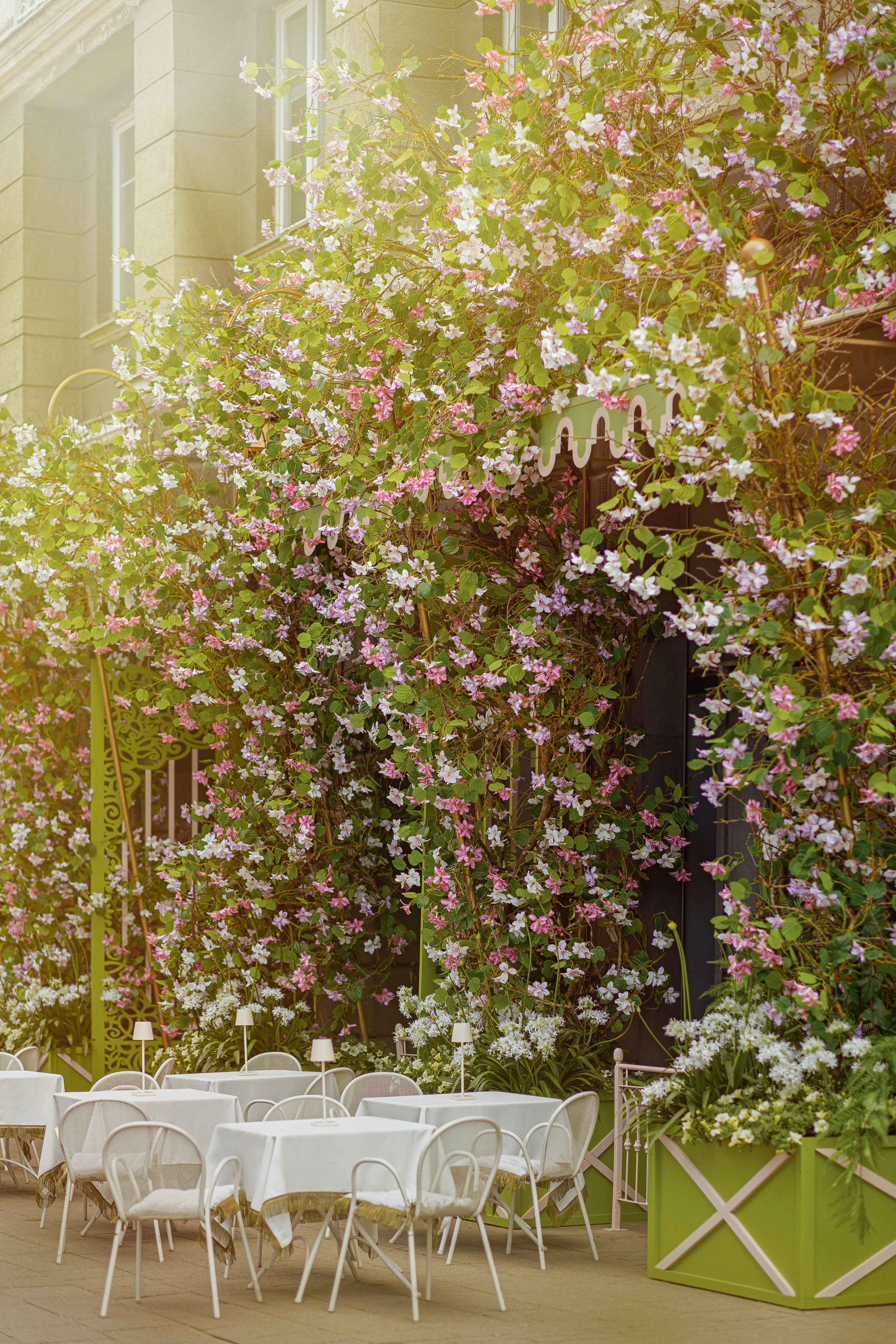
Sugamour, Vilnius. Photo: AA Studio
Terraces and Courtyards as Designed Environments
Outdoor hospitality spaces offer another opportunity to connect botanical design with architecture. The catalogue’s project at Casa Mița Biciclista takes the studio to Bucharest, to one of the city’s best-known historic houses. One of the 159 monuments of national value in the capital, it reopened in 2022 after 80 years, with the association ARCEN turning it into a space for the city’s creative community. Here, greenery meets ornate architecture with a strong story of its own.
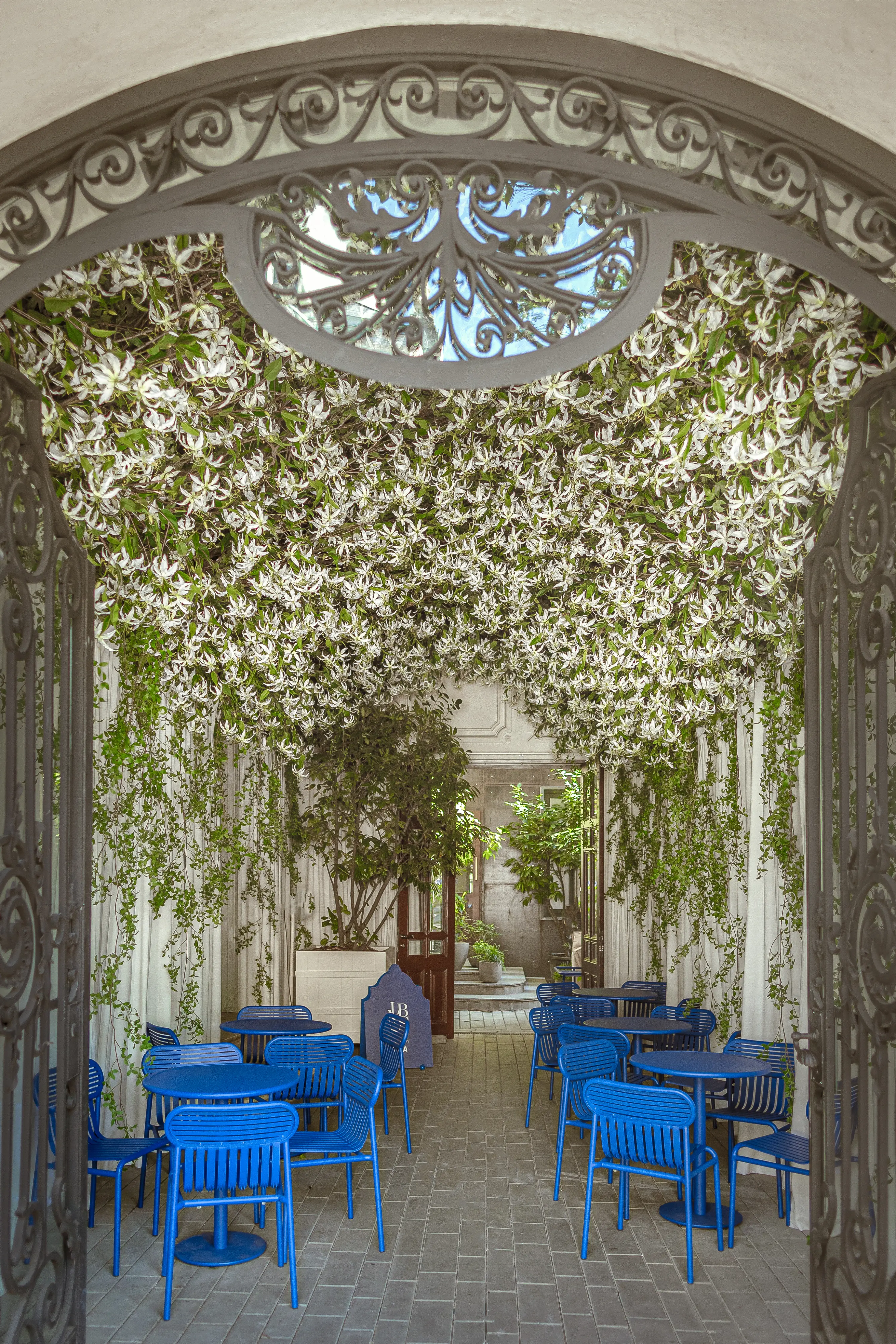
Casa Mița Biciclista, Bucharest, Romania. Photo: AA Studio
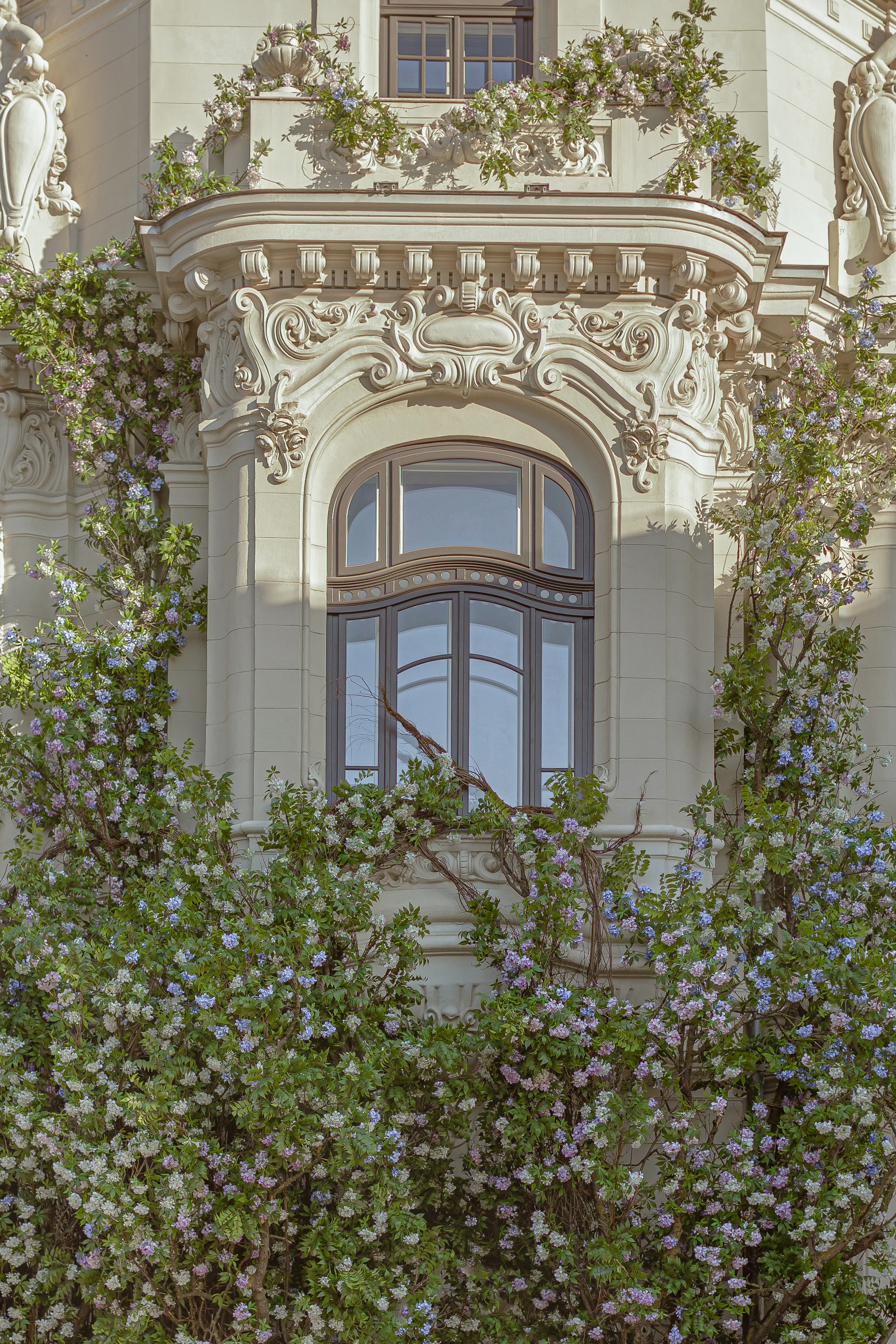
Casa Mița Biciclista, Bucharest, Romania. Photo: AA Studio
Beauty as Part of Daily Life
Seen together, these projects reveal a studio interested in the complete environment. Floral design becomes a way to engage with architecture, express a venue’s personality and influence how a space feels. For restaurant owners, hoteliers and interior designers, that opens an appealing possibility. An existing room or facade can acquire a different energy through an installation conceived specifically for it. A botanical composition may draw the eye towards an entrance, bring texture to a restrained interior or introduce a garden-like atmosphere to an urban terrace.
As Kelly Wearstler observed in an interview with Architectural Digest, “looking for inspiration in less obvious places enriches all of our lives.” That thought resonates with Flower Couture’s approach: seeing a restaurant entrance, a café terrace or a familiar facade as an opportunity for creative expression. The work gives form to a simple idea: everyday surroundings deserve care and imagination. A café visit, an evening meal or a quiet moment in a courtyard can include an encounter with something beautiful.
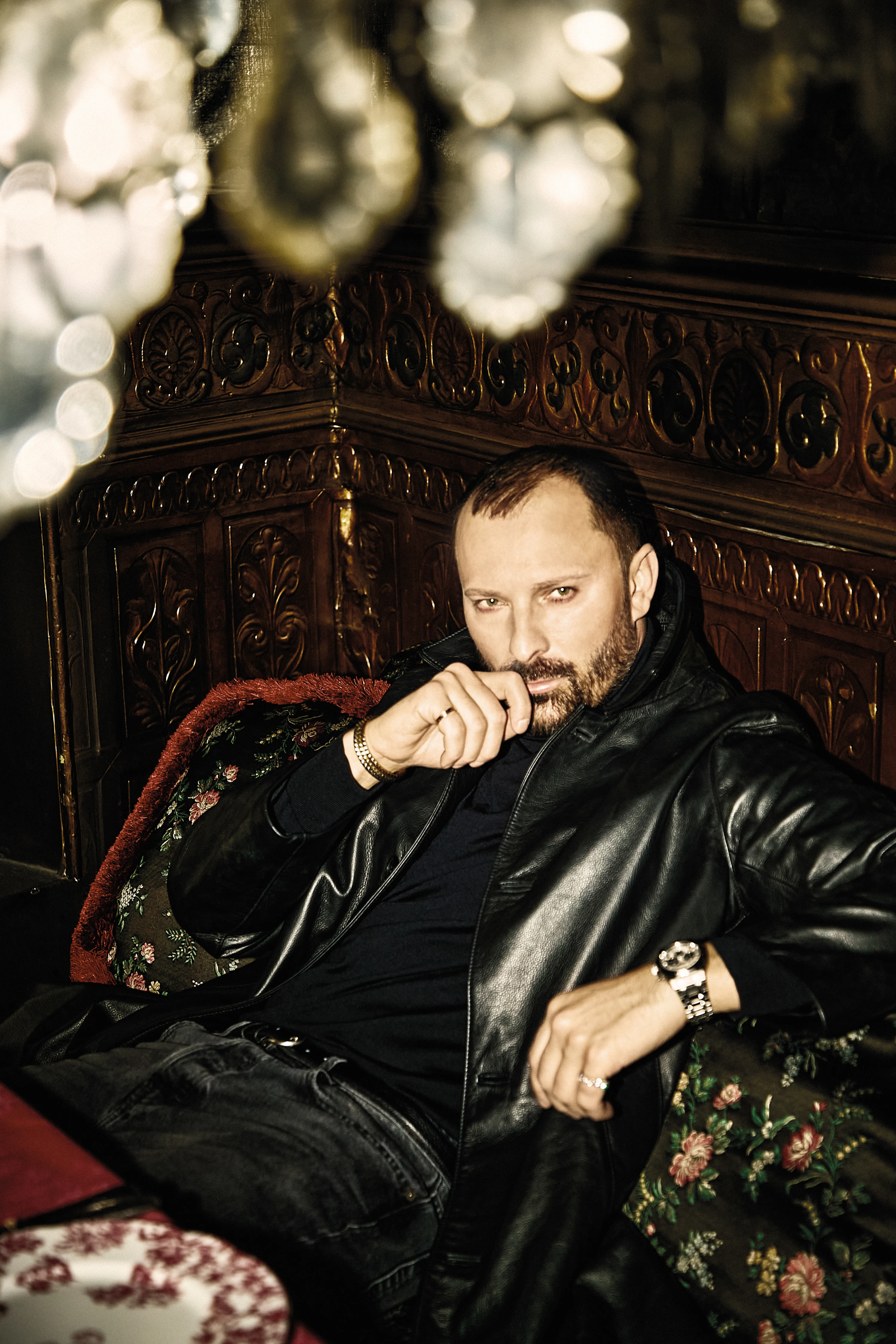
Mantas Petruskevicius. Photo: David Dijan
Through Flower Couture, Mantas Petruskevicius brings that idea into the places people inhabit. His installations invite a closer look at how flowers, greenery and craftsmanship can become part of the character of a building—and part of the experience people remember.
Explore the studio’s portfolio at Flower Couture by Mantas Petruskevicius.