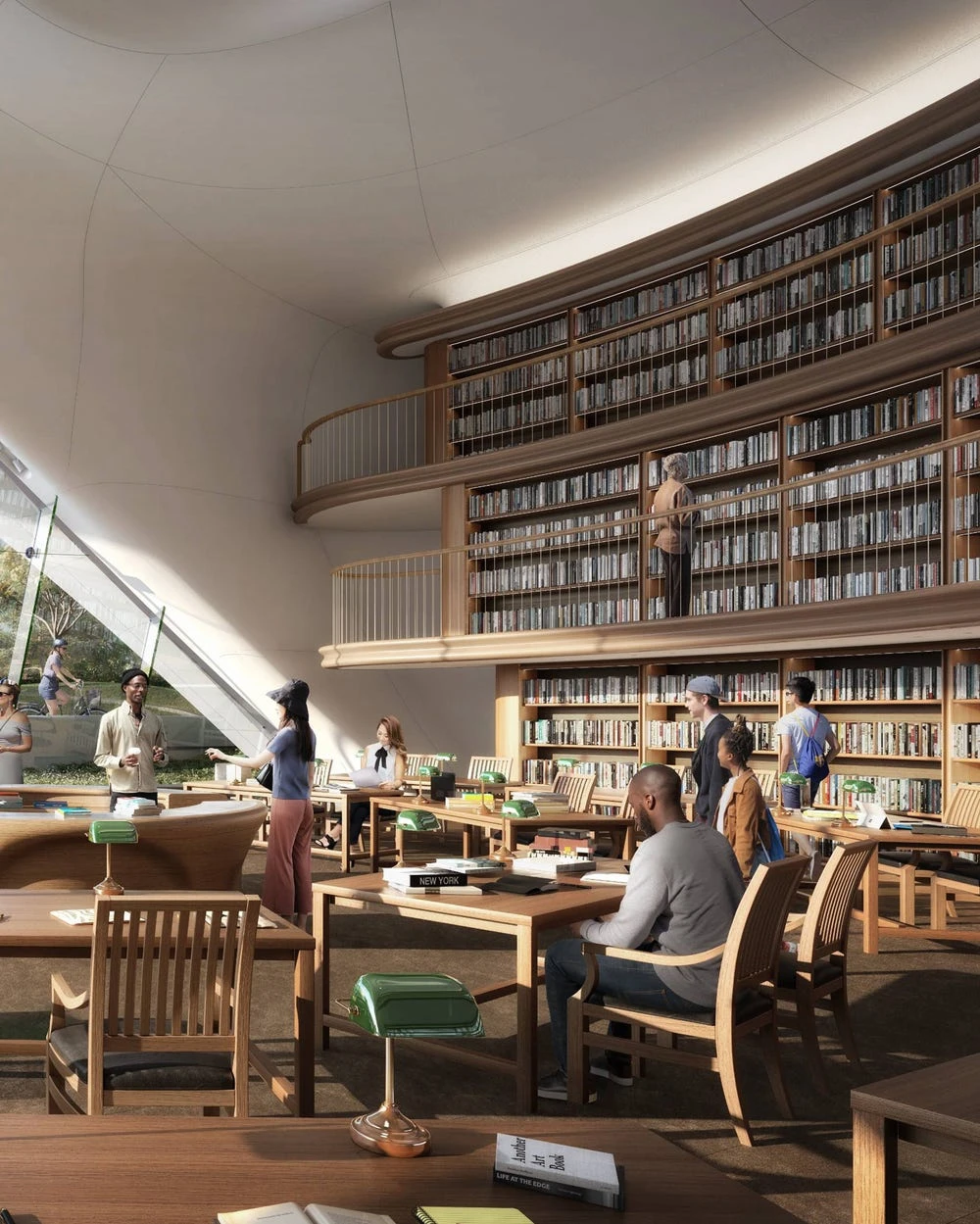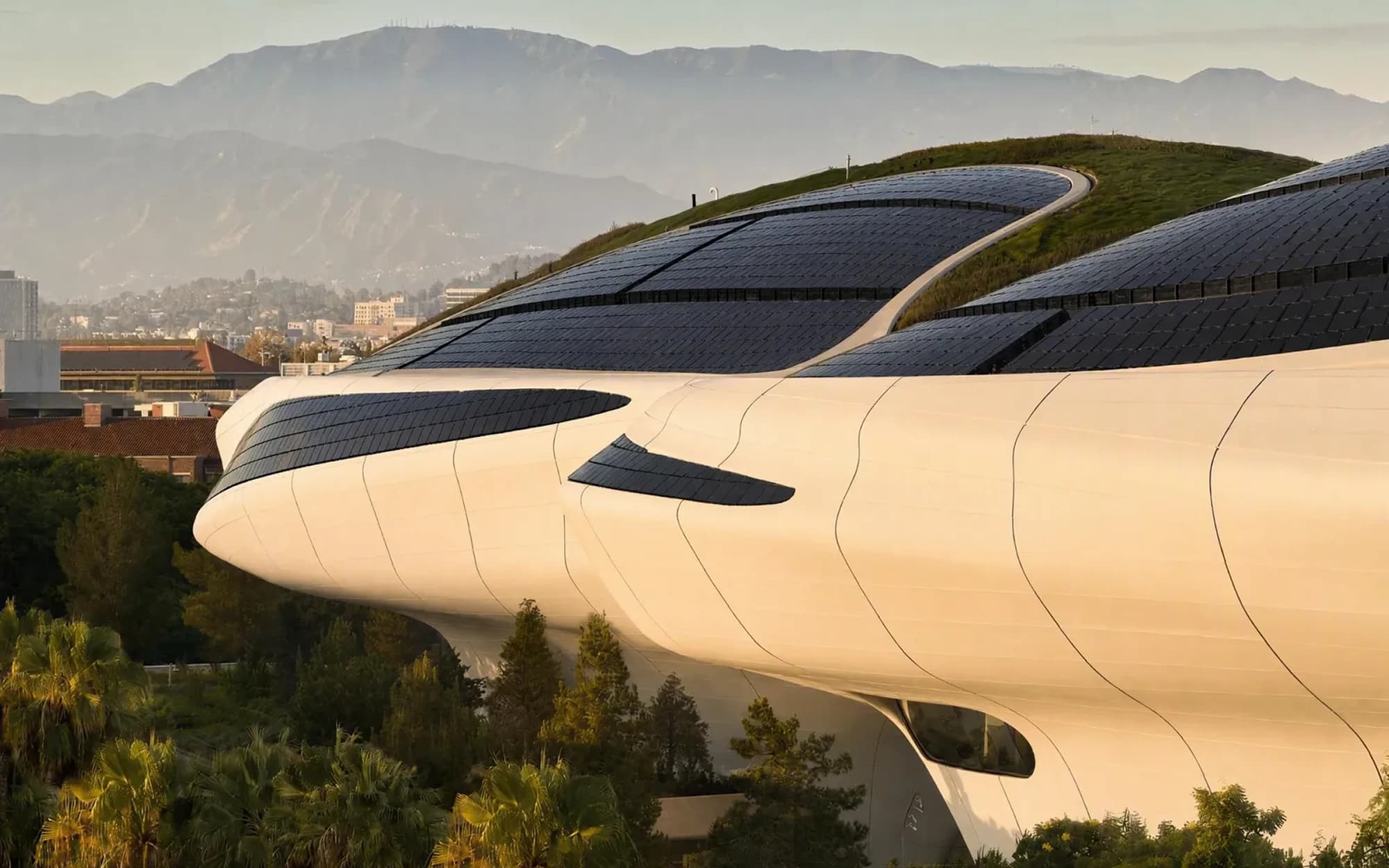
George Lucas says the Lucas Museum of Narrative Art began with a blank piece of paper. The drawing has since travelled through San Francisco and Chicago, survived years of planning disputes and construction delays, and arrived in Los Angeles as a museum built around an unusually broad idea: that a comic strip, a film poster, a painting and a frame from a blockbuster can all belong to the same history of visual storytelling.
On 22 September, the museum opens in Exposition Park, beside USC and close to the Coliseum. Its co-founders, Lucas and Mellody Hobson, have spent more than sixteen years bringing it into being. At the museum’s opening gala on 19 September, Hobson described the process with characteristic directness: “We didn’t follow any rules. We didn’t work at a museum, we don’t have PhDs.” Some people, she added, “don’t like it - but we do.”
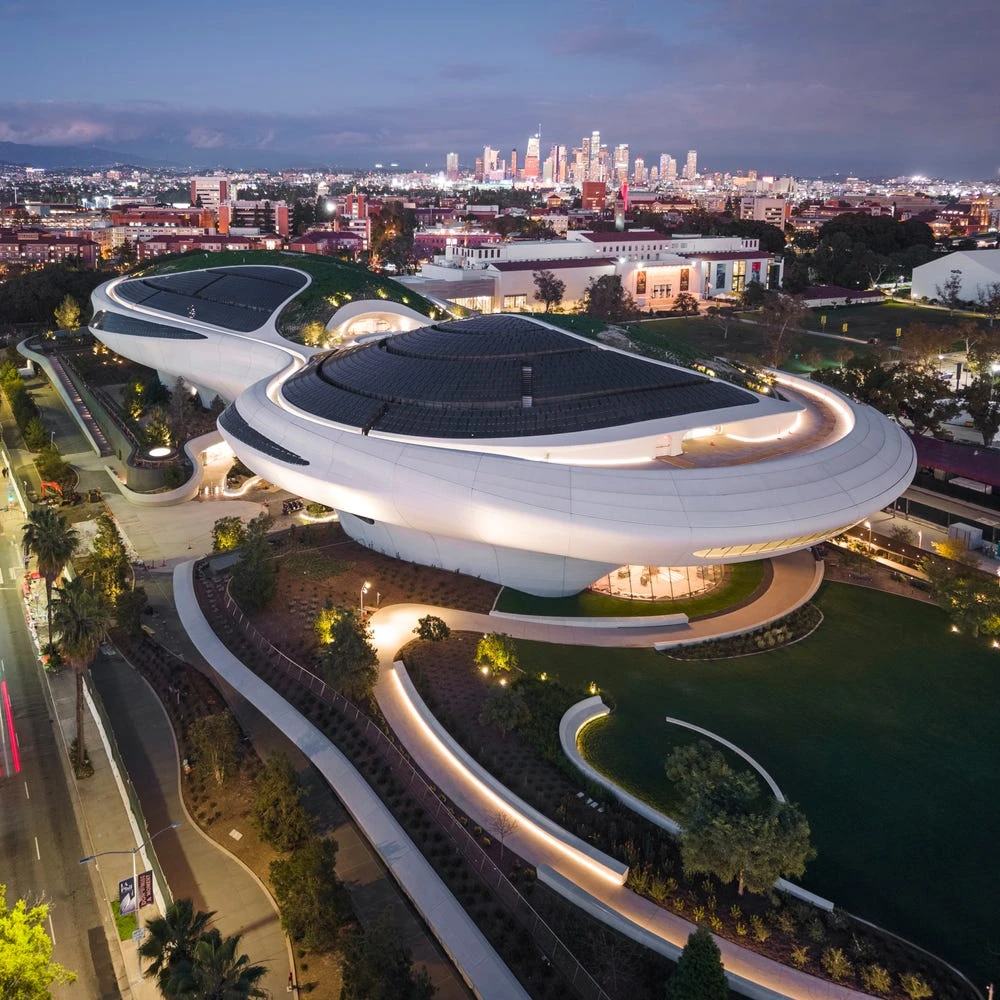
Lucas Museum of Narrative Art. Image © Lucas Museum of Narrative Art
From idea to institution
The museum was first proposed for San Francisco’s Crissy Field and later for Chicago’s lakefront. Both plans fell apart amid public opposition, legal challenges and larger arguments about private development on public land. Los Angeles became the project’s home in 2017, and construction began the following year.
That difficult route has become part of the museum’s identity. Lucas’s personal collection is at its core, and his name sits above the door. The project is openly shaped by the taste and ambition of its founders. It also arrives with the responsibilities of a public institution: a permanent location, a collection of more than 40,000 works and a place in one of Los Angeles’s most visited cultural districts.
The building, designed by Ma Yansong of MAD Architects with Stantec, looks like little else in Exposition Park. Its curved form lifts above the landscape, creating a shaded public area below. The former parking lot around it has been remade as parkland, with paths, gardens and places to sit. The design is fluid and sculptural, with no straight lines and no conventional façade – closer to a film set than to a civic building.
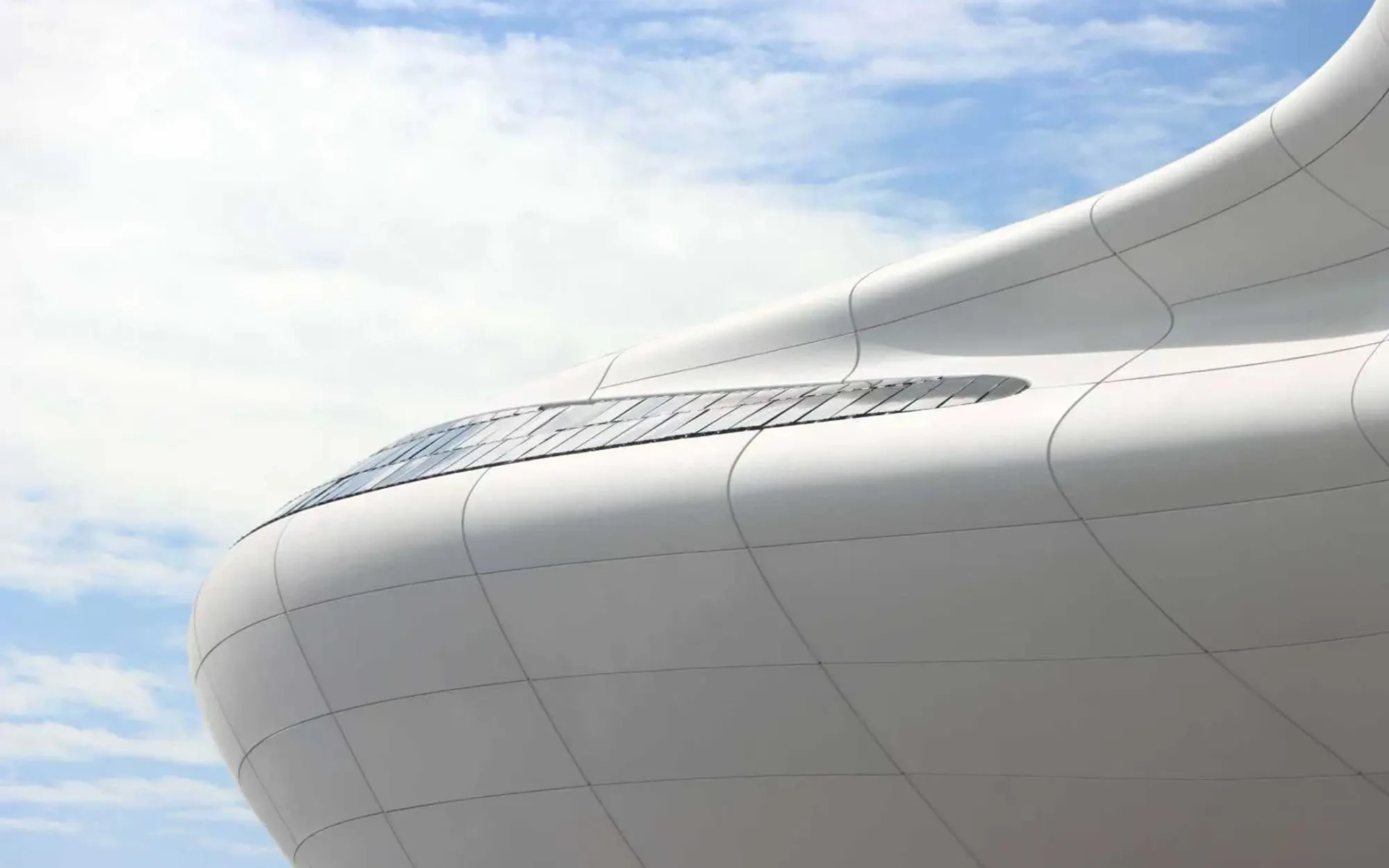
Lucas Museum of Narrative Art. Image © MAD
What belongs together
The Lucas Museum’s collection moves through painting, illustration, comic art, photography, animation, film ephemera and design. Norman Rockwell, Frida Kahlo, Robert Crumb and Artemisia Gentileschi are among the artists represented. The collection also includes works and objects connected to Lucas’s own films, as well as the Separate Cinema Archive, a major archive of African American film materials.
The opening displays are arranged around stories and subjects rather than art-historical chronology. Visitors will encounter works through themes that recur across centuries and media: love, family, adventure, conflict and imagination. The museum’s argument becomes visible in these juxtapositions. A visitor may move from a painted scene to an illustrated one, then to an object made for the screen, without being asked to treat one form as inherently more serious than another.
How much precision that breadth can sustain is the open question. “Narrative art” is an inviting phrase, but it can cover a great deal – the exhibitions will have to show what is gained by placing these images together, and what stays distinct about their histories, audiences and purposes.