.webp&w=3840&q=75)
Following major collaborations with Studio Högl Borowski and Pierre Renart, Longchamp continues its foray into the world of design by teaming up with Patrick Jouin. Together, they are presenting an exclusive pop-up installation inside the Longchamp flagship store on Via della Spiga. The work will be on display from April 21 through Milan Design Week 2026. This further proves that combining fashion and design is a key source of inspiration for the iconic horseman brand. It helps reinforce the brand’s core values of optimistic luxury, authenticity, “savoir-faire,” and attention to detail. These values define Longchamp’s identity and have cemented its global success.
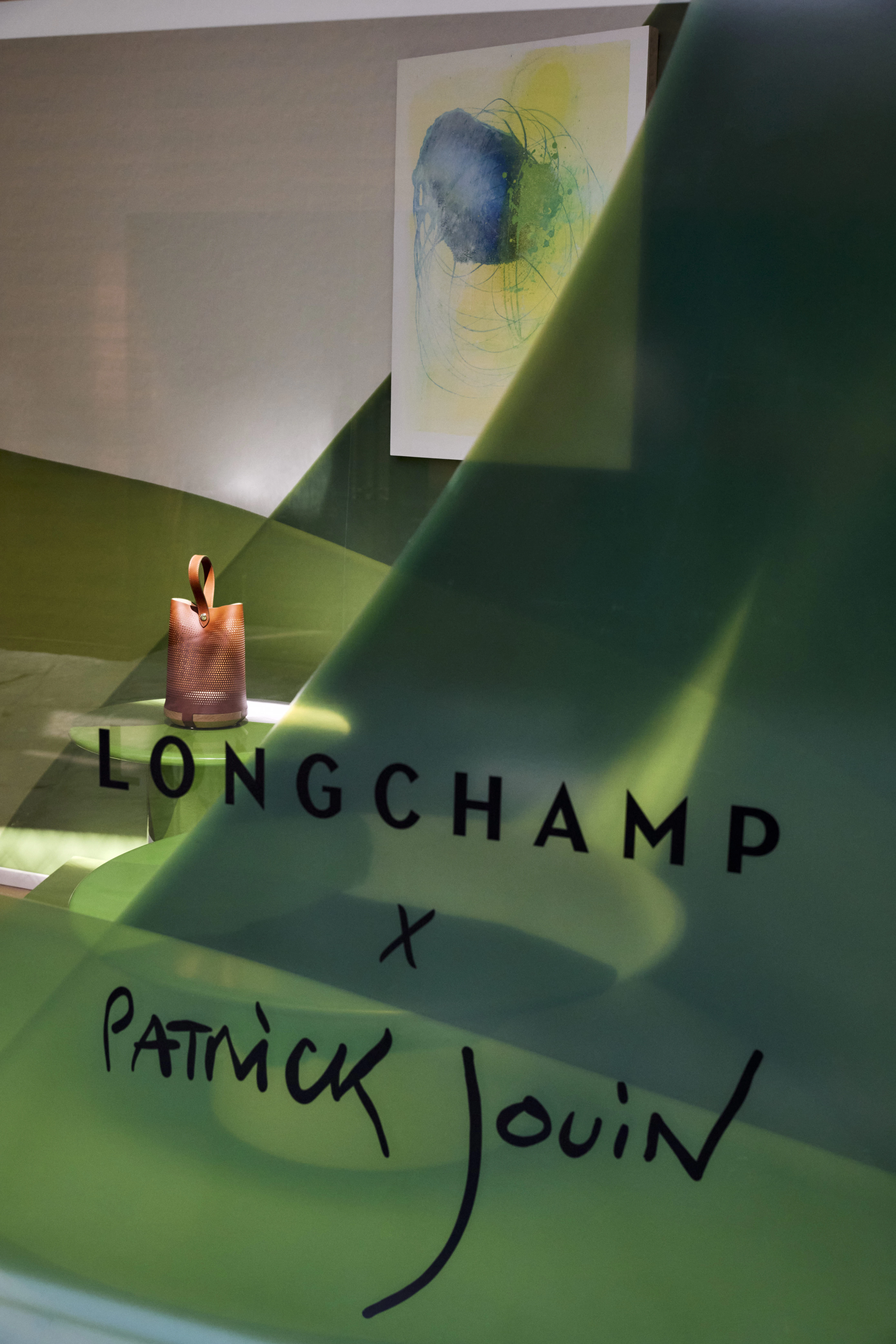
Longchamp X Patrick Jouin, Installation View, Milan, Via della Spiga 6, April 2026
Patrick Jouin’s Background and Design Philosophy
Patrick Jouin, a designer born in Nantes, France, in 1967, graduated from the École nationale supé-rieure de création industrielle (ENSCI). He has collaborated with Pedrali, Louis Vuitton, Cassina, Alki, Leucos, Alessi, Puiforcat, JCDecaux, and Fermob on exceptional projects. His distinctive style and vision of design and craftsmanship are reflected in each project, ranging from collectible designs to urban furniture for future Grand Paris Express stations. In 2009, his career and that of his studio, Patrick Jouin iD, were celebrated with a monographic exhibition at the Centre Pompidou and hono-red with the Compasso d’Oro award for the “Pasta Pot” by Alessi. Several of his works have been added to the permanent collections of major museums, including the “Solid” edition at MoMA. In 2004, it became the first series of life-size furniture created using 3D printing technology. In 2025, he launched Patrick Jouin Édition, a collection in which materials and craftsmanship are given free rein. Designed as an intimate workshop, this initial series of self-produced pieces highlights the uniqueness and excellence of craftsmanship that define Jouin’s creative universe and invite the unexpected.
Longchamp’s Heritage and Global Expansion
Since its founding in 1948 by Jean Cassegrain as a manufacturer of leather pipe cases, which his son Philippe later transformed into a leather goods brand, Longchamp has established itself as a leader in the fashion world. Renowned for its women’s handbags, such as the iconic Le Pliage®, the Maison has proudly asserted its independence throughout its history. The Cassegrain family has owned the company for three generations. The brand has never pursued an aggressive expansion policy or outsourced production, which remains firmly rooted in France. With over 400 stores in more than 80 countries, the company is embracing its international presence. While addressing the urgent need for sustainability and tackling the challenges of digitalization and the shift toward cross-media communication, Longchamp remains true to the artisanal tradition that has defined the company since its inception. In doing so, the firm demonstrates its ability to reinvent itself without losing its essence.
In this joint interview with creative director Sophie Delafontaine and designer Patrick Jouin, we delve into their new collaborative venture for Milan Design Week 2026.
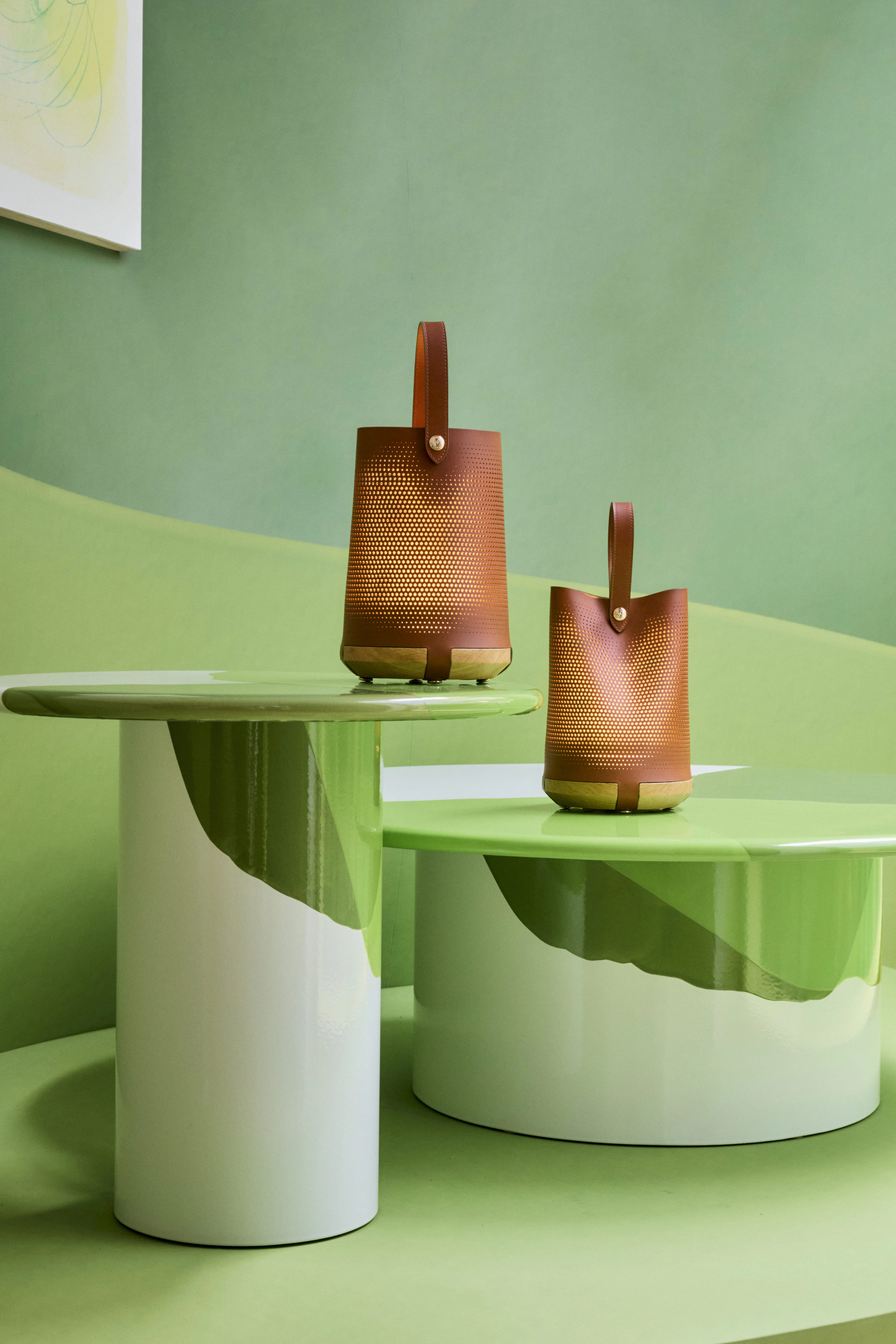
Longchamp X Patrick Jouin, Installation View, Milan, Via della Spiga 6, April 2026
Interview with Patrick Jouin: Design, Function, and Materiality
Francesca Interlenghi: In your work, you combine design, engineering, and functionality with a style that is both refined and sensitive. How would you describe your practice, and what are the points of connection with Longchamp that led you to take on this project?
Patrick Jouin: I never really separate design, engineering and function. For me, they belong to the same movement. A project often begins with something very simple, almost obvious, and then it develops through constraints, technique, material and use. There is always a rational dimension in the way we work, but at the same time something very intuitive, very physical, almost tactile. What interests me is not form alone, but the life of the object. How it is made, how it behaves, how it is touched, how it is carried, how it accompanies someone in daily life. In that sense, the connection with Longchamp came quite naturally, even if at first our worlds might have seemed different. Leather goods have their own culture, their own codes, but very quickly we found a common ground through the idea of movement. A Longchamp bag is something you carry, that folds, that adapts. It is extremely simple in appearance, but very precise in use. That balance between elegance, practicality and lightness was a starting point for us. Not to reproduce their codes, but to understand what makes them strong. This led us to the idea of carrying light. Designing an object that could be flattened, stored easily in a bag or a suitcase, taking almost no space, and then unfolding to become a lamp. There is something very direct in that gesture, but also something quite poetic. That is where the dialogue with Longchamp became meaningful, in understanding the intelligence behind their objects rather than quoting their language. There was also a connection through material. Over the years, I have worked with many craftspeople who taught me a great deal. I began with industrial materials, and progressively learned wood, glass, textile, leather. Meeting tanners, artisans, Meilleurs Ouvriers de France, changes the understanding of what a material really is. So when we started working with Longchamp, there was already a deep respect for leather, not as a surface, but as a transformed material shaped by expertise. Our shared attention to material became a natural point of connection. It enabled us to approach the project with sensitivity, not by imposing a language, but by building on what was already there. We understood the material, the gestures, and the intelligence behind the objects, extending them into a different context. Ultimately, the project is about striking that balance. It's about balancing intuition and precision, use and emotion, and two universes that meet through a common way of thinking about objects.
Longchamp X Patrick Jouin, Installation View, Milan, Via della Spiga 6, April 2026
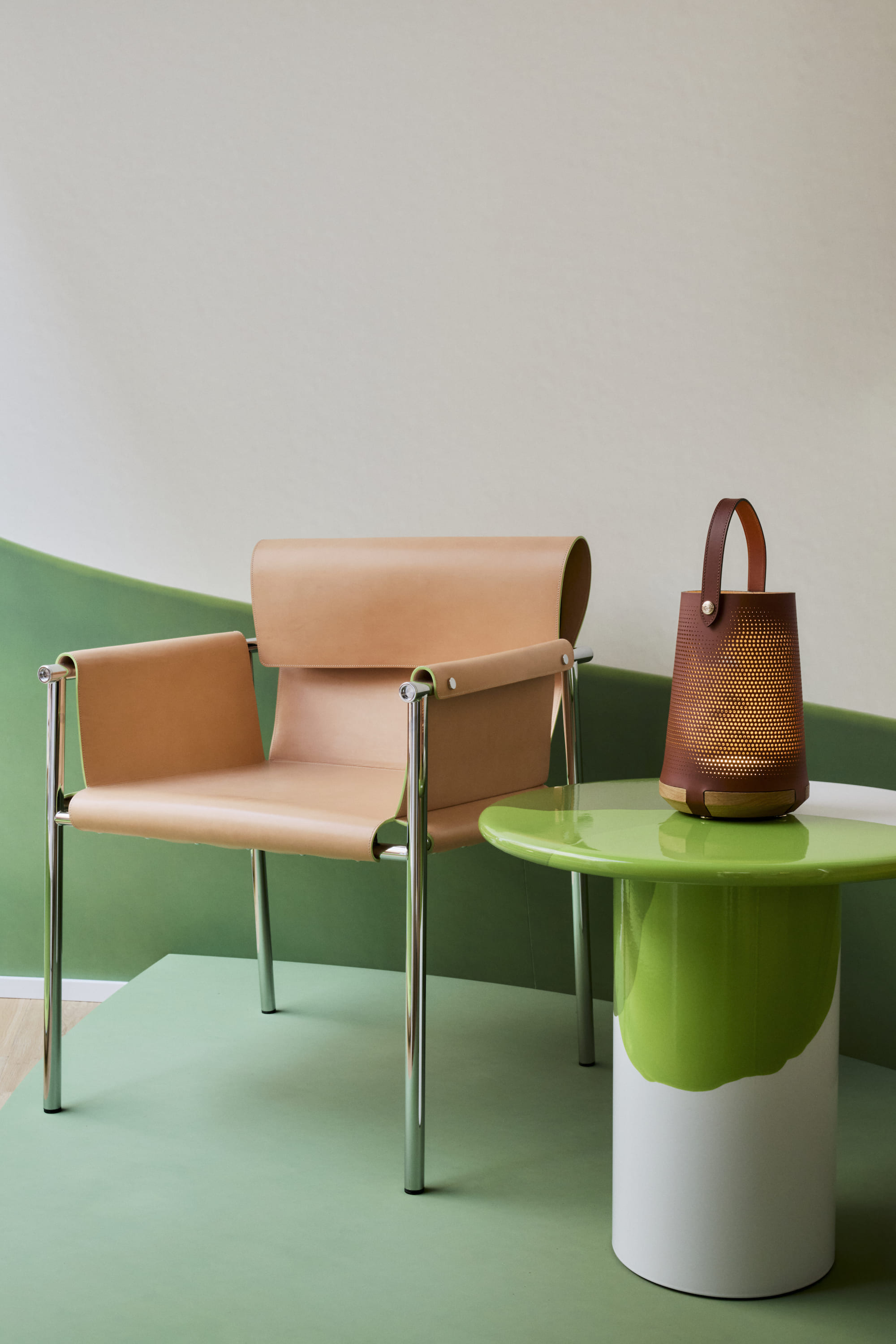
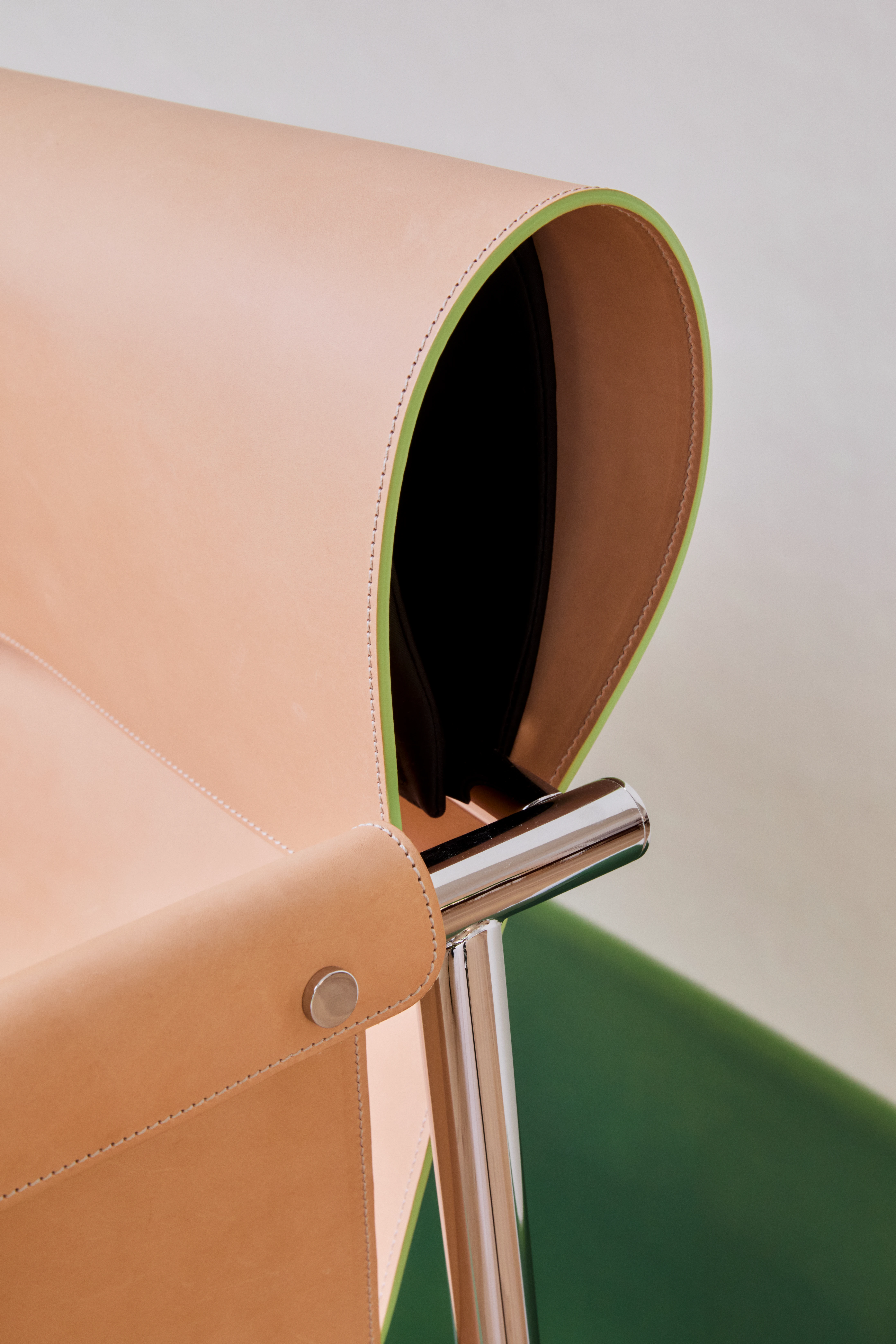
FI: The DROP side and coffee tables, along with the OLO armchair, are part of the Patrick Jouin Édition collection. They have been reinterpreted in line with the brand’s aesthetic. Could you describe these design pieces and explain how they take on new significance when tran-sitioning from standalone items to the universe of a brand like Longchamp?
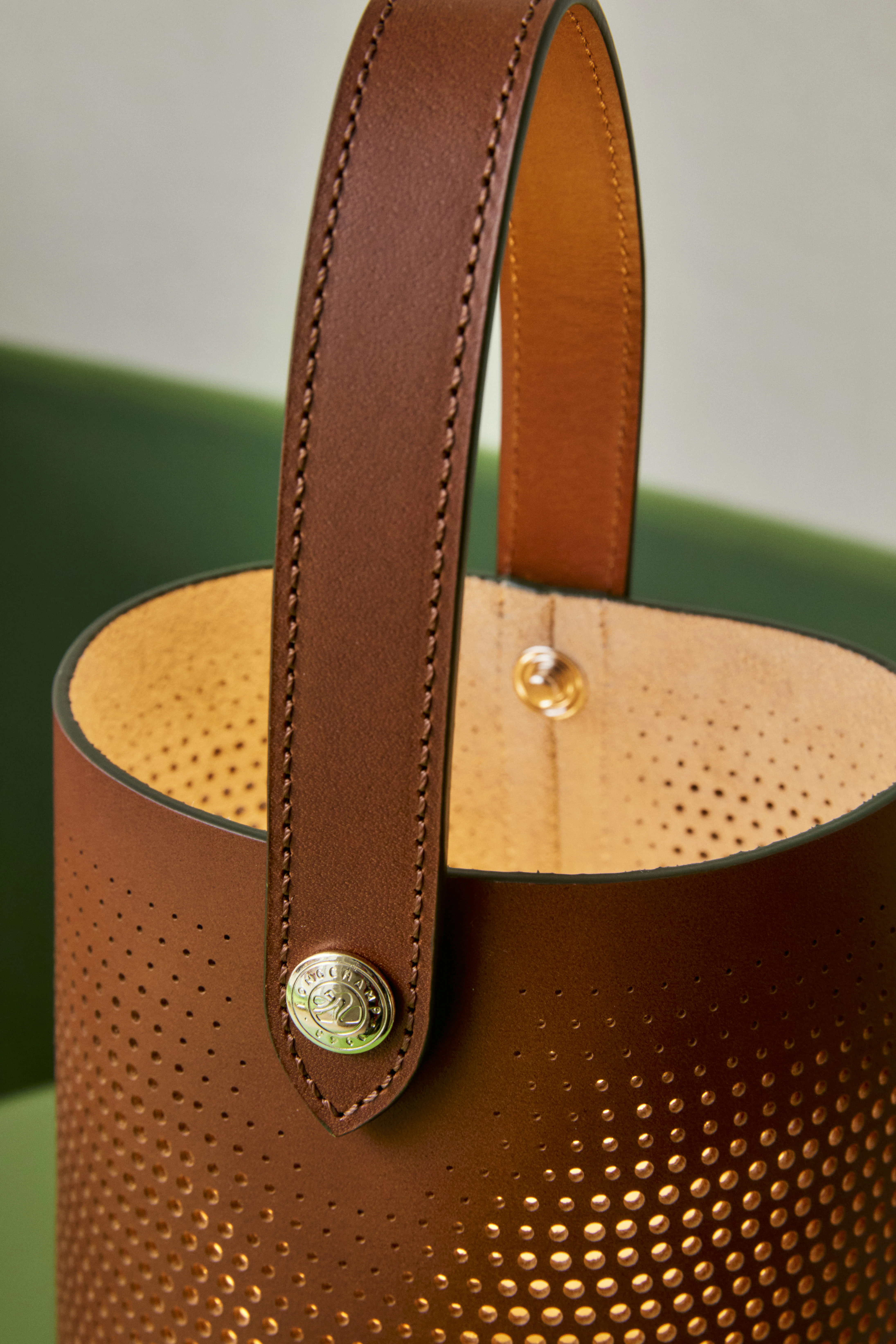
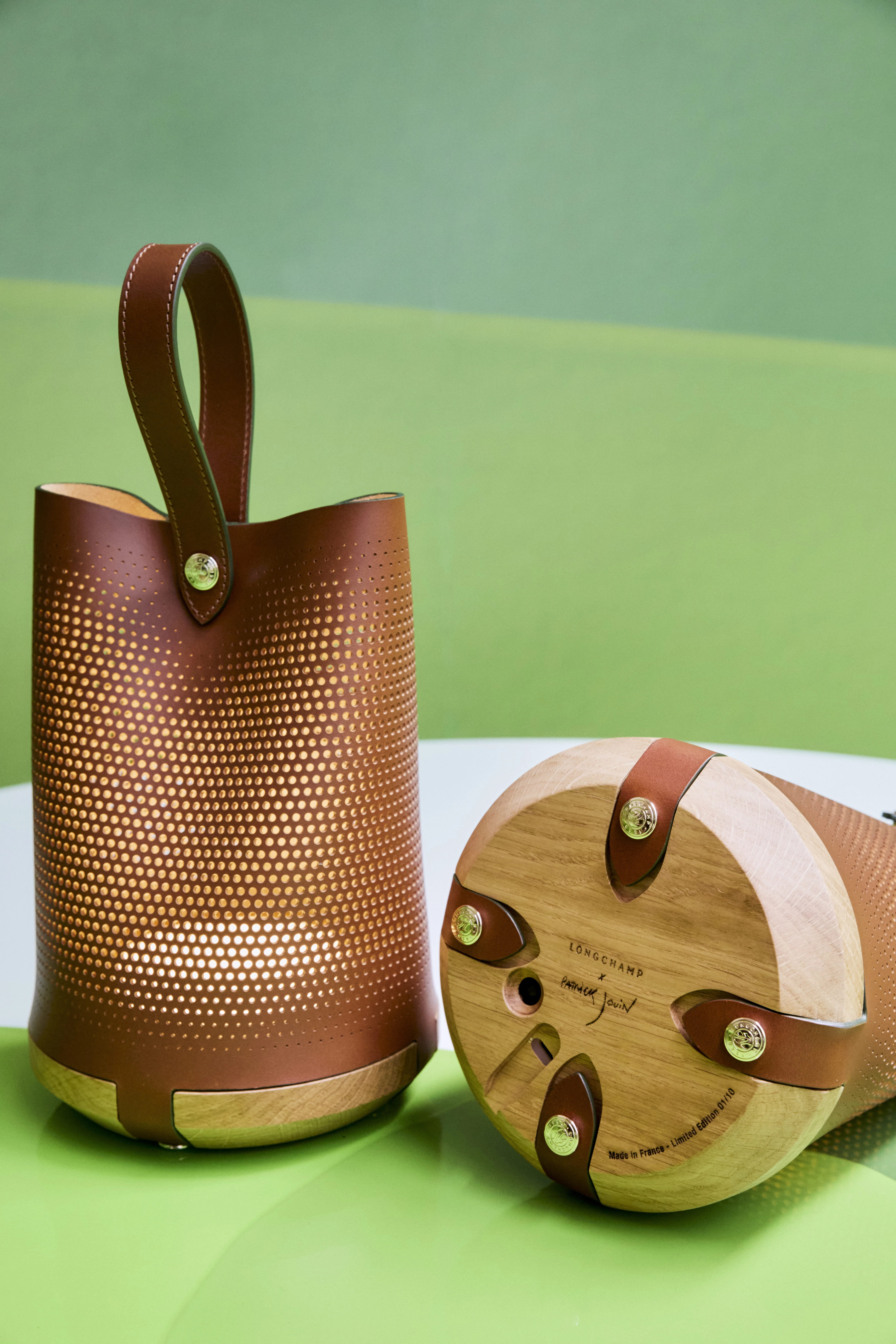
PJ: These pieces were originally designed as quite autonomous objects, almost self-contained. The OLO armchair is quite particular because, usually, comfort comes from foam. Here, we wanted to achieve comfort only through leather, through its tension. The leather is not a surface, it is what creates the seat, what gives both structure and softness at the same time. With Longchamp, we added something very specific to their universe, the painted edge. It is a detail, but it changes everything. It brings a kind of energy, almost a signature, that comes to underline the drawing of the seat. It anchors the piece very clearly in the world of leather craftsmanship. DROP is something else. It is really about joy. It is almost like a painting laid flat. We dress the table with colour, we let it spread, we let it meet. What I like is this slightly unpredictable dimension, the way the colours interact, almost like an encounter between two movements. At the same time, it is a piece that plays with perception. It can appear very delicate, very soft, almost fragile, but in reality, it is extremely resistant. There is a kind of tension between what you see and what it is. With Longchamp, we reworked the enamels around their emblematic greens. And that is a very demanding process, because with enamel everything happens during firing. You have never seen the final colour before. Finding the right tone is a long process of adjustment, almost like waiting for the material to reveal itself. In a way, it mirrors the collaboration itself, something that is built progressively, through dialogue, until a balance appears. Then the lamp is really the piece that materialises the encounter. It started from a very personal memory. I discovered Longchamp in the 1990s through this iconic travel bag that could fold into itself. That stayed with me. The idea of a beautiful object that never compromises on usefulness. We worked from that. From leather, from the idea of a flexible object, almost like a small bag placed on a wooden base. A nomadic lamp, both practical and elegant, that you can pick up, carry, take with you. We developed it with their workshop in Segré, with this question of how a leather piece can hold itself, without becoming rigid or cold. Like with the armchair, it is about finding the right tension. And then the micro-perforation allows the light to pass through. The leather filters the light, softens it, gives it a very particular quality. It is both very simple and quite complex at the same time. In the end, this object is not just a lamp. It is really the expression of a meeting, between a way of working with material, and a way of thinking about use.
Longchamp X Patrick Jouin, Installation View, Milan, Via della Spiga 6, April 2026
FI: The Longchamp x Patrick Jouin lamp is rechargeable, equipped with an LED system, and made from recyclable materials. It embodies an approach to sustainable design that combines technical innovation with exceptional craftsmanship. Can contemporary luxury still afford to be “just beautiful,” or must it also necessarily be responsible?
PJ: I think today it is no longer possible to separate beauty from responsibility. For a long time, we could perhaps consider an object only through its form, its image. But now, we know that this is not enough. The way an object is made, the materials it uses, how long it lasts, all of this is part of its value. With this lamp, the starting point was very simple: carrying light. Almost like having light inside your bag. But behind that simplicity, there is a lot of precision. We worked with leather as a central material, not as a surface, but as something that structures the object, that filters the light, that gives it both presence and softness. The challenge was to find the right balance between flexibility and structure, between something that can be folded and something that still holds its shape. At the same time, we developed an object that can be flattened, stored, transported easily, then deployed. The LED system, the autonomy, the micro-perforation of the leather to let the light pass through, all of this had to come together without making the object more complicated than necessary.For me, luxury today is not about adding more. It is about doing things with accuracy. We create meaningful, lasting objects that are conscious of the world they belong to. Responsibility is not something you add later. It is part of the design itself.
Longchamp X Patrick Jouin, Installation View, Milan, Via della Spiga 6, April 2026
FI: Increasingly, design expresses itself in hybrid forms that blend objects, installations, and spaces. Do you think we are witnessing a redefinition of the designer’s role?
PJ: Personally, yes, I think we are. I was trained as an industrial designer, but today I also work on architecture. I can design a door handle or a building, and for me there is no real boundary between these scales. What matters is not the scale, but the coherence. You work with different people, different expertise, of course, but in the end you are trying to create a consistent experience. We have all been in places where something feels right immediately, without necessarily knowing why. And that often comes from the fact that everything has been considered together, the space, the objects, the materials, what you touch, what you feel. So yes, the role evolves. Not in its essence, but in its scope. It is less about designing isolated objects, and more about thinking about how everything works together.
Longchamp X Patrick Jouin, Installation View, Milan, Via della Spiga 6, April 2026
Interview with Sophie Delafontaine: Craftsmanship, Identity, and Retail Evolution
Francesca Interlenghi: Longchamp has a long history of dialogue between fashion, art, and design. Is this endeavor still cultural, or has it become a strategic positioning tactic?
Sophie Delafontaine: This dialogue between fashion, art, and design has always been an essential part of Longchamp’s identity. It reflects a deliberate intention to enrich and expand our brand platform by highlighting both emerging avant-garde talents and more established personalities, across a wide spectrum of creative disciplines. For now, these initiatives mostly take the form of one-off artistic projects, rooted in our broader mission to support creativity and craftsmanship. More than a strategic positioning tool, we see these collaborations as a space for expression and experimentation, an opportunity to foster meaningful creative exchanges while remaining true to our heritage.
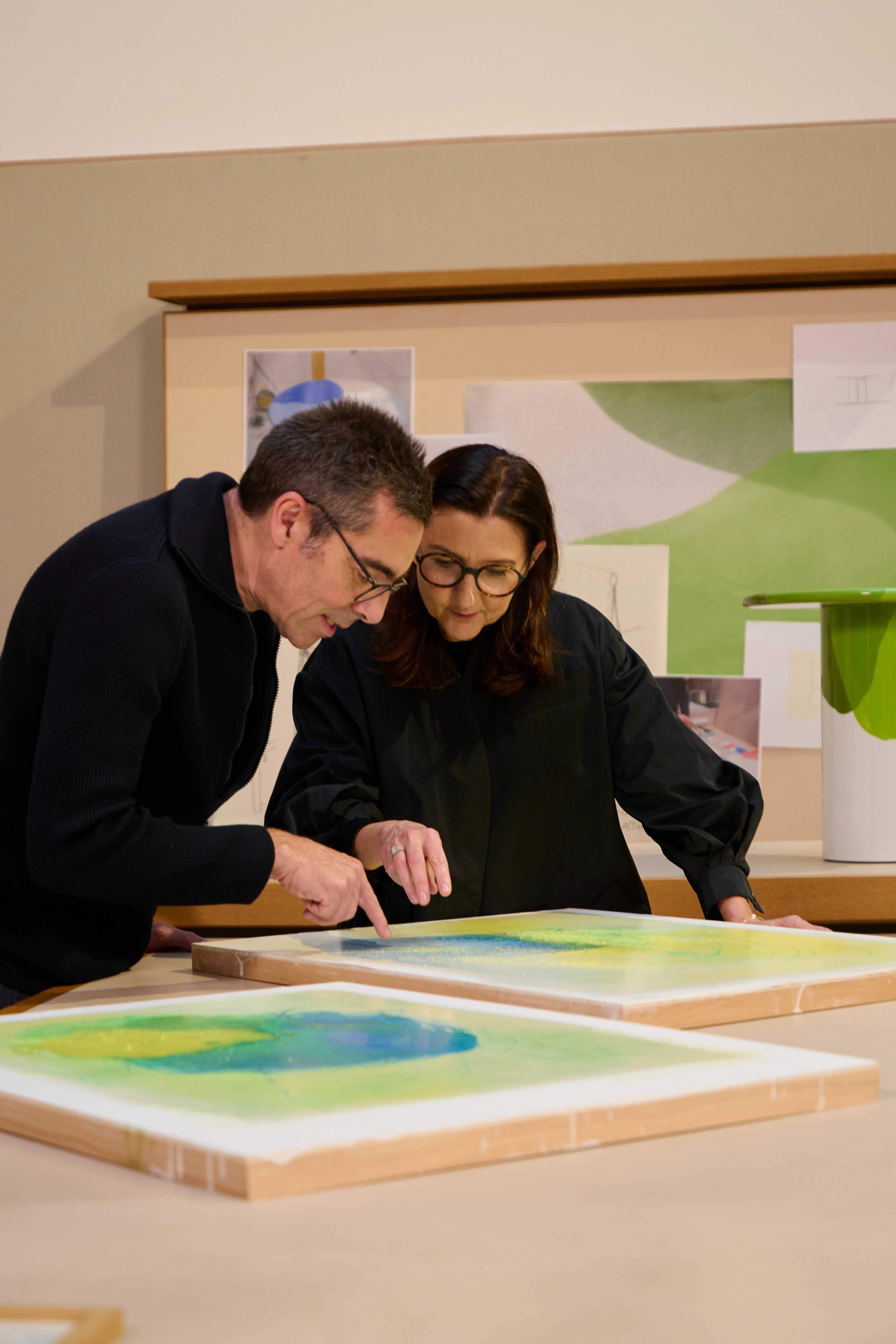
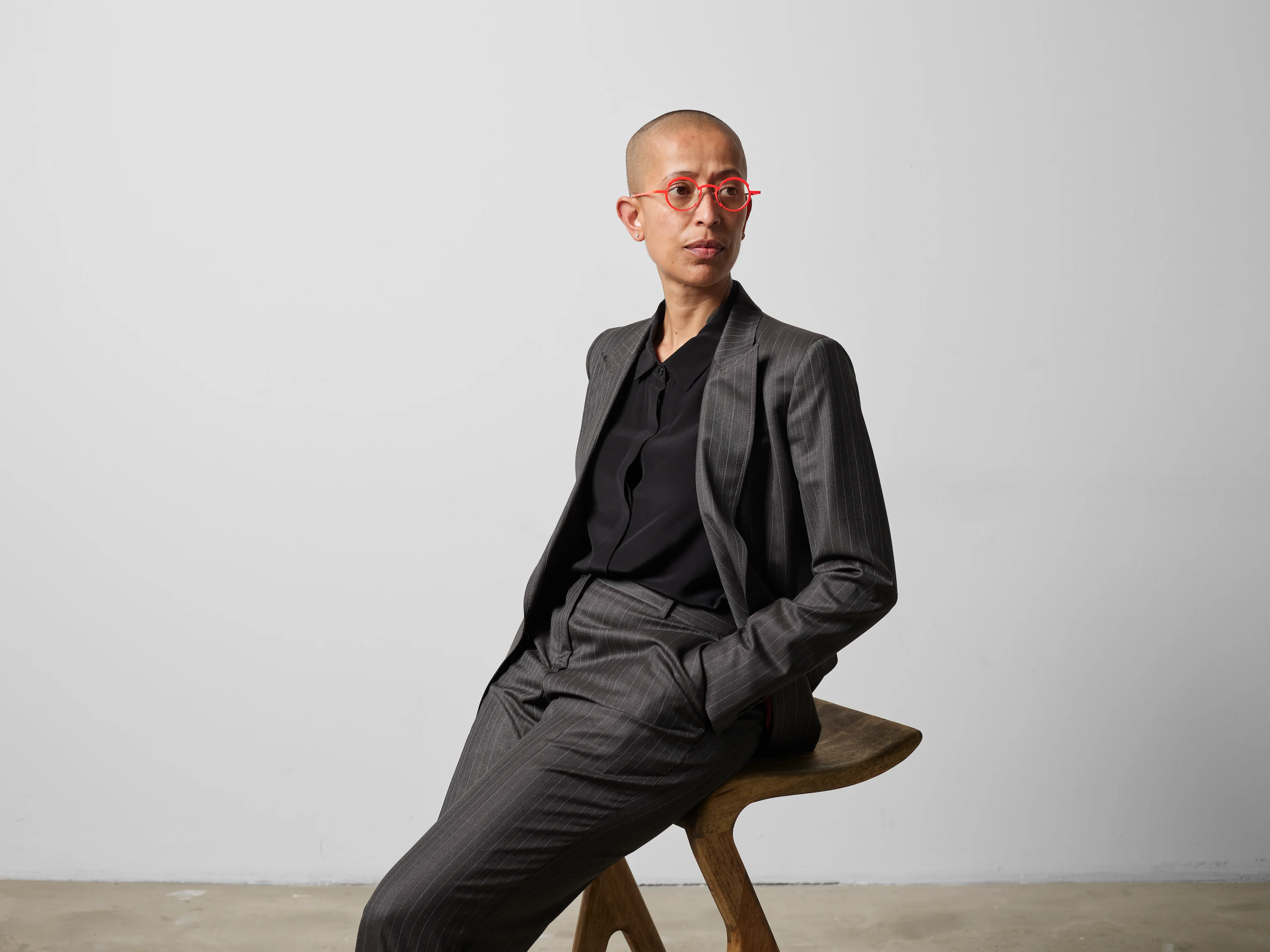
Patrick Jouin x Sophie Delafontaine Portraits (© Anaïs Barelli)
FI: For a brand like Longchamp, which stands out as one of the few luxury houses that is still independent of large financial conglomerates, how important is it to highlight the artisanal process, as well as the finished product?
SD: For Longchamp, independence is not simply a structural distinction, it is a creative and cultural foundation that allows us to remain deeply rooted in our craft. It gives us the freedom to preserve, cultivate, and transmit a “savoir-faire” that is both exacting and alive, shaped by the hands of our artisans and refined over time. Our Maison has always embodied a form of authentic Parisian elegance, grounded in exceptional expertise in leather craftsmanship. In this context, highlighting the artisanal process is as essential as presenting the finished product. It is through the gesture, the precision and the intelligence of the hand that the object finds its true meaning. Our artisans, whose mastery has been honed over decades, create pieces that are not only precise and beautiful, but conceived to endure. This mastery of craftsmanship is, in essence, what has defined Longchamp throughout its history and continues to shape its future. It speaks to a culture of transmission, revealing the deeper nobility of our philosophy, at the crossroads of a demanding artisanal heritage that has been ours for nearly 80 years. By bringing this process to light, we affirm a singular vision of leather goods: one that is resolutely creative, fully mastered, and guided by an uncompromising commitment to excellence, where the value of the object lies as much in how it is made as in what it ultimately becomes.
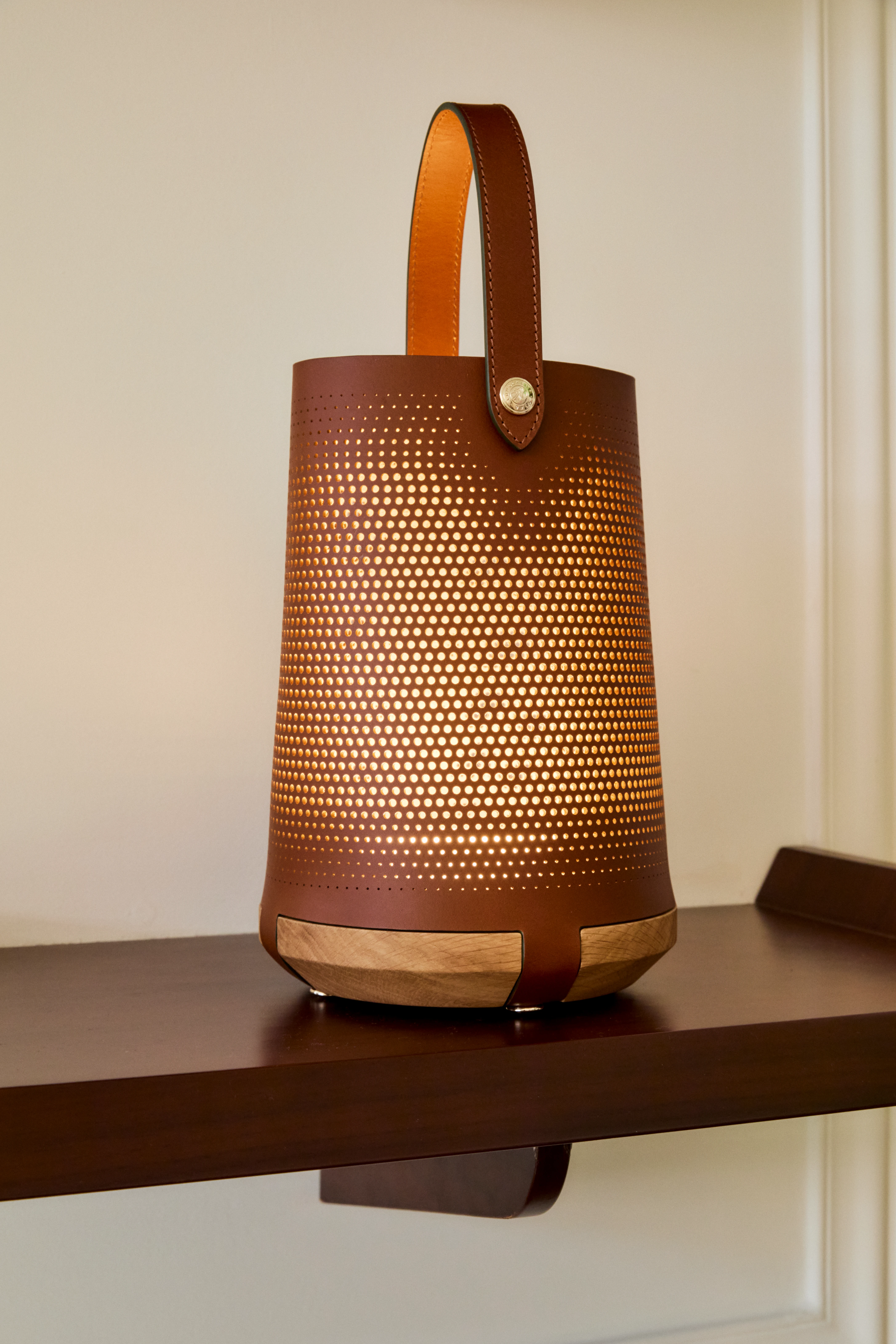
Longchamp X Patrick Jouin, Installation View, Milan, Via della Spiga 6, April 2026
FI: In addition to customizing existing designs, this collaboration gives rise to a shared project: a Longchamp x Patrick Jouin lamp that draws on the codes of Longchamp’s iconic Le Pliage® collection, launched in 1993. Could you tell us about this extension and the meaning of translating a stylistic signature synonymous with identity from fashion to design?
SD: The OSTARA lamp, an exclusive co-creation and a highly limited edition, stands as the cornerstone of the Longchamp x Patrick Jouin collaboration. It emerges from a shared way of thinking, a creative dialogue rooted in functionality, materiality, and intelligent design. Crafted in full-grain leather and enhanced through an innovative micro-perforation technique, OSTARA incorporates elements drawn directly from the House’s leather goods heritage, such as snap buttons and saddle-inspired pointed details. These features give the object both character and adaptability, while ensuring it remains portable, modular, and easy to transport. In direct reference to the iconic Le Pliage® collection, launched in 1993, the lamp embodies the same philosophy: a portable object that can be flattened, stored, and almost disappear when not in use. That ability to contain a great deal while occupying very little space—to be both clever and discreet—creates a natural bridge between our two worlds. More than an object, it is an exploration of essence: how a signature rooted in utility, lightness, and transformation can transcend categories and become a shared language between disciplines.
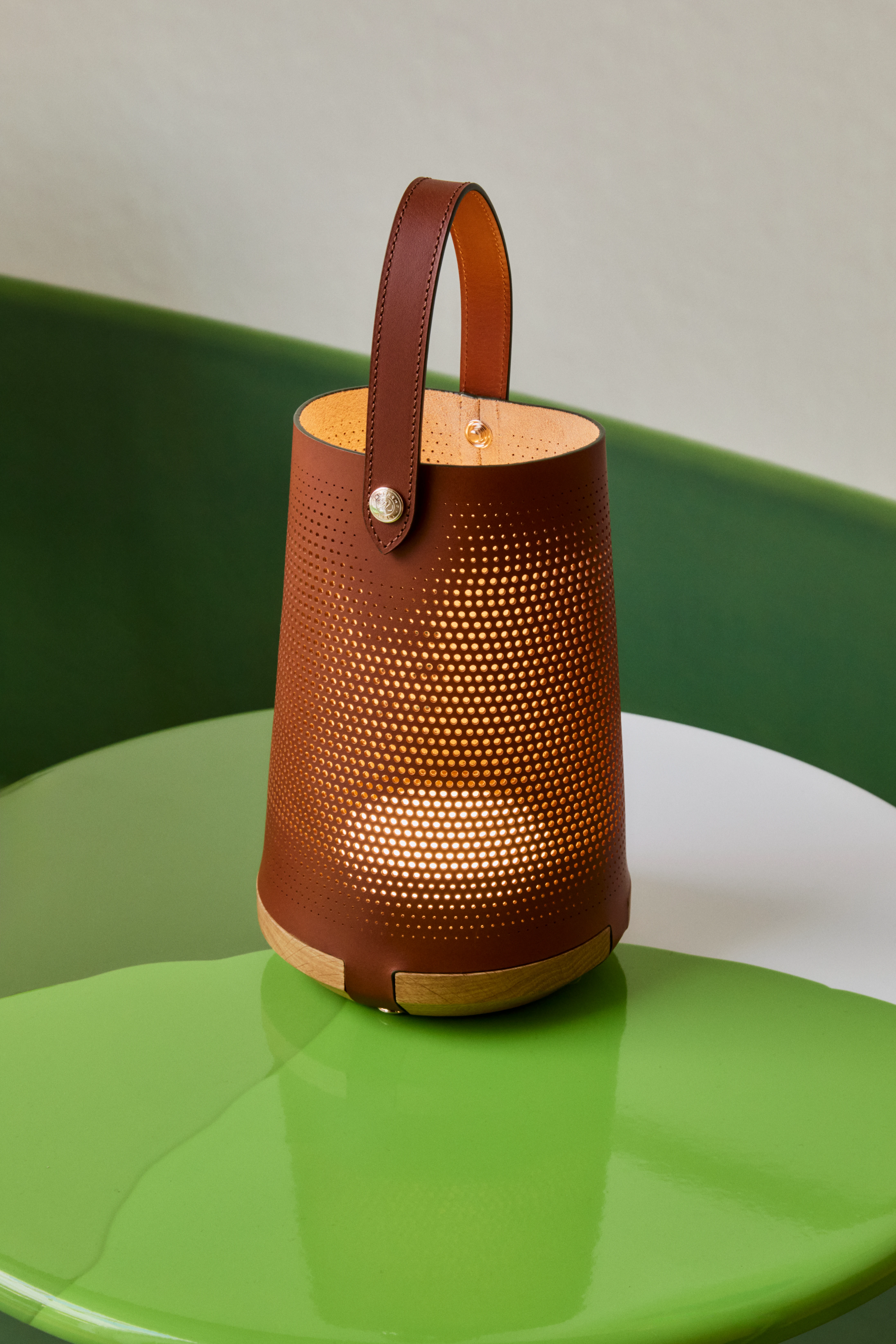
Longchamp X Patrick Jouin, Installation View, Milan, Via della Spiga 6, April 2026
FI: Thanks to inspiring events like Design Week, the Longchamp boutique on Via della Spiga is becoming more of a narrative space than a place dedicated solely to sales. Could this narrative approach serve as a response to the crisis in traditional retail?
SD: At Longchamp, our boutiques are the beating heart of our creative identity. They embody the Maison’s core values of longevity, sincerity, creative curiosity, and optimism. We increasingly see our stores as platforms for artistic expression, where art, design, and culture are not only showcased but actively integrated into the client experience. This transforms the boutique into a place of discovery and dialogue, rather than a purely transactional space. Today, more than 250 works by around 100 artists are displayed across our 360 boutiques worldwide, reflecting our commitment to supporting creativity in a tangible way and to making art more accessible. This approach is deeply rooted in the Maison’s origins and its enduring spirit of innovation. From the outset, Longchamp has been driven by the exploration of new aesthetic territories, and this openness continues to shape the way we conceive and activate our retail spaces. During Milan Design Week, our Via della Spiga flagship becomes a true space for dialogue, animated by an ephemeral installation open to the public as well as a dedicated exterior scenography created for the occasion. It becomes a living laboratory of our creative curiosity. Rather than a response to a “crisis” in traditional retail, this narrative approach reflects a natural evolution of our boutique experience. It is about enriching the relationship between the Maison and our clients through meaning, emotion, and cultural engagement, extending the role of the store far beyond the act of purchase.
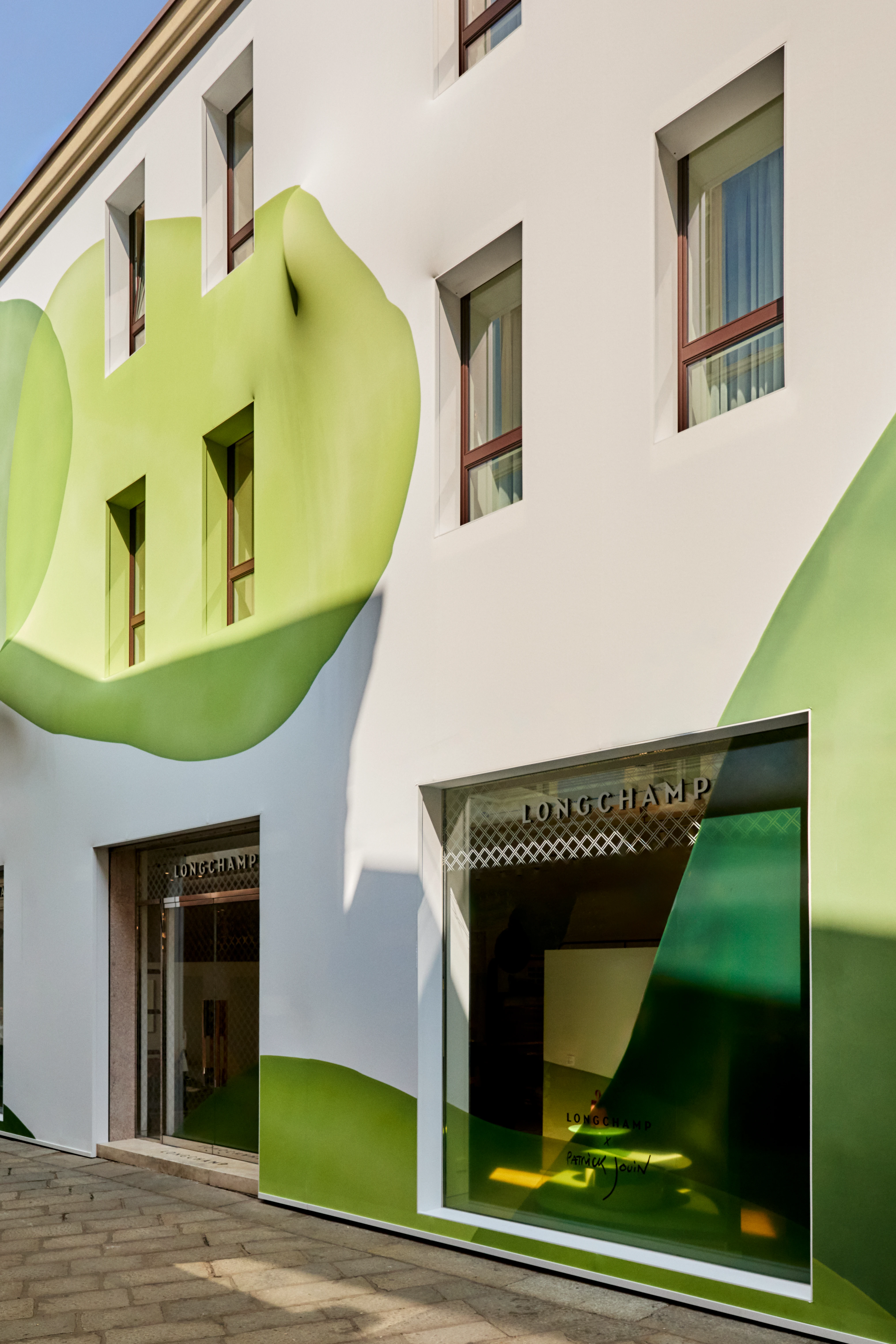
Longchamp X Patrick Jouin, Installation View, Milan, Via della Spiga 6, April 2026
Longchamp x Patrick Jouin Milan Design Week 2026 Installation
Longchamp flagship boutique
Via della Spiga, Milan
Cover: Patrick Jouin x Sophie Delafontaine Portraits (© Anaïs Barelli)