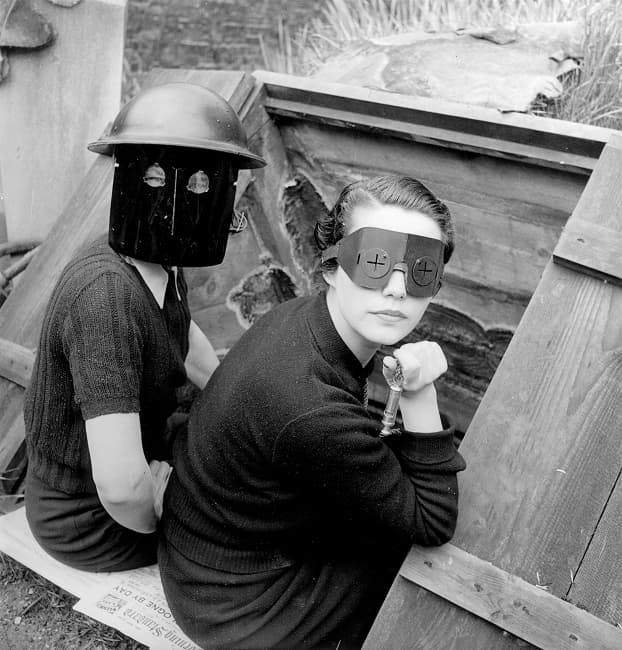
Lee Miller, Fire Masks
6 min

01.05.2026

Lee Miller in Musée d’Art Moderne in Paris

By Francesca Interlenghi

The 2026 Paris retrospective reunites 250 works by Lee Miller — surrealist, war photographer, and one of the key figure in the international avant-garde

“Baby, I’m home,” she said as soon as she returned to Paris. She walked down the boulevard with the ease of someone who felt an intimate and deep connection to the French capital—then the epicenter of all things new. It was 1929, and the art world was in the midst of the greatest revolution ever, initiated by Duchamp. He had made the categories of object, concept, artist, and context the foundations of radical change. It was a turning point that his Dadaist friends, especially Francis Picabia and Man Ray, had immediately recognized and embraced. This left posterity with a question that is still being asked today: If anything can be art, then it becomes difficult to assess its quality. But perhaps this is the price to pay for freedom of expression. Perfectly comfortable in that laboratory of creative freedom, Lee Miller (1907, Poughkeepsie, United States - 1977, Chiddingly, United Kingdom) arrived in the city with the ambition of someone who felt at home and wanted to become an artist. She succeeded brilliantly, managing to live a hundred lives in one.

The major Lee Miller retrospective at the Musée d’Art Moderne de Paris

From April 10 to August 2, 2026, the Musée d’Art Moderne de Paris presents the largest retrospective in France in twenty years dedicated to this leading figure of the international avant-garde. The exhibition, initiated by Tate Britain in collaboration with the Art Institute of Chicago, brings together approximately 250 vintage and modern prints, some of which have never been exhibited before. Curated by Hilary Flo, Tate Britain’s senior curator of modern and contemporary art, with the assistance of Saskia Flower, and Fanny Schulmann, curator at Musée d’Art Moderne de Paris, in charge of photography collection, assisted by Adélaïde Lacotte, the exhibition is divided into six sections that combine thematic and chronological approaches. It traces Miller’s entire career, offering a fresh perspective on her body of work and shedding light on her multifaceted nature as an artist. She engaged with both photographic experimentation and themes of fashion and war, uniting the seemingly superficial with the most devastating aspects of human struggle.
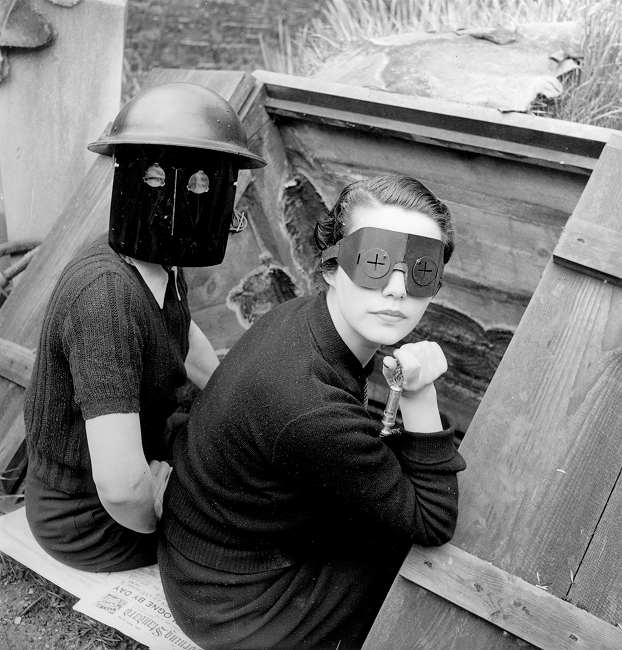
Lee Miller wearing protective goggles beside soldier in helmet and face shield, WWII era

Lee Miller, Fire Masks
Downshire Hill, Londres 1941 © Lee Miller Archives England 2026 All Rights Reserved

From model to photographer: Lee Miller and the world of fashion

Miller, a model, surrealist artist, portraitist, fashion photographer, and war correspondent accredited by the U.S. Army, was long relegated to the role of muse before being recognized as one of the greatest photographers of the 20th century. Born and raised in a darkroom, as she recalls, thanks to her amateur photographer father who put her in front of the camera from an early age, Miller began working as a professional model in New York in 1926 while studying painting at the Art Students League. At that time, fashion magazines, particularly those published by Condé Nast, were shifting from illustration to photography. Her modern beauty embodied the new style of women who were beginning to wear a “combination corset,” a brassiere and girdle in one with light boning that emphasized the waist. “Or you can buy a bra-topped petticoat with divided legs to wear over a girdle,” Vogue declared, dictating the new rules of style. Miller collaborated with some of the greatest photographers of the 1920s and 1930s, but her bold and daring nature meant she was not content to merely be photographed. George Hoyningen-Huene, for example, gave us some of the most refined images of Miller. His poetics were born from the encounter between classicism, aristocratic elegance, and photographic modernity, and his formal perfection of sculptural light rendered his images timeless. “I’d rather take a picture than be one,” she declared early on, setting a new course for her life.
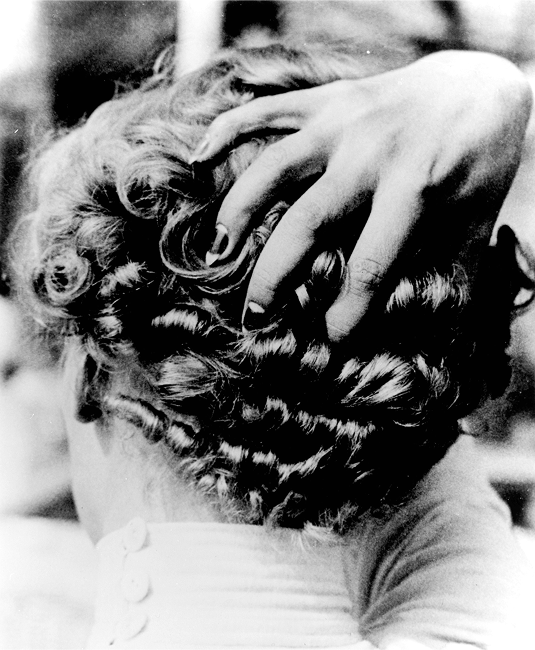
Black and white photo of curly updo hairstyle with hand resting on head, Lee Miller

Lee Miller, Woman with Hand on Head [also known as Coiffure], Paris 1931 © Lee Miller Archives England 2026 All Rights Reserved

Lee Miller and Man Ray: surrealist experimentation in photography

Her encounter with Man Ray was also pivotal. She presented herself to him unannounced “I told him boldly I was his new student.” He said he didn’t have students and anyway he was leaving Paris for his holidays. I said, I know. I’m going with you—and I did.”  Theirs was a partnership that was both professional and romantic. Aligned with Dada and Surrealism, Man Ray challenged the notion of photography as mere documentation with his rayographs, transforming it into an experimental, almost magical act where chance and intuition played a central role. They were both subjects and objects of photography, experimenting with new techniques such as solarization or double exposure. Thus, the camera lens became a vehicle for exploring themes of eros, love, and desire, bequeathing to history some of the most enigmatic and powerful images ever created. However, it was not only the human figure, even in her fashion photographs for Vogue, that piqued Miller’s interest. From her studio apartment in Montparnasse, she ventured out onto the streets of Paris in search of a new objectivity. In perfect surrealist style, this objectivity could reveal unprecedented meanings through close-ups, reflections, disorienting angles, and unusual juxtapositions.
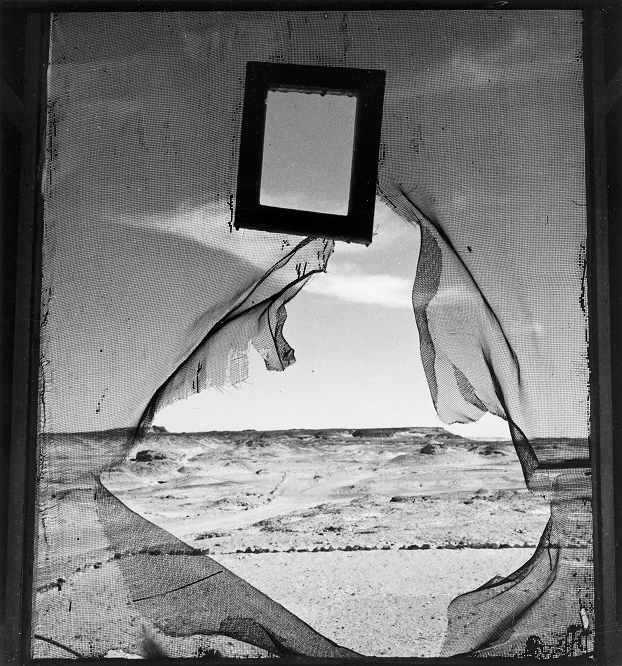
Lee Miller surrealist black and white photo, torn screen framing desert landscape with small mirror

Lee Miller, Portrait of Space
Al Bulwayeb, près de Siwa, Egypte 1937 © Lee Miller Archives England 2026 All Rights Reserved

New York, Cairo and the search for new perspectives

After her relationship with Man Ray ended in 1932, she left Paris for New York, where she opened a new studio. The Julien Levy Gallery organized her first solo exhibition. There would be no others during her lifetime. A rebellious and curious spirit, she arrived in Cairo in 1934, determined to start a new chapter in her life. After marrying a wealthy Egyptian businessman, she stopped taking photographs until a trip to Jerusalem the following year reignited her passion. Egypt, which had achieved partial independence from British control and was undergoing a period of significant modernization, became her subject of choice. Art Deco and modernist architecture blended together, and cultural life flourished. Miller captured the country’s traditional, colonial, and cosmopolitan spirit, avoiding Orientalist clichés and demonstrating her unique ability to see things from an “other” perspective, one that was never predictable or banal.

Lee Miller in London and the outbreak of World War II

Another turning point in her life was her encounter with the surrealist painter and poet Roland Penrose. She left Egypt behind and reconnected with the Parisian intelligentsia—the artists and intellectuals of the time. They became the subjects of her portraits, revealing the spirit of an era characterized by “a lucid intoxication of dream and rebellion”—if I may allow myself a bit of hyperbole. When Miller joined Penrose in London in 1939, World War II was just around the corner. There would be no more extravagance or fantasy in fashion, which was impossible not only because of the wartime spirit, but also because of government restrictions. From the outset of the war, Vogue took what journalist Pearson Phillips has called “a positive and optimistic line.” However, over the next three years, the magazine’s tone changed radically. At the start of the war, there was still a pretense that fashion was changing year by year, with diagrams showing how to adapt last year’s looks to the current year. Later on, however, Vogue turned its attention to making the best of the situation. “You can go hatless if you wear your hair swept back like this… You can go stockingless if you wear simple, flat-heeled shoes like these.”  Despite those constraints, Miller added a touch of style to her narratives, developing a visual language that created tension between the glamour of the clothes and the reality of the conflict. She continued experimenting and embracing innovative techniques. She seized the opportunity to try out the vivid, saturated colors of Kodachrome film. “Checkmate,” her first color image for Vogue, was published in October 1943. In April of the following year, her first color cover appeared, marking a turning point for the British edition, which had always taken its color pages from its New York counterpart.

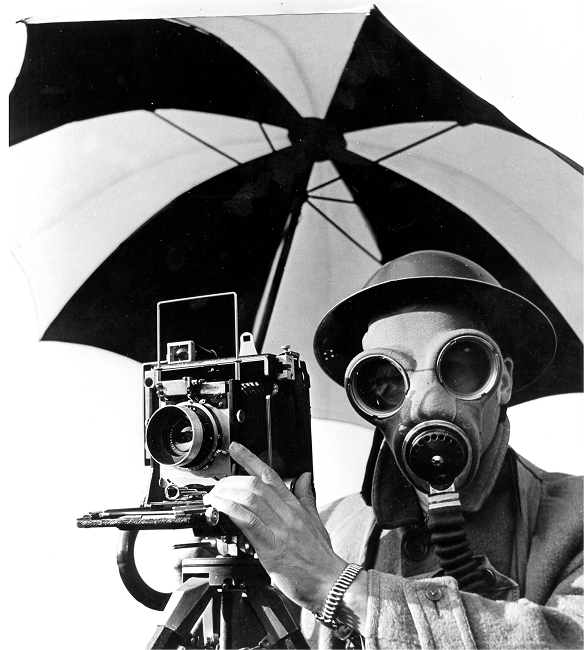
Photographer wearing gas mask and goggles operating large format camera under umbrella

Lee Miller, David E. Scherman, dressed for war
Dean House, 4 Dean Street, Londres 1942 © Lee Miller Archives England 2026 All Rights Reserved

War correspondent: Lee Miller and the photography of World War II

Ultimately, her attitude toward life prevailed over everything else. In a letter to her parents, she poured out all her frustration: “It seems pretty silly to go on working on a frivolous paper like Vogue, though it may be good for the country’s morale it’s hell on mine.” Armed only with her camera, she immortalized the real hell, bearing witness to a rapidly changing world and the women taking men’s places in roles that had recently been their exclusive domain: mechanics, pilots, and journalists. Miller became an accredited war correspondent with the U.S. Army in late 1942. However, like other female journalists, she was not permitted to enter the war zone. It wasn’t until the summer of 1944, after D-Day, that she had the opportunity to witness the brutality of the battlefield firsthand and capture images exposing the war’s devastation. Motivated by her strong opposition to Nazi politics, she traveled extensively across Europe, through France, Belgium, Luxembourg, Germany, Denmark, Austria, Hungary, and Romania, producing numerous articles for Vogue that combined her striking photographs with her lively, spontaneous writing. This exhibition pays tribute to her work as a great photographer who rode the wave of the avant-garde and rapid technological advancement. She became an interpreter of the new and an absolute protagonist of modern international social, cultural, and artistic life.

​

Lee Miller

Musée d’Art Moderne de Paris

April 10 – August 2, 2026​

On the cover: Lee Miller, Fire Masks. Downshire Hill, Londres 1941 © Lee Miller Archives England 2026 All Rights Reserved

Date

01.05.2026

Tags
Photography & Visual MediaLee MillerLee Miller exhibition 2026Musee d'Art Moderne de ParisTate Britainsurrealist photographyMan Raywar correspondent photographyVogue fashion photographyavant-garde artsolarization techniqueWorld War II photographyRoland Penrosefemale photographers20th century photographysurrealismParis exhibitionLee Miller retrospectivephotography history