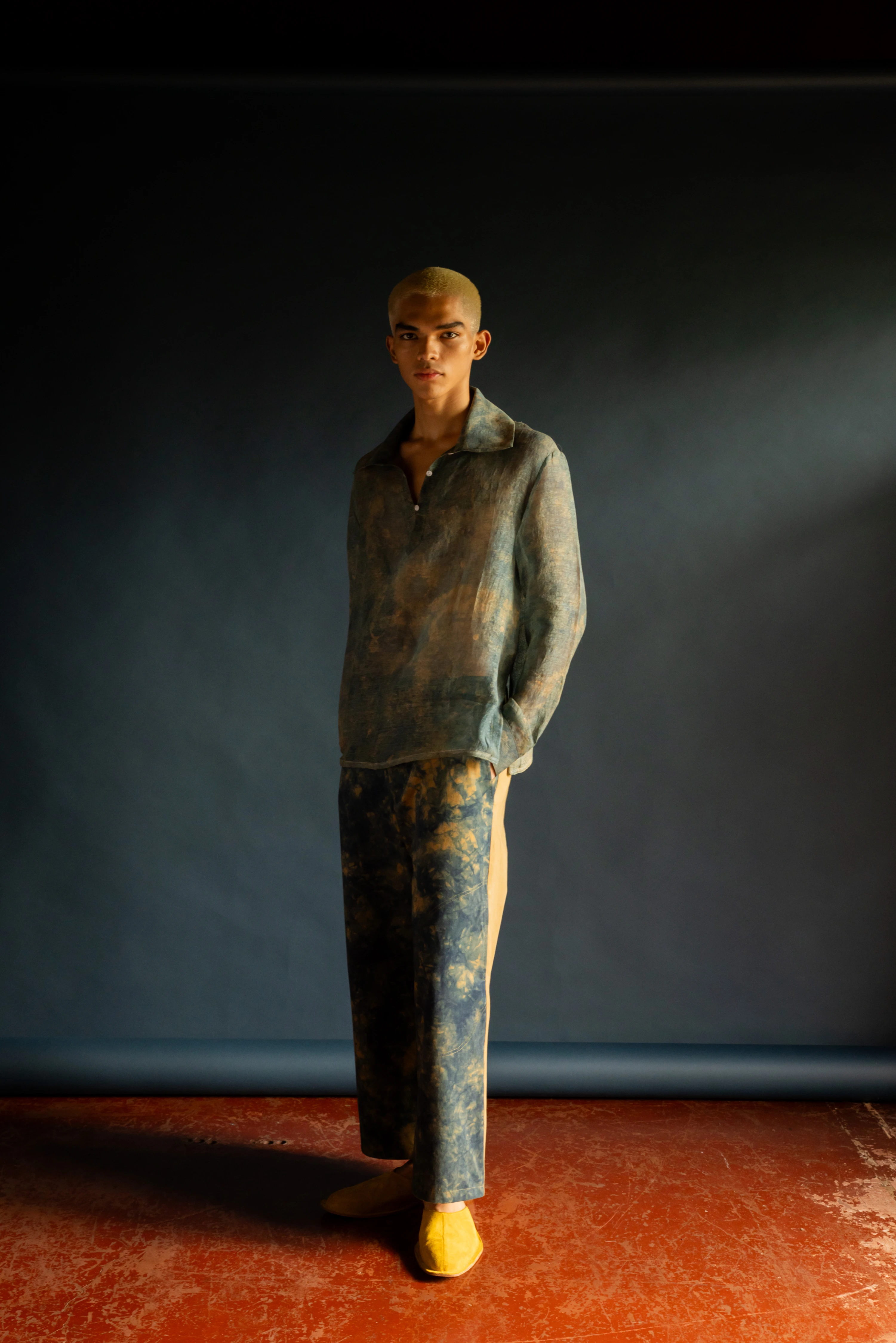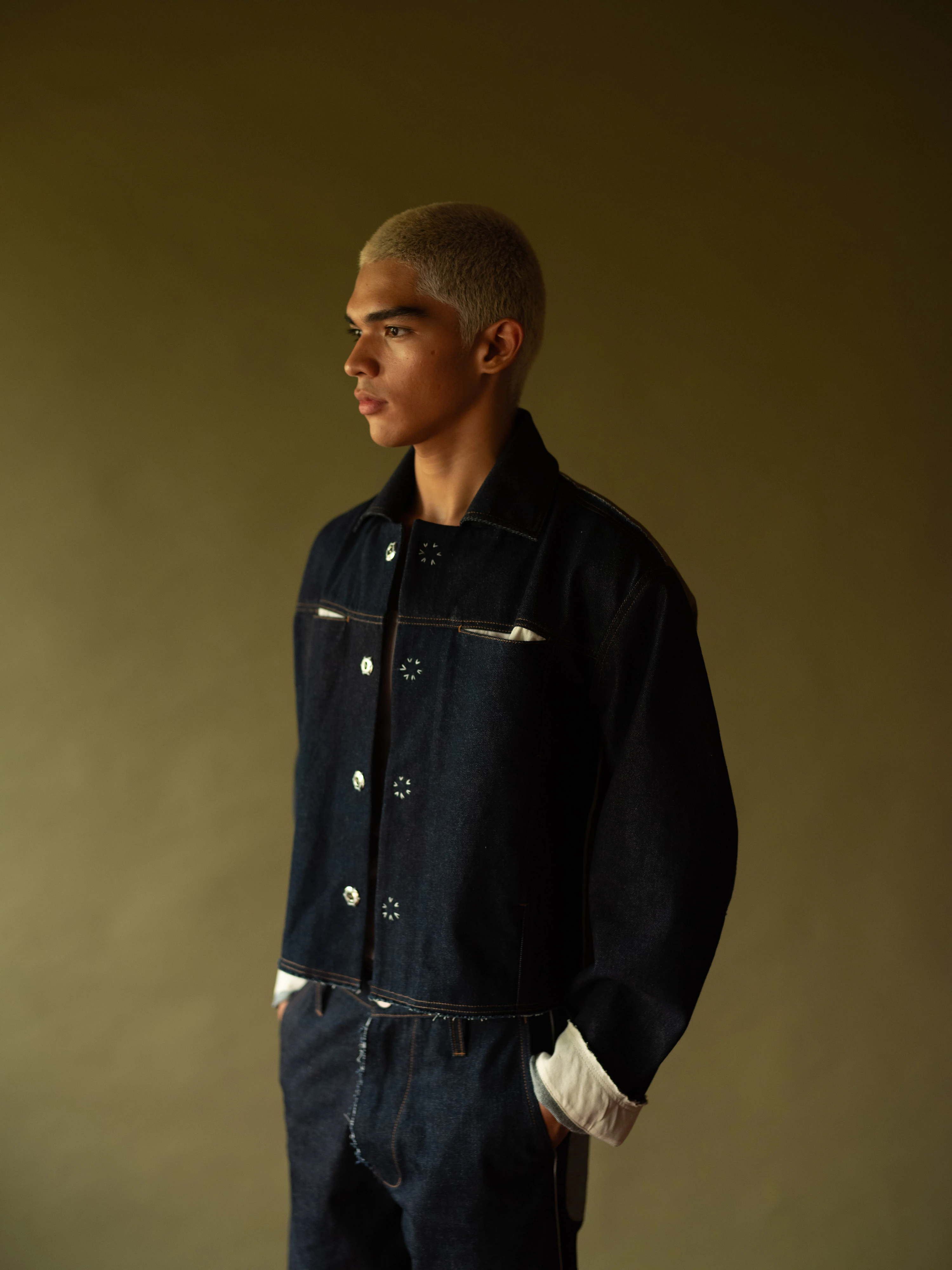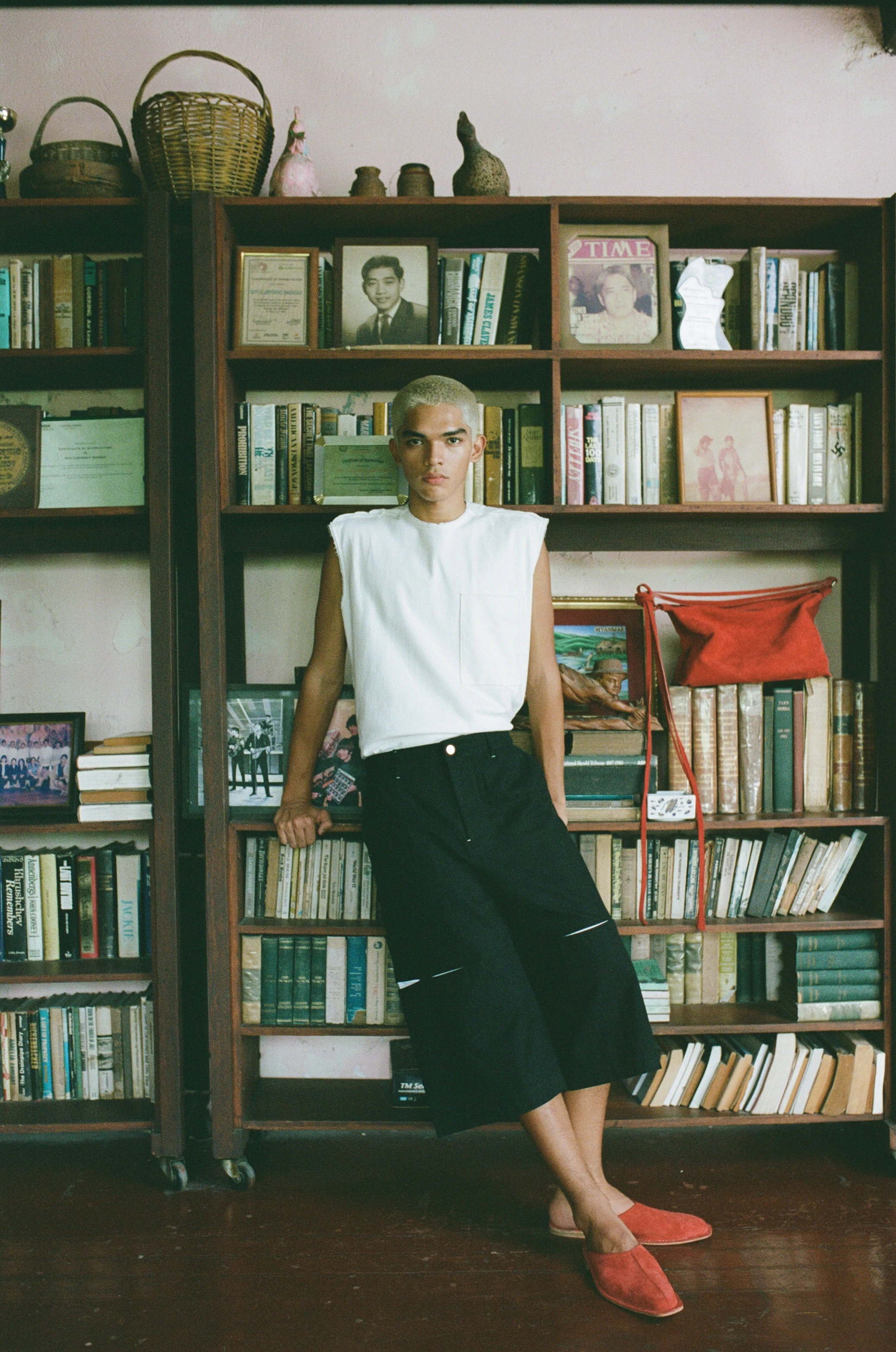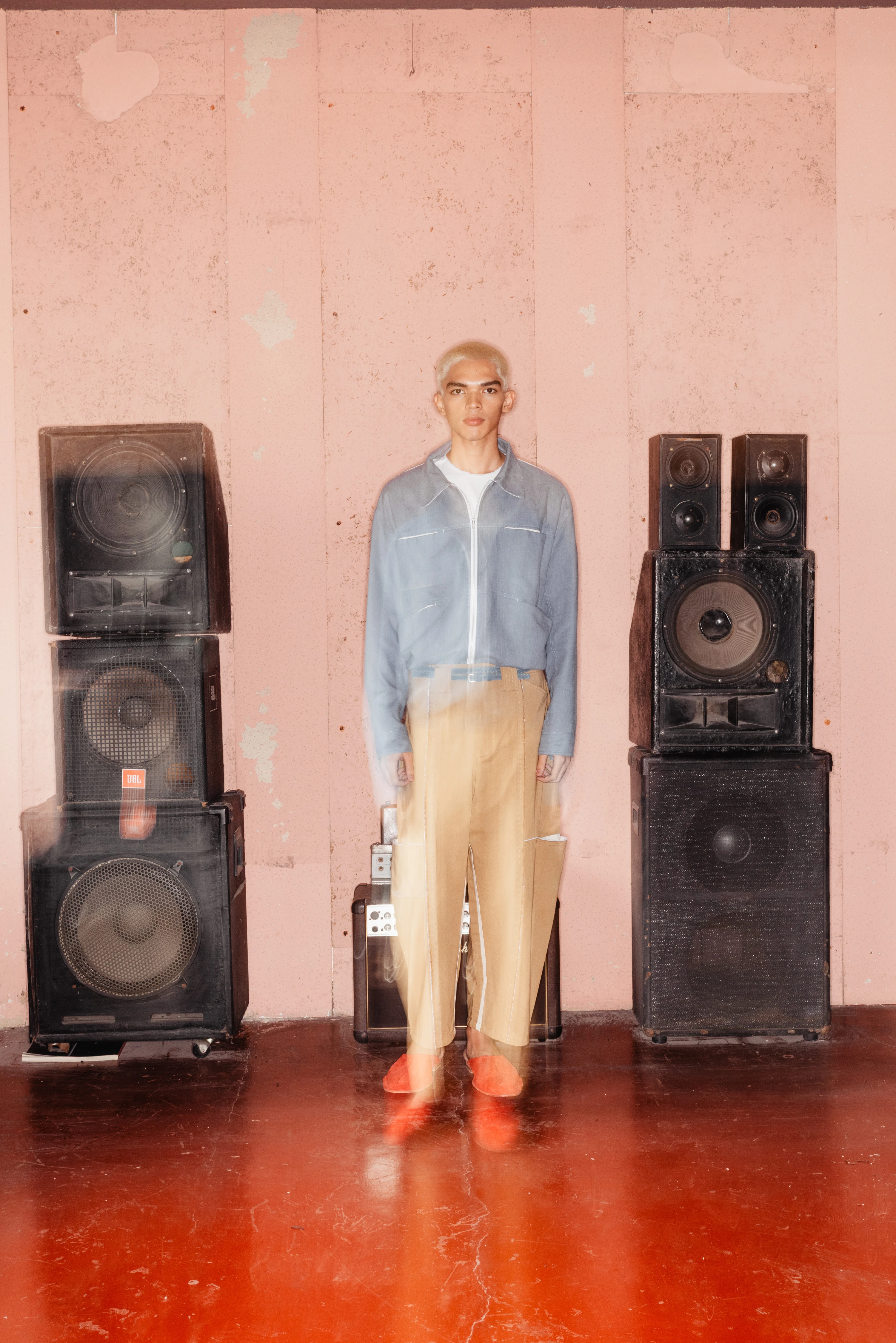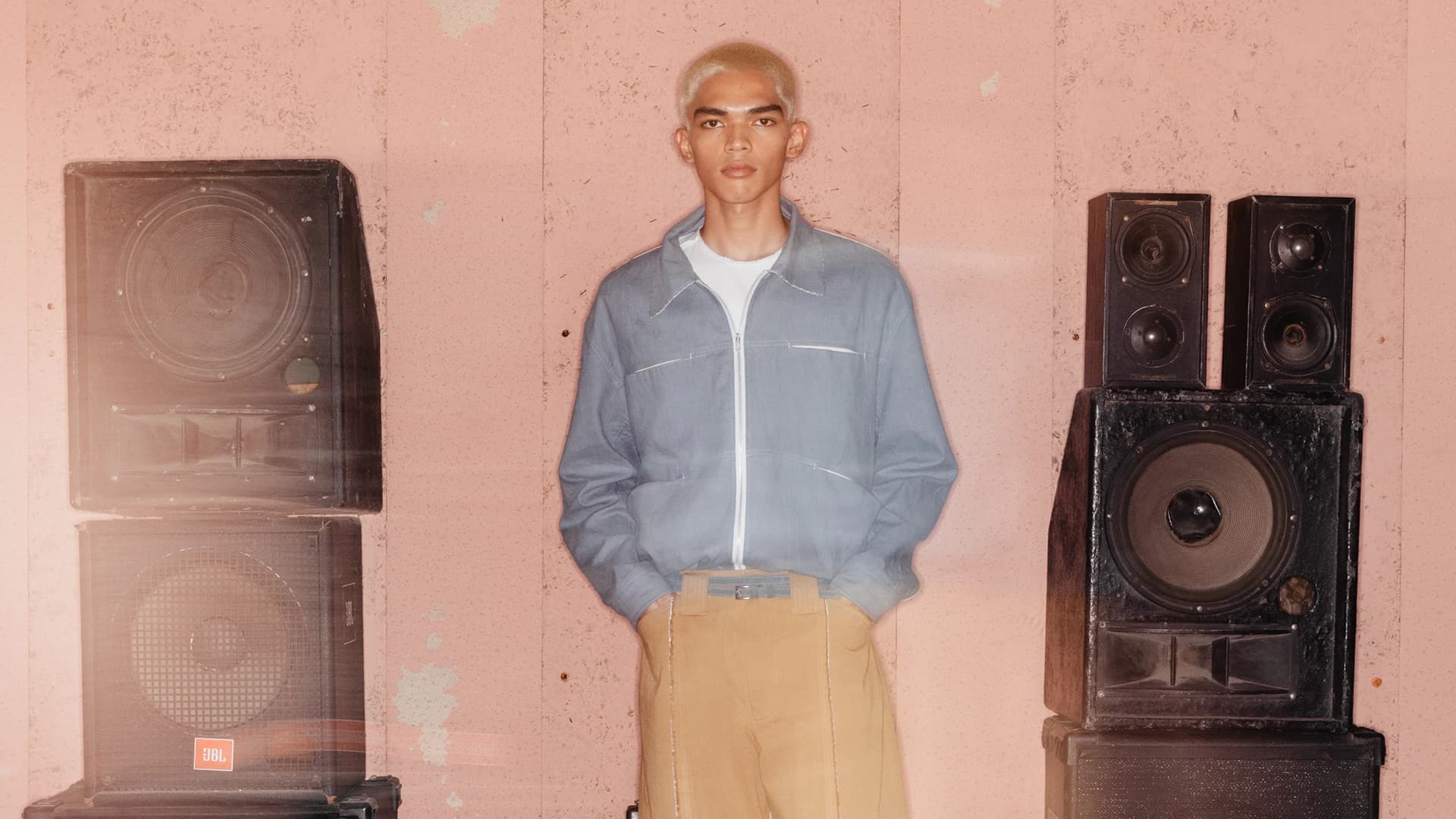
Joseph Bagasao’s work exhibits a particular kind of restraint. Nothing needs to make itself heard too loudly. A seam may interrupt a garment's expected trajectory; a shift in proportion may destabilize a familiar silhouette; and contrasting textures may introduce tension into an apparently minimal construction. It is within these subtle displacements that BAGASÁO has gradually defined its aesthetic: precise yet never rigid, understated yet far from neutral, suspended between structure and ease. We met Joseph Bagasao, the founder and creative director of the Philippine brand, at the Fondazione Sozzani during Milan Fashion Week. The occasion was FASHIONPHILIPPINES MILAN, a mentorship and exhibition program presenting a new generation of Filipino fashion brands to an international audience.
Since its founding as an independent label, BAGASÁO has developed a language that can move beyond its place of origin without severing its connection to it. Rather than using Filipino identity as an aesthetic statement, BAGASÁO treats it as intrinsic to its perspective — a cultural background that need not announce itself to remain present. Our conversation in Milan provided an opportunity to explore the origins of this measured approach and to understand how personal experience, cultural identity, and independence can influence fashion design without becoming rigid formulas.
© BAGASÁO
Your relationship with fashion seems to be deeply rooted in memories from long before it became a professional choice. Where does that story begin for you?
It really started as a passion, and I think it largely goes back to my grandmother. I grew up very close to her in a rural area of the Philippines, far from Manila. I lived next door to her, and after my grandfather passed away, I slept every week at her house. She became an important presence in my life. She encouraged me to play the piano, and I remember that she always surrounded herself with beautiful things. She loved clothes, shoes, and beautiful objects. She was incredibly chic. For instance, she always carried a fan. Last year, I suddenly realized that the woman I had unconsciously been designing for all these years was actually her. I found myself asking, "Why am I always drawn to this kind of woman, with this attitude and elegance?" Then I realized that the image had been there all along. It was my grandmother. I think I became interested in fashion very early on. While other kids were watching Cartoon Network, I was watching Fashion TV. I knew designers like Prada before I even understood fashion. I was fascinated by clothes, shoes, and beautiful things because I grew up surrounded by that sensibility.
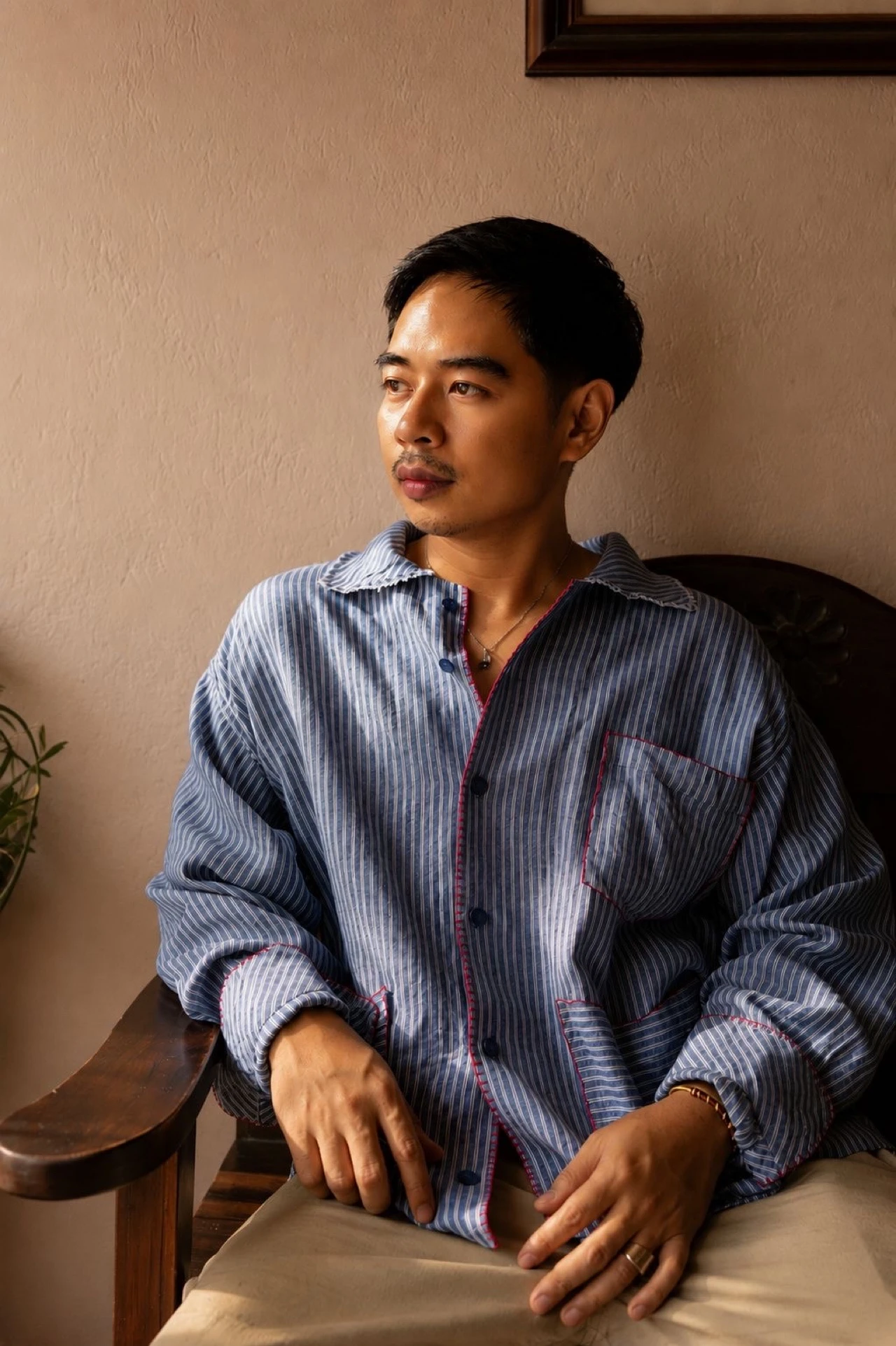
Joseph Bagasao, portrait. © BAGASÁO
However, fashion was not initially perceived as an obvious path for you. How did you transform your early fascination into your own professional language?
At that time in the Philippines, studying fashion was perceived very differently, particularly if you were a boy. My parents didn’t want me to pursue fashion at first, so I finished college first. But I always knew I wanted to work in fashion. After graduating, I couldn’t find the right job, so I studied photography and took French classes while looking for an internship with a fashion designer. That was really the beginning. Eventually, I convinced my mother to let me attend fashion school. I attended the Fashion Institute of the Philippines, graduating at the top of my class. I was awarded Designer of the Year. I then did internships and eventually worked for Josie Natori [Editor’s note: a Filipino-American fashion designer and entrepreneur], where I became a junior designer specializing in embroidery. That experience is why handwork remains such an important element in my clothes today.
© BAGASÁO
When did working in fashion no longer suffice, prompting you to develop your own vocabulary and, eventually, your own brand?
After working for a few years and becoming comfortable in my job, I decided to leave and start my own business. I was afraid of losing my dream so I took a leap of faith and started my own brand. Then, in 2016, I received an opportunity to show in Tokyo. I was one of the three Filipino designers selected to participate in Amazon Fashion Week TOKYO. That became an important moment for me. From there, it was year after year and collection after collection. I tried to understand not only how to make clothes, but also what kind of company I wanted to build and what kind of brand I wanted BAGASÁO to be. There are so many brands, designers, and products in the world. I didn’t want to add more products without reason. At some point, I realized that I had to stay true to the message I wanted to convey through my clothes. That became my compass. Even if I’ve already designed something, if it doesn’t feel authentic to me, I know I have to go back and change it.
© BAGASÁO
In your work, there seems to be a constant negotiation between the presence of the garment and the person wearing it. What kind of relationship do you want your clothes to have with the body and the individual wearing them?
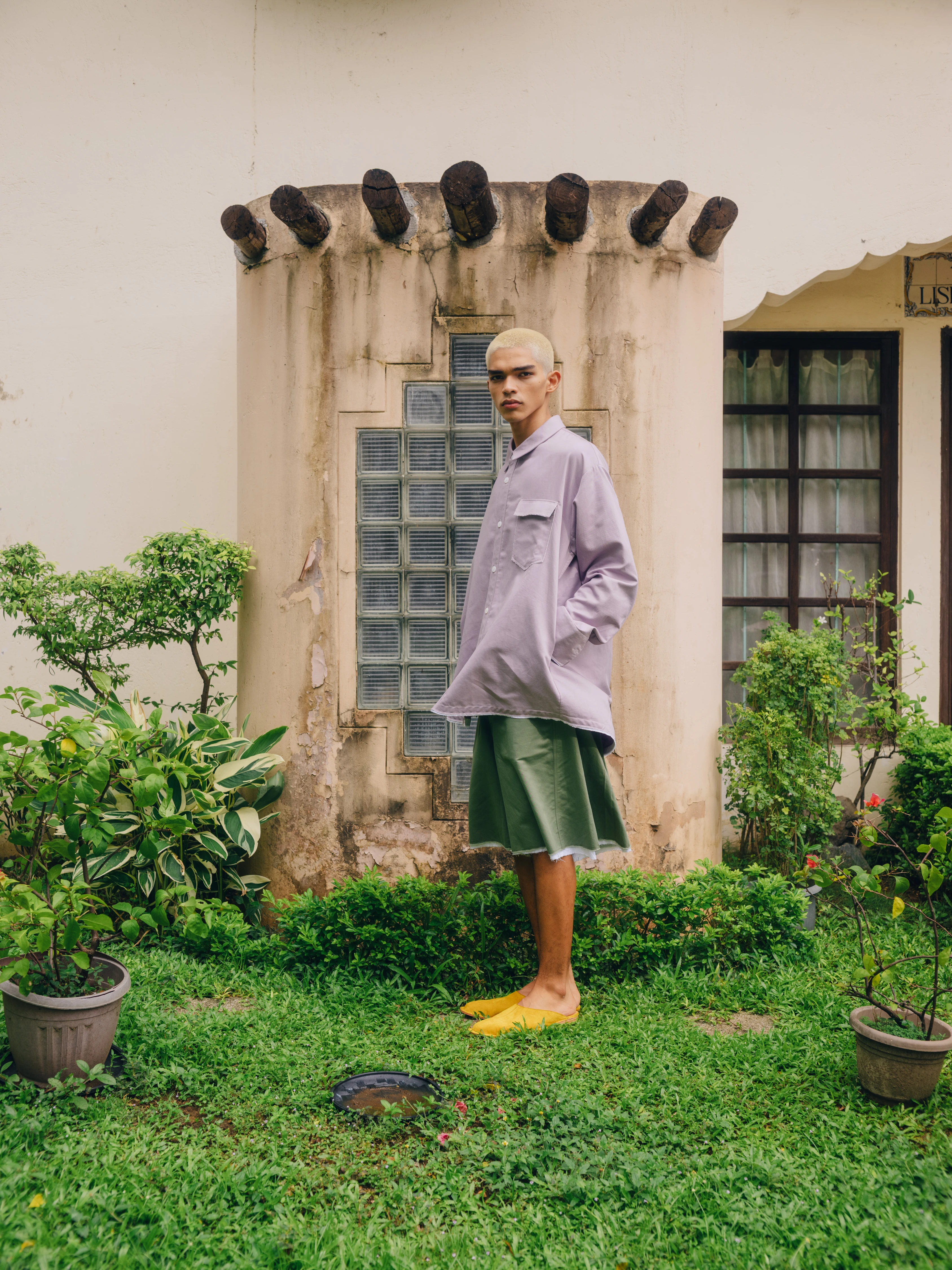
I don't like looking at someone and no longer seeing the person because I can only see the clothes. A garment can be beautiful, but if the person inside it disappears, something is lost. I want people to feel like themselves in my clothes. Many of my clients in the Philippines start with one piece and then keep coming back. I think this happens because the pieces are approachable yet not completely conventional. A shirt is never just a typical shirt. There's always something unique about them, yet they still connect with who the person is.
Your clothes often start with a sense of formal restraint, but something subtly disrupts their apparent simplicity. How would you describe BAGASÁO's aesthetic?
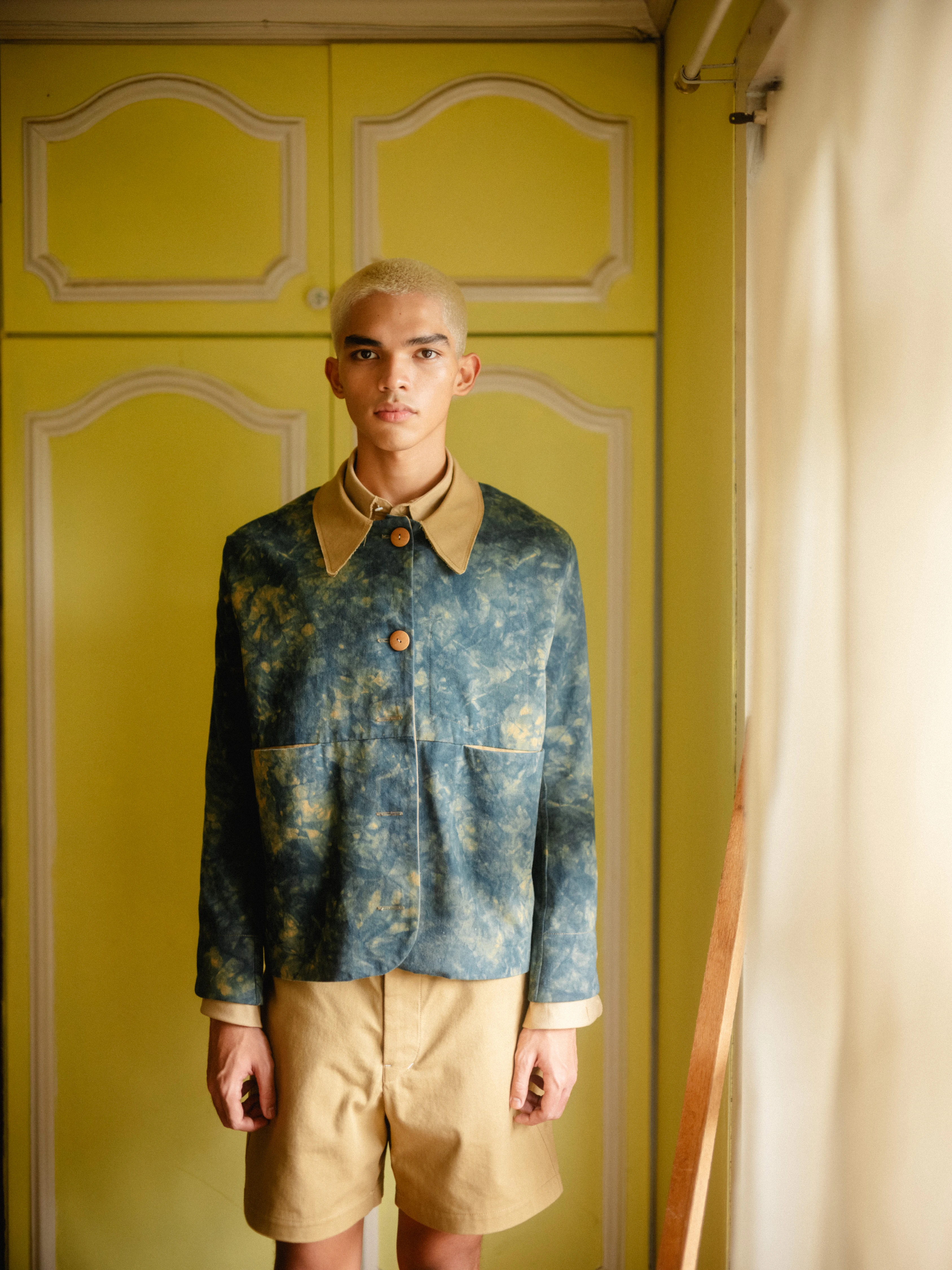
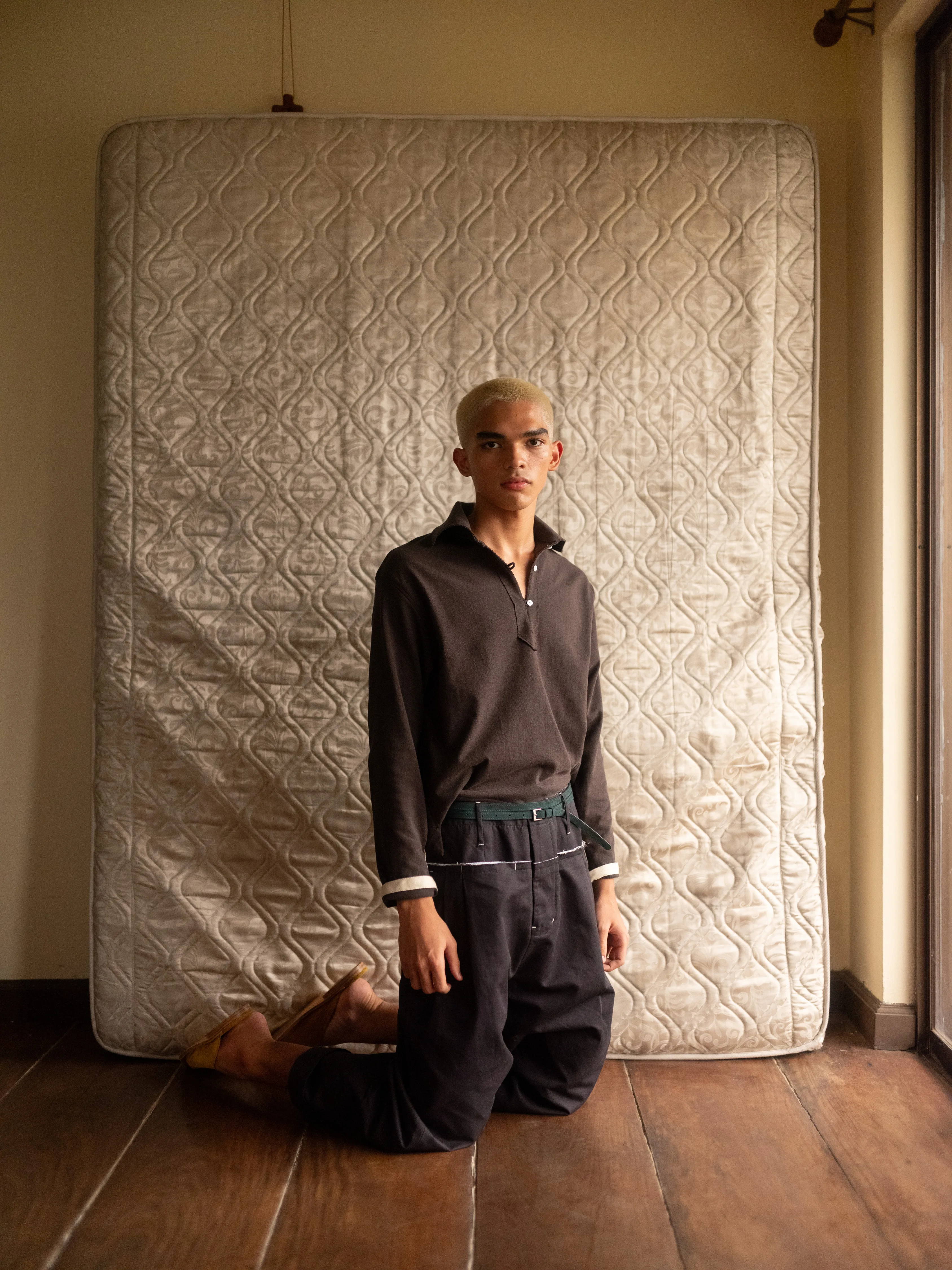
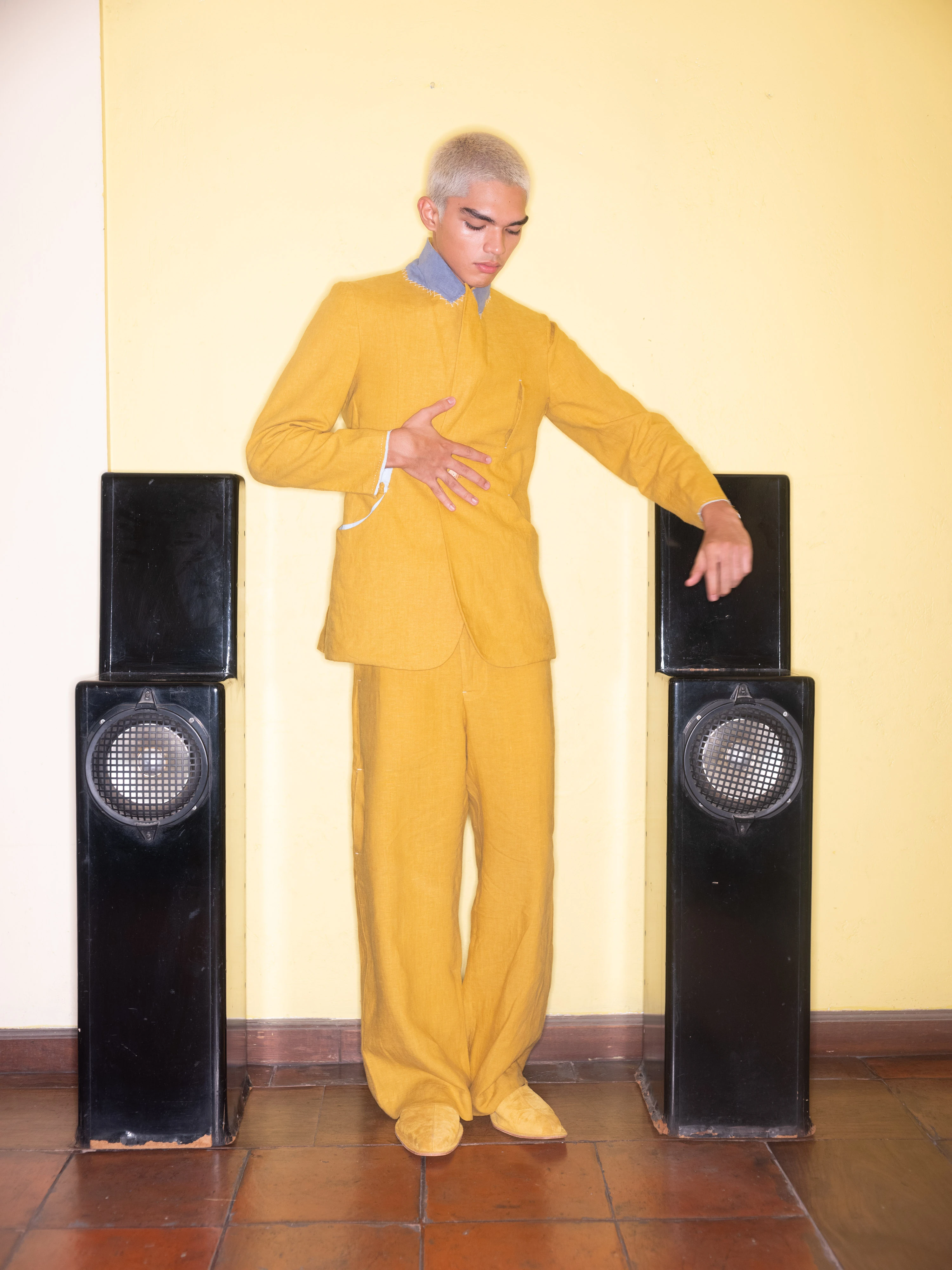
I like clean lines, but I also like to subtly disrupt them. For example, I might make a pair of trousers and introduce a seam somewhere unexpected that breaks the line. The gesture is small; it doesn't need to be loud. There is always something slightly off—something that interrupts what initially appears simple.
© BAGASÁO