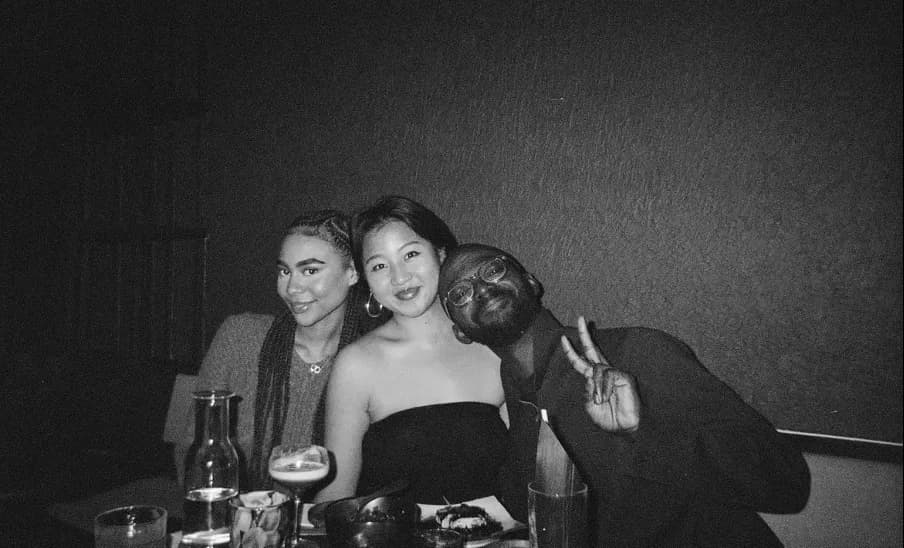
Black-and-white photo of three friends sitting at a restaurant table, smiling at the camera; Joseph Awuah-Darko on the right flashes a peace sign.
8 min

Joseph Awuah-Darko and the Art of Dying Online

By Isabelle Enquist

Explore Joseph Awuah-Darkos art of dying online and how social media turns suffering, empathy and attention into a performance in contemporary art.

TW: mention of death, suicide, mental illness, pain, harm


When Joseph Awuah-Darko – also known as Okuntakinte – decided against medically assisted dying (MAiD) in July 2025, the internet erupted - flooding his social media with both love and disdain, commendation and shunning. The announcement threw his reputation into hot waters, yet again, with many speculating whether his entire journey was just a performance to garner sympathy and draw attention away from previous career tensions.


Awuah-Darko is a social media influencer with a background as an artist and curator. He captured the attention of millions with his profoundly raw, candid, and oftentimes messy account of life with bipolar disorder and PTSD, as well as his decision to pursue MAiD in The Netherlands. Through stylized writing about depression, trauma, and the relief which assisted dying might afford him, he has made the journey seem less alien and isolating. His mental health advocacy, especially being a gay man of color, is important in offering representation to those who have historically been, and really still are, left out of conversations surrounding mental health care, resources, and treatment options. To many, surely, he was a safe haven. It is necessary, therefore, to discuss the polarizing effects of his influence when the aesthetic of suffering is often not in line with an uncomfortable reality.


In 2024, Awuah-Darko launched “The Last Supper Project”, where he met strangers for an intimate meal and conversation. He invited the internet to witness his impending death - or rather what convinced him to live - in real time, reflecting on the tenderness and support we can extend by simply breaking bread. Having had a tumultuous journey - both with his mental health and quite literally as an undocumented immigrant in Europe - he asked those around him for kindness and to extend him the grace of hosting (and paying) him for dinner. All of these dinners have been documented on Awuah-Darko's Substack, where his hosts' stories and backgrounds become central to the experience, as much as the food itself. In the rebirth of supper clubs and dinner events in the art sphere, seen with the likes of Frieze, Dazed, and the 2sday Supper Club, it is no wonder that the series has gained so much traction.

Food is as nurturing as it is disarming, offering a glimpse into the emotional, cultural, and domestic backgrounds of participants. Much of the project’s intrigue lies in its incredibly fragile cycle of trust it requires; trusting in both parties’ sincerity, that kindness will not be abused, and privacy will be respected – trusting, simply, that it is a safe space. This is also a reflection of our desire for more personal, tangibly earnest experiences, thus adding to the credibility and integrity of Awuah-Darko’s cause in an entirely private manner. Ranging from those pursuing MAiD themselves to stars like SZA, he has been able to share 170 meals in 9 months. As impressive, exciting, and difficult as these journeys seem, much of the content we see is controlled, edited, and particularly geared to make us feel for and with.


In the age of “digital confession” few have blurred the line between life, online presence, and performance as dramatically as Awuah-Darko, making his struggles with mental health, ambition, and almost-death an evolving artwork – one which questions how we engage with authenticity, sympathy, and spectacle.
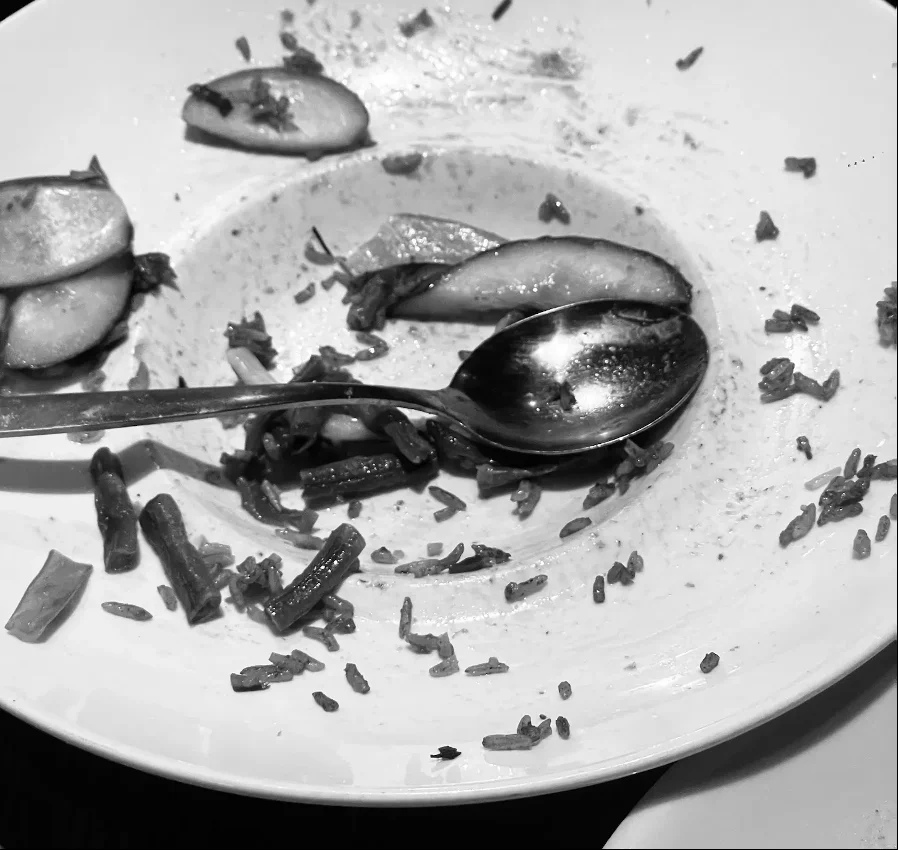
Black-and-white close-up of a nearly empty plate with leftover rice, vegetables and two spoons resting in the center.

Image courtesy of Joseph Awuah-Darko. Available at Substack

Contemporary tragedies: compassion curdled by consumption

Before being dubbed “Britain’s first euthanasia influencer”, however, the Ghanaian-British writer, multidisciplinary artist, and entrepreneur was already a well-known and equally divisive figure in the art world. Having founded Noldor Artists Residency and The Institute Museum of Ghana in Accra, Awuah-Darko sought to create a platform for emerging African artists to gain visibility in the global art scene. In a complex, volatile market, purpose-driven initiatives like Noldor or Sorondo Project, which foreground marginalized and historically overlooked artists, are crucial to revitalizing collector interest and creative production. Yet his career is marred by controversy; while praised by the likes of Art Basel, The New York Times, and Artnet, he also stands accused of exploiting resident artists – raising questions about leadership and accountability.


The primary lawsuit was launched by Foster Sakyiamah who claimed to be owed upwards of $260,000, as well as having been kept in the dark about additional sales of artwork outside of the terms of  his contract with JAD Advisory, by Awuah-Darko personally. The public allegations, which escalated into a lawsuit, coincided with the time at which Awuah-Darko announced his decision to pursue MAiD in December 2024. Although the court case is still ongoing, it has been very much overshadowed by his pursuit of a way to cope with debilitating mental health issues. This interplay between moral scrutiny and seemingly boundless emotional exposure sits at the heart of Awuah-Darko’s public identity – a tension which both undermines and upholds his credibility, holding a fragile balance. Many still speculate on the authenticity of his endeavours - both professional and personal - producing a slew of Reddit forums, articles, and investigative social media accounts. The primary criticism, not at all unfounded, seems to be how troubling it is to publicly portray euthanasia and MAiD as a tender solution or standard treatment option, risking the romanticization of suicide and undermining its gravity. Equally, many also came to his support, recognizing the complexity, the highs and lows, of struggling with a chronic mental illness and trauma.  Whether his efforts to nurture artistic development, his inadequate treatment of artists, or his radical transparency, one thing is undeniable; Awuah-Darko has a magnetic influence on millions.


Representation, meaning, and the attention economy

The more pressing concern, however, is our enduring obsession with the struggling artist. Is suffering a performance meant to inspire or exploit people’s fears, vulnerabilities, curiosities, and perversions? From Van Gogh and Diane Arbus to Mark Rothko and Frida Kahlo – we have romanticized the idea that suffering breeds beauty. Awuah-Darko’s almost-death fits this narrative, too, and the internet martyred him before he even died. His survival disrupted this fantasy, and those who sought representation and refuge found themselves torn between a sense of betrayal and revelation. Detailed investigative reports and a history of professional misconduct further deepened these feelings by challenging his authenticity. This position is a double-edged sword; a mental health advocate with a large following can easily, if unintentionally, become a negative influence to a large audience struggling to cope, especially in the age of disinformation. Self-diagnoses through simple Google searches, a lack of access to resources, and very easy access to a portfolio of self-proclaimed online mental health advocates leaves a vast majority of internet-users susceptible to suggestion and inadequate treatment. Visibility, having access to millions of minds means living with the possibility of having words, thoughts, and ideas skewed.
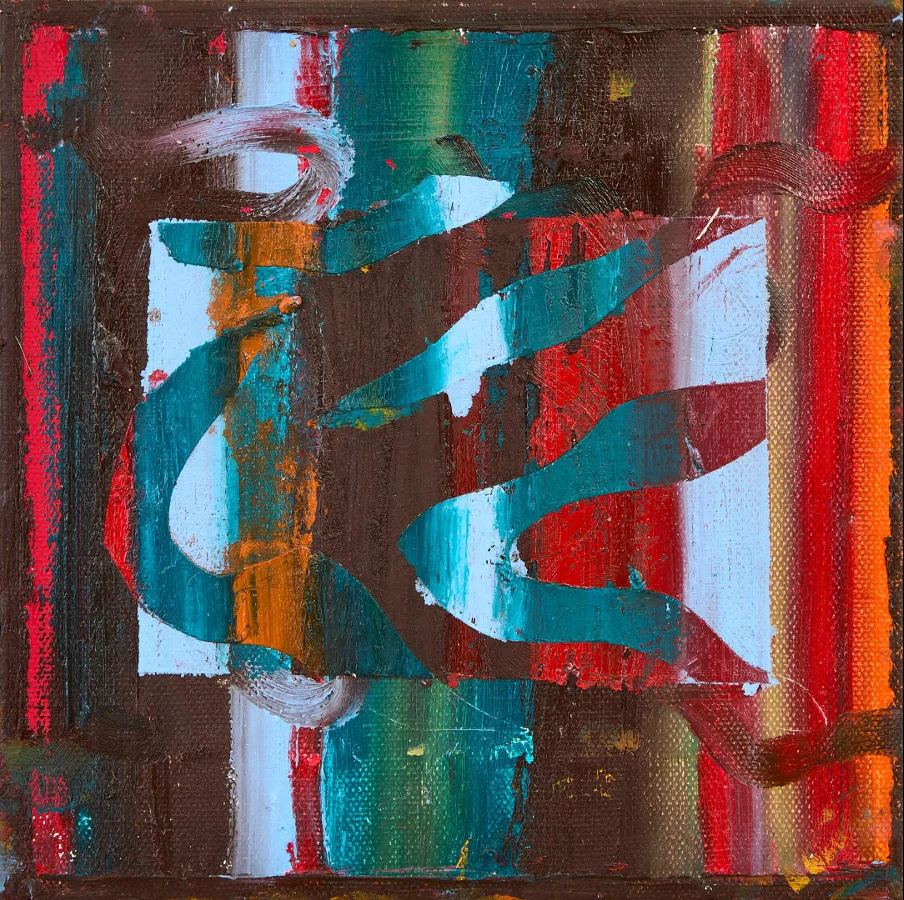
Abstract painting with vertical bands of red, teal, brown and orange, overlaid by sweeping turquoise brushstrokes on a small square canvas.

Awuah-Darko, Joseph. (2024). June 28, P.M, 2024. Image courtesy of Ed Cross Fine Art.


If we were to compare it to the work of Marina Abramović - the godmother of performance art - we can see certain similarities. Most notably, her Rhythms series (1973-4) and The Artist is Present (2010), explore human nature; in the former the more dark and sinister tendencies we have when freed from moral and legal frameworks; and the latter the agency, presence, and sincere connection of strangers through a gesture as simple as sitting at a table together and looking at each other in silence. With Rhythm 0 (1974), famously, Abramović offered her audience a selection of 72 tools to inflict either pain or pleasure. The 6-hour long performance confirmed the worst - when given power, especially over a passive subject, people become virtually amoral, inflicting hurt - both physically and emotionally - on the object of their attention. Giving the general public unfiltered access to influencers’ and artists’ lives, their achievements and insecurities, is a litmus test for society’s frustration and need for a different outlet which absolves them, superficially, of responsibility. Art always has been a sign of the times.


Her recent exhibition at Saatchi Yates in London and performance at Factory International in Manchester are testament to our fascination with works which question the very essence of ethics, morality, connection, and the extent to which we hold ourselves accountable. This reignited interest in performance art, like that of Marina Abramović, is a sign of the times - people need to feel more and experience more. A real body is much easier to relate to – and easier to reject. Where Abramović explores the very extremes of the body’s physical ability - both her own and her audience’s - to exercise and withstand control; Awuah-Darko’s exposure of the body reveals how these same impulses - guided by empathy, curiosity, and cruelty - manifest in the digital sphere.


The “art of dying online” is a catchy title, and perhaps that is also the point – so intriguing it might overshadow the question of how we perceive and consume suffering – as we navigate authenticity and meaning online. Inspired by the works of the likes of Qualesha Wood, this article, however, hopes to inspire a deeper introspection into representation, obsession, and new media in our search for identity, community, and truth. The case of Awuah-Darko and the questions we are left with, can be a starting point.

Did he genuinely help destigmatize mental illness or has struggle become a currency in the exchange of empathy, monetizing on people’s vulnerability? Putting aside the morality of his actions, which leaves some room for skepticism, it is at the end of the day a question of how we engage with sensationalism.


The answer is unclear and the inquiry uncomfortable because it implicates us. His audience made his suffering viral. His proximity to death, his vulnerability, and the space he held for others was rewarded with likes, shares, and critique in equal parts. Joseph Awuah-Darko’s greatest piece, then, might have been the orchestrating of human behaviour – a study on a generation’s fascination with tragedy. Maybe the real artwork is not “The Last Supper Project” but rather our collective hunger for it.
Date

25.11.2025

Tags
Culture ResearchJoseph Awuah-DarkoContemporary ArtPerformance ArtSocial Media CultureDigital SufferingAttention EconomyOnline IdentityArt and EmpathyCulture CritiqueAfrican Artists
Black-and-white fashion photograph of a model in profile bending forward, wearing a sculptural striped pleated garment against a plain white background.
7 min

Beyond the Runway: How Fashion Photography Becomes Fine Art

By Liv Hooson

Explore how fashion photography moved beyond the runway into galleries and museums, from Man Ray to Leibovitz, and why these images now count as fine art.

What happens when photographers apply their creativity to capture fashion in unexpected ways? Photographs are elevated from beyond the promotion of a product and into a memorable work of art worthy enough for the walls of galleries and museums.


A fashion photographer is able to freeze time, allowing a garment, a model’s movement’s, and a beautifully brief moment to exist far beyond the moment. Historically, fashion photography served a purpose to simply sell clothing for brands and designers. Advertising was the impetus, yes, but with creative minds behind the camera, it was only a matter of time before the editorial work became an artform. In the early 20th century, editorial magazines were known for their fashion as well as the aspirational lifestyles they promoted. The most recognizable publications were Vogue and Harper's Bazaar who curated the styles of the season. But they were also the first magazines to highlight the experimentation and artistry of fashion photographers.


Editorial photography began to transform from its original purpose of selling a product and into a medium for telling a story.

The Transcending Impact of Fashion Photography

It takes an artist to see a visual story within everyday objects. Even clothing, jewelry, and hand bags can be mundane if treated as simple utilities. What separates the great fashion photographers in the industry are the ones who form entirely new conversations using fashion as their subjects. Some of the most well-known photographs explore clothing as extensions of the model’s presence and capture images in an array of settings, juxtaposing material and design against changing contexts. The office or the city streets are common locations to show off an ensemble as well as more surreal landscapes, like the edge of a sky-high rooftop or the expanse of the desert. Location and application help delineate fashion advertisements from story-driven sets that allow the clothing and accessories to ‘live in.’ Fashion photographers have a strong sense of creative direction and a unique perspective that helps to transform their subjects with the potential of becoming their own works of art. These photographers create in a range of contexts, but have all contributed to the ever-changing discipline.


Runway fashion photographers capture the flash and glitz of a new collection first seen by the public. They can turn a model's momentary strut into a legendary photograph that showcases their designer outfit, hair, and makeup that would otherwise wash away after the show is over. The photographs serve as marketing tools for the brands as well as showcase the clothing in motion rather than stagnant. And it is the ability of the photographer to curate a collection of images that reflect the essence of the runway show, which is what will help sell the story of the garments.


Editorial photographers are mostly known for their artistic expression and story-telling abilities, which is why their work has been featured in the most popular print and digital publications. One of the greatest impacts that editorial fashion photography has had on culture is the way consumers value clothing and accessories. It is less about the product itself and more about the message it conveys. And the photographer is partly responsible for conveying that message through visuals, lighting, and positioning. Impactful editorial fashion photography happens when people literally “buy” into the story being told. This is where art informs culture.


Street photographers have the uncanny ability to see individuality on a crowded street.  Their work is arguably some of the most organic and candid as they document people in motion, mid-laugh, or simply walking to work. These photographers capture life as it happens in real time to tell stories of style from around the world. They also document behind-the-scenes experiences, including fashion week in Paris and New York, as well as red carpet premiers. These images offer an immersive experience that share authentic moments in between the posed ones, and are often the shots that many editorial magazines use and share online to tell a broader story of the event. With social media at the forefront of our lives, there are more opportunities than ever for fashion photographers to share their work and perspective on style and culture. Henri-Cartier-Bresson is one of history's most renowned street photographers known for his deliberate captures of human emotions against striking composition that elevated his images to be considered works of art.

Fashion Photographers: The Icons over the Years

Runway, editorial, and street photography have each played a key role in furthering fashion photography as an artistic discipline. Arguably one of the most distinct figures in fashion photography is Edward Steichen who was the chief photographer for Vanity Fair and Vogue between 1923 and 1938. Incorporating the geometry of the Art Deco movement into his designs, Steichen incorporated a dynamic and cinematic approach that resulted in some of the most recognizable photographs to this day. Irving Penn was another photographer whose mantra “selling dreams, not clothes” helped him execute photographs that bridged elegance and minimalism while demanding attention and allure. Think: white gloved-women in oversized hats, bold cat-eye makeup, and hauntingly symmetrical images worthy of being framed. It’s no wonder his work would be featured on more Vogue covers than any other photographer.

Black-and-white portrait of a woman reclining on an ornate upholstered armchair, with dramatic eye makeup, lace gloves, and a floral collar, lit in soft studio light.

Photo by Edward Steichen, courtesy of Getty Images.


As fashion photography continued to make a name for itself, it was the painter Man Ray who helped propel it to levels of fine art. Applying an experimental style to his photographic process, including double exposures and a trompe l’oeil effect, he created images that blurred the lines between fashion and art. Perhaps the lines were always there to be blurred, it was just a matter of who was willing to go there. With commercial photography already well-established, there was a great opening for artistry to be applied to the medium. Man Ray’s avant-garde approach to photography resulted in moody, dramatic, and seductive images that caught the attention of leading fashion houses, including Schiaparelli and Chanel, who hired him for photography work.


As fashion evolved, so did the artists behind the lens. Contemporary photographers include Peter Lindbergh and Annie Leibowitz who individually shaped the discipline to be reminiscent of a more progressive culture. Lindbergh championed inclusivity by showcasing diverse models and opting for minimal retouching in post production. He is also credited as launching the supermodel as a person rather than a prop for hanging clothes on. His photographs brought out the renowned models’ personalities, emphasizing playfulness over extravagance. Lindbergh’s prolific career would lead him to photographing such talents as Tina Turner and Beyoncé, for whom he would shoot her album cover “I Am…Sasha Fierce.” He helped to prove that the influence of the fashion photographer is unconfined.

Fashion photograph of a woman in a dramatic sculptural red gown and oversized red hat against a neutral studio background.

Photo by Annie Leibovitz, courtesy of Getty Images.

Leibowitz amplified the discipline by bridging portrait photography of some of the world’s most recognizable faces, including actors, models, and musicians during the 1970’s. As the chief photographer for Rolling Stone magazine, she photographed such icons as John Lennon, Joan Didion, and Kate Moss. Bridging culture and fashion, her work took on a life form all its own as she showcased well-known cultural figures in a new light; expanding the public’s perception of them by utilizing unconventional props and exploring evocative themes. Her most famed photographs include Leonardo DiCaprio posed with a white swan, Whoopie Goldberg in a bath of milk, and a naked John Lennon draped around Yoko Ono in bed.


From the Runway to the Gallery Walls

Fine art is defined by visual works that indicate their creators expertise and ability as well as the artworks' impactful aesthetics. Fine art doesn’t have to be functional but often evokes ideas and originality. Contemporary fine art is constantly evolving, reflecting how art is perceived and appreciated depending on the current culture and conversations.


One of the earliest fashion photographers whose work was featured in the Metropolitan Museum of Art in 1978 was Richard Avedon. His famed exhibition featured intimate portraits and high fashion moments captured in the streets of Paris. Avedon’s dedication to capturing fashion during his prolific career greatly contributed to the discipline of fashion photography being considered fine art. He also opened the door for more photographer’s work to be shown in museums, galleries, and in fine art auctions including Bonham’s, Sotheby’s, and Christie’s fine art auctions. In fact, a remarkable sale occurred in 2022, when Man Ray’s notable photograph Le Violon d’Ingres (1924) sold for a record $12.4 million, proving that fashion photography has become a lucrative form of art in the fine art world.


The photographers we have explored here are all examples of how commercial photography  has transcended into highly valuable forms of art. From Leibowitz’s striking and vivid narrative-driven photographs to Man Ray’s deeply surreal and stunningly intimate images, fashion photography has proved its staying power as well as its undeniable contributions to the art world. The discipline continues to pave new pathways for photographers, fashion designers, and creatives to find success and share their stories en masse.

Black-and-white fashion photograph by Irving Penn of a model in a wide-brimmed hat, face veiled in netting, long gloves and a cinched dress, posed against a plain studio backdrop.

Photo by Irving Penn, courtesy of Getty Images.

The Influence of Fashion Photography Continues

We are living in a time where influence can transpire overnight. A single image or video can take the world by storm in an instant. What makes fashion photography such a continuously compelling art form is its ability to transform a fashionable moment into an image rich with symbology, filled with inspiration, and even the ability to shock. A fashion photographer has the ability to elevate an editorial photo shoot for a new clothing collection, capture a candid moment in the bustle of the city, or conceptualize a narrative-driven campaign that bridges style and story. These artists can turn a moment into a memory with the power of their lens and with the application of creativity and innovation, their work is appreciated at higher levels.


Both photography and fashion are artforms that shape culture, inspire creativity, and explore identity. Fashion photographers continue to push the boundaries of where art begins and ends. And the truth is, there’s no end to how art can be defined — and redefined.

Date

25.11.2025

Tags
Photography & Visual Mediafashion photographyfine art photographyfashion as arteditorial photographycouture imageryrunway to galleryfashion historyiconic fashion photographersphotography and museumscontemporary fashion imagesvisual cultureart directionfashion editorialsfashion magazinesphotography collectors