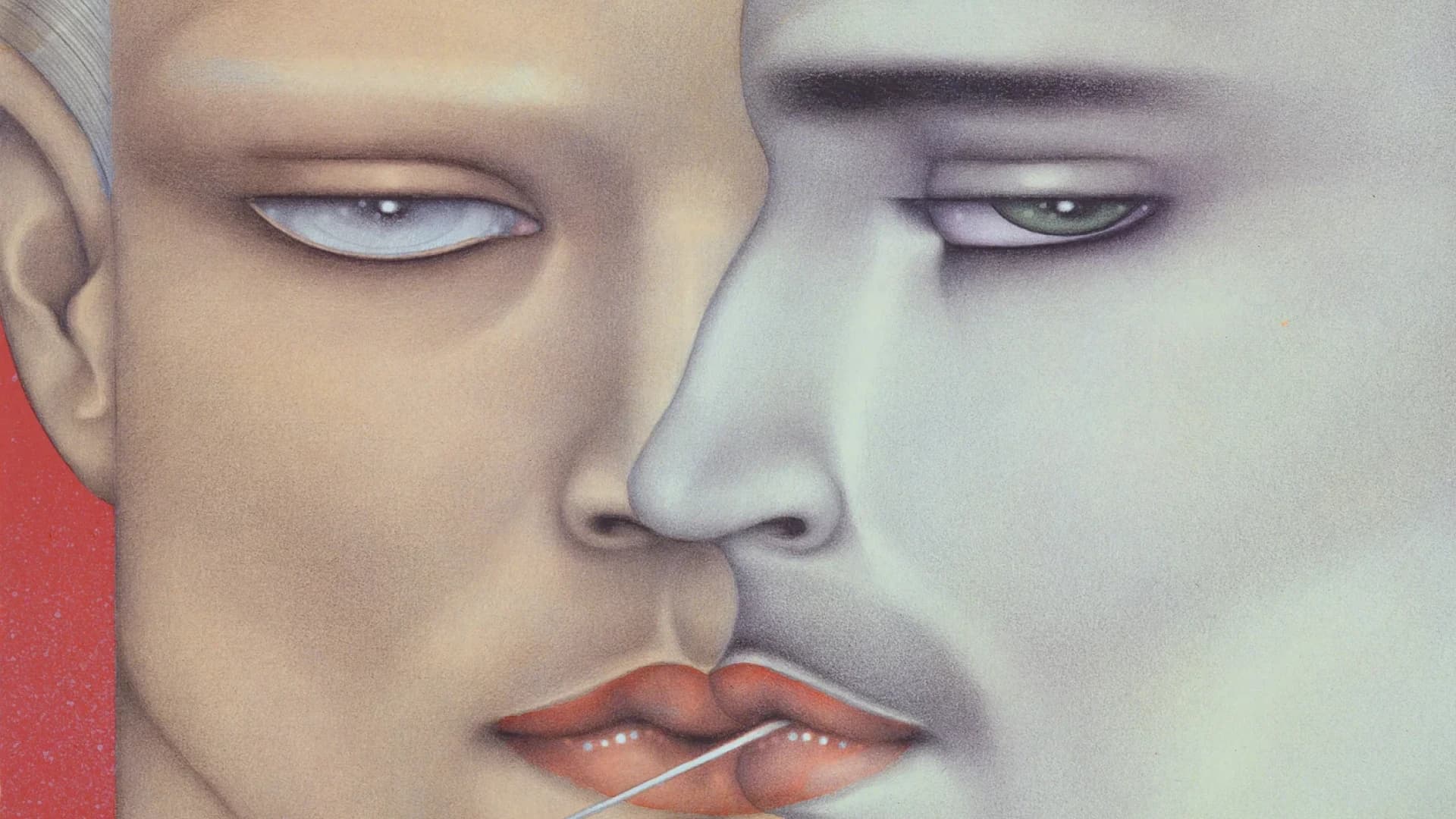
Mel Odom has spent five decades illustrating other people's stories – from the daring covers of Blueboy and the luminous faces on hundreds of book jackets to the porcelain companion that would become Gene Marshall, a doll born from grief and transformed into a global phenomenon. Now, as galleries in Paris, Los Angeles, and Vienna exhibit his work, and a documentary traces his life through decades of loss and creation, Odon reflects on survival, memory, and the peculiar alchemy of turning personal fantasy into something the world wants to hold. In this intimate conversation, the artist talks about the park he still visits in his mind, the friends he couldn't save, and why he's still not done dreaming.
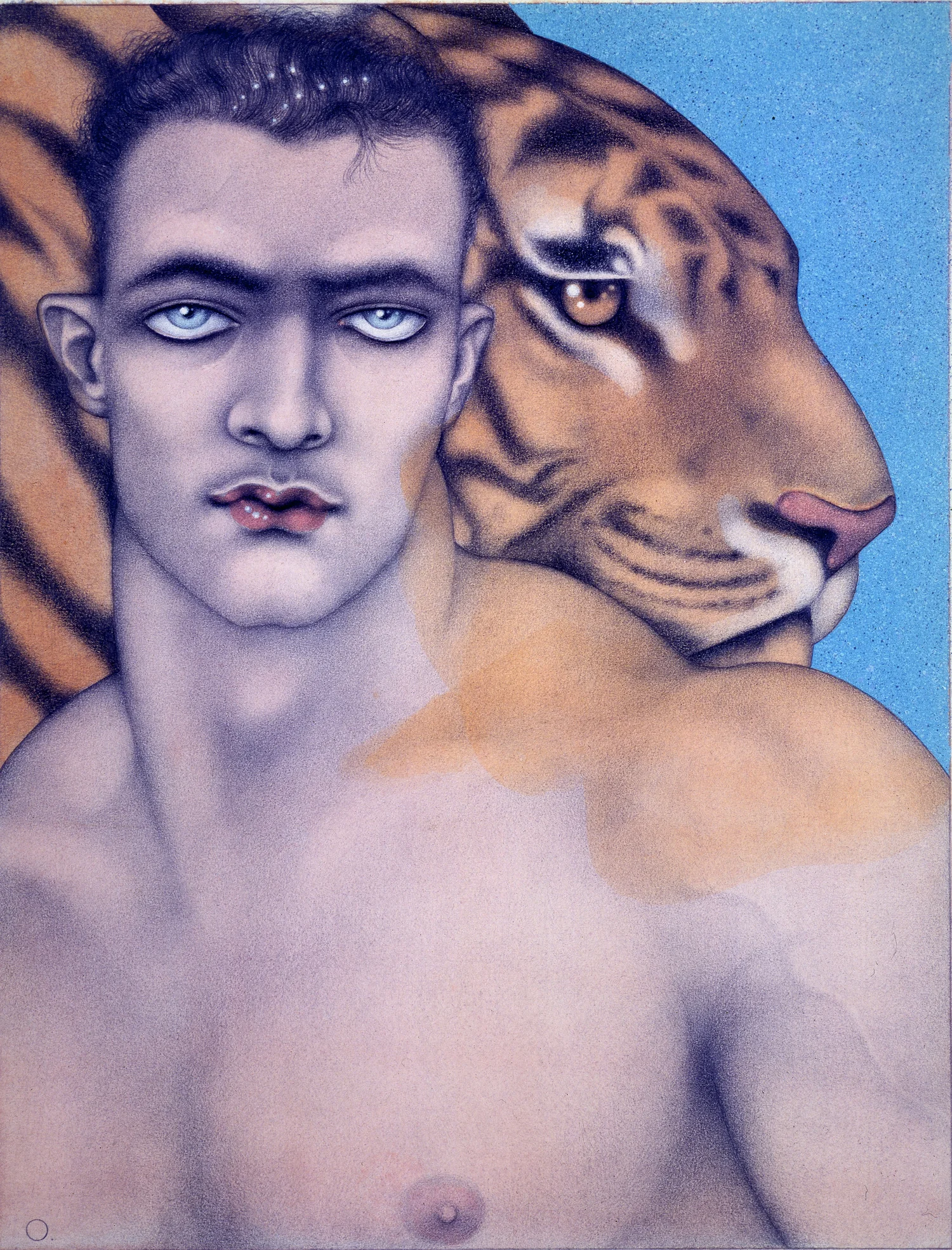
Mel Odom, Birthmark, 1980. © Mel Odom
Do you have places you keep coming back to – a gallery, a museum, even a street corner – wherever you are in the world, New York or otherwise?
I had to think about this for a while, but I do have a place I return to, even if it's only in my mind. It's a park I played in as a kid, directly next my grammar school. It was on the edge of a woods that had been cleared a bit, with swings and picnic tables added. It was very basic. Among the vegetation still there were violets and wild dogwood which I would pick and bring home sometimes. The attraction for me was a small stream that ran through this park. My friends and I would wade through this shallow creek and catch frogs and crayfish. We would trek back deeper into the woods in this stream sometimes, in a line, like a jungle safari. Occasionally I'd go there by myself and wade in this shallow water and just 'be there'. Now, living in New York City, I'm amazed at how frequently my mind goes back to this stream. I think it's a place I was totally at peace.
Fifty years in the same New York apartment – the city around you has reinvented itself several times over. Does the New York that "captured" you in 1975 still exist anywhere, or do you just carry it around in you now?
I call my neighborhood in NYC Manhattanberry. It's like a small town within a big city. I have several friends from college living nearby. I've seen many of the same neighbors for decades, movie stars, dancers, newsmen. I LOVE New York City. It's given me much. I've never been bored a day here.
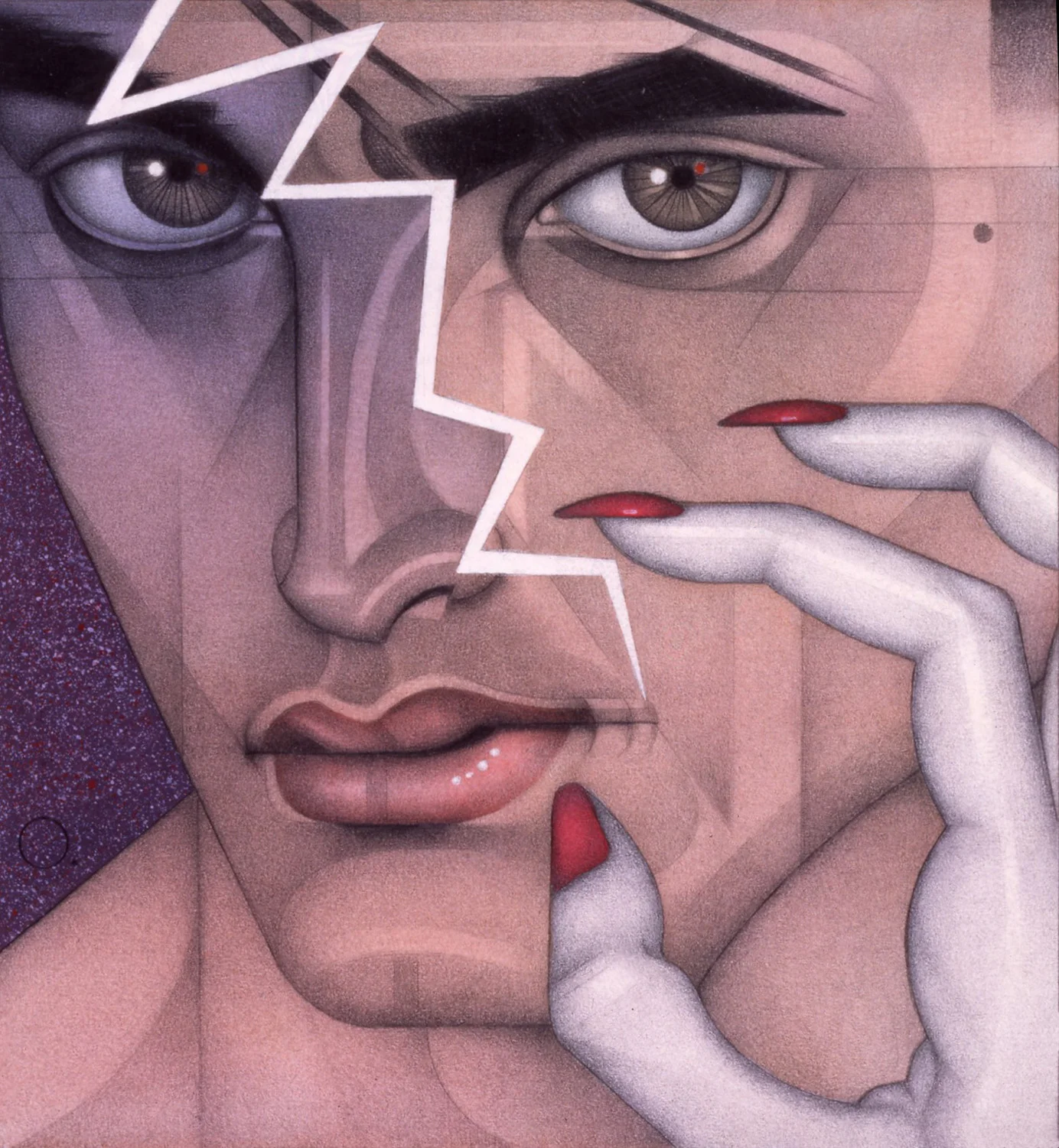
Mel Odom, Live Flesh, 1986. © Mel Odom
When you start a new piece, is the image already fixed in your head, or does it change as you go – does the paper ever surprise you?
When I was working as an illustrator I had to stick to the elements that were there in the original sketch the art director had approved. If I'm doing a drawing for myself or a painting, things frequently change. Particularly if I'm painting, things can change at any time and drastically. There's a wonderful freedom about painting.
Is there something you do before you touch pencil to paper – a habit that gets you into the right headspace to start?
LOL, I smoke weed!
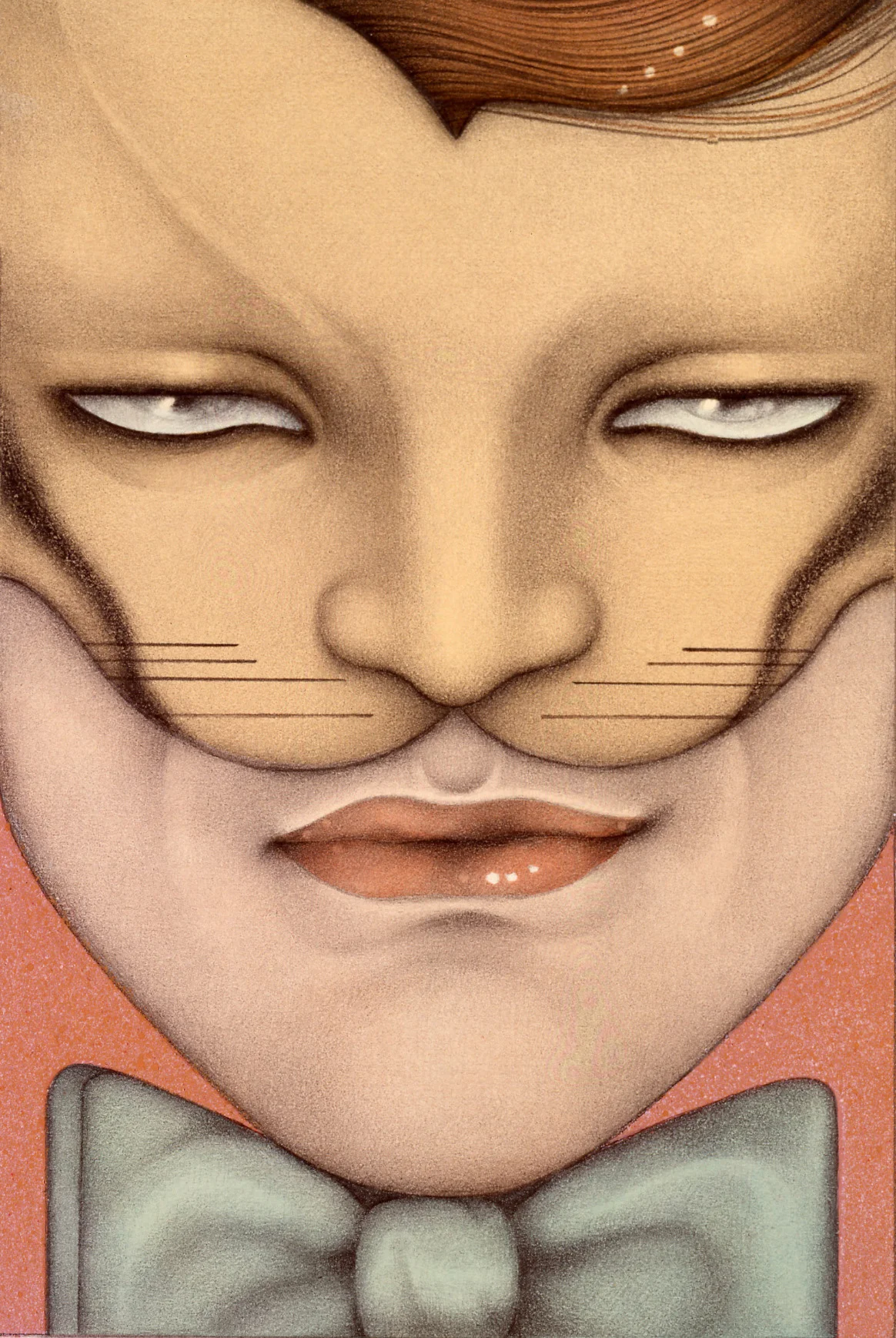
Mel Odom for an unpublished storybook "Rayford", 1978. © Mel Odom
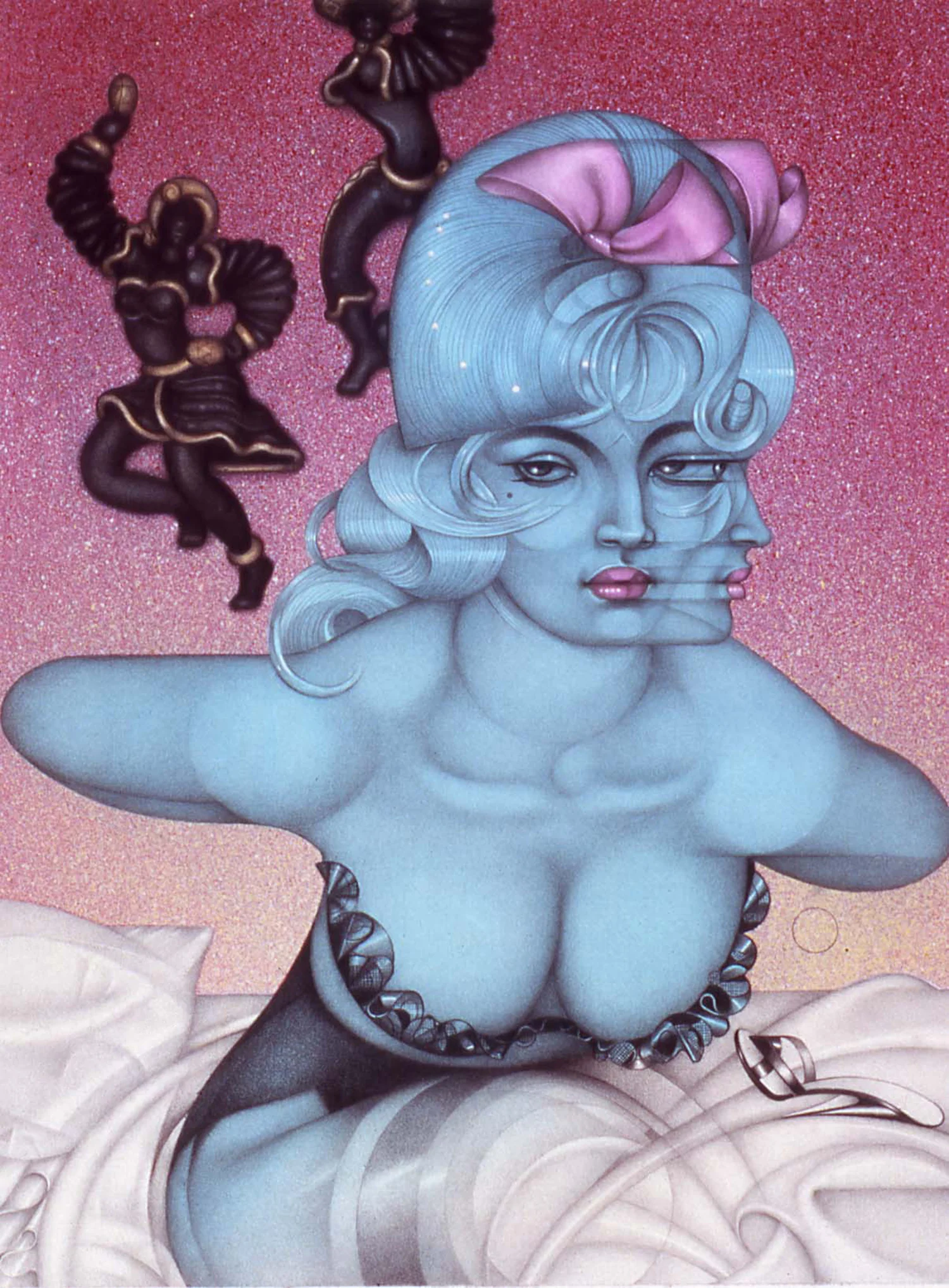
Mel Odom, Blue Moves, 1984. For Playboy magazine, "Mother's Day" © Mel Odom
You went from the explicit eroticism of Blueboy covers to the polished innocence of a collectible doll. Was that a retreat from that period of your life, or just a different language for the same desire and beauty?
Just a different language. My life has never let me retreat. Gene was just for me for the first six months of my working on her. I LOVE dolls and had been called a sissy my whole childhood for that. I was reclaiming that part of myself I'd learned to hide. She was the dream doll I had wanted as a child that did not exist. (Barbie came close) When I started thinking I might try to have her produced and made into a product I knew nothing of business. But I knew that Gene Marshall was meant for me to make happen.
You named Gene Marshall after a boyfriend who was dying of AIDS while you were designing her. More than thirty years later, do you still see him in her – or has she become someone entirely separate from what inspired her?
The intent is still there when I see her. I created Gene because my best buddy, designer Brian Scott Carr had developed HIV related dementia, and it fell to me to take care of him. He and his family were estranged, and I needed to be his advocate. This was happening all over the world at the time. He went into the hospital, and I decided to create a doll to have a distracting project during the sad times I knew were coming. She had a different name for a while, or a few different names. My boyfriend's name was Gene and the day he was diagnosed with HIV, I renamed my doll Gene in his honor. He had called her Lil' Gene all along (like she was our daughter). When I could get the name trademarked, that became her official name. Gene Marshall took over a year with a licensing agent to make happen, and during Gene Marshall's first year for sale at the trade show 'Toy Fair', I was going from my partner Gene's hospital room to the Trade Show and talk about GENE all day. It was very surreal. My boyfriend Gene died the month after my first Toy Fair.
You didn't look at Hard Stuff for twenty years after you finished it. What changed the day you finally pulled it back out – and what did you see in it that you couldn't see in 1985?
I had intentionally forgotten about it. I had finished it years earlier and put it away immediately. It was about my boyfriend Joe Morrocco who had become a heroin addict. I had done the portrait after our very difficult breakup. Years had passed and he too had died of AIDS. Later, I could look at the drawing without fear or dread and finally be able to appreciate it.
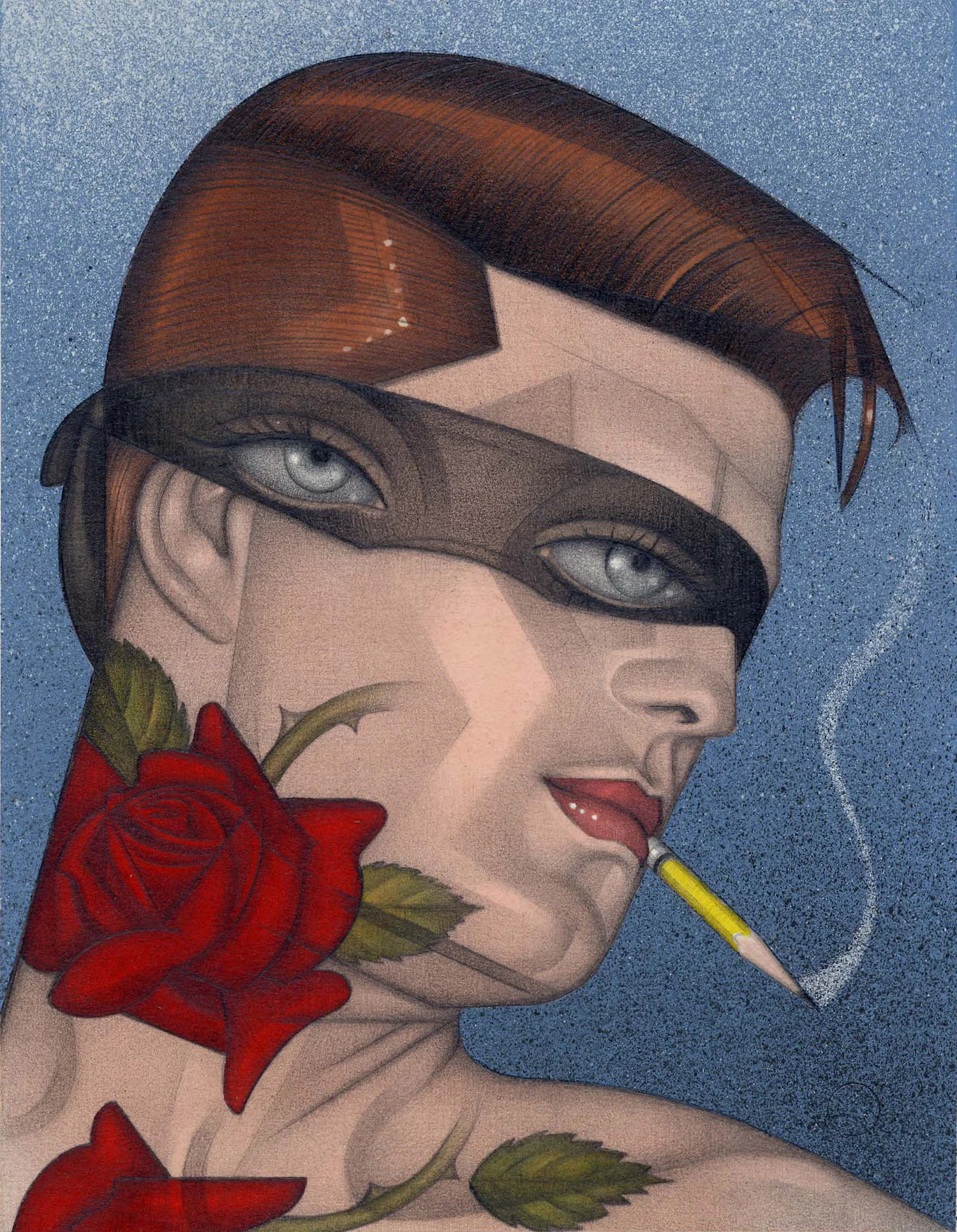
Mel Odom, RSVP © Mel Odom
You've described feeling like the last survivor of an entire era — like Colette, outliving all her friends. Which is harder: being the one who remembers, or knowing there may be no one left to remember you?
I don't worry about being remembered. I think I will be, even if it's just remembered by a bunch of lovely nerds who collect dolls. I'm a nerd and I like my friends to be at least five kinds of nerd. My remembering the time when my friends were all dying around me is the toughest part. I still occasionally cry about this. I said my last goodbye at so many bedsides. I turned out to have an HIV resistant gene (that name again). They think it's because someone in my distant family past survived the Bubonic plague. The gene that was saving me and the Gene doll's name are both the same unlikely story. I can't help but feel blessed.
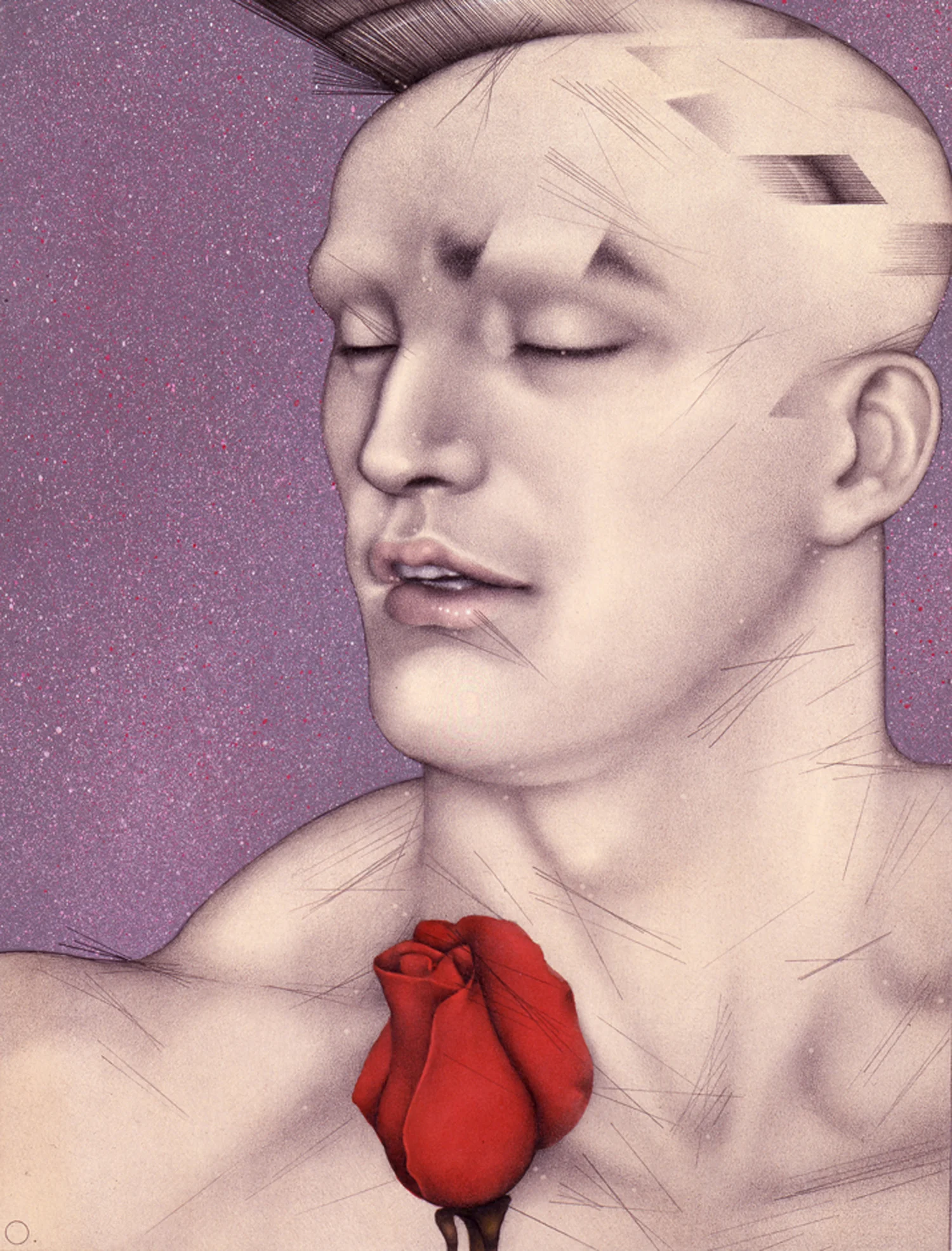
Mel Odom, Close Shave, 1979. For an editorial for BlueBoy magazine "Close Shave'. © Mel Odom
Guy Gavriel Kay, Ruth Rendell, Anne Rice – you spent years putting faces to other people's stories you had no hand in writing. Is there a cover you're genuinely proud of for a book you secretly thought wasn't very good?
Oh, a couple, but there were also books that introduced me to brilliant writers I probably wouldn't have read otherwise. I've always loved to read. 'Nocturnes for the King of Naples' was my first book cover and introduced me to Edmund White who became a friend, as did the genius mystery writer Ruth Rendell.
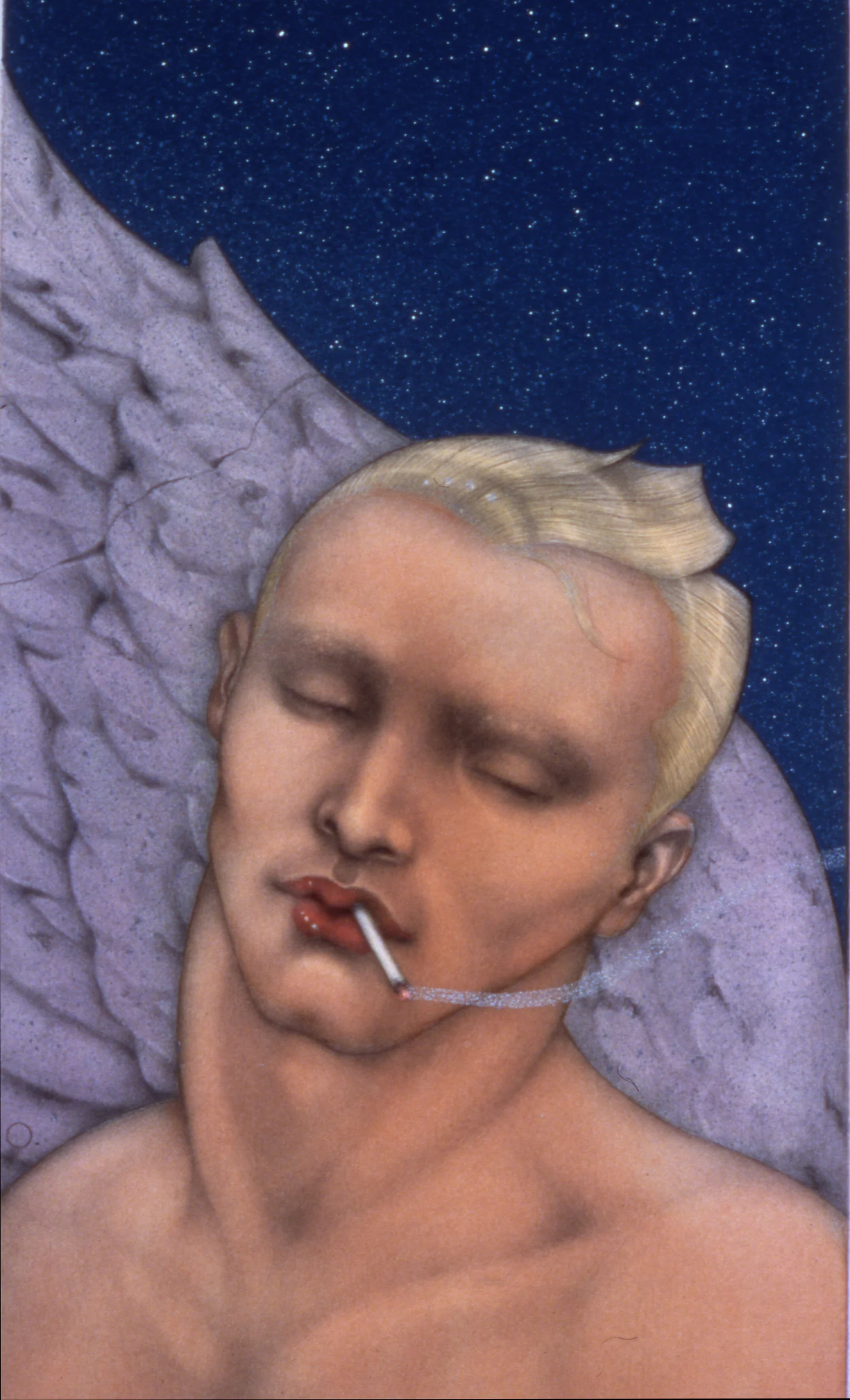
Mel Odom, Nocturnes, 1987. For the cover of Edmund White's "Nocturnes for the King of Naples" © Mel Odom
You worked alongside George Stavrinos and Antonio Lopez, both of whom died far too young. If one of them walked into your studio today and saw what you're working on in 2026, what do you think they'd say first?
I was close to George. He was the first successful illustrator to reach out to me. We traded drawings and lived not far apart. He would say "You need to dust in here"!
There's a documentary being made about you now. What's it like, for once, not illustrating someone else's story but being the one whose story gets illustrated – and how much control were you willing to give up over how it gets told?
It's definitely kind of odd. I pretty much gave up control on this because one of the two directors is a longtime friend and I figured I'd see what they made and take it from there. They've promised if there's anything I really hate they'll change it. It's difficult (or impossible) to be objective about one's life.
Dreams for Sale – the title of your recent show sounds almost like a verdict on your whole career: you've spent your life selling people a dream, whether on a magazine cover or in a doll box. Do you still buy into your own dreams, or have you seen through them a long time ago?
My drawings have always been filled with friends and boyfriends and fetishes. It sounds so corny but with my now having exhibits in snazzy galleries in France and LA and soon in Vienna it looks like my art career is still evolving. Gene Marshall gave me enough money to be able to relax a little and with Charlie, my husband of many years, I feel very blessed. Many of my dreams have come true.
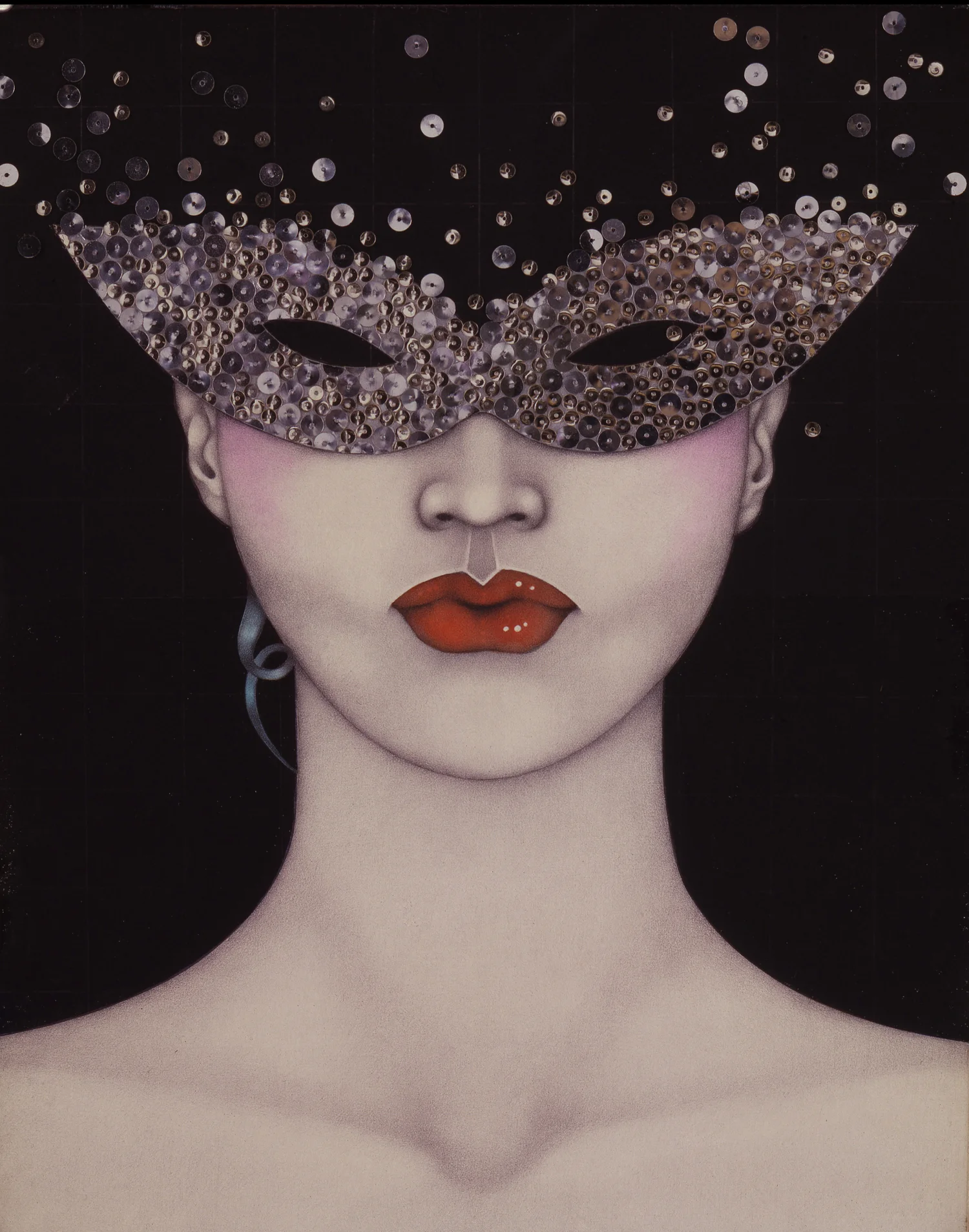
Mel Odom, Jennifer, 1979 © Mel Odom