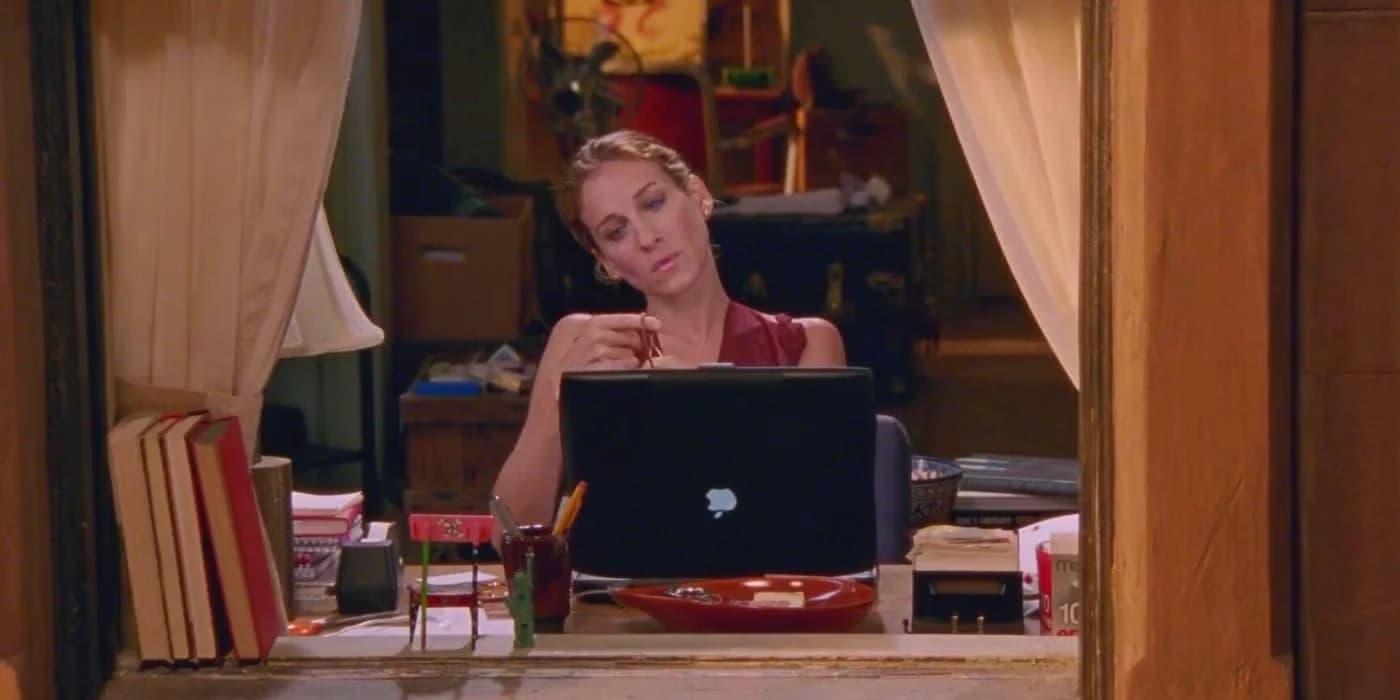
Woman writing on a laptop at a desk, focused on the screen.
7 min

24.11.2025

How to Start Writing: A Funny, Honest Guide for Beginners

By Miluna Valen

A funny, honest guide to writing for beginners from creative spaces and productivity myths to rejection letters and writerly insecurities.

Readers Are Not Your Soulmate (and That’s Okay)

Let me tell you a memory. I was once enrolled in a course that focused on creative writing. I wrote a story about a couple breaking up and read it loudly in the class like its BBC radio theatre. It was about a couple who, after spending a night at a hotel, argued and broke up.

A woman from the class came to me and asked with sad eyes:

‘I hope you feel better now.’

I didn’t understand. I said:

‘Sorry, I don’t understand.’

She looked sorry.

‘Your boyfriend... I'm sorry. These things happen.’

I found it a very weird moment because it was based on imagination and I didn’t have a boyfriend. That was just a story.

I said:

‘No, it was just fiction. I created the character.’

'Of course,' she said, hugging me. 'Denial is normal.'

She didn't believe that and thought that actually had a breaking up process.

The following week, when she came, she asked, ‘How is it going?’

I decided to let her believe what she wanted to and replied,

‘Yes, it was the worst break up ever...’

She patted my shoulder and looked at my eyes and said.

''I believe you'll forget him and be happy.''

It's impossible to be understood by everyone. Writers secretly dream of finding the one: the mythical reader who will completely understand their work and nod wisely in agreement, perhaps even whispering, 'Genius'. But writers rarely think the same way because it can be completely different.

​

Writing romance: you don't need a typewriter or red or pink roses

You know those antique enthusiasts. I was one of them. When I got my first typewriter, I had big dreams. I wanted it so much. The feeling of touching and smelling it was wonderful. It really is a great feeling. Retro typewriters can be very charming and decorative. Some writers still prefer them. However, I soon realised that although the typewriter looked fabulous on my desk, it mostly served as a very loud paperweight. It didn't help me write at all, in fact it slowed me down.

I know people who still reject e-books and audiobooks. There is beauty in keeping traditions alive. For example, you could enjoy using fountain pens as part of an evening ritual at home. However, let's not confuse the image of the writer with the act of writing itself. Sometimes, we surrender to the image of the writer that we create in our minds.

An expensive notebook? The more expensive the notebook, the more anxiety you may feel because you've already made the investment and your mind may be expecting a return. It's as if buying a luxury pen means your writing must win a Nobel Prize.

Write where you are. Use what you have. You don't need a special pen or a Moleskine notebook. Just write somewhere. It could be a small piece of paper, the notes section of your mobile phone or even the back of a receipt, it doesn't matter. Creativity is a living, spontaneous and fluid process. Let it flow and keep going!

Ah, yes: the desk. A sacred temple. A temple to productivity. But it's also the place where dreams go to die, buried under mountains of unpaid bills and abandoned teacups.

Your writing spot is wherever your soul stops sighing: a café, a forest. A forest. A train. Desks are fine, too. But so is the floor. Or even the top of a fridge. This is especially true if you're trying to hide from your responsibilities.

Some people prefer crowded, noisy places such as city centre cafés, while others prefer silence. Some people love nature, while others love writing while walking or travelling by train. Our creative space is also our safe place. There are sacred times. It's just you and your work. Don’t limit yourself.

​

Wake up at 4 a.m. to be productive

Mornings are productive. I work in the mornings. But it is not for everyone. You can be productive whenever you want. Look at writers and artists — they make good use of the morning. They enjoy the peace and quiet and the clarity of mind that come with it.

Remember that everyone has their own most productive times, so never force yourself to do anything. We're not looking for hardship and pain, but for fun and discovery. Life is hard enough. So please don't make it harder and let your creativity flow!

​

Writing Gym: Working Every Day Myth

Sometimes you feel really exhausted. It's as if everything is falling apart. But it just doesn't happen. I stopped fighting those nights a long time ago. I’ve learned to accept things as they are and just go to sleep.

We're not machines. It's not good to push yourself too hard when you're trying to be creative. But if you really have to meet a deadline the next day, at least give yourself some space. Go for a coffee or a walk. Or go to bed early and get up early.

We work very hard. Sometimes we need to stop and rest.

A few years ago, I confessed to a man that I was struggling to finish my novel. He said, 'Have you tried squatting?' 'As in... an actual squat?' I asked. 'Weak glutes kill creativity.'

I remained silent, confidently establishing a link between my novel character and my glutes. He continued. 'You must follow a protein-rich diet. Tell me what you eat for breakfast. Come on. Balzac drank 50 cups of coffee every day. Sometimes, he didn’t even bother brewing it. He would eat spoonfuls of ground coffee straight from the tin.'

Welcome to the writer's gym! You don't need a membership.

​

Never ask permission to write

Many writers feel guilty during the day because we feel like we always have to be doing something to earn money.

While no one can deny that we need money, you don’t have to earn a living through art – it’s your birthright. You have the right to create art and set aside time for writing without asking permission.

This is why we prioritise other tasks and then realise at 1 am that we have no time left for writing or art. We then feel drained and sleepy. We decide to do it tomorrow, which leads us into a cycle of procrastination.

You can prioritise your writing or art. Even if it's just 20 minutes in the morning, do it! Because that means you don’t need anyone’s permission.

It will make you feel powerful and more connected.

​

What you write is... Basically poop!

Let's just say it: Someone needs to tell you the truth before you name your cat Kafka and submit another haiku to The Paris Review.

Psychoanalytically speaking, your first piece of writing — your masterpiece, your magnum opus, your artistic explosion — is excrement.

This isn't an insult. It's Freudian theory.

Acording to Freud, poop is the first production we proud of and all other products we have are just symbolises this process.

It's true. The first thing you created was raw, embarrassing and important to you: your poo. Like a proud toddler, you expect the world to say, 'Oh wow! That’s magnificent!'

But that's the point. You have to make a mess at the beginning before anything beautiful can emerge.

No one skips this stage. Not even Kafka did. Nor did Virginia Woolf. Dostoyevsky probably wrote silly jokes too, hoping that no one would find them.

So here’s the rule: do the messy work first, then polish it up later.

​

Stop Comparing Your Writing to Dead Geniuses

Reading Dostoevsky while writing your first story is like comparing your home kitchen to a five-star restaurant. Of course it doesn't measure up. One has a literary empire. The other has one functioning spoon.

Don't compare your first manuscript to Kafka's. Did you know that Kafka asked his friend Max Brod to burn his work? Yet here we are, quoting him.

What was he thinking when he gave his work to Max Brod? And what was Max Brod thinking? Was it a good idea? Fortunately, that’s not the case this time. All of Kafka’s books are being turned into five-part articles on Medium, and subscribers will receive weekly newsletters from him.

Personally, I wouldn't want an email from Kafka every week.

​

Bonus: The Writer’s Scarf and Other Useless Props

People will tell you a scarf gives you a genius look. What they don't tell you is that the scarf will not do all the work while you sit there.

Here’s what writers actually need to know:

1.     Not everyone will love your work. If this is the case that’s quite good. Dictators get 100% approval.

2.     Your audience exists somewhere. You just need to find them. Maybe they are in a forest, or on a spaceship, but hopefully not that far and in your neighbourhood.

3.     Rejection letters are free therapy with better prose. Enjoy the long and deep sentences.

4.     If readers feel anything at all, even anger, congratulations, you've connected.

5.     Keep creating. Remember, you can’t edit a blank page, but you can accessorise it with a nice scarf.

​

Writing doesn’t start with perfection – it starts with showing up, staying curious, and letting yourself be a beginner. If this helped you take even one small step towards the page, stay tuned: we’ll be sharing more articles for writers soon, from building a routine to surviving rejection with your sense of humour intact.

​

Date

24.11.2025

Tags
Writing & PublishingCreative WritingWriting TipsWriting HumorProductivity MythsBeginner WritersWriting MotivationWriting InspirationWriting ProcessWriting AdviceWriting Life