Unlike the monumental trends shaping much of the Gulf, Bahrain has taken a quieter, more introspective path. Muharraq, now emerging as the country’s new art capital, serves as an example of how tradition and innovation can, and perhaps should, go hand in hand. The large-scale redevelopment of the island’s historic heart reveals a vision forthe future rooted in continuity, revival, and the transmission of knowledge across generations.
Gigantic, ambitious projects of the Gulf, from The Line in Saudi Arabia to the Louvre in Abu Dhabi have long marked the era of giganticism, pushing the boundaries of innovation and presenting visions of a utopian future for the region.Yet these promises often clash with the harsh realities of the desert and the everyday needs of its people, working against the context rather than with it.
Bahrain’s Shift: Following the Pearling Path
In Bahrain, however, an intriguing new shift has occurred in recent years. Muharraq, a former capital of Bahrain, hasbeen converted to a new art hub, housing galleries, studios and art residencies that open doors to both local andinternational artists. As a part of the Pearl Path Redevelopment Project, initiated by the Ministry of Culture of Bahrain,old and new have come together. Monumental new construction projects were accompanied by a series of careful restorations of historic residences, cultivating a multi-layered dialogue across times.
As a part of this project, cities like Muharraq have become open stages for experimentation, allowing regional and international architects to interpret the Gulf’s vernacular language through their own perspectives. Visitors, drawn initially to the large-scale projects, find themselves instead confronted with something subtler: the transcendence of time itself.
This raises a question: what sparked this change, and what came first: art or architecture? As a UNESCO World Heritage Site, the Pearling Path project walks a fine line between preservation, restoration and innovation. This philosophy binds together the redevelopment approach, and today Muharraq presents itself as a vibrant mix of traditional houses and a cluster of new architectural projects, both detached, but in a communication with each other. Architect Noura Al Sayeh joined the initiative as a young graduate from EPFL in Switzerland, entrusted withrecommending architects for the Pearling Path’s contemporary additions. As a result, many of the new interventions were realized by European architects, each offering a distinct interpretation of the brief’s core principles.
A Personal Entry Point
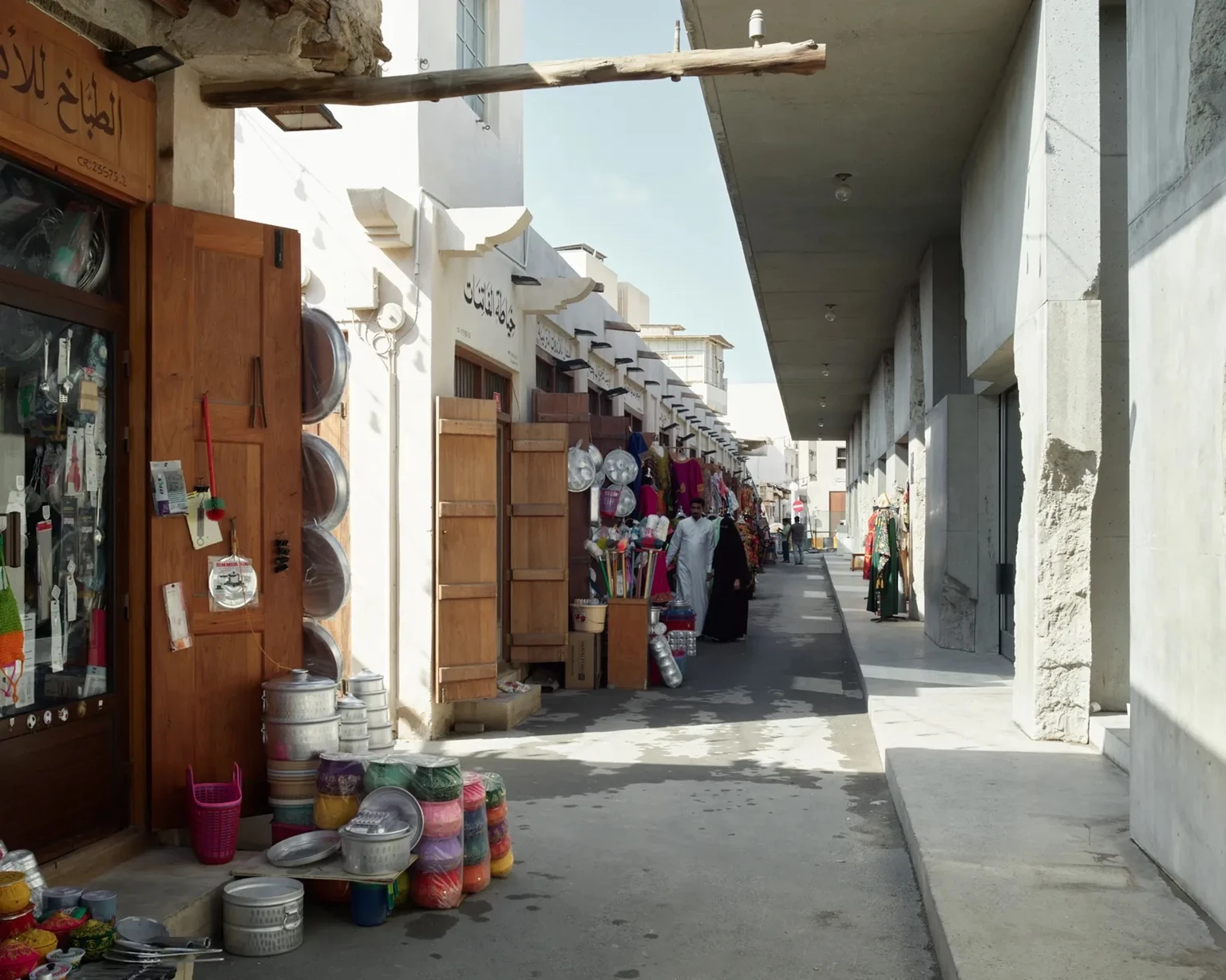
My personal introduction to Bahrain began as a resident at the Art Station Bahrain, where I first encountered how vibrantand active the island’s creative community is. As a place that serves a mission, the old market building was renovated and repurposed as a creative centre, offering studio spaces to artists, as well as an active cultural program for the residents of all ages and backgrounds. The journey of renovation was an extended act of care, both for communities and spaces they inhabit. The project honored the legacy of the place, its craftsmanship, and its traditional materials. For instance, traditional wooden window screens were ordered from the last remaining local workshop in Bahrain: a gesture that speaks volumes about the country’s perception of its past and future.
A short walk through Muharraq is enough to be convinced: this project takes its millennia-long history seriously, allowing it to grow and evolve into new forms and contexts.
The Layered City: Valerio Olgiati’s Pearling Path Visitor Centre
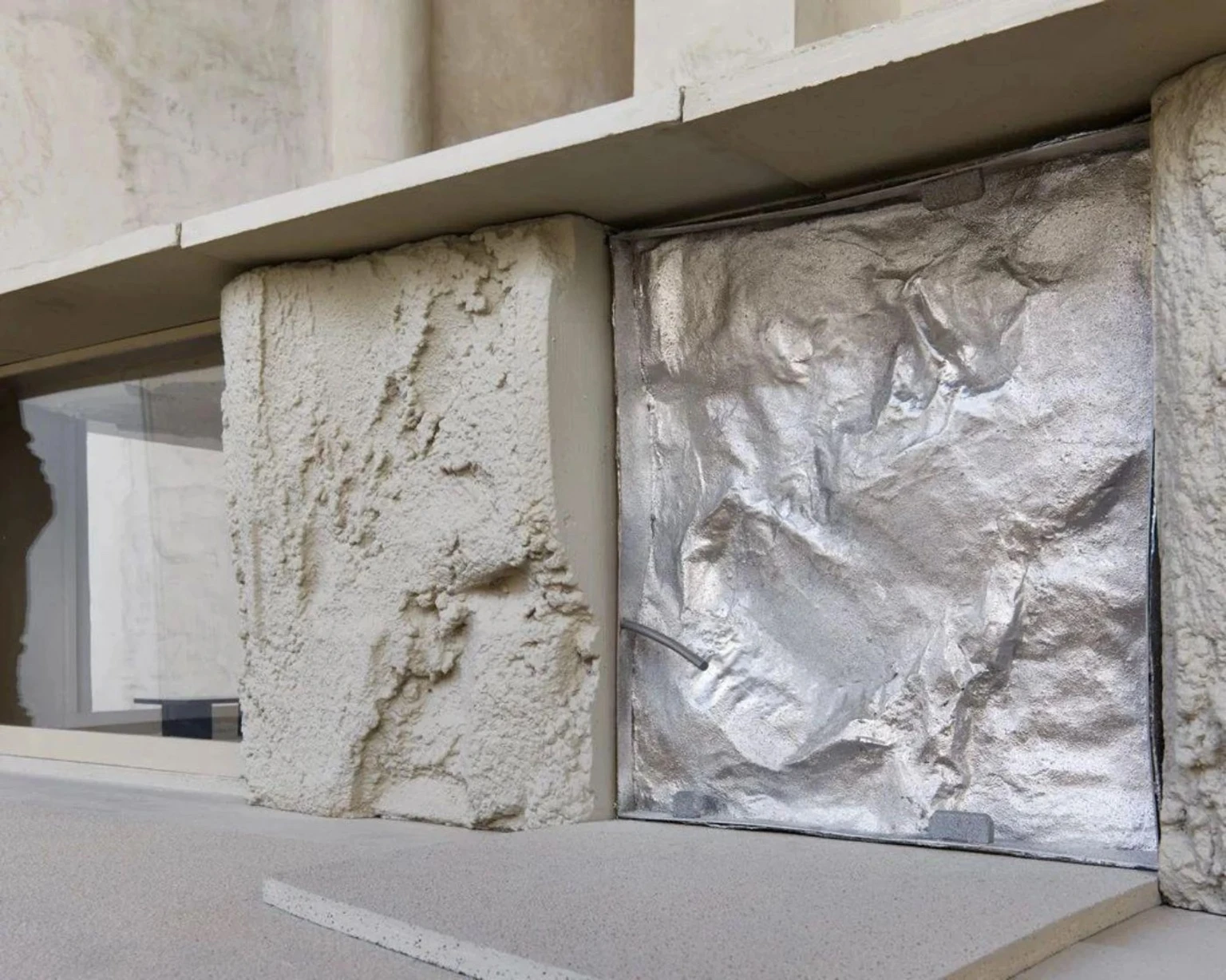
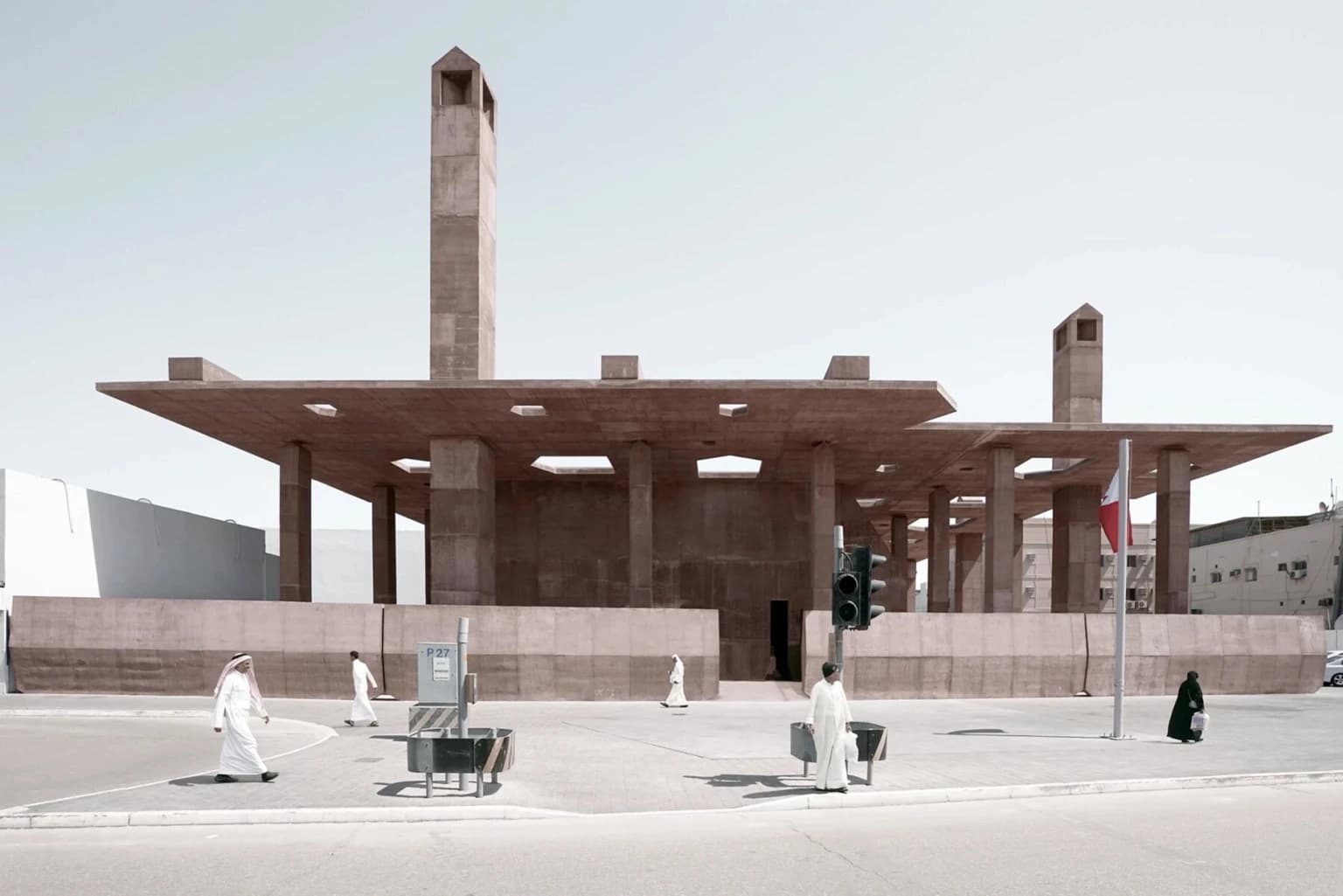
A natural starting point for this exploration of Muharraq is the Pearling Path Visitor and Experience Centre by ValerioOlgiati. The project perfectly embodies the logic of layering, so central to the city’s redevelopment. A massive, minimal concrete structure rises above and integrates the ruins of the Amarat Yousif A. Fakhro: a 1930s building that had fallen into decay by the 1960s. The center pays tribute to Bahrain’s pearling heritage while standing as a symbol of how the country’s architectural language evolves through dialogue with its ancestral knowledge.
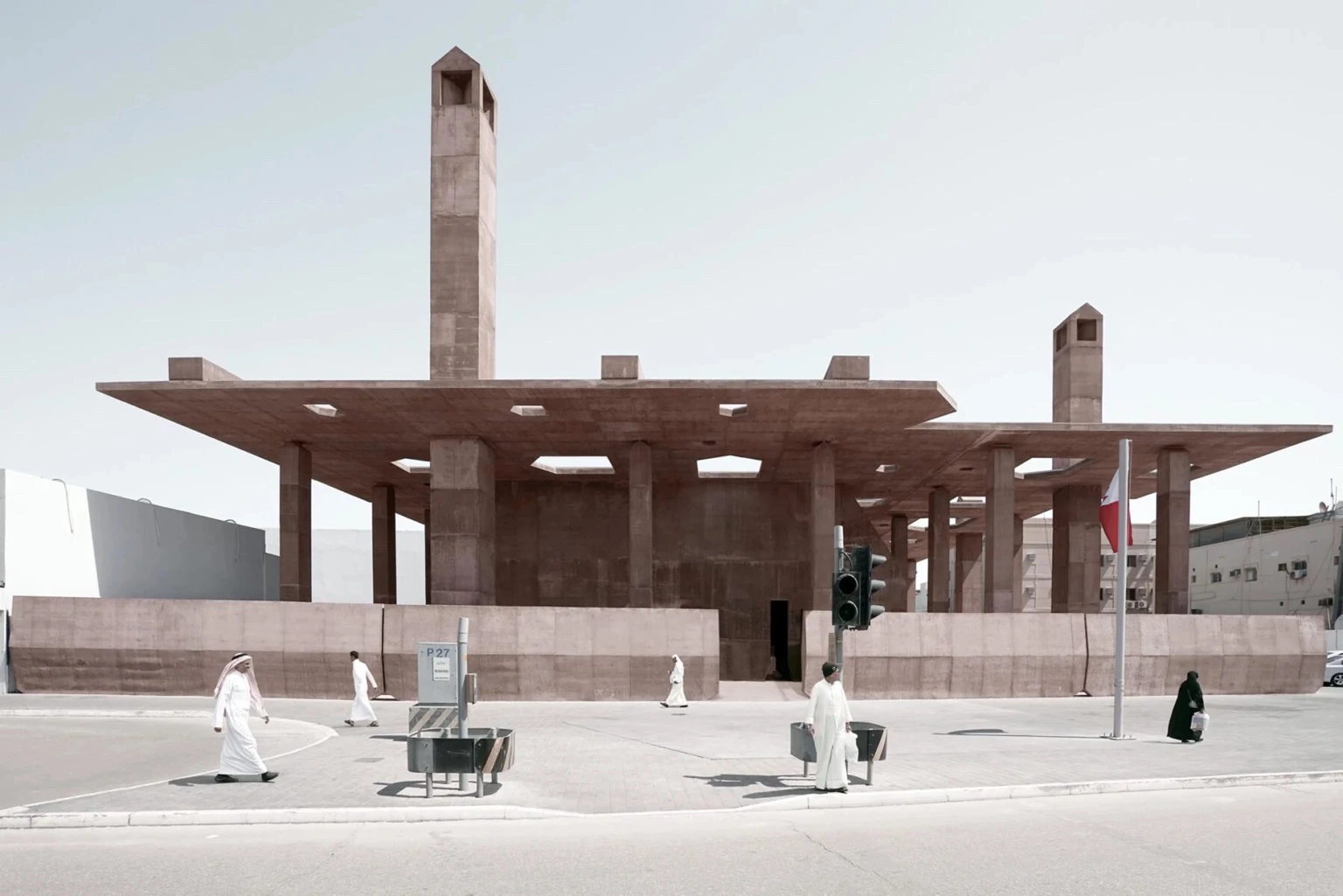
Pearling Path Visitor and Experience Centre, Muharraq, Bahrain. Photo © Valerio Olgiati.
The station's exterior reads as almost brutalist, yet inside it unfolds as a series of semi-open spaces that flow naturally from one to another. This invitation of new experiences right next to the old ones is quite symbolic of Bahrain. Acting as a protective canopy over the buildup of buried history, the structure is supported by large, minaret-like columns. It exists somewhere between indoors and outdoors, between shelter and openness. Beyond just a pearling history museum, it hosts events, such as Muharraq Nights, bringingshops, food and live music into its courtyards.
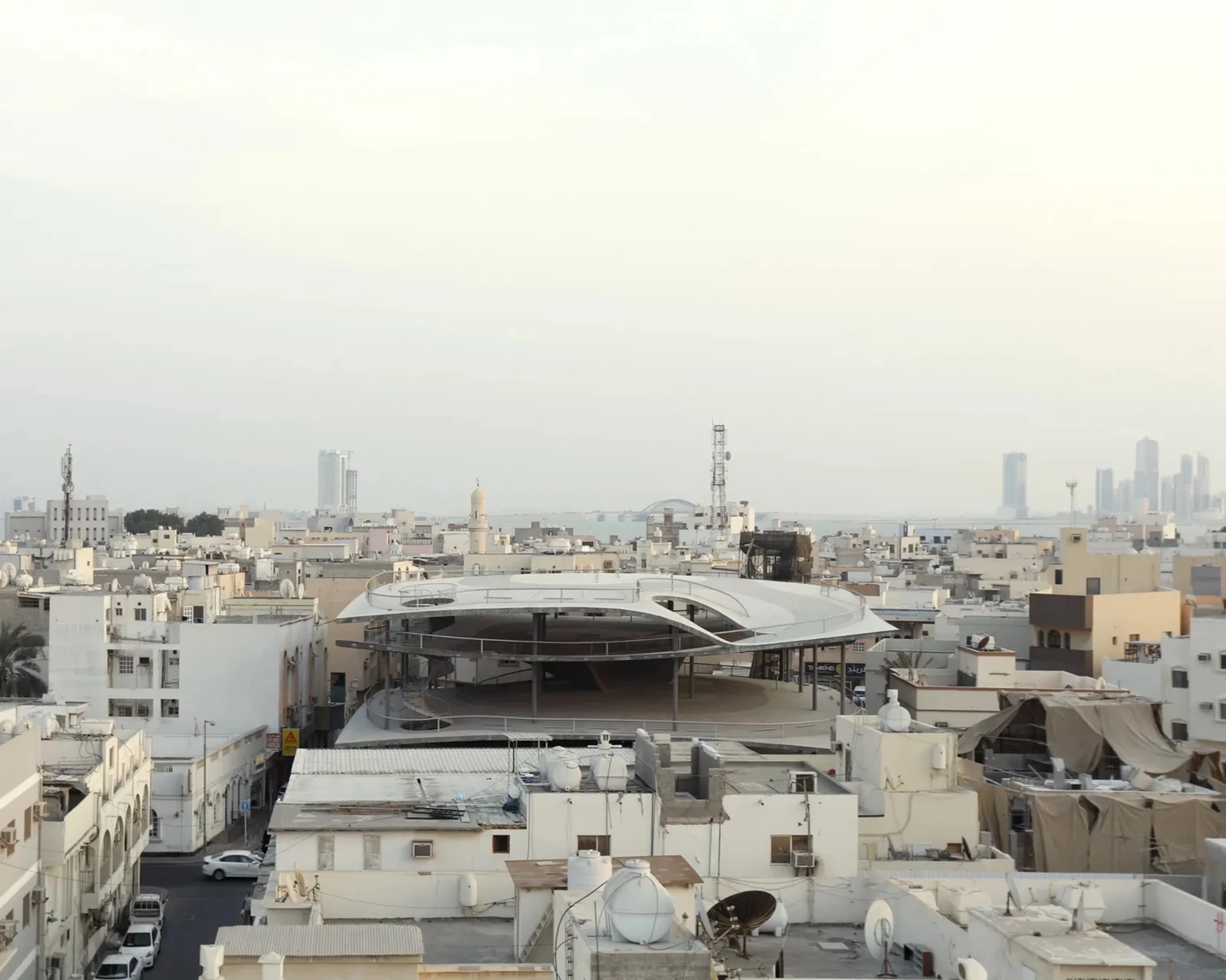
The Concrete Experiment: Christian Kerez’s Car Park Plot A
Further away from the visitors centre is a very ambitious parking lot, one of the series of Four Car Parks designed byswiss architect Christian Kerez. Brutal, concrete and sculptural, it takes an alternative approach towards the samematerial, bending and manipulating it till it becomes almost fluid and soft.