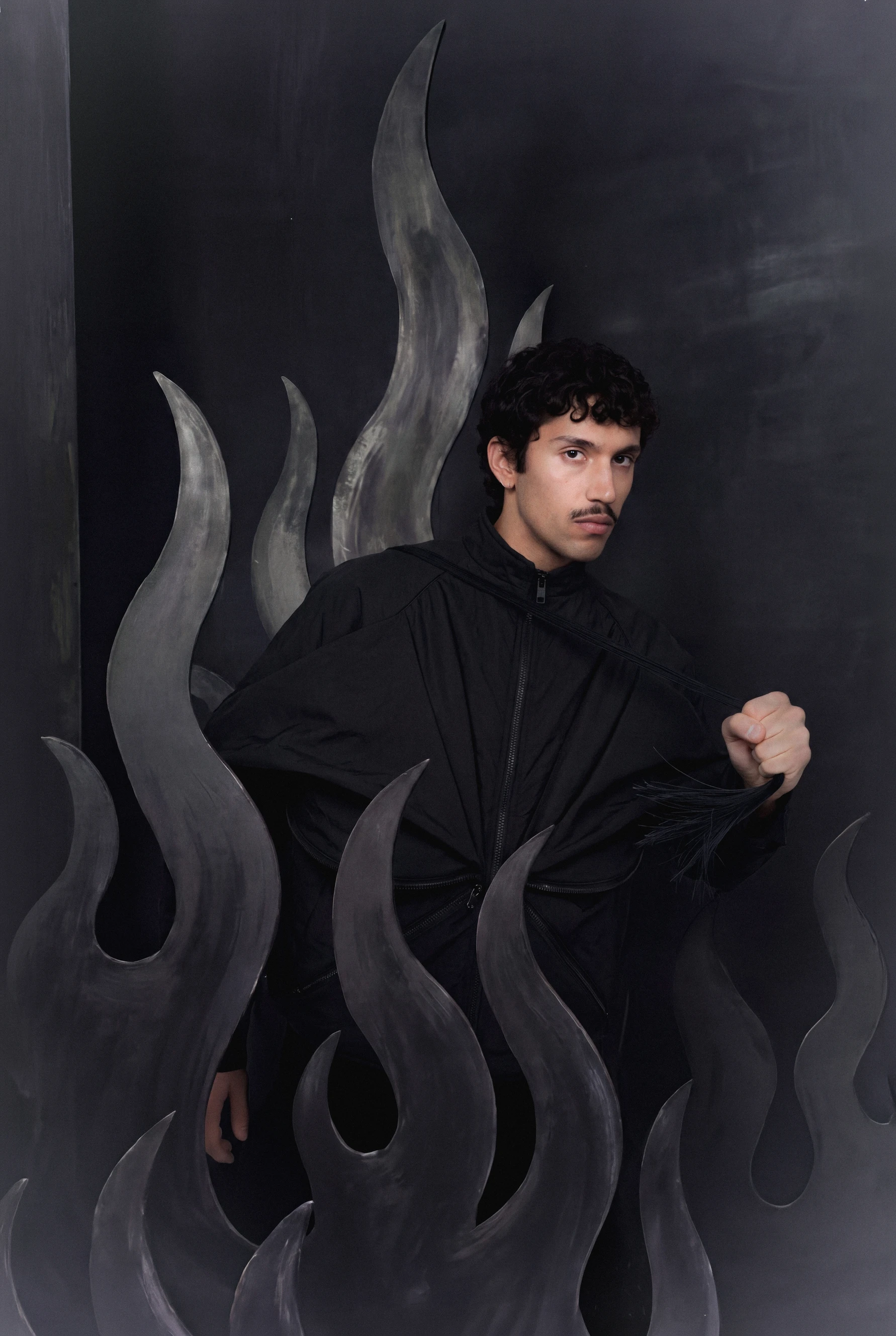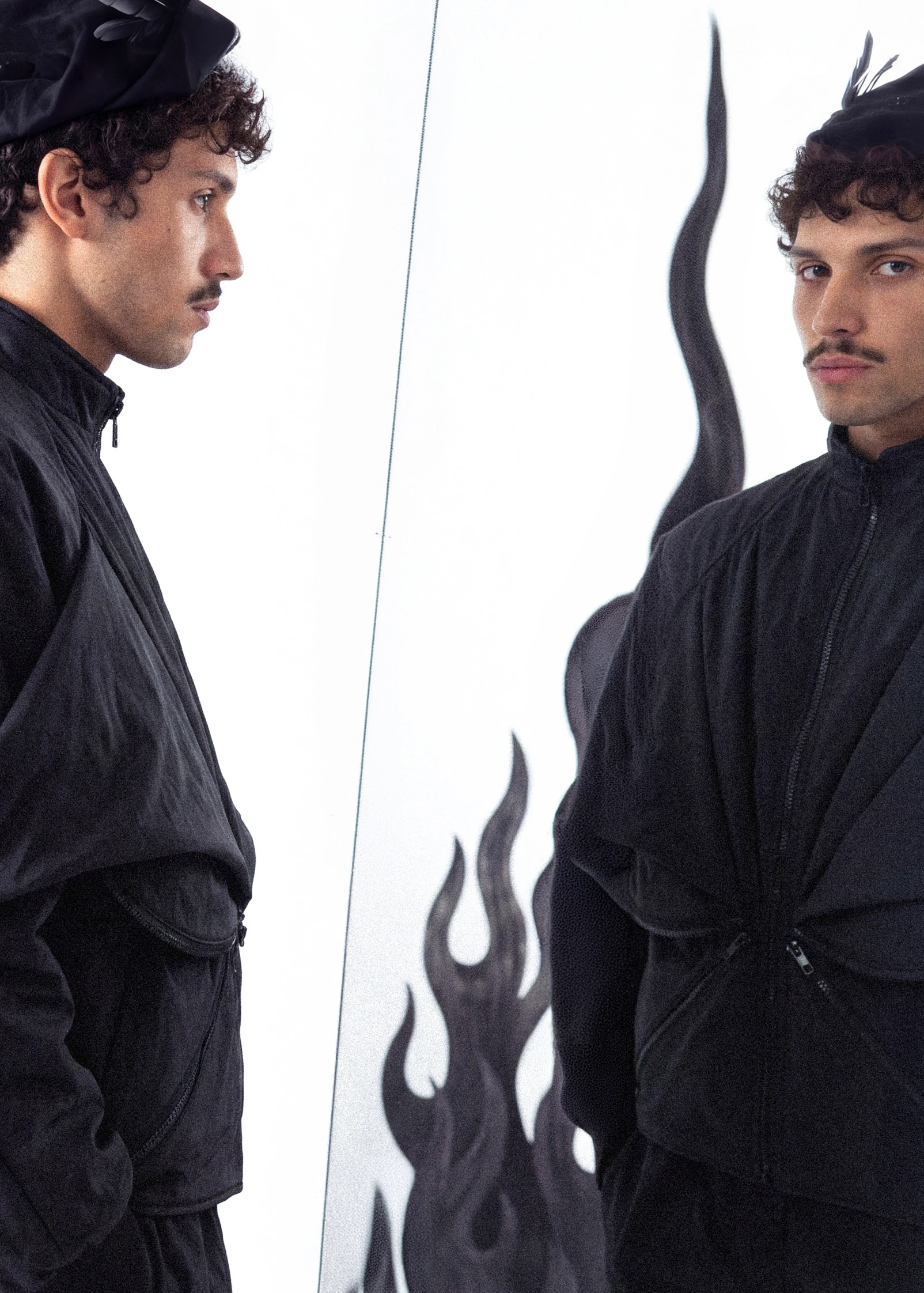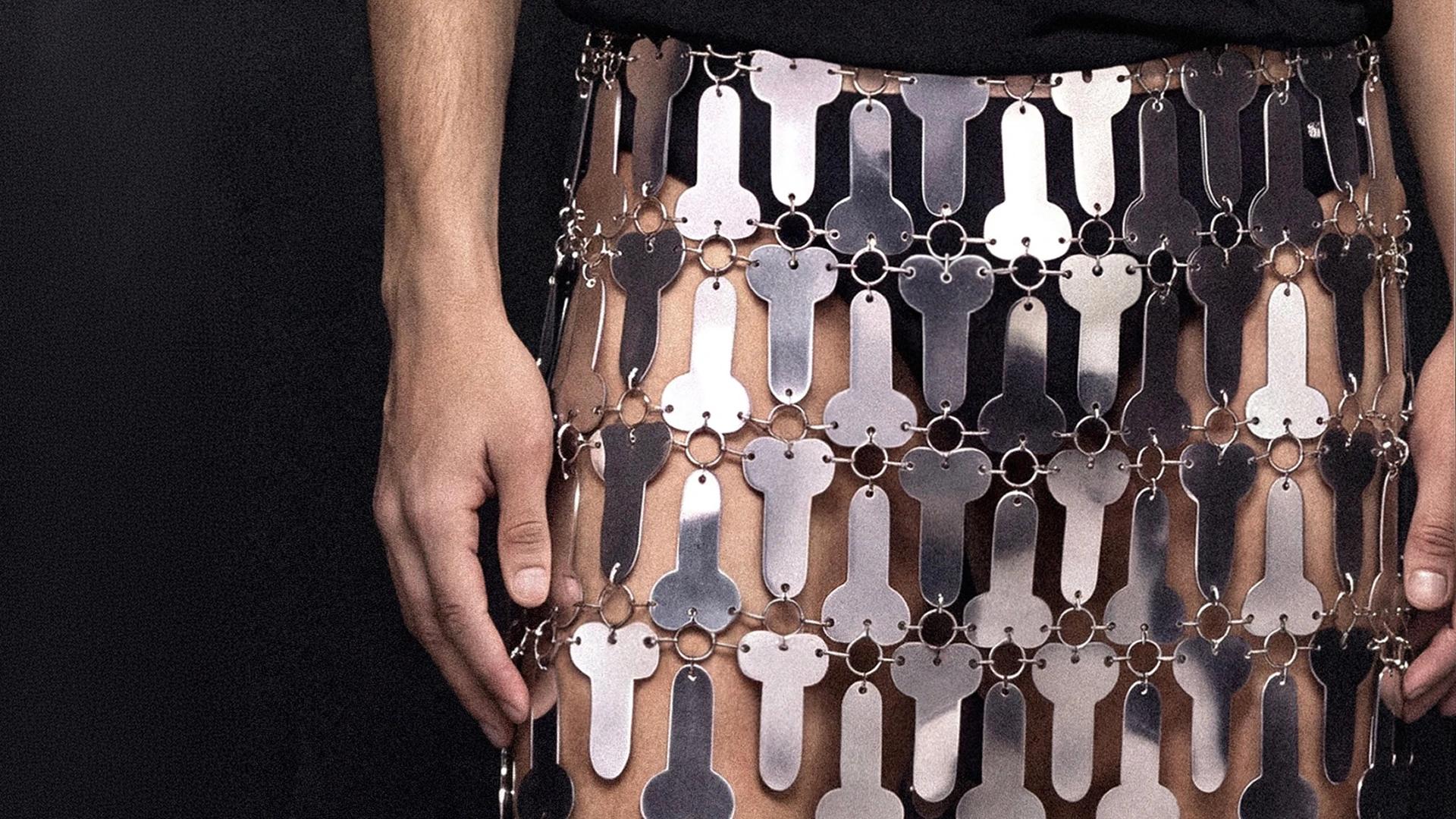
Before founding his eponymous label in Istanbul, Göksenin Ay approached fashion from different perspectives, moving between writing, styling and image-making. Today, these experiences converge in a deeply personal design language rooted in memory, desire and the body. In his debut collection, Lament, Ay explores the tension between vulnerability and protection. He transforms leather and metal, fetish codes and intimate symbols into objects meant not simply to be seen, but to be worn, touched and lived in.
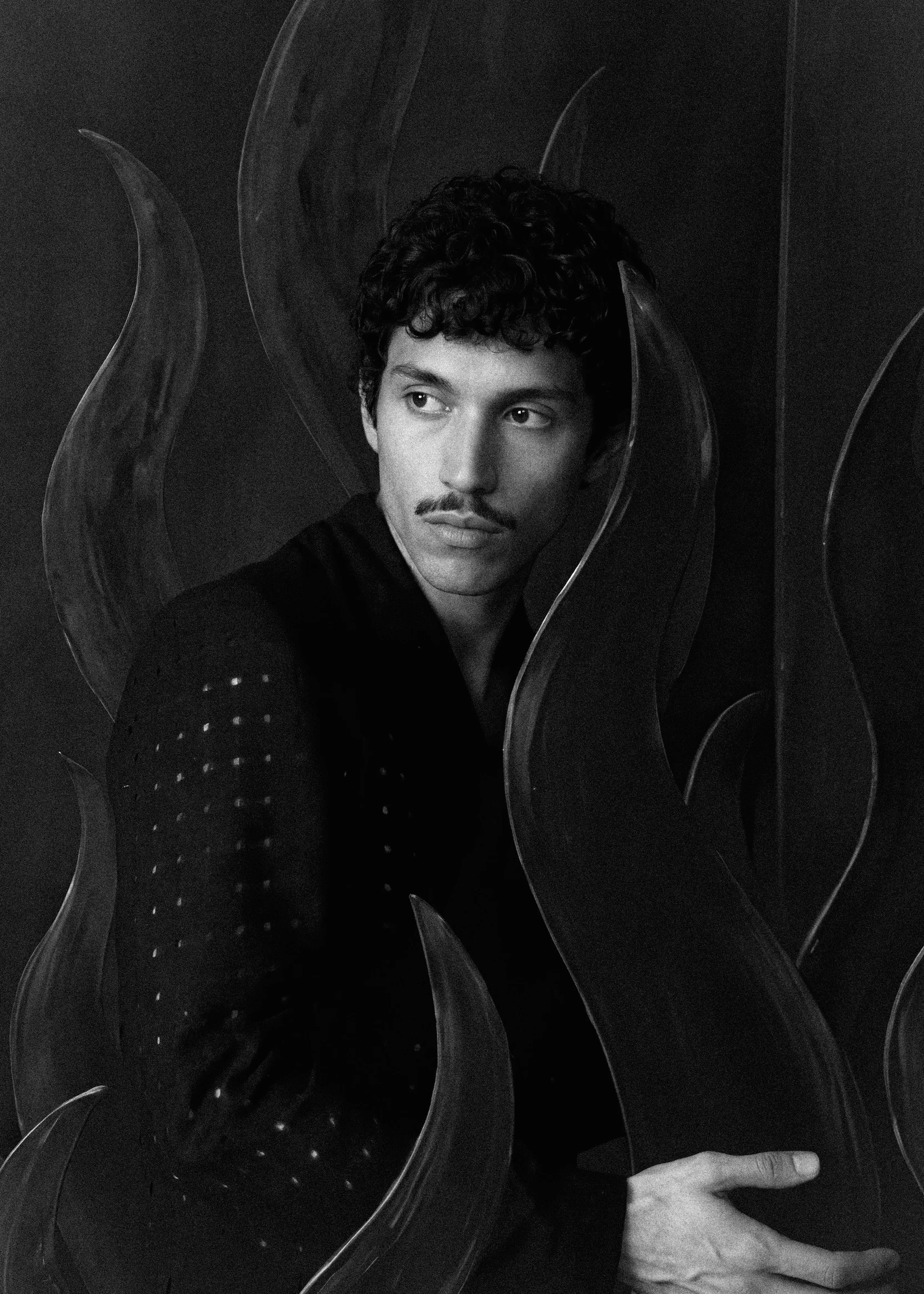
Göksenin Ay, Lament Collection. © Göksenin Ay
Your relationship with fashion began long before you launched your own label. You started out by observing and writing about fashion. Later, you worked in styling and image-making. When did looking at fashion from the outside turn into a need to create something of your own?
It wasn’t a particularly conscious decision. I’ve always had an instinctive need to make things. There was this enormous hunger to produce, but it took me some time to understand what my medium was. I think it would be fair to say that I was drawn into fashion almost unintentionally, without thinking too much about entering the industry itself. As I gradually developed my own language and understanding of making within it, discovering that clothing and accessories were the right form of expression for me was incredibly exciting. But I still feel there is so much within that language to experiment with, disrupt and rebuild. I still feel that same hunger to make things as if it has never been fed.
Göksenin Ay, Lament Collection. © Göksenin Ay
You say that your brand "did not come from a store window. It came from my body." This seems to reject the idea that fashion is primarily visual experience, replacing the image with something physical and experienced. What does designing starting from the body mean to you?
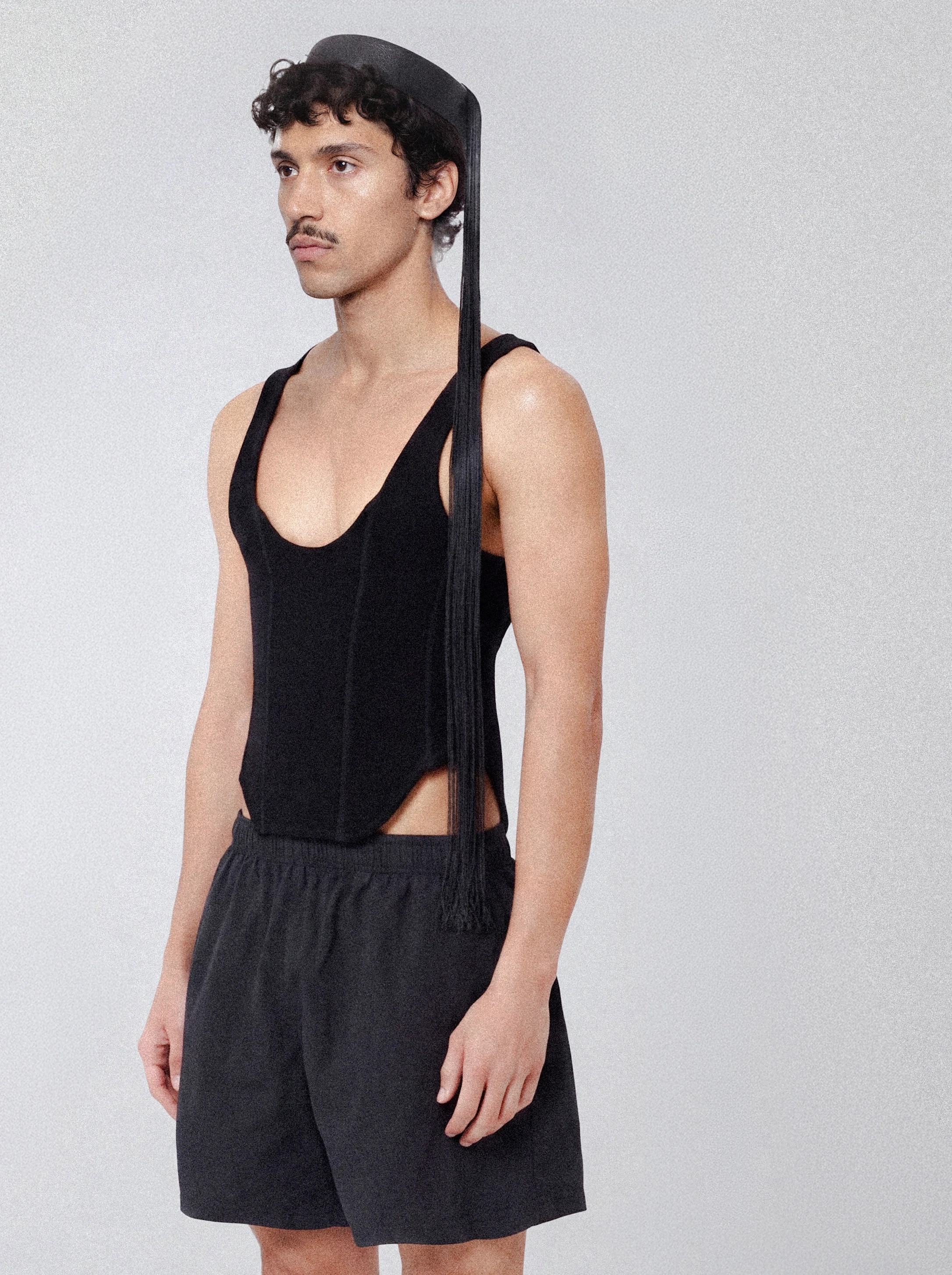
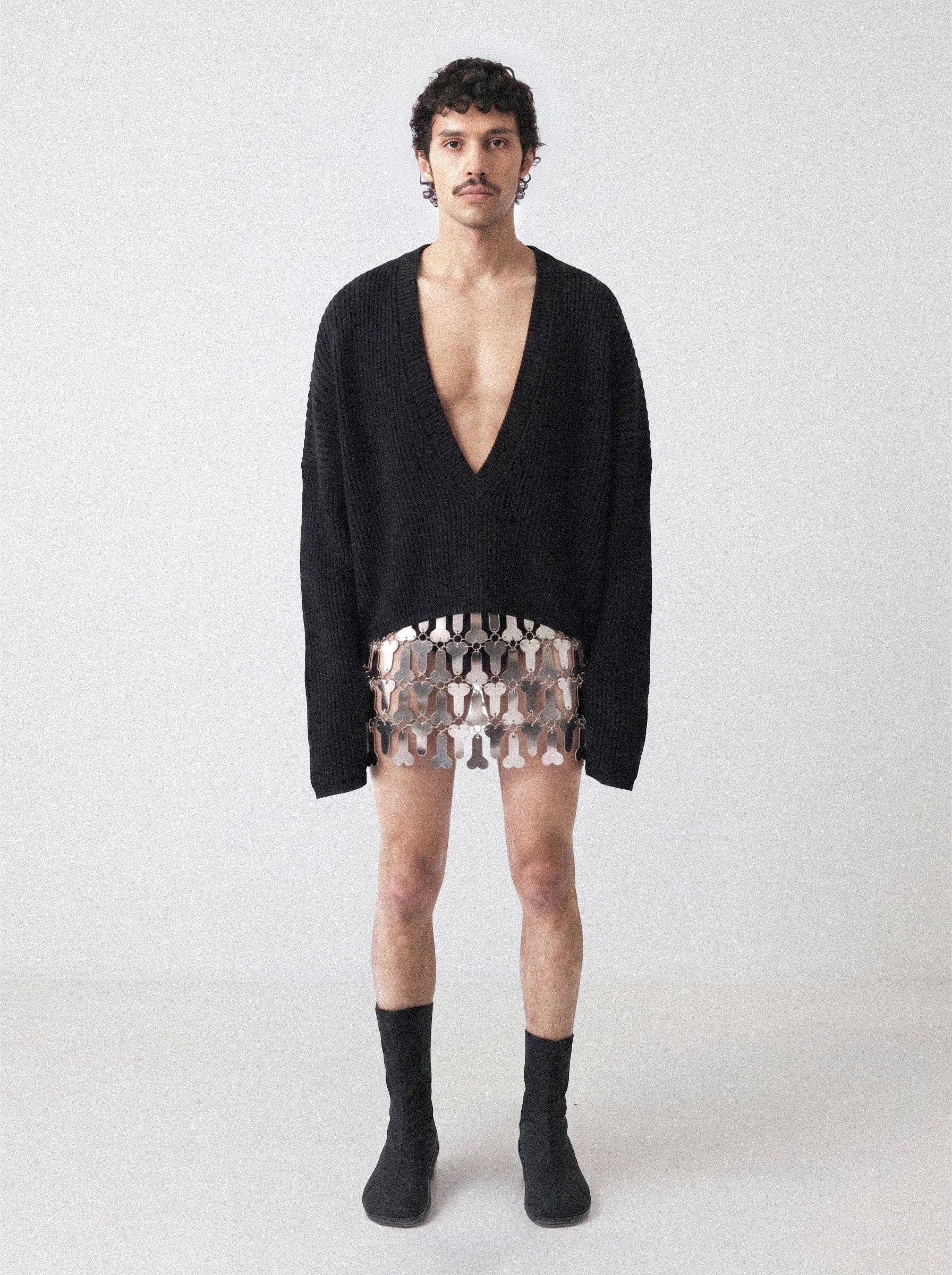
I actually begin designing not with the body, but with memory. Something I’ve lived through, something I’ve seen, or simply a moment I find myself in first seems to need an armor, or perhaps more accurately, a narrative. Clothing is the language I know best, so I tell the story by constructing a scene and then dressing it. The scene or the armor isn’t necessarily for me. It appears more like a defense mechanism on an imagined character, within an imagined setting. The process doesn’t unfold exactly this way every time, but that character and that scene give me a very interesting blank surface to begin with. Once I start working on the body, the writing, the characters, the world I’ve constructed and the body itself begin to transform one another. At some point, memory itself starts to change as well. The store window, to me, comes at the very end of all of this. Display is the final part of the narrative. I think a garment or an accessory created simply to be displayed can only tell its story from where it stands. I’m interested in making things that move, that change with the body, that have a sense of motion of their own.
Göksenin Ay, Lament Collection. © Göksenin Ay
In your work, the body is never neutral. It desires, remembers, submits, resists, protects itself, and exposes itself. You write that power lies not in what covers the skin but in "what the skin is asked to remember." What can the skin remember that the mind cannot?
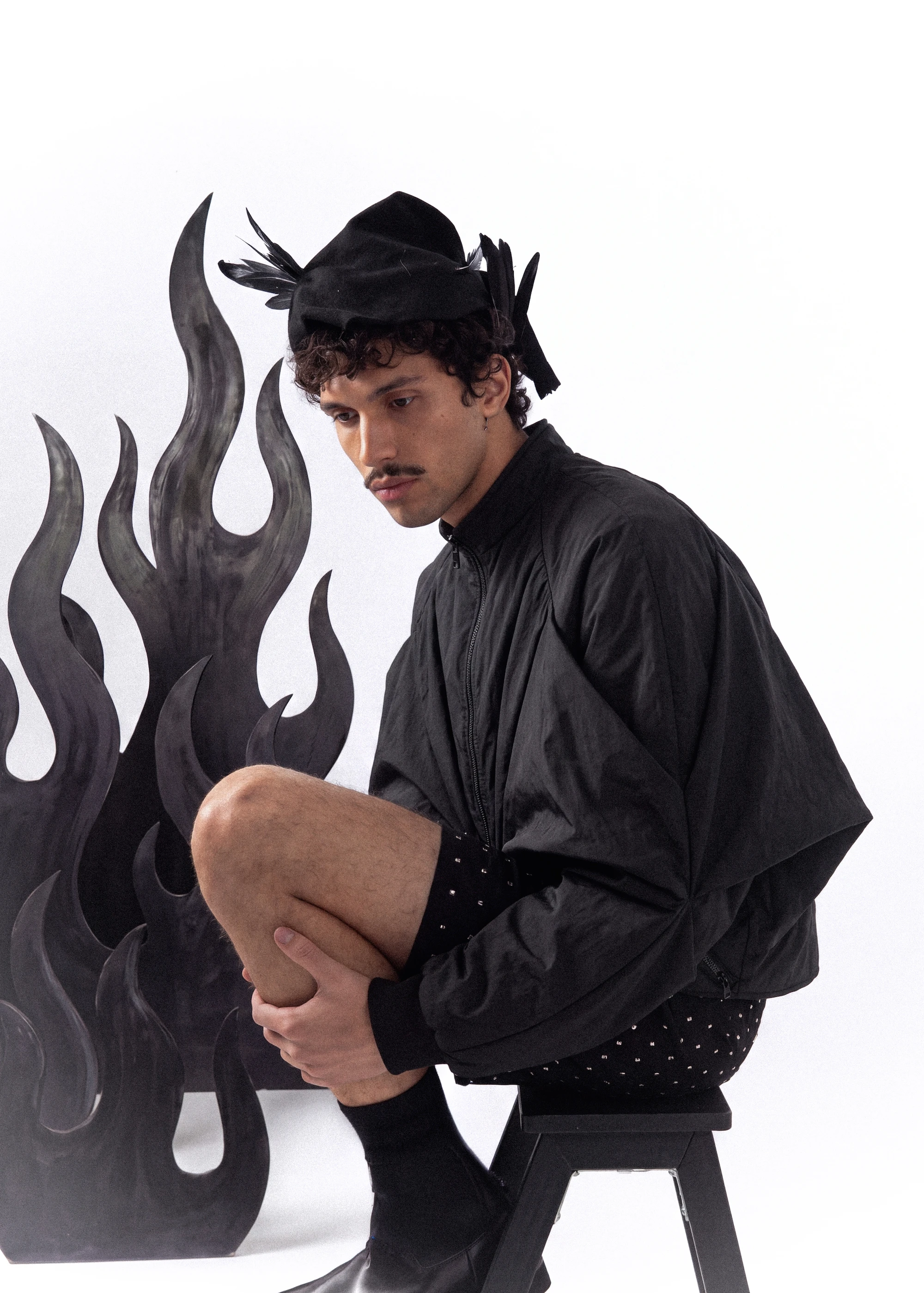
Lately, I’ve been thinking a lot about the Turkish verb “sanmak,” which means to believe or assume something to be true without really knowing. It has actually become an increasingly frightening idea to me. Because when you are inside a moment, you are not only believing that moment to be something; sometimes that moment also reaches backwards and seems to heal many things that happened before it. You believe something is real, and that reality begins to change the meaning of other things you have lived through. Then one day, when you realize that what you experienced was not actually what you believed it to be, you don’t only lose that moment. Everything in the past that the moment seemed to have healed is suddenly taken away from you again. That is why I know the mind can be unreliable. The mind can assume, it can believe, it can reconstruct the past. I trust the memory of the body more. I mean this from a very personal place. Both when I’m trying to regulate myself and when I’m designing, the information my body gives me can feel more reliable than the narrative my mind constructs. That’s also why I find the sequence in your question, “desires, remembers, submits, resists, protects itself, and exposes itself,” so accurate. To me, they almost feel like stages that follow one another. The body desires, remembers, submits, resists, tries to protect itself, and eventually something is exposed. Design often appears at the very end of that process for me, almost like the physical residue left behind by everything that came before it. I don’t claim that the resulting object carries that entire thought process within itself, or that all of it can be understood simply by looking at the object. In fact, something very simple can emerge at the end of an enormous process of thinking that I sometimes find myself completely lost inside. But perhaps that is exactly what interests me about design. After all of that complexity, I can return to the body and reveal through form, material and touch something that thought itself cannot quite articulate. The mind can believe something to be true. The body leaves a trace. I trust the trace more.
Göksenin Ay, Lament Collection. © Göksenin Ay
You discovered fetish and erotic subcultures at a young age, and you say they taught you things that design school never could. What did they teach you about desire, power, and the relationship between bodies? How has that experience shaped your design language?
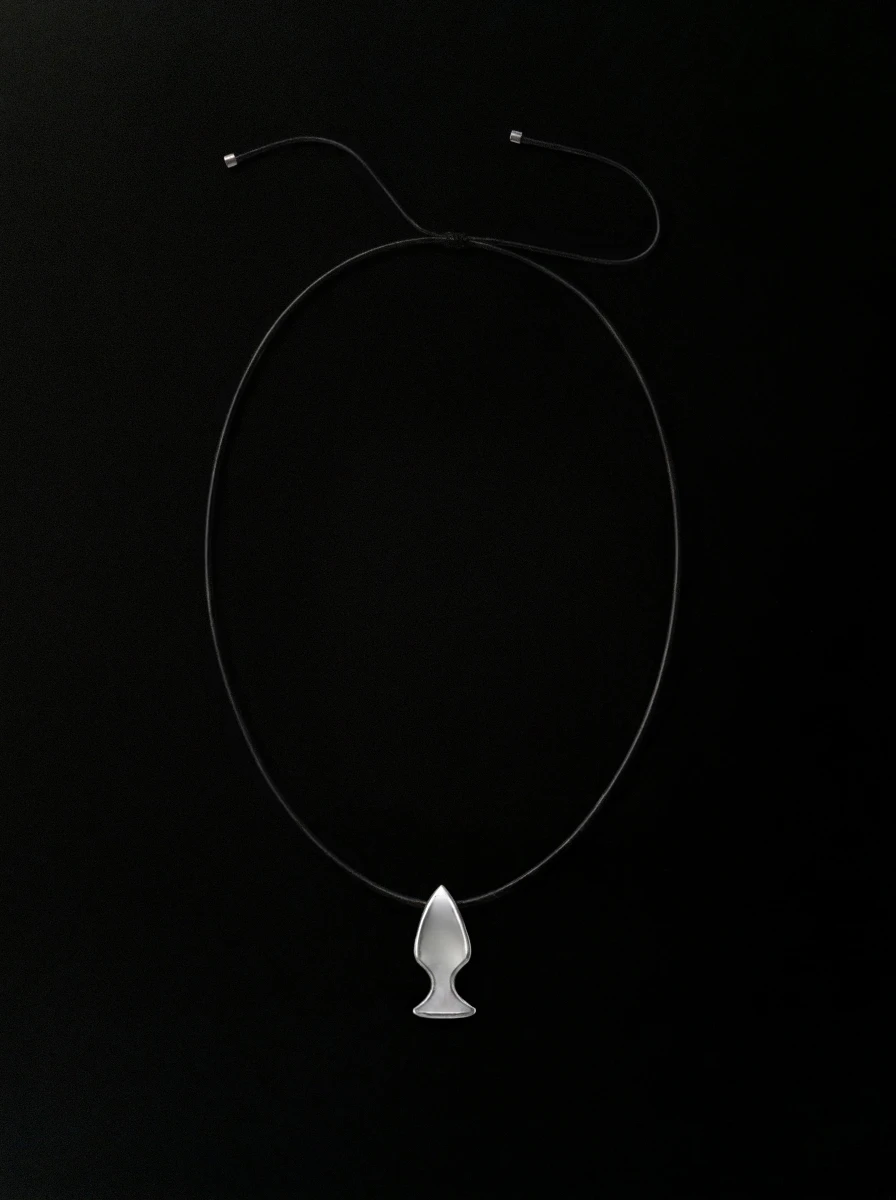
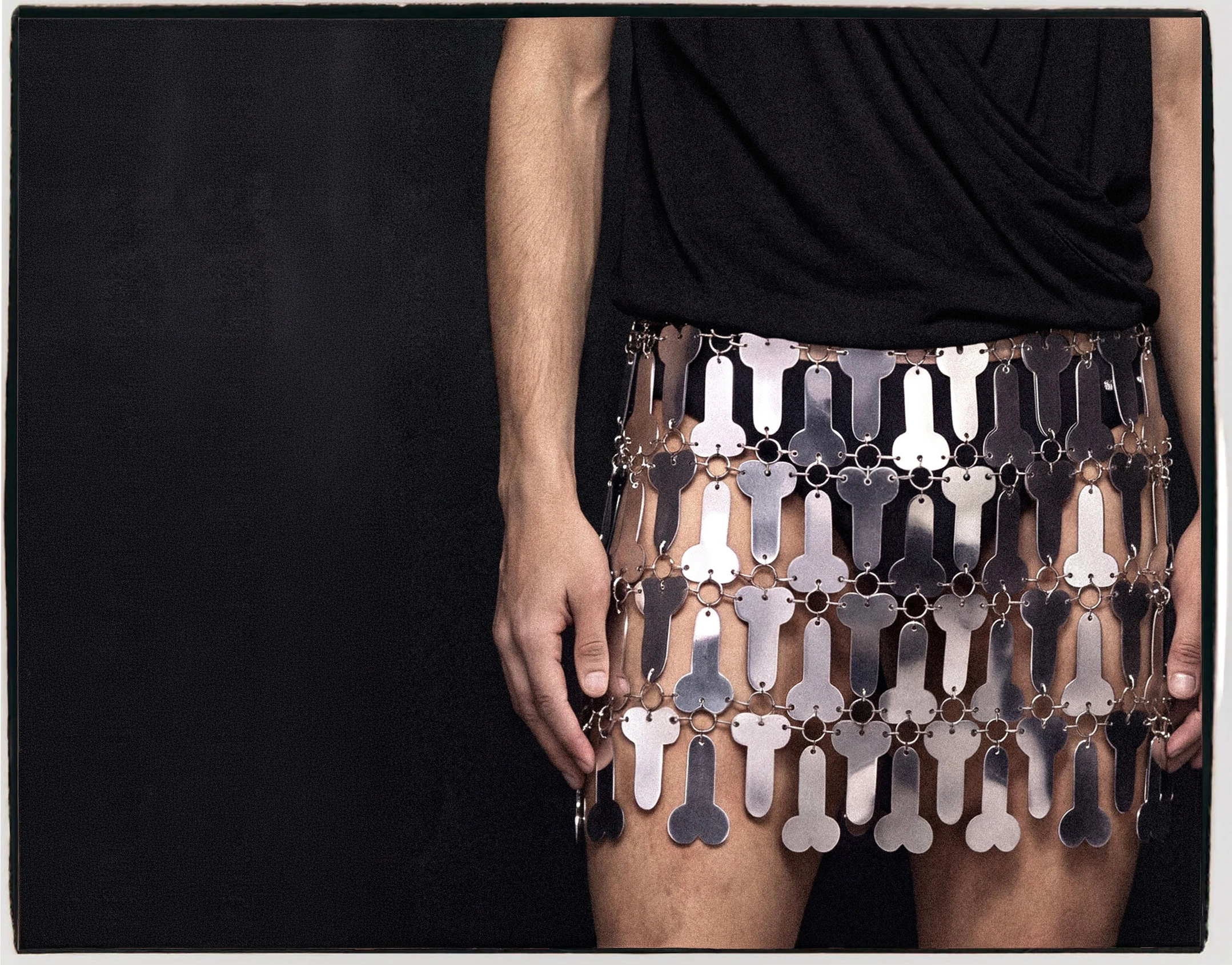
I think I realized that power can exist equally on both sides: in affecting another body and in allowing yourself to be affected by one. I realized that the hierarchy between surrendering yourself to another body and having control over one is not as simple as we tend to imagine. Both sides can be incredibly conscious and powerful. Perhaps that made me a little more audacious. I began to approach desire, the body, and what can be done with and to the body with much less hesitation. The way this entered my design language was not simply through translating fetish objects into clothing. It gave me a way of playing within my own boundaries. My design language is actually quite wearable and controlled, and often exists right at the edge of something. What interests me is not removing that boundary altogether, but knowing exactly where it is and then playing with it. Perhaps that is what fetish culture taught me that design school never could. It didn’t teach me how to make the “right” garment. It showed me how to have fun with the body, how to restrict it, expose it, or give it a different kind of power. It is still important to me that the object remains wearable through all of this. I think my own language exists precisely there: somewhere between the furthest point at which something can still exist in everyday life, and the point just beyond it, where it begins to become something else.
Göksenin Ay, Lament Collection. © Göksenin Ay
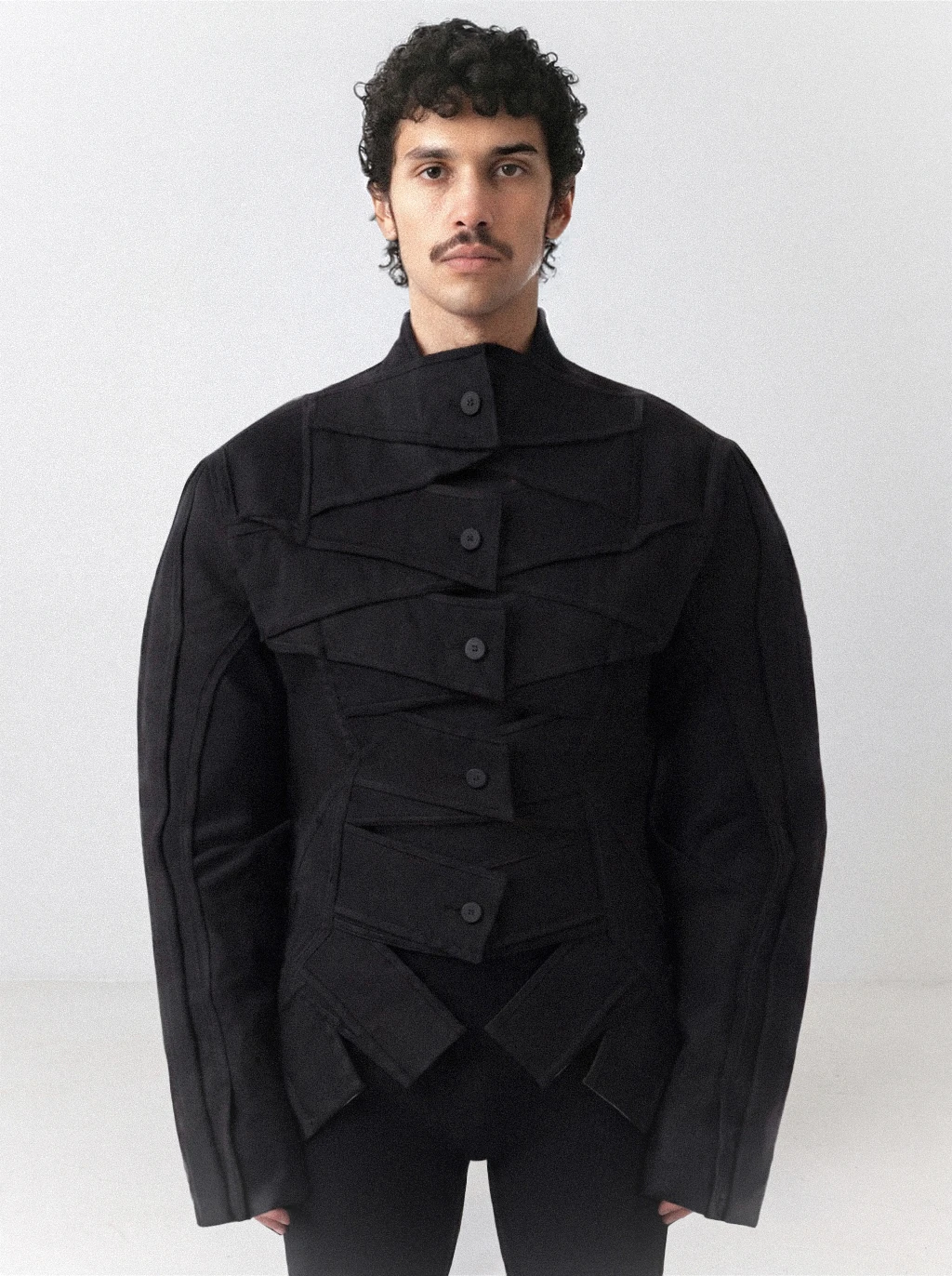
In your first collection, Lament, fetishized objects become protection, and armor is constructed out of fragility itself. Why did vulnerability become the starting point for your concept of armor? Can protecting ourselves also be a way of revealing who we are?
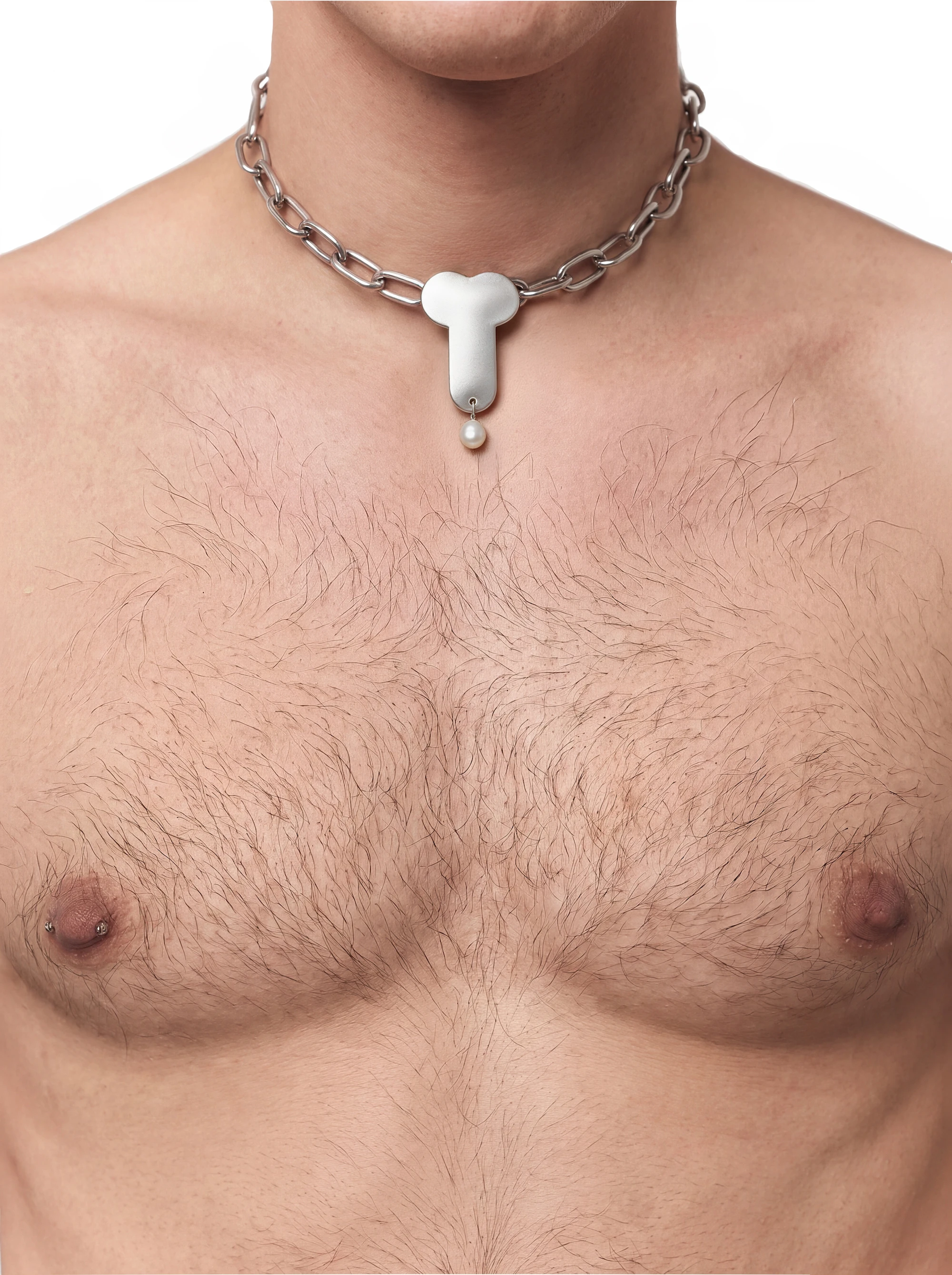
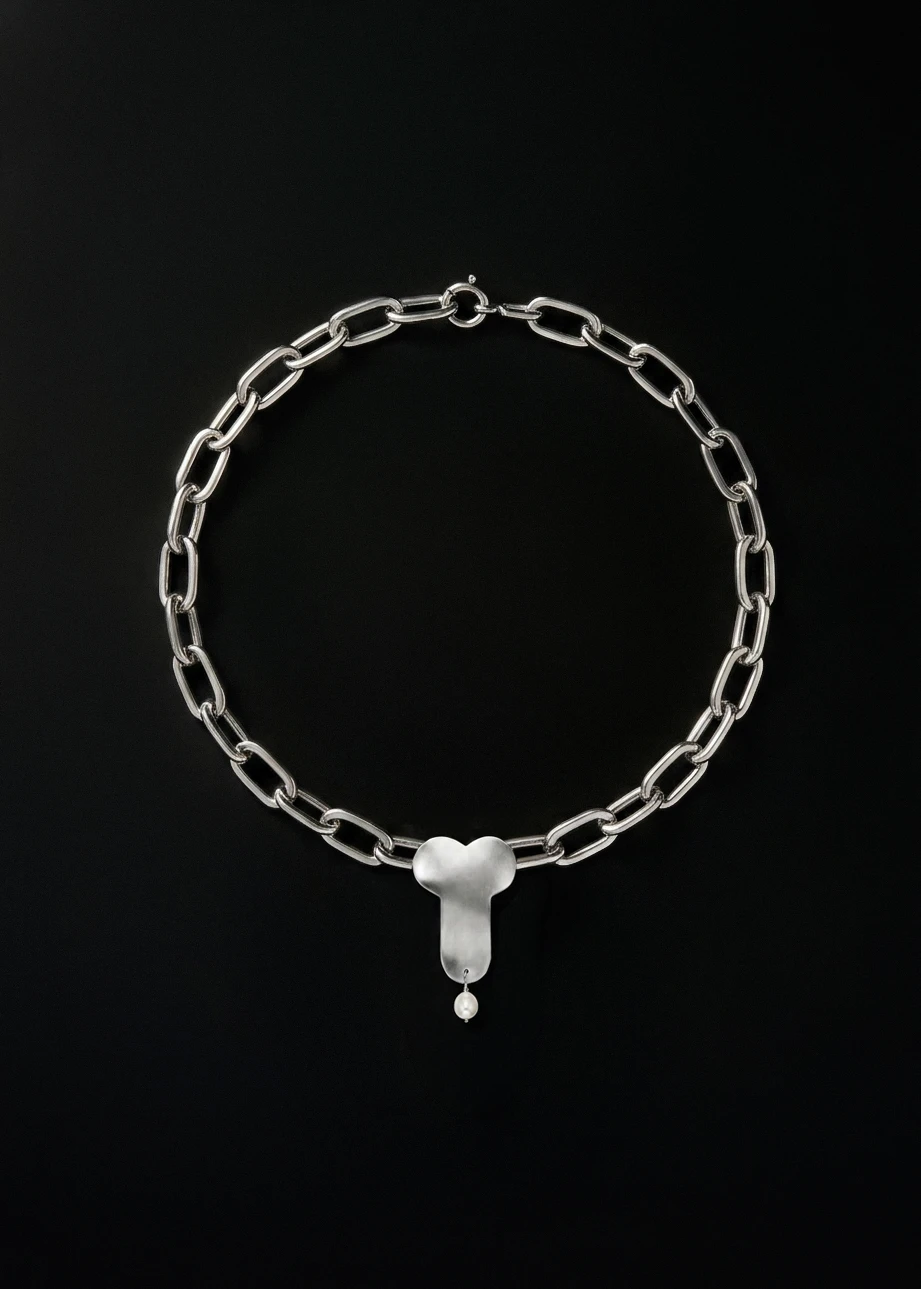
I actually wanted the armor to function less as something that conceals vulnerability and more as something that reveals it. The penis form I use is an extremely familiar image. It is an almost anonymous symbol that boys and men have been drawing on school desks, walls, counters, or in bar bathrooms since childhood, something we encounter hundreds of times throughout our lives.