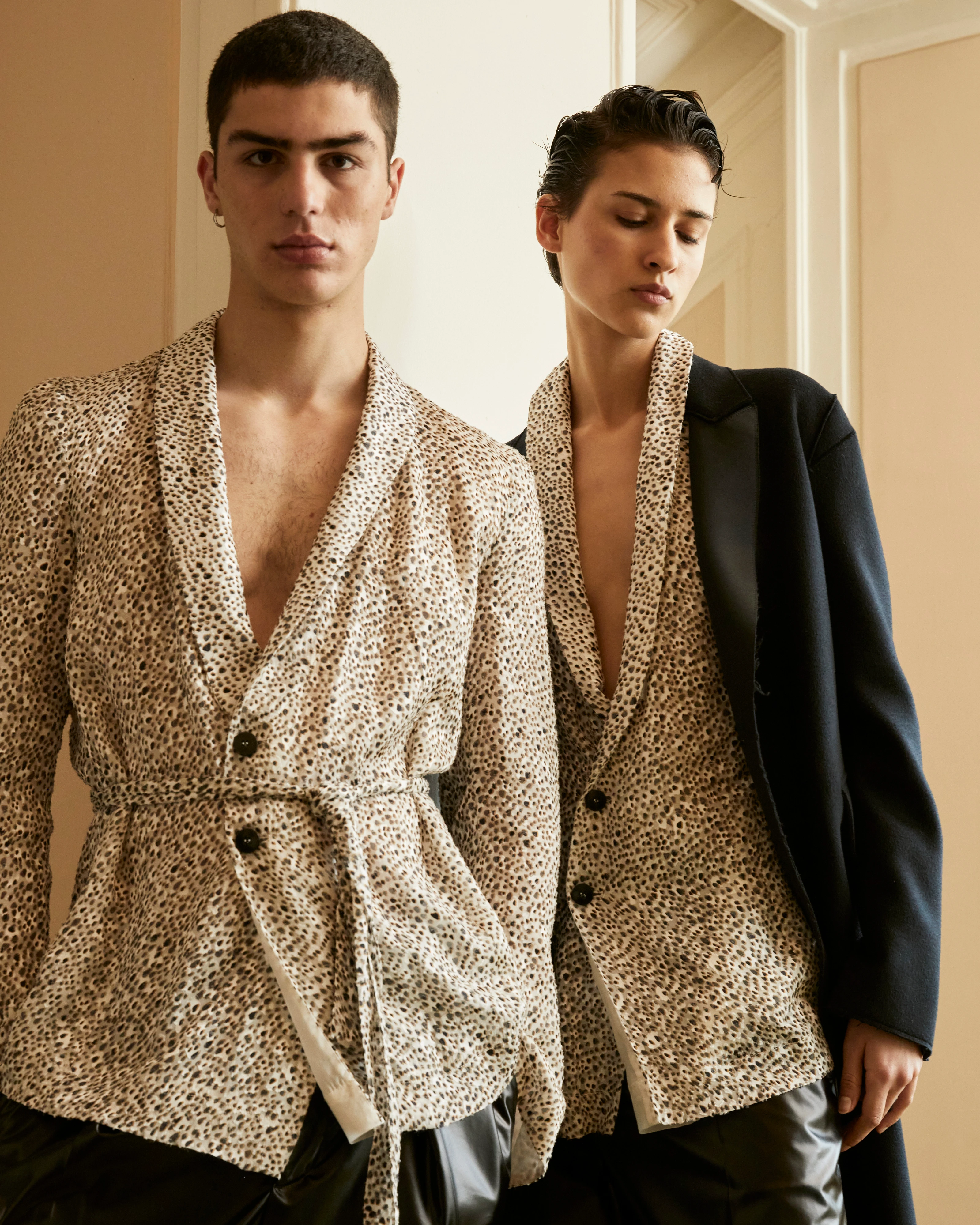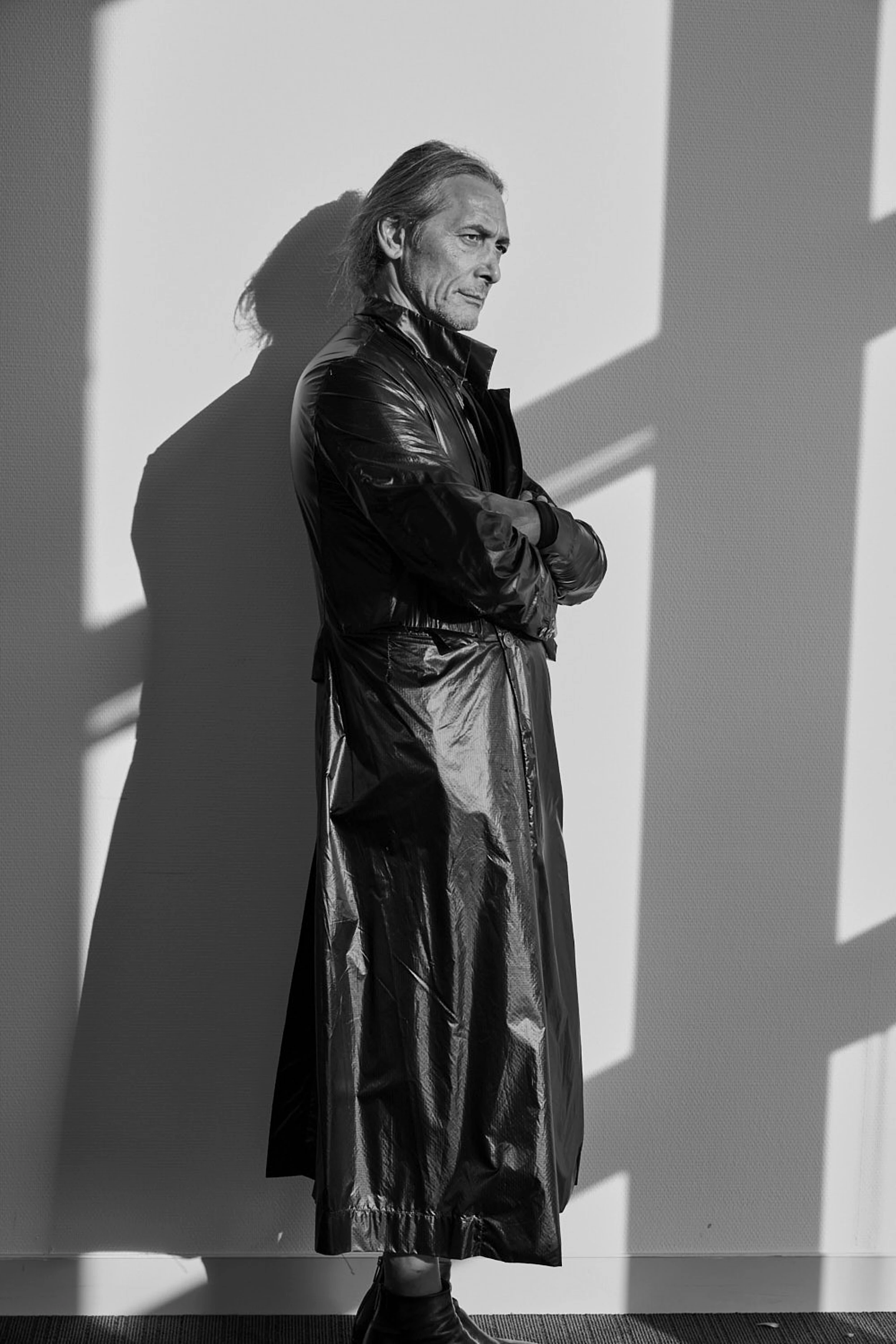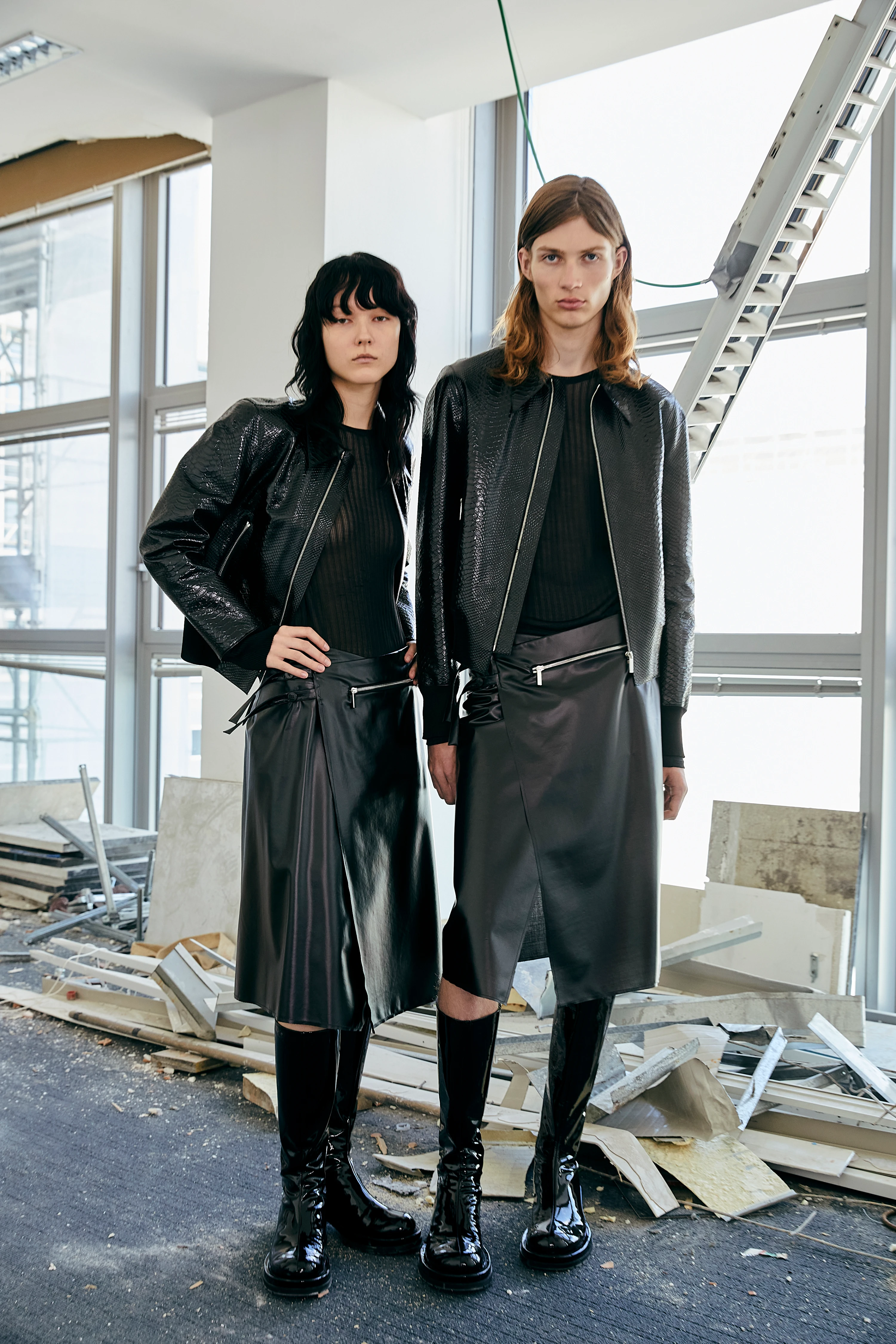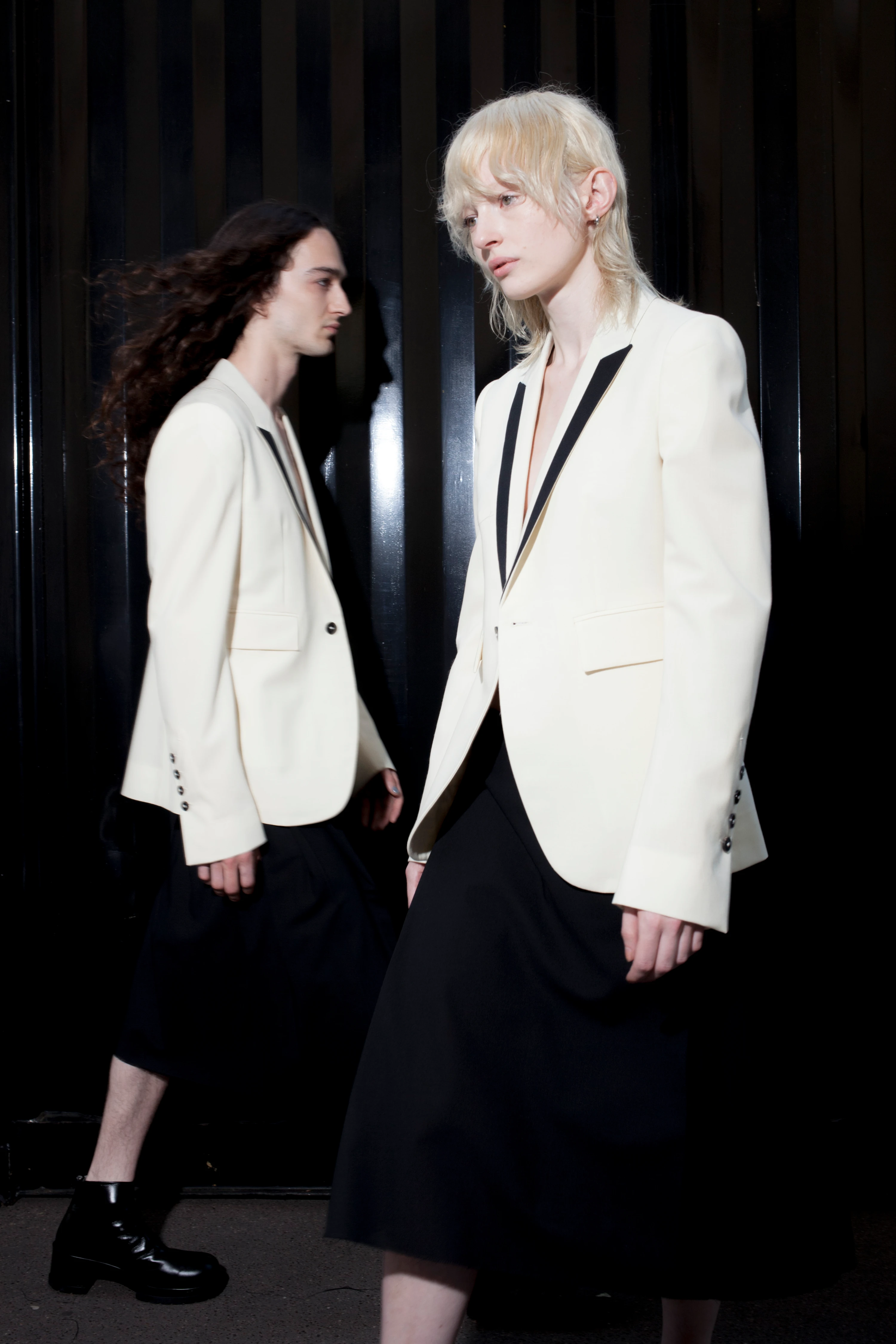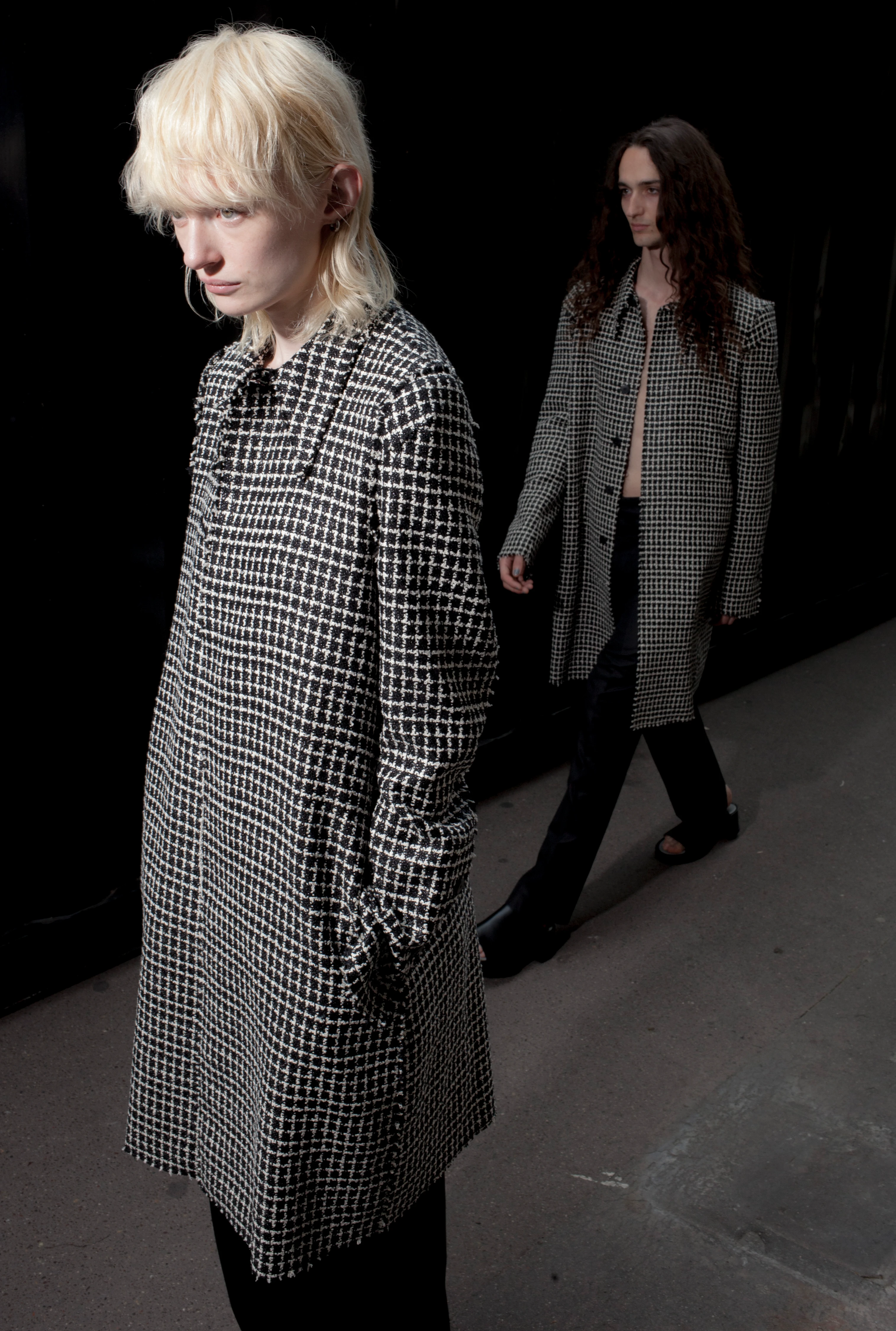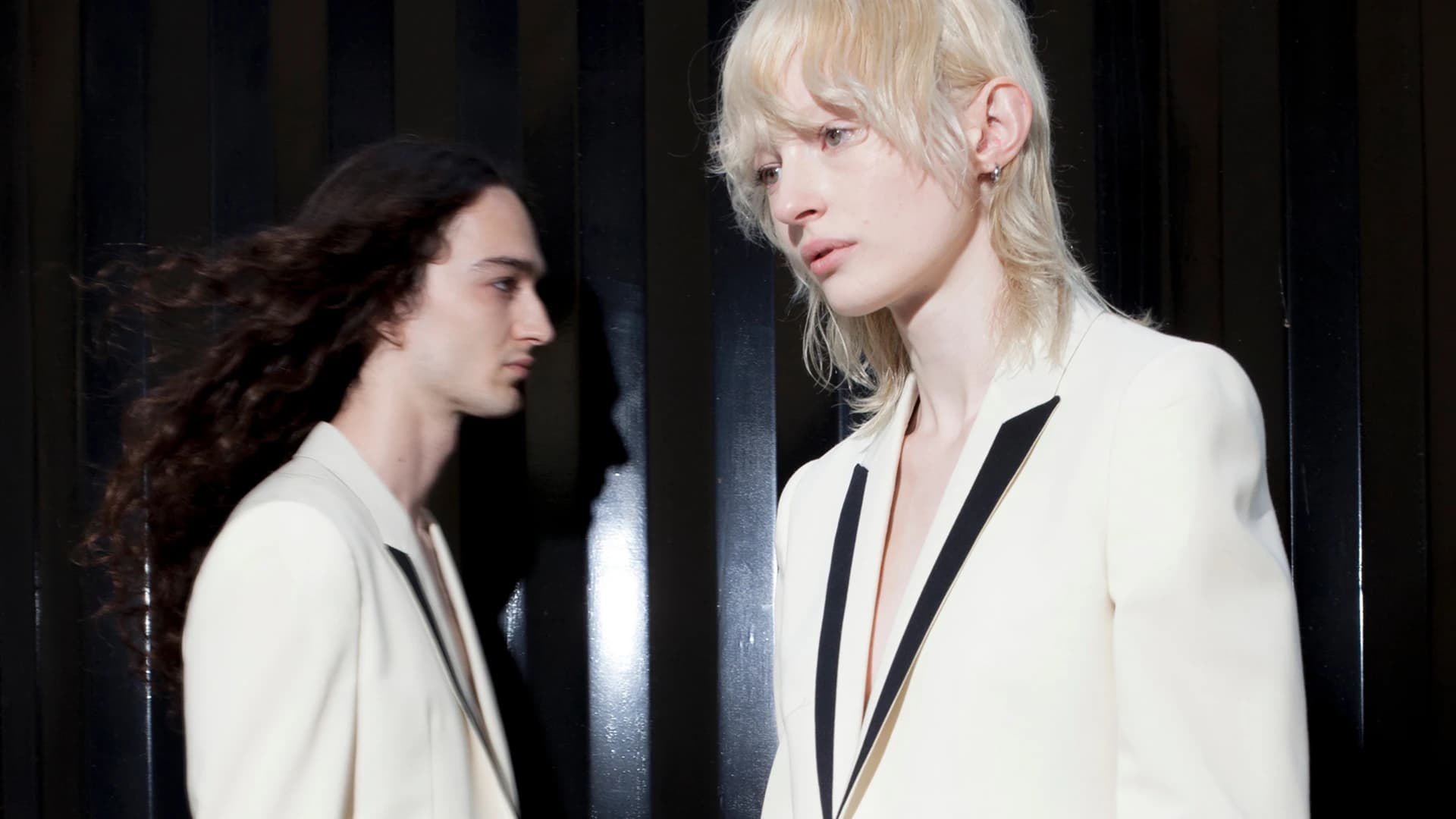
In a fashion system governed by acceleration, where the new often erases what came before, Giulio Sapio operates on a different timeline. His collections do not replace one another. Instead, they accumulate and evolve, gradually constructing a vocabulary in which precision, materials, and the relationship with the body take precedence over the imperative of novelty. Sapio’s path has never followed a predetermined route into fashion. Before founding SAPIO, he worked in retail and music. These experiences shaped his sensitivity toward clothes, bodies, rhythm, and composition. A pivotal chapter in his professional journey was his nearly twenty-year collaboration with Rick Owens. This experience developed alongside — rather than replacing — his personal aesthetic research, which eventually found its own expression.
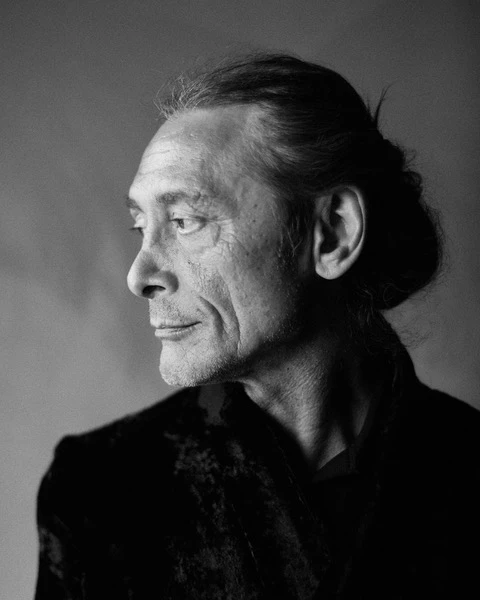
Giulio Sapio. Photo: Gabriele Giussani
That moment arrived in 2020 under exceptional circumstances. SAPIO was born during the pandemic when traditional fashion industry production, presentation, and interaction mechanisms were suddenly disrupted. This disruption paradoxically created an opportunity for the brand to develop its first collection and transform a long-standing creative urgency into an independent project. Instead of waiting for the system to restart, Giulio brought the collection directly to its audience. His initial designs traveled across Italy in a trunk inside a van, enabling him to meet with buyers in person. This concept evolved into a traveling showroom featuring a black container, which Giulio used to present a subsequent collection during Milan Fashion Week before moving on to Paris. This pragmatic response to the circumstances embodied something fundamental to SAPIO: the desire to restore physical proximity, time, and intimacy to interactions with clothing.
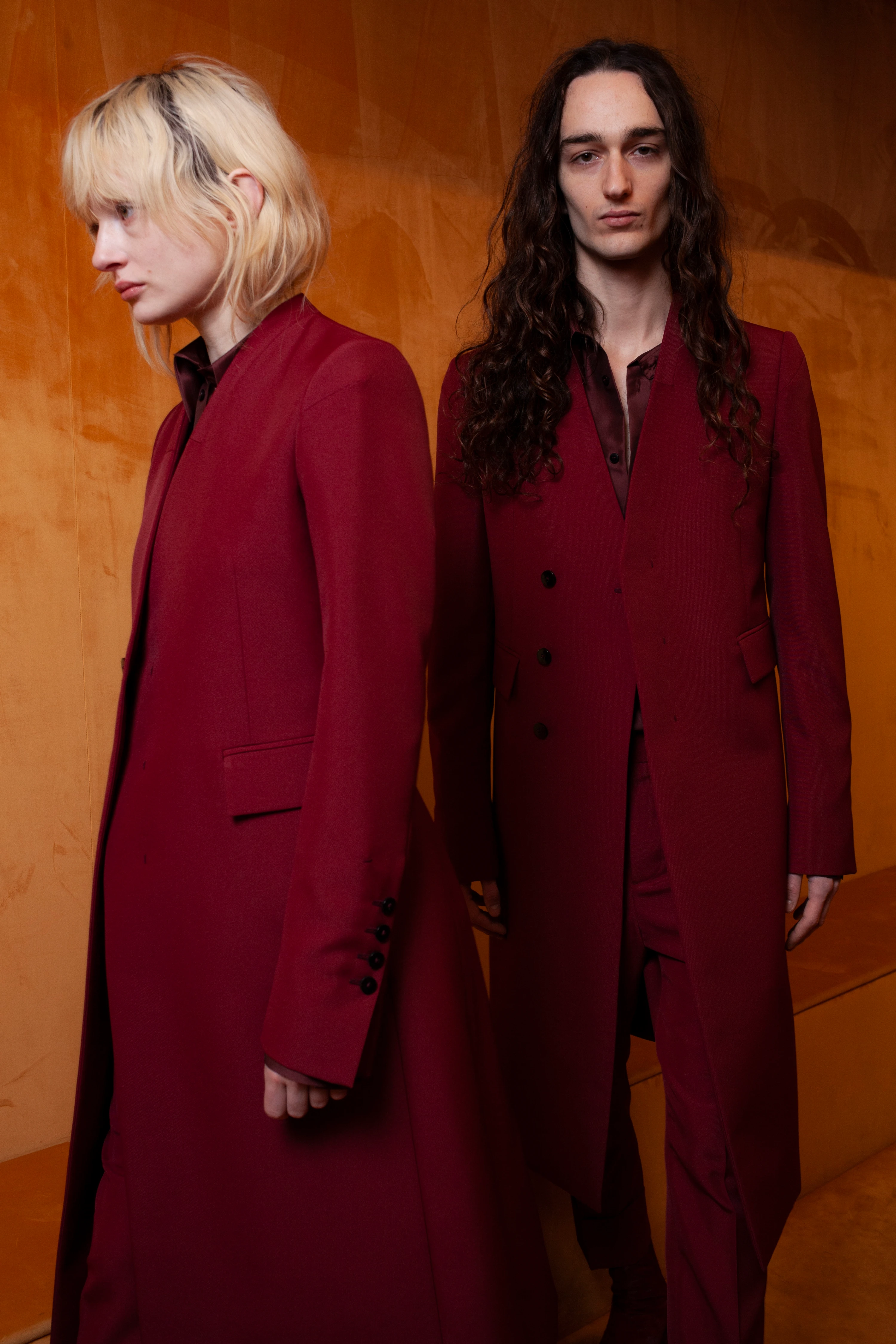
The project soon attracted the attention of the international fashion industry. In 2022, SAPIO was invited to Pitti Uomo 102 as a special project, where the designer presented a unisex collection. Focusing on precise construction and materials, the Made in Italy brand has developed a recognizable style featuring sharp silhouettes, controlled proportions, and a restrained color palette with shifts in texture, transparency, and surface. However, defining SAPIO exclusively through minimalism would be reductive. Beneath the apparent severity of its designs lies a complex tension between structure and the body, discipline and sensuality, and permanence and transformation.
SAPIO FW24
Giulio has defined his position as an independent designer by navigating these oppositions. Rather than rejecting the fashion system outright to establish his identity, he seems interested in creating the conditions necessary to maintain the integrity of his aesthetic vision within it. From this perspective, independence becomes less of a declaration and more of a practice—the possibility of allowing an aesthetic vision to evolve according to its own rhythm. In this conversation, Giulio recounts the experiences that led him to create his brand and considers the ideas that continue to shape it. He reveals how an independent identity can emerge not from rupture but from the gradual evolution of a personal vision.
SAPIO, Pitti Uomo 102, Presenting SS23 Collection
Before founding your brand, SAPIO, you gained experience in music and retail. You then worked with Rick Owens for nearly twenty years. How did these seemingly disparate experiences influence your approach to fashion?
I never planned this path—it just happened spontaneously. Aesthetics and form were simply a necessity I could never escape. The opportunity to open our first store together arose thanks to my older brother. The store became a place where I could express my deep passion and explore my personal idea of beauty by selecting designers. Shortly after, music came into the picture, bringing with it an intimate and abstract dimension—an almost therapeutic necessity after spending fifteen years in close contact with materials and bodies. Music instilled in me a sense of rhythm, harmony, and composition, leaving a deep imprint on how I think about the proportions and lines of a garment. Finally, there was my time at Rick Owens, which lasted nearly twenty years. In this case, a very dear friend who strongly believed in the opportunity introduced me to the world of Rick Owens. Driven by a sincere curiosity, I had an experience that intertwined with my journey, but never replaced what was already mine.
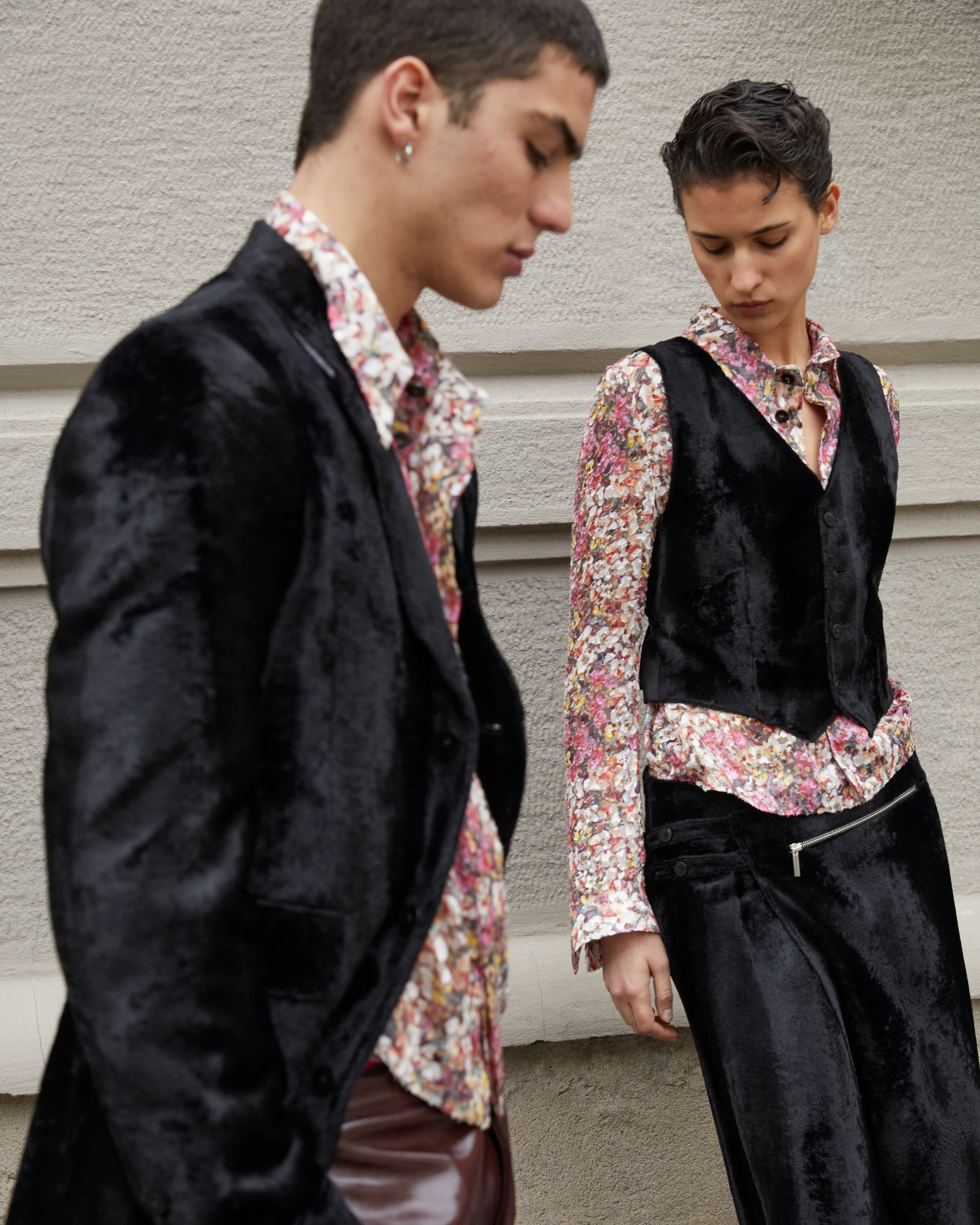
SAPIO FW25
After spending so many years with one of the most recognizable names in contemporary fashion, which aspects of that experience did you feel you needed to hold onto from that experience? From what did you need to distance yourself in order to define your identity?
I can’t define it in terms of what I held onto or what I distanced myself from. My aesthetic is the only filter that determines everything. My obsessions and my desire to express my vision through SAPIO aren't reactions or imitations, but rather the natural consequences of that experience. It’s a continuous flow. What you see in my work today is simply what built up over the years and evolved into my idea of purity and form.
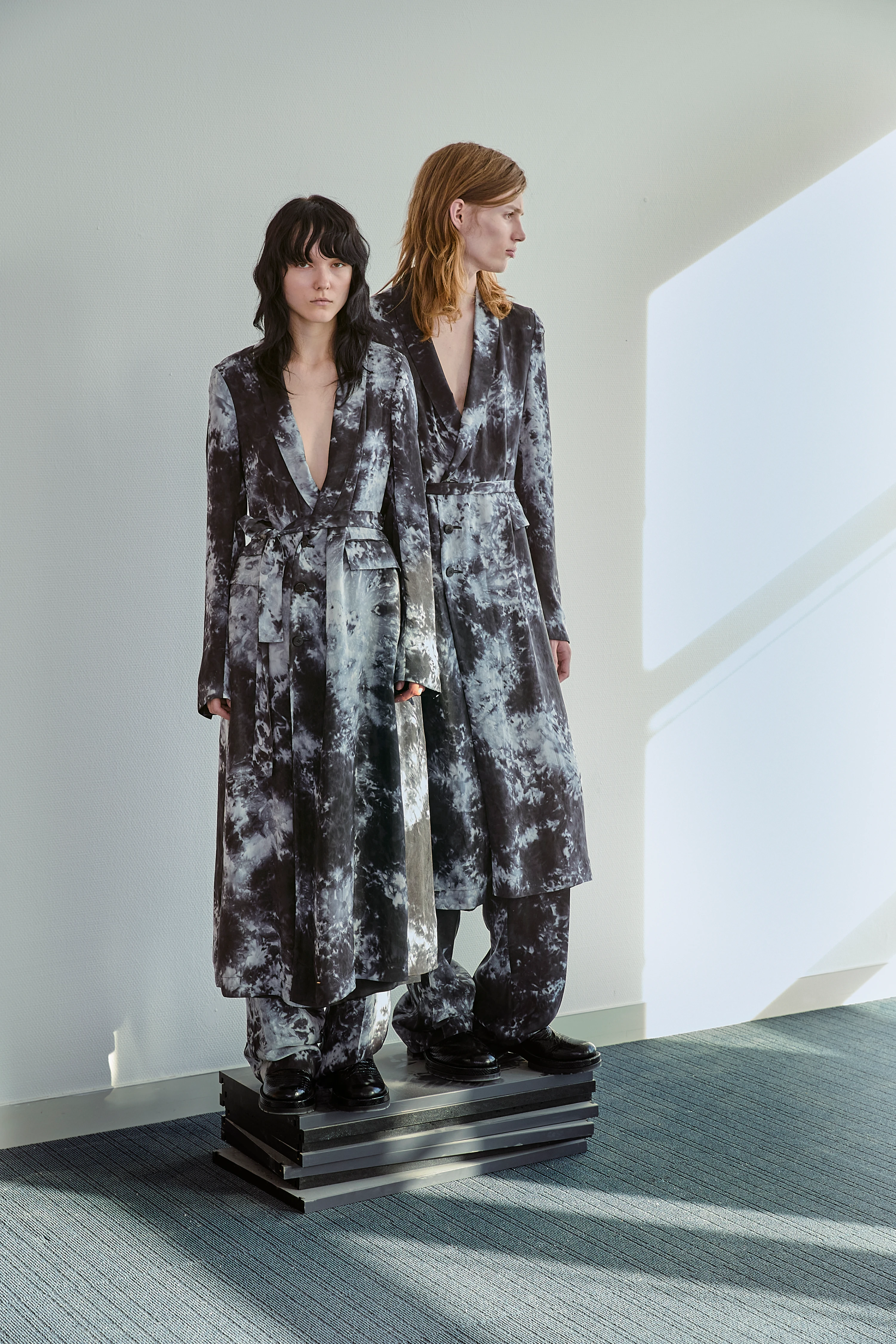
SAPIO SS25
SAPIO was launched at a unique time—during the pandemic—and you initially chose to present the collection to buyers in person, through a traveling showroom. Could you tell us about the origin of that idea and how it developed?
During that suspended period when everything had come to a standstill, I finally had the time to create my first collection. There was a deep need for hope, which allowed me to find an extraordinary willingness among everyone involved in producing it. At the same time, the pandemic eliminated every conventional way of presenting the work. That’s how the idea of meeting with buyers came about—a natural response to the circumstances. It was a wonderful experience that restored the value of time and personal connection to collection presentations in an intimate setting. Once again, I didn't choose; I simply went with the flow.
Instead of creating collections meant to replace one another, your work focuses on gradually building a wardrobe. In a system based on constant acceleration and production, what value does "permanence" have?