What Is Sound Design and Why It Shapes Our Environments
Sound design is everywhere. It shapes the way we watch films, listen to music, and even walk through a city at night. It’s more than recording — it’s the art of layering, blending, and mixing sounds to tell stories and stir emotions. From the hiss of rain on concrete to the thrum of a distant bassline, sound design gives our surroundings a voice. Using everything from sound effects, sound libraries and field recordings, sound designers build worlds that we lose ourselves in. The idea of sound design really took shape after the 1927 film The Jazz Singer (available to stream on YouTube), and the term itself was coined by Apocalypse Now’s editor, Walter Murch, in 1979 (streaming on Amazon Prime, YouTube and Apple TV). That’s probably why most people think of movies when they hear about sound design. Cinematic sound editors build atmospheric soundtracks and scores, mix captivating dialogues and create dynamic SFX to bring their scenes to life. Imagine the final scene of Apocalypse Now without its deep, booming score and its haunting downpour of rain – it just wouldn’t be the same.

Still from Apocalypse Now (1979), directed by Francis Ford Coppola.
But I’m not here to talk about film – I’m more interested in how sound design plays an important role in contemporary music production. Way back in 1913, musicians were already experimenting with new audio. Luigi Russolo, an Italian Futurist, even wrote in his manifesto, The Art of Noises, of a mechanical device called the ‘intonarumori’ that could emulate the sound of bombs and trains. Fast forward eighty years, and things drastically progressed with the development of digital audio workstations (DAWs) and samplers. Suddenly, musicians could edit crashing waves and pitch-down echoing vocals into their productions or arrange elaborate compositions of instruments they did not know how to play. It was a moment of audio experimentation, never before possible. From this, music production of the early 2000s exploded, with creative and personal sound design becoming a staple amongst digital musicians. Early dubstep artists and the later ambient musicians of the 2010s were wild, vibey, and exciting. But it is with one key innovator of early dubstep that sound design reached its most inventive, intimate and atmospheric potential – William Bevan AKA Burial. In this article, I’ll delve into how Burial changed the way we think about sound design, how commercial identities are shaping sound in our cities and daily lives, and how contemporary musicians are resisting this noise to reclaim our natural sonic environments.
Sound Design in Urban Music: Burial and the Nocturnal City
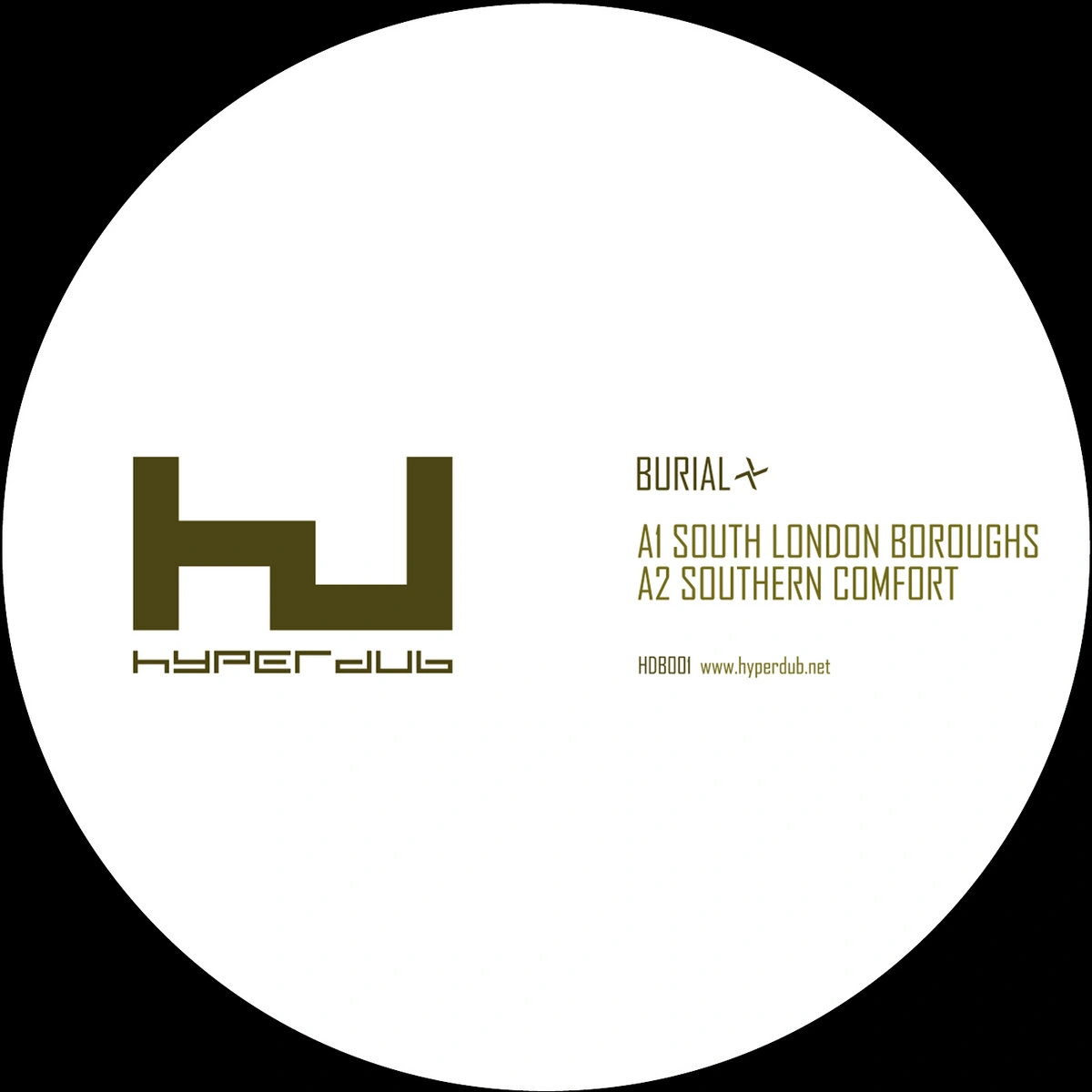
South London Boroughs EP by Burial, released in 2005 on Hyperdub.
Released in 2005, South London Boroughs was the breakthrough EP for emerging dubstep artist Burial. Instead of sticking to the slick, bouncy 2-step beats of ‘90s UK Garage and Jungle, Burial adopted a new approach. He began experimenting with field recordings and the sounds of everyday city life, which you can hear in the pounding sub-bass on tracks like ‘Southern Comfort’ and the syncopated rhythms on ‘Night Train’, capturing that discomforting nocturnal haze of London’s empty streets (both which can be listened to on all music streaming platforms, together with the rest of Burial’s discography).
Burial’s Untrue and the Sound of South London at Night
But it was his second album, Untrue, in 2007, where the sounds of South London truly shaped his music. Burial wanted to capture what his city felt like at night – a melancholic space interrupted by the rush of buses and taxis, the distant laughter from clubs, and the low rumblings of the underground. Inspired by his frequent late-night wanders around the city, Untrue immerses itself in the urban soundscape. In a rare interview with TheWire, Burial discussed with journalist Mark Fisher how he often spent his time roaming endlessly across the city: ‘Sometimes it’s because I’ve got somewhere to go, sometimes it’s because I haven't got anywhere to go [...] In London, there’s a kind of atmosphere that everyone knows about, but if you talk about it, it just sort of disappears.’ By weaving these personal experiences of London into his music, Burial created hauntingly euphoric tracks that capture the uncanny atmosphere of a city late at night.

Album cover for Burial's Untrue, 2007
With tracks like ‘Homelessness’ and ‘Near Dark’, Burial paints a picture of a cold, dispassionate London night, using layered reverb, the crackling sounds of bacon frying and the clattering of cutlery. On songs like ‘Archangel’ and ‘Shell of Light’, he mixes moody vocals taken from phone calls and internet videos – inviting us into a world that feels both intimate and distant. Burial isn’t interested in making things sound fake or over-produced – he’s all about capturing what real life in his city feels like, so that you and I can immerse ourselves in his soundscape. It is Burial’s explanation of his use of drum presets during his discussion with Mark Fisher that proves how forward-thinking his sound design truly was:
‘They’re like a fishbone, a spine, an exoskeleton that cradles the sounds. It’s not about the deepest kick or the biggest snare. The drums are more about trying to thread sounds and vocals together; they flicker across the surface of the tune, it circles around you, it's not just chopping you up, it's not about the sounds being big.’
Untrue’s bold way of exploring sound changed the game for early dubstep, creating music that hissed, groaned, boomed and haunted – connecting back to the world it drew from. After that, artists like The XX and James Blake followed in Burial’s footsteps, creating music that attempted to capture the essence of their cities. But now, almost twenty years on, with the sounds of the city constantly changing, is it even possible to make music that truly engages with its natural environment?
Controlled and Commodified Soundscapes in Commercial Spaces
Even though Burial is all about using the sounds from his surroundings, he admits in his interview with Mark Fisher that by the late ‘90s, businesses were already selling a particular sound. Designer bars tried to copy the club's vibe, so everything began to sound fake and like an ad – totally ‘imported’. That word says it all: instead of embracing their natural environments, businesses started carefully picking and controlling their sound designs. These days, commercial spaces take it to the next level by designing soundtracks to set the mood and encourage us to spend more and more. Casinos are a prime example, using sound to inspire endless play, ensuring you lose track of time and become detached from the outside world. Background music is mixed with the beeps and buzzes of slot machines, and the shuffles and clicks of the poker table, creating an immersive and coercive environment. Retail stores are also at fault for this controlled sonic influence, slowing down their music to make you linger or speeding it up to get you to spend quicker. It’s all about perfecting the right sound for their brand identity. And it works – 67% of UK shoppers say they’ll leave if there’s no music playing. Before you even walk in, these places have already determined your mood and your sonic experience. That real, personal sound Burial loved gets lost in these spaces, replaced by carefully crafted audio meant to keep you shopping.
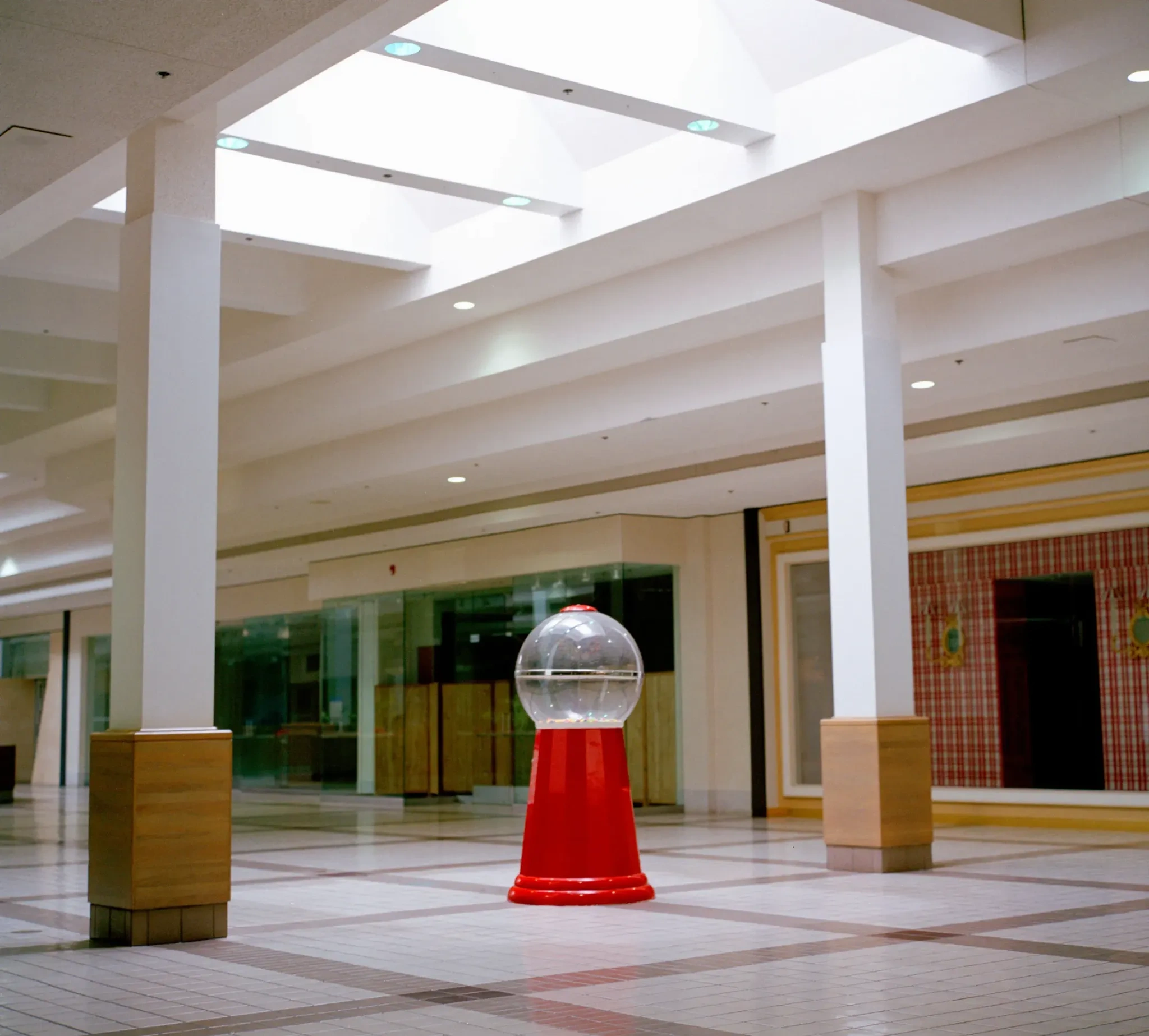
Abandoned shopping mall. Photograph by Ashley Gilbertson / VII / Redux.
These days, we’re surrounded by sounds, but we don’t pay much attention to them anymore. Instead of letting us really connect with our environments, many of the sounds we hear are selected for us, shaping how we feel, and ultimately making things feel fake and ‘imported’. The crackling rain in tracks like ‘Endorphin’ or the ghostly stirring dub plates in ‘Raver’ just don’t cut through today’s hyper-commercial world. Now, sound design is more concerned with brand identity and financial gain than it is with capturing the true essence of a place. So, what does the future hold for sound design when so much of what we hear has already been decided for us? How are musicians supposed to explore their sonic environments when our natural sounds have been drowned out? Maybe Burial was the last to capture the true feeling of the urban soundscape before it got lost in all this noise.
Navigating the Modern Soundscape in Contemporary Music
Christina Vantzou and Nature-Driven Soundscapes
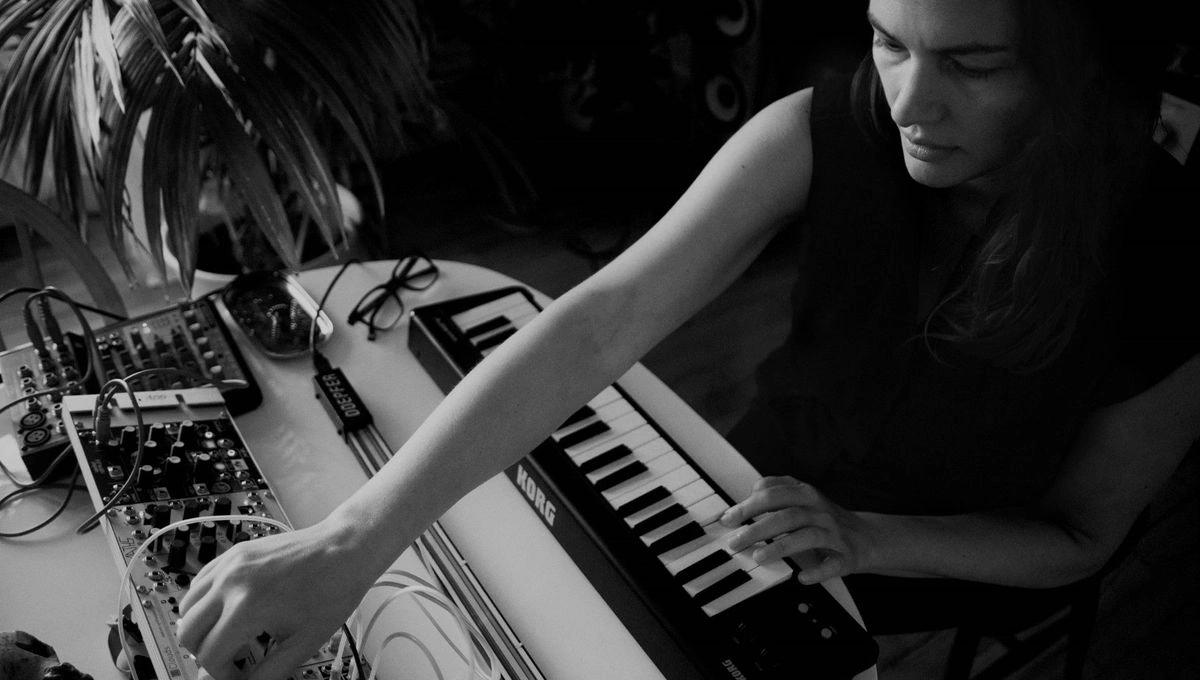
Christina Vantzou’s 20202 album Multi Natural (available on all music streaming platforms) is a fantastic example of where soundscapes are headed. She mixes in sounds from her natural environments – such as the powerful gusts of wind, the scraping of metal against stone, and the crunching of gravel underfoot – to make her music feel alive and unpredictable. You can really hear this in tracks like ‘Wild Beast Research’, where panting breaths, a looped harp recording and tiny cricket clicks all come together to create a beautiful yet mysterious landscape. Vantzou keeps things simple, using field recordings, basic instruments, vocals and her JV-1080; similar to Burial’s early dubstep productions. Just as Burial brought the everyday sounds of South London into his music, Vantzou lets nature’s haphazard orchestrations shape her tracks. It could be that Burial’s version of South London was the last authentic sound of the city, but Vantzou’s album proves it's still possible to use natural sounds in creative ways. When so much of our experience with sound is driven by a hyper-commercialised influence, maybe the best way to capture something genuine and intimate is to turn back to nature.

Christina Vantzou in her home studio, 2018, © Photo: Julie Calbert, Exclaim!
Steven Wilson and Experimental Spatial Audio
It could be that the future of sound design may go beyond using everyday noises. As more music is made to fit a brand or sell ads, some musicians are pushing back by exploring unconventional soundscapes. Take Steven Wilson, for example – a pioneer in spatial audio, who transforms ordinary noises into something out of this world. His latest album, The Overview (2025), has been described as a ‘Kubrickian journey into the darkness of outer space,’ blending prog-rock with an alien-sounding production style. Around the 9-minute mark of the first track, ‘Object Outlive Us’, these otherworldly, spacey effects really shine. Using a tape hiss, Wilson manipulates the audio clip through a Line 6 Echo Farm plug-in, before stripping away the high notes until what remains is this creepy, futuristic sound – think the sentry guns and dropships of Ridley Scott’s Alien (currently streaming on Disney+). Wilson goes wherever his creativity takes him, transforming banal sounds into new and exciting moments, rather than sticking to a set formula and brand identity. It’s totally different from Burial’s moody dubstep, but it proves there are endless ways to experiment with sound if you immerse yourself in it.
Embracing Creative and Experimental Sound Design
In 2022, researchers at Bournemouth University showed how important soundscape composition can be in helping young people be more engaged and involved with their environments. As lead researcher Panos Amelidis noted, ‘listening deeply to familiar spaces can shift and expand our conscious awareness of our surroundings,’ totally changing how we see and connect with both our environment and others. Their team put together a manual for schools, encouraging students to use technological devices to listen, record and edit the sounds of their world. This hands-on approach gives young people – especially those in more vulnerable positions – a creative and therapeutic outlet to explore their surroundings. By helping students be more mindful of the sounds in their own spaces and engage with them in a personal way, this sound design manual is an effective tool that enhances creative and critical thinking.
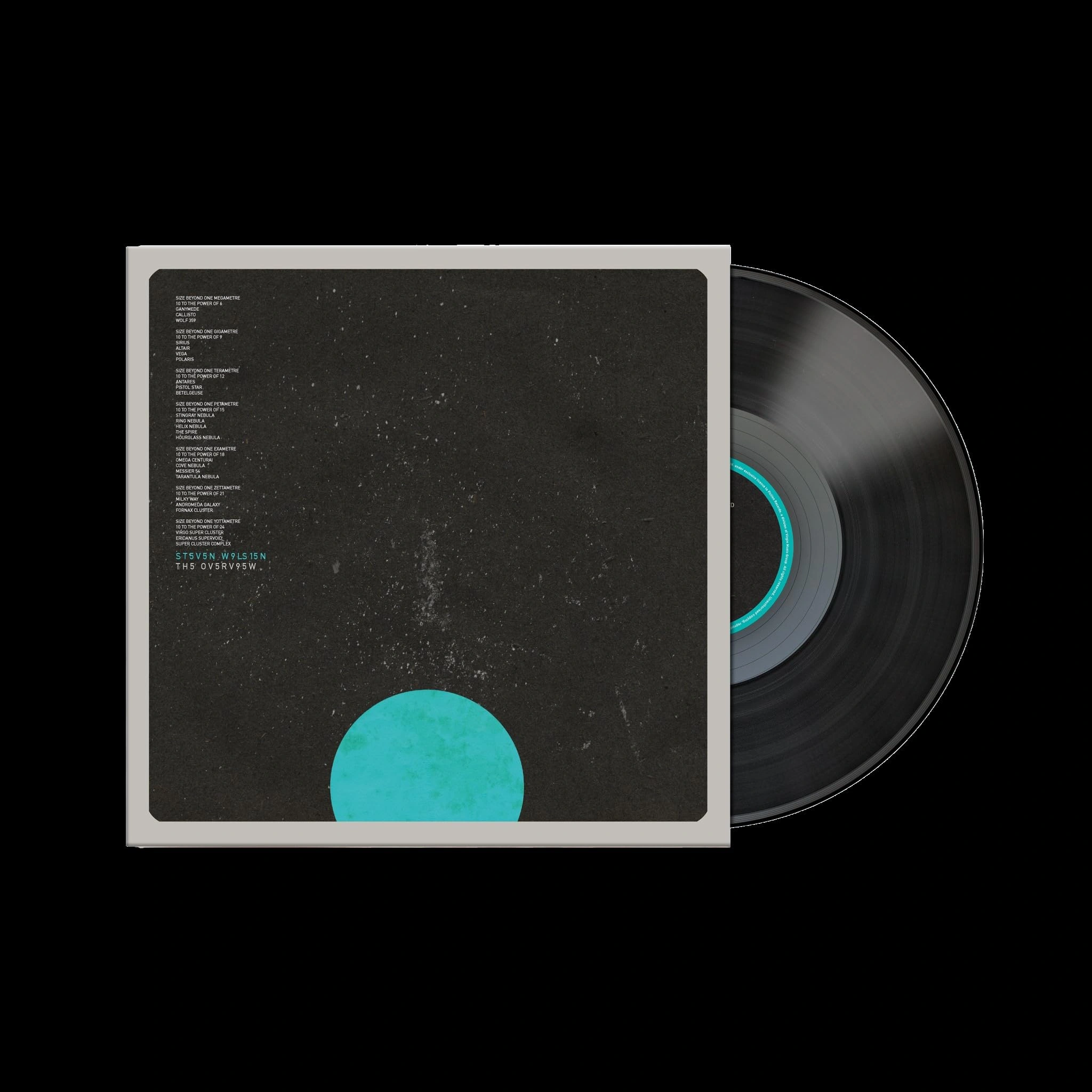
The Overview vinyl release by Steven Wilson, 2025
The Future of Sound Design and Environmental Listening
When sound design is exploited for commercial gain, we lose that personal connection to the sonic world around us. Research, such as Pauline Brown’s Aesthetic Intelligence, which refocuses aesthetics as crucial to business building and marketing, proves that there is a growing understanding that our senses are not exempt from commercial coercion. But with contemporary musicians like Steven Wilson and Christina Vantzou adopting a creative approach to sound design, and research highlighting how important soundscape projects are for the younger generation, Burial’s steadfast dedication to capturing real life lives on. Platforms like SoundCloud, Bandcamp, and Mixcloud give us hope for the future of music production, creating a space that encourages individual discovery, experimentation, and personal expression. In a world where so much focus is on branding and profit, sound designers like Burial give us something authentic, ‘a dose of real life, something people can relate to.’
References & Further Reading:
Amelidis, Panos, Stephanie Schwandner, Emily Fisher, et al. Introduction to Soundscape Composition: A Manual for Practitioners. Bournemouth University, 2022.
Carr, Alexander. “How Can Music Influence Consumer Behaviour.” PPL PRS, March 21, 2022.
Child, Nick. “The Subtle Power of Sound: How Audio Design Shapes Leisure Environments and Retail.” Building Design and Construction Magazine, April 11, 2025.
Fisher, Mark. “Interview with William Bevan AKA Burial.” The Wire, December 2012.
Rose, Brad. “Christina Vantzou’s World of Sound.” Foxy Digitalis, January 18, 2023.
Wilson, Steven. “How I Build My Soundscapes.” X (Twitter), January 10, 2024.
Zanna Sound. “Sound Design: The Art of Storytelling through Sound, from Cinema to Advertising.” January 7, 2023.