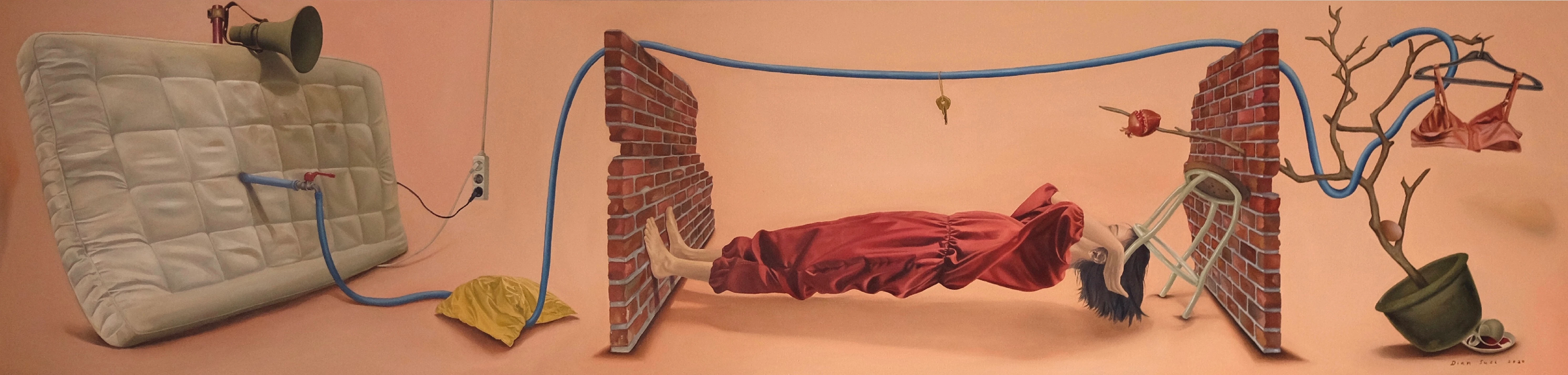
With just a few days to go before the opening of the 61st International Art Exhibition – La Biennale di Venezia, we present a sneak peek at the must-see national pavilions out of the 99 that are participating in the event. Titled In Minor Keys, the exhibition will be open to the public from May 9 to November 22, 2026, at the Giardini, the Arsenale, and various locations throughout Venice. Following Koyo Kouoh’s untimely passing, La Biennale di Venezia organized the exhibition according to her vision in order to preserve, highlight, and disseminate her ideas and work. “An exhibition attuned to minor keys; an exhibition that invites us to listen to the persistent signals of the earth and of life, in connection with the frequencies of the soul.”
Great Britain
The British Pavilion is hosting “Predicting History: Testing Translation,” a solo show by Lubaina Himid (b. 1954, Zanzibar). A leading figure in contemporary art and a cultural activist, she was the first Black woman to win the Turner Prize in 2017. Her work addresses themes such as race, feminism, cultural memory, and identity. Grounded in a critical re-examination of Western history, particularly as it relates to colonialism and the Atlantic slave trade, her work interweaves individual and collective narratives and reclaims erased or marginalized Black figures through a counter-narrative.

Lubaina Himid. Photo © Adama Jalloh
Her speculative approach suggests alternative histories that consider the perspectives of those who were marginalized. For the 2026 Venice Biennale, Himid has conceived a project that brings together a series of new works reflecting on the theme of home, the meaning of belonging, and what it means to live far from one’s place of origin. The project creates an emotional and symbolic guide for navigating elsewhere, recounting a journey of learning, adaptation, and progressive understanding. Her new large, multi-panel paintings in vivid colors reflect her profound interest in the materiality and performativity of painting, shaped by her Theater Design degree from Wimbledon College of Art. They depict surreal and almost magical settings populated by imaginary characters. In her dual role as an artist and filmmaker, Himid creates visual narratives that interact with the neoclassical architecture of the exhibition space. Like Britain itself, the seemingly bright and welcoming environment gradually reveals an underlying sense of unease, transforming into a landscape of uncertainty. This transformation is suggested by visual and auditory details, the latter of which were created in collaboration with artist Magda Stawarska. These details gradually introduce a latent tension, creating a suspended and surreal atmosphere. Curated by Ese Onojerou, the exhibition invites reflection on the United Kingdom as a simultaneously open and complex space, shaped by multiple voices and capable of challenging dominant narratives of national identity. The exhibition stands as a testament to art's potential to help us understand our shared past and our collective ability to create new narratives.

Lubaina Himid, Bitter Battles, 2023, Courtesy the artist, Hollybush Gardens, London and Greene Naftali, New York. Photo © Andy Keate
British National Pavilion - 61st International Art Exhibition of La Biennale di Venezia
Exibitor: Lubaina Himid
Commissioned by the British Council
Commissioner: Emma Dexter
Curated by Ese Onojerou
Vence (Giardini), 9 May – 22 November 2026
India
India returns to Venice for the first time since 2019 with a group exhibition titled “Geographies of Distance: Remembering Home,” which aims to convey the depth and cultural richness of the nation at a pivotal moment in its presence on the global stage. The project features five artists — Alwar Balasubramaniam (Bala), Sumakshi Singh, Ranjani Shettar, Asim Waqif, and Sonam Tashi — who draw on millennia-old traditions of Indian material culture to evoke an emotional connection to the concept of home while reflecting on India’s transformation, mobility, and global diaspora. The country is undergoing a period of accelerated transformation, driven in part by strong economic growth. Cities are expanding horizontally and vertically, transforming neighborhoods and urban landscapes at an unprecedented pace. Although the population is now more mobile than ever, it nevertheless maintains a strong connection to its origins and culture. Curated by Amin Jaffer, the group show explores how home becomes less a stable place and more a portable condition for those living in conditions of change or distance: an interweaving of memory, matter, ritual, and personal mythology. Despite their differences in geographical origin, background, and artistic language, all of the artists selected for this project share a common approach: using traditional organic materials to create and present their works.

Alwar Balasubramaniam. Courtesy of The Artist and Talwar Gallery, New York New Delhi
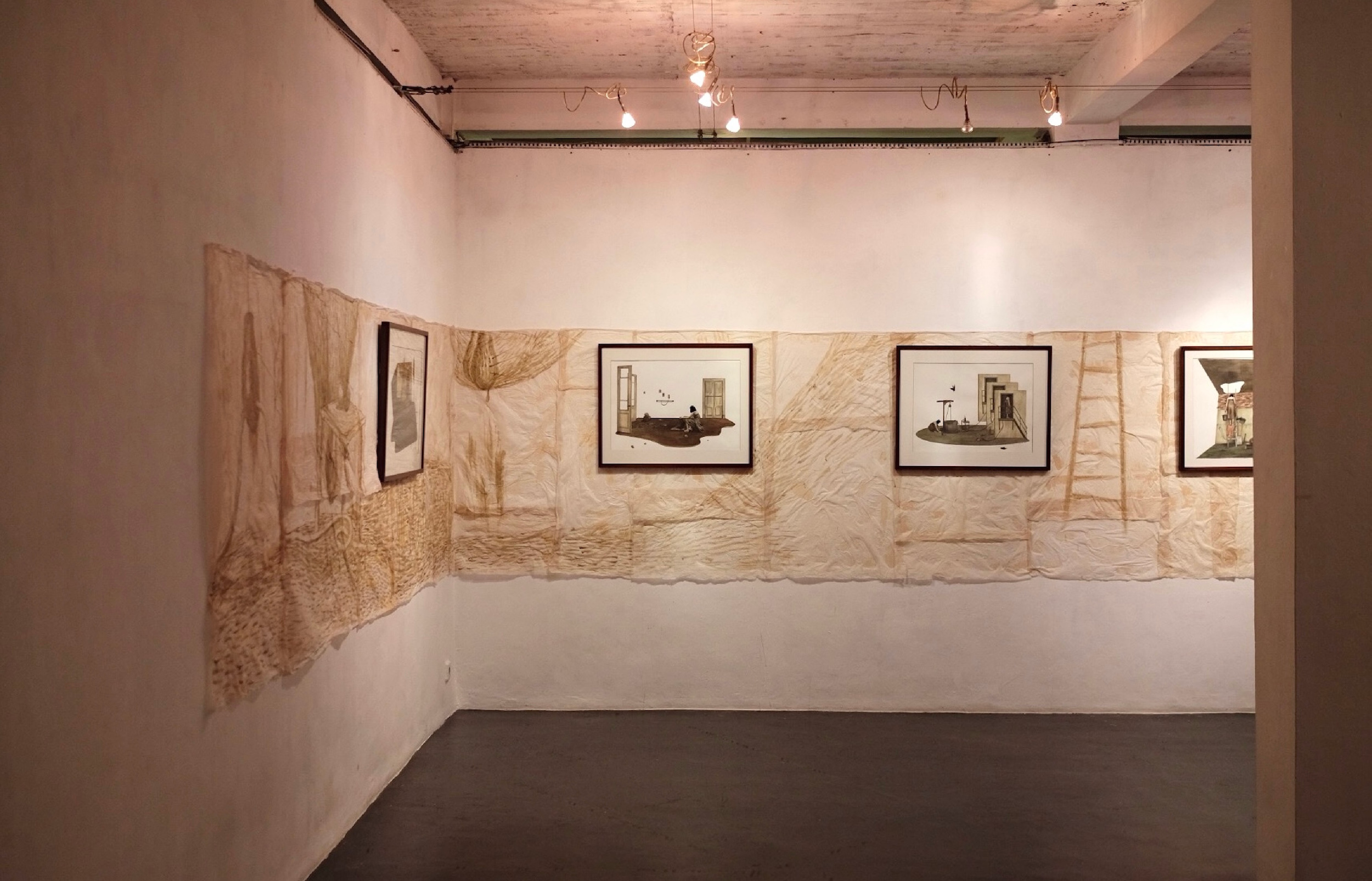
Alwar Balasubramaniam (b. 1971) works in rural Tamil Nadu. His practice is deeply rooted in dialogue with the surrounding natural landscape, and he uses earth and clay from the region.

Sumakshi Singh. Photo © Sunder Ramu
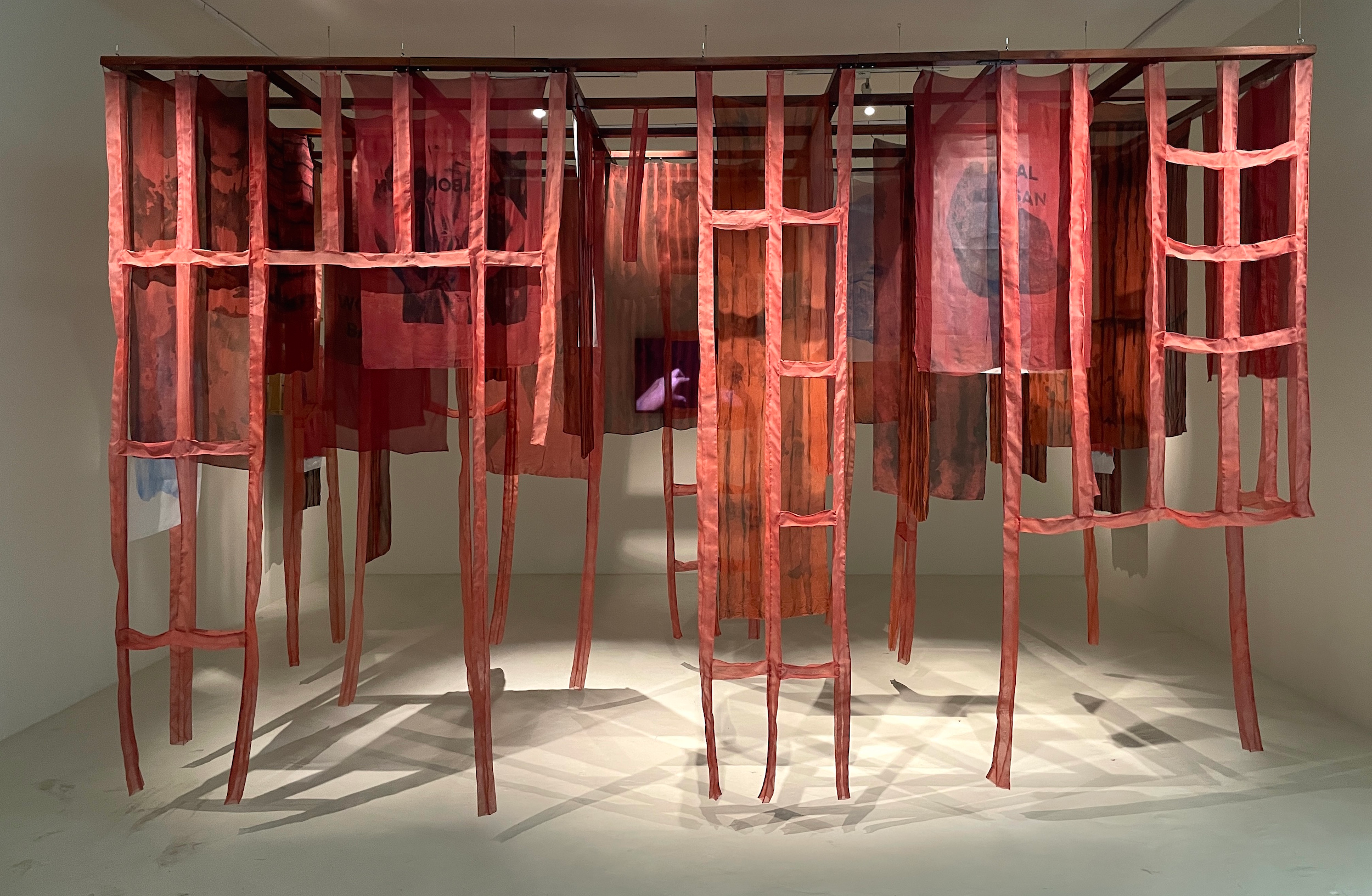
Sumakshi Singh (b. 1980) is a New Delhi-based artist who creates ethereal installations with embroidered threads, transforming memory itself into a sort of architectural medium.

Ranjani Shettar. Courtesy of the artist and Talwar Gallery, New York, New Delhi
Ranjani Shettar, based in Karnataka, explores ancient craft traditions through sculptures that seem to defy gravity. She transforms natural materials into organic and floral forms, all of which are made entirely by hand.

Asim Waqif. Photo © Richa Sahai
Asim Waqif (b. 1978), an architect by training, repurposes organic and waste materials in his sculptural installations to address themes related to consumption and sustainability in public spaces. He invites visitors to interact directly with his structures.

Skarma Sonam Tashi. Photo © artopedia.ind
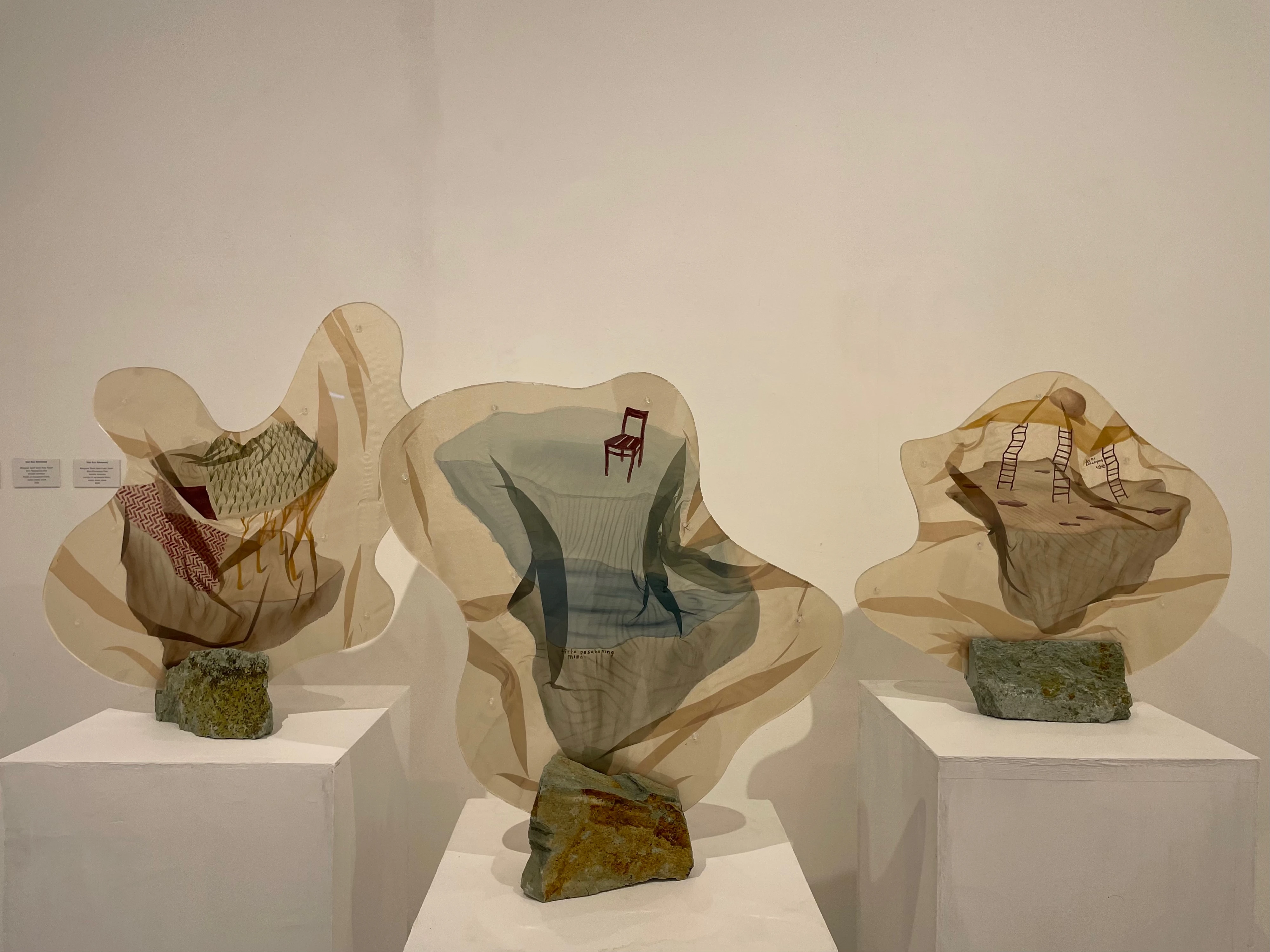
Finally, Skarma Sonam Tashi (b. 1997) presents works related to the landscape and architecture of his native Ladakh. Using recycled materials and traditional techniques, such as papier-mâché, he reflects on the fragility of the natural environment and cultural preservation.
India National Pavilion - 61st International Art Exhibition of La Biennale di Venezia
Exibitors: Alwar Balasubramaniam (Bala), Sumakshi Singh, Ranjani Shettar, Asim Waqif e Skarma Sonam Tash
Presented by: the Ministry of Culture, Government of India, in partnership with the Nita Mukesh Ambani Cultural Centre (NMACC) and Serendipity Arts Foundation
Commissioned by: National Gallery of Modern Art (NGMA), Ministry of Culture
Curated by: Amin Jaffer
Venice (Arsenale), 9 May - 22 November 2026
Scotland
The Scotland National Pavilion has been entrusted to the Glasgow-based duo Bugarin + Castle. They were selected as part of the Scotland + Venice program, which is curated by the Mount Stuart Trust. The project consists of new works combining sculpture, performance, and video. Bugarin and Castle explore the parade as a symbolic and political device. Rather than being merely a moment of collective celebration, the parade serves as a lens through which to observe the emotional and cultural layers of shame, pride, and celebration.

Davide Bugarin, Angel Cohn Castle and Morven Gregor at Mount Stuart. Photo © Charlotte Cullen, courtesy Scotland + Venice
Bringing together Scottish archives, queer histories, and references to Filipino cultural heritage, the project examines how sound, costume, and public ritual shape identity and systems of social control. The artists’ research lies at the intersection of performative practices, architectural methodologies, and cabaret traditions, resulting in a highly interdisciplinary approach. At the heart of their work lies an explicitly queer and decolonial perspective that uses performativity to reexamine archives and historical narratives. In this sense, the Venice project seems to fit into a well-established line of research in their practice that favors hybrid, process-oriented forms. They also perform in drag as Hairy Teddy Bear and Pollyfilla through Pollyanna, a Scottish queer arts company founded by Castle that is now in its tenth year. These forms are capable of activating the exhibition space as a site of cultural negotiation. A significant precedent is the interactive film Sore Throat (2023), produced in Edinburgh and Manila and presented at the Fruitmarket before moving on to the Tate Modern and other international venues. The film explores the concept of “colonial monsters” and the role of sound in Filipino queer spaces. It uses software that records visitors’ voices and re-inserts them into the narrative, thereby transforming the audience into an active and unwitting presence within the story. The Mount Stuart Trust's curatorial approach further underscores its commitment to programming that combines contemporary artistic research with reflection on cultural identities. Since 2001, the Trust has developed an exhibition program featuring leading contemporary artists. This project, conceived for Venice, will be restaged at Mount Stuart on the island of Bute in the summer of 2027 before continuing with further presentations in Scotland. This demonstrates that Scotland’s participation in the Biennale is not an isolated event but rather part of a broader cultural ecosystem connecting artistic production, institutions, and international networks.
Scotland National Pavilion - 61st International Art Exhibition of La Biennale di Venezia
Exibitors: Bugarin + Castle
Commissioned by: Scotland + Venice
Curated by: Mount Stuart Trust
Venice (Palazzo Giustinian Lolin), 9 May – 22 November 2026
Bahamas
After a thirteen-year hiatus, the Bahamas Pavilion is set to make its second appearance at the Venice Biennale with “In Another Man’s Yard: John Beadle, Lavar Munroe, and the Spirit of (Posthumous) Collaboration,” an exhibition curated by art historian Krista Thompson. The duo show brings together works by two Bahamian artists, John Beadle (1964–2024) and Lavar Munroe (b. 1982), focusing on a generational dialogue that forms the conceptual and visual core of the project. The artists’ practices are closely tied to the visual and social traditions of the Bahamas, as well as the broader African diaspora. They address issues such as cooperation, memory, and the transformation of materials.

Installation image. The Bahamas Pavilion, In Another Man's Yard John Beadle, Lavar Munroe, and the Spirit of (Posthumous) Collaboration. Works pictured by Lavar Munroe. Photo © Francesco Allegretto
Within this framework, the exhibition serves as a meditation on the creative dialogue between generations and the transmission of a shared cultural heritage. Beadle was a deeply respected artist in the local art community and a role model for many younger artists, including Munroe himself. He was also an active member of a group of artisans dedicated to creating costumes for Junkanoo, a national parade held twice a year with roots in a centuries-old tradition. The artist considered Junkanoo the cultural foundation of the archipelago. Junkanoo's aesthetics and strong collective spirit significantly influenced Beadle’s practice, particularly his use of recycled materials, such as cardboard. Beadle incorporated sails from abandoned Haitian boats into his works. Through recurring elements, such as unusable oars, mobile homes, and hidden machetes, the artist drew attention to people, objects, and creative processes that are often overlooked. Like Beadle, Munroe has built his practice at the intersection of the Junkanoo tradition and contemporary art. He interweaves painting, airbrushing, collage, ceramics, glass, feathers, and cardboard to explore themes such as identity, spirituality, and storytelling, imbuing his work with ritual significance. His complex sculptures are made from strips of discarded festival costumes, reusing cardboard that has already been discarded twice. Formal results often take the form of monumental equestrian figures or life-size dogs. The nature of the materials used is not immediately recognizable, which contributes to the creation of a complex and layered visual language. Munroe previously exhibited her work at the Arsenale during the 56th International Art Exhibition of La Biennale di Venezia, which was curated by Okwui Enwezor in 2015.

Artist Lavar Munroe, Deputy Commissioner Amanda Coulson, curator Dr. Krista Thompson and Commissioner John Cox, Photo © Francesco Allegretto
Bahamas National Pavilion - 61st International Art Exhibition of La Biennale di Venezia
Exibitors: John Beadle; Lavar Munroe
Organised by The Bahamas in Venice Committee (BVC), a sub-committee of the Friends of the Arts in The Bahamas (FAB) Foundation
Commissioner: John Cox
Deputy Commissioner/Producer: Amanda Coulson
Curated by: Krista Thompson
Venice (San Trovaso Art Space), 9 May – 22 November 2026
United Arab Emirates
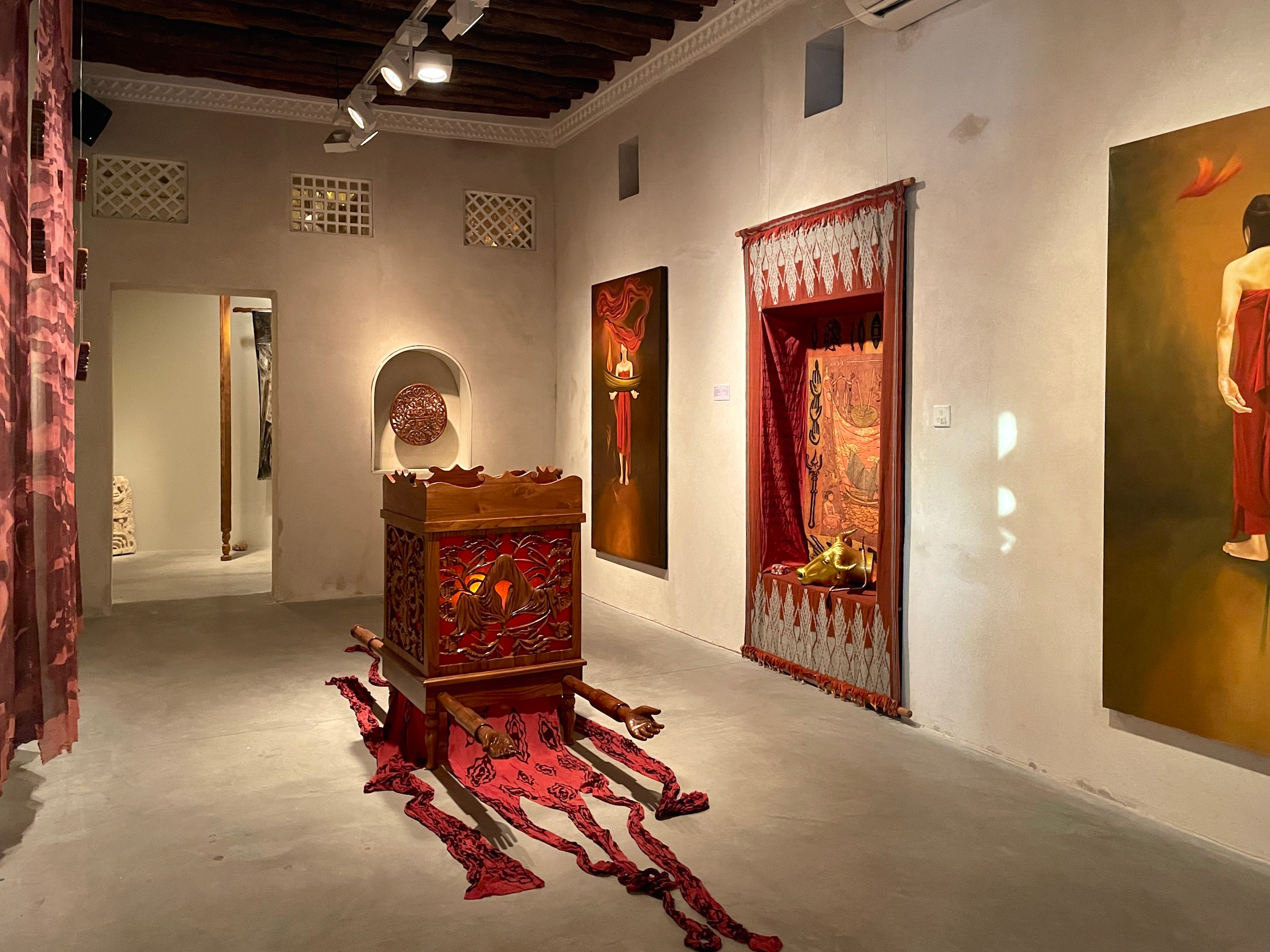
The UAE is participating in the Venice Biennale with “Washwasha”, an exhibition exploring sound as a tool for memory, movement, and cultural self-representation. Curated by Bana Kattan, the current Curator and Associate Head of Exhibitions for the Guggenheim Abu Dhabi project, and assistant curator Tala Nassar, the project features six artists whose work reflects the changing soundscapes of the United Arab Emirates. Mays Albaik (b. 1991), Jawad Al Malhi (b. 1969), Farah Al Qasimi (b. 1991), Alaa Edris (b. 1986), Lamya Gargash (b. 1982), and Taus Makhacheva (b. 1983) each explore an acoustic landscape shaped by migration, crossings, and enduring relationships with the landscape through their own sensibilities and approaches. The exhibition’s title comes from the phonetic transliteration of the Arabic word for “whisper”: washwasha. It serves as a starting point to explore themes such as movement, technology, oral histories, and the relationships between language, the body, and identity. These elements reflect the living conditions of the communities that shape the cultural landscape of the Emirates. Historically, sound has played a fundamental role in the Emirati context as a platform for collective self-representation. From oral storytelling traditions and poetry circles to the earliest experiments in local radio broadcasting, sound practices have constituted a space for sharing and identity-building. “Washwasha” situates contemporary artistic practices within this long continuum of transmission, listening, and exchange. The stories evoked by the exhibition reveal that the country is far from culturally static. Rather, it emerges as a space defined by mobility, connections, and layered forms of listening that traverse land and sea. The exhibition reflects on the profound infrastructural changes that have shaped the country in recent decades by bringing together long-standing collective sound practices with a technology-mediated culture of listening. These architectural, technological, and social transformations have redefined the ways communities listen, communicate, and are heard. The exhibition, designed by Büro Koray Duman Architects, is conceived in close relation to the Pavilion’s acoustic qualities and the materiality of its architecture. The itinerary unfolds as a sequence of spaces that guide visitors through different listening conditions, from intimate, focused spaces to areas where sounds overlap and intensify until they verge on noise.

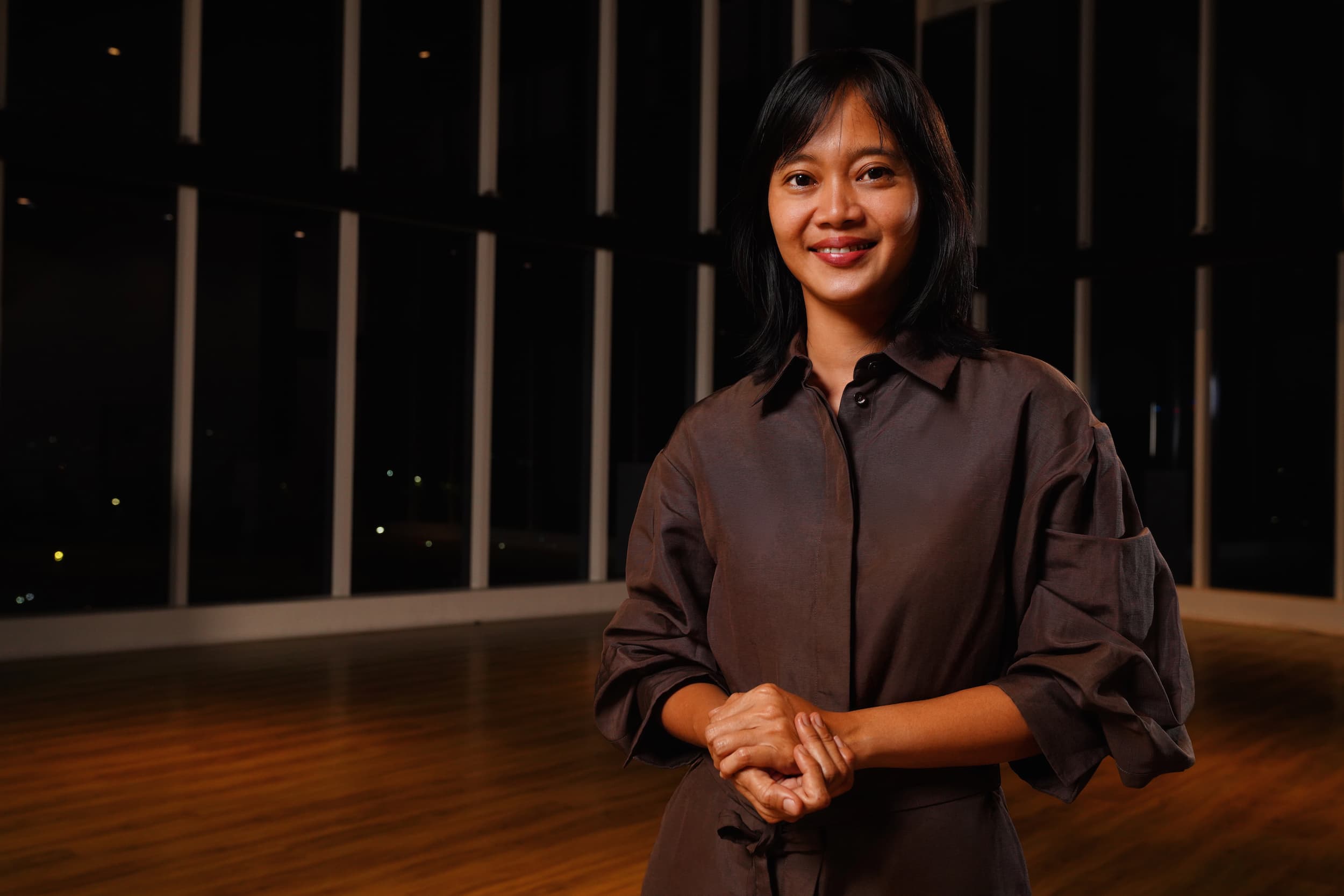
Curator Bana Kattan, 2026. Photo © Dahlia Dandashi. Image Courtesy of National Pavilion UAE - La Biennale di Venezia
UAE National Pavilion - 61st International Art Exhibition of La Biennale di Venezia
Exibitors: Mays Albaik, Jawad Al Malhi, Farah Al Qasimi, Alaa, Edris, Lamya Gargash, and Taus Makhacheva
Commissioned by: the Salamabint Hamdan Al Nahyan Foundation
Supported by: the UAE Ministry of Culture
Curated by: Bana Kattan, Curator and Associate Head of Exhibitions at the Guggenheim Abu Dhabi Project, and Assistant Curator Tala Nassar.
Venice (Arsenale), 9 May - 22 November 2026
Qatar
“untitled 2026 (a gathering of remarkable people)” is the title of the project with which Qatar is participating in the Venice Biennale for the first time. The project will be presented at the Giardini site created for the country’s future permanent pavilion, which was designed by Lina Ghotmeh–Architecture. The initiative, curated by Tom Eccles and Ruba Katrib, centers on the relational practice of Rirkrit Tiravanija (b. 1961) and serves as a collaborative platform intertwining visual art, sound, film, and gastronomy. The artist designed a temporary architectural structure inspired by the shape of a tent. This open space is intended for cultural exchange and is conceived to be a meeting place for artists and the public. A multidisciplinary program developed in collaboration with key figures in the contemporary art and cultural scene will unfold within this space. Among them is Qatari-American artist Sophia Al-Maria (b. 1983), who will present an experimental documentary film centered on a dreamlike journey in which music and sound serve as tools for transformation and imagination. Lebanese artist and composer Tarek Atoui (b. 1980) will coordinate a series of performances and improvised collaborations with musicians and poets alongside her. These performances will bring together field recordings, archival materials, and soundscapes from the Arab world. Alia Farid (b. 1985), a Kuwaiti-Puerto Rican artist, will handle the sculptural dimension of the project. She will present Jerrican (2022–2026), a monumental sculpture from her series dedicated to containers used to store and transport water in the Gulf. These vessels, reproduced on an oversized scale and crafted from lacquered fiberglass, are at once imposing and surprisingly light. They evoke the circulation of resources and people, drawing on materials and techniques common to the region’s urban landscape. The proposal also includes a culinary component curated by Palestinian chef Fadi Kattan, who will design a gastronomic program dedicated to MENA regional traditions, evoking stories of migration and trade that have traversed the Mediterranean and Middle East.

Sophia Al-Maria, Tom Eccles, Rirkrit Tiravanija, Tarek Atoui, Ruba Katrib. Photo © Brigitte Lacombe
Qatar National Pavilion - 61st International Art Exhibition of La Biennale di Venezia
Exibitors: Rirkrit Tiravanija, Sophia Al-Maria, Tarek Atoui, Alia Farid, Fadi Kattan
Commissioned by: Her Excellency Sheikha Al Mayassa bint Hamad bin Khalifa Al Thani
Curatated by: Tom Eccles and Ruba Katrib
Produced by: Qatar Museums
Presented by: Rubaiya Qatar
Venice (Giardini), 9 May - 22 November 2026