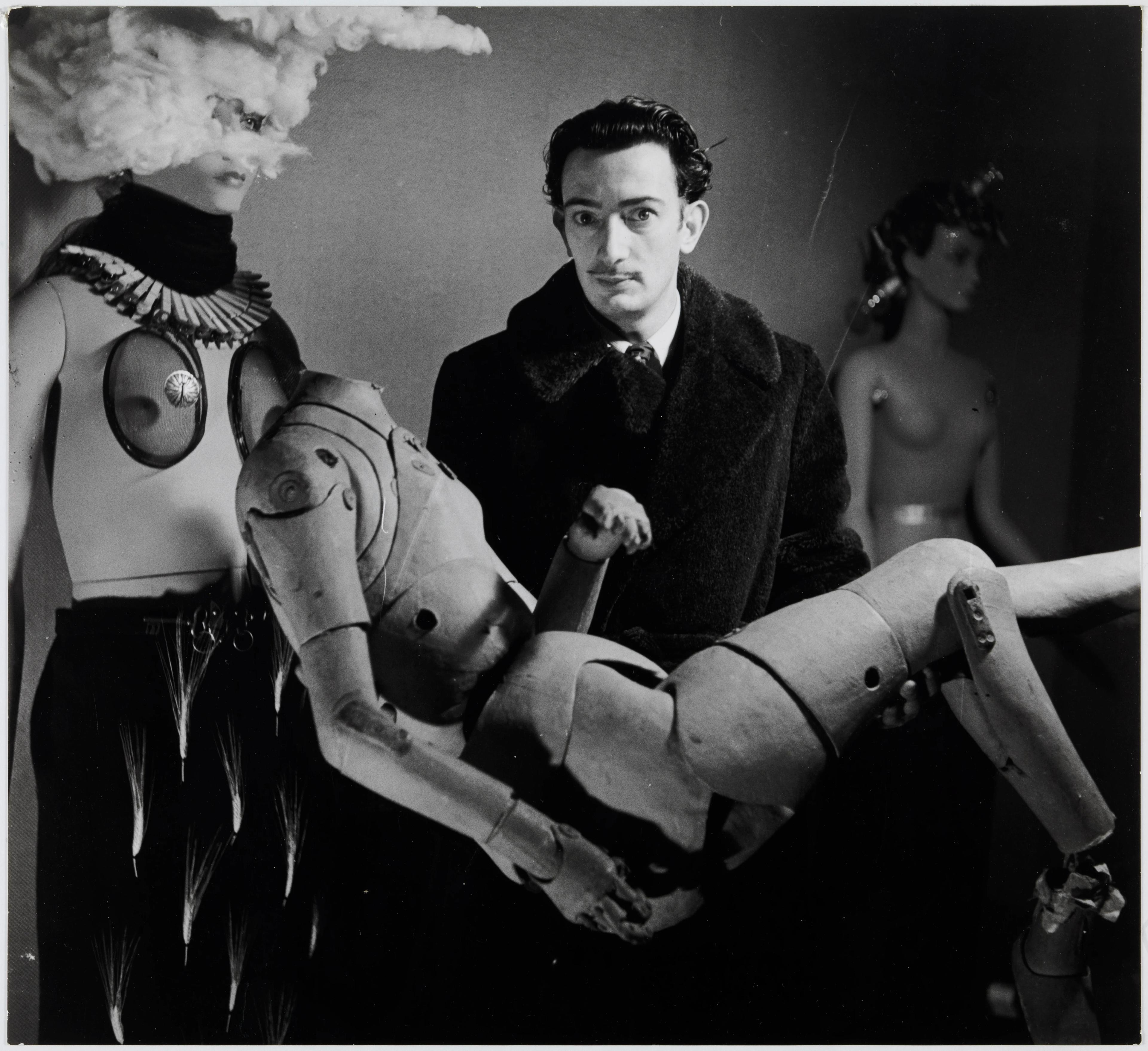
For Salvador Dalí, fashion was never just about clothing. It was a language through which he constructed his identity, challenged conventions, and extended artistic experimentation beyond the traditional boundaries of art. From his carefully curated public persona to his collaborations with some of the most influential couturiers of the twentieth century, Dalí transformed fashion into a space where the body, imagination, and spectacle could converge. This multifaceted relationship is the focus of Dalí and Fashion, an exhibition at Palazzo Reale in Milan from September 24, 2026, to January 31, 2027.
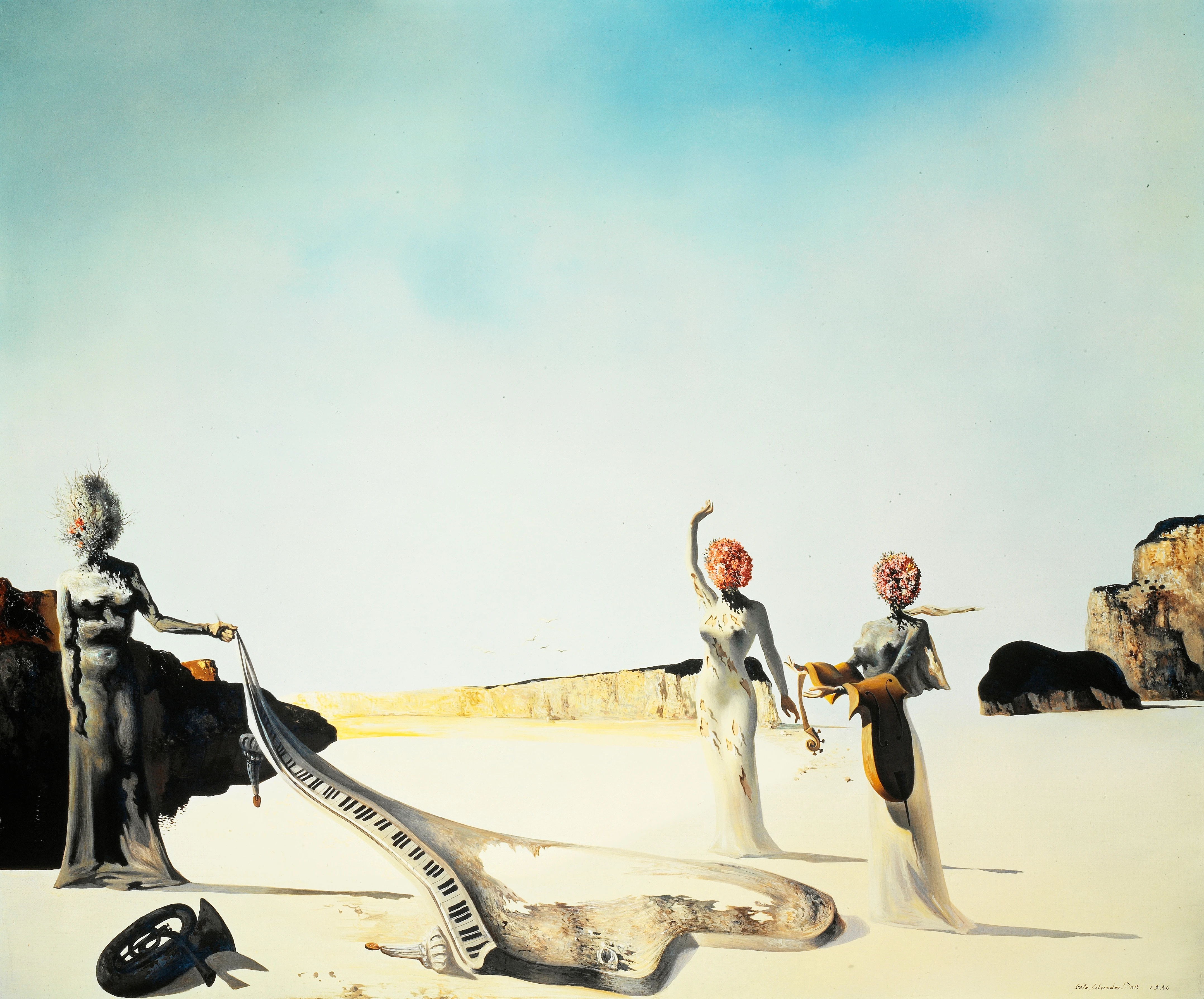
Immagine guida-Salvador Dalí, Three young surrealist women holding in their arms the skins of an orchestra, 1936. Collection of The Dalí Museum, St. Petersburg, FL (USA); Gift of A. Reynolds & Eleanor Morse. Photo © Oriol Tarridas, 2024 © Salvador Dalí, Fundació Gala-Salvador Dalí, Figueres, 2026
The project brings together over 200 works and archival materials, including paintings, drawings, photographs, garments, jewelry, and films. It traces the artist’s visionary engagement with fashion and his enduring influence on contemporary designers. Developed in collaboration with the Fundació Gala-Salvador Dalí, the exhibition is presented under the scientific direction of Montse Aguer, director of the Dalí museums, and is curated by Laura Bartolomé Roviras, deputy director of research and projects at the foundation, alongside Judith Clark, a fashion historian and professor at the University of the Arts London. Senior curators Lucia Moni and Bea Crespo also contributed. “Dalí and Fashion“ draws on major international collections, including those of the Fundació Gala-Salvador Dalí in Figueres, the Dalí Museum in St. Petersburg, Florida, and the Museo Nacional Centro de Arte Reina Sofía in Madrid. It also presents garments belonging to Dalí and Gala that are being displayed outside of Spain for the first time. In this interview, Laura Bartolomé Roviras reflects on Dalí’s view of fashion as an extension of his artistry, Gala’s pivotal role in shaping their shared public image, and how his radical experimentation continues to influence contemporary visual culture.
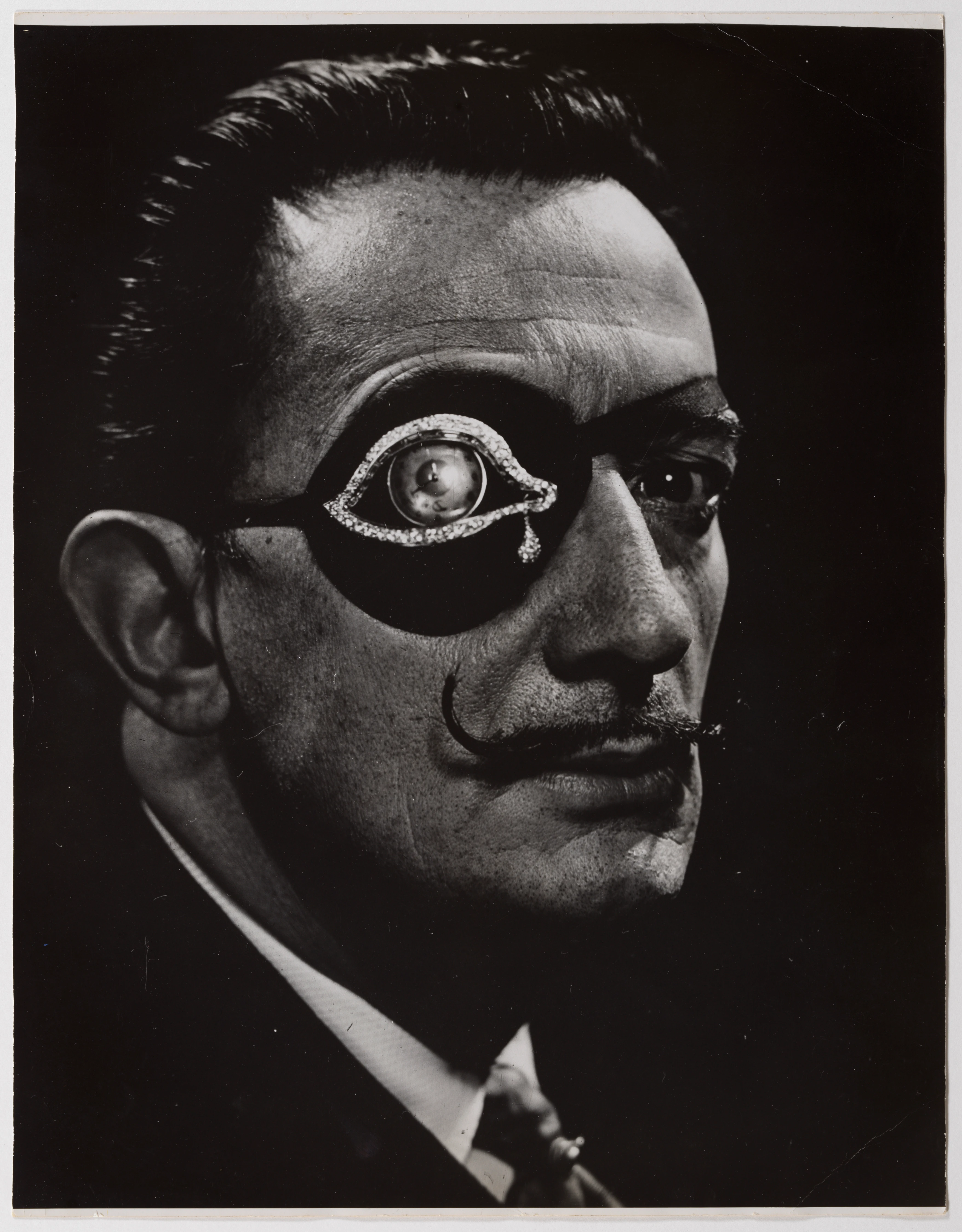
Philippe Halsman, Salvador Dalí wearing the watch brooch, The Eye of Time, c. 1956, Fundació Gala-Salvador Dalí, Figueres. Photo by Philippe Halsman © Philippe Halsman Estate 2026 © Salvador Dalí, Fundació Gala-Salvador Dalí, Figueres, 2026
Fashion as self-portrait
Dalí recognized clothing as a means of self-representation, transforming his wardrobe and public image into integral elements of his artistic identity. How does this understanding of fashion anticipate contemporary strategies of identity construction and communication?
Dalí quickly understood the power and potential of visual language, which became an intrinsic part of his artistic practice from the very beginning and manifested itself in multiple ways throughout his career. This can be seen first and foremost in the way he presented himself to the world, which was also a means of expressing his conception of art. To achieve this goal, his sartorial choices became an extension of the canvas itself. From childhood, he learned that dressing differently could arouse curiosity and attract attention. He transformed his family’s appreciation for elegant dressing into a personal visual language, and he continually adapted it whenever he perceived the possibility of expressing his unique personality. Clothing was deeply connected to self-representation, and for this reason his wardrobe, heterogeneous and eclectic, offers meaningful insights into the construction of his identity. Beyond his wardrobe, the moustache became one of the most iconic elements of his appearance and one of the features for which he was most readily recognized by audiences. Those antennae that he invented and reinvented as if they were a work of art and which at the same time defended and safeguarded the essence of his true self. The photographs by Philippe Halsman for the 1954 photo-book Dalí’s Mustache reflect the originality of his proposal.
To some extent, Dalí’s public persona merged with his oeuvre, and vice versa. Photographers of the time played a significant role in this process, capturing him in carefully staged and often sophisticated mise-en-scènes that were widely disseminated through the press, magazines and other publications. This approach to artistic creation and self-promotion can be seen as a precursor to the strategies employed on social media today, where many creators similarly cultivate their public image as an integral part of their creative practice.
Gala’s role
Gala played a fundamental role in shaping Dalí’s aesthetic universe and the couple’s public image by curating her wardrobe and cultivating her personal style. What independent creative contributions did Gala make to this shared visual language?
If Dalí had already recognized the power of self-fashioning, this commitment became a shared endeavour following Gala’s arrival in his life in 1929. Together, they developed what might be described as a deliberate strategy of self-representation, in which clothing played a pivotal role. Fashion was not merely a means of presenting themselves in society, but an essential component of a broader conception of identity. And also of the promotion of Dalí’s work. Gala was far more than a muse: she was Dalí’s partner, confidante, inspiration, manager, and, at times, collaborator. And she had a prominent role in the construction of the self-imaging of the couple, taking a decisive role when posing dressed-up in selected dresses for photographers. Some of these photographers were committed to fashion, such as Man Ray, Cecil Beaton, George Hoyningen-Huene or Horst P. Horst. These encounters must have stimulated the creativity of both the photographers and the portrayed, since Gala and Dalí were aware of the power of images to generate lasting memories in the collective memory.
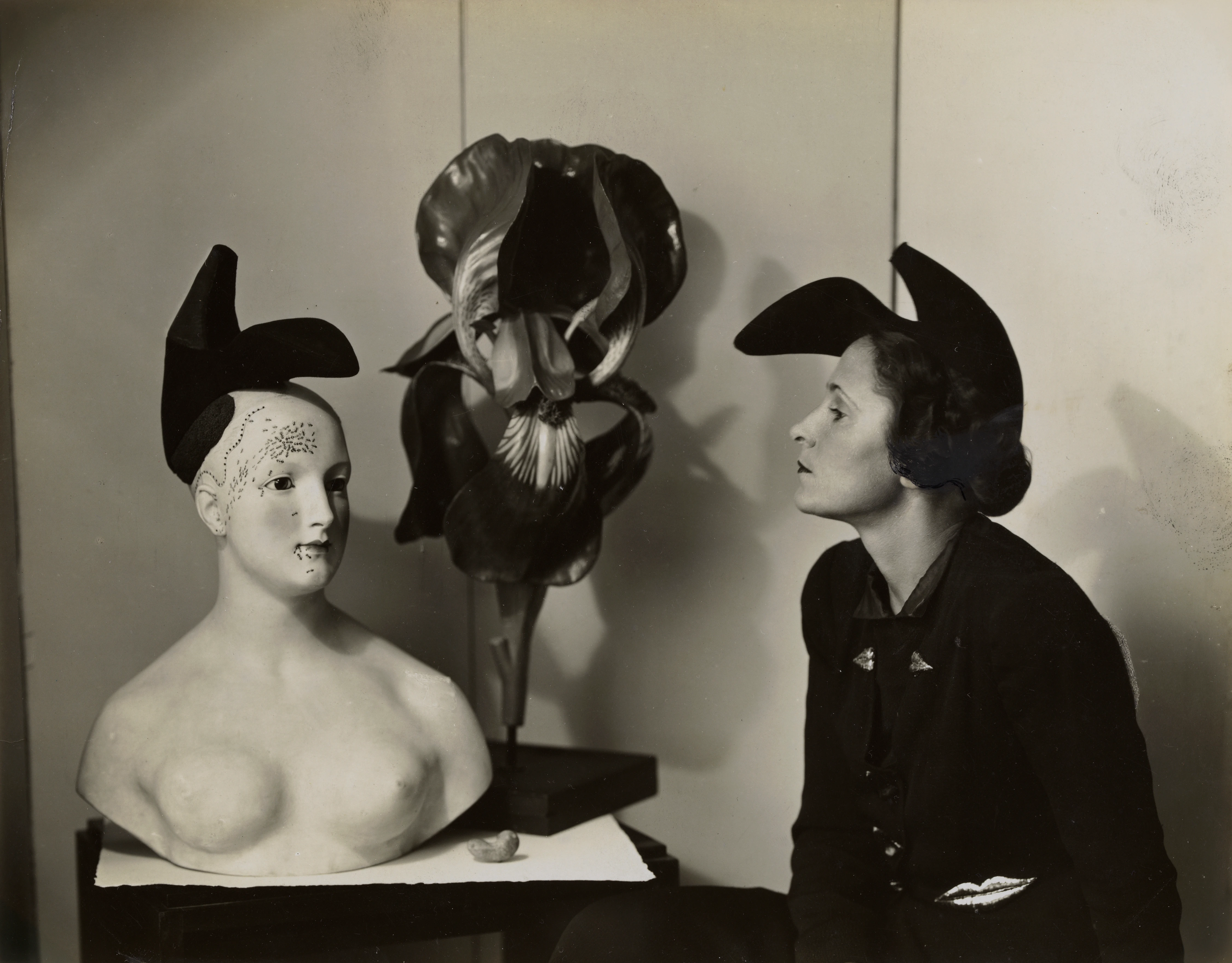
André Caillet, Gala wearing Elsa Schiaparelli’s shoe-hat inspired by a Salvador Dalí design, 1938 © Salvador Dalí, Fundació Gala-Salvador Dalí, Figueres, 2026
Clothing reinforced the visual power of their self-image. Gala’s wardrobe takes a central place in this exhibition, as it reveals the different choices she made over time, some of which were closely linked to the relationships that Dalí cultivated with leading couturiers of the period. For example, two haute couture pieces designed by Elsa Schiaparelli in the second half of the 1930s, preserved in our archives, are presented in the exhibition. This wardrobe also preserves pieces from major couturiers such as Christian Dior, Chanel, Givenchy, Gucci, Pucci, Pierre Cardin or the American Howard Greer and Arthur Falkenstein.
Dalí’s collaborations with Schiaparelli, Chanel and Dior
Dalí collaborated with Elsa Schiaparelli, Gabrielle Chanel, Christian Dior, and Paco Rabanne. This reflects his conception of creativity, which transcends traditional disciplinary boundaries. In what ways did his engagement with fashion expand and transform his artistic practice?
Dalí’s engagement with twentieth-century fashion transcended almost all boundaries. While he is best known as a painter, his creative output extended far beyond traditional disciplines to encompass fields beyond art, to the extent of fashion design. This extraordinary breadth has secured his reputation as one of the foremost artists of the twentieth century. Yet his contribution to fashion remains a field that continues to reveal new dimensions of his creative practice. On one occasion, he declared: ‘There is no dishonour of any sort for him who, during his lifetime, excels in the greatest possible number of fields.’ In fact, there was no separate Dalí the artist and Dalí the fashion designer, but rather a total artist capable of transcending any boundaries that stood in his way.
Collaborations with some of the most influential couturiers of his time provided him with opportunities to expand his artistic universe and apply his imagination to an entirely new medium. And he approached each of these contributions in a different way. With Elsa Schiaparelli, he conceived bold and provocative haute couture garments and accessories that have become icons of twentieth-century fashion. With Gabrielle Chanel, he developed a more personal relationship while collaborating on the costumes for the 1939 Bacchanale ballet. With Christian Dior, who had been his art dealer in the early 30s, he designed the disguises for The Ball of the Century at Palazzo Labia in Venice in 1951. Later, he incorporated the first revolutionary 1966 dresses of Paco Rabanne into a number of performances with fashion models in Portlligat, Cadaqués, Barcelona, and Paris. For Dalí, the objective was not simply to create fashion. Rather, it was to extend artistic practice into the realm of fashion and, in turn, to transform fashion into a new platform through which his art could reach wider audiences. Fashion became both a medium of expression and a stage upon which artistic ideas could be performed, communicated, and amplified.
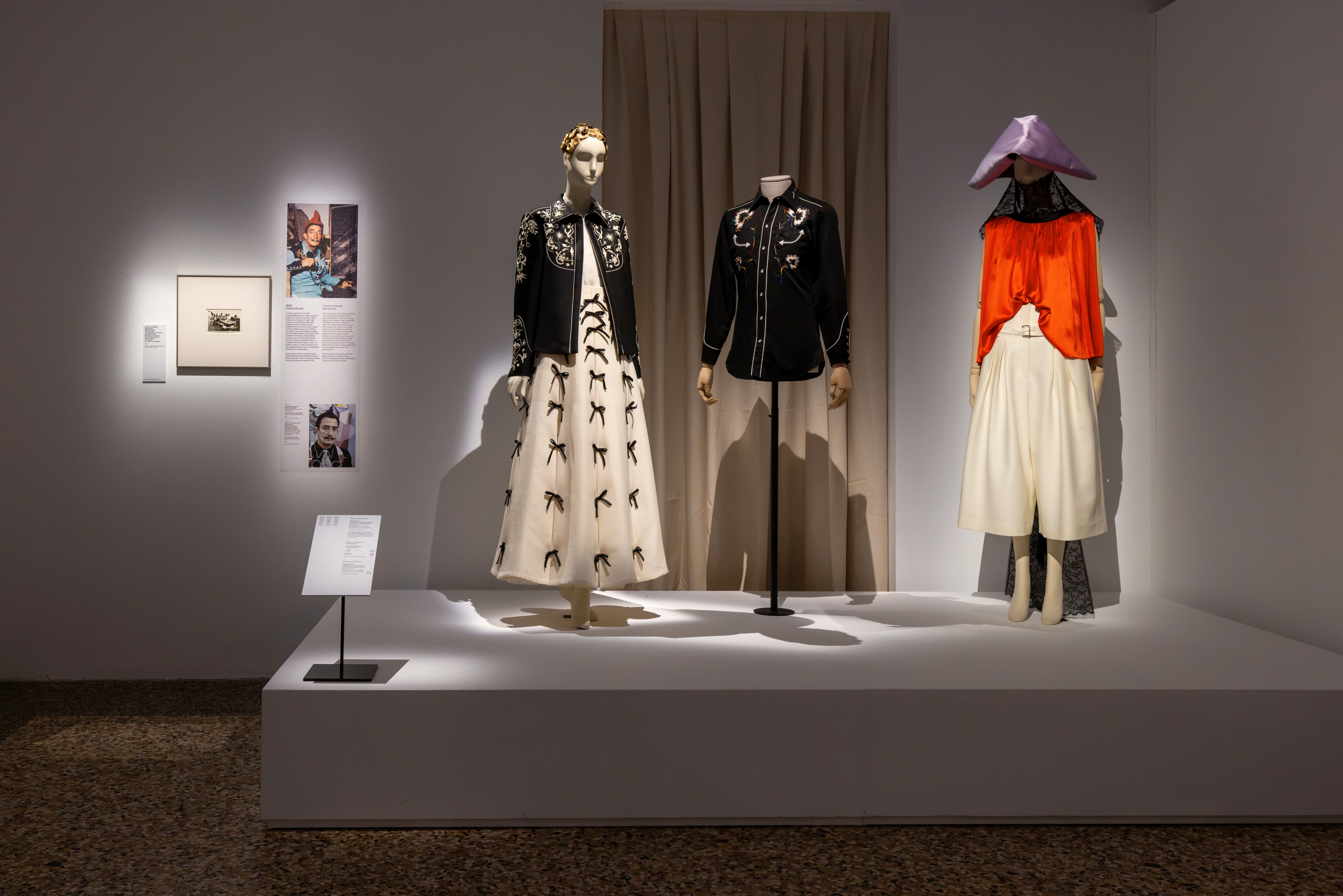
'Dalí and Fashion' Exhbition View, Palazzo Reale, Milan, Image Courtesy of Palazzo Reale.
Reshaping the body
The use of anatomical fragmentation, mannequins, and jewelry that reconfigures body parts challenges the notion that physical identity is stable and immutable. The concept of the body as modifiable and redefinable was explored by contemporary fashion designers such as Rei Kawakubo, Hussein Chalayan, and Alexander McQueen. To what extent can Dalí be considered a precursor to the idea of using clothing to alter one's appearance?
Physical identity can be as mutable as fashion itself. The notions of transformation and reinvention, which are intrinsic to fashion, are also among the most recognisable aspects of Dalí’s self-representation throughout his life. He understood that clothing played a crucial role in constructing and redefining his public image and appearance. Besides that, Dalí found in fashion creation a new means or “canvas” to explore and redefine the body through artistic expression.
Mannequins, like the one of the 1926 painting Barcelona Mannequin, were one of the first figures that reflected this interest. An interest that was further developed in some imaginary designs published in The American Weekly in 1935, although his collaboration with Elsa Schiaparelli, which began in 1936, proved decisive. Together, they explored the body’s surfaces and volumes through some of their most celebrated creations, thanks also to sophisticated visual displacements, trompe-l’œil effects, and innovative tailoring techniques. The Shoe-Hat, created for Schiaparelli’s Winter 1937-1938 Haute Couture collection, remains one of the boldest manifestations of this creative mindset. The exploration of the body, its forms, volumes, surfaces, and anatomical boundaries, has continued to fascinate contemporary fashion designers and constitutes one of the most significant links between Dalí’s work and the present-day and future of fashion. The illusionary organic prolongations and mutations of different parts of the body in some designs of referred Rei Kawakubo and Hussein Chalayan transform human forms into new unexpected physiologies. This kind of reshaping may recall the aforementioned imaginary designs and other ‘false’ anatomies that Dalí designed in the second half of the 30s.
Even if the last had not been explicitly conceived to become fashion creations, they entail somehow conceptual and research on the possibilities of the transformation of the body. Moreover, some of the jewels Dalí designed in 1949 reflect the aim for the fragmentation of body parts, such as eyes, lips, hands, transformed into new forms of fashion. At the Palazzo Reale exhibition, we have chosen to emphasise this theme through bringing together a selection of paintings, drawings and jewels by Dalí with recent creations by Daniel Roseberry for Schiaparelli, in which the exploration of the body is central. This approach is also to emphasize how Dalí continues to inspire new possibilities for fashion in the twenty-first century.
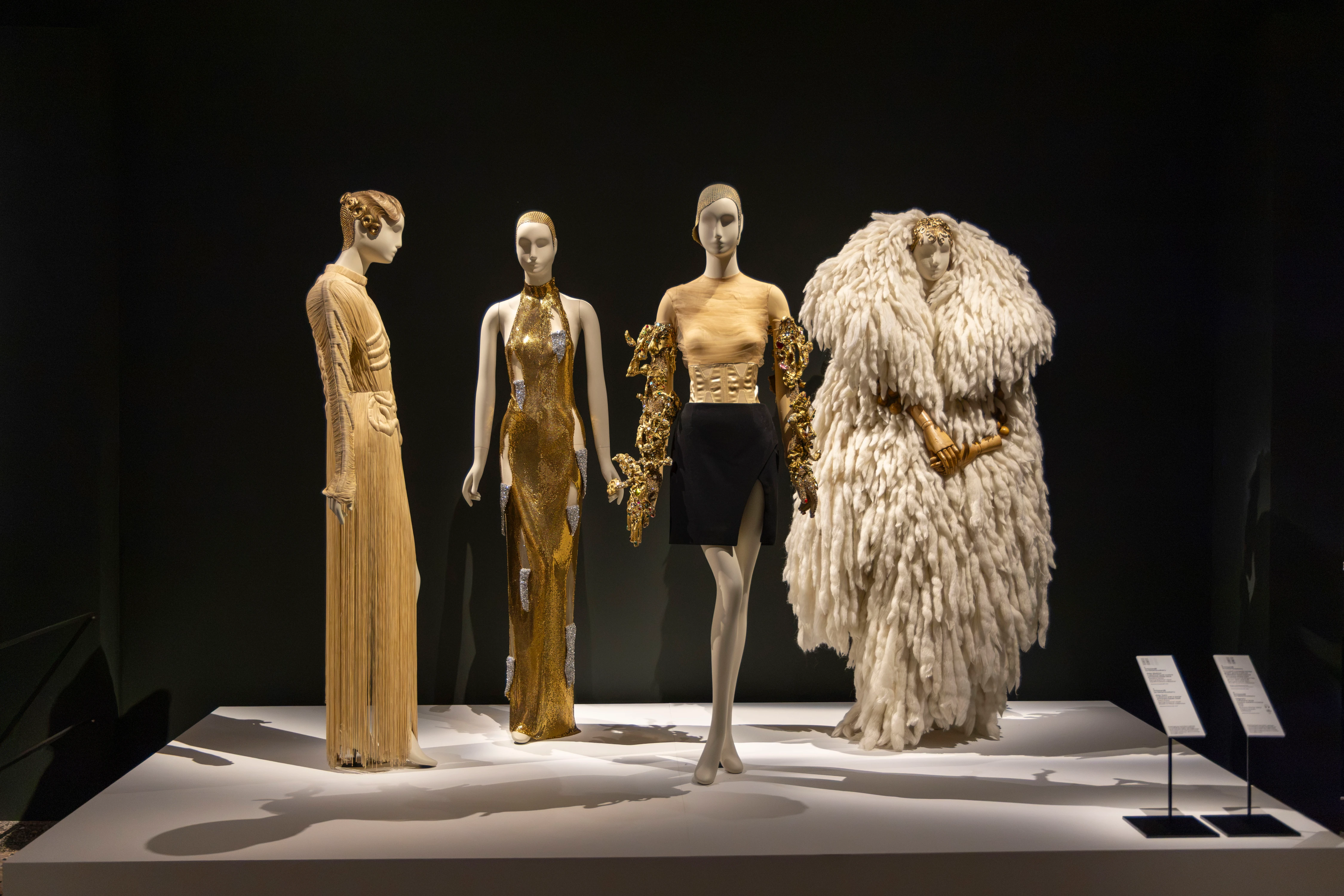
'Dalí and Fashion' Exhbition View, Palazzo Reale, Milan, Image Courtesy of Palazzo Reale.
Performance and spectacle
From his public appearances to his collaborations with Paco Rabanne, Dalí embraced spectacle as an integral part of his artistry. In doing so, he anticipated modes of expression that are now widespread in contemporary fashion. How did the performative dimension contribute to redefining the boundaries of artistic work and the relationship between artists and their audiences?
Performative practices formed an integral part of Salvador Dalí’s artistic production, particularly during the 1960s, and also served as an effective means of promoting his work. It is therefore no coincidence that this exhibition includes a curated selection of films and videos, offering visitors the opportunity to discover Dalí in action. Soft Self-Portrait of Salvador Dalí (Autoportrait mou de Salvador Dalí) shot in Portlligat by Jean-Christophe Averty in 1966, is one of the clearest expressions of how performance and performative gestures were fundamental to understanding Dalí’s universe and artistic practice. For Dalí, performance was not only a means of creation and self-expression, but also a way of engaging audiences. Some of these actions were conceived as public events, inviting spectators to witness and enjoy in the artistic experience. This was the case with the performance created for the Harkness Ballet at Barcelona’s Parc Güell in 1966, for which Dalí enlisted the participation of Donyale Luna, one of the most celebrated fashion models of the time. She appeared wearing Paco Rabanne’s ‘unwearable’ dresses, transforming the event into a striking fusion of art, fashion, and performance. These performative actions became a powerful tool for promoting Dalí’s oeuvre while simultaneously drawing spectators and the wider public into his creative world, making them active participants in the construction of his artistic myth.
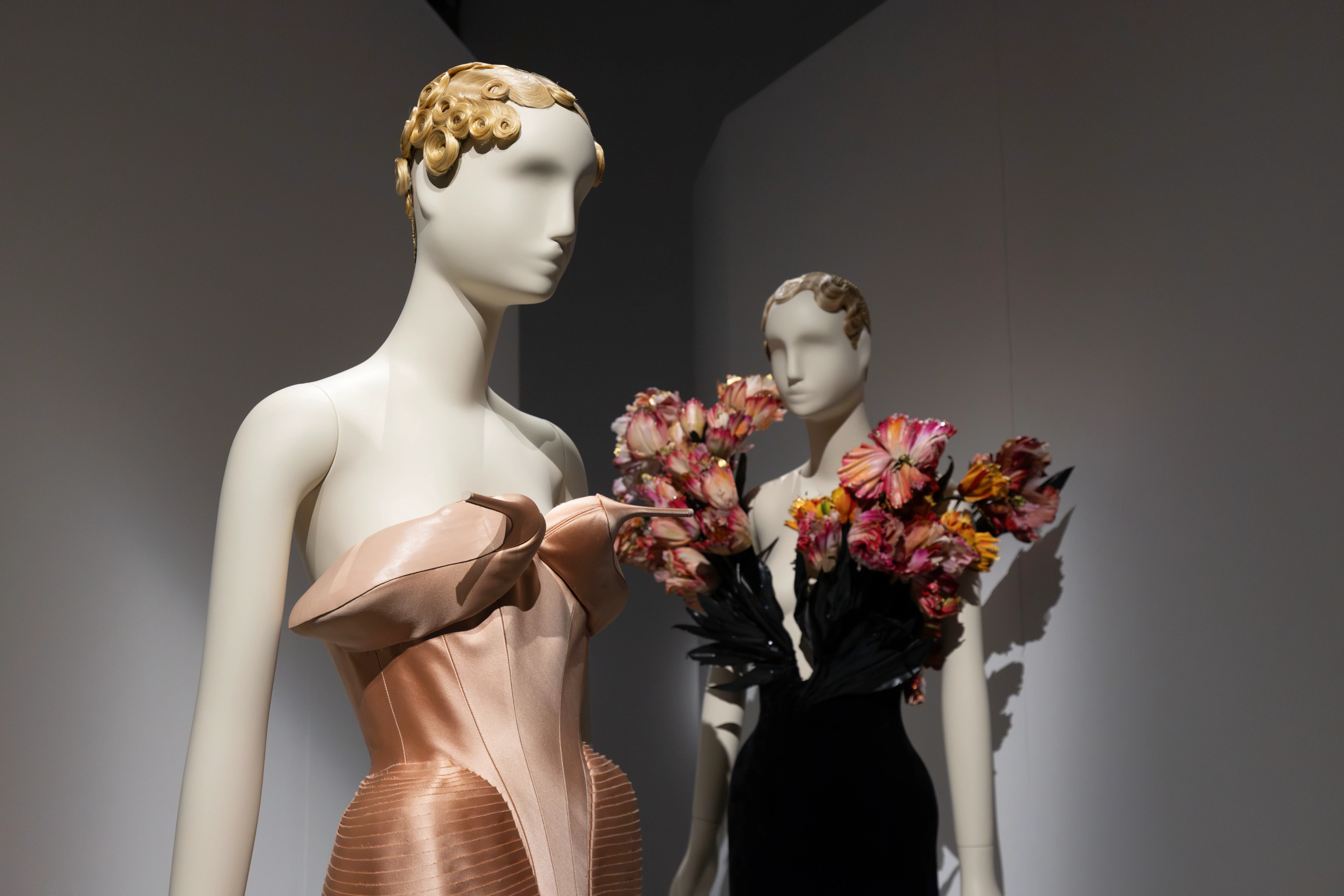
'Dalí and Fashion' Exhbition View, Palazzo Reale, Milan, Image Courtesy of Palazzo Reale.
Surrealism and consumer culture
Through fashion magazines, advertisements, commercial window displays, and collaborations with major fashion houses, Dalí brought the language of Surrealism beyond the confines of the avant-garde and into the realms of communication and consumer culture. What was the significance of his engagement with mass culture for the evolution of his artistic practice?
Dalí’s engagement with mass culture is key to understand his conception of the art and the world. Indeed, a major exhibition entitled Dalí and Mass Culture was devoted in 2004 to his contribution to the consumer culture. At different points of his career, Dalí also conceived creations that helped to the reduction of the distance between art and everyday life. Alongside his creation in traditional disciplines such as painting, drawing or sculpture, he sought to participate in different kinds of creations alien to what is usually understood as ‘high culture’. Resulting in some cases, in products for mass consumption. His engagement to fashion is also evidence of this fact. Even if some of his first co-creations with Schiaparelli were for haute-couture collections, and therefore for reduced circles, others were intended for a broader production. One of the best examples is the series of fabrics he designed for Wesley Simpson in the mid-40s, which translated his best Surrealist iconography to textile creations. Besides that, he also committed to the design of ties, perfumes, cosmetics packaging, linen and other goods for consumption. Not only this, but he also contributed to the design of advertisements of products, starting with the perfumes and cosmetics by Schiaparelli to the Bryans Hosiery or the campaign he ideated for the promotion of the new ‘Camisa Dalí’ by Confecciones Regojo made of cotton and polyester that didn’t need ironing.
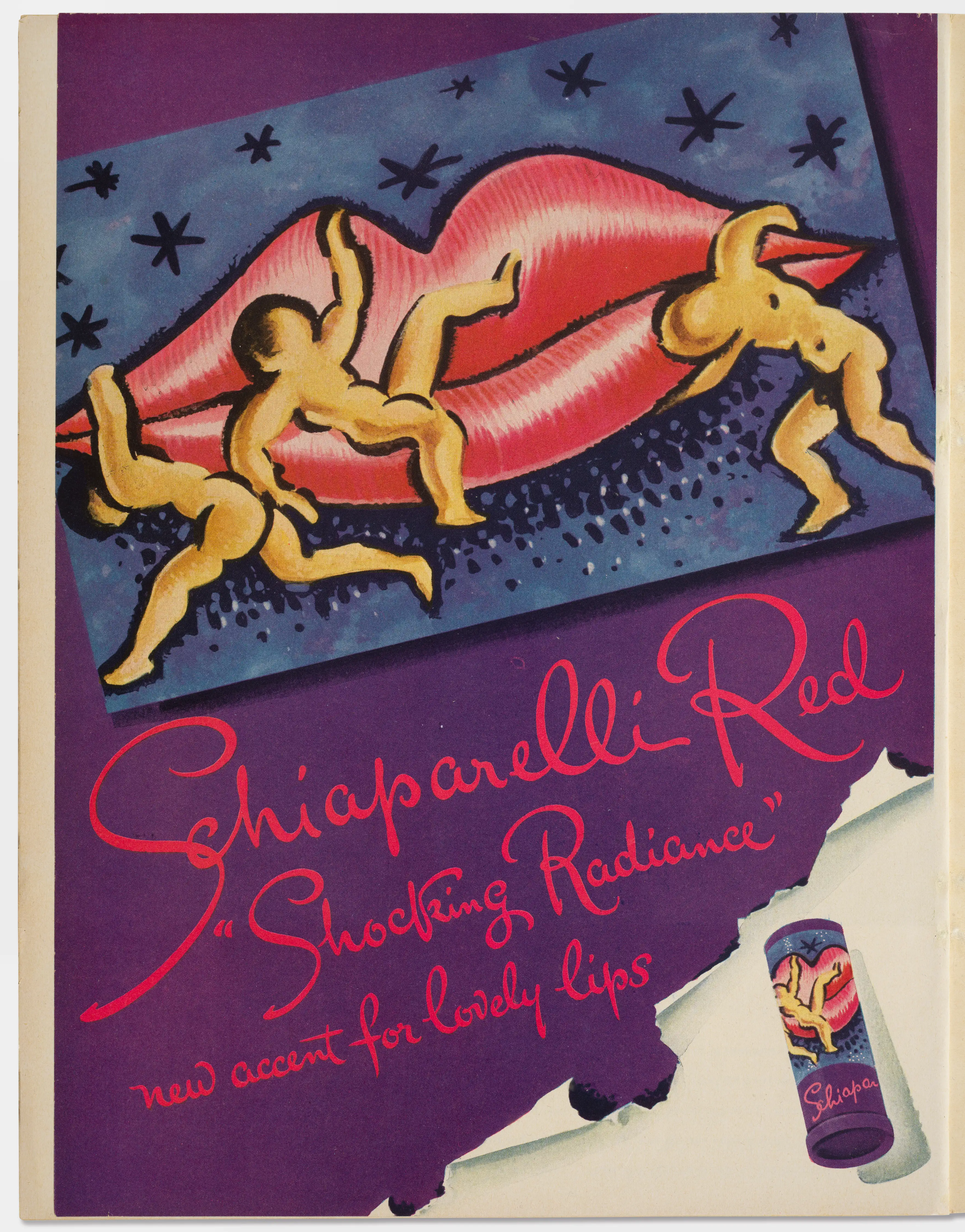
“Schiaparelli Red ‘Shocking Radiance’” Advertisement illustrated by Salvador Dalí, Vogue, vol. 103, no. 10 (15 May 1944), New York, 31,1 x 23,6 cm, Fundació Gala-Salvador Dalí, Figueres Salvador Dali, Vogue, ©Condé Nast © Salvador Dalí, Fundació Gala-Salvador Dalí, Figueres, 2026
The growing presence of fashion in museums prompts us to rethink the display and interpretation of garments, accessories, and archival materials. How does the curatorial approach of Dalí and Fashion, which involves a dialogue between artworks, objects, photographs, and archival documents, contribute to redefining the role of museums in presenting fashion as a cultural language and artistic practice?
In the exhibition at Palazzo Reale, fashion is presented by means of three different axes. First, as the archive material of Dalí and Gala strategy for self-representation. Second, as one of the fields of creation in which Dalí was able to develop his art. Third, as the enduring influence of Dalí’s creation in fashion creative directors of the twenty-first century. To establish a dialogue of Dalí’s historical works with contemporary fashion creations was one of the main goals of this exhibition. The exchange between art and fashion is therefore not unidirectional but reciprocal and continuous. Understanding this dynamic relationship is essential to appreciating both the richness of Dalí’s oeuvre and the lasting impact of his ideas on contemporary visual culture. For the curatorial team, the inclusion of fashion has been a natural choice, given the exceptionally close relationship between fashion and Dalí’s artistic universe. Fashion was not merely a secondary interest for Dalí but an expanded field of his art. Presenting paintings, drawings, photographs, and archive materials alongside garments, accessories, jewellery, and another objects related to fashion, provides a more comprehensive understanding of his artistic practice and its cultural reach. Our curatorial approach is grounded in the premise that fashion constituted a significant field within Dalí’s artistic practice. We therefore regard his contributions to fashion as extensions of his artistic production and, in some way, as works of art in their own right. The question of whether fashion can be considered art remains an important and ongoing current debate in major exhibitions around the world. At the very least, both art and fashion originate from the creative vision of their makers and share a capacity to generate meaning, shape identities, and reflect cultural values.
Dalí and Fashion | Palazzo Reale, Milan
September 24, 2026 - January 31, 2027
Under the scientific direction of Montse Aguer – Director of Dalí Museums,
Curated by Laura Bartolomé, Deputy Director of Research and Projects, and Judith Clark, a fashion historian and professor at the University of the Arts London, with contributions from senior curators Lucia Moni and Bea Crespo, also from Fundació Gala-Salvador Dalí.
On the cover: Denise Bellon, Salvador Dalí with a mannequin at the Exposition internationale du Surréalisme in Paris, 1938. Fundació Gala-Salvador Dalí, Figueres