Black-and-white fashion photograph of a model in profile bending forward, wearing a sculptural striped pleated garment against a plain white background.
7 min

Beyond the Runway: How Fashion Photography Becomes Fine Art

By Liv Hooson

Explore how fashion photography moved beyond the runway into galleries and museums, from Man Ray to Leibovitz, and why these images now count as fine art.

What happens when photographers apply their creativity to capture fashion in unexpected ways? Photographs are elevated from beyond the promotion of a product and into a memorable work of art worthy enough for the walls of galleries and museums.


A fashion photographer is able to freeze time, allowing a garment, a model’s movement’s, and a beautifully brief moment to exist far beyond the moment. Historically, fashion photography served a purpose to simply sell clothing for brands and designers. Advertising was the impetus, yes, but with creative minds behind the camera, it was only a matter of time before the editorial work became an artform. In the early 20th century, editorial magazines were known for their fashion as well as the aspirational lifestyles they promoted. The most recognizable publications were Vogue and Harper's Bazaar who curated the styles of the season. But they were also the first magazines to highlight the experimentation and artistry of fashion photographers.


Editorial photography began to transform from its original purpose of selling a product and into a medium for telling a story.

The Transcending Impact of Fashion Photography

It takes an artist to see a visual story within everyday objects. Even clothing, jewelry, and hand bags can be mundane if treated as simple utilities. What separates the great fashion photographers in the industry are the ones who form entirely new conversations using fashion as their subjects. Some of the most well-known photographs explore clothing as extensions of the model’s presence and capture images in an array of settings, juxtaposing material and design against changing contexts. The office or the city streets are common locations to show off an ensemble as well as more surreal landscapes, like the edge of a sky-high rooftop or the expanse of the desert. Location and application help delineate fashion advertisements from story-driven sets that allow the clothing and accessories to ‘live in.’ Fashion photographers have a strong sense of creative direction and a unique perspective that helps to transform their subjects with the potential of becoming their own works of art. These photographers create in a range of contexts, but have all contributed to the ever-changing discipline.


Runway fashion photographers capture the flash and glitz of a new collection first seen by the public. They can turn a model's momentary strut into a legendary photograph that showcases their designer outfit, hair, and makeup that would otherwise wash away after the show is over. The photographs serve as marketing tools for the brands as well as showcase the clothing in motion rather than stagnant. And it is the ability of the photographer to curate a collection of images that reflect the essence of the runway show, which is what will help sell the story of the garments.


Editorial photographers are mostly known for their artistic expression and story-telling abilities, which is why their work has been featured in the most popular print and digital publications. One of the greatest impacts that editorial fashion photography has had on culture is the way consumers value clothing and accessories. It is less about the product itself and more about the message it conveys. And the photographer is partly responsible for conveying that message through visuals, lighting, and positioning. Impactful editorial fashion photography happens when people literally “buy” into the story being told. This is where art informs culture.


Street photographers have the uncanny ability to see individuality on a crowded street.  Their work is arguably some of the most organic and candid as they document people in motion, mid-laugh, or simply walking to work. These photographers capture life as it happens in real time to tell stories of style from around the world. They also document behind-the-scenes experiences, including fashion week in Paris and New York, as well as red carpet premiers. These images offer an immersive experience that share authentic moments in between the posed ones, and are often the shots that many editorial magazines use and share online to tell a broader story of the event. With social media at the forefront of our lives, there are more opportunities than ever for fashion photographers to share their work and perspective on style and culture. Henri-Cartier-Bresson is one of history's most renowned street photographers known for his deliberate captures of human emotions against striking composition that elevated his images to be considered works of art.

Fashion Photographers: The Icons over the Years

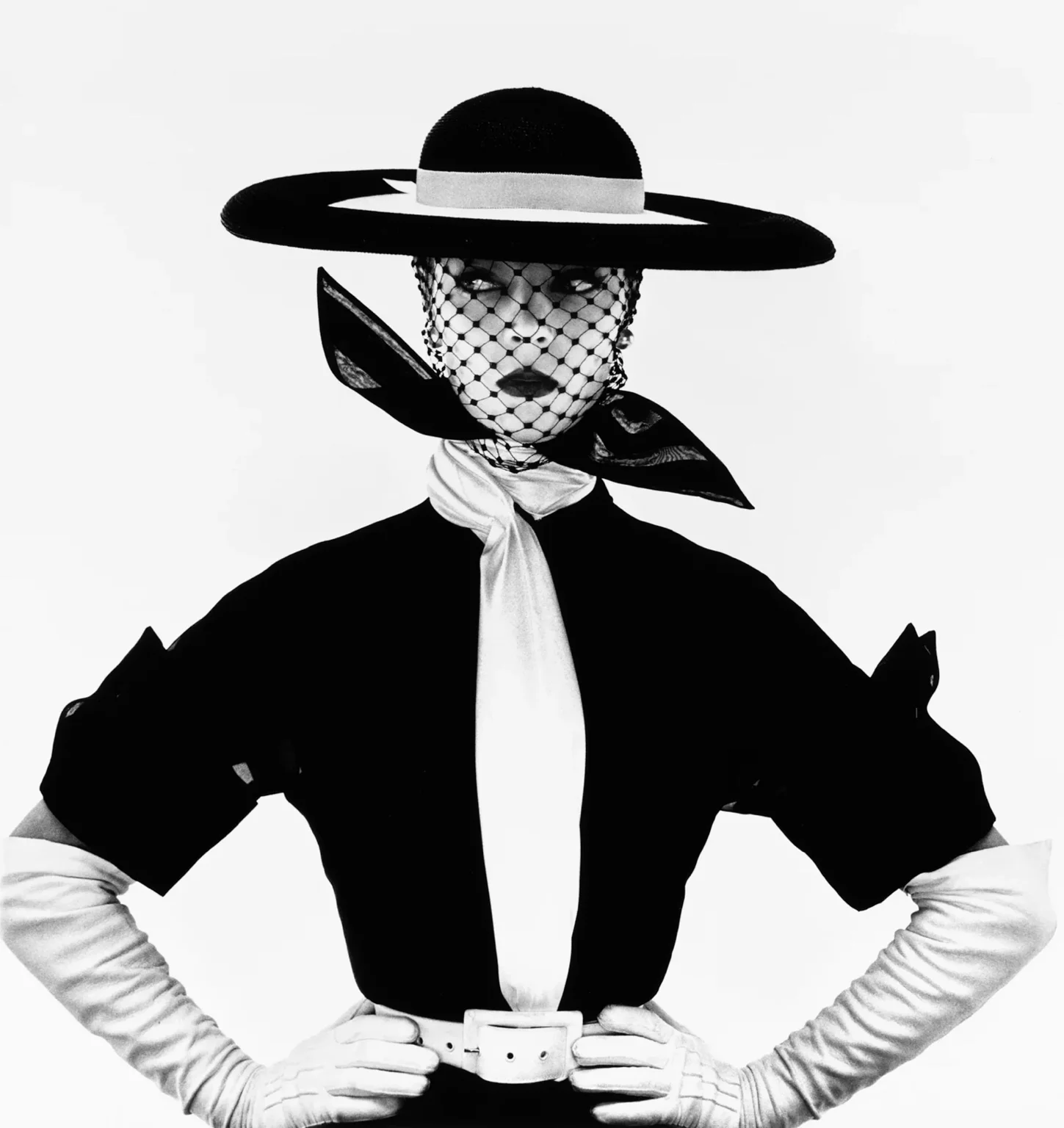
Runway, editorial, and street photography have each played a key role in furthering fashion photography as an artistic discipline. Arguably one of the most distinct figures in fashion photography is Edward Steichen who was the chief photographer for Vanity Fair and Vogue between 1923 and 1938. Incorporating the geometry of the Art Deco movement into his designs, Steichen incorporated a dynamic and cinematic approach that resulted in some of the most recognizable photographs to this day. Irving Penn was another photographer whose mantra “selling dreams, not clothes” helped him execute photographs that bridged elegance and minimalism while demanding attention and allure. Think: white gloved-women in oversized hats, bold cat-eye makeup, and hauntingly symmetrical images worthy of being framed. It’s no wonder his work would be featured on more Vogue covers than any other photographer.
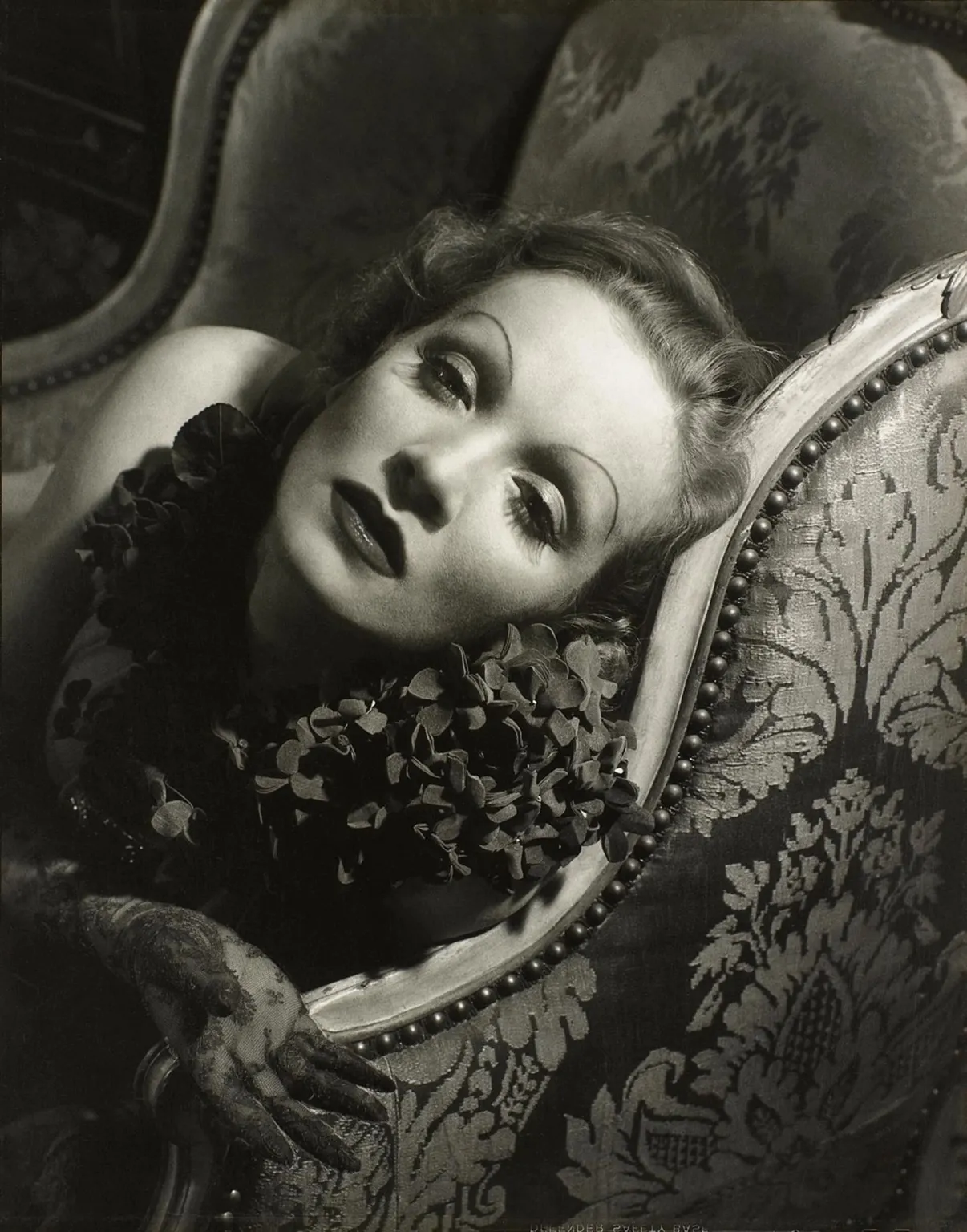
Black-and-white portrait of a woman reclining on an ornate upholstered armchair, with dramatic eye makeup, lace gloves, and a floral collar, lit in soft studio light.

Photo by Edward Steichen, courtesy of Getty Images.
 

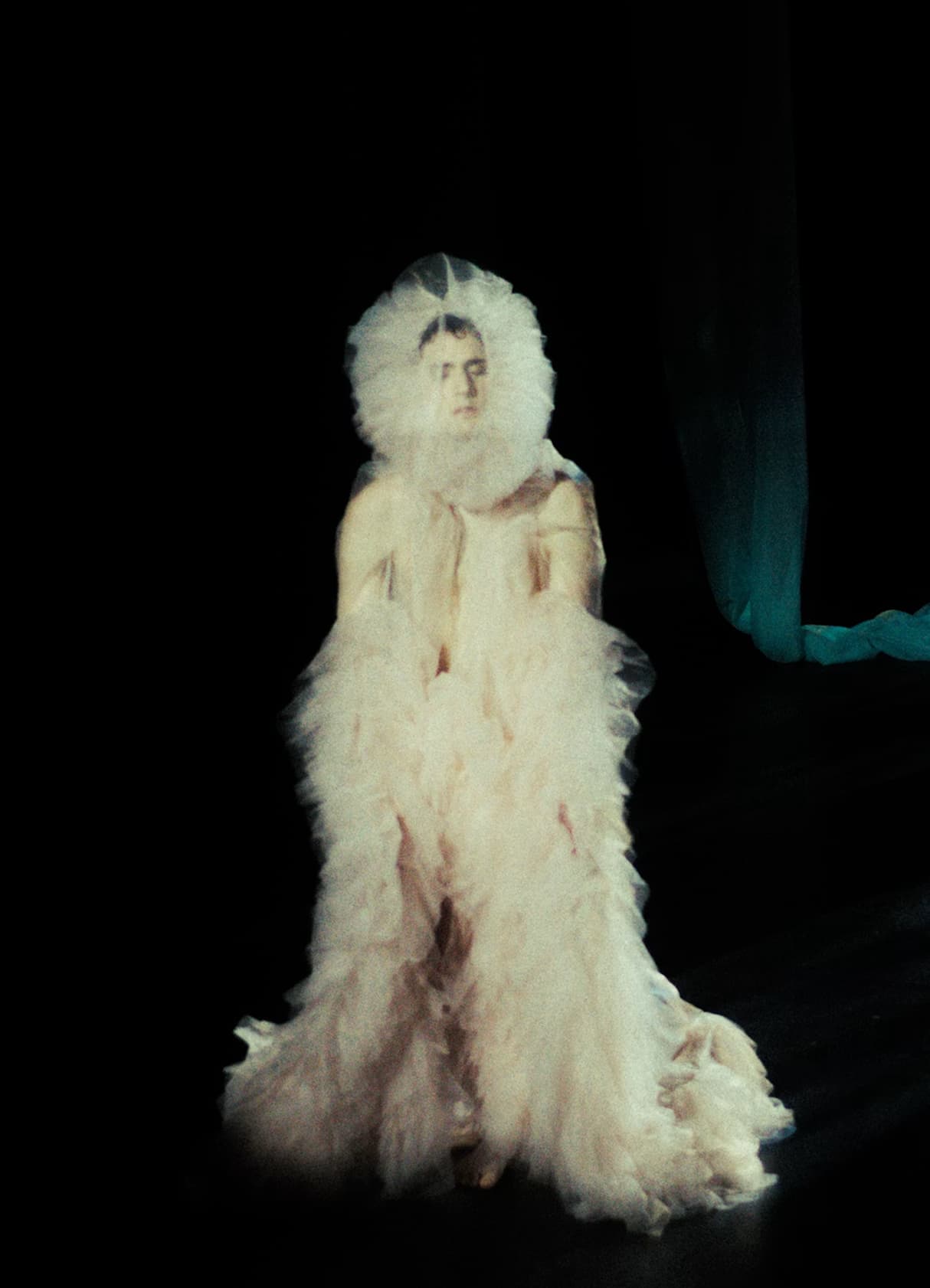
As fashion photography continued to make a name for itself, it was the painter Man Ray who helped propel it to levels of fine art. Applying an experimental style to his photographic process, including double exposures and a trompe l’oeil effect, he created images that blurred the lines between fashion and art. Perhaps the lines were always there to be blurred, it was just a matter of who was willing to go there. With commercial photography already well-established, there was a great opening for artistry to be applied to the medium. Man Ray’s avant-garde approach to photography resulted in moody, dramatic, and seductive images that caught the attention of leading fashion houses, including Schiaparelli and Chanel, who hired him for photography work.


As fashion evolved, so did the artists behind the lens. Contemporary photographers include Peter Lindbergh and Annie Leibowitz who individually shaped the discipline to be reminiscent of a more progressive culture. Lindbergh championed inclusivity by showcasing diverse models and opting for minimal retouching in post production. He is also credited as launching the supermodel as a person rather than a prop for hanging clothes on. His photographs brought out the renowned models’ personalities, emphasizing playfulness over extravagance. Lindbergh’s prolific career would lead him to photographing such talents as Tina Turner and Beyoncé, for whom he would shoot her album cover “I Am…Sasha Fierce.” He helped to prove that the influence of the fashion photographer is unconfined.

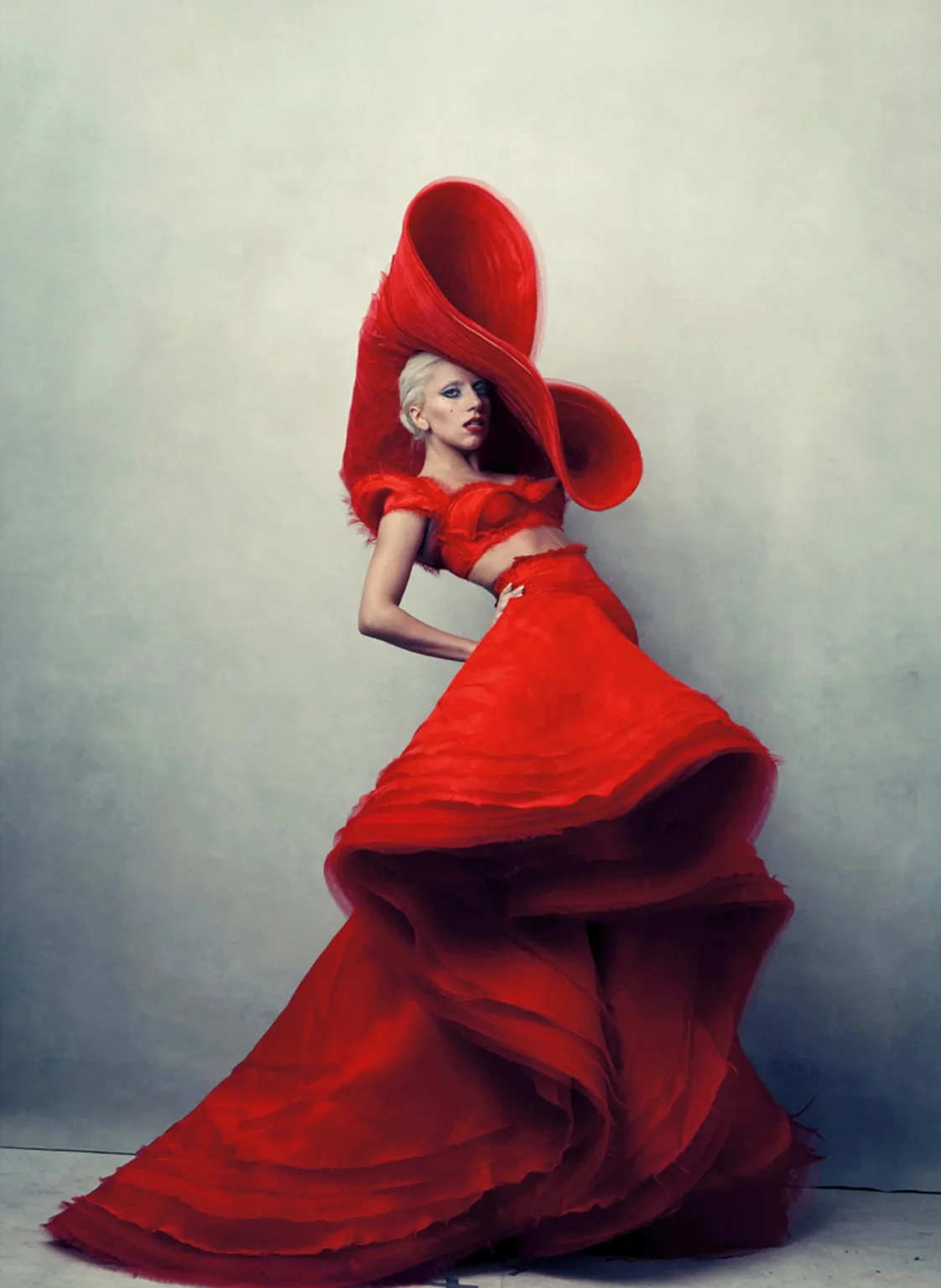
Fashion photograph of a woman in a dramatic sculptural red gown and oversized red hat against a neutral studio background.

Photo by Annie Leibovitz, courtesy of Getty Images.

Leibowitz amplified the discipline by bridging portrait photography of some of the world’s most recognizable faces, including actors, models, and musicians during the 1970’s. As the chief photographer for Rolling Stone magazine, she photographed such icons as John Lennon, Joan Didion, and Kate Moss. Bridging culture and fashion, her work took on a life form all its own as she showcased well-known cultural figures in a new light; expanding the public’s perception of them by utilizing unconventional props and exploring evocative themes. Her most famed photographs include Leonardo DiCaprio posed with a white swan, Whoopie Goldberg in a bath of milk, and a naked John Lennon draped around Yoko Ono in bed.


From the Runway to the Gallery Walls

Fine art is defined by visual works that indicate their creators expertise and ability as well as the artworks' impactful aesthetics. Fine art doesn’t have to be functional but often evokes ideas and originality. Contemporary fine art is constantly evolving, reflecting how art is perceived and appreciated depending on the current culture and conversations.


One of the earliest fashion photographers whose work was featured in the Metropolitan Museum of Art in 1978 was Richard Avedon. His famed exhibition featured intimate portraits and high fashion moments captured in the streets of Paris. Avedon’s dedication to capturing fashion during his prolific career greatly contributed to the discipline of fashion photography being considered fine art. He also opened the door for more photographer’s work to be shown in museums, galleries, and in fine art auctions including Bonham’s, Sotheby’s, and Christie’s fine art auctions. In fact, a remarkable sale occurred in 2022, when Man Ray’s notable photograph Le Violon d’Ingres (1924) sold for a record $12.4 million, proving that fashion photography has become a lucrative form of art in the fine art world.


The photographers we have explored here are all examples of how commercial photography  has transcended into highly valuable forms of art. From Leibowitz’s striking and vivid narrative-driven photographs to Man Ray’s deeply surreal and stunningly intimate images, fashion photography has proved its staying power as well as its undeniable contributions to the art world. The discipline continues to pave new pathways for photographers, fashion designers, and creatives to find success and share their stories en masse.

Black-and-white fashion photograph by Irving Penn of a model in a wide-brimmed hat, face veiled in netting, long gloves and a cinched dress, posed against a plain studio backdrop.

Photo by Irving Penn, courtesy of Getty Images.

The Influence of Fashion Photography Continues

We are living in a time where influence can transpire overnight. A single image or video can take the world by storm in an instant. What makes fashion photography such a continuously compelling art form is its ability to transform a fashionable moment into an image rich with symbology, filled with inspiration, and even the ability to shock. A fashion photographer has the ability to elevate an editorial photo shoot for a new clothing collection, capture a candid moment in the bustle of the city, or conceptualize a narrative-driven campaign that bridges style and story. These artists can turn a moment into a memory with the power of their lens and with the application of creativity and innovation, their work is appreciated at higher levels.


Both photography and fashion are artforms that shape culture, inspire creativity, and explore identity. Fashion photographers continue to push the boundaries of where art begins and ends. And the truth is, there’s no end to how art can be defined — and redefined.

Date

25.11.2025

Tags
Photography & Visual Mediafashion photographyfine art photographyfashion as arteditorial photographycouture imageryrunway to galleryfashion historyiconic fashion photographersphotography and museumscontemporary fashion imagesvisual cultureart directionfashion editorialsfashion magazinesphotography collectors
Gregory Peck as the gunfighter Jimmy Ringo sitting alone at a bar, seen from behind, in a dim saloon interior from the film The Gunfighter (1950).
8 min

American Neorealism: Violence and the 1950s Western

By Mattia Agnelli

An essay on American neorealism in 1950s Westerns, where violence, guilt, freedom and outsiders reveal the darker truths of U.S. identity.

Violence, Evil, and the American Western Myth

Violence has never slowed its pulse. The Proselytism of Violence has spared no place. We are often surprised at how much cruelty our eyes see, how much cruelty our spirit must undergo. People are killed in absolute randomness. In the country as well as in the city, no life can be assumed to be safe. We are often led by the vehicles of expression, by visual arts, to profit from what authors and artists ingest and show to entertain us, to lift us up culturally and intellectually. To make us meditate and ponder what we have around us, about where we place our feet, where we are soaked. They always try to seize what is most relevant in the fleeting in order to record it in an ageless present. We often seek consolation in this. They always seek new paths and traces, and we always seek new opens and new insights.

Close-up of a bloodied hand lying on a striped rug in a scene from the Western film Rancho Notorious (1952), directed by Fritz Lang.

Rancho Notorious (1952), dir. Fritz Lang. Director of photography: Hal Mohr.

To find a commonality that leads to a debate standing within rationality. Evil has never come out of this debate. Evil is the only possible truth in the artificial void. Good is only a mutation of evil, just as joy is a mutation of suffering and happiness a mutation of unhappiness. Heinrich von Kleist, in a letter to Wilhelmine von Zenge, wrote “What is evil? Absolute evil? In a thousand ways are the things of the world linked and intertwined, each action is the mother of millions of others, and often the worst produces the best – Tell me, who on this earth has ever done anything evil? Something bad? Something that is evil for all eternity – ?”.  In constantly and unceasingly seeking the good, perhaps we have always been wrong. This has never been the way. Deepen evil to find a chance for good, that’s the way. In 1903, Edwin S. Porter’s The Great Train Robbery gave birth to a movie genre that reached its peak in the 1950s, able to encircle a Nation in all its complexity and contradictory nature, in the good and the bad, high and low, able to never displace focus from what has always been the subject of controversy throughout history and in our times, namely wickedness and evil’s unfailing presence. The Western genre, for the US, is German idealism in the late eighteenth and early nineteenth centuries. John Ford, Howard Hawks, Budd Boetticher, Lesley Selander, Gary Cooper, John Wayne, Audie Murphy, Robert Ryan, Skip Homeier, Randolph Scott linger in today’s America. It is the cult of violence that has never lost its appeal. A genre always belittled and downgraded, humiliated and mocked. But reading the newspapers, following newscasts on television, reading online papers, and scrolling through X, what is ever more frequently occurring in learning that someone has been hurt or killed in sheer gratuity, due to shady suspicion or just because they have been wronged? Without guilt and remorse, but very simply because that is how it is. It is on this how-it-is that Western genre, even the minor so-called B-western, has lived on. It is not up to us to judge, vaya con Dios. Carrying the focus steadily on the good takes our minds off from a dire reminder, that there is really no life that is universally worth anything, that my life as well as yours is universally worth as much as that of the fly in your house, of the ant that like a pilgrim marches through the cracks in your tiles. Western genre has also mangled the concept of innocence. Nothing is ever painless, even where we feel safest. In the desert only the dead are harmless. We are always subject to the unforeseen that can turn tragic. There is no face that cannot betray us.

Guilt, Conscience, and the Cult of the Villain

What makes 1950s Westerns so defining is the American identity. A straightforward story of survival, degradation, betrayal, revenge, redemption. There is always something to leave behind and there is always something to be conquer. The long-suppressed emotion that suddenly and savagely overflows into a vicious deed. Over the years we come across this in some American schools. We have been used to cowboys versus Indians. But in the 50s Westerns there is a subject that runs frequently: the battle between cattlemen. Among ranchers and landowners. It is the hauntingly single-minded pursuit for an enemy, whatever it may be. And if it is not an alien, someone who came from the outside like the stranger – Mexican, or a Native, the target shifts to one of us, the neighbor, so that we never miss the obsessive struggle in suppression, in overruling the other. It is the needed quest to find someone to put the guilt on. Someone has to bear the cross, if not for their own sins, for ours. In No Name on the Bullet (1959), directed by Jack Arnold, Murphy plays a hired killer who rides into a town and prompts his victims into drawing on him first. When he rides into Lordsburg, paranoia sets in. Who is he here for? For everybody has a guilt-ridden conscience. The crisis we are living in is that we have made our conscience a mere bystander. Vehicles that explore the fine line between a legitimate quest for justice and a destructive quest for revenge. Stories that examine how a man can lose his humanity and succumb to cruelty but potentially regain it, stories that place at our fingertips this question: is it better to take a long and winding road to heaven or a shortcut to hell? There is something peculiar about the pattern of these fabrications, which in current times is a rather noticeable feature: that no matter how despicable and evil a person is, no matter how deranged beliefs he holds, this person will always have a large cult following and there will always be someone to help him, to lend a hand. There is nothing that can halt the soaring of these black streams, blindness to vileness in all its forms secures this millennial vocation its perpetual continuity. The villain in 1950s Westerns is a linear man, without contradictions. It is the good man who is unlike, who cannot fit into a harsh surroundings. In these movies, executions are open to everyone. Everybody in the town can attend. It’s the ludic amusement of death. Because we feed on other people’s misfortunes, they are our livelihood. We are thrilled by plane crashes on television. It is not only violence, but also emotions. It is the man’s visceral solitude as such that stands against all distortion. Wandering endlessly yet never finding peace. He is the biblical and stoic man finally on screen. In the 1970s and 1980s, attempts were made to introduce Dostoevsky and psychology into Westerns, such as Clint Eastwood’s High Plains Drifter. Although these are great pictures, it was a half-baked experiment. It’s like looking up Hegel in a coal mine in West Virginia. Tragedy and sublimity in man lie in his easiness, in not breaking down for what’s not fathomable, for what can only be revealed outside the spheres of this world. Ingmar Bergman’s Winter Light is a monumental oeuvre, but Sidney Salkow’s Gun Brothers is closer to us.

Freedom, Outsiders, and the Law of the West

In 1950s Westerns, there is an evergreen and still elusive topic: freedom. Are we truly free? It seems there has never been a worthy answer to this question. Cowboys and average ranchers are at their core free due to a law they have introduced themselves with the aid of a lawless wideness. In our own small day-to-day lives, we vainly strive for this, but the law-soaked wideness overwhelms us, and we lack the guts to let ourselves go with the power. Sadly, and for a long time now, the fragile, the introverted, the shy, the withdrawn, all those who are inadequate and incompatible have been crushed by a structure that does not allow for irregularities. The outsider is always the stranger who enters a saloon, where all eyes are on him. There is no place for these people, and perhaps there never has been. Those who do not comply with game’s rules are likely to fail, regardless of their innate and nurtured character. So there is an outgrowth of disparity. The eyes pointed at them are silent threats. They are early warnings. Should we run away or face what stands in our way? The foreign figure is a figment. It will not disappear with the world. Movies that best embodies Wittgenstein’s proposition that “ethics is transcendental.” Nothing has value because otherwise we would have to seek it outside of all happening. We’ve lost the wise illiterate within us. Watch one of those movies and a toothless farrier could reveal a lot about what life is all about.

Victorian dining room with a red-and-white checkered tablecloth, half-finished breakfast dishes and silverware, from the Western film Quantrills Raiders (1958).

Quantrill’s Raiders (1958), dir. Edward Bernds. Director of photography: William Whitley.


Beauty, Detail, and Quiet Moments in 1950s Westerns

1950s Westerns are also accommodating. Aesthetically pleasing. The colours, the landscapes, the décors of certain homes, the china displayed on the sideboard or lined up along the table, brewing coffee over a fire in a wooded spot, the sunset’s glow seeping through a crack in a broken window. It is the pursuit of the minimal, the detail, the partial, to allow us to catch our breath, to briefly embrace an idea of well-being, to let the dew settle on the blood. The road home still far away.

Date

24.11.2025

Tags
Film & MediaAmerican Neorealism1950s WesternsWestern MoviesViolence in CinemaAmerican IdentityFilm CriticismGenre CinemaCowboys and OutlawsClassic Hollywood