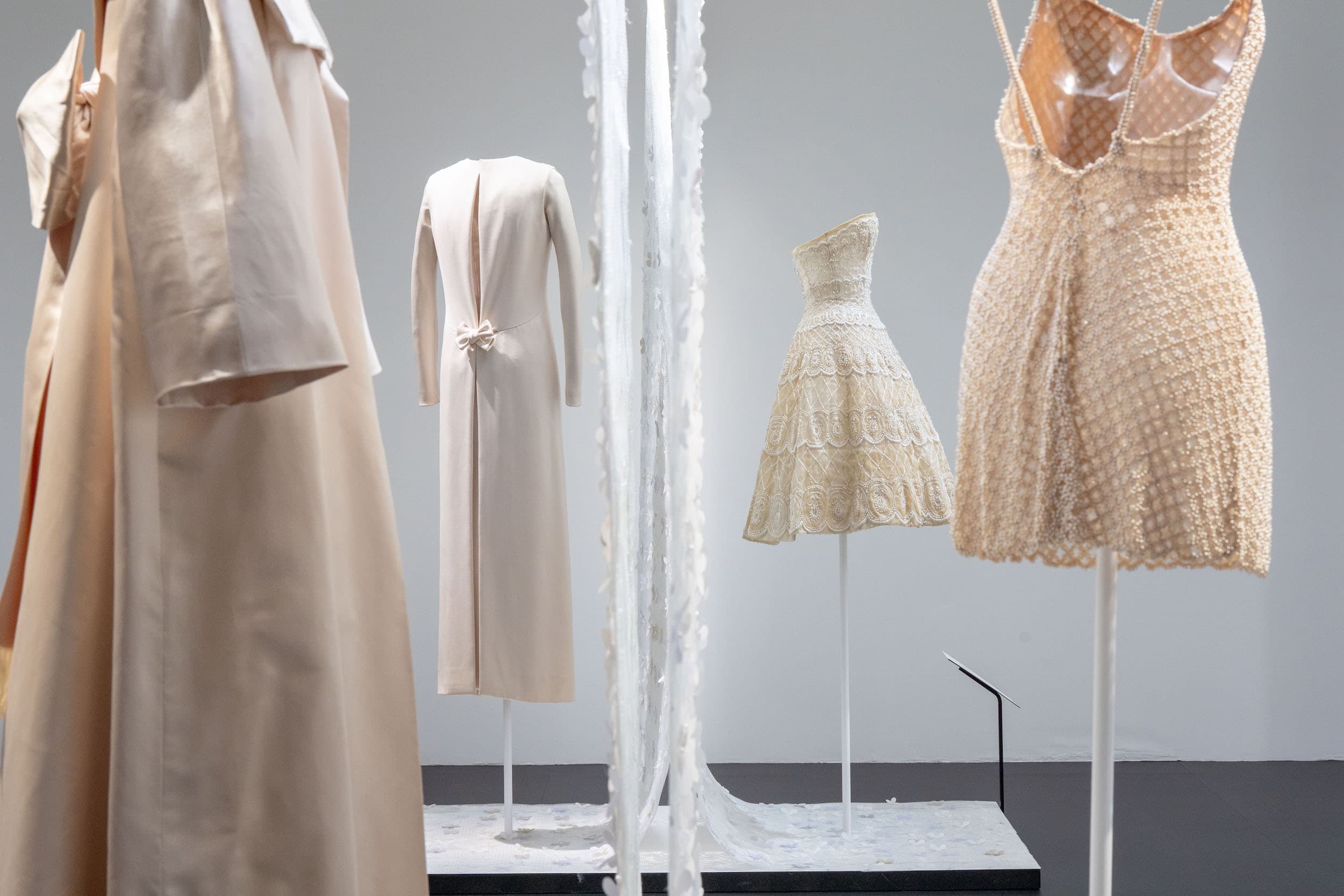
At the Fondation Azzedine Alaïa in Paris, a dialogue of extraordinary refinement between two great couture masters—Azzedine Alaïa and Christian Dior—is unfolding until June 21, 2026. This subtle and necessary comparison is especially important in these challenging times for creativity. It restores fashion’s multifaceted nature, making it a reflection of both individual and collective identity. Curated by Olivier Saillard, the exhibition brings together two closely related worlds, tracing a line of continuity between history, form, and memory. One wanted to become a sculptor; the other, an architect. Both, however, designed clothing and offered compelling answers to the question, “What is the meaning of a garment?” Fashion has long been relegated to the status of a second-rate art form and labeled as frivolous and superficial. However, shortly after the mid-19th century, Charles Frederick Worth burst onto the scene and raised fashion’s profile, establishing it among the other disciplines with its own authority and dignity. As a catalyst for experiences, the garment becomes a tool capable of exploring the relationship between humanity and the world, as well as the dynamics of its era. It is a useful magnifying glass for interpreting the phenomena that accompany the evolution of the human spirit.
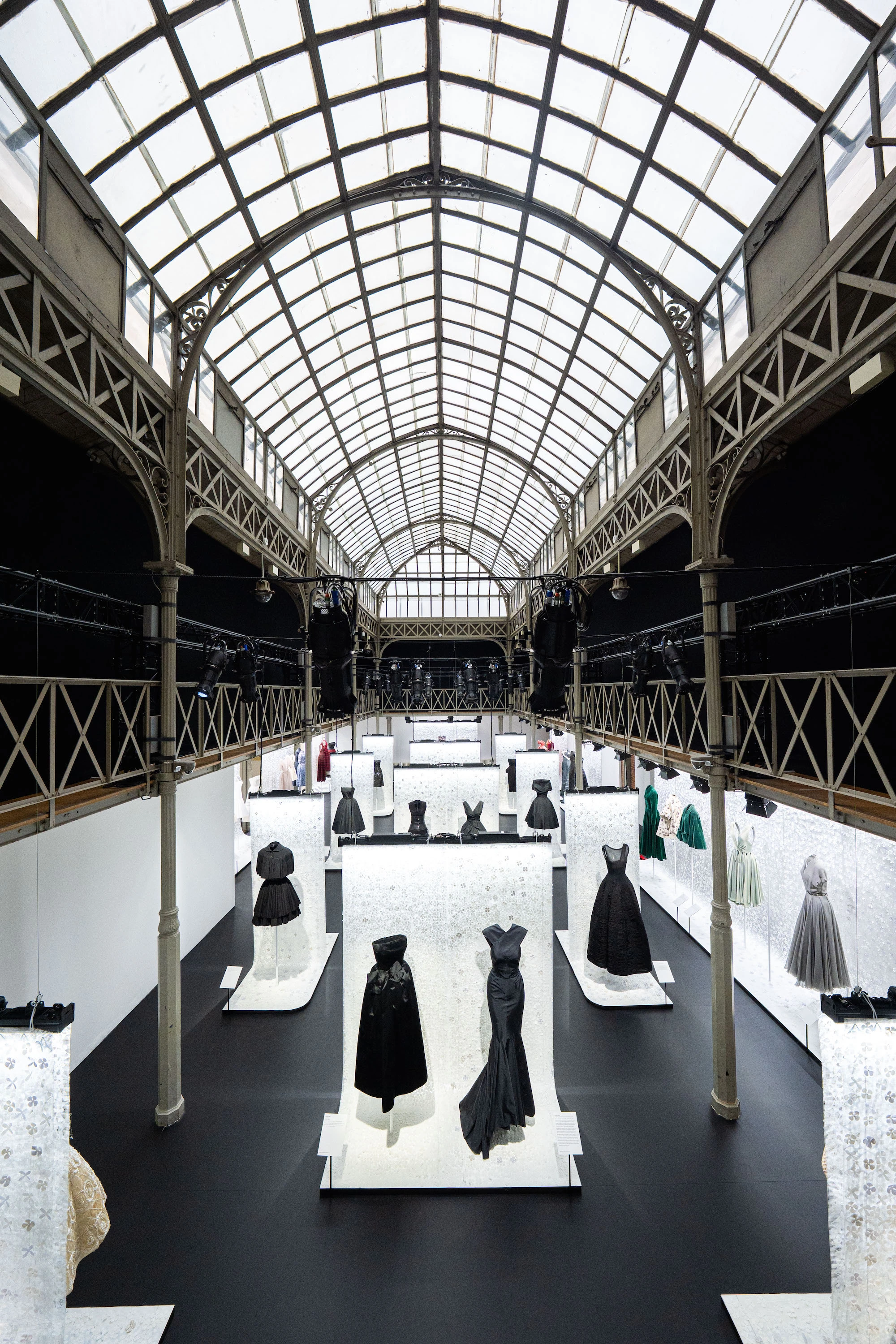
Azzedine Alaïa and Christian Dior: Two Masters of Haute Couture Installation view. Photo ©Stéphane Aït Ouarab
Azzedine Alaïa Biography: From Tunis to Paris and His Sculptural Approach to Fashion
Azzedine Alaïa was born in Tunis in 1935. In 1953, he left Tunisia for Paris with only a letter of recommendation. Encouraged by Habiba Menchari, a prominent figure in the women’s movement in Tunisia and the mother of Leila, a close friend of Alaïa’s, he went straight to the Champ de Mars to visit Madame Lévy-Despas, a Christian Dior client. She found him an internship in the workshops, which gave him the opportunity to meet the couturier who would become famous worldwide for the New Look. “As it happened, my personal sensibility aligned with the general sensibility, gaining the force of a battle cry,”Dior wrote in his autobiography. Alaïa’s approach evokes the mastery of couturiers of yesteryear while maintaining an independent spirit. An outsider by nature, he ignored trends and remained indifferent to seasonal rhythms, often working behind the scenes initially. Trained as a sculptor, he brought this sensibility to fashion. Instead of sculpting bronze or marble, he shaped the body itself through fabrics that he transformed into malleable materials. He gave life to structures that redefined the female anatomy. A tireless traveler through time, Alaïa reworked the codes of Dior, whom he was deeply fascinated by despite the brevity of their collaboration. In fact, he acquired more than 500 of Dior’s designs. He was also inspired by the work of Madeleine Vionnet, Paul Poiret, Cristóbal Balenciaga, and Madame Grès. He recognized a shared focus on construction, technique, and sculpting the body in them. Drawing from these influences, he created pieces with tubular structures, rigid shapes, and spirals that wrapped obsessively and precisely around the body. After working largely behind the scenes and on commission for years, he rose to prominence in the late 1970s. Initially, his aesthetic stood in contrast to the dominant minimalism of the era, but it found fertile ground in the following decade. Between 1979 and 2017, the year of his passing, Alaïa created a new silhouette based on essential architecture yet rich in technical complexity. Even today, it defies overly simplistic categorization.
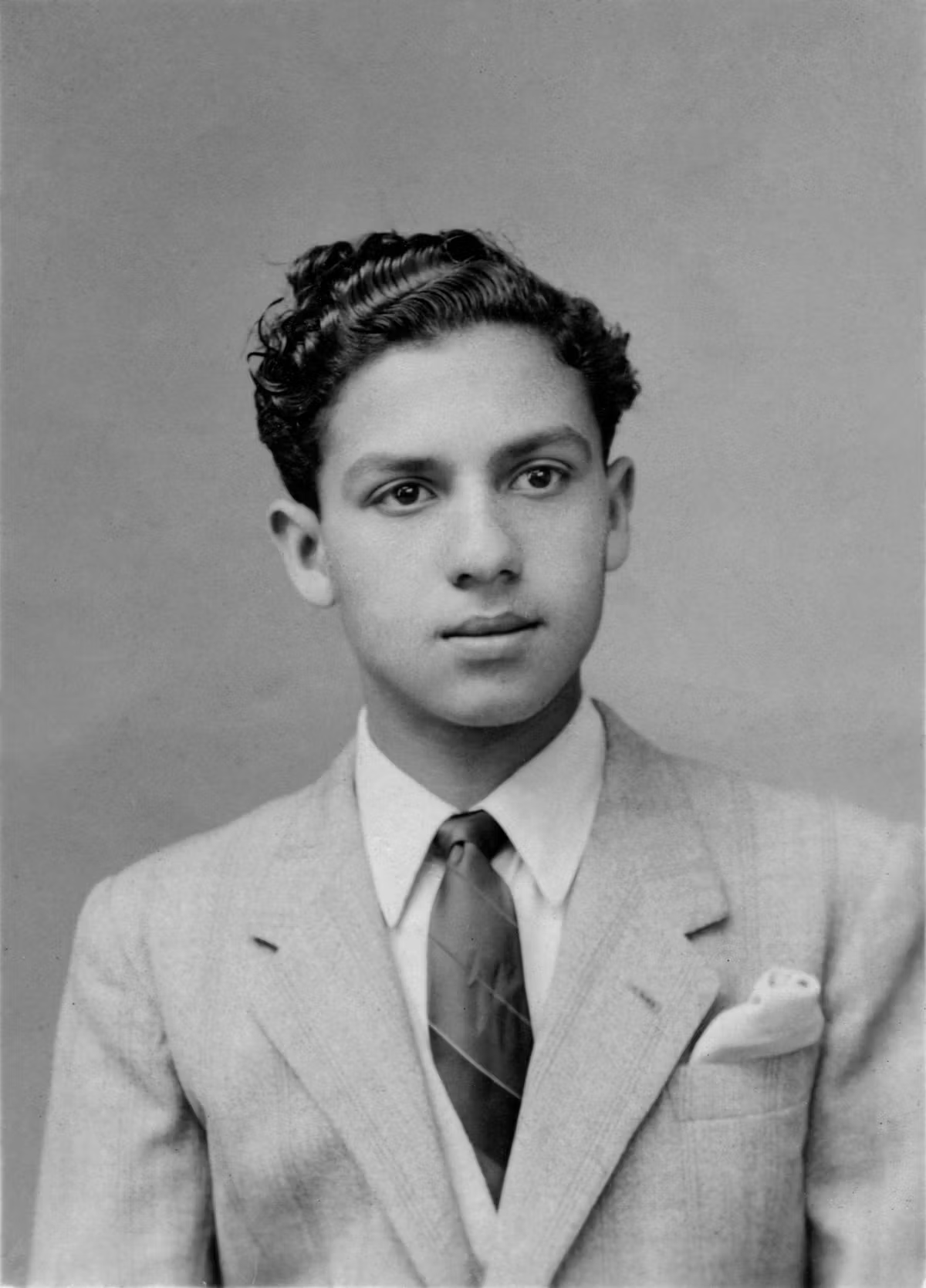
Azzedine Alaïa aged 15, portrait photograph taken in Tunis, 1950ю Photo Fondation Azzedine Alaïa
Alaïa as a Fashion Collector: Preserving Haute Couture Heritage
At the same time, he established himself as a precocious and visionary collector. A quiet guardian of memory, he was a pioneer in preserving fashion heritage as early as 1968. He collected haute couture and prêt-à-porter garments long before fashion houses established formal archives. Over the decades, driven by the urgency to preserve a legacy otherwise destined to be lost, he assembled a vast collection. He acquired hundreds, then thousands of garments over time, including pieces by renowned designers as well as lesser-known figures, restoring them to their rightful place in history. The most significant names include Vionnet, Poiret, Patou, Balenciaga, and Grès, as well as 19th-century creations by Charles Frederick Worth and Redfern. His collection also features masterpieces by Elsa Schiaparelli and theatrical costumes designed by Henri Matisse, juxtaposed with everyday garments in an ongoing dialogue between the extraordinary and the ordinary. Over the course of more than fifty years, Alaïa built one of the world’s most important private fashion collections. It is now the heritage of the foundation that bears his name.
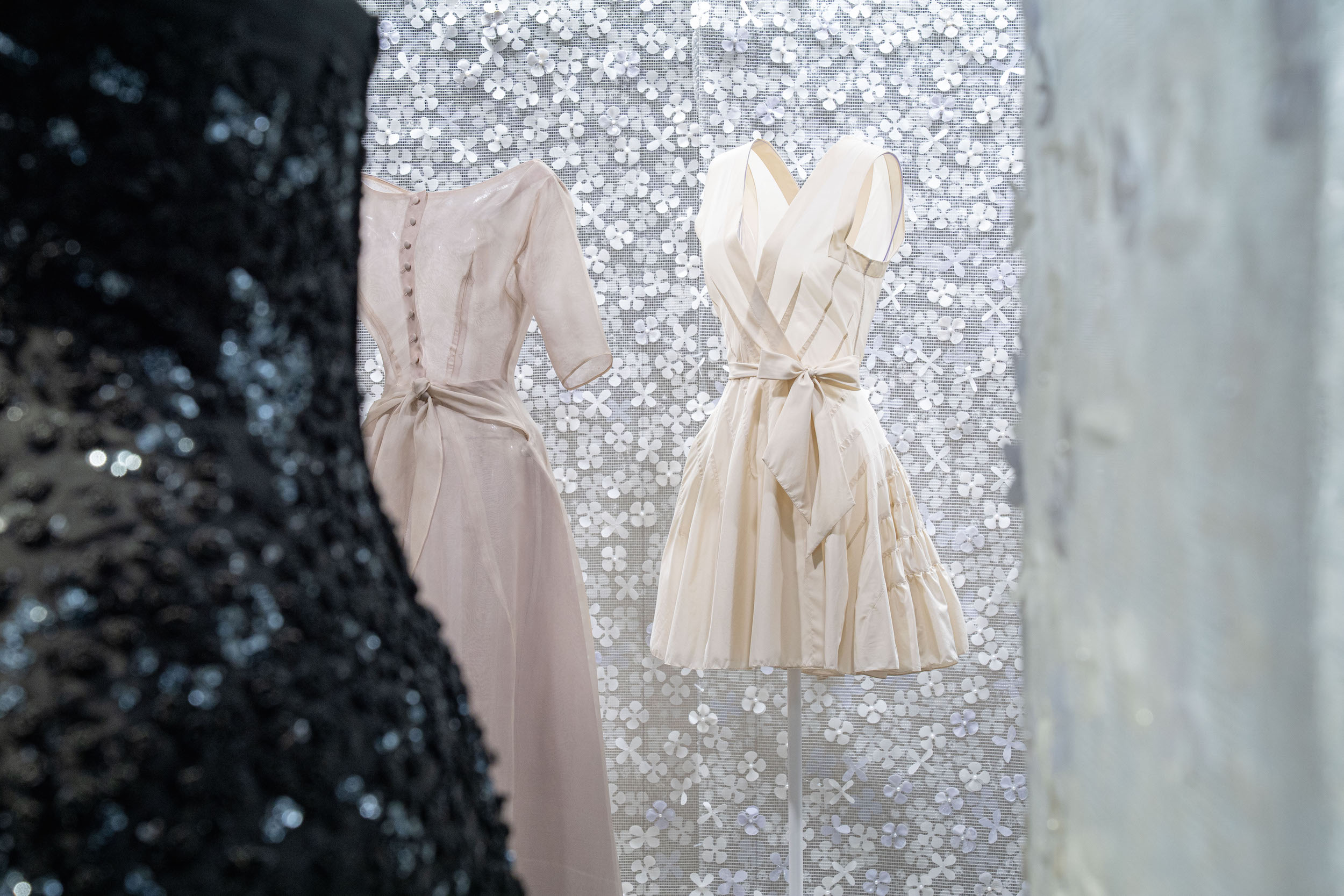
Azzedine Alaïa and Christian Dior: Two Masters of Haute Couture Installation view. Photo ©Stéphane Aït Ouarab
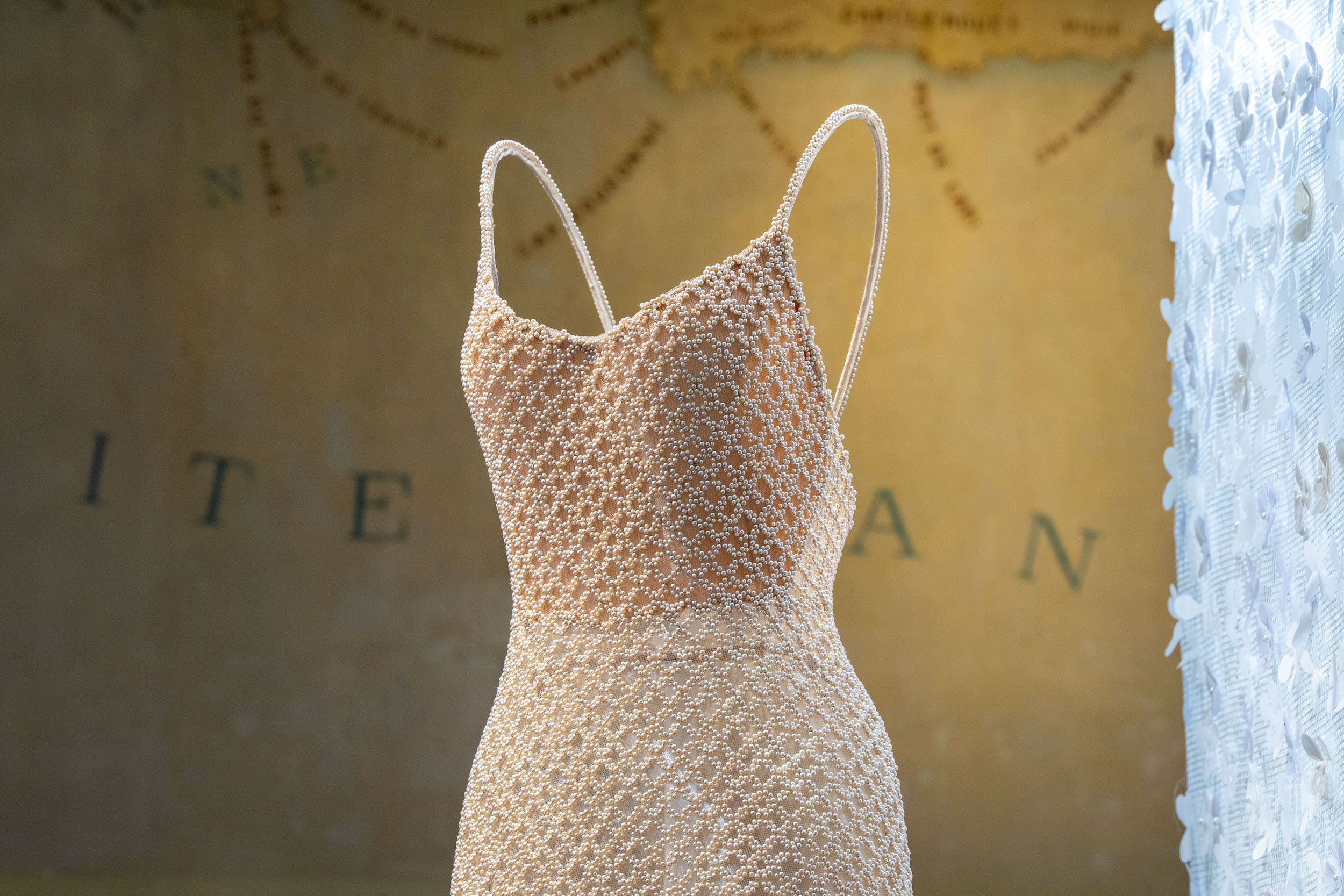
Azzedine Alaïa and Christian Dior: Two Masters of Haute Couture Installation view. Photo ©Stéphane Aït Ouarab
Exhibition Highlights: 70 Haute Couture Creations and Timeless Aesthetic Dialogue
The exhibition, “Azzedine Alaïa and Christian Dior: Two Masters of Haute Couture,” showcases nearly 70 creations by the two designers, revealing their shared commitment to timelessness. This quality unites and solidifies their creative vision in an exhibition curated with great intellectual rigor. Through formal and aesthetic similarities, a continuity emerges that transcends eras and spans time without ever losing its power. The result is harmonious, rigorous prose with surprising lyrical outbursts, largely due to the juxtaposition of color schemes, such as red, green, and golden accents, which appear throughout the two couturiers’ prolific careers. These similarities orchestrate a seductive polyphony between the two masters that never slips into cacophony. From the top floor of the exhibition space, one can glimpse Alaïa’s atelier through a round window and imagine him working amid shelves and coat racks overflowing with garments, unfinished sketches, stacks of boxes piled against the walls, rolls of fabric, and objects scattered on and under tables. There are also auction house catalogs and photographs of his closest friends, as well as the portrait of Oum Kalthoum.
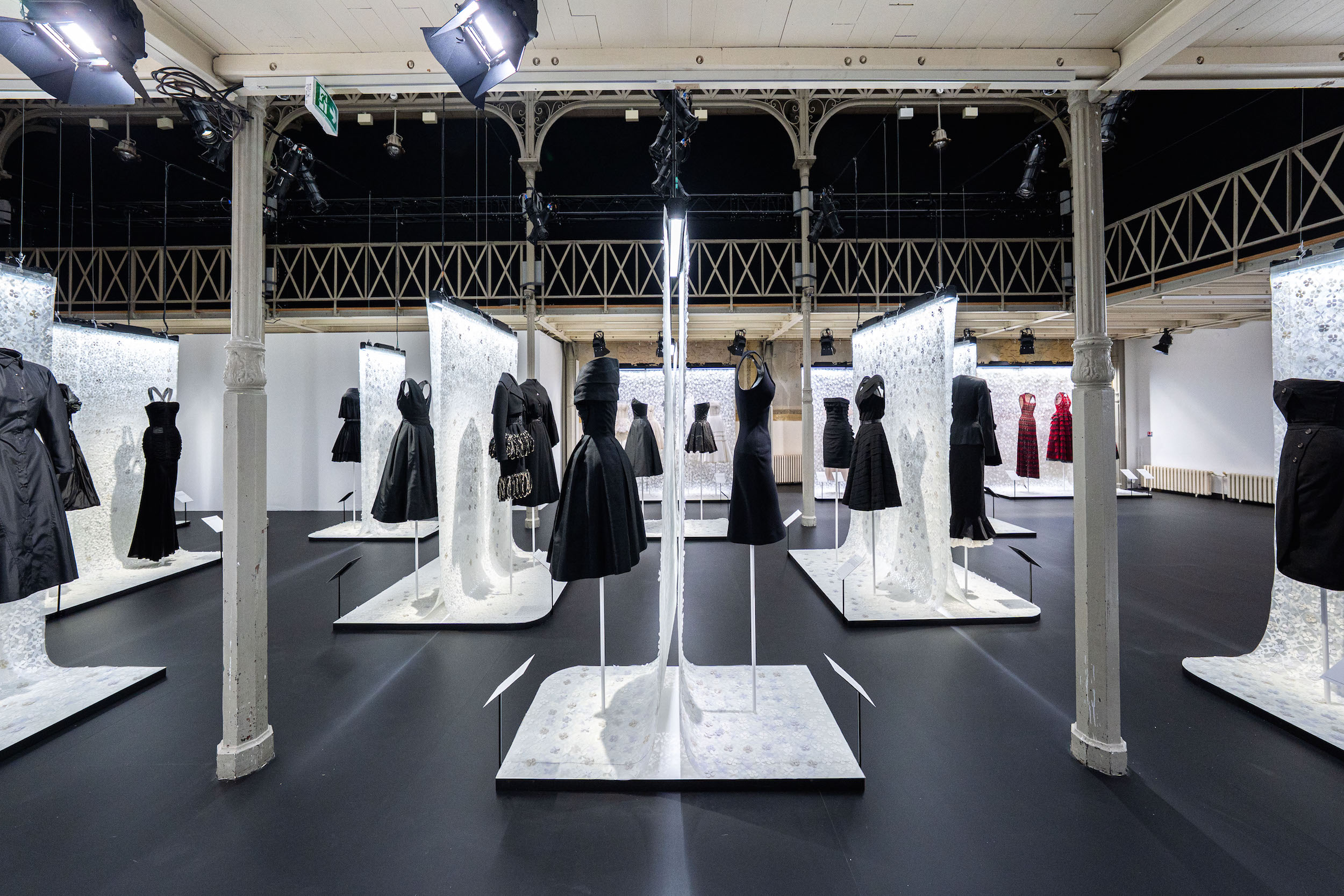
Azzedine Alaïa and Christian Dior: Two Masters of Haute Couture Installation view. Photo ©Stéphane Aït Ouarab
A Dialogue Between Alaïa and Dior: Couture, Architecture, and Sculpture
I imagine him deep in conversation with Dior, reminiscing about his early days. “I wanted to be a sculptor,” he says, “but when I realized I wouldn’t be good at it, I shifted my focus. Sculpting gave me an understanding of anatomy. When I work on a model, it’s as if I’m working with clay. I mold, assemble, disassemble, stick, and unstitch. It is through these endless movements and trials that I have probably pierced part of the mystery of couture.”
“I wanted to be an architect,” I hear the master reply—the man who revolutionized fashion by designing flower-like dresses for women. “As a couturier, I am obliged to follow the laws and principles of architecture. A dress is constructed according to the grain of the fabric. That is the secret of couture, which depends on the first law of architecture: obedience to gravity.”
“There is a sensuality to fabric. All materials should be inviting to the touch,” Alaïa continues.
“Fabric is the only vehicle for our dreams,” adds Dior. “It can be the starting point for our inspiration. Many dresses are born solely from it.”
“I like black,” remarks the first, “because to me, it’s a very happy color.”
“Color demands renewal,” concludes the second. “Would we appreciate the blue sky if it were always blue? It is the ever-moving clouds that make the sky so beautiful.”
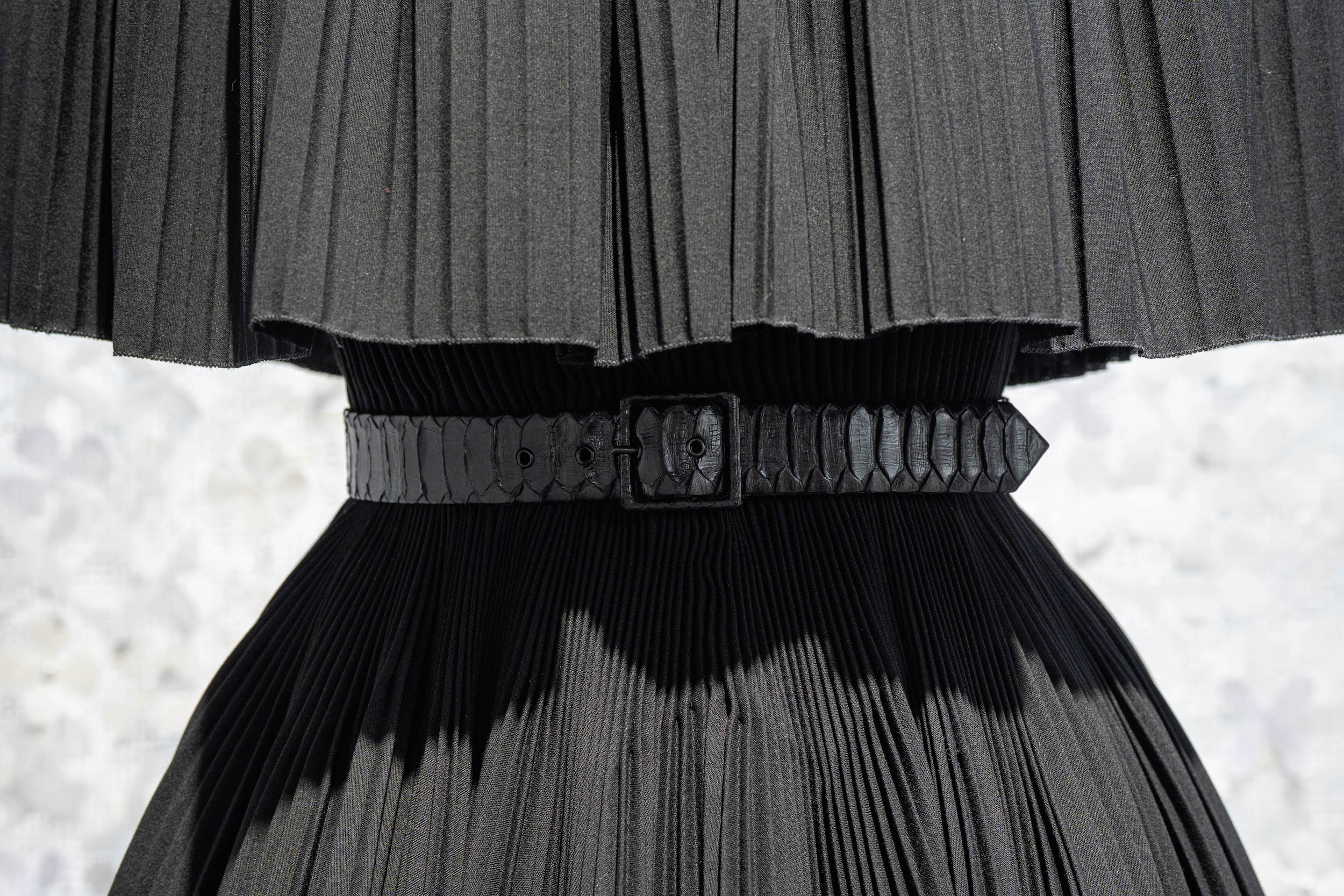
Azzedine Alaïa and Christian Dior: Two Masters of Haute Couture Installation view. Photo ©Stéphane Aït Ouarab
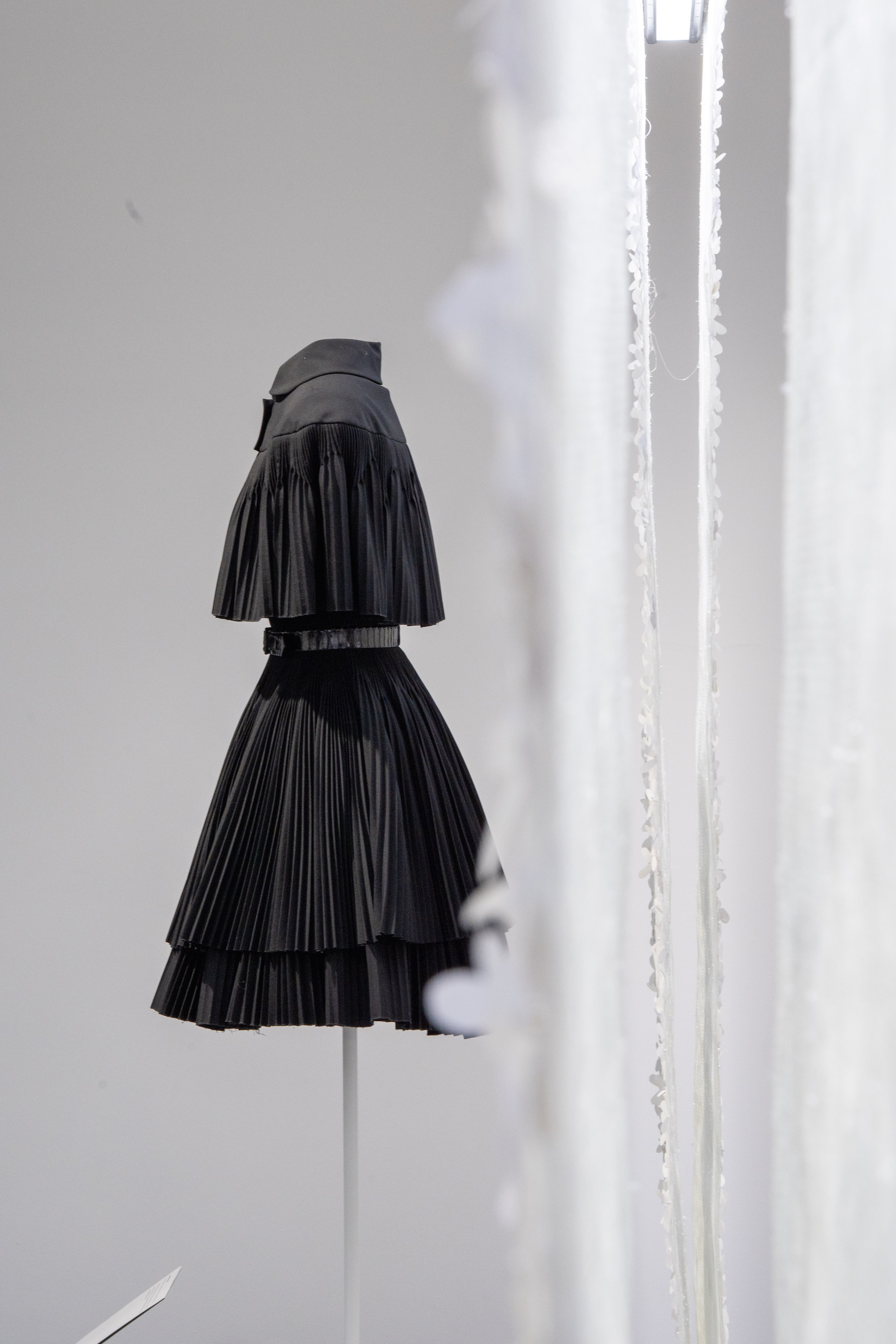
Azzedine Alaïa and Christian Dior: Two Masters of Haute Couture Installation view. Photo ©Stéphane Aït Ouarab
How Alaïa and Dior Revolutionized Haute Couture
The exhibition also provides an opportunity to critically reexamine both designers’ work. In 1947, with the support of Marcel Boussac, Dior opened his fashion house at 30 Avenue Montaigne, marking a historic turning point. Thanks to him, the war suddenly seemed like a distant memory. The New Look restored Paris’s status as the fashion capital and redefined the female silhouette after years of austerity. Skirts flared out in swaths of fabric, waists were cinched to the extreme, and shoulders were softened. This vision sparked immediate enthusiasm and revolutionized the tastes of the time. Vogue spoke of a true renaissance, highlighting the innovative power of fashion that was deeply feminine yet “calculated and precise,” as Dior himself defined it. The success was overwhelming; among its earliest admirers were the Duchess of Windsor and Eva Perón. The New Look quickly became dominant, establishing itself as the leading aesthetic for over a decade. However, it would be a mistake to view Dior’s vision as a stubborn celebration of the past or as nostalgia for its own sake. He was too astute a couturier to simply recreate a historical period that he undoubtedly admired. His intention was to exalt the female form and revive a certain understated seduction. “I emphasized the waist and the volume of the hips. I highlighted the bust.” It’s a gentle eros that Alaïa also championed throughout his career, never straying from the body as a central theme. Through the use of diverse materials, such as chiffon, leather, yarn, and silk, as well as the systematic incorporation of the bodice, he sought to transform traditional silhouettes and redefine body shape. This is a testament to freedom and independence destined to leave its mark on the pages of fashion history and stand as a beacon for future generations.
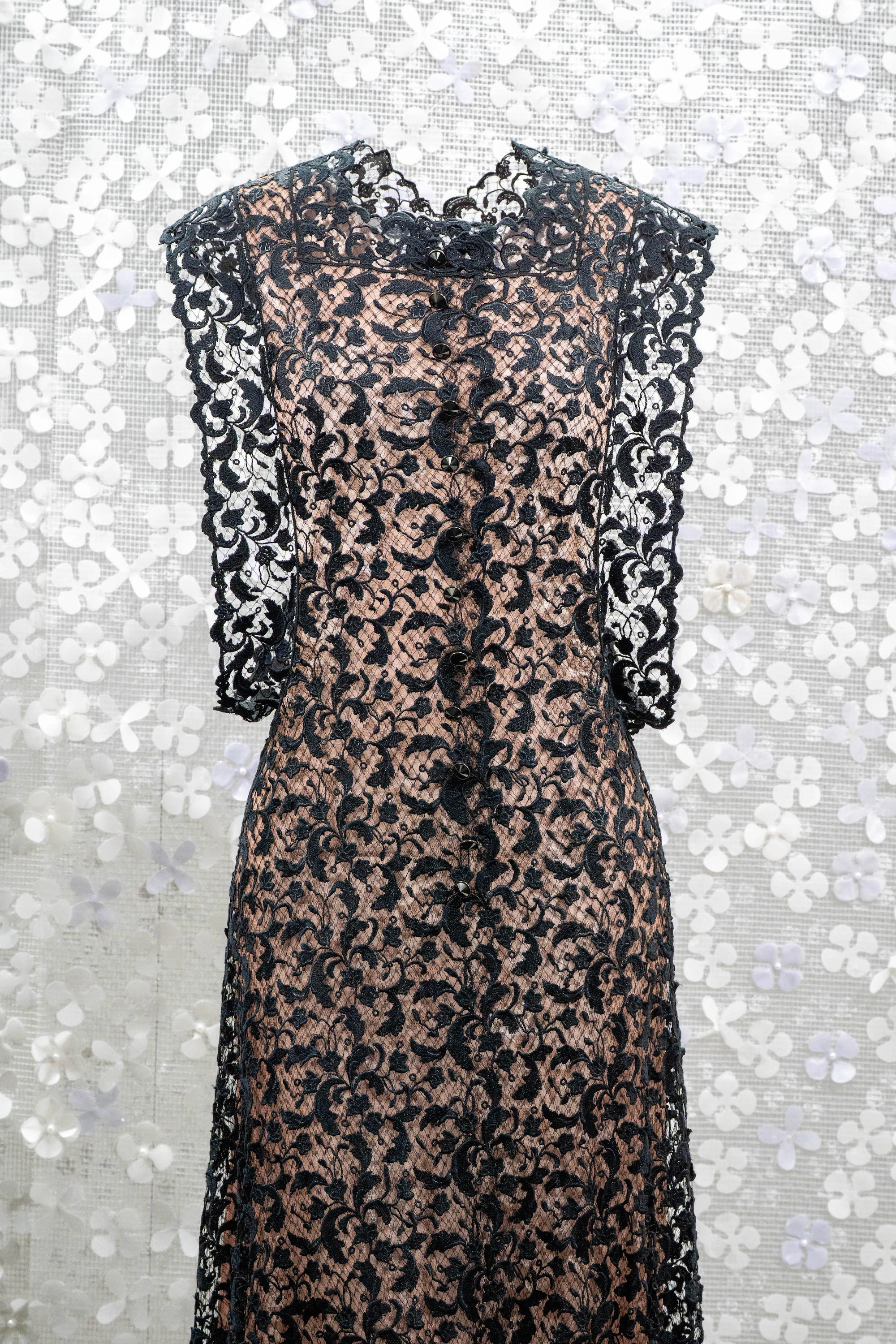
Azzedine Alaïa and Christian Dior: Two Masters of Haute Couture Installation view. Photo ©Stéphane Aït Ouarab
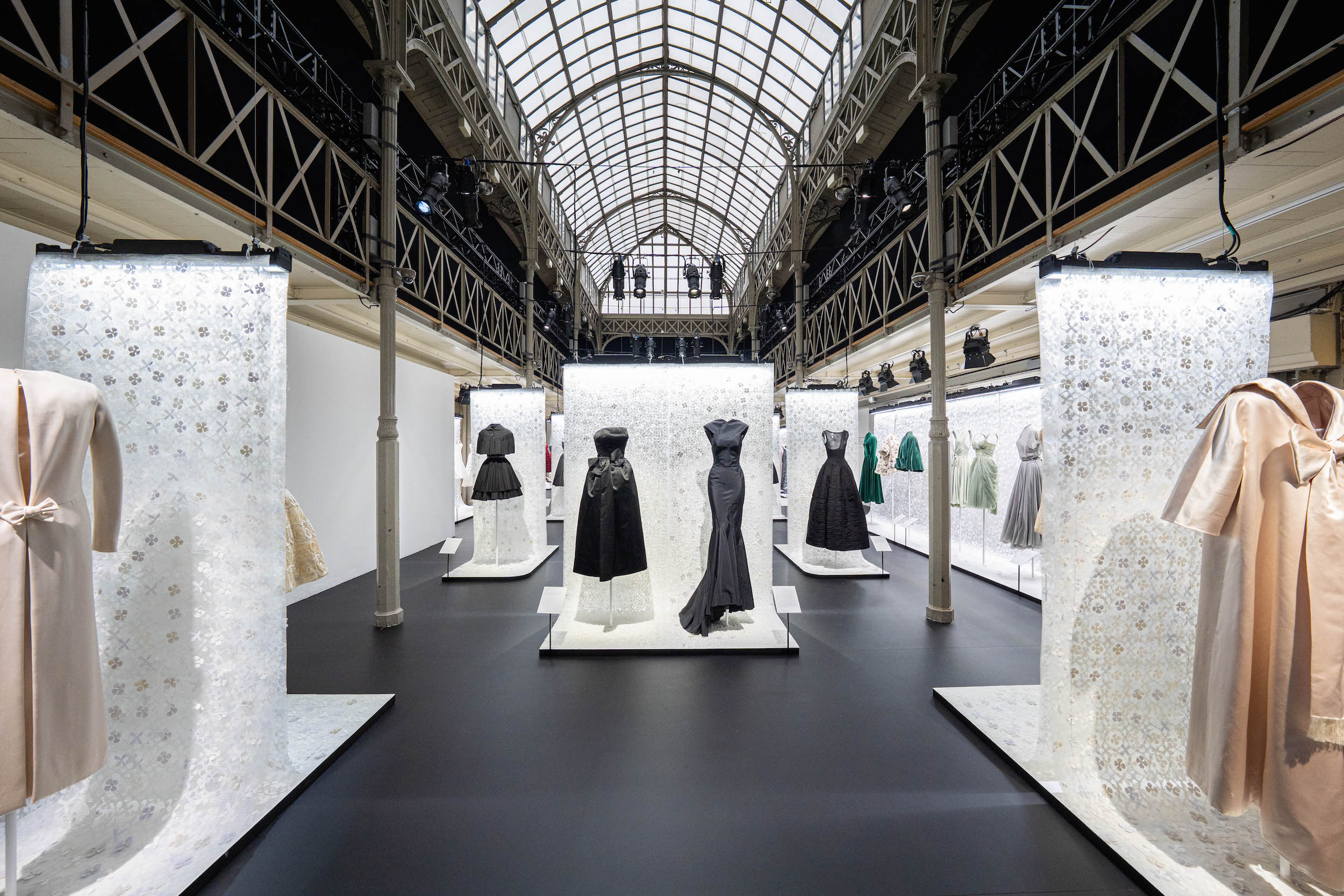
Azzedine Alaïa and Christian Dior: Two Masters of Haute Couture Installation view. Photo ©Stéphane Aït Ouarab
Azzedine Alaïa and Christian Dior Two masters of Haute Couture
Curated by Olivier Saillard
Fondation Azzedine Alaïa - 18, rue de la Verrerie, 75004 Paris
15 December, 2025 – 21 June, 2026
.webp&w=3840&q=75)