Art Basel Paris 2026 extends far beyond the Grand Palais, transforming the French capital into a vibrant hub for contemporary art. Museums, foundations, galleries, and public spaces will host an ambitious program of exhibitions, monumental installations, performances, and site-specific interventions. Our Beyond the Fair itinerary highlights some of the most compelling artistic experiences shaping Paris’s contemporary art scene, moving between the official Art Basel Paris Public Program and independent initiatives across the city and its surroundings.
1. Kennedy Yanko: Ce qui nous rassemble (What Brings Us Together) at the Cité de l’architecture et du patrimoine
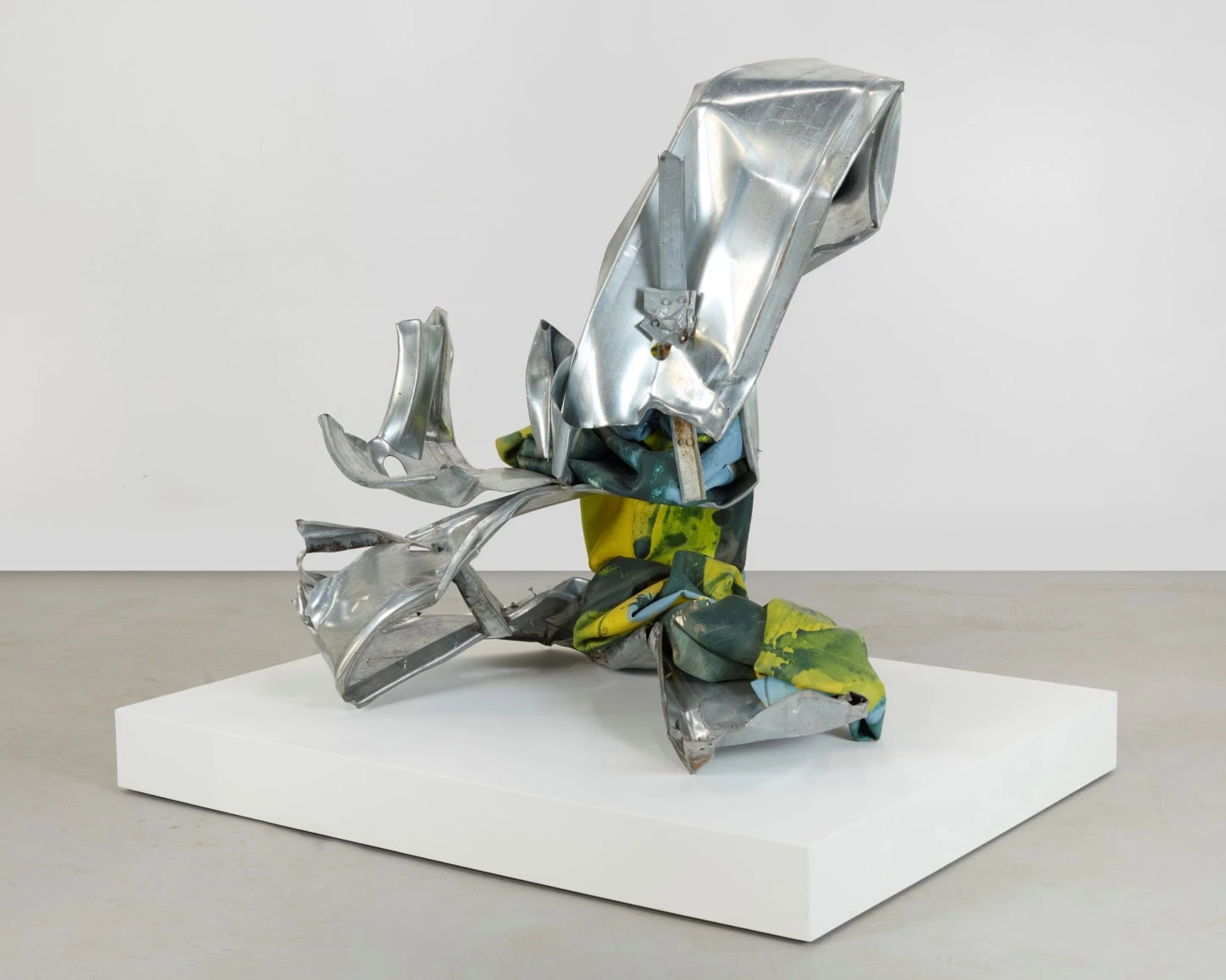
Kennedy Yanko, Serpent I, 2026. Photograph by Martin Parsekian. Courtesy of the artist.
At the Cité de l’architecture et du patrimoine, Kennedy Yanko (b. 1988, St. Louis, Missouri) blurs the lines between painting and sculpture, and between industrial materials and organic forms. Her work engages in dialogue with the museum’s monumental architectural heritage. The exhibition, titled “Ce qui nous rassemble" and curated by Matthieu Poirier, opens on October 16, 2026, as part of the Art Basel Paris Public Program, of which Miu Miu is an official partner. It features a series of sculptures, many of which were designed specifically for the cultural institution’s spaces. Yanko’s pieces are made from the assemblage of salvaged metal fragments that are bent, distorted, and welded together and then combined with expansive membranes of acrylic paint. Poured onto the floor, left to dry, and then manipulated like fabric or tanned leather, these flexible surfaces do not hide the metal structures but rather wrap around them. They slip into their folds and become organic extensions of the underlying forms. In the Galerie des moulages, overlooking the Eiffel Tower, Yanko’s contemporary sculptures interact with monumental reproductions of medieval and classical portals and architectural elements. Spread across approximately 1,500 square meters, the works introduce irregular forms and intense colors into a space dominated by the whiteness of historical plaster casts. Alongside this formal investigation, a spiritual dimension emerges. In an interview with Jessica Lack for Art Basel, Yanko explains how Mary Magdalene became a key reference for the exhibition. Drawing on the apocryphal tradition of Magdalene’s journey to southern France, the artist reflects on representations of femininity and the contradictory identities attributed to her over the centuries. Raised in a Seventh-day Adventist family, Yanko has explored the relationship between religion and spirituality through Theosophy and the invisible investigations of Kandinsky and the Surrealists. Her experience with New York’s Living Theatre also informs the performative dimension of her work, which appears to retain the energy of a movement abruptly interrupted. Magnetism becomes the principle connecting painting, sculpture, architecture, bodies, gazes, and memories. Balancing industrial ruin with anatomy and matter with spiritual imagination, Yanko invites viewers to reflect on transformation as an intrinsic condition of existence, where vulnerability and strength are no longer opposing categories.
Kennedy Yanko: Ce qui nous rassemble
Curated by Matthieu Poirier
Cité de l’architecture et du patrimoine, Palais de Chaillot, 1 Place du Trocadéro, Paris, 16th arrondissement
October 16, 2026 – January 3, 2027
Part of the Art Basel Paris 2026 Public Program
2. Geste de Consolation: A Major Project Conceived by Alice Diop
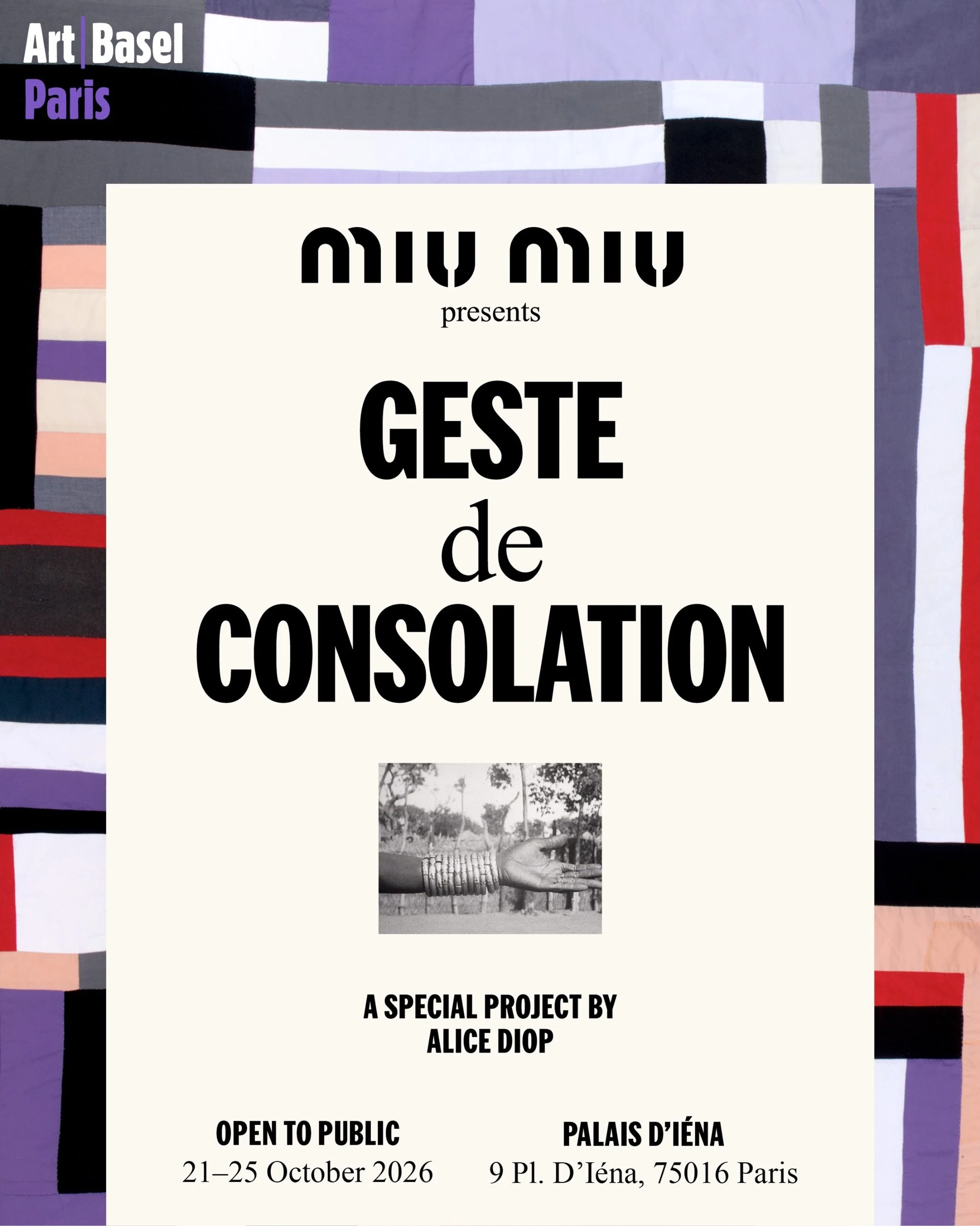
Geste de Consolation, a major project by Alice Diop at Art Basel Paris, Palais d'Iéna. Presented by Miu Miu.
For Art Basel Paris 2026, Miu Miu will mark its third consecutive year collaborating with the fair's Public Program. At the invitation of Miuccia Prada, French filmmaker Alice Diop (b. 1979, Aulnay-sous-Bois) conceived “Geste de Consolation,” a multidisciplinary project to be presented at the Palais d’Iéna from October 21 to 25. This will mark Diop’s debut as an exhibition maker, as she expands her cinematic style into a spatial realm where film, photography, sculpture, poetry, dance, music, and performance converge to examine the mechanisms of representation. Diop is one of the most significant voices in contemporary French cinema. Through films such as Nous (2021) and Saint Omer (2022), recognized at the Berlinale and the Venice Film Festivals, respectively, she has developed a body of work that addresses identity, migration, and colonial legacies. Her work brings historically marginalized subjectivities to the forefront. The Paris project builds on the exploration initiated with Fragments for Venus (2025), a short film created for Miu Miu Women’s Tales. It questions how art history has constructed and perpetuated a fetishizing gaze on Black women’s bodies. The exhibition is organized across four interconnected spaces and adopts the structure of cinematic editing. The journey begins with a photograph by Zanele Muholi and continues with a two-screen video installation by Diop. This piece juxtaposes archival imagery and film sequences that evoke violence and consolation. Visitors then enter the “Chambre à soi,” a domestic setting with a library arranged on multicolored carpets adorned with a motif by artist Mary Lee Bendolph. The books that shaped Diop’s intellectual development collectively portray a Black woman thinking in the twenty-first century, presenting knowledge as a means of emancipation. The library’s intimate atmosphere then gives way to a performance arena where works by authors such as Audre Lorde, Zora Neale Hurston, June Jordan, and Zadie Smith are brought to life through readings and performances. The program includes an adaptation of Prophétique by Ivorian choreographer Nadia Beugré, as well as musical performances by Angel Bat Dawid and her ensemble, Sistazz of the Nitty-Gritty. The exhibition concludes with “Sentinel” (Mami Wata) (2020-21), a monumental bronze sculpture by Simone Leigh standing almost five meters tall that reinterprets the figure of a West African water spirit associated with creative and destructive powers. The scenography transforms the act of looking into a subject of reflection. Viewers observe the images, performers, and one another. Through this circulation of gazes, “Geste de Consolation” reimagines established representations. Rather than presenting consolation as an act of appeasement, the project reenvisions it as a collective practice of memory, awareness, and repair.
Geste de Consolation: A major project conceived by Alice Diop
Palais d’Iéna, 9 Place d’Iéna, Paris
October 21–25, 2026. Preview: October 20
Part of the Art Basel Paris 2026 Public Program
3. Tracey Emin at the Parvis des Droits-de-l’Homme
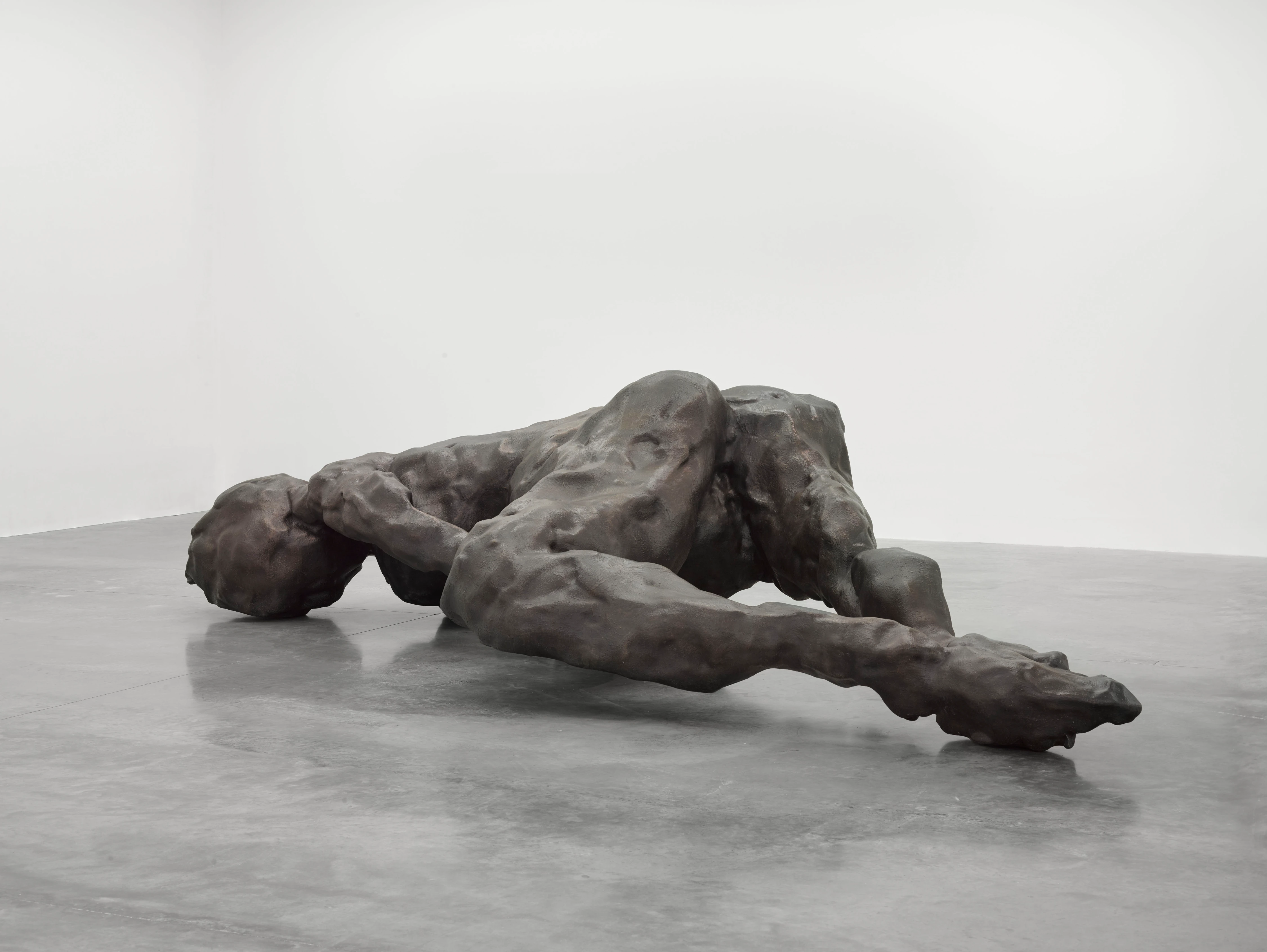
Tracey Emin I lay here for you, 2018. Bronze © Tracey Emin. All rights reserved, DACS 2026. Photo © White Cube (Theo Christelis).
For Art Basel Paris 2026, Tracey Emin (b. 1963, London) will present three bronze sculptures that explore the female body as a site of vulnerability, desire, resistance, and transformation: “I Lay Here for You” (2018), “I Followed You to the End” (2024), and “I Will Not Be Alone” (2025). Organized in collaboration with White Cube and the Cité de l'architecture et du patrimoine, the exhibition will be on view from October 14 to November 1. This is the first project in Art Basel Paris’s public off-site program on the Parvis des Droits-de-l'Homme at the Trocadéro. A central figure in contemporary art, Emin has developed a profoundly autobiographical practice in which intimate experiences, sexuality, loss, and personal memory acquire a collective dimension. Her visual language, which spans painting, drawing, installation and sculpture, restores the body to a central position — not through an idealized representation of the human figure, but through exposure of its fragility. The three works presented in Paris trace a physical and emotional progression. In “I Lay Here for You,” an elongated figure lies on the ground, suspended between surrender and exposure. The irregular surface of the bronze retains a tactile quality that contradicts the material’s solidity, evoking intimacy and precariousness. In “I Followed You to the End,” the body is in a kneeling position with the legs spread apart. This posture oscillates ambiguously between availability and submission, desire and violence, resisting any single interpretation. Meanwhile, “I Will Not Be Alone” depicts a woman seated on a rock with a veiled face. The absence of recognizable facial features removes the sculpture from the realm of individual portraiture, transforming it into a broader representation of emotional resilience and the need for connection. The relationship between autobiography and monumentality is one of the most significant aspects of Emin’s sculptural practice. For many years, she rejected large-scale public sculpture, viewing it as an expression of a predominantly masculine tradition based on assertions of power and strength. However, in her monumental bronzes, scale does not idealize the human figure. Rather than transcending private experience, Emin transfers it into collective space where it acquires new visibility. At the Trocadéro, this tension takes on further significance. In the monumental setting of the Parvis des Droits de l'Homme, which is traditionally associated with celebrating universal values, Emin replaces the image of the glorified body with that of an exposed, imperfect, mortal body.
Tracey Emin: I Lay Here for You (2018), I Followed You to the End (2024), I Will Not Be Alone (2025)
Parvis des Droits-de-l’Homme, Palais de Chaillot, Place du Trocadéro, 75016 Paris
October 14 – November 1, 2026
Part of the Art Basel Paris 2026 Public Program
4. Marcello Maloberti: CIEL
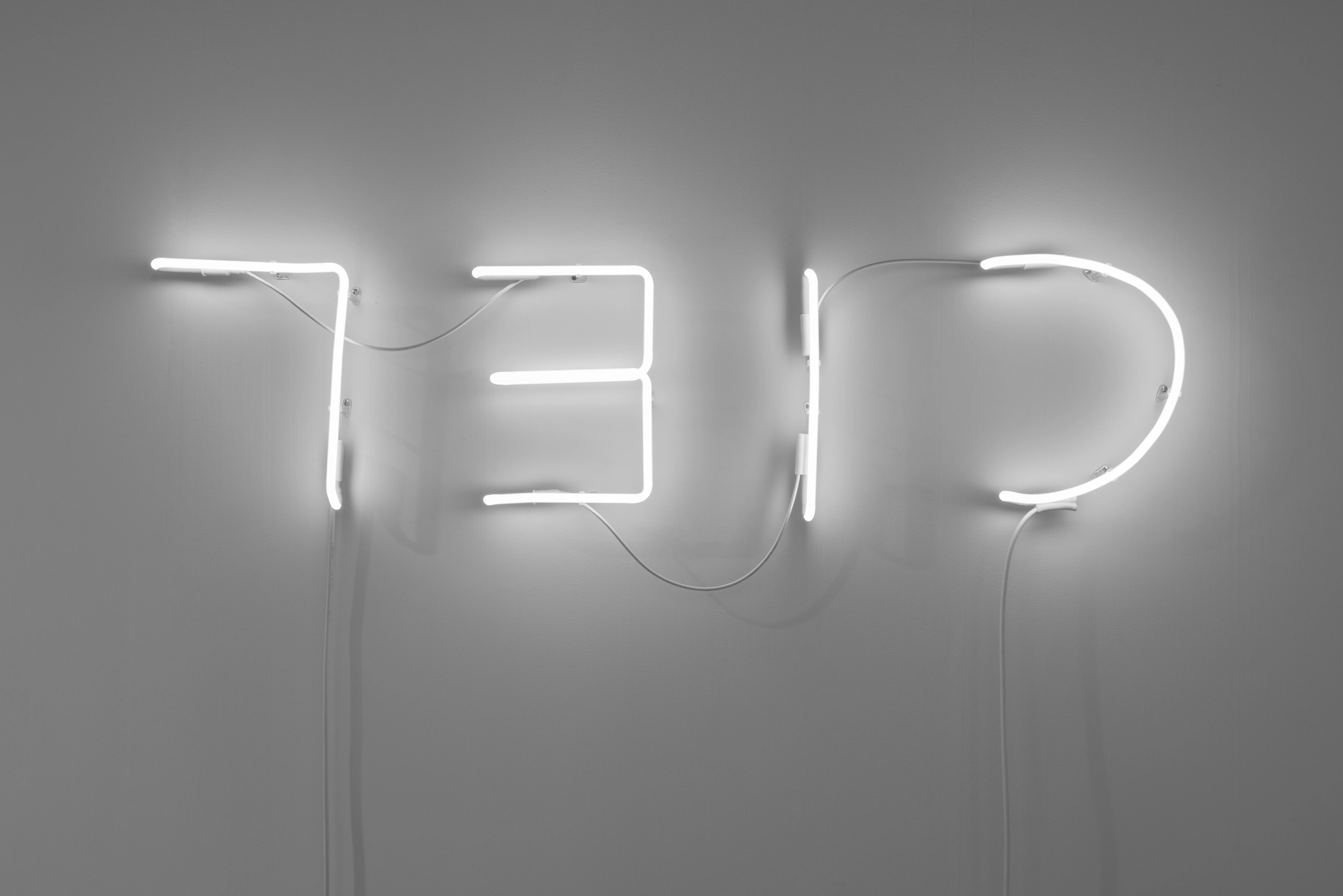
Marcello Maloberti, CIEL, 2023, Neon. Courtesy the artist and Raffaella Cortese, Milan - Albisola. Photo by Andrea Rossetti
The Avenue Winston Churchill is once again hosting a series of large-scale sculptures and installations in the public realm. Connecting the Petit Palais and the Grand Palais, the avenue offers visitors an opportunity to experience significant projects exploring transformation, memory, urban life, cultural identity, and the evolving relationship between monumentality and fragility. Among these works is “CIEL” (2026) by Italian artist Marcello Maloberti (b. 1966, Codogno). Presented by Galleria Raffaella Cortese as part of the fair’s Public Program, the piece consists of an illuminated word suspended approximately twenty meters above the ground by a truck-mounted aerial platform. “CIEL,” a French word meaning “sky,” is written in the artist’s handwriting and displayed upside down, as though it were intended to be read from above rather than by passersby. The supporting structure remains visible, giving the installation the appearance of a temporary construction site and combining the luminous language of neon with elements of provisional infrastructure. Active since the early 1990s, Maloberti has developed a practice spanning performance, photography, video, installation, sculpture, and drawing. He transforms the urban landscape into a space of poetic disruption where language, daily life, and shared experiences converge. His work frequently involves a participatory dimension, in which the viewer’s involvement is an essential part of the project. Written language occupies a central position in Maloberti’s creative investigation, particularly in “Martellate,” which consist of brief, poetic, and aphoristic statements produced across different media and formats. The Paris installation is an extension of his exploration of luminous works and temporary interventions in public spaces, in which writing has a physical and architectural presence. In “CIEL,” suspending a word above the street and reversing its orientation alters the conventional relationship between text and viewer. It is not only the viewer who looks toward the sky, but also the word itself that turns upward symbolically. By doing so, writing abandons the surface to engage with the scale of architecture and the urban environment.
Marcello Maloberti: CIEL, 2026
Avenue Winston-Churchill, Paris
Presented by Galleria Raffaella Cortese
Part of the Art Basel Paris 2026 Public Program
5. Remember Me: Masterpieces of Photography from the Pinault Collection
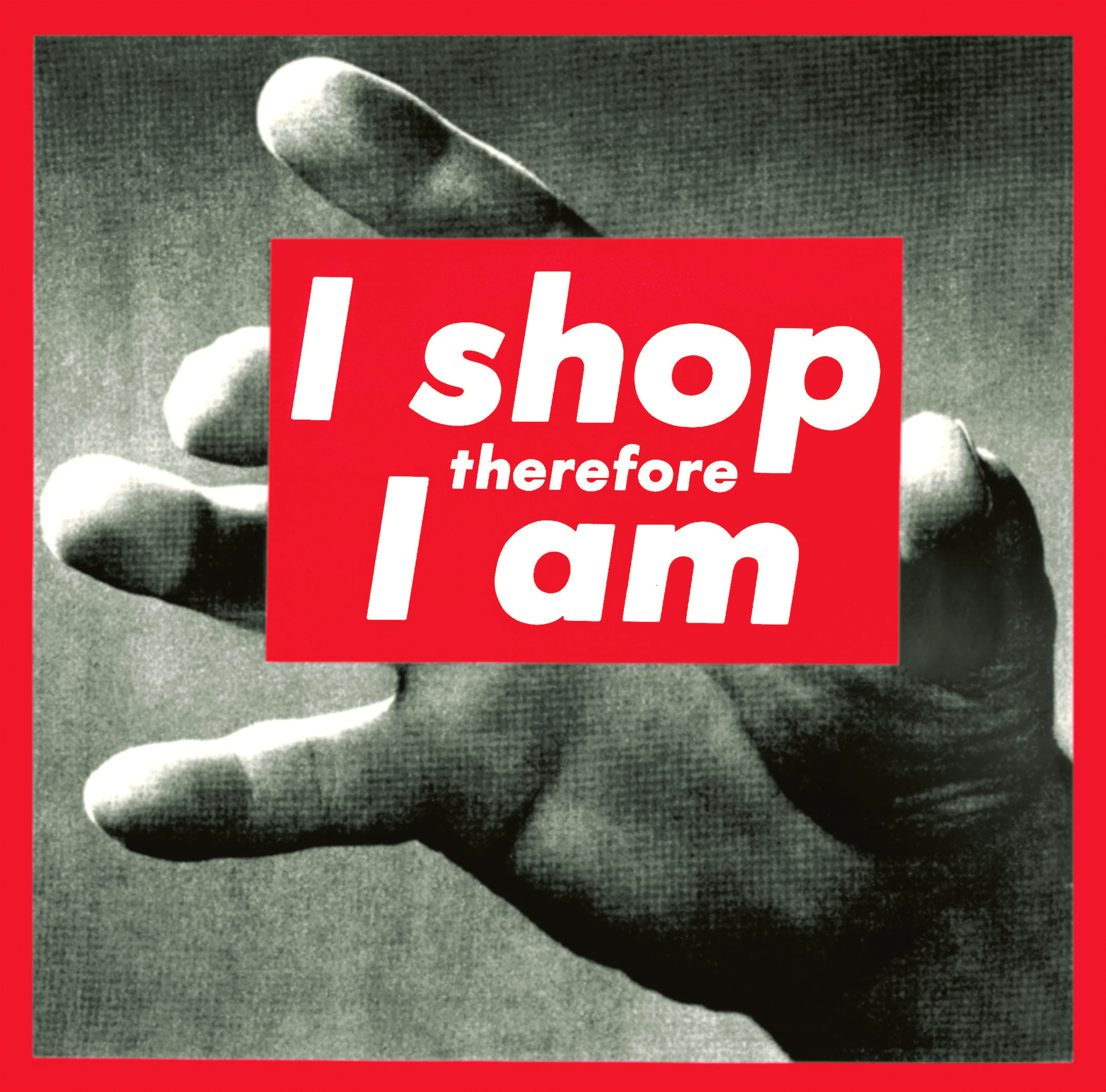
Barbara Kruger, Untitled (I shop therefore I am), 1987. Courtesy Pinault Collection
In honor of the bicentennial of photography’s birth, the Bourse de Commerce in Paris is presenting “Remember Me,” a significant group show spanning nearly two centuries of the medium’s history. Curated by Matthieu Humery and Lola Regard, the exhibition brings together approximately 700 works by over seventy artists from the Pinault Collection. Instead of taking a chronological approach, the curators have chosen to highlight visual, formal, and conceptual correspondences. The project’s title comes from a work by Barbara Kruger, who has created a monumental installation in the building’s Rotunda. Through her signature blend of text and imagery, Kruger questions the power of language and representation, transforming the museum into a space for contemplating memory. Memory itself provides the project’s organizing principle, understood not merely as photography’s ability to preserve traces of the past but also as a process through which experience is constructed and reinterpreted. Images engage in dialogue across historical boundaries. For example, Marilyn Monroe, as photographed by Richard Avedon, comes face-to-face with one of Cindy Sherman’s self-portraits. Gustave Le Gray’s seascapes are juxtaposed with those of Eileen Quinlan, and August Sander’s portraits are reinterpreted in Sherrie Levine’s “After August Sander” series. This creates a history of photography as an open system of references, appropriations, and reinterpretations. Particular emphasis is placed on the work of Irving Penn and Raymond Depardon. Penn is represented by an installation of over 400 photographs that reveal the compositional precision and technical experimentation in his work. Depardon portrays a France of shops, homes, streets, and squares, capturing a social landscape suspended between modernization and disappearance. The exhibition also addresses the body, portraiture, and impermanence through sections devoted to disappearance and memento mori. From Annie Leibovitz’s famous photograph of John Lennon and Yoko Ono to self-portraits by Meret Oppenheim and Tyler Mitchell, photography emerges as a means of expression capable of addressing absence, vulnerability, and mortality. “Remember Me” concludes with Man Ray’s “Ma dernière photographie,” a painting on cardboard depicting a black rectangle that symbolically returns the medium to its boundaries with abstraction.
Remember Me: Masterpieces of Photography from the Pinault Collection
Curated by Matthieu Humery, Advisor for Photography, Pinault Collection & Lola Regard, Project Officer
Bourse de Commerce – Pinault Collection, 2 Rue de Viarmes, 75001 Paris
October 7, 2026 – January 18, 2027
6. Jenny Holzer: J'ai vu (I Have Seen) at the Musée d'Orsay
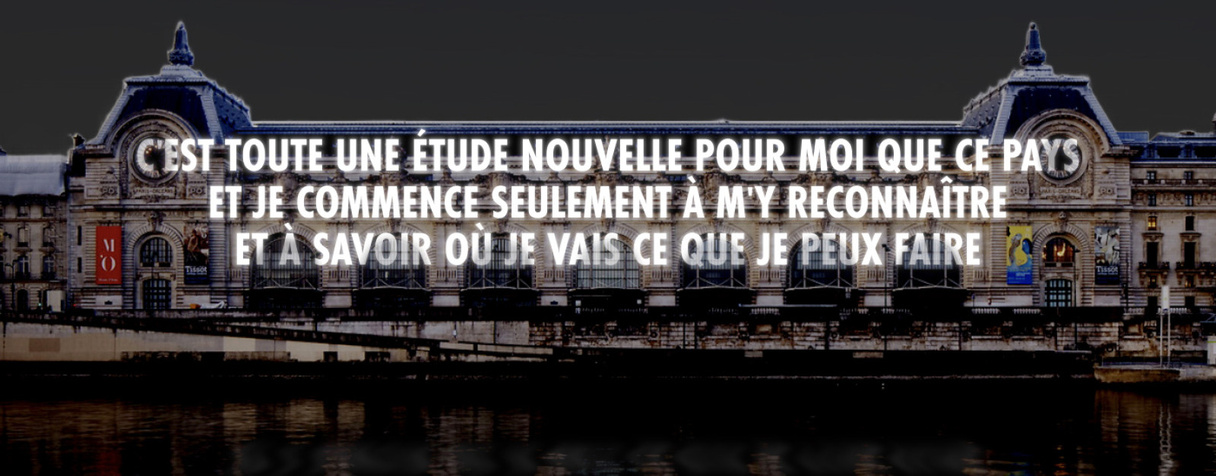
Jenny Holzer (1950), Claude Monet, letter to Théodore Duret, February 2, 1884 © 2026 Jenny Holzer, member Artists Rights Society (ARS), New York/ADAGP, Paris
For Art Basel Paris 2026, the museum will present a new site-specific commission by Jenny Holzer (b. 1950, Gallipolis, Ohio). “J'ai vu” will encompass both the interior and exterior spaces, including the façade overlooking the Seine. Curated by Sylvain Amic and Nicolas Gausserand, the project will be on view from October 20, 2026, to February 21, 2027. The exhibition is part of the institution’s 40th anniversary celebrations and establishes a dialogue between the American artist’s work and the museum’s historical and artistic heritage. Holzer has developed a practice in which words become visual material and instruments of political and social inquiry. Through monumental installations, light projections, electronic displays, and inscriptions carved into stone, she removes language from its conventional contexts and transforms it into an experience that engages public spaces and individual perceptions. For “J’ai vu,” Holzer draws on the Musée d’Orsay’s archives and testimonies from the historical period represented by its collections. She has selected fragments of artists’ letters, literary writings, and political commentary. These materials, belonging to a past that continues to question the present, are reactivated through her distinctive artistic language. From October 18 to 22, light projections will transform the façade of the former railway station into a monumental writing surface, beginning the exhibition outside the building. Inside, a site-specific LED installation will display streams of colored text, creating a connection between the movement of words, the circulation of visitors, and the building’s original function as a railway station. The solo show also extends into galleries dedicated to history painting, naturalism, and symbolism. Selected works from the collection engage in dialogue with Holzer’s paintings, which incorporate gold, platinum, and palladium leaf. These compositions, known as redaction paintings, obscure large sections of text, leaving only certain fragments visible. The metallic surfaces are sensitive to changes in light reflected from the Seine, introducing a shifting dimension to the perception of the works. The redactions evoke questions of secrecy, memory, and historical responsibility. The project includes new bench sculptures made from unusually colored stones and distributed throughout the galleries and ground floor. Many of the benches bear inscriptions drawn from documents dating between 1848 and 1914. The chromatic diversity of these materials echoes that of the museum’s sculptures and pedestals, recalling the original display designed by Gae Aulenti.
Jenny Holzer: J’ai vu
Curated by Sylvain Amic, President of the Public Establishment of the Musée d’Orsay and the Musée de l’Orangerie – Valéry Giscard d’Estaing (April 24, 2024 – August 31, 2025), and Nicolas Gausserand, Advisor to the President, Head of International and Contemporary Affairs
Musée d’Orsay, Esplanade Valéry Giscard d’Estaing, 75007 Paris
October 20, 2026 – February 21, 2027
Façade projections: October 18–22, 2026, approximately 7–11 pm
7. Ibrahim Mahama: The Harvest Season at the Fondation Cartier pour l’art contemporain
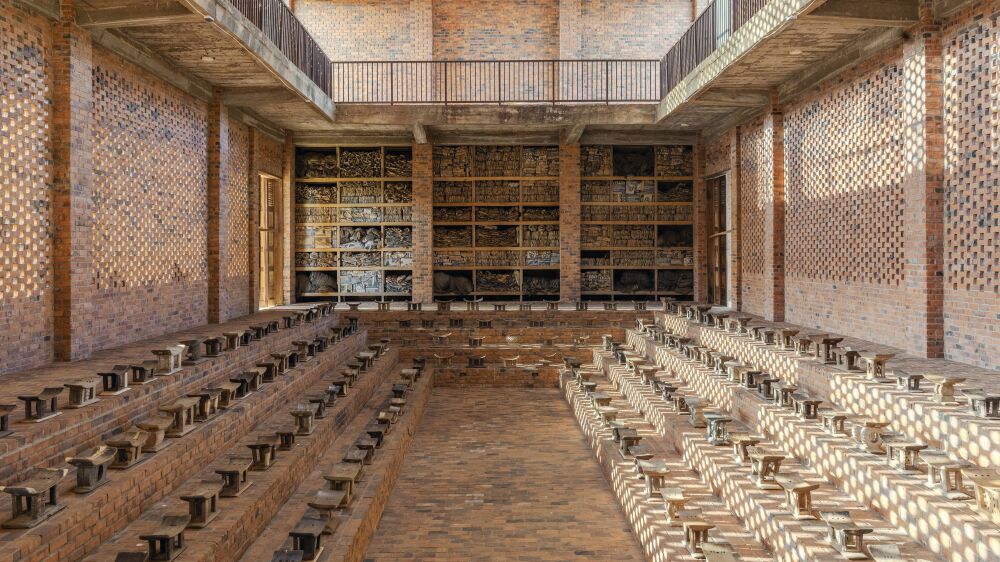
Ibrahim Mahama, Parliament of Ghosts, 2025, sièges ashantis en bois, Red Clay, Tamale. © Ibrahim Mahama. Photo © Ernest Sackitey, courtesy Red Clay
From October 22, 2026, to February 28, 2027, the Fondation Cartier pour l’art contemporain in Paris will present “The Harvest Season,” the first major Parisian exhibition by Ibrahim Mahama (b. 1987, Tamale, Ghana). Designed as a collective project, it will involve nine international artists and collectives and will take place in the foundation’s new space. There, art, historical memory, architecture, and social participation will converge to create possible futures. At the heart of Mahama’s practice are Ghana’s colonial and postcolonial legacies and the unfulfilled promises of independence. Using reclaimed materials, archives, and fragments of industrial heritage, the artist reconstructs histories of labor, exploitation, and the circulation of commodities. Emblematic of this are the jute sacks used to transport cocoa and coal. Their seams, stains, and repairs preserve traces of collective memory. The concept of repair is one of the exhibition’s central theoretical concerns. For Mahama, repairing an object does not mean restoring it to its original condition by erasing its history; rather, it means preserving its transformations and recognizing its potential. Repair is a material and political gesture that challenges the idea of progress based exclusively on newness by transforming ruin into an opportunity for regeneration. This vision is expressed in “Things Fall Apart,” a monumental architectural installation made from original materials salvaged from a former glass bottle factory that opened in 1966, just before the coup that overthrew Kwame Nkrumah. The artist purchased the factory in 2024 and reactivated it as a testament to an interrupted industrial utopia. The title, borrowed from Chinua Achebe’s novel of the same name, highlights the tension between historical disintegration and reconstruction. Equally significant is “Parliament of Ghosts,” a parliamentary chamber reconstructed with traditional Asante wooden stools. Empty of its representatives, Parliament alludes to the 1966 coup in Ghana and the dissolution of Nkrumah's government. It has become a metaphor for the fragility of democratic institutions. However, it is also a participatory space intended to host meetings, debates, and performances. The collective dimension extends to invited artists, including James Barnor, Dorothy Akpene Amenuke, Zohra Opoku, and the Congolese collective CATPC. Their practices intertwine memory, identity, decolonization, and social responsibility. Mahama’s three art centers in Tamale provide a concrete precedent for this approach: the Savannah Centre for Contemporary Art, the Red Clay, and the Nkrumah Volini. These venues are dedicated to artistic production, heritage preservation, and educating younger generations. The exhibition’s title, “The Harvest Season,” refers to the Ghanaian principle of nnɔboa, a traditional agricultural practice based on reciprocal labor and shared responsibility. Thus, the metaphor of the harvest becomes a paradigm for art that extends beyond the production of objects to generate relationships, knowledge, and social infrastructures.
Ibrahim Mahama: The Harvest Season.
A Collective Imagining of African Futures with Dorothy Akpene Amenuke, Gideon Appah, James Barnor, Cercle d'Art des Travailleurs de Plantation Congolaise, Courage Dzidula Kpodo & Postbox Ghana, Zohra Opoku, Tjaša Rener, Feda Wardak
Curators: Aby Gaye-Duparc (Ibrahim Mahama), Jeanne Barral (associated artists). Associate curator: Chiara Agradi (James Barnor)
Fondation Cartier pour l’art contemporain, 2 Place du Palais-Royal, 75001 Paris
October 22, 2026 – February 28, 2027
8. Yu Nishimura: Towards a Sea at Lafayette Anticipations
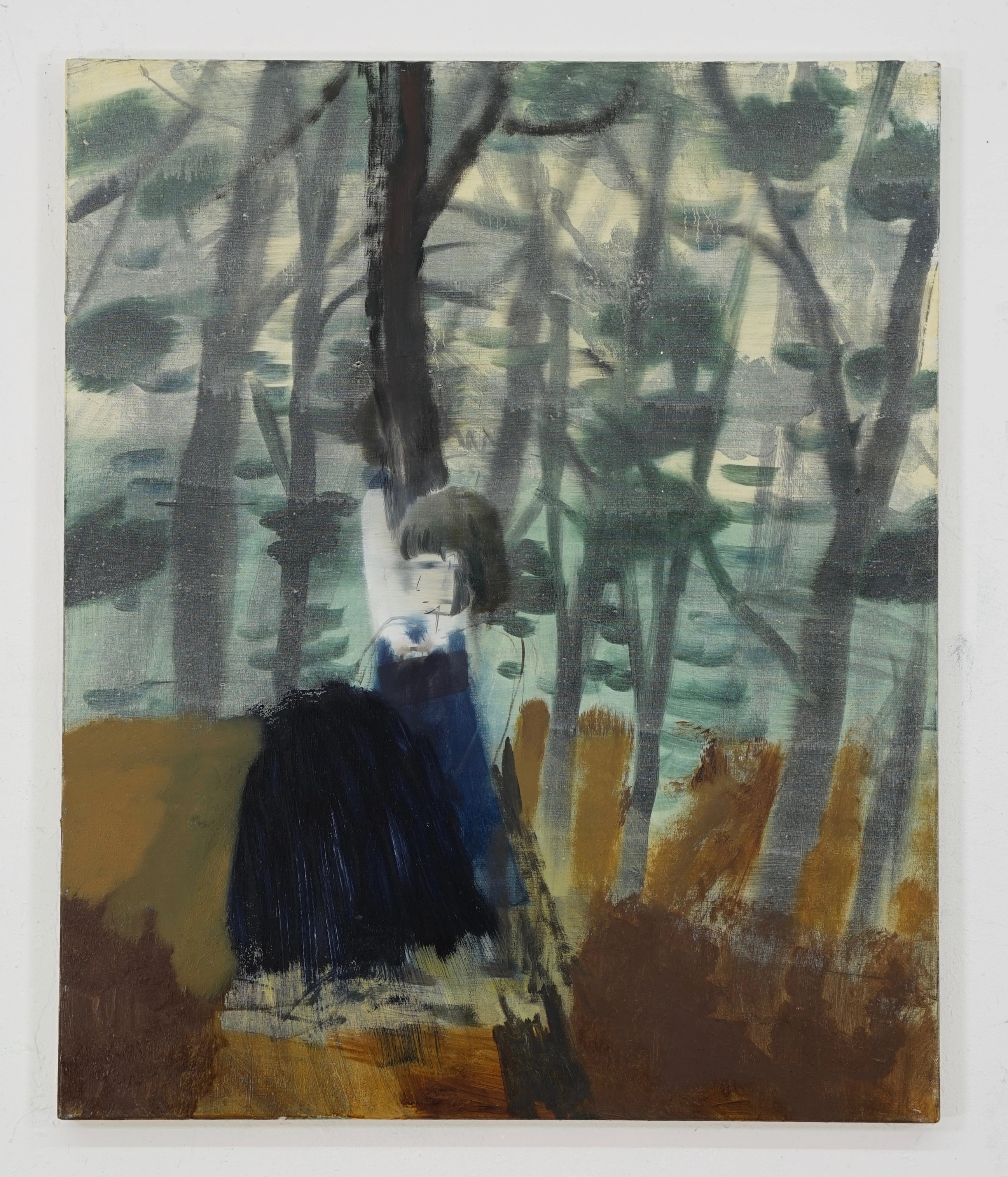
Yu Nishimura, lonely girl, 2022, Courtesy the artist.
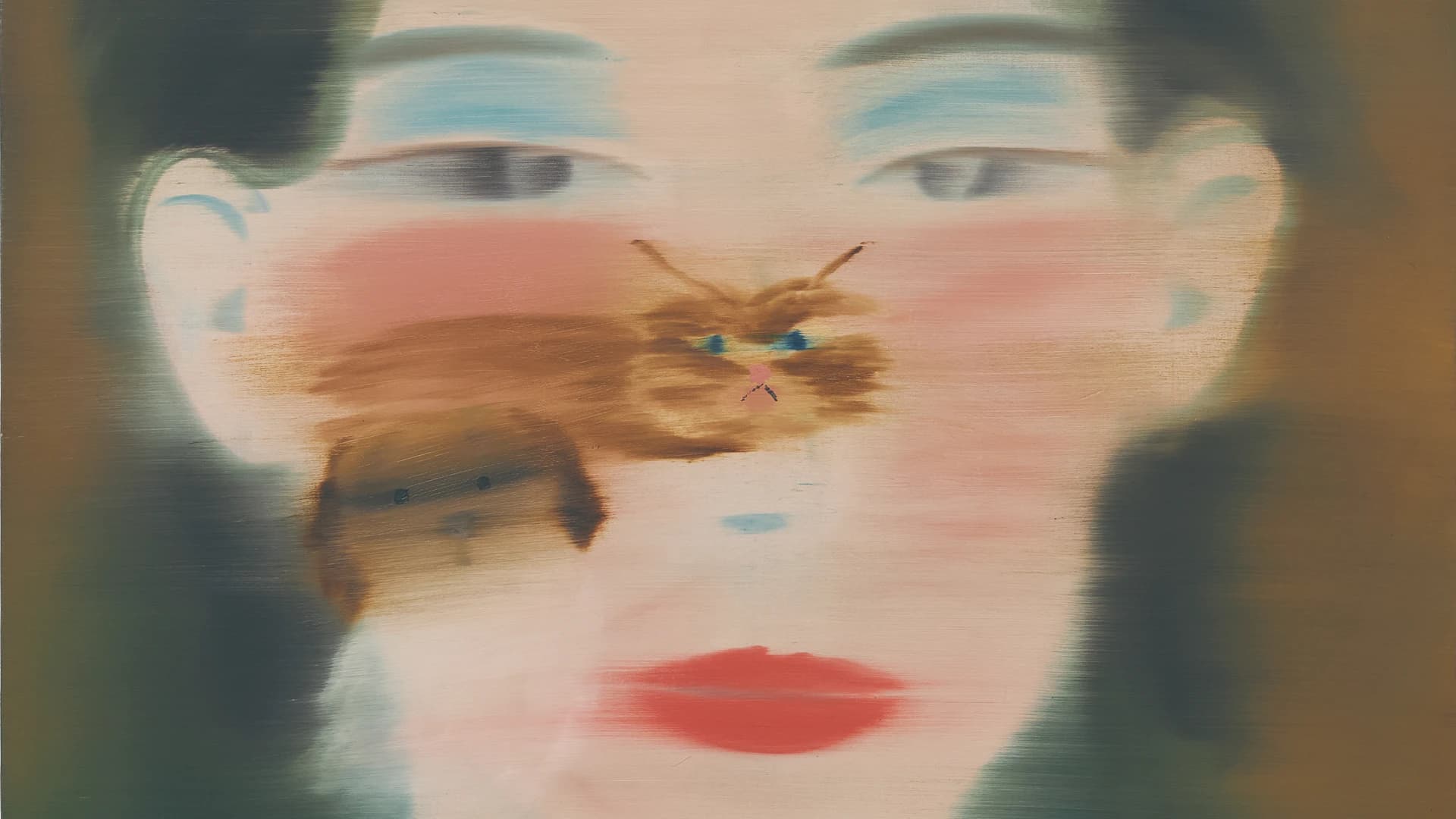
From October 21, 2026, to January 3, 2027, Lafayette Anticipations will present “Towards a Sea,” the first institutional solo exhibition in France by Japanese painter Yu Nishimura (b. 1982, Kanagawa). Curated by Elsa Coustou, the exhibition will bring together approximately fifty of the artist’s works, including drawings and large-scale paintings produced over the past decade, some of which were conceived specifically for this exhibition. Nishimura was raised in Yokohama in an artistic family and belongs to a generation shaped by Japan’s economic and social transformations during the 1990s. His childhood experiences form an essential part of his visual vocabulary. Suburban streets, family holidays in Chiba, spontaneous vegetation, insects, and fleeting glimpses of the sea recur throughout his compositions. Rather than reconstructing specific places, the artist explores how memory transforms landscapes, giving familiar environments an elusive, almost dreamlike quality. Primarily working with oil and tempera, Nishimura builds translucent layers in which human figures, animals, and natural elements overlap and dissolve into one another. Drawing inspiration from Japanese photography, particularly the works of Shinzo Fukuhara and Takuma Nakahira, as well as cinema and anime, Nishimura revisits traditional genres such as portraiture, landscape, and still life. His paintings defy precise categorization: contours blur, perspectives shift, and seemingly insignificant details—such as a bicycle wheel, an animal’s head, or clouds reflected on water—become fragments of a visual narrative suspended between observation and imagination. The sea, a recurring presence since childhood, becomes a central motif in this project. Often glimpsed through a train window or partially concealed by trees and buildings, the sea emerges less as a geographical location and more as an image shaped by distance, time, and recollection. The exhibition unfolds as a meditative journey through landscapes inhabited by human and animal figures, revealing the artist’s interest in the transience of experience and the unstable relationship between perception and representation. Nishimura is a 2004 graduate of Tama Art University and the 2017 recipient of the Koji Kinutani Prize. He has exhibited internationally with galleries including Sadie Coles HQ, Crèvecœur, and David Zwirner. His work is held in major institutional collections, including the Centre Pompidou, the Metropolitan Museum of Art, the Guggenheim Museum, and LACMA.
Yu Nishimura: Towards a Sea
Curated by Elsa Coustou
Lafayette Anticipations – Fondation d’entreprise Galeries Lafayette, 9 Rue du Plâtre, 75004 Paris October 21, 2026 – January 3, 2027
9. OFFSCREEN Paris 2026
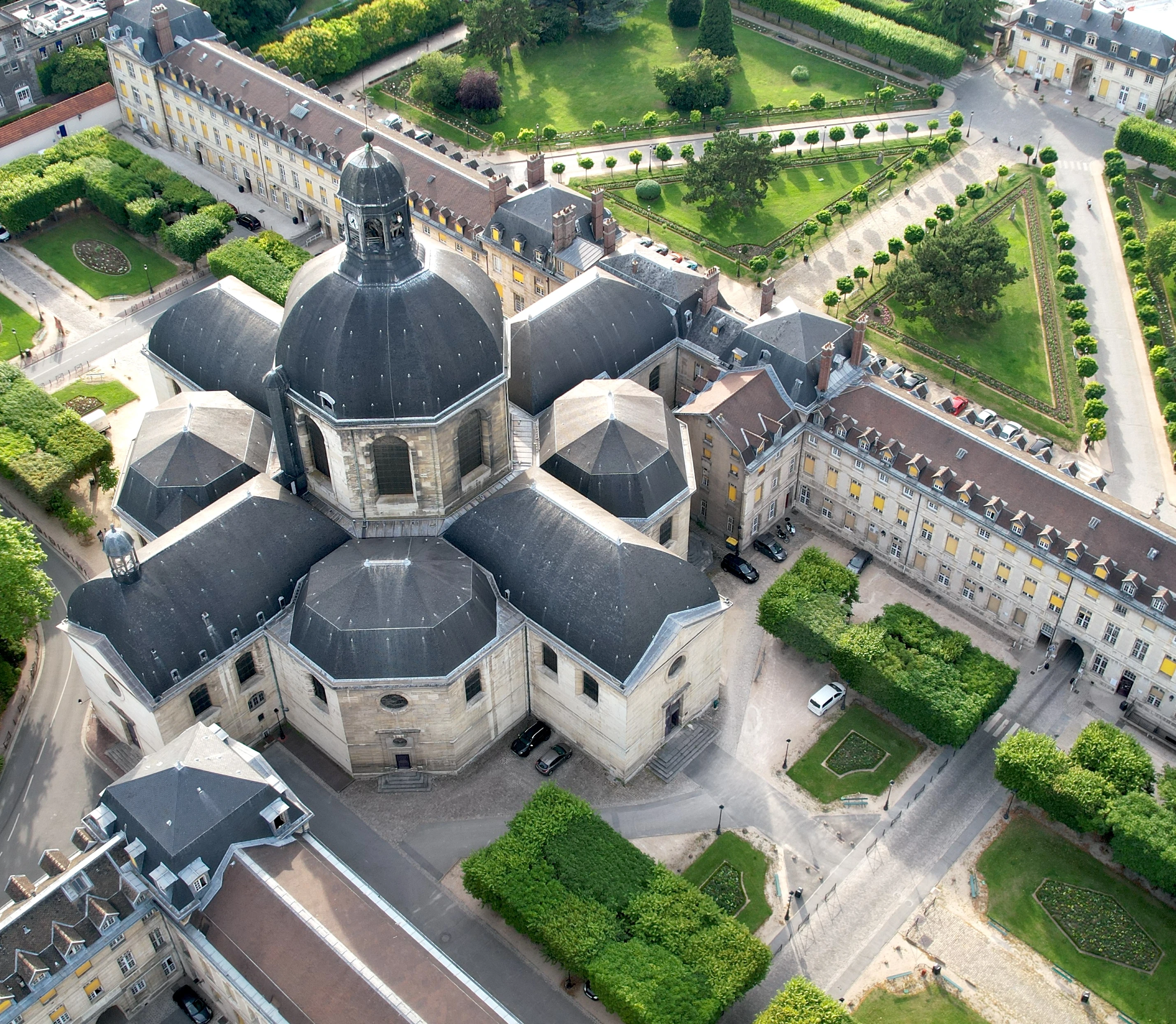
La Chapelle Saint-Louis de la Salpêtrière. Hôpital Pitié-Salpêtrière. Photo Lympa Architecture
OFFSCREEN is one of the events that enrich the Parisian landscape during Art Basel Paris. It stands out for its approach that challenges the traditional boundaries of the image and how it is experienced. Founded in 2022 by artistic director Julien Frydman, OFFSCREEN will return from October 20 to 25, 2026, to the monumental spaces of the Chapelle Saint-Louis de la Salpêtrière. The event will bring together a selection of artists presented by French and international galleries, alongside a special project associated with the Dior Photography and Visual Arts Award for Young Talents. Rather than a conventional fair, OFFSCREEN operates as a site-specific exhibition and commercial platform. Photography, video, experimental cinema, and installation engage with architecture there, transcending the distinction between still and moving images. The guest of honor for the fifth edition is Ana Mendieta (Havana, 1948–New York, 1985), a central figure in 1970s artistic experimentation whose work intertwined the body, nature, ritual, and cultural identity. In the chapel’s central rotunda, six films will reveal the complexity of her artistic practice, which used the presence and absence of the body to explore identity. Her celebrated “Siluetas,” ephemeral imprints created through interactions with earth, water, fire, and other natural elements, express a tension between rootedness and displacement, individual memory, and universal experience. Presented by the Marian Goodman Gallery in collaboration with the Estate of Ana Mendieta, this project is part of renewed institutional interest in the artist and coincides with the retrospective currently on view at the Tate Modern in London. The program brings together different generations and artistic styles, placing pioneers of audiovisual experimentation in dialogue with contemporary practices that explore memory, identity, and political transformation. One of the most significant projects is “Geomania” (1986) by Steina Vasulka. This installation comprises 21 monitors arranged in a ziggurat-like structure demonstrating the artist’s fundamental contribution to video art. Andrea Geyer presents a site-specific iteration of “Feeding the Ghosts” (2019), an audio installation incorporating dozens of slide projectors within the archival architecture of the chapel’s Magasins. Equally notable is the participation of Ukrainian artist Daria Koltsova. Her piece, “The Kiosk” (2025), transforms images of landscapes she can no longer access into handcrafted stained-glass panels. This work translates the experience of loss and displacement into a means of preserving memory. Ibrahim Mahama will present “Voli-ni” (2022), an installation combining archival materials with recurring images of Brutalist architecture and bats, alongside his exhibition at the Fondation Cartier. The digital works of Waldemar Cordeiro, a pioneer of Latin American computer art, will draw attention to the origins of the relationship between technology and sociopolitical critique. OFFSCREEN’s value lies in its ability to establish a tangible dialogue between the art market, curatorial research, and museum institutions. This year’s Acquisitions and Discoveries program involves the Pinault Collection and the Whitney Museum of American Art. The OFFSCREEN Curatorial Residency brings together 24 international curators for working sessions, public conversations, and exchanges with artists. Valentine Umansky of Tate Modern and Chrissie Iles of the Whitney Museum of American Art will moderate the 2026 program.
OFFSCREEN Paris – 5th Edition
Chapelle Saint-Louis de la Salpêtrière 47 Boulevard de l’Hôpital, Paris
October 20–25, 2026. Preview: October 19
10. Large Opens on Île Seguin with Moteur Imaginaire (Imaginary Engine)
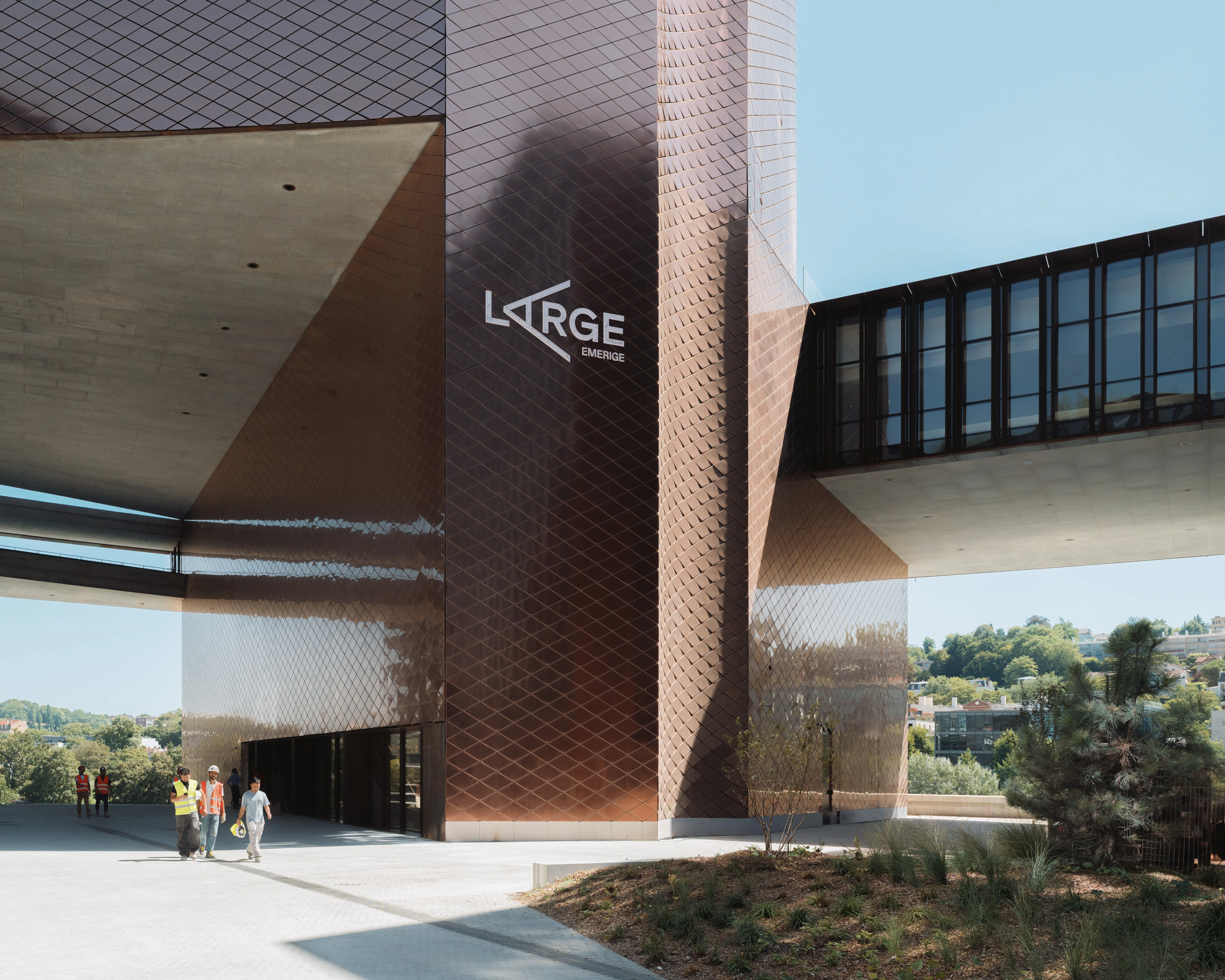
Le Large – Centre d’art de la Pointe des Arts – Île Seguin. ©RCR Arquitectes et CALQ. Photo : Nicolas Trouillard
Just outside of Paris, on the Île Seguin, a French industrial landmark is preparing to enter a new cultural chapter. On October 17, 2026, Large – Cultures contemporaines, a new art center developed by the Emerige Group and its president, Laurent Dumas, will open to the public. Its inaugural exhibition, “Moteur Imaginaire (Imaginary Engine): From Masterpieces of the Renault Collection to Contemporary Artists,” is curated by Cecilia Alemani, the former artistic director of the 59th Venice Biennale. The project brings together historical pieces from the Renault Collection and new contemporary works to examine the relationship between humans, machines, and social changes. For nearly a century, Île Seguin was home to Renault’s factories, which played a key role in shaping the area’s economic and social identity. This industrial heritage provides the starting point for the curatorial project, developed in collaboration with the Fonds Renault pour l’Art et la Culture. The factory serves as a departure point for reflecting on 20th-century industrial utopias, the automobile as a symbol of modernity, and the contradictions of technological progress. “Moteur Imaginaire" juxtaposes works by Victor Vasarely, Jean Dubuffet, Jean Tinguely, and Robert Doisneau from the historic Renault collection with seventeen newly commissioned works by artists including Théo Mercier, Sara Sadik, Bianca Bondi, Clément Cogitore, Bertrand Lavier, Mohamed El Khatib, Oliver Beer, Bertille Bak, Thu Van Tran, and Giulia Andreani. The project renews the dialogue between industry and art that the automobile manufacturer initiated in the 1960s. Spanning five chapters—“Factory of My Thoughts,” “Driving Forces,” “Social Bodies,” “Objects of Desire,” “The Human Machine”—the exhibition explores the collective dimension of labor, the mechanisms of production, the desire associated with industrial objects, and the boundary between the human and the artificial. The result is a critical interpretation of modernity in which the machine is not merely a functional tool, but also a device capable of influencing behavior, identities, and social relationships. Paula Aisemberg directs the 5,000-square-meter Large exhibition space. Designed by RCR Arquitectes (winners of the 2017 Pritzker Architecture Prize) in collaboration with CALQ, the venue dedicates 2,500 square meters to exhibitions. The architecture prioritizes sensory experience through an interplay of intimate spaces and expansive volumes, including a 1,000-square-meter gallery, as well as the use of natural light filtered through aluminum elements. The center is part of the 53,000-square-meter Pointe des Arts mixed-use development by Emerige, Ardian Real Estate, and AOG. The development also includes a Pathé cinema, a hotel, offices, restaurants, and retail spaces. Large evokes the French expression prendre le large, meaning “to set sail.” It encapsulates the ambition to broaden cultural horizons by supporting the French art scene, from emerging artists to major figures of the twentieth century. With “Moteur Imaginaire,” the transformation of Île Seguin provides an opportunity to critically examine the legacy of industrialization. Through art, the island’s productive past reflects the promises and contradictions of modernity at a time when the relationship between humans and technology continues to reshape our worldview.
Moteur Imaginaire
Curated by Cecilia Alemani
Large – Cultures contemporaines, Pointe des Arts, Île Seguin, Boulogne-Billancourt, Paris
October 17, 2026 – March 7, 2027
11. Offrandes at NIKA Project Space
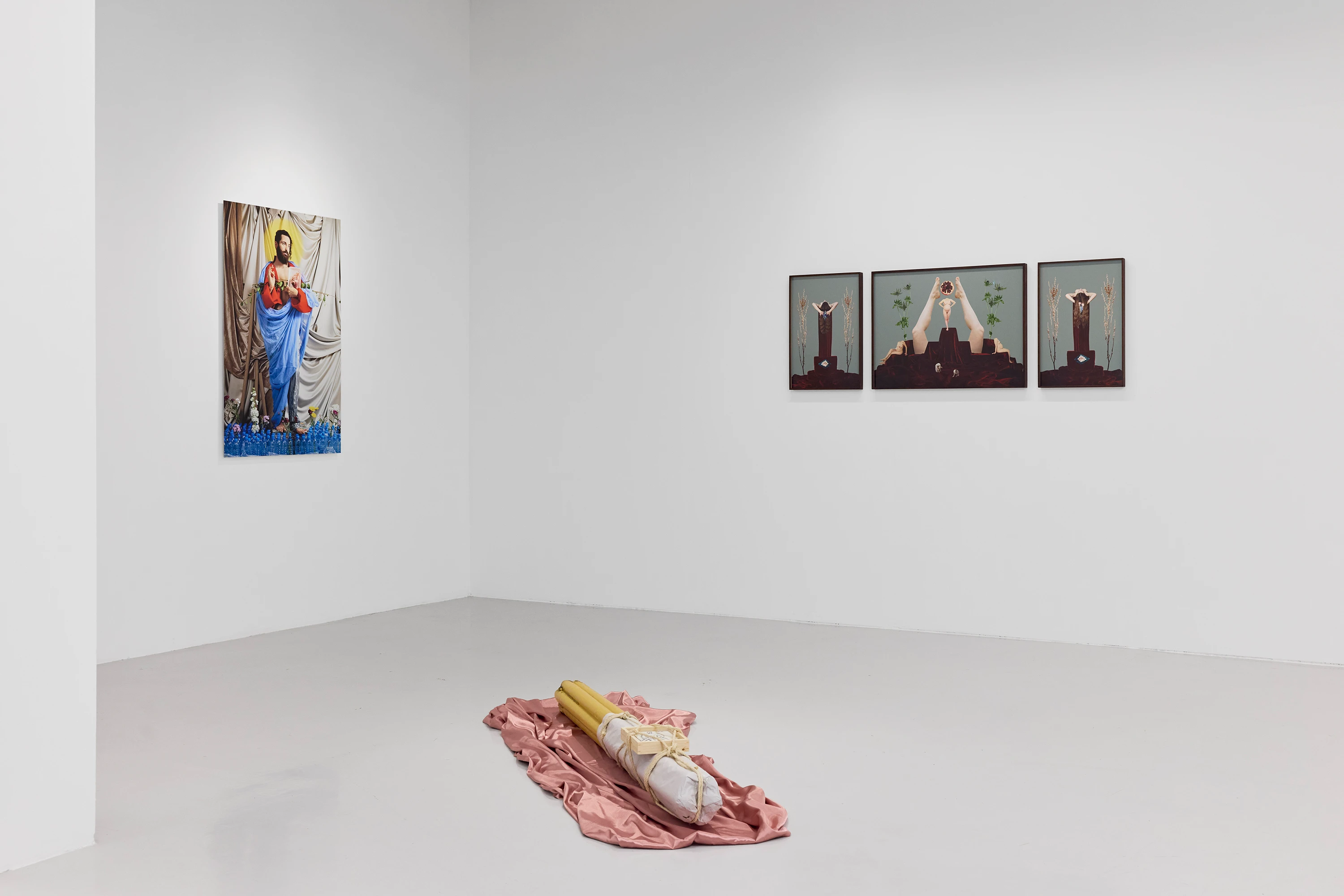
Offrandes. Exhibition view. Group show curated by Camille Bréchignac. Photo by Aleksei Kostromin. Courtesy of NIKA Project Space
Further afield in Romainville, the NIKA Project Space will present “Offrandes,” a group show curated by Camille Bréchignac. The exhibition explores the possibility that artworks can transcend their material existence. The project, on view from September 13 to October 31, brings together fourteen international artists around the concept of the ex-voto—an object offered to express a request, give thanks for a favor received, or commemorate a healing experience. The starting point is an unlikely parallel: What do offerings placed in places of worship have in common with artworks displayed in white cubes? In both cases, an object enters a space invested with shared meanings and addresses a community in the hope of affecting the world. The aim is not to revive religious iconography, but rather to explore the persistence of votive gestures in contemporary art and the desire for protection, remembrance, care, and collective responsibility. The exhibition is divided into four thematic sections. The first section revisits the cumulative forms of ex-votos and their relationship with popular visual culture, which has historically transcended academic circles. The second section focuses on the figure of the Virgin Mary, whose image is shaped by contradictory representations of motherhood, purity, suffering, and sexuality. This thematic cluster reimagines the female body beyond traditional models. The third section draws inspiration from anatomical ex-votos, which were once dedicated to healing specific parts of the body. This part explores the invisible connections between individuals and their environments. The final section discusses the testimonial purpose of offerings and connects them to experiences of displacement and colonial memory. Participating artists include Mirna Bamieh, Pauline Curnier Jardin, Guadalupe Maravilla, Daniela Ortiz, Nika Neelova, and Nomin Zezegmaa. Despite their different artistic languages and backgrounds, their practices converge in attributing a symbolic capacity to artistic form to narrate, repair, or transform. The project’s significance lies in recovering the ritual dimension as a possible instrument of political and social action, not as nostalgia for the sacred. As part of the Art Basel Paris VIP Program on Friday, October 23, NIKA Project Space will host a guided tour of Offrandes from 10 a.m. with curator Camille Bréchignac and several participating artists. Organized in collaboration with In Situ – Fabienne Leclerc, 22,48 m², and Iragui, the morning program includes visits to their respective exhibitions and exceptional access to the FRAC Île-de-France storage facilities. This offers an opportunity to discover Romainville’s artistic ecosystem, including spaces that are normally closed to the public.
Offrandes
Curated by Camille Bréchignac
NIKA Project Space, Bâtiment Nocard, 43 Rue de la Commune de Paris, Romainville
September 13 – October 31, 2026. VIP visit: October 23, 10 am, by invitation only
__
On the cover: Yu Nishimura, gaze, 2023, oil on canvas, 145.5 × 112 cm. Courtesy the artist and Crèvecœur, Paris. Photo: Alex Kostromin