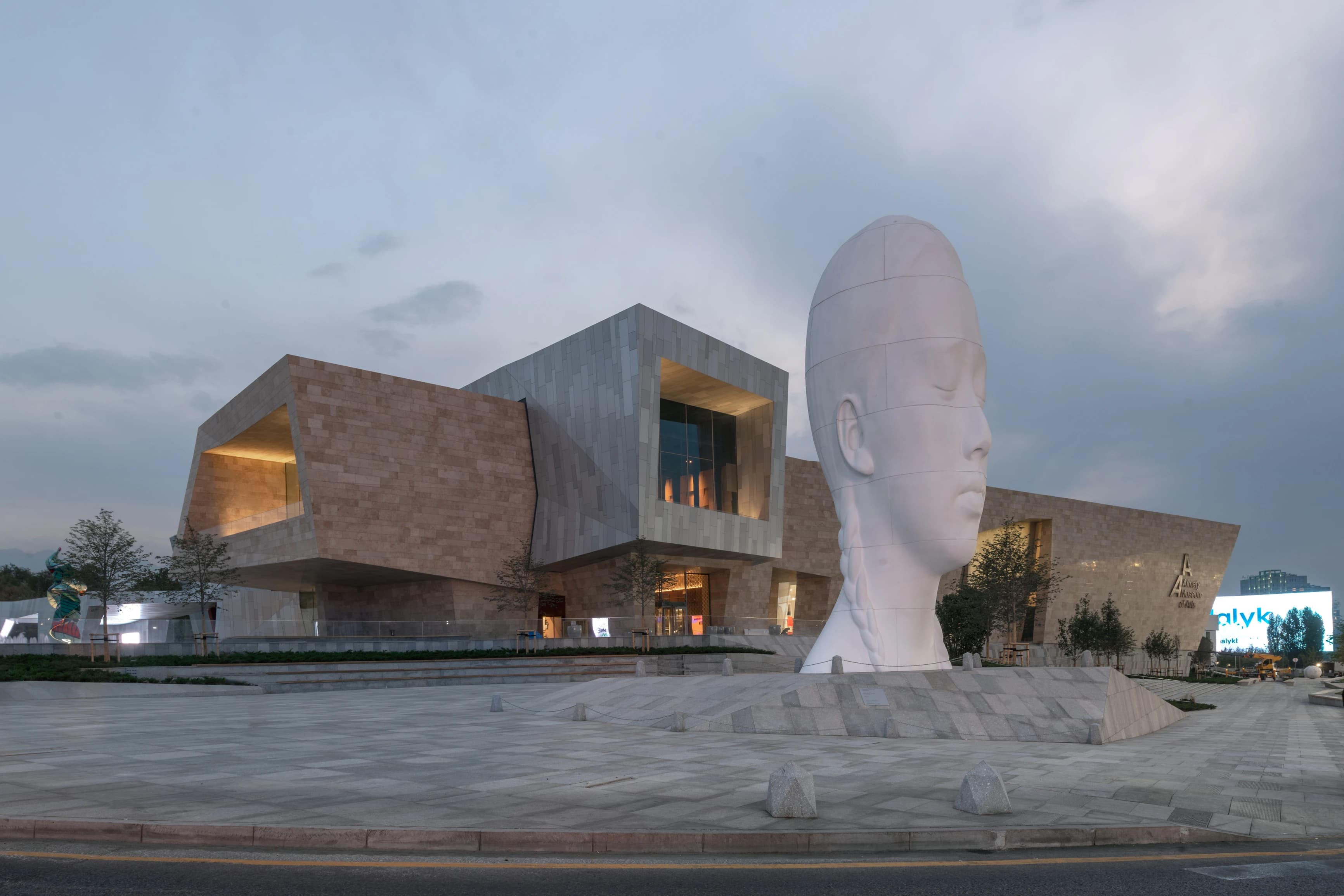
As Almaty Museum of Arts marks its first anniversary on September 12, the institution can reflect on an extraordinary debut: 460,000 visitors, a landmark sculpture exhibition, and the emergence of an urgent research agenda around Kazakhstan's twentieth-century art. In this conversation with WeDirectory, Meruyert Kaliyeva – Artistic Director of the Museum and founder of the Aspan Gallery – discusses how a museum becomes woven into a city's daily life, what the Müsinder exhibition reveals about sculpture's transformation from Soviet ideology to contemporary critique, and why documenting Central Asian art history has become an imperative now.
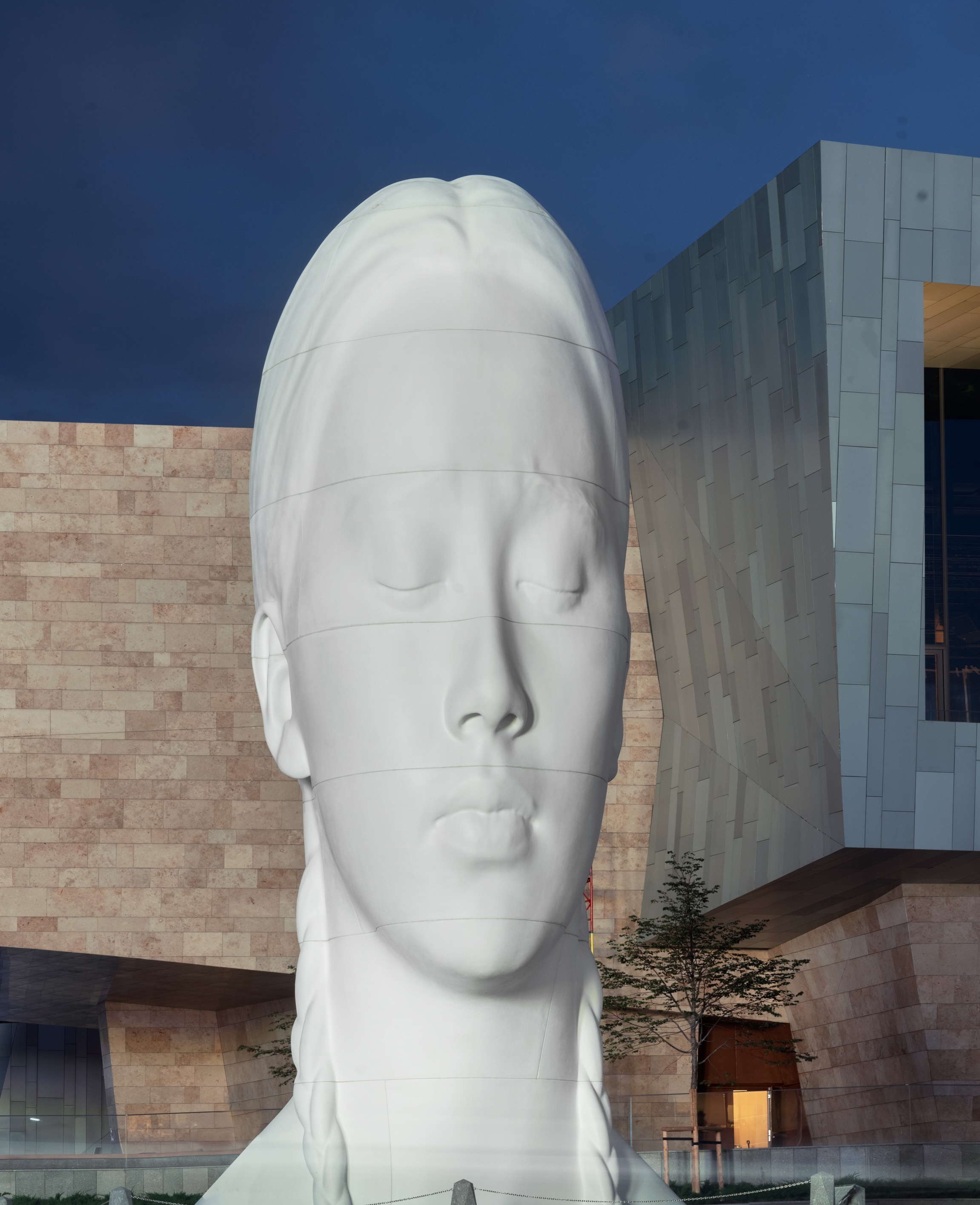
Jaume Plensa, Nades (2023), outside the Almaty Museum of Arts, Kazakhstan. Image courtesy of the Almaty Museum of Arts. Photo: © Almaty Museum of Arts Press Office
On 12 September, Almaty Museum of Arts marked its first anniversary. What has this first year revealed to you about the city and its audiences—and by what signs do you understand that the museum is beginning to become part of Almaty’s everyday cultural life?
What this first year has shown us is that Almaty was ready for a museum like this. In our first year we welcomed around 480,000 visitors, which has by far exceeded our projections. What matters even more is how people are using the museum. Sometimes they come without even going to the exhibitions. They come for a screening, a workshop or a lecture, to meet friends, or simply to revisit a favourite work of art. For me, that is when a museum starts to become part of everyday city life: when it is no longer somewhere you visit once, but a place you return to and feel connected to.
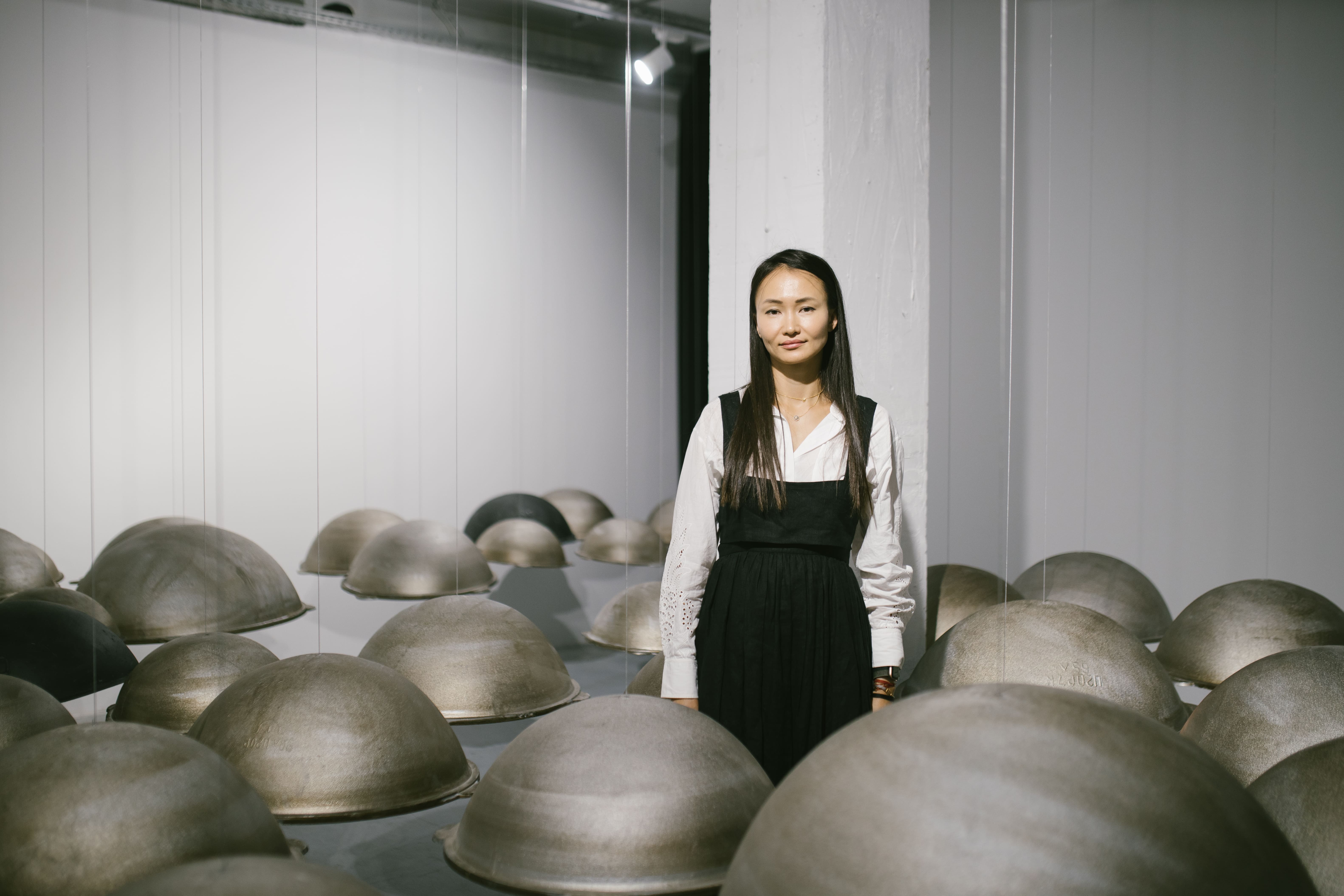
Meruyert Kaliyeva Artistic Director of Almaty Museum of Arts Kazakhstan. Photo: Anvar Rakishev
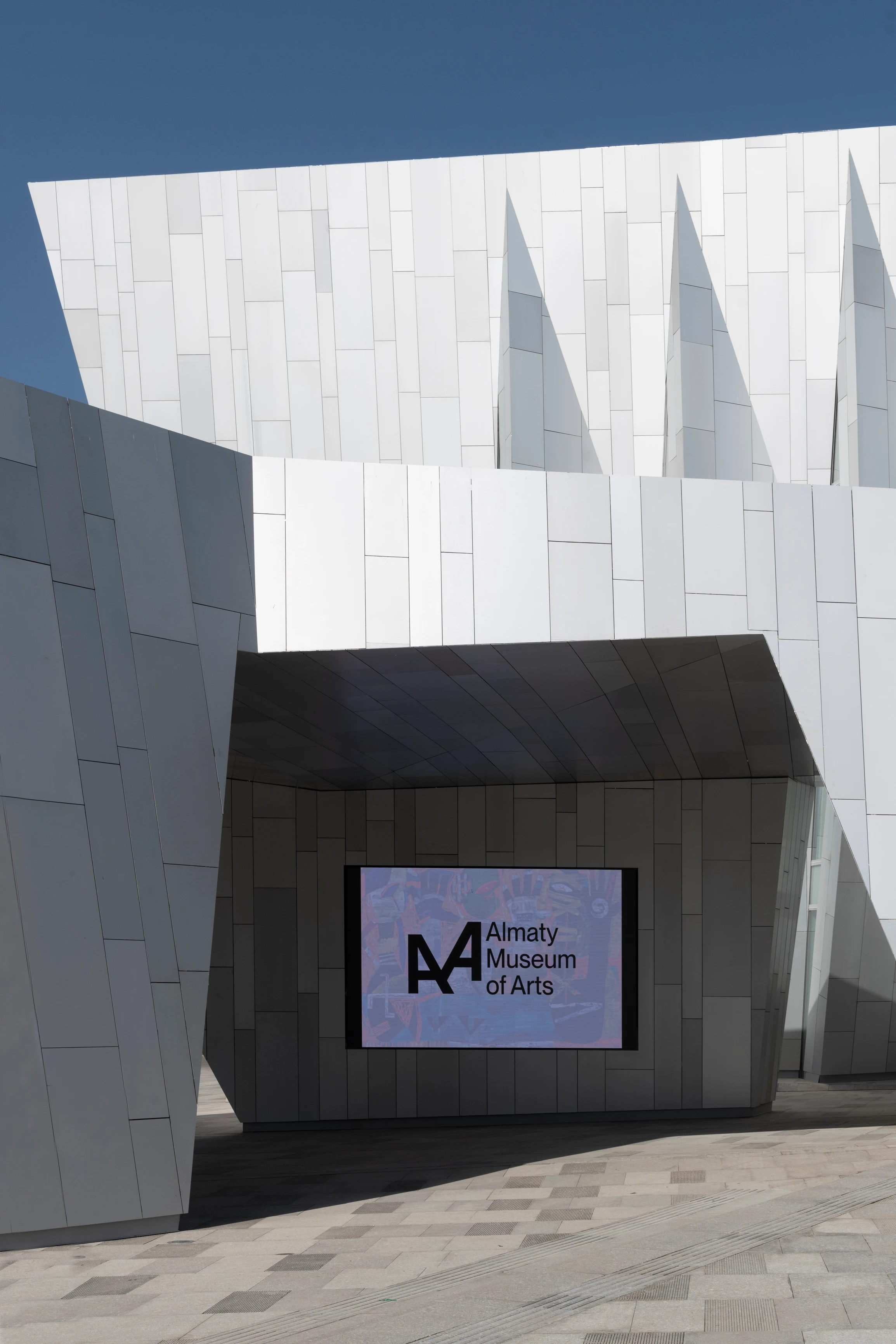
Almaty Museum of Arts, Kazakhstan. Image courtesy of the Almaty Museum of Arts. Photo: © Almaty Museum of Arts Press Office
As the founder of Aspan Gallery, you have spent many years working with artists and audiences in a gallery context, while also serving as Artistic Director of Almaty Museum of Arts. How has working across these two different formats shaped your approach to artists and to the curatorial process?
Aspan Gallery has been operating for more than ten years. We organise around four exhibitions a year and participate in international art fairs, so we have staged more than 60 shows since the opening of the gallery, but my approach has always been centred on the artist. For a gallery, four exhibitions a year may be part of the daily rhythm. For an artist, however, each exhibition is a major moment. They have a solo show only once every few years; it might be their first, or the first time they are presenting an entirely new body of work. It is a cathartic experience.
At Aspan Gallery, we have always treated every project as if it were the very last exhibition we were doing. There are no routine shows. I am bringing the same approach to the museum. If something needs to be redone for the hundredth time, we redo it. Respect and deep admiration for the artist guides every decision. Ultimately, museums exist because of artists: it is their work that gives these places meaning and has the power to bring people together.
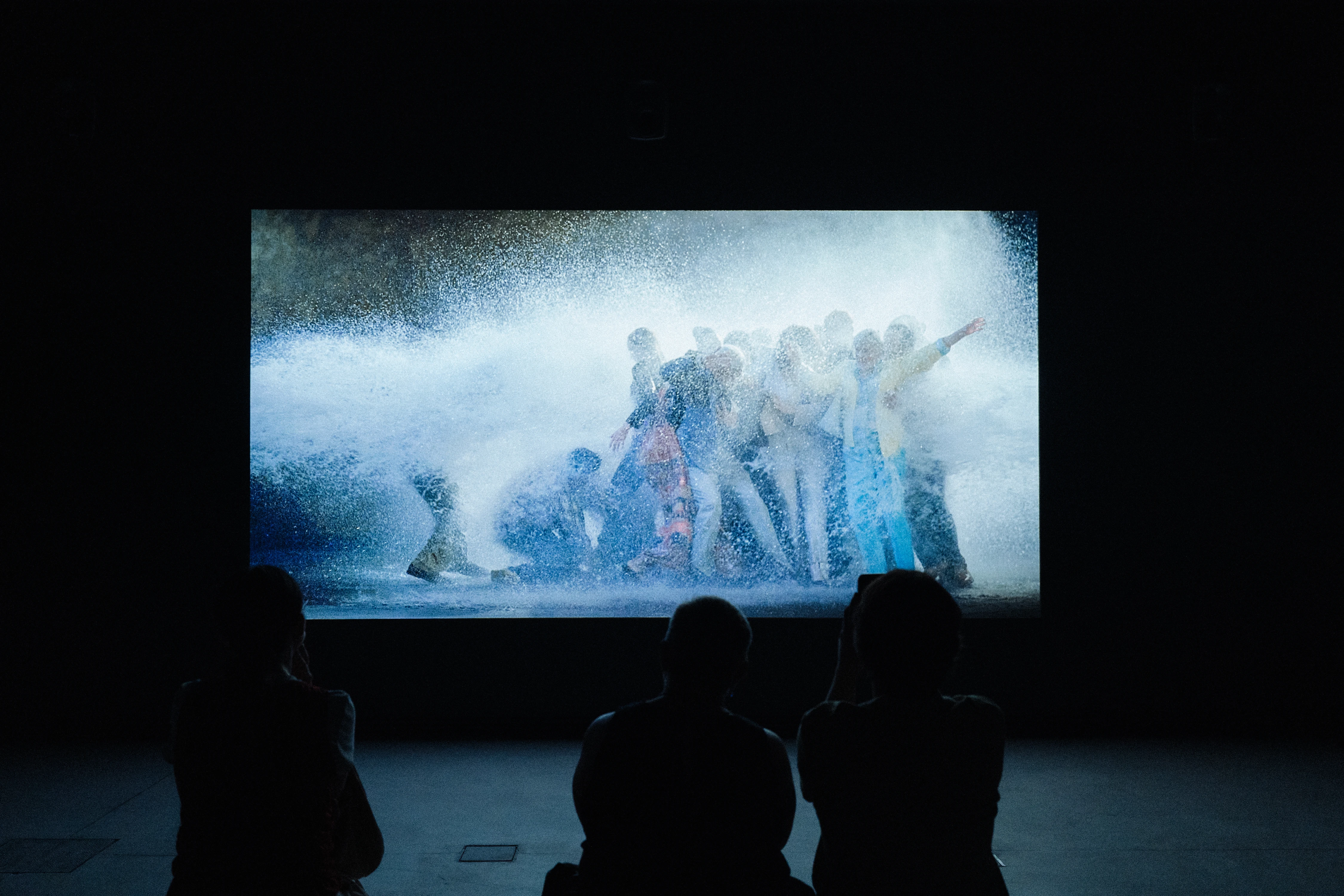
Bill Viola, The Raft (2004), Almaty Museum of Arts, Kazakhstan. Image courtesy of the Almaty Museum of Arts. Photo: © Almaty Museum of Arts Press Office
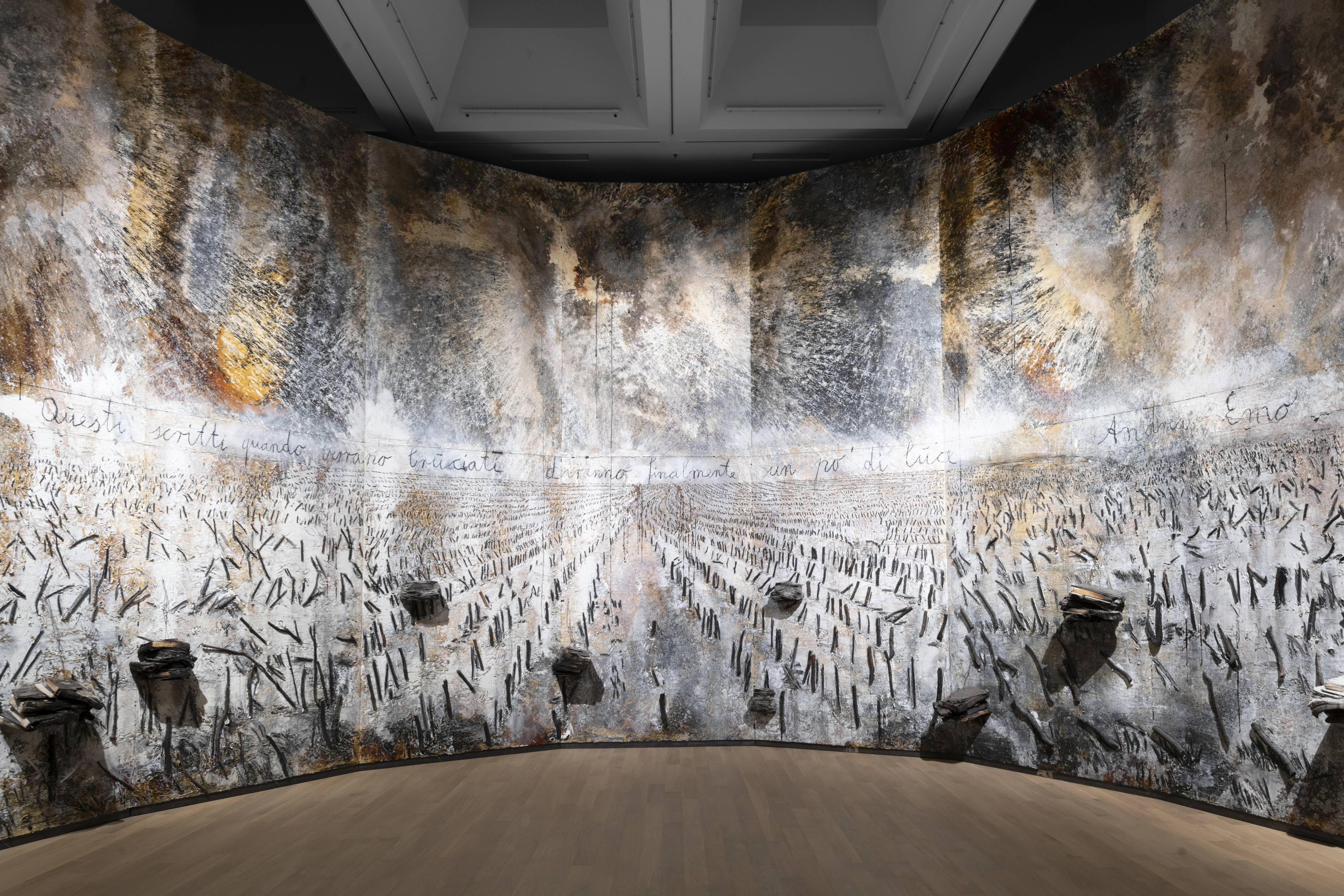
Anselm Kiefer, Questi scritti, quando verranno bruciati, daranno Finalmente un po' di luce (2020–2021), Almaty Museum of Arts, Kazakhstan. Image courtesy of the Almaty Museum of Arts. Photo: © Almaty Museum of Arts Press Office
The collection of the museum's founder, Nurlan Smagulov – which includes works by Kusama, Kiefer, Serra, Léger, Viola and others – became the foundation of Almaty Museum of Arts. What principles shaped the collection, and how do you decide which works, and the stories around them, should be presented to the public first?
The collection was built by Nurlan and Madina Smagulov over more than thirty years, initially as a private collection rather than with the idea of creating a museum. Over time it developed around both important voices from Kazakhstan and Central Asia and major international artists, creating a dialogue between the region and a wider history of modern and contemporary art.
When we began shaping the museum, the question was which stories we wanted to tell first. We are interested in stories that help us understand the past, place the present within a wider context, and also allow us to imagine possible futures. We look at how works speak to one another and what they can reveal about ourselves and about humanity in general. The collection gives us the freedom to keep shifting that perspective, bringing different works, voices and narratives to the foreground over time.
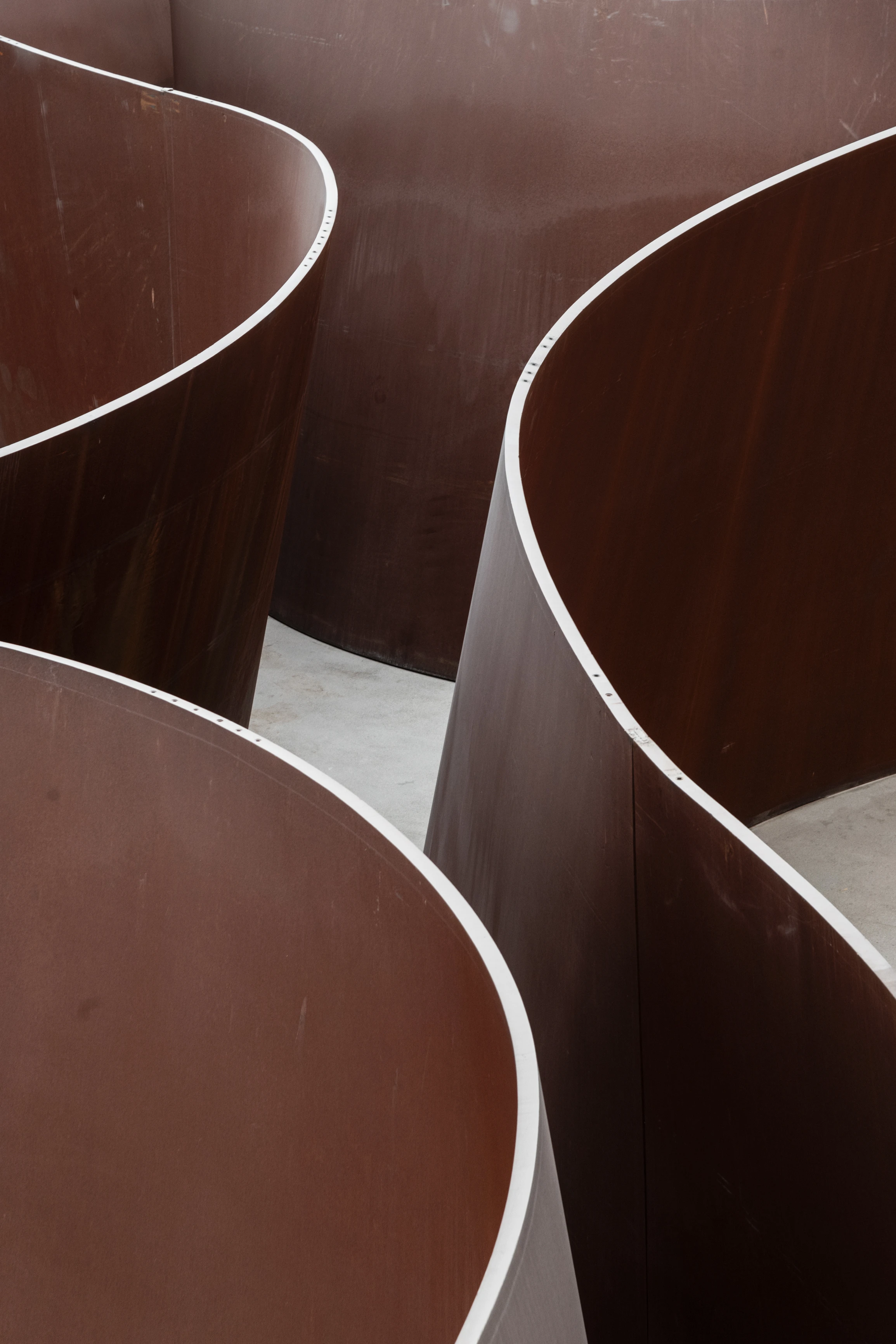
Richard Serra, Junction (2011), Almaty Museum of Arts, Kazakhstan. Image courtesy of the Almaty Museum of Arts. Photo: © Almaty Museum of Arts Press Office
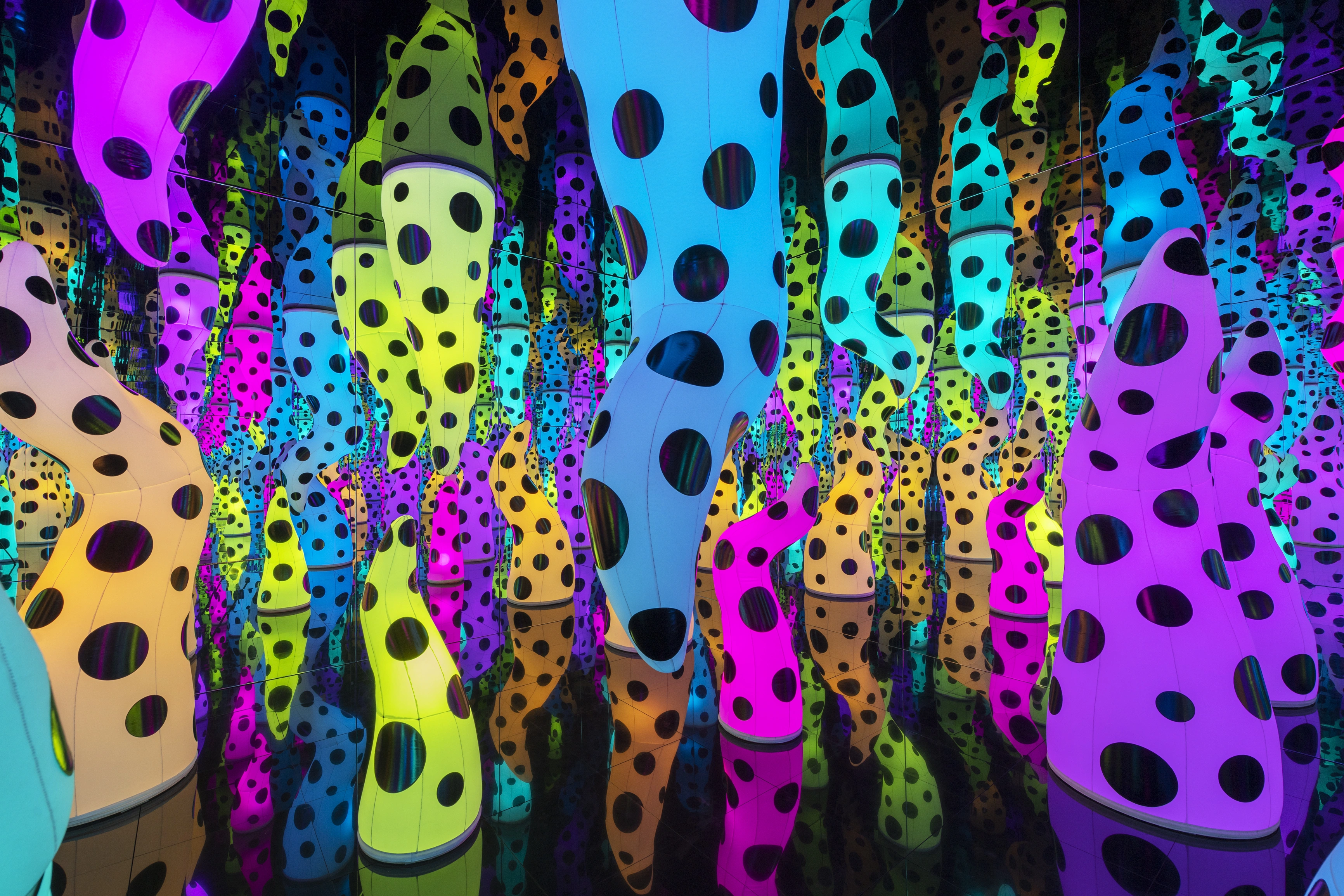
Yayoi Kusama, LOVE IS CALLING, (2013), Almaty Museum of Arts, Kazakhstan. Image courtesy of the Almaty Museum of Arts. Photo: © Almaty Museum of Arts Press Office
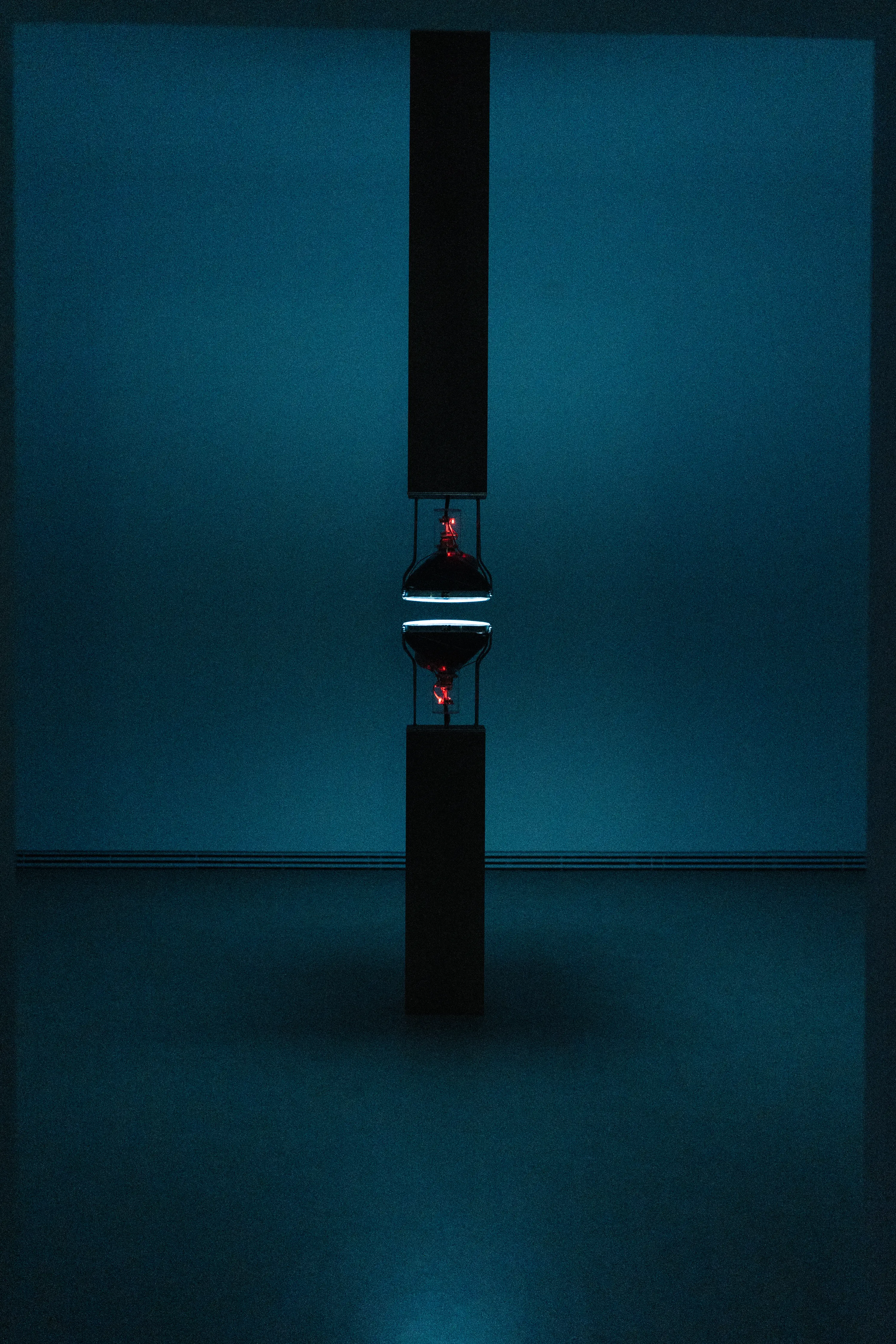
Bill Viola, Earth (1992), Almaty Museum of Arts, Kazakhstan. Image courtesy of the Almaty Museum of Arts. Photo: © Almaty Museum of Arts Press Office
In the exhibition Müsinder: Sculpture in Kazakhstan from the 1950s to the Present Day (8 September – May 2027), academic sculpture enters dialogue with works by contemporary artists. What changes in Kazakh sculpture—in its themes, its representation of the human figure and its use of materials—come into focus through this conversation?
What becomes very clear is that the human figure never disappears, but its meaning changes dramatically. In Soviet academic sculpture, the body was often idealised and used to represent collective values, family, labour or heroism. Contemporary artists approach it much more critically and personally, through questions of identity, memory, gender, violence and social norms.
The figure itself also changes. It can be monumental and complete, but it can also be fragmented, absent, suggested through clothing, gesture or trace. Materials expand in the same way: from bronze, stone and wood to textile, found objects, ceramics and installation.
For me, this dialogue shows that sculpture in Kazakhstan has moved from representing the body to using the body as a way of thinking about society.
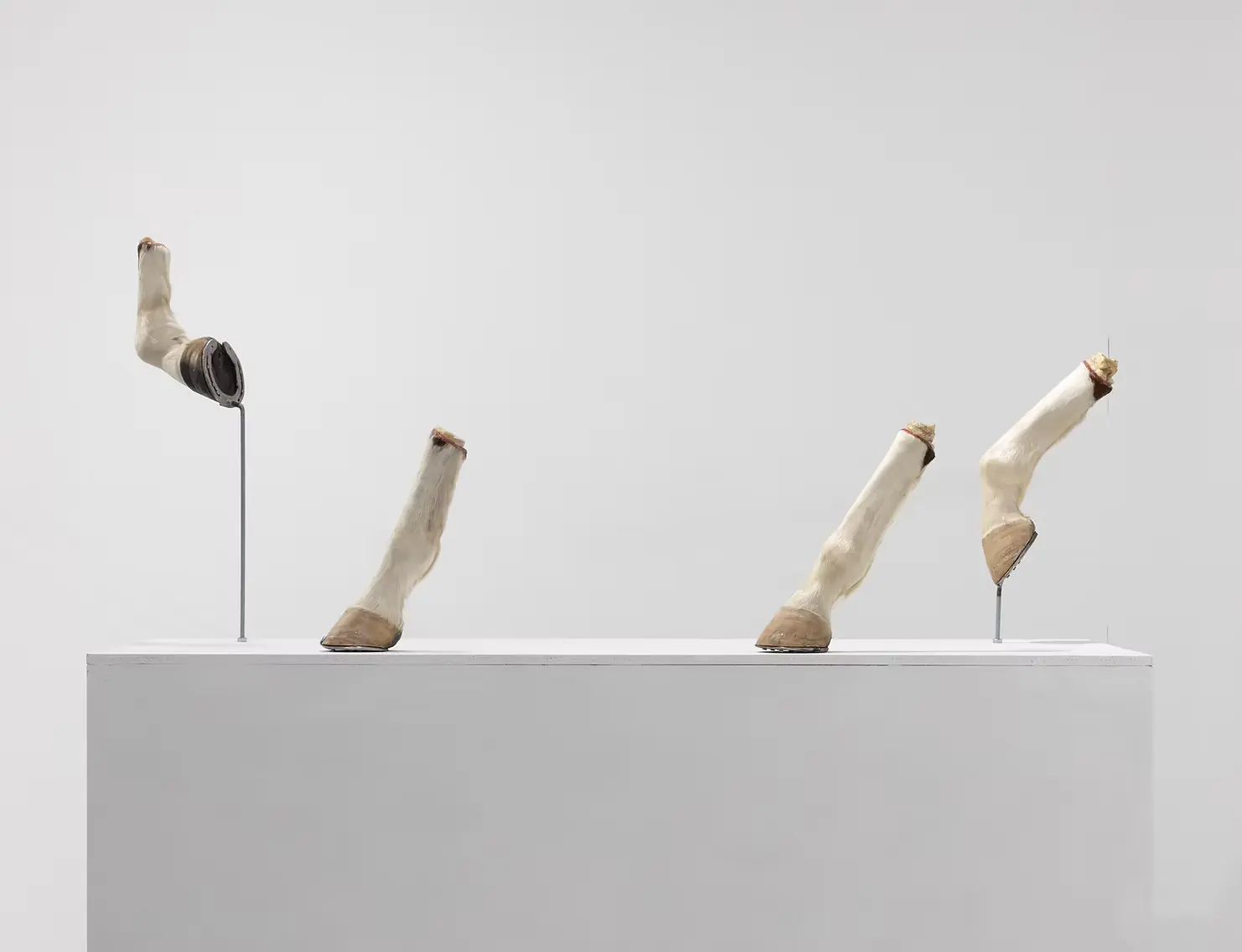
Yerbossyn Meldibekov’s work Monument to the Unknown Hero. Almaty Museum of Arts, Kazakhstan. Image courtesy of the Almaty Museum of Arts. Photo: © Almaty Museum of Arts Press Office
Which underexplored chapter in the art history of Kazakhstan or Central Asia do you believe deserves to become a distinct long-term research focus for the museum—and why is it important to return to it now?
A great deal of twentieth-century art in Kazakhstan remains very poorly documented. While researching Müsinder, for example, we found that for some artists almost no information existed beyond basic biographical data. This becomes even more challenging with our next major exhibition, dedicated to monumental art in Kazakhstan, where in some cases even the names of the artists have not been properly recorded. Many of these works were also collective projects, involving numerous artists, architects and craftspeople.
We see it as part of the museum's mission to document, record and preserve this history, but also to analyse it within the broader context of global art history. We do this through exhibitions, publications, public programmes, research projects and films.
It is an enormous task, and one that requires collaboration. Last year we hosted a two-day programme with Tate on the history of performance in Central Asia and the Caucasus. We have also received a three-year Getty Foundation grant together with NYU to support research into art history in Central Asia, and we have collaborated with AWARE on documenting the biographies of women artists from the region. There are several further research projects currently in development. For me, this work is urgent because if we do not document these histories now, while archives, works and first-hand memories are still accessible, much of this knowledge risks disappearing.
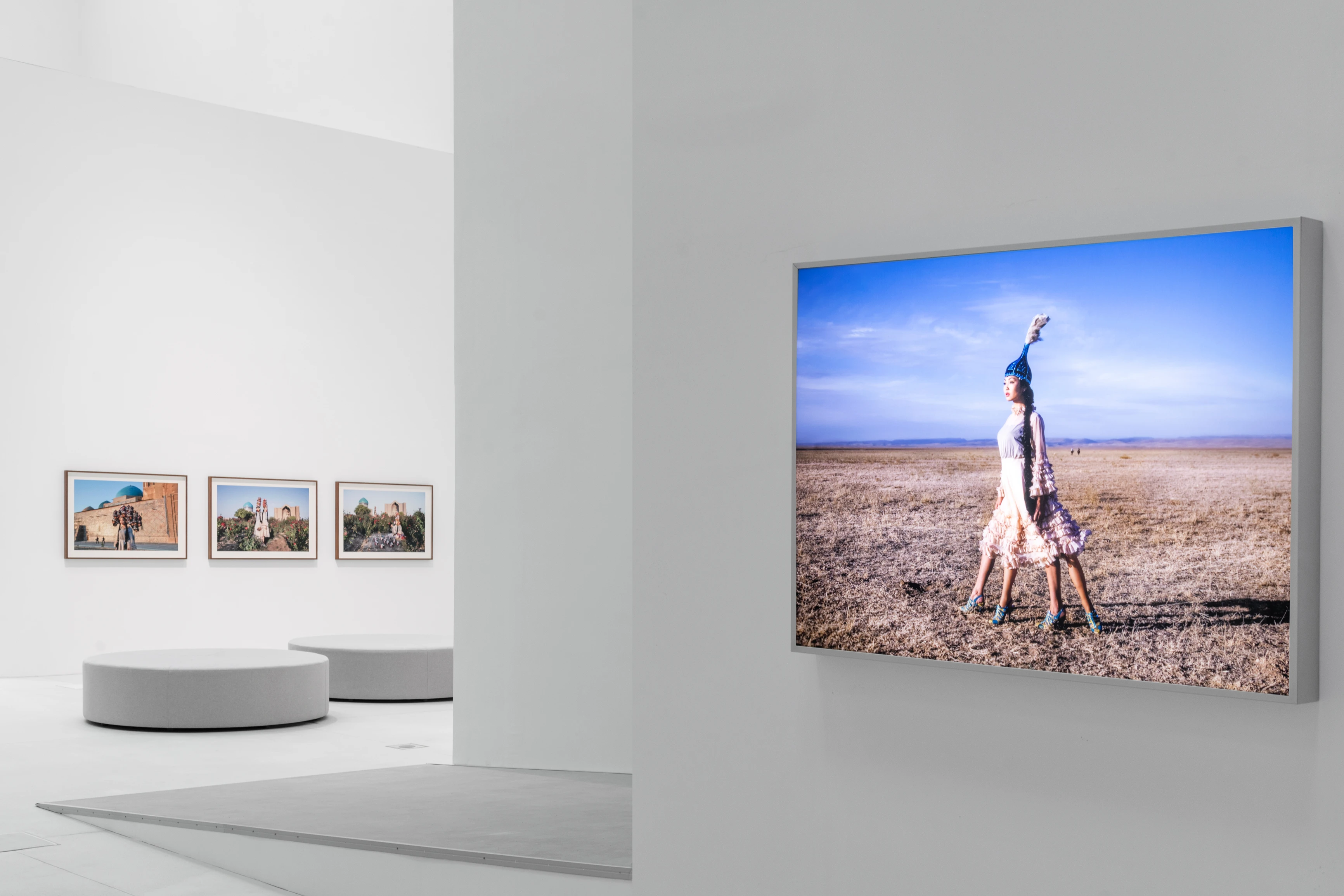
Almagul Menlibayeva, I Understand Everything Installation View, 2025. Almaty Museum of Arts, Kazakhstan. Image courtesy of the Almaty Museum of Arts. Photo: © Almaty Museum of Arts Press Office
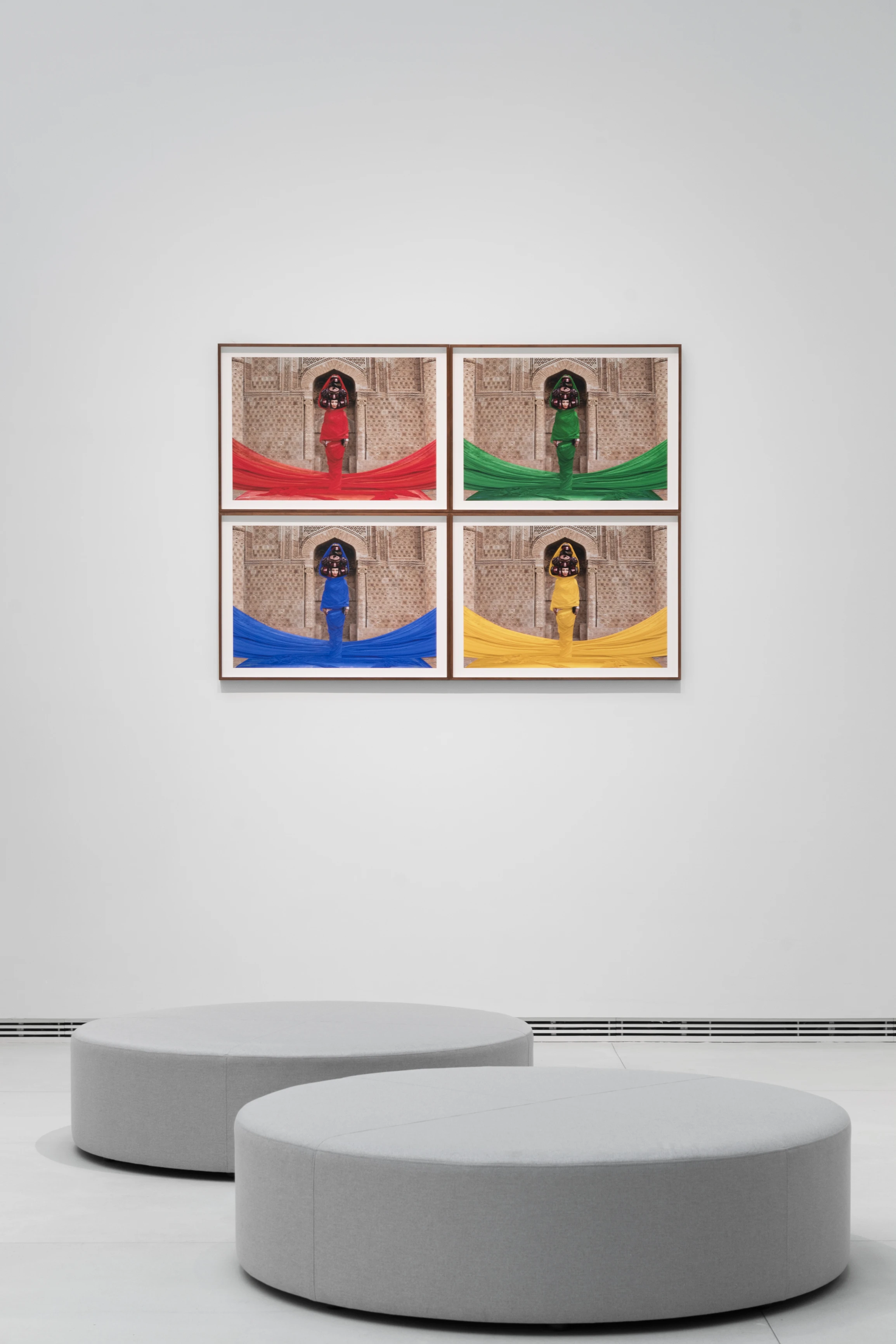
Almagul Menlibayeva, I Understand Everything Installation View, 2025. Almaty Museum of Arts, Kazakhstan. Image courtesy of the Almaty Museum of Arts. Photo: © Almaty Museum of Arts Press Office
With its rich collection and scale, Almaty Museum of Arts has already become a space for dialogue among audiences from different countries. The museum is preparing a joint project with the Centre Pompidou centred on Christian Marclay's The Clock. Could you tell us more about this collaboration and what it may bring to audiences in Kazakhstan?
It is part of our mission to bring important works of contemporary art to audiences in Almaty, and I am particularly excited that people here will have the opportunity to experience an iconic work such as Christian Marclay's The Clock.
The Clock will be our first loan from the Centre Pompidou and will mark the beginning of a multi-year collaboration. The Pompidou is one of the world's leading museums, and it is a great honour for us to develop a strategic partnership that will include exhibition projects, joint research, public programmes and the exchange of expertise.
This collaboration is especially meaningful because the Centre Pompidou's collection is truly international, and the museum already has a history of engagement with Central Asia, including exhibiting and acquiring works by artists from the region. For us, the partnership is not only about bringing major international works to Kazakhstan, but also about creating a stronger two-way dialogue between Central Asia and the global art world.
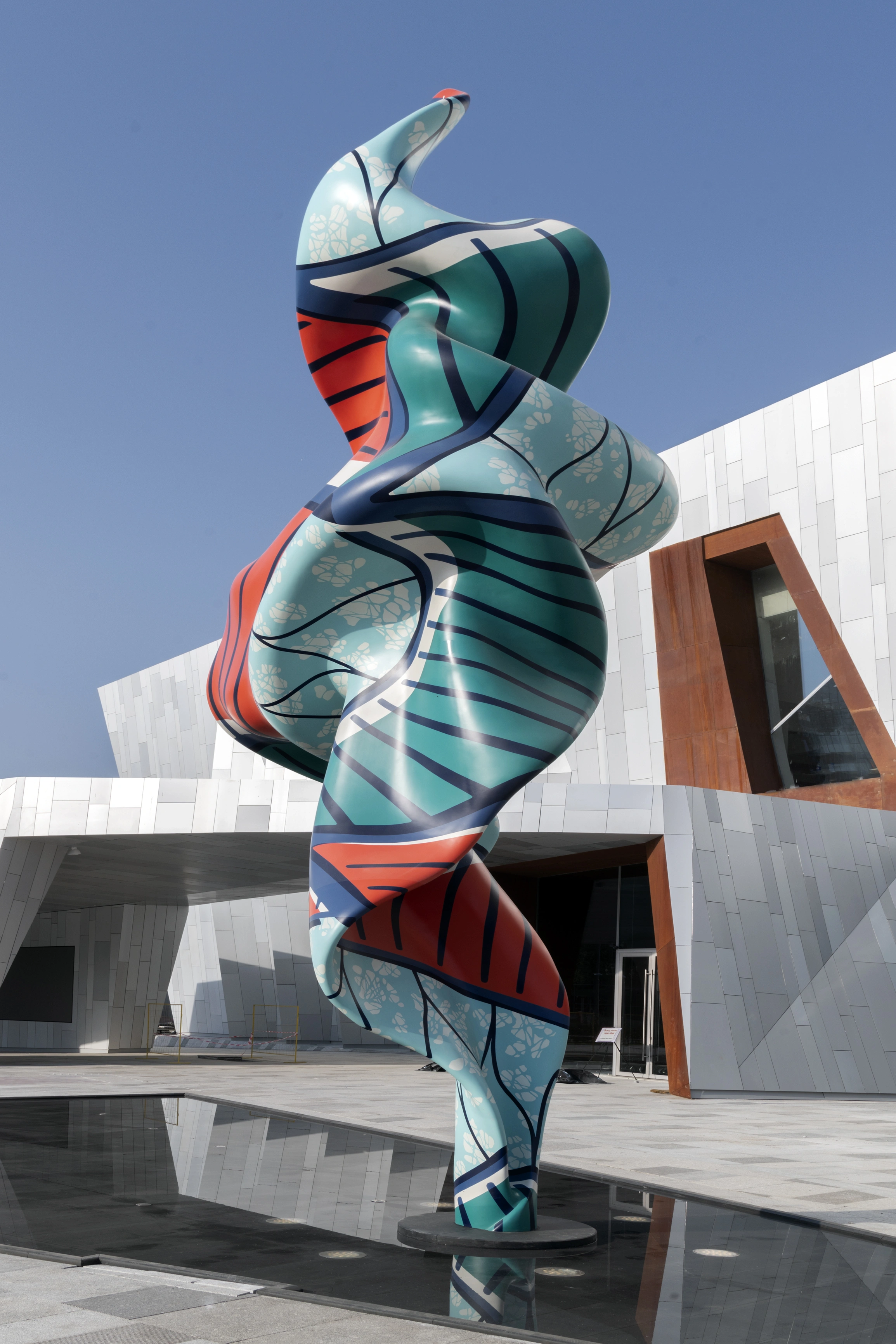
Yinka Shonibare, Wind Sculpture (TG) II , 2022 Hand painted aluminium. Almaty Museum of Arts, Kazakhstan. Image courtesy of the Almaty Museum of Arts. Photo: © Almaty Museum of Arts Press Office