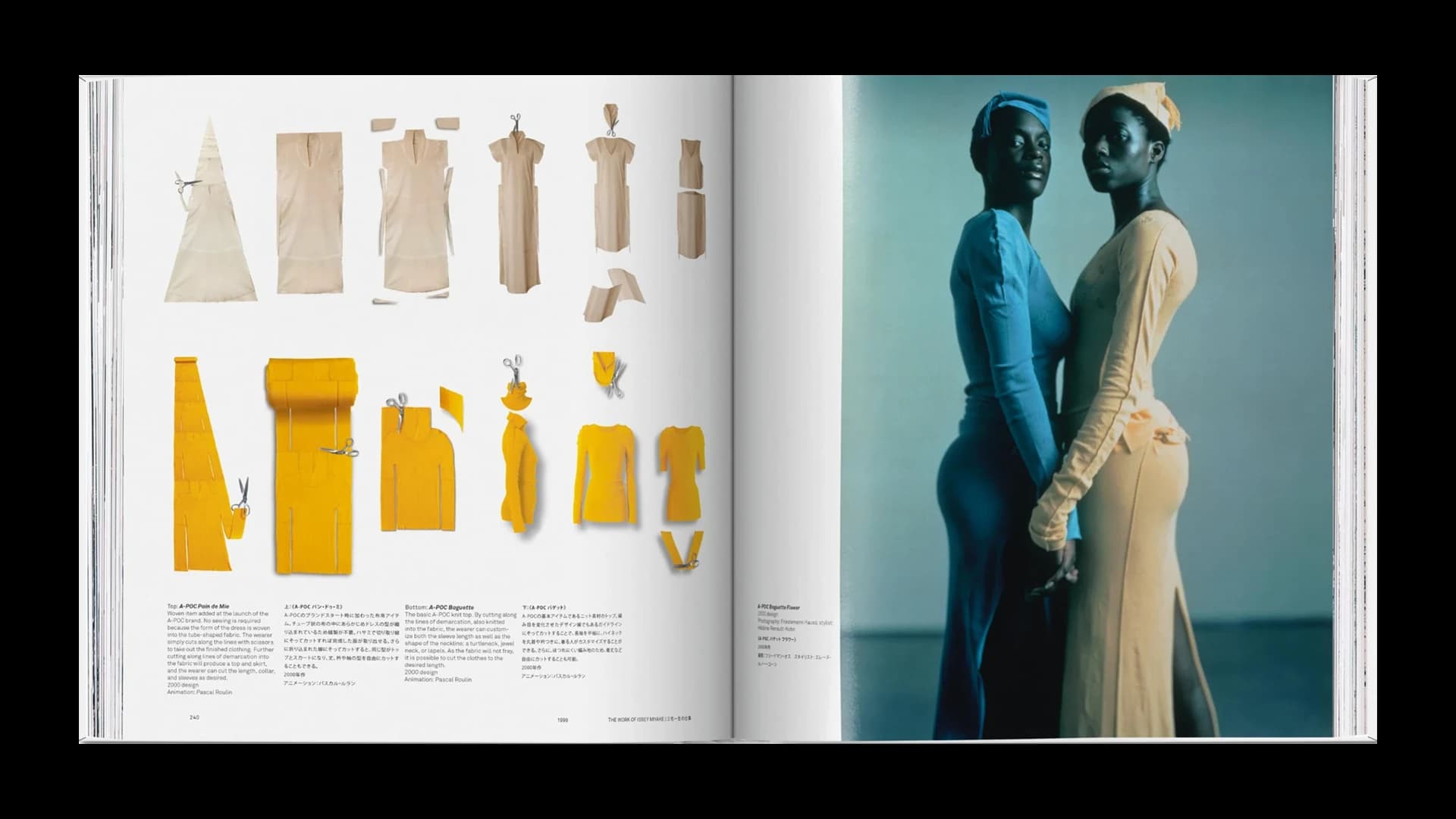
Taschen Issey Miyake book spread showing mustard yellow dress pattern pieces beside two models in sculptural designs
6 min

03.09.2026

10 Essential Books: TASCHEN's Limited Offer

By WeDirectory

Discover 10 essential TASCHEN books spanning photography, fashion, architecture, and design. From Wolfgang Tillmans to Helmut Newton, explore curated visual histories at special prices.

By WeDirectory

​For four days, TASCHEN is cutting prices up to 75% across selected titles – a rare window. With that in mind, we've chosen ten books worth your actual attention. What we've gathered spans photography, fashion, design, music, architecture – from Wolfgang Tillmans' three decades of photographic inquiry to the visual archive of Atlantic Records, from twentieth-century design that fundamentally reshaped how we live to fashion photography that asks genuine questions about representation and desire.
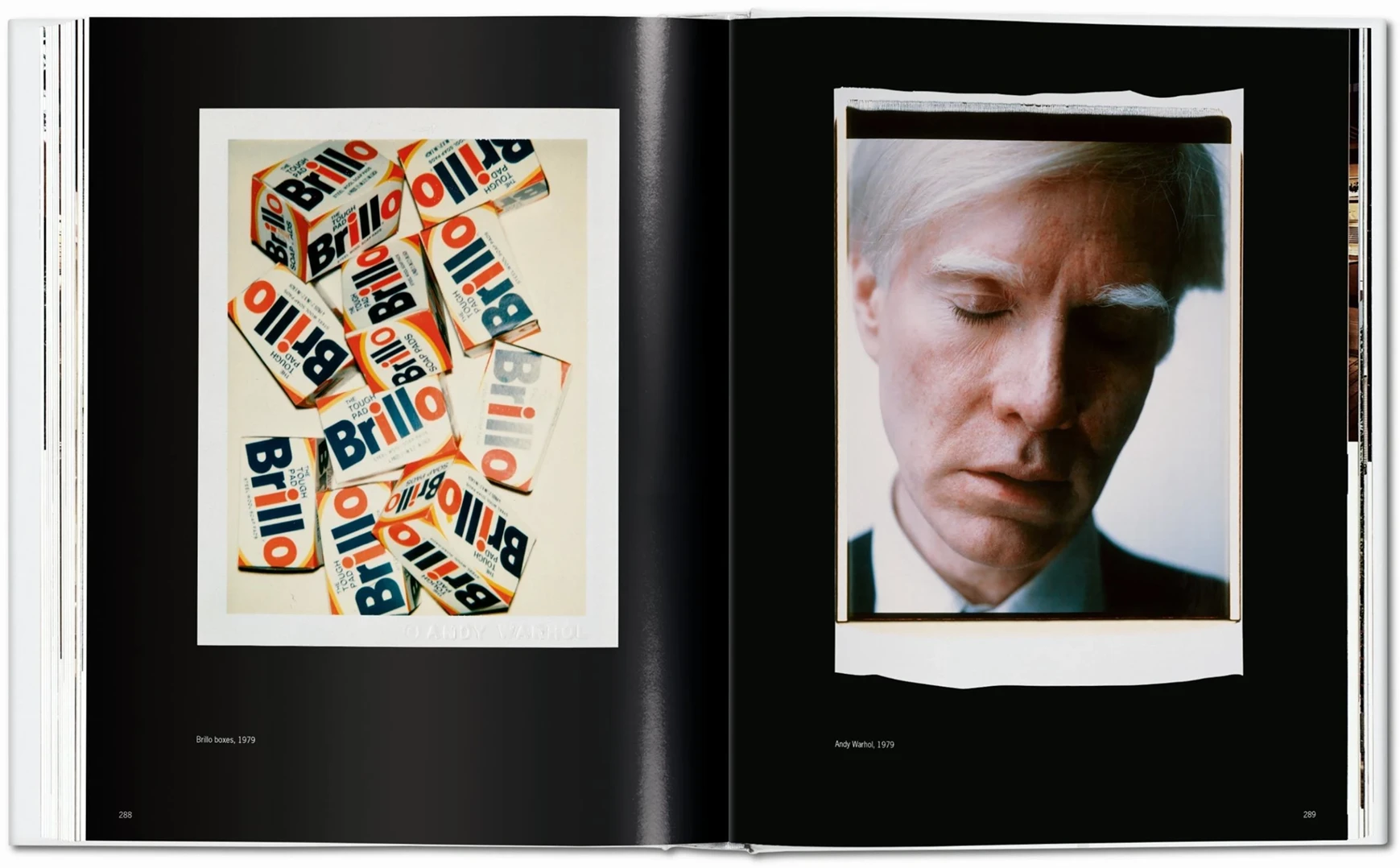
TASCHEN Andy Warhol Polaroids book spread showing Brillo boxes artwork and a close-up portrait photograph, 1979

Andy Warhol. Polaroids 1958-1987. © The Andy Warhol Foundation for the Visual Arts, Inc. Courtesy TASCHEN.

​

Wolfgang Tillmans. Four Books. 45th Ed.

Wolfgang Tillmans has spent thirty years asking what photography can be. His work moves fluidly between still lifes and abstractions, between crowded club scenes and solitary landscapes, treating each with the same philosophical attention. This 45th-edition retrospective compiles material from his earlier TASCHEN volumes – spanning 1995 to 2012 – and presents what amounts to a visual argument about community, place, technology, and transformation across the turn of the millennium. Tillmans edited this collection himself, revisiting his archive with the perspective of three decades' distance. The book works as both document and meditation: images that once felt like urgent portraits of the 1990s now carry a different weight, speaking to continuities and shifts in how we live. In 2000, Tillmans became the first photographer to win the Turner Prize, a recognition that photography itself had become a legitimate medium for artistic inquiry.
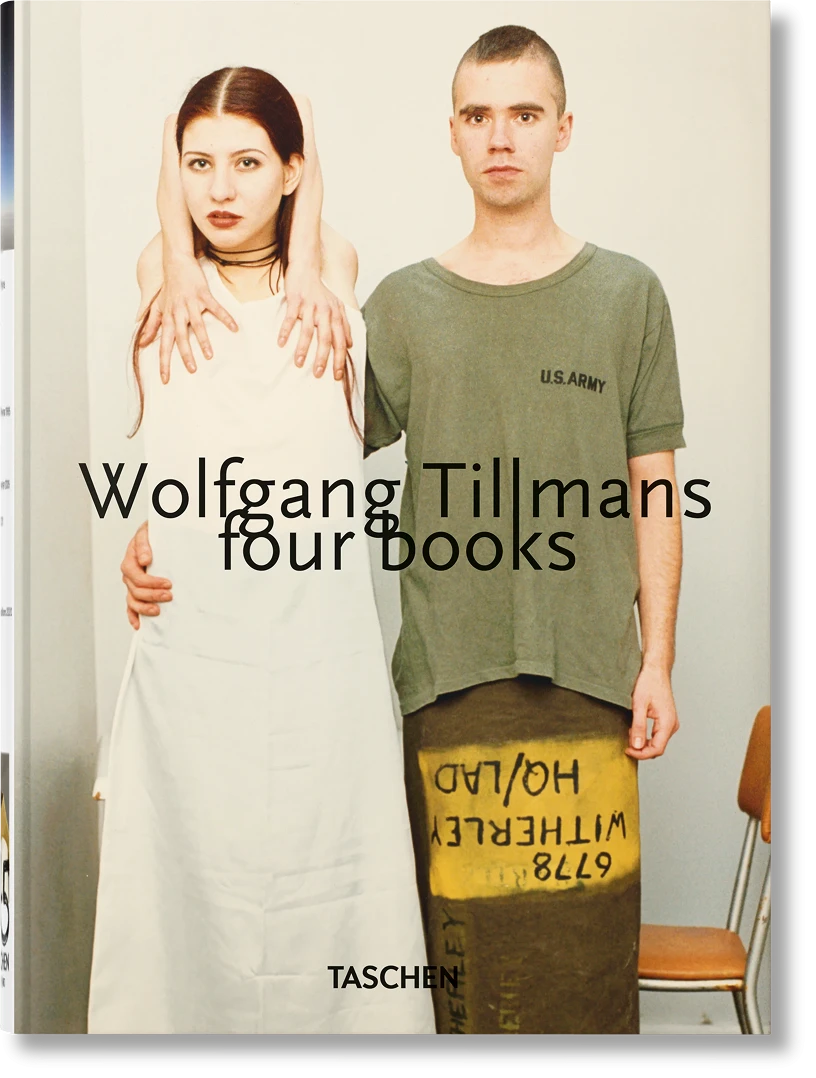
Wolfgang Tillmans four books Taschen 45th edition cover featuring two young figures in surrealist portrait

Wolfgang Tillmans. four books. 45th Ed. Courtesy TASCHEN.

​

Helmut Newton. Legacy

Helmut Newton's work operated in a register that many photographers avoided: the erotic, the theatrical, the artificial. Over more than five decades, he published in Vogue and Elle but his photographs resisted the conventional logic of fashion work. He was interested in scenarios, in narrative density, in what happens when you treat a photograph as a stage. His subjects – Catherine Deneuve, Liz Taylor, Charlotte Rampling – appear as characters in a visual narrative. Newton's intelligence lay in his refusal to choose between elegance and irony, between seduction and critique. This retrospective gathers highlights from his vast archive, including rediscovered images, and makes clear why his influence persists: he demonstrated that fashion photography could be genuinely philosophical, could ask questions about representation and desire without reducing either.
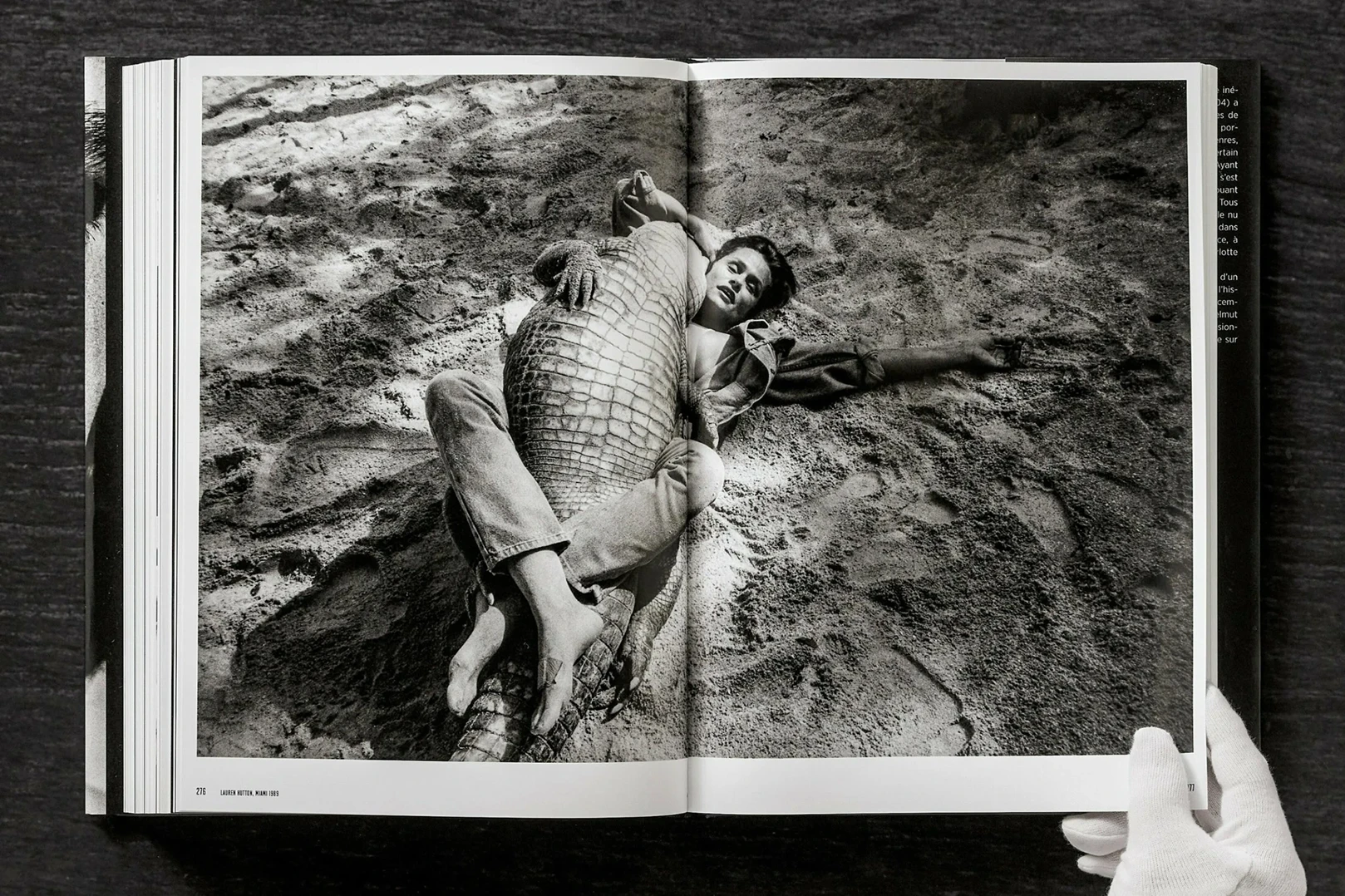
Helmut Newton Legacy Taschen book spread: black-and-white photo of person lying with crocodile on sand

Helmut Newton. Legacy. Courtesy TASCHEN.

​

Issey Miyake

Issey Miyake's design philosophy resists simple categorization: it's simultaneously rooted in traditional Japanese thinking and aggressively experimental with synthetic materials. This definitive history, overseen by Midori Kitamura (who worked alongside Miyake for over 45 years), treats his work as a form of material inquiry. Rather than organizing by season or collection, it traces his innovations through concepts (A Piece of Cloth, the Body Series, the Pleats) approaching clothing as a problem to be solved. Miyake's ambition was to reconcile poetry with practicality, to create garments that moved with the body. The photographs capture his clothes in everyday use, avoiding the artificiality of runway presentation. This book functions as both design history and technical manual, valuable equally to practitioners and to anyone curious about how innovation actually happens in fashion.

Issey Miyake Taschen monograph cover featuring a golden textured oval sculpture on white background

Issey Miyake. Courtesy TASCHEN.

​

Kate Moss by Mario Testino

Fashion photography at its best is about something beyond clothing. Mario Testino's two-decade archive with Kate Moss traces a partnership that became iconic because of intimacy, humor, the peculiar alchemy between photographer and subject. This book draws heavily from Testino's private collection, many images published here for the first time, moving between formal editorials and backstage moments. There's something refreshing about a collaboration this sustained: it resists the disposable logic of fashion cycles and instead documents the relationship itself. Testino's foreword and Moss's essay add another layer – these are two people who shaped visual culture across decades, reflecting on their own partnership.
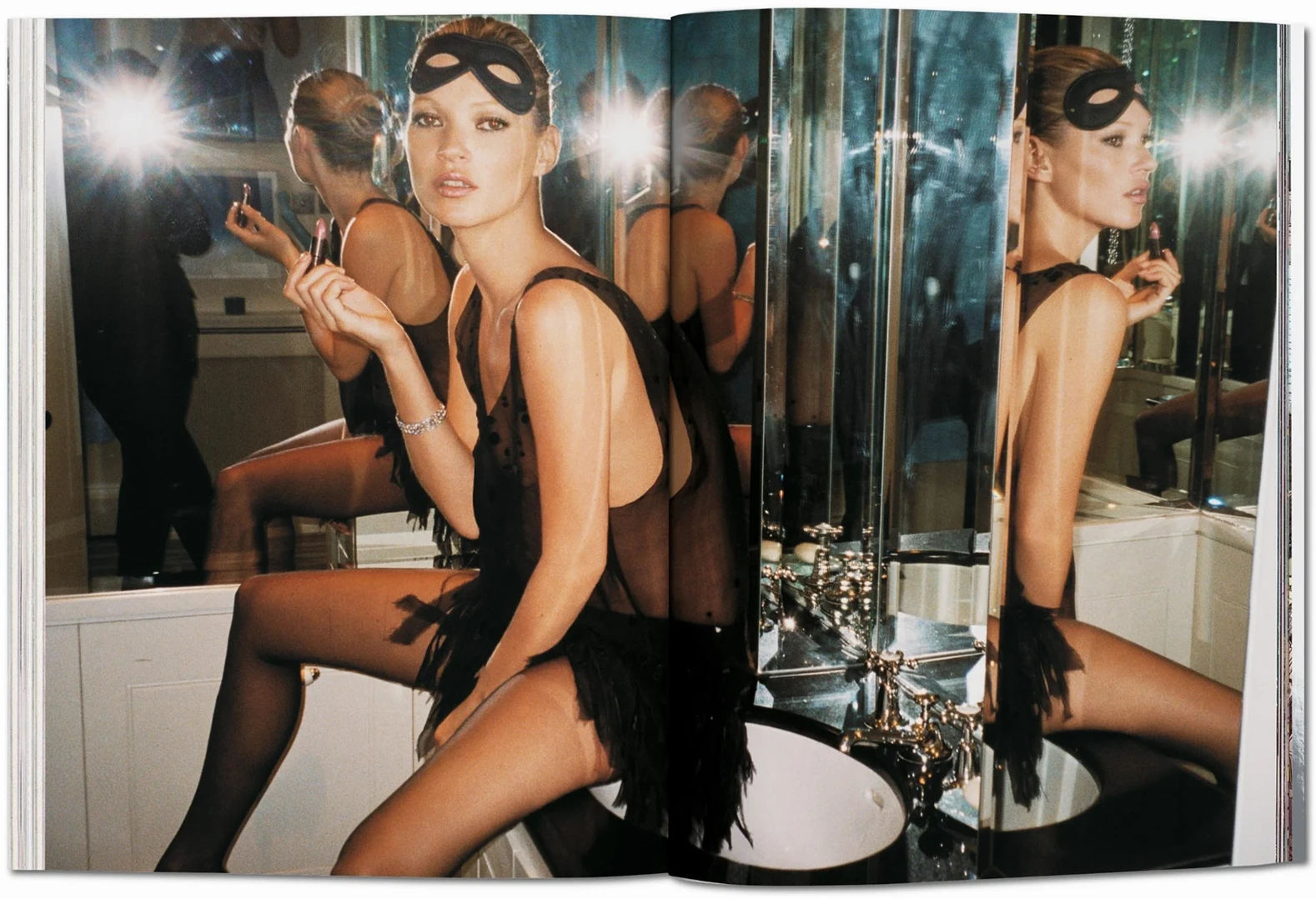
Kate Moss in black feathered costume and masquerade mask, photographed by Mario Testino for Taschen

Kate Moss by Mario Testino. Courtesy TASCHEN.

​

A History of Photography. From 1839 to the Present

The George Eastman House holds the largest collection of photographs and cinema materials in the world, over 400,000 images accumulated over decades. This volume curates selections from that archive in chronological order, tracing photography's evolution from its invention through the contemporary moment. The breadth is staggering – Alfred Stieglitz, Edward Steichen, Ansel Adams, and thousands of others whose names are less familiar but whose vision was equally crucial. A survey like this clarifies that photography's history isn't linear, it's a conversation across time, with photographers solving problems for one another, building on innovations, challenging what the medium can do.
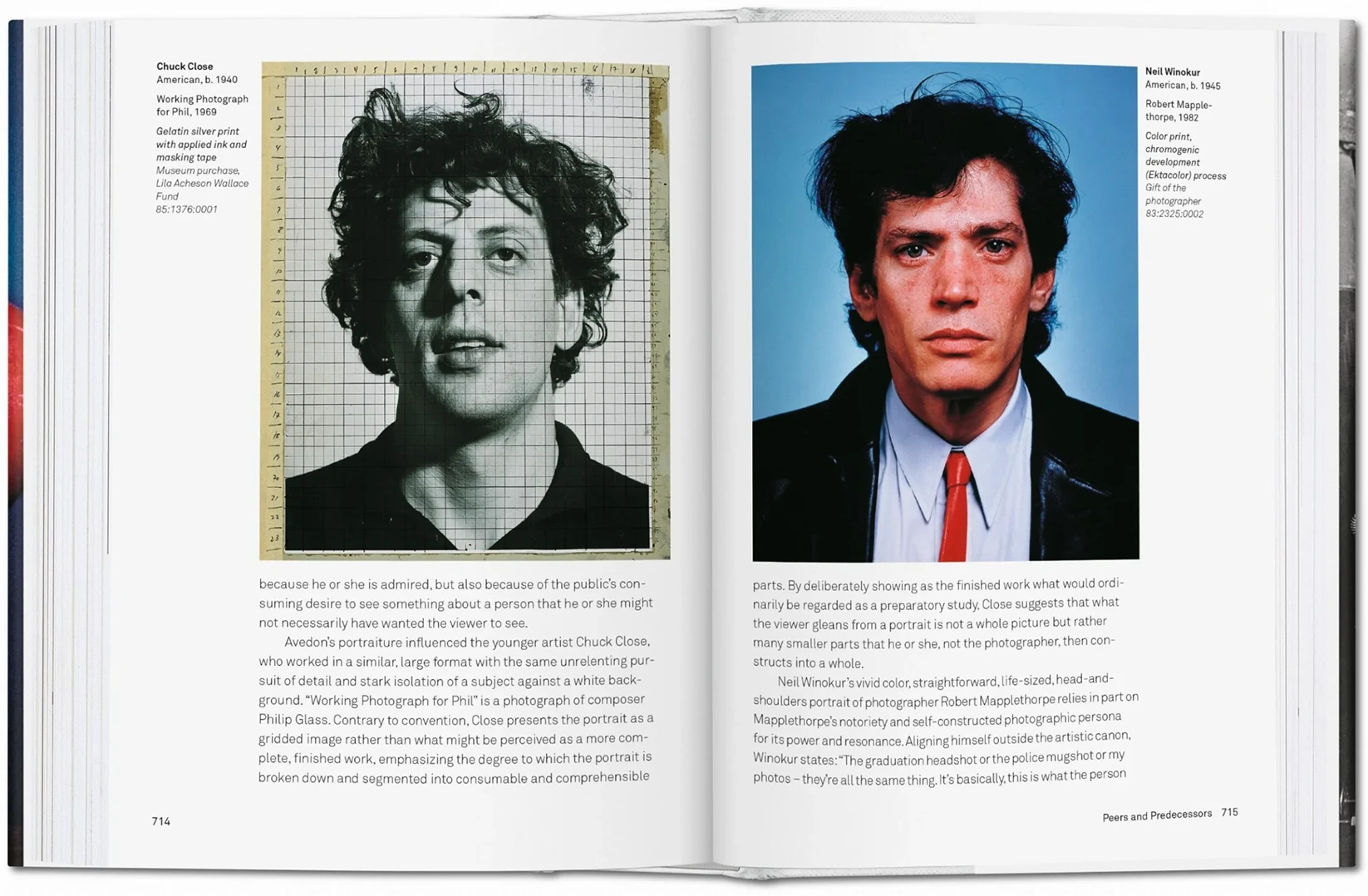
Taschen History of Photography book spread showing Chuck Close and Robert Mapplethorpe portrait studies

A History of Photography. From 1839 to the Present. Courtesy TASCHEN.
​

75 Years of Atlantic Records

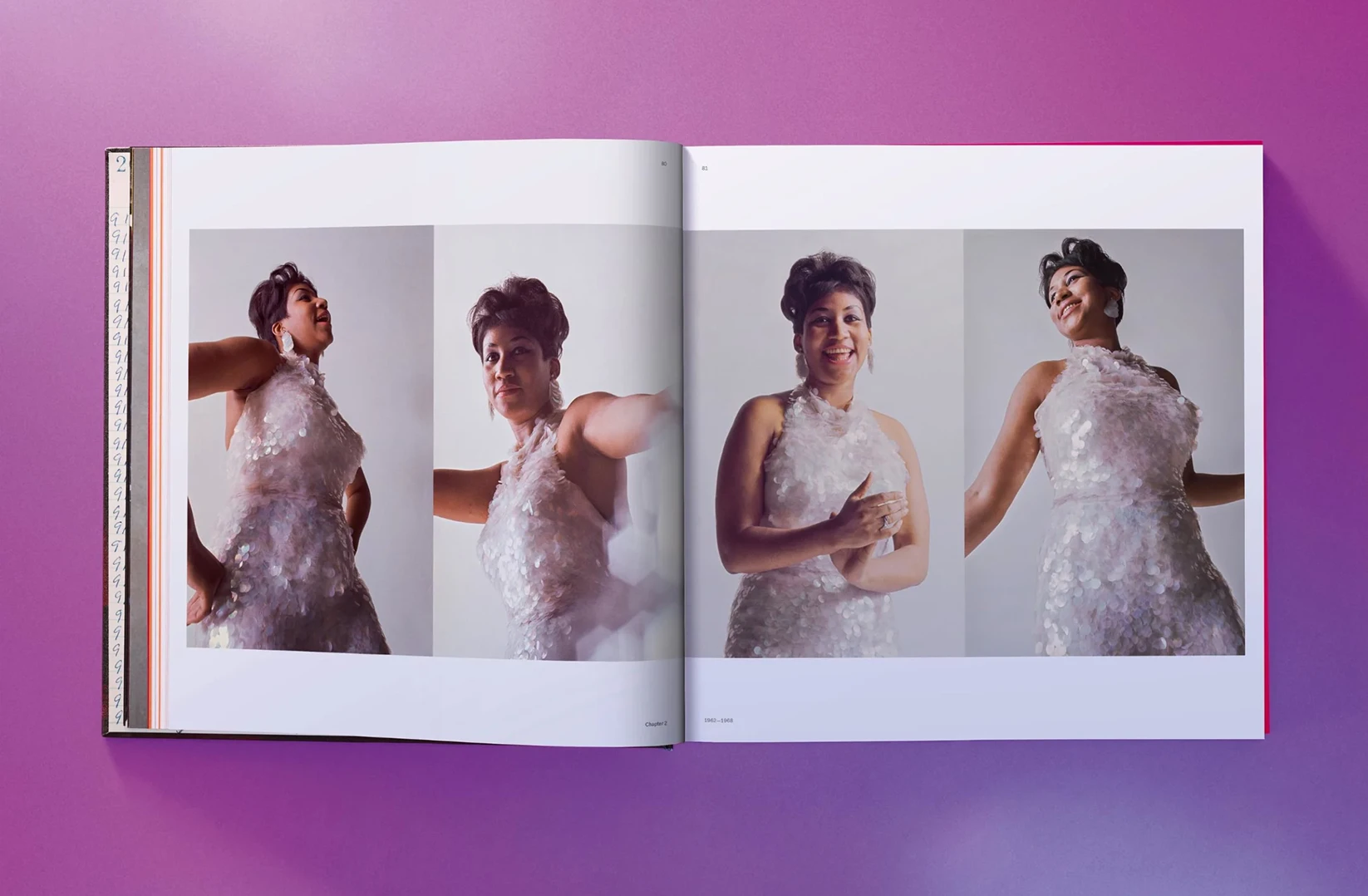
The visual history of Atlantic Records is, inevitably, the visual history of American popular music from 1947 onward. Founded by Ahmet Ertegun and Herb Abramson with something close to religious fervor for the music itself, Atlantic became synonymous with artistic integrity in an industry driven by profit. This book (four years in the making) draws from the label's archives to present Aretha Franklin, Ray Charles, Led Zeppelin, the Rolling Stones, and dozens of others, photographed by some of the greatest music photographers of the era: Annie Leibovitz, Jim Marshall, David LaChapelle. The photographs move between formal portraiture, live performance, and intimate backstage moments, documenting the people and the relationships that made these records possible. The captions and essays also contextualize the label's crucial role in championing Black music at moments when mainstream culture resisted.

Open Taschen book spread showing four portrait photos of a woman in a white floral dress, from 75 Years of Atlantic Records

75 Years of Atlantic Records. Courtesy TASCHEN.

​

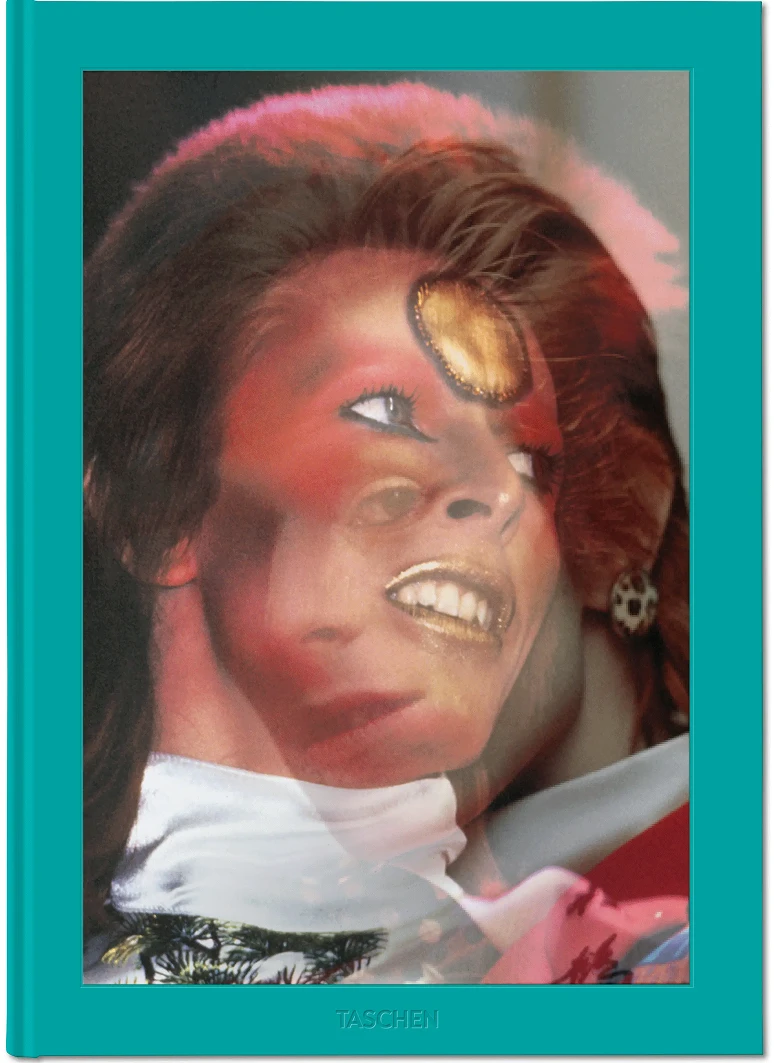
Mick Rock. The Rise of David Bowie. 1972–1973

Between 1972 and 1973, Mick Rock was embedded in David Bowie's world as photographer and videographer, witnessing the Ziggy Stardust era from within. This book captures a moment of genuine cultural rupture – when Bowie made it possible to imagine that identity could be remade, that the boundaries between masculine and feminine, performance and authenticity, were negotiable. Rock's access gives the work an intimacy that most concert photography lacks, these are images of a person thinking in public. What's striking is how these photographs, now fifty years old, still feel urgent and clarifying about how one artist's willingness to be strange can ripple across a generation. Rock became known as "the man who shot the seventies" for good reason.

Mick Rock photograph of David Bowie as Ziggy Stardust, 1972–1973, from the Taschen book The Rise of David Bowie

Mick Rock. The Rise of David Bowie. 1972–1973. Courtesy TASCHEN.

​

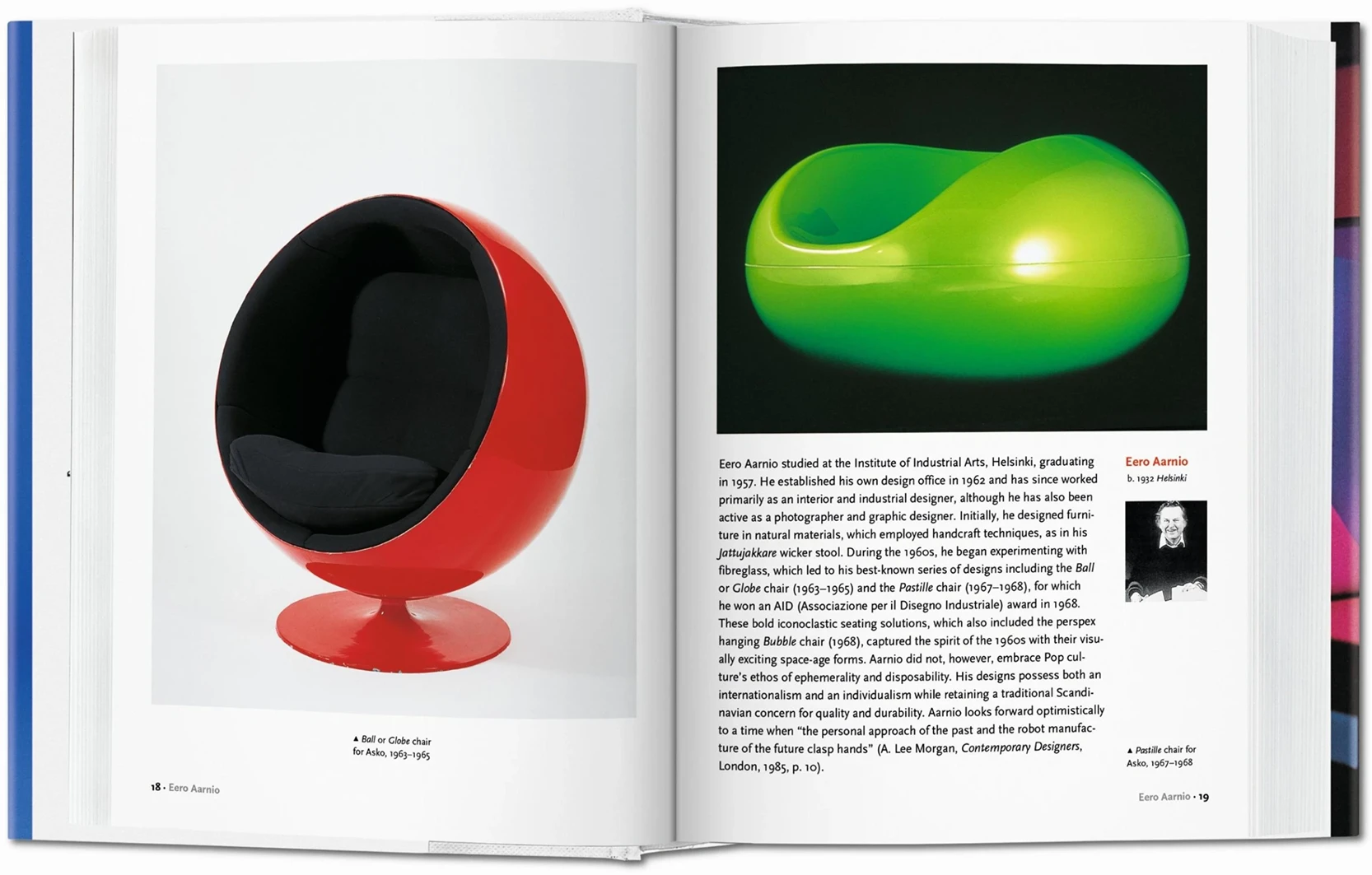
Design of the 20th Century

The twentieth century saw aesthetics move from the margins of everyday life to its absolute center. This survey moves across movements, from Art Deco through Pop to High-Tech, and across geographies, presenting designers from multiple continents working in parallel, sometimes in conversation, sometimes in ignorance of one another. Charles and Ray Eames, Philippe Starck, Dieter Rams, and dozens of others reimagined what objects could be, how form and function could coexist, how beauty could emerge from constraint. The book's structure, organized alphabetically by designer and movement, resists narrative hierarchy, instead presenting design as an ecosystem where different approaches coexist. For anyone interested in how culture shapes the objects we live with, this is essential visual history.

Eero Aarnio Ball Chair spread in Taschen's Design of the 20th Century book, showing red fiberglass globe seat

Design of the 20th Century. Courtesy TASCHEN.

​

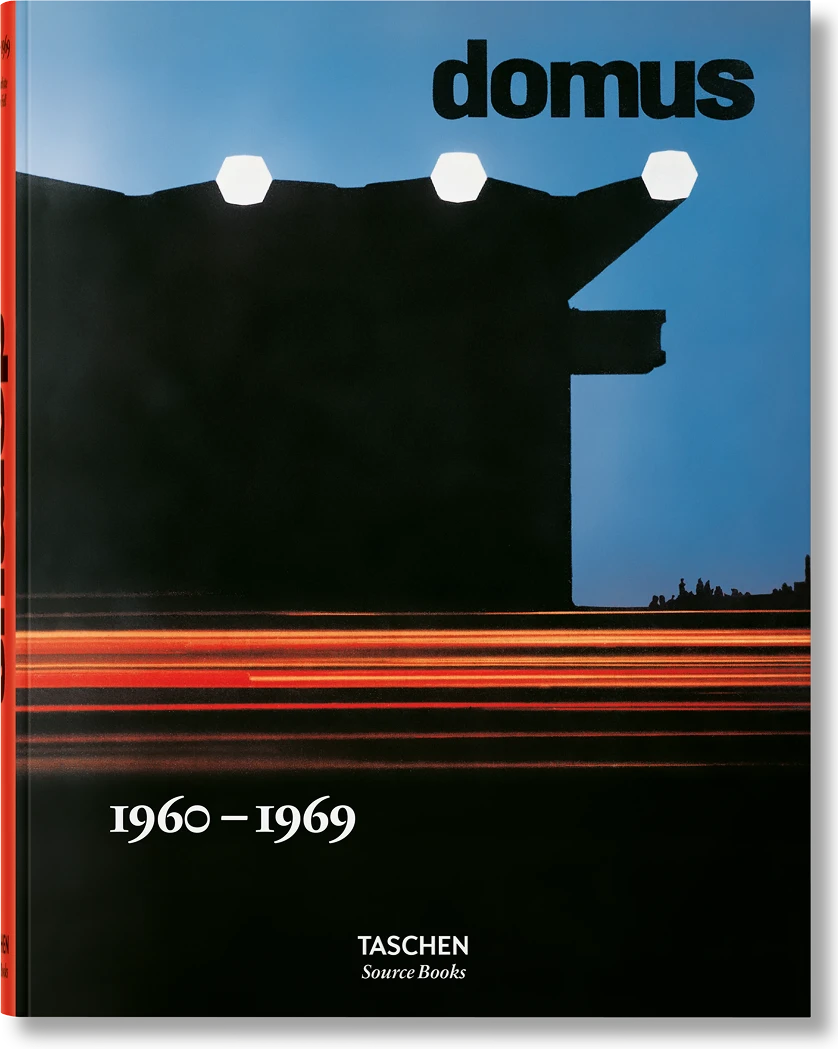
domus 1960–1969

Founded in 1928 by Gio Ponti as a "living diary," domus became the world's most influential architecture and design journal. This volume reprints highlights from the 1960s, a decade when design was genuinely experimental, when new synthetic materials offered possibilities that hadn't existed before, when the boundaries between fine art and functional design were dissolving. The projects documented include work by Ray and Charles Eames, Kenzo Tange, Carlo Scarpa, and others who were rethinking space and form. The magazine treated design as a form of thinking, a way of solving problems about how people actually live. Reading this archive fifty years later, it's clear how many of these ideas remain urgent, how many contemporary designers are still working through problems these architects first articulated.

Domus 1960–1969 Taschen Source Books hardcover featuring bold architectural silhouette against dusk sky

domus 1960–1969. Courtesy TASCHEN.

​

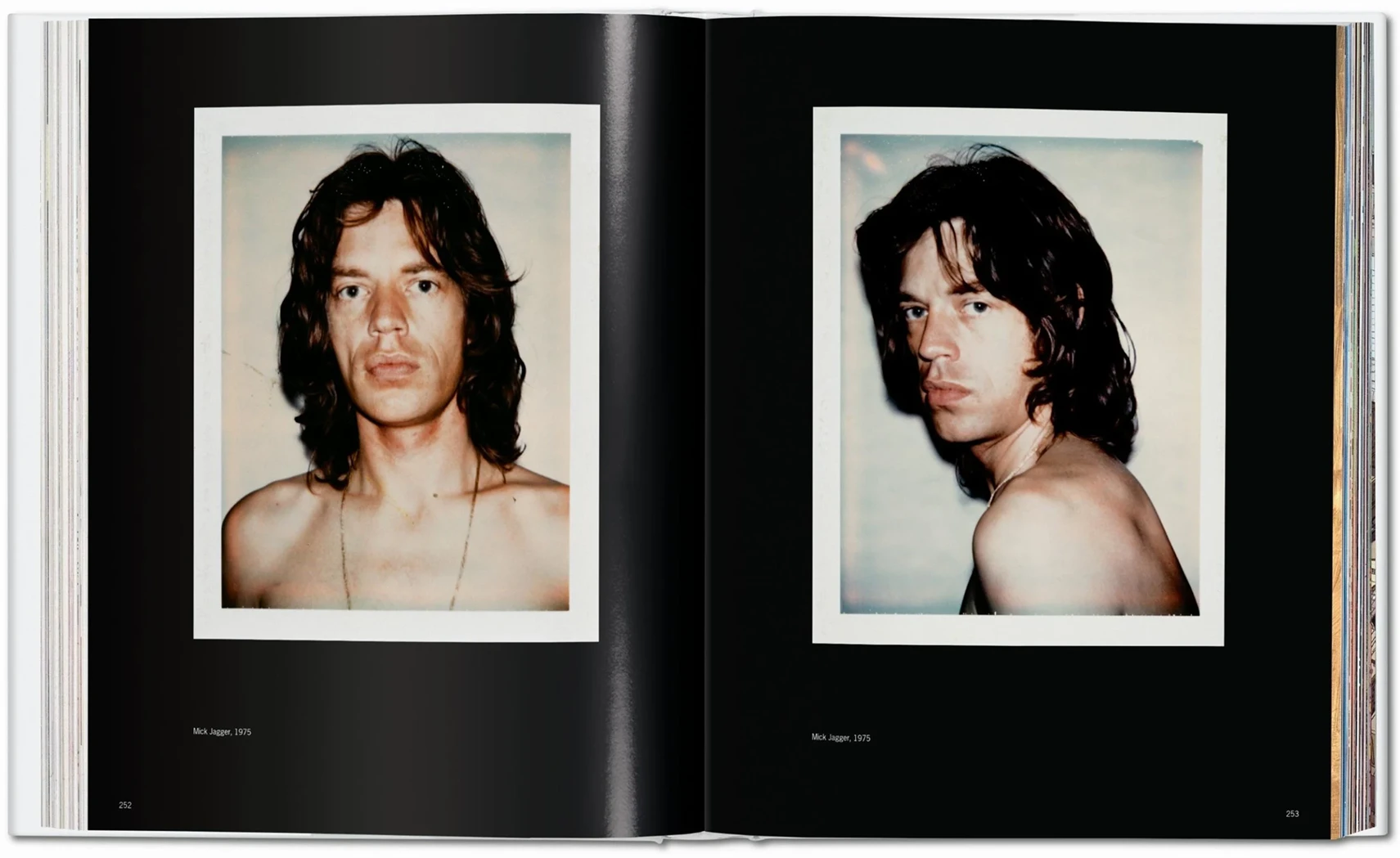
Andy Warhol. Polaroids 1958-1987

Andy Warhol carried a Polaroid camera for nearly thirty years, documenting his life with the casual abundance that Instagram would later make a grammar of visual culture. Before the golden age of social media, Warhol was engaged in the close idea: the rapid, democratic recording of encounters – celebrities alongside friends alongside strangers, high art alongside Cabbage Patch dolls, himself endlessly. This book, created in collaboration with the Warhol Foundation, gathers hundreds of these instant photographs, many published here for the first time. They complicate the image of Warhol as a cool, detached observer, the Polaroids reveal someone intensely interested in people, in surfaces, in the texture of his own time. The book works as a kind of visual diary, or an archive of consciousness.

Andy Warhol Polaroid portraits of Mick Jagger, 1975, from Taschen's Andy Warhol Polaroids 1958–1987

Andy Warhol. Polaroids 1958-1987. Courtesy TASCHEN.

​

There are books you want in your collection because they're one of a kind, and these are exactly those books. Some we already have, and others have been on our wishlist longer than we'd like to admit – TASCHEN's special prices through September 6 just remove the reason to keep waiting.

​

_

On the cover: Issey Miyake. Courtesy TASCHEN.

Author

WeDirectory

Date

03.09.2026

Tags
Writing & PublishingTASCHENTASCHEN salebook roundupphotography booksfashion designvisual cultureHelmut NewtonWolfgang TillmansMario Testinodesign historyDavid BowieIssey Miyakearchitectural designmusic photography