Like anyone with a pulse this summer, I went to see Curry Barker's Obsession. And while the script was an absolute romp of a time and I left with enough dialogue to quote for a week, the real moment that struck was hearing the drop of Current Joys' "Kids" as the leads sat together in the car. I wasn't just watching the scene—I felt the same pang of heart-wrenching nostalgia as the lead did. Of the summer nights where I sat crushed in the middle seat with my friends talking about nothing and everything.
Obsession(2026) Official Soundtrack Cover. Directed by Curry Barker
A needle drop subverts the expectations of music as a supporting role. A well-placed score is meant to disappear into the fabric of a film. Think the reverberation of drums underscoring a climactic fight or the gentle strum of a guitar carrying an intimate conversation. Its job is to heighten emotion without demanding attention.
So when a filmmaker does the opposite and lets the audience in on the fun, it reminds us that creativity and art is meant to also be shared. Dropping in a familiar song so recognizable that it instantly jolts the audience into a meta relationship with the scene. Half accent, half-four wall break, the needle drop is a tool that requires a delicate dance of context and scoring.
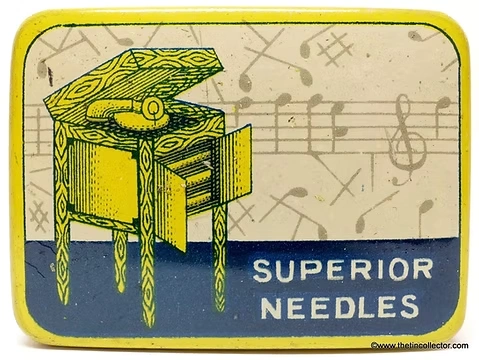
Old tin for Gramophone needles
The term originates from the literal act of dropping the stylus onto a vinyl record to cue a song. In film, it has come to describe the use of a pre-existing track rather than an original score, often at a moment when the music takes on a narrative role of its own. One of the earliest examples dates back to The Jazz Singer (1927), when Al Jolson performed the 1922 hit "Toot, Toot, Tootsie (Goo' Bye!)" using the synchronized Vitaphone sound-on-disc system.
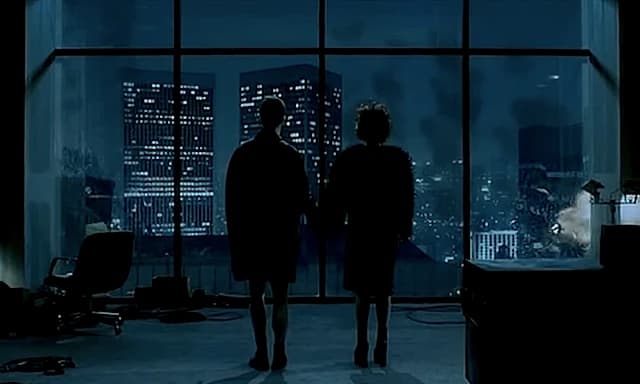
Iconic needle drops becomes inseparable from the film itself: so perfectly matched to a scene that it's impossible to hear the song without picturing it on screen. Think The Breakfast Club and it’s Judd Nelson draped in his flannel shirt raising his fist to "Don't You (Forget About Me)." Quentin Tarantino's Pulp Fiction opens with Dick Dale's surf-rock rendition of "Misirlou," which explodes over the opening credits and immediately sets the tone for the razor-sharp dialogue, dark humor, and stylized violence that follow. In Fight Club, the Pixies' "Where Is My Mind?" arrives just as Edward Norton's character accepts responsibility for everything he has unleashed.
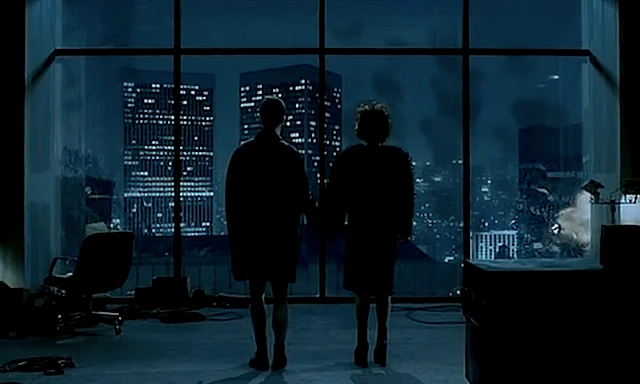
Final still from Fight Club (1999), directed by David Fincher.
Needle drops aren't always a physician’s cure for an underwhelming score. A misplaced song can pull an audience out of a scene just as quickly as the right one can draw them in. If the choice feels too obvious, too on-the-nose, or simply doesn't belong, the illusion breaks. When a song is chosen to manufacture a moment instead of earning one, audiences can feel the slight.The dance between the two shatters if the viewer feels cheated or dumbed down to.
David Ayer’s heavy-handed approach to music delivers moments for sighs like in Suicide Squad when House of the Rising Sun plays without justification.
My love for well-timed needle drops gives me the same adrenaline rush as having an intimate conversation at a packed house party or taking a lap down the block with my sister during Thanksgiving dinner. It’s the same mutual click of understanding between two people in a crowded room that hinges on the intimacy of trust, context and a little bit of shared rebellion. A great needle drop feels like being let in on a secret hidden in plain sight: that in the split second of realisation after a song plays is where the love a director has for their viewer lives.