
Softly blurred silhouettes of several figures standing against a warm golden background, creating an abstract, cinematic scene with strong light and shadow
7 min

How Small Brands Can Compete With Big Brands in 2026

By themercyw

How small brands can compete with big brands in 2026 using niche positioning, long-tail SEO, topical authority, and smarter distribution to increase visibility and growth.

In almost every industry, search results are dominated by large companies. They have bigger budgets, stronger domain authority, established backlinks, and entire teams focused on growth. For small brands, this can feel discouraging. How can you compete when the first page of Google is filled with global players?

The answer is not to outspend them. It is to out-position them.

In 2026, competition is less about scale and more about clarity, niche authority, and search visibility. Small brands can win, but only with a smarter strategy.

Why Big Brands Dominate Search and Visibility

Large companies dominate because of three structural advantages.

First, authority. Their websites have thousands of backlinks, years of content, and strong brand recognition. Search engines trust them.

Second, content volume. Big brands publish consistently across multiple topics. This creates topical authority across broad keyword clusters.

Third, distribution power. They can amplify content through paid ads, PR, partnerships, and email databases.

When a small business searches for SEO for small businesses or how to increase website traffic, they often see results from companies that are not small at all. That is because search engines reward signals of authority, not size.

However, scale is not the only ranking factor. Relevance and depth matter. This is where small brands can compete.

Why Authority Compounds Over Time

Authority is not built overnight. It compounds.

Every optimized article, every backlink, and every internal link strengthens your site structure. Over time, search engines recognize consistent expertise within a specific topic.

This is especially important for marketing for creatives and branding for creatives. Many large platforms publish broad content. Smaller brands can focus deeply on a defined niche.

For example, instead of targeting a broad term like marketing strategy, a smaller brand can build authority around niche marketing strategy for creative founders, studios, or digital product builders.

When your content consistently answers related questions within a narrow field, you build topical authority. That authority becomes your competitive advantage.

The Niche Authority Strategy

Trying to rank for high-volume, generic keywords is often a losing battle. Competing directly with large corporations on broad terms rarely works.

Instead, define your niche precisely.

Ask:

  • Who exactly are you serving?

  • What specific problem do they face?

  • What language do they use when searching?

A niche marketing strategy allows you to dominate smaller, more specific keyword clusters. Over time, this builds a strong foundation.

For example, instead of competing for branding, you can focus on branding for creatives or marketing for creative brands. Instead of targeting website design, you can create in-depth resources about creative portfolio websites and visibility optimization.

This approach does two things: it reduces competition, and it increases conversion because your audience feels understood.

Niche authority is not about limiting growth. It is about building a focused base before expanding.

Long-Tail SEO and Topical Clustering

Long-tail keywords are specific search phrases with lower volume but higher intent. They are easier to rank for and often convert better.

For small brands, long-tail SEO is essential. Instead of targeting compete with big brands, target:

  • how to compete with big brands as a small business

  • how small creative brands can increase website traffic

  • SEO for small creative businesses in competitive markets

Each article should connect to a larger content cluster. This is called topical clustering.

For example, a cluster around marketing for creatives could include:

  1. How to Build a Brand Positioning Strategy in 2026

  2. Content Marketing Strategy for Emerging Digital Brands

  3. SEO for Small Creative Businesses

  4. How to Increase Website Traffic Without Paid Ads

Each article links to the others. Together, they signal depth and consistency.

Topical clustering allows smaller sites to appear authoritative within a defined subject area, even if their overall domain authority is lower than larger competitors.

Platform Exposure and Digital Showcases

Search is not the only channel. Visibility also comes from being featured on curated platforms and digital showcases. When your website or brand is published on respected platforms, you gain:

  • Referral traffic

  • Backlinks

  • Brand credibility

  • Industry recognition

While platforms such as Awwwards focus on highlighting outstanding web experiences, exposure across curated ecosystems strengthens your authority signals. Read about other platforms you can use to showcase your website here.

For small brands, this kind of exposure can level the playing field. It increases discoverability and creates trust signals that search engines recognize.

Distribution beyond your own website is critical. Relying only on organic search limits growth. Being visible in curated directories, interviews, and industry publications expands your digital footprint.

AI Search Visibility and AIEO

Search is evolving. AI-driven search tools and conversational engines are changing how users find information.

Optimizing for AI search requires clarity and structure. This includes:

  1. Clear headings

  2. Direct answers to questions

  3. Structured content

  4. Topical consistency

AIEO, or AI engine optimization, focuses on making your content understandable for AI systems that summarize and recommend results.

Small brands can adapt faster than large organizations. They can create focused, well-structured resources that answer specific questions clearly. This improves the chances of being surfaced in AI-powered summaries and search features.

The future of competition is not only about ranking number one on traditional search engines. It is about being included in intelligent recommendation systems.

Distribution Over Perfection

Many small brands spend too much time perfecting visuals, messaging, and design before launching. Meanwhile, larger competitors continue publishing and expanding.

Momentum matters.

Instead of waiting for perfection, focus on consistent distribution. Publish optimized content. Improve it over time. Build backlinks gradually. Refine positioning as you gather feedback.

A strong brand positioning strategy combined with consistent content marketing strategy creates compounding visibility.

Perfection does not drive growth. Distribution does.

Final Thoughts

Small brands will always compete with larger players. The difference in 2026 is that scale alone does not guarantee dominance. Relevance, niche authority, structured SEO, and strategic distribution create opportunity.

If you focus on marketing for creatives, build deep expertise in your niche, implement long-tail SEO, and strengthen your visibility across platforms, you can compete effectively.

Big brands rely on size. Small brands must rely on clarity and precision.

The brands that win are not always the biggest. They are the most focused, the most consistent, and the most visible.
Author

themercyw

Date

25.02.2026

Tags
Marketing & Businessmarketing for creativesbranding for creativesSEO for small businessesniche marketing strategytopical authoritycontent marketing strategyincrease website traffic
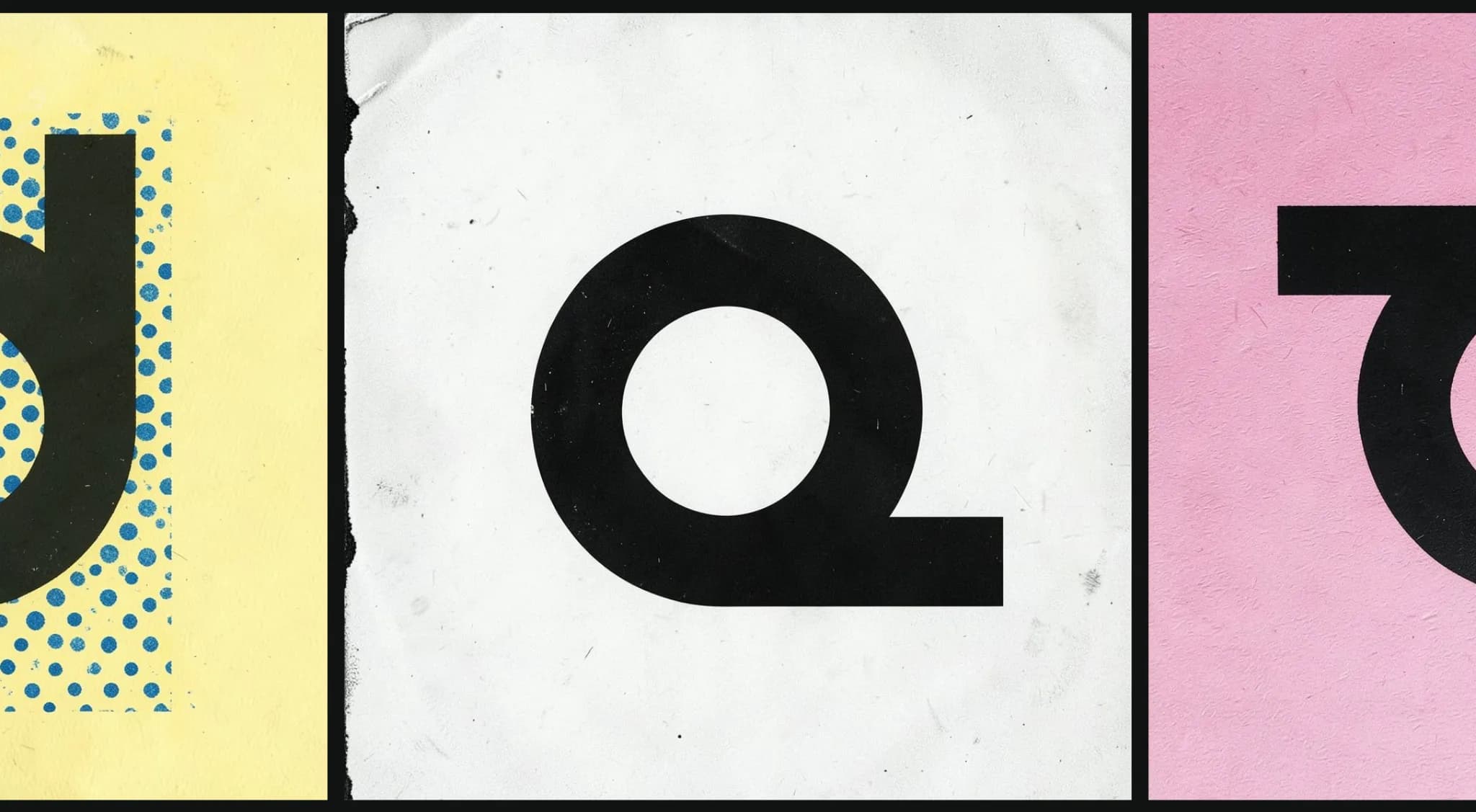
Close cropped graphic composition featuring bold black typographic letterforms across three textured panels in yellow, white and pink, with visible paper grain and print imperfections.
5 min

The Logo Trap: Don’t Overthink Your Visual Identity

By themercyw

Explains why overthinking logo ideas can slow growth, outlines essential logo design principles, and shows how strong brand identity and strategy should come before visual identity execution

The Obsession With the Perfect Logo

Every new brand starts in the same place. A founder opens Pinterest, searches for logo ideas, saves dozens of references, and begins sketching concepts before the business model is even clear.

Weeks turn into months. Fonts change. Colors shift. Friends vote. Designers revise. Meanwhile, the website is not live. SEO is not set up. No content is published. No traffic is coming in.

This is the logo trap.

Many founders believe that a strong logo will instantly build credibility. They assume that if the visual identity looks polished, customers will follow. But growth rarely works that way. Visibility, positioning, and consistent communication matter far more than a perfectly refined symbol.

A logo is important. It represents your brand in small spaces like a website header, a favicon, or a social profile image. But it does not build authority on its own. It does not drive traffic. It does not clarify your offer. It does not replace strategy.

When too much time is spent refining visuals before defining direction, momentum is lost. In competitive markets, momentum is often more valuable than perfection.

What Makes a Good Logo

Before dismissing the importance of a logo entirely, it is important to answer a common search question: what makes a good logo?

Strong logo design principles are surprisingly simple. They focus on function rather than decoration.

  • Simplicity
    A good logo is easy to recognize and easy to read. It does not rely on complex gradients, heavy detail, or trendy effects. Minimalist logo design often performs better because it scales well and remains clear across formats. If your logo becomes blurry or confusing at small sizes, it will fail in real-world use.

  • Memorability
    A strong logo leaves a mental imprint. This can come from a distinct shape, a unique typographic treatment, or a bold structural decision. Memorability does not require complexity. In many cases, the simplest marks are the easiest to remember.

  • Versatility
    Your logo must work everywhere. It should function in black and white. It should remain clear as a social media avatar. It should not break when placed on different backgrounds. A logo that only works on a white background or only in one layout is not flexible enough for digital environments.

  • Relevance to Positioning
    This is where many brands go wrong. A logo should support your brand identity, not replace it. It should align with your tone, audience, and category. A playful mark for a serious financial product creates confusion. A rigid corporate mark for a youth-driven platform feels disconnected. The logo must reflect positioning, not trends.

When founders search for logo design principles, they often expect secret formulas. In reality, the principles are practical and grounded in usability. A good logo identifies. It does not carry the full weight of your brand.

Logo Ideas vs Brand Strategy

The search for logo ideas often starts too early.

Founders look for visual references before answering essential questions. Who is the audience? What problem are you solving? What makes your offer different? What category are you entering?

Without clarity on these points, logo exploration becomes guesswork.

It is important to separate three concepts that are often mixed together.

A logo is a symbol or wordmark that identifies your company.

A visual identity is the broader system that includes typography, color palette, imagery style, layout rules, and design patterns.

Brand identity goes even deeper. It includes positioning, messaging, tone of voice, values, and perception in the market.

When logo creation starts before brand identity is defined, the result is often disconnected. The visual may look attractive, but it lacks strategic depth.

A more effective order looks like this:

  • Positioning

  • Message

  • Visual system

  • Logo

Positioning defines where you stand in the market. Message defines what you communicate and how you communicate it. The visual system supports that message consistently across platforms. The logo then becomes the final, distilled mark that represents the system.

Reversing this order creates confusion. Many brands redesign their logo multiple times not because the design was poor, but because the strategy underneath it was unclear.

A Smarter Approach to Visual Identity

If you want to avoid the logo trap, the solution is not to ignore design. It is to approach it with structure.

  1. Step 1: Define Your Audience and Positioning
    Be precise. Are you targeting early-stage founders, enterprise clients, or niche communities? What space are you entering? What makes you distinct from competitors? Without clarity here, visual decisions will lack direction.

  2. Step 2: Clarify Your Value and Message
    Write down your core promise. Define your tone. Are you bold, minimal, analytical, experimental, or refined? Messaging informs design choices. A confident, direct tone may support strong typography. A subtle tone may call for softer visual language.

  3. Step 3: Establish a Coherent Visual System
    Before focusing on the logo, define typography, spacing, layout structure, and color hierarchy. These elements shape user perception more consistently than the logo alone. On a website, typography and layout often influence experience more than the mark in the corner.

  4. Step 4: Design the Logo Within the System
    Now the logo becomes easier to create. It reflects the established structure. It fits naturally within your brand identity. Instead of forcing meaning into a standalone symbol, you allow it to represent an already defined system.

When exploring logotype inspiration, it is useful to study curated platforms such as Awwwards to understand trends and patterns. However, inspiration should be filtered through your positioning. Trends change. Strategy should remain stable.

A strong visual identity is not about impressing other designers. It is about clarity, consistency, and recognition. It should help people understand who you are and what you offer within seconds.

For digital brands especially, visibility plays a larger role than visual perfection. Search optimization, structured content, and distribution strategy determine whether people find you. A refined logo does not guarantee discoverability. Consistent publishing, technical optimization, and strategic positioning do.

This is where many small brands lose momentum. They invest heavily in refining the mark but delay publishing content, building authority, and optimizing their website. Large brands dominate search results because of scale, content depth, and technical strength, not because of slightly better logos.

If resources are limited, prioritize what drives growth. Launch with a clear, simple logo that meets core design principles. Then invest time in improving positioning, content strategy, and discoverability.

Conclusion: Avoid the Logo Trap!

A logo matters, but it is not the foundation of growth.

It identifies your brand. It signals tone. It supports recognition. But it does not replace positioning, messaging, or visibility.

When founders overthink their visual identity, they often delay the very actions that create momentum. Clear strategy first. System second. Logo last.

Avoid the logo trap. Focus on clarity, consistency, and visibility. A strong brand is built through structure and exposure, not endless revisions of a single mark.

Author

themercyw

Date

23.02.2026

Tags
Design & Creative Studioslogo ideaslogo design principleswhat makes a good logologotype inspirationbrand identity