In 2016, Bureau Betak built a hill inside the Louvre. Actual moss, actual flowers, three stories tall, right in the middle of the Cour Carrée. Nine days later, it was gone. Since 1990, the Paris studio founded by Alexandre de Betak has designed over a thousand fashion shows in spaces curated with total architectural seriousness, then torn down twelve minutes after the last model walks. A checkerboard pavilion built from scratch for Dior, dismantled the same night it opened. A wall of a Gagosian gallery demolished so Rodarte's models could walk over the rubble. A 600-metre runway cut straight through a working wheatfield for Jacquemus, with nothing around it but sky. None of it is meant to last past the applause.
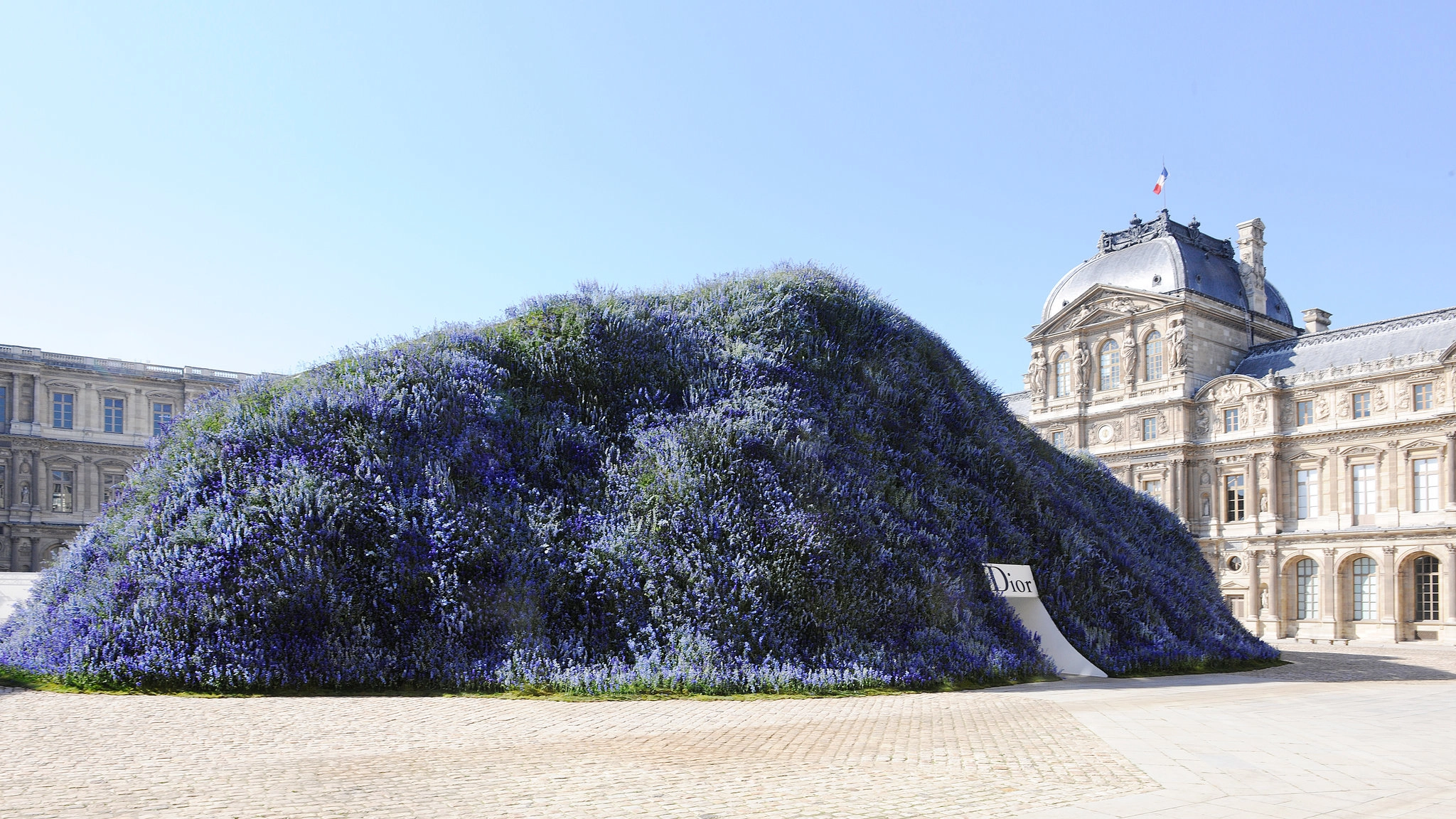
Dior's Spring/Summer 2016 show, © Photo: Dior
What You Can Build When Nothing Has to Last: Dior’s Fall/Winter 2013
Most spatial design carries a quiet anxiety about being forgotten. Betak's doesn't, because forgetting is already built into the contract. Take Dior's show on Red Square in July 2013, staged inside a mirrored pavilion built specifically for the occasion. It was the first fashion show Red Square had ever hosted, restaging Raf Simons's Fall/Winter 2013 collection fifty-four years to the month after Dior brought the very first foreign fashion show to Moscow in 1959, under Christian Dior himself. For one evening, a temporary mirrored structure sat directly in front of St. Basil's Cathedral and the Kremlin walls, reflecting one of the most heavily symbolic public squares on earth back at the guests inside it. By the next week it was gone, and Red Square went back to being Red Square. What's left is a handful of photographs of a room that briefly held sixty years of history inside a building that was never meant to outlast the evening.
That's a strange kind of freedom if you actually sit with it. A building meant to last a hundred years has to compromise for weather, for budget, for the next tenant who didn't choose any of this. A building meant to last twelve minutes doesn't compromise for anyone except the feeling it's trying to create, which is probably how you get permission to wrap a mirrored pavilion around one of the most symbolically loaded squares in the world for a single night. Betak has described his sets as things that need to be "emotional, intellectual, maybe even something not of this world." That's not a mission statement you get to write often when your building also needs to survive a rainy.
Tuesday in March. Impermanence isn't the limitation here; it becomes the whole reason the work can be this uncompromising.
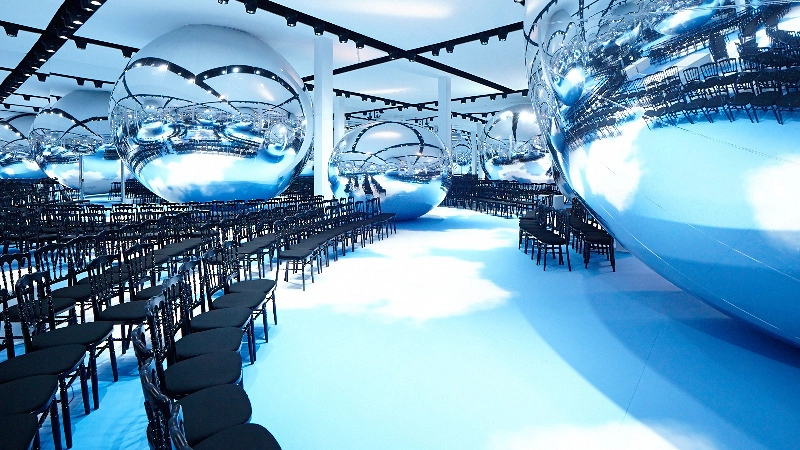
Dior’s Fall/Winter 2013, © Photo: Bureau Betak.
The Field That Became the Runway: Jacquemus's Spring/Summer 2020
Most architecture is designed to stand on its own. A cathedral is still a cathedral with nobody inside it. A museum is still a museum after closing time. Bureau Betak's sets don't work that way, they're built incomplete, waiting on the audience to finish them.
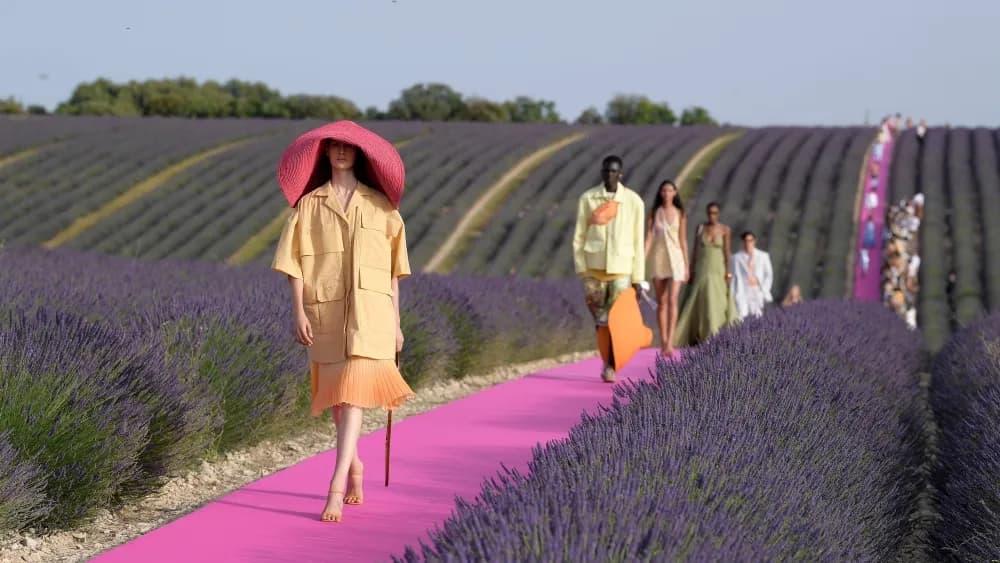
Jacquemus's Spring/Summer 2020 show "Le Coup de Soleil" was staged in the lavender fields of Valensole for the brand's 10th anniversary: a hot-pink runway, 500 metres long, laid straight through the rows of purple in full bloom. Bureau Betak’s work involved building almost nothing, just a strip of colour cut into a landscape that was already there. The design didn't just accept an audience, it depended on one willing to become part of the picture. There was no barrier keeping the audience separate from the flowers, so guests and models were standing in the exact same field, with nothing marking where the show ended and the people watching it began. Take the crowd out of that field and you're left with a pink ribbon lying in the grass — striking, maybe, but not the show everyone still talks about six years later.
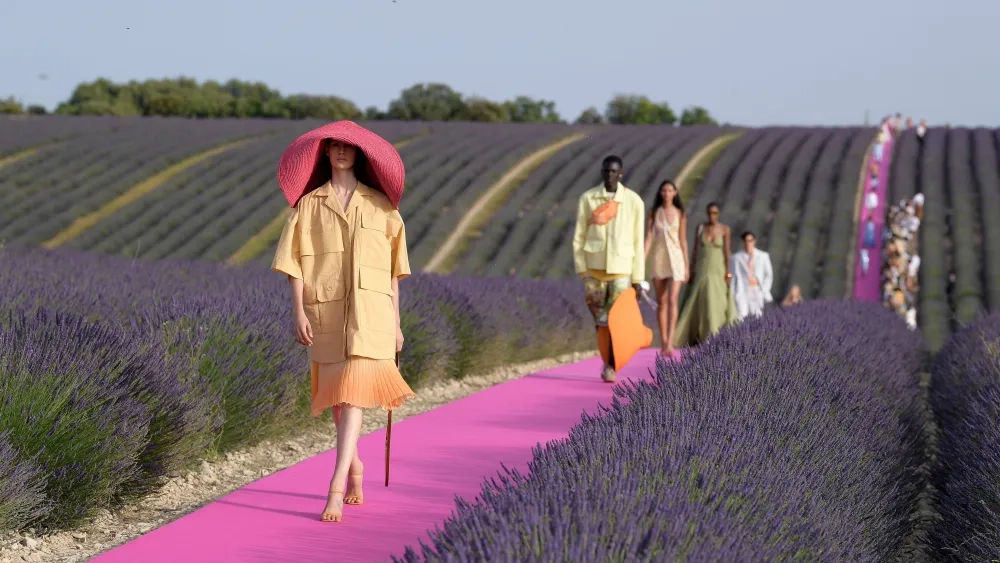
Jacquemus's Spring/Summer "L'Amour" 2020, © Photo: Arnold Jerocki/WireImage
Giving Fashion Somewhere to Live: The Argument Bureau Betak Was Really Making
It's tempting to file Bureau Betak's work under "event design" and move on, and for years that's mostly what happened. Alexandre de Betak has said as much himself, joking that in Europe you need a drawer to be taken seriously, and it didn't matter which one. But a room designed around a body moving through it, a narrative built into a site, materials chosen for how they behave under light and time, that's not decoration. That's architecture doing what clothes alone can't: giving a collection somewhere to live, so the idea behind it arrives before a single look even reaches the runway.
Bureau Betak didn't just make fashion shows more spectacular. It built a working argument that a space can be complete without being permanent, and that letting something end well might be its own kind of design mastery.